

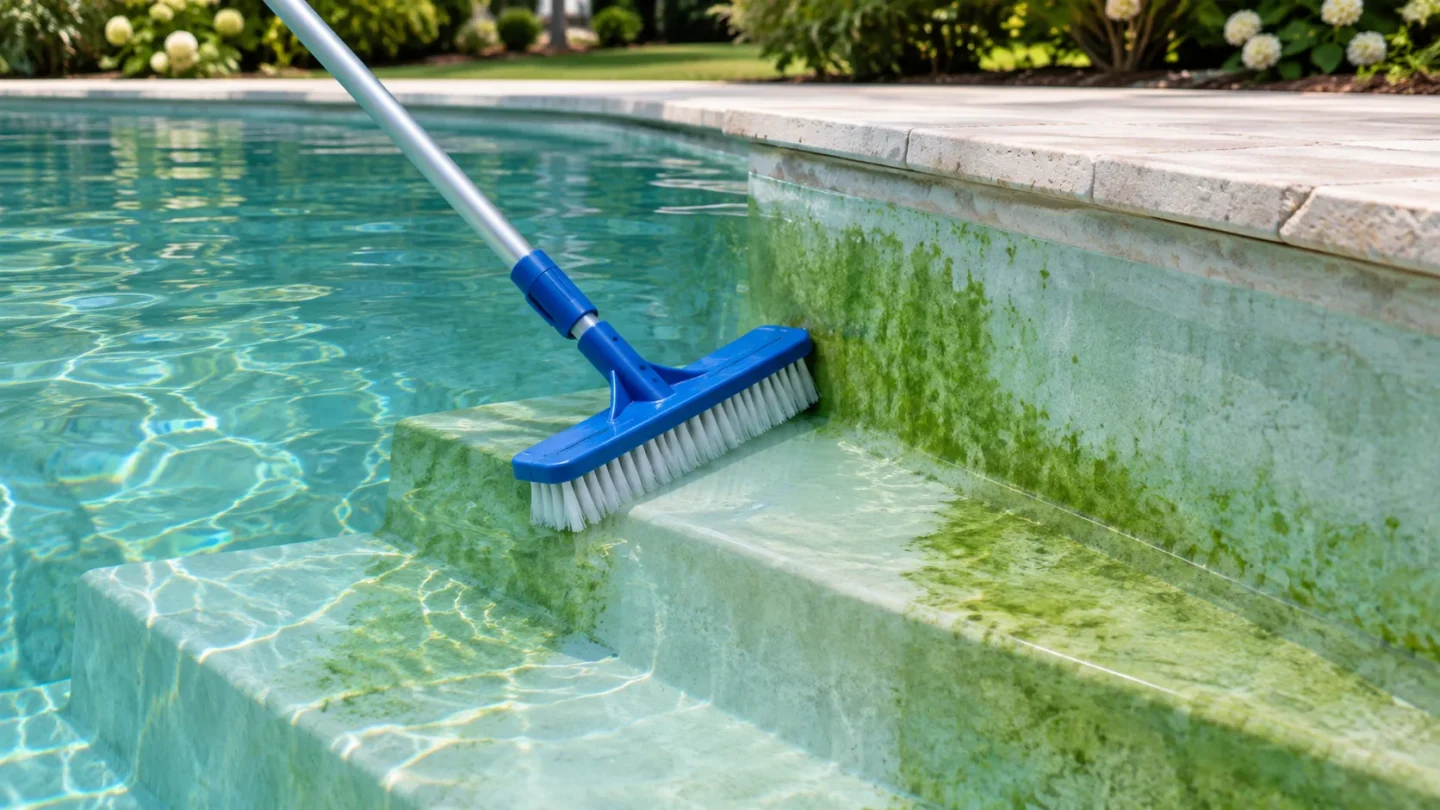
An algae stain is two problems stacked on each other.
There’s the living algae sitting on the plaster, and there’s the mark it’s driven down into the surface underneath.
Brushing a green film off the wall is nothing. The stain left by old algae, or by black algae rooted into the plaster, only comes off after the algae that made it is dead, which fixes the order of the job: kill it first, then lift what it leaves.
Know Which Algae It Is
The color names the type, and the type decides how hard this is going to be.
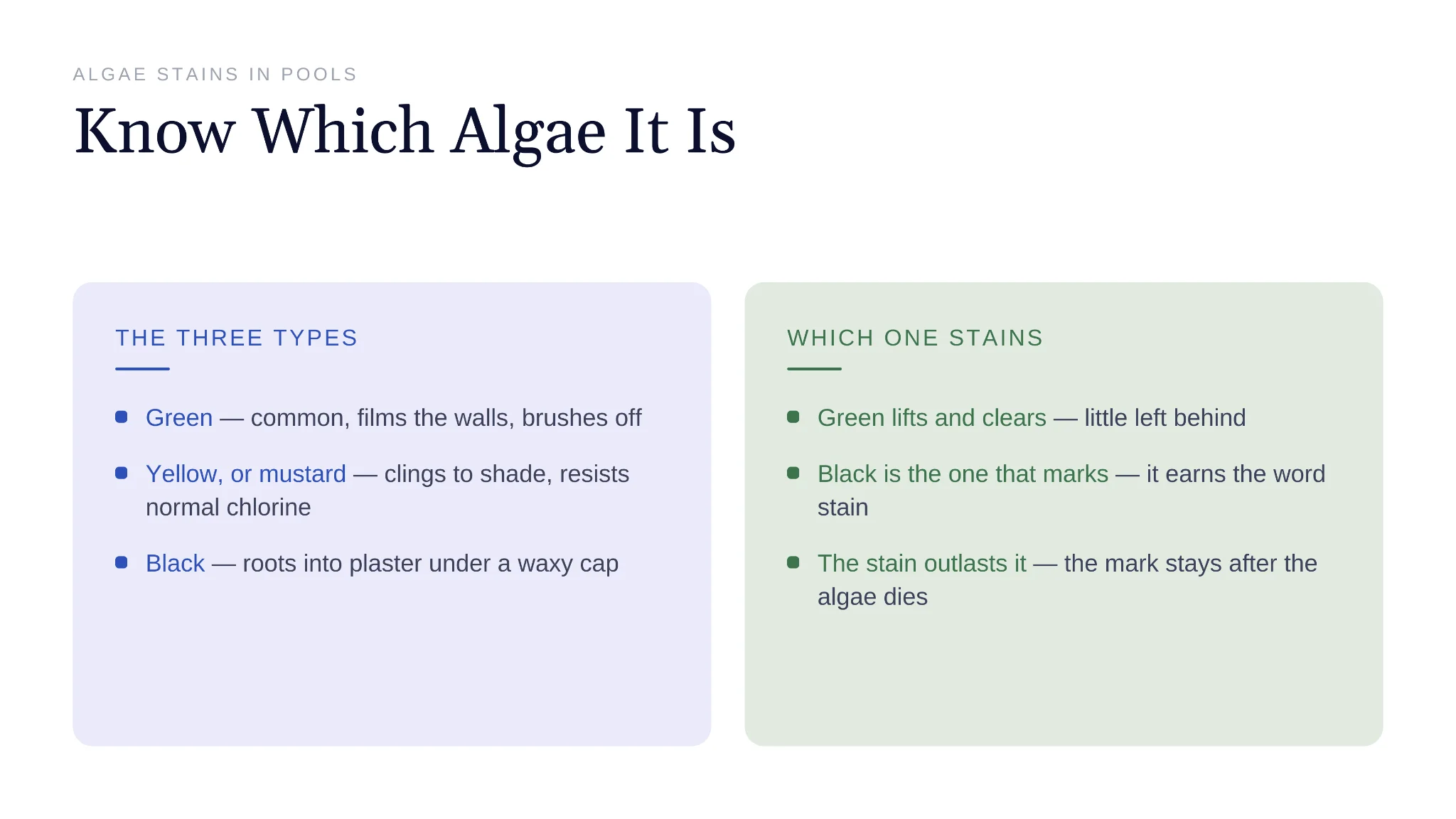
Green is the common one and the least trouble. It clouds the water or forms a film on the walls, lifts under a brush, and dies off readily once the chlorine comes up.
Yellow, the kind people call mustard algae, is more stubborn. It clings to the shaded side of the pool in dusty-looking sheets that brush away and return, and it shrugs off a normal chlorine level.
Black algae is the one that earns the word stain. It roots down into porous plaster and builds a waxy cap over itself, so a brush skims the top while the roots sit safe underneath, and the spot it held stays marked in the plaster even after the organism is dead.
Kill It Before Touching the Stain
Nothing lifts an algae stain while the algae is alive, so killing it comes first, and that runs on a brush and chlorine working together.
Brushing breaks the surface open and, on black algae, cracks that protective cap so the chlorine can reach the roots at all.
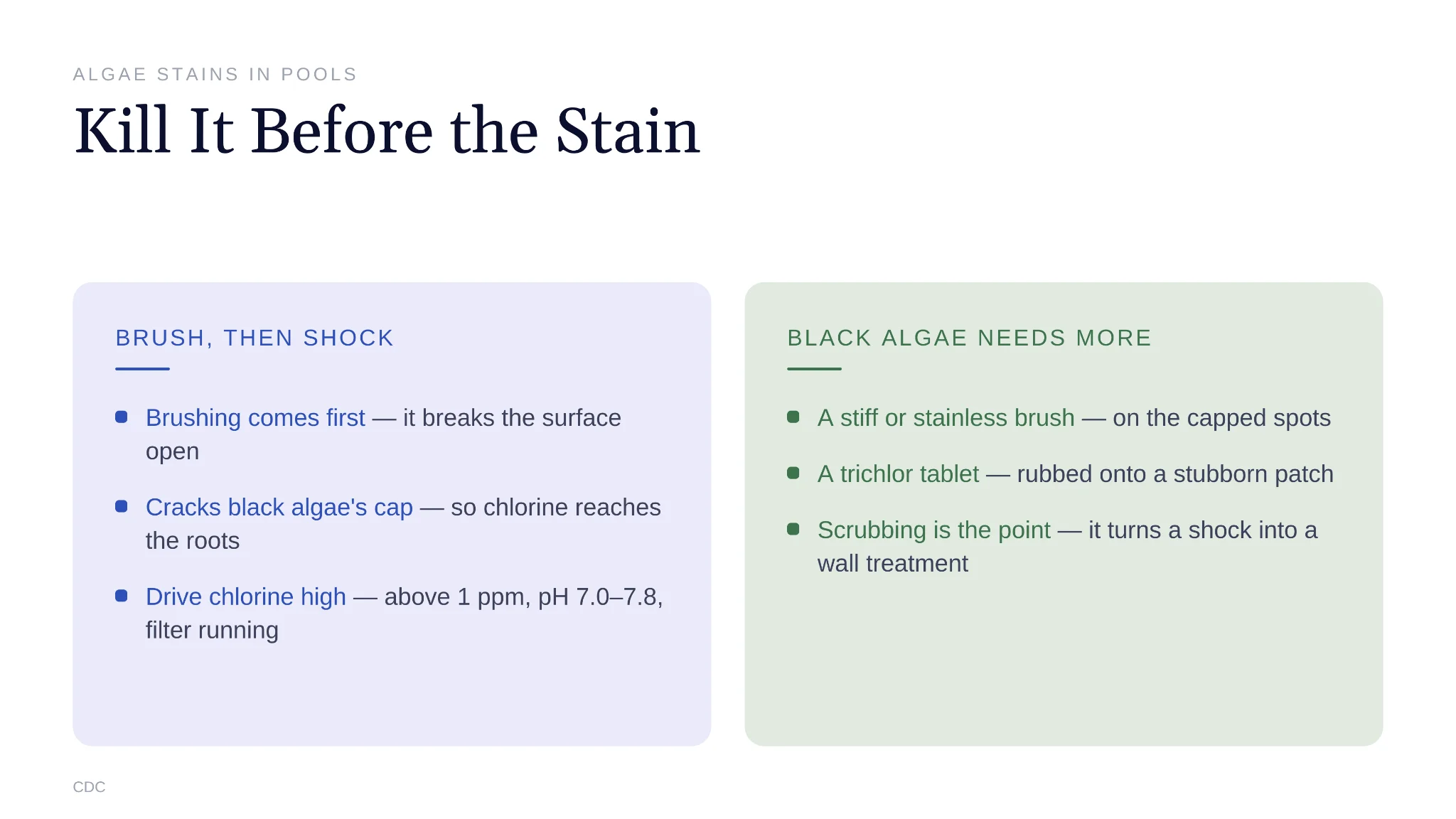
Then the pool gets shocked, free chlorine driven well above the 1 ppm minimum a pool holds day to day, with the pH kept in the 7.0 to 7.8 band where chlorine does its best work, and held there with the filter running until the bloom is dead. Brush it again while the chlorine’s high.
Black algae usually asks for more, so use a stiff or stainless brush on the capped spots, and a trichlor tablet rubbed straight onto a stubborn patch to put raw chlorine against the roots.
CDC’s instruction for public pools is to scrub the surfaces and take off the slime layer, and that scrubbing is what turns a shock from a water treatment into a wall treatment.
Lift the Stain That’s Left
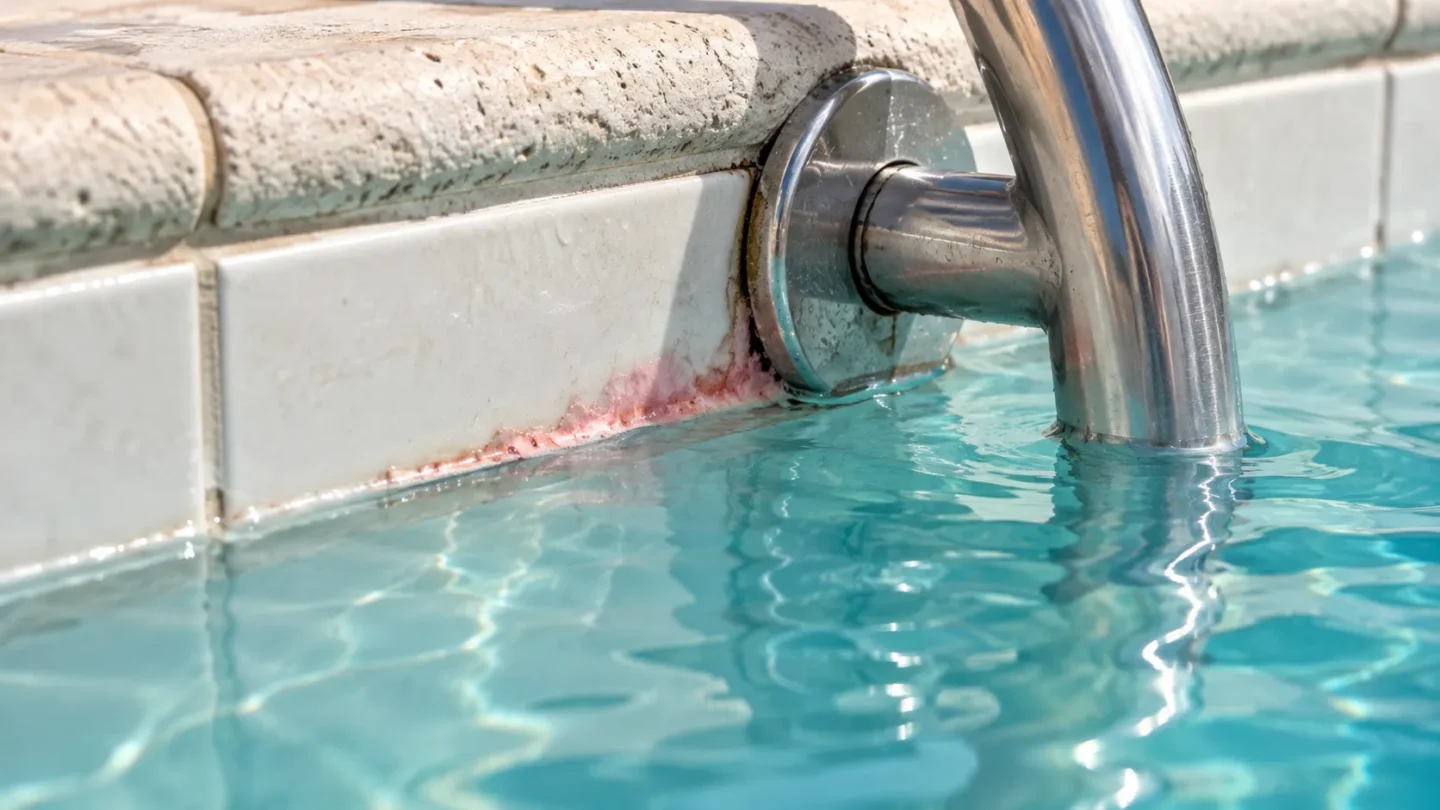
Once the algae is dead, what stays on the plaster is an organic stain, and organic stains answer to chlorine.
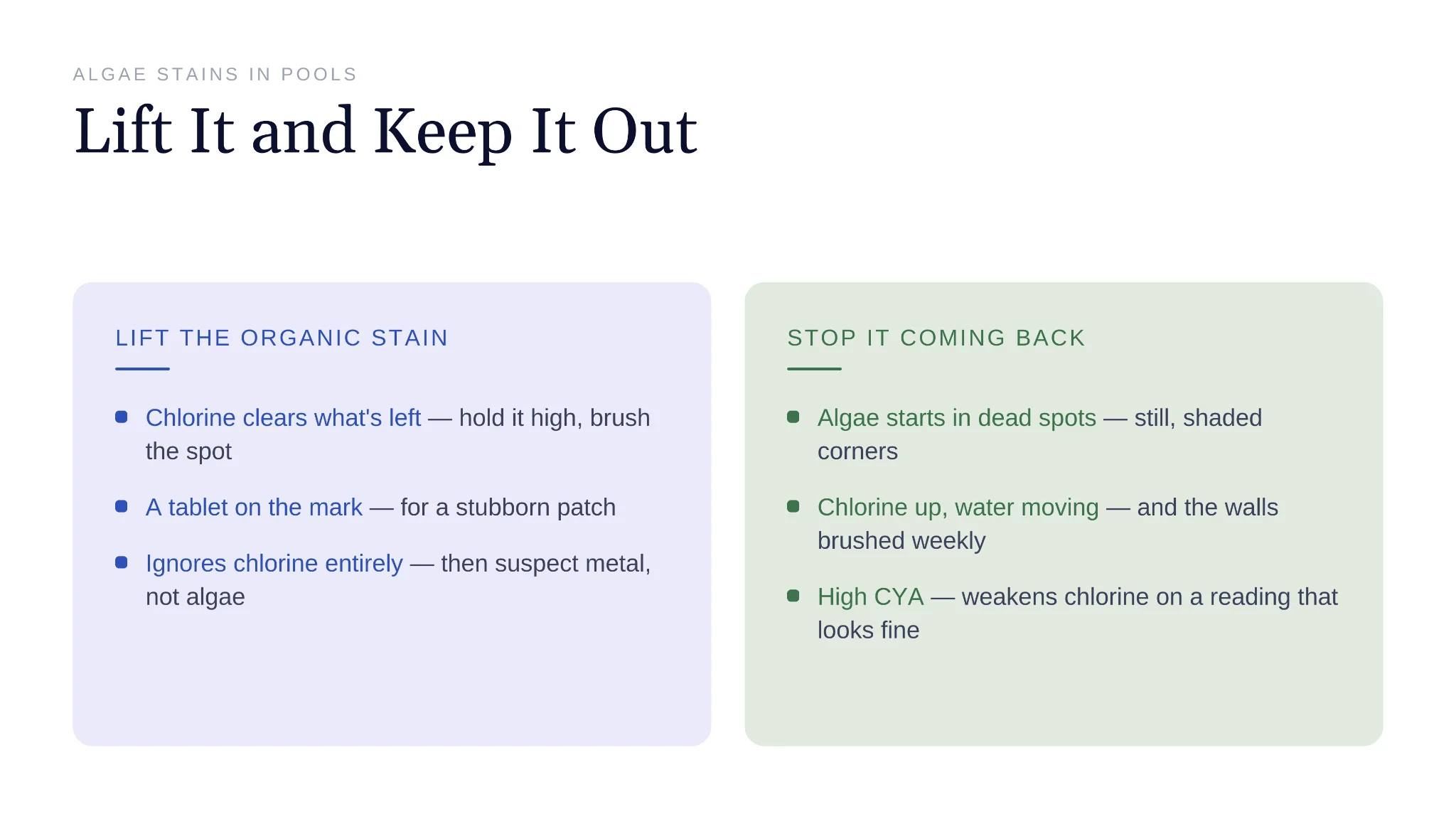
A green or brown mark lingering after the water has cleared usually comes up with more of the same: holding the chlorine high, working the spot with a brush, sometimes pressing a chlorine tablet against it.
The one thing worth ruling out is metal. A stain that ignores chlorine entirely points to iron or copper in the plaster rather than algae, and that runs on a completely different treatment.
Stop It Coming Back
Algae takes hold where the water goes still, and the chlorine runs thin, like the corners the return jets never reach.
Holding free chlorine up, keeping the water moving, and brushing the walls is most of the prevention right there.
Two things work against it: phosphates feed algae, and cyanuric acid weakens chlorine as it climbs, so a pool that keeps blooming on a chlorine reading that looks fine often has a stabiliser level sitting too high underneath.
Keep the Walls Brushed
A brush run over the walls once a week is the single move that keeps algae from ever getting started, and it’s the one that gets skipped.
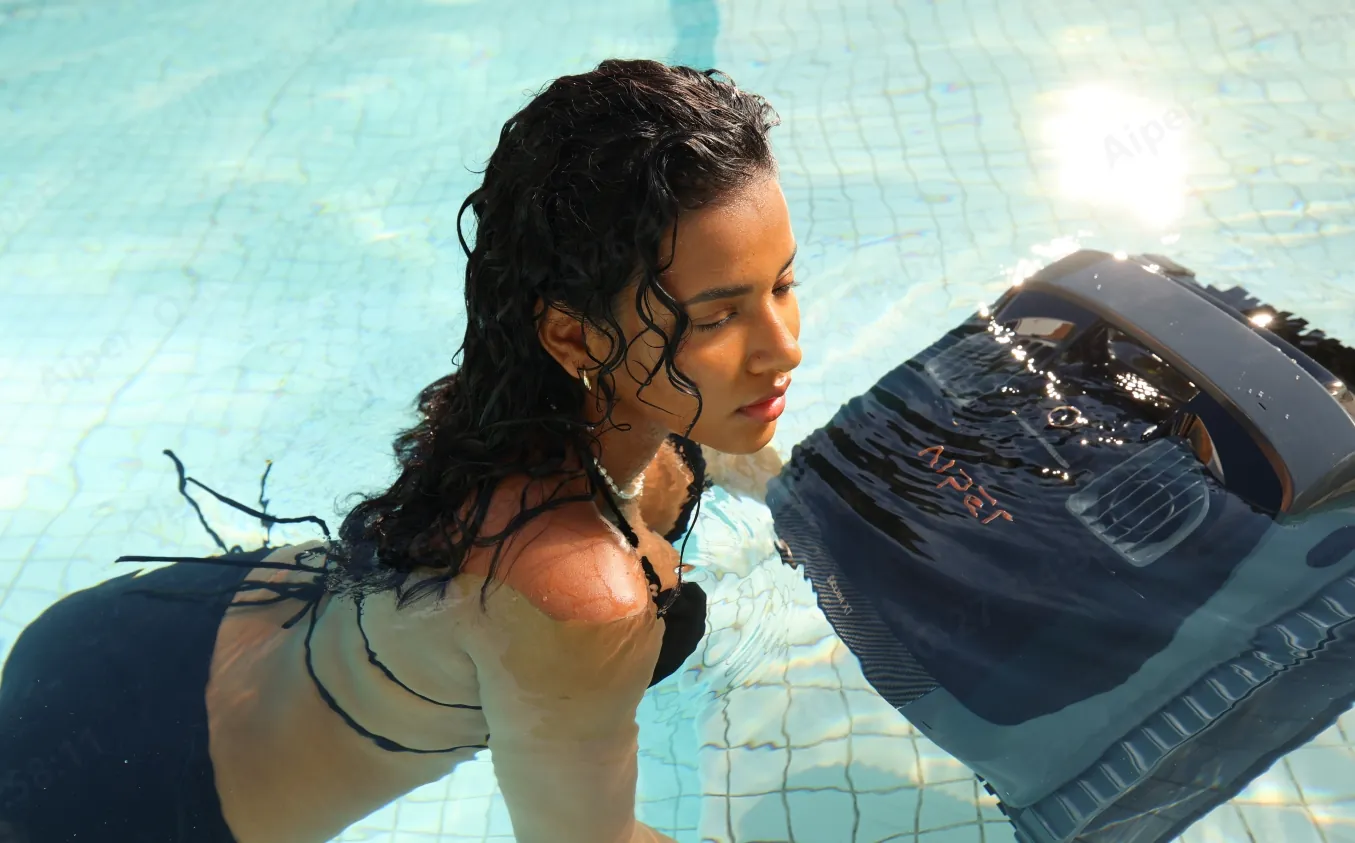
An Aiper robotic pool cleaner works the floor and climbs the walls on its own cycle, scrubbing the surfaces and pushing water through the quiet corners where algae begins, off its own battery without pulling on the pump.
A black-algae bloom that’s already rooted is beyond it. That takes the brush, the shock, and the scrubbing above. What it does is keep the walls worked and the dead spots stirred so a bloom never finds the still, undisturbed surface it needs to start.
Get more pool and lawn care guides from Aiper on Google