


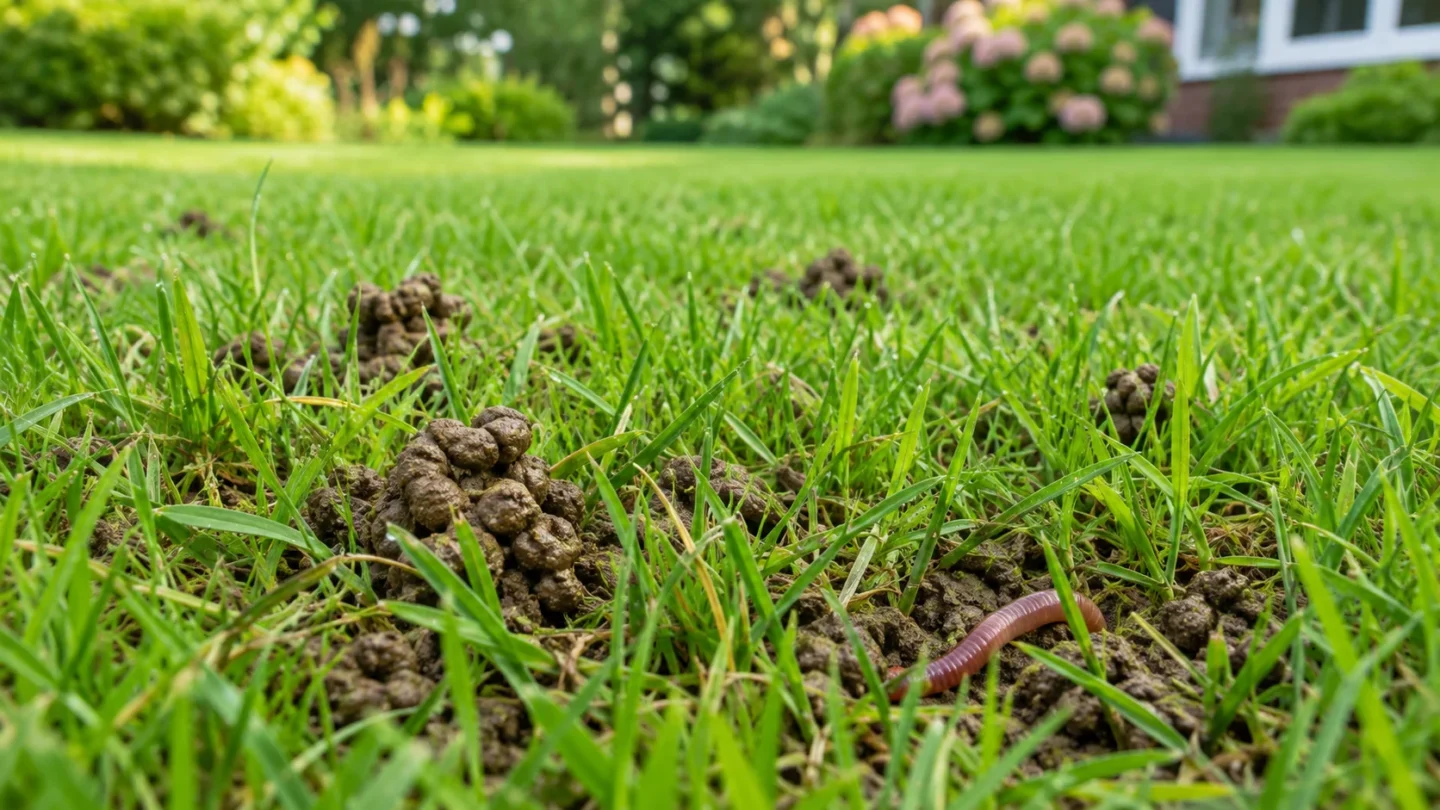
You walk out in April, and the lawn feels like gravel underfoot.
Little mud mounds everywhere, coiled piles of dirt sitting on the grass, and down in the soil, the earthworms are the ones leaving them.
So you go looking for whatever kills them.
Hear this before you spend a dime: you can’t buy that, it’s against the law to try, and the worms doing it are the best thing happening in your soil.
The lumps are the real annoyance, and the fix is straightforward once you stop aiming at the worms, flatten the casts, and change how you water.
Why You Shouldn’t
Earthworms don’t eat grass, and they don’t damage turf.
What they run under your feet is a free soil-conditioning operation.
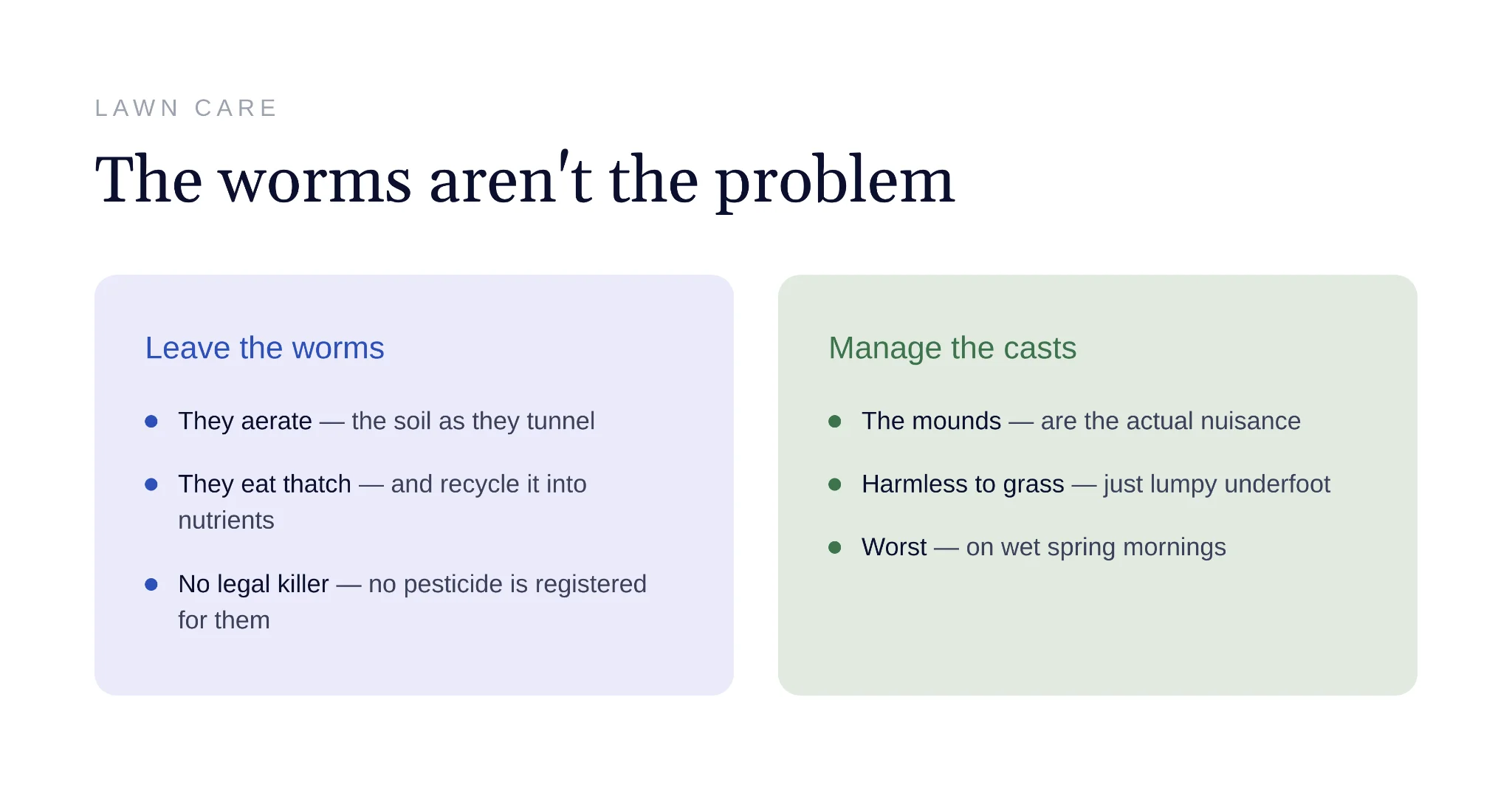
Their tunnels open the soil so water, air, and roots can get down into it. They work through thatch, the dead, spongy layer that builds up and chokes a lawn, turning it into nutrients the grass can actually use.
A lawn with a healthy worm population is a lawn with good soil. That’s what the mounds are really telling you.
And here’s the part that ends the discussion. There’s no pesticide registered to kill earthworms, and applying any pesticide specifically to control them is off-label and against the law.
The old products that did the job got pulled decades ago, for good reasons.
So “get rid of them” isn’t a real option, legally or practically, and even if it were, you’d be trading a cosmetic problem for a worse one underground. Wipe out the worms, and the thatch stacks up, and the ground packs down, which thins the lawn, the exact outcome nobody’s after.
What’s Actually Bugging You
What bothers people is the casts. Those little cone-shaped mounds are soil the worm has eaten, digested, and left at the mouth of its burrow, and they do nothing to the grass itself.
They just make the surface lumpy, enough to feel underfoot and jar a mower.
You see them worst on wet spring mornings, when the worms are up near the surface working, and again in fall. Come summer heat, they head deep, and the mounds mostly stop. A good number of “earthworm problems” quit on their own by June.
What to Do About the Castings
Since the worms are staying, the real job is managing the mess they leave, and most of it is easier than killing anything would have been. The first move is to do less than you think.
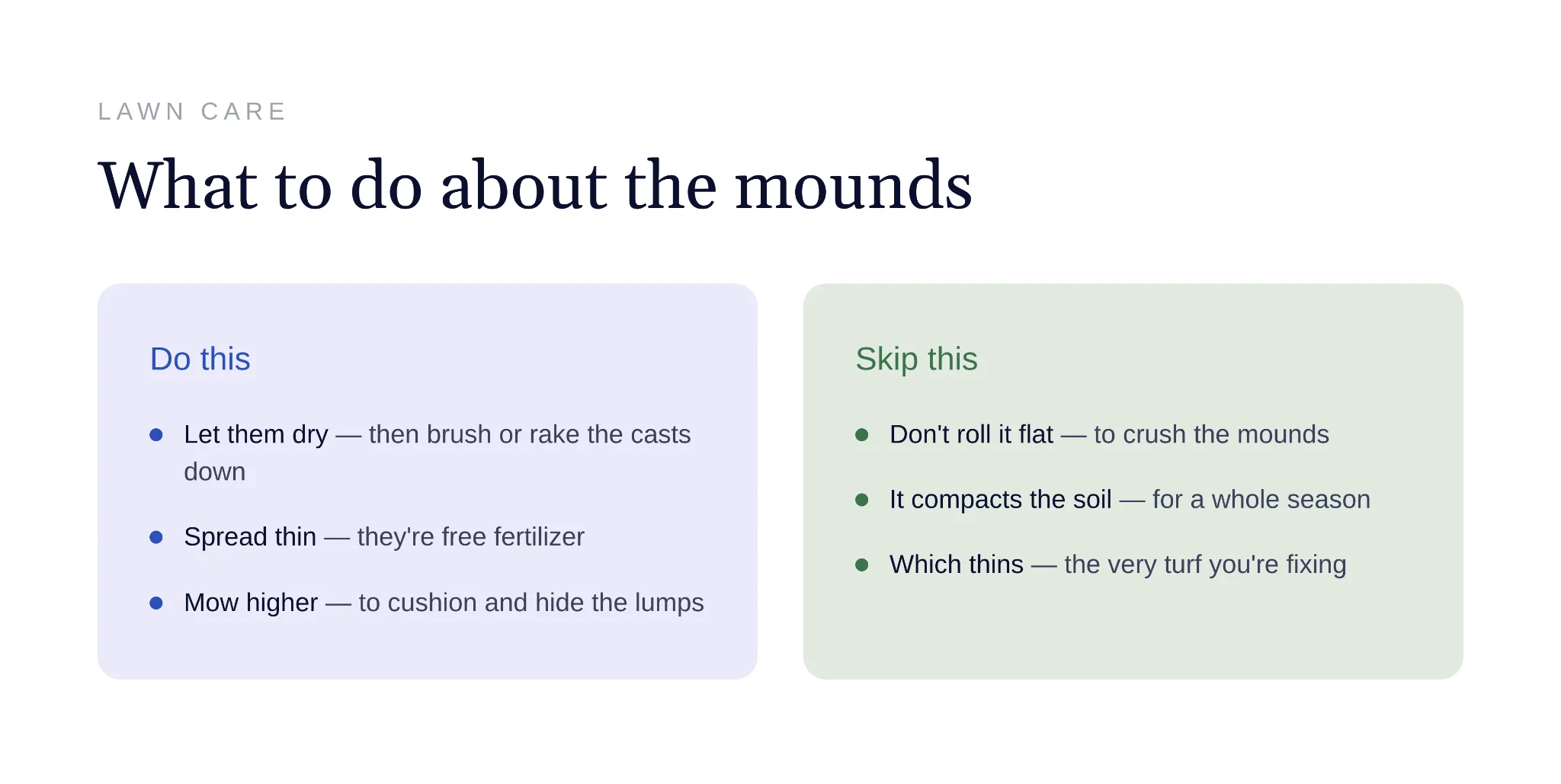
Wait for the casts to dry, then knock them down.
Once they’re crumbly, drag a stiff broom, an old doormat, or the back of a rake across the lawn to break them apart and scatter them. Spread thin like that, they’re free fertilizer, some of the richest stuff you can put on grass. Drag them while they’re still wet, and you just smear mud and smother the blades, so hold off for a dry stretch.
Mow a notch higher while you’re at it. Taller grass hides the lumps and pads the surface, and the bumps you’re left with stop registering underfoot.
A patch that’s genuinely rough you can level over time, core-aerating or verticutting to shave the high spots and work the soil back flat. That’s a slow fix, not a one-weekend cure.
The move to avoid is rolling the lawn flat to crush the mounds. It flattens them for a day and compacts the soil for a season, and compacted soil thins the turf, which drops you right back to a lumpy, struggling lawn.
Water Deep, Not Often
Here’s the lever that actually changes how many casts you see, and it barely touches the worms directly. Worms surface and cast when the top of the soil stays wet.
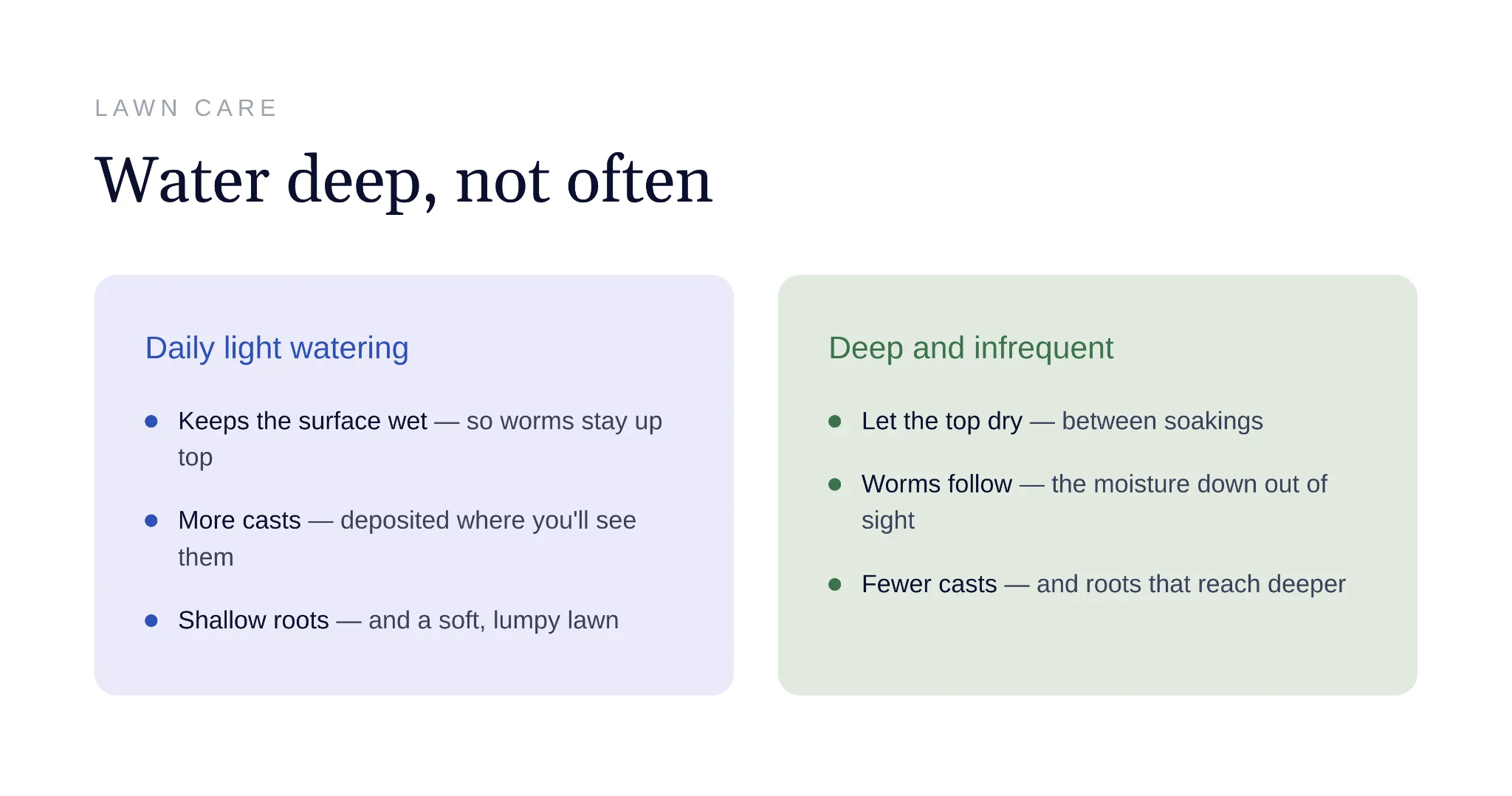
When there’s daily light sprinkling, a zone that runs too long, a rainy spell you can’t do anything about, the worms stay up there working and depositing.
Water deep and infrequently instead, letting the surface dry between soakings, and the worms follow the moisture down and do their casting below where you’ll ever see it.
That one change pulls double duty. Fewer casts on top, and a deeper, tougher root system, because roots chase water down when the surface stops handing it to them. Shallow daily watering grows a soft, casty, shallow-rooted lawn. Deep and spaced-out grows the opposite.
The One Worm Worth Worrying About
There’s an exception worth knowing. Invasive jumping worms, Asian species that thrash like a snake when you pick one up, are a genuine problem, just not a lawn problem.
They tear through the leaf litter in garden beds and woodland edges and leave behind a loose, dry, coffee-ground soil that plants struggle in.
That’s a different animal from the mounds on your turf. If you fish, it’s the reason not to tip leftover bait worms into the woods, and if you buy compost or mulch, they can hitch a ride in it. The nightcrawlers in your lawn aren’t these.
Let the Water Do the Work
The whole thing turns on one change of target. Stop trying to get rid of the worms and go after what’s pulling them to the surface, which is the watering. Fix how the lawn gets watered and the casts fall off on their own, and the lawn gets better everywhere else while you’re at it.
That’s where an Aiper IrriSense 2 earns its place. It runs the deep, infrequent schedule that keeps worms down in the soil and roots reaching for water, instead of the daily light sprinkle that keeps the top wet and the casts coming, you get the right amount of water, spaced right, without you managing it.
Let it handle the watering and let the worms handle the soil, which is the arrangement you actually wanted, even if you walked out this morning ready to declare war on them.
Get more pool and lawn care guides from Aiper on Google