How to Keep Dogs Off Your Lawn, Yours or the Neighbor’s

Dogs damage lawns in two different ways, and each needs its own fix. Your own dog leaves urine spots in the same few places every day. A neighbor’s dog cuts across the yard, marks your shrubs, and leaves waste you have to pick up.
The approach for your dog is training and water. For someone else’s dog, it is barriers, deterrents, and a conversation with the owner.
Why Dog Urine Kills Grass
Dog urine is high in nitrogen. When a dog empties its bladder on one small spot, that nitrogen burns the grass the same way spilled fertilizer does, according to Penn State Extension.
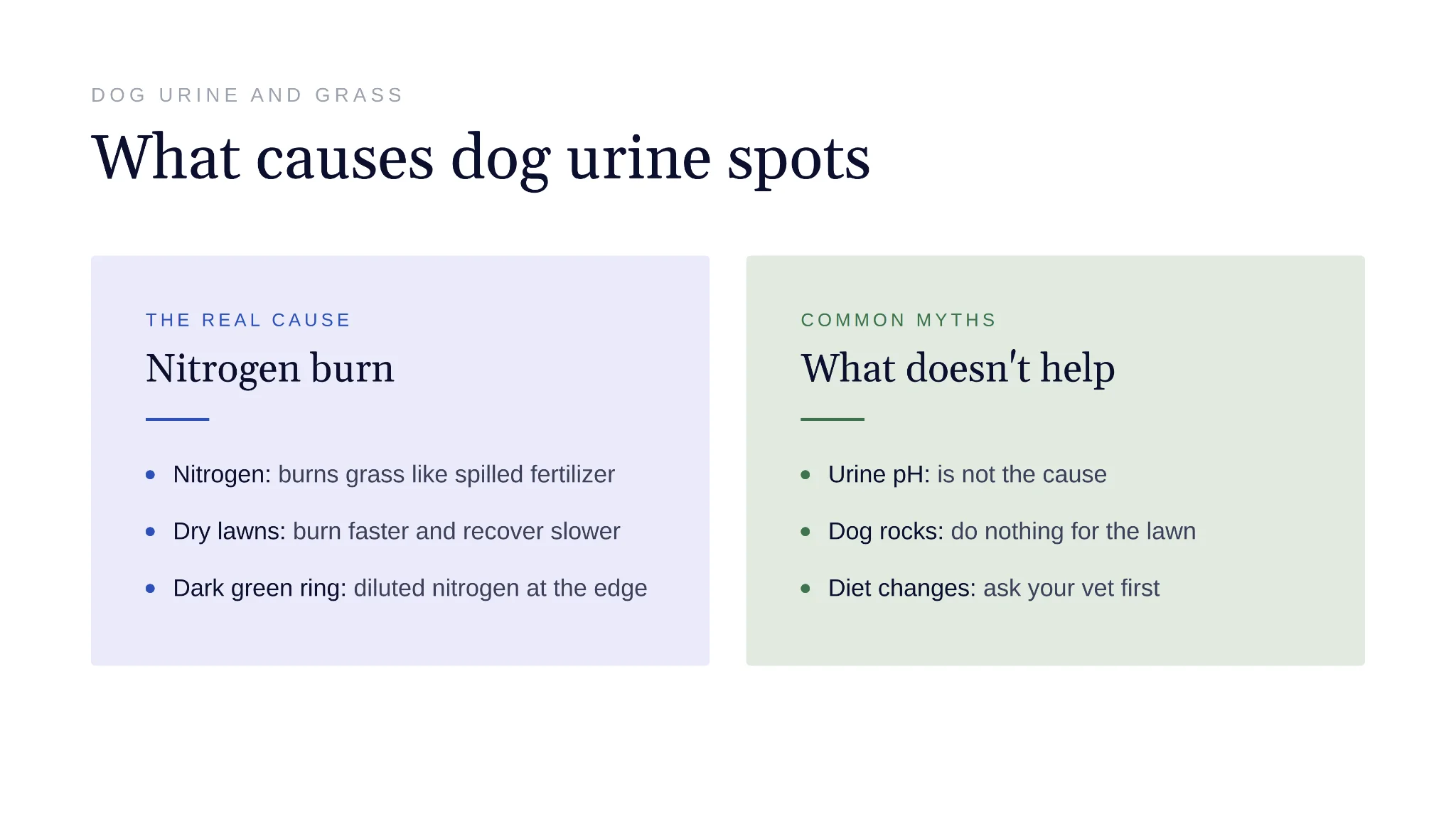
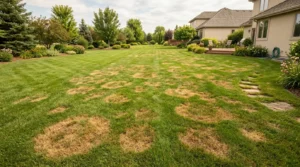
The result is a round patch of yellow or brown grass, often ringed with darker green where the diluted nitrogen acted as fertilizer. Damage is worst on dry, drought-stressed lawns in hot weather.
Two common fixes do nothing for the lawn. Urine pH does not cause the spots, so tomato juice, cider vinegar, and “dog rocks” in the water bowl won’t help. Talk to your vet before changing your dog’s diet for the sake of the grass.
Training Your Own Dog to Use One Spot
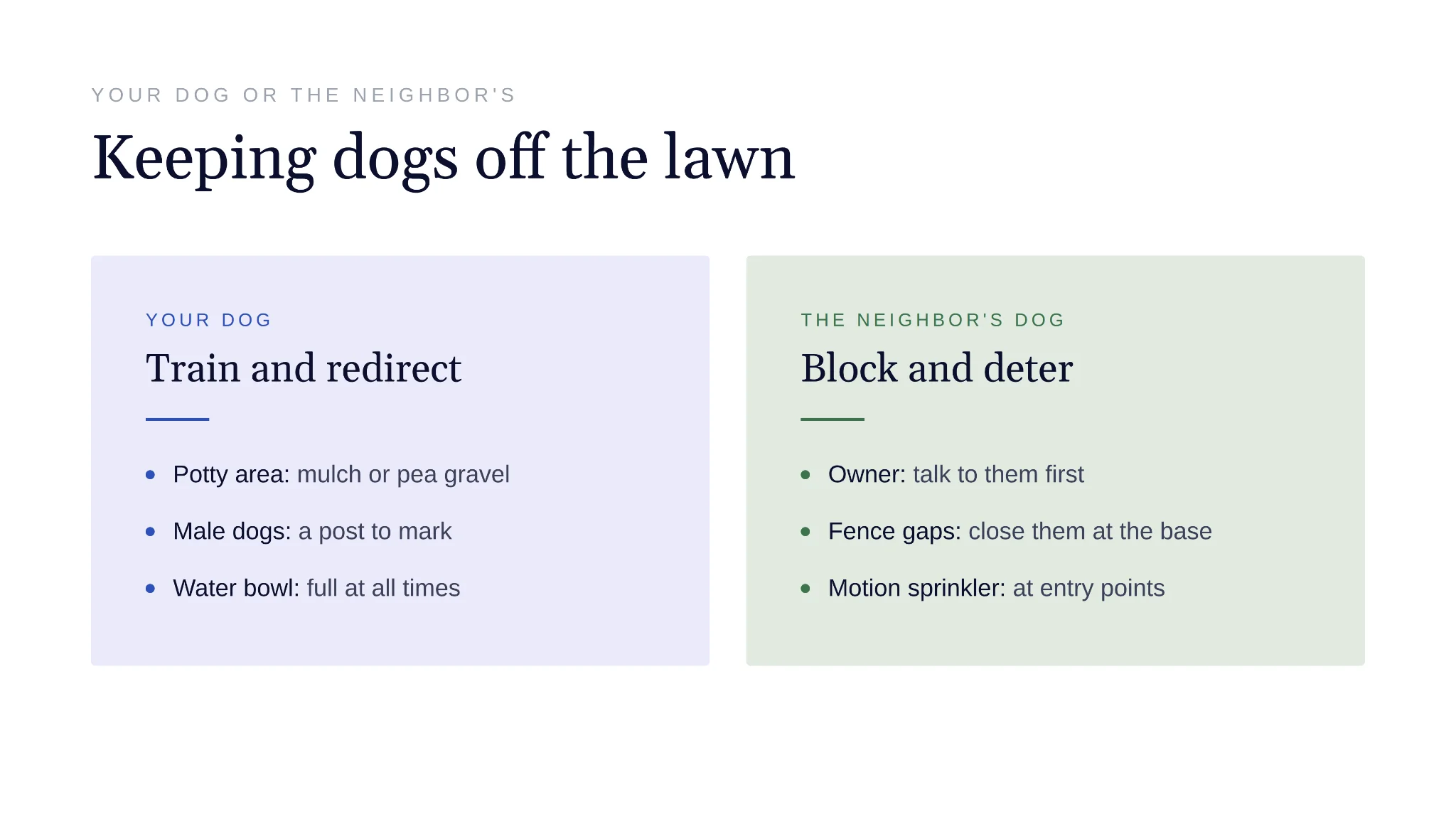
The most reliable fix is giving your dog a bathroom area away from the lawn. Mulch and pea gravel both work, and a spot behind shrubs or along a side yard keeps it out of view.
To train a dog to use a potty area:
- Pick a spot close to the door your dog uses most, so it is easy to reach in bad weather.
- Lay 3 to 4 inches of mulch or pea gravel over an area large enough for your dog to turn around in.
- For male dogs, set a short post, stump, or large rock in the area to give them something to mark.
- Take your dog to the spot on a leash for every bathroom trip for two to three weeks.
- Praise or reward the dog immediately after it goes in the right place.
- If the dog goes on the grass, rinse the spot and keep going. Don’t punish after the fact.
Keep your dog’s water bowl full. A well-hydrated dog produces more dilute urine, which is easier on both the dog and the grass.
Rinsing Spots and Watering Through Dry Spells
Watering a spot right after your dog urinates is the only method shown to reduce the damage. A gallon or two from a watering can, poured within a few minutes, spreads the nitrogen out before it burns the roots.
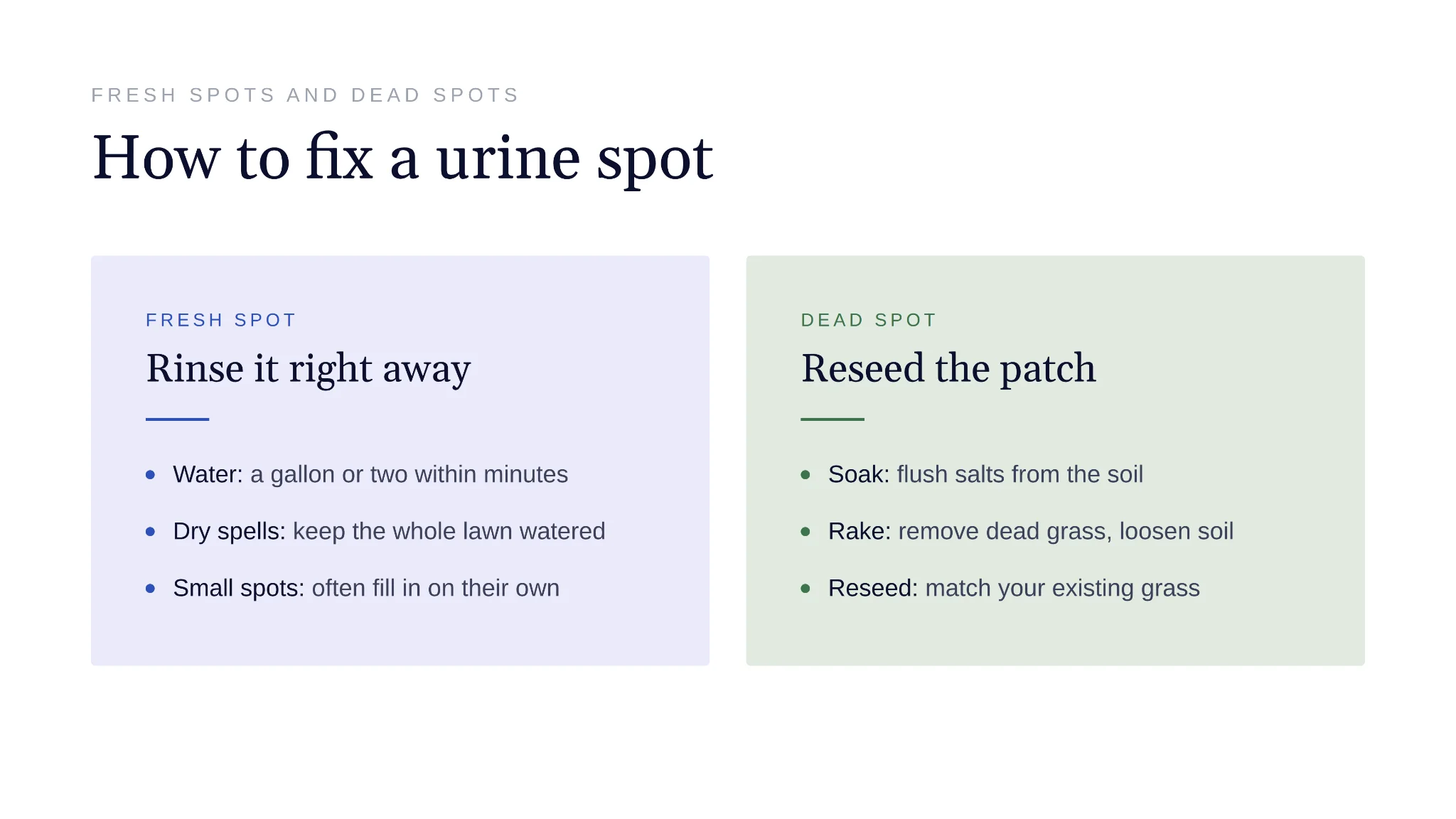
That habit only works when you see the dog go. For the spots you miss, keep the whole lawn evenly watered, especially in summer, since dry turf burns faster and recovers slower.
The Aiper IrriSense 2 handles this on a schedule. You can map the dog’s favorite corner of the yard as its own zone and give it an extra watering cycle, while the rest of the lawn stays on its normal routine.
Repairing Dead Patches
A spot that has gone brown and stays brown after a week of watering is dead. The grass won’t come back, so the patch needs reseeding.
To repair a dead urine spot:
- Soak the spot with water to flush leftover salts and nitrogen from the soil.
- Rake out the dead grass and loosen the top inch of soil.
- Seed the area with the same grass as the rest of your lawn. If you don’t know what you have, perennial ryegrass blends in with most cool-season lawns.
- Water lightly every day until the seed germinates.
- Cut back watering gradually over the next few weeks as the new grass roots in.
- Keep your dog off the patch until it has been mowed two or three times.
Small spots under 6 inches often fill in on their own from the surrounding grass. Give those a few weeks of normal watering before reseeding.
Keeping the Neighbor’s Dog Out
Start with the owner. Most people don’t know their dog is using your yard, and a friendly word usually solves it faster than any product.
If the visits continue, block the routes the dog uses and make the lawn an unpleasant place to stop. Walk your property line first to find where the dog gets in.
| Method | Where it works best | Limits |
|---|---|---|
| Close fence gaps | Dogs coming under or through an existing fence | Dogs that dig need wire mesh buried 6 to 12 inches along the base |
| Motion-activated sprinkler | Open front lawns and known entry points | Needs a hose connection and must be turned off before you mow or walk through |
| Border planting | Property lines with no fence | Takes a season or two to fill in |
| Scent repellents | Flower beds and small areas | Wash off in rain and need reapplying every week or two |
| Picking up waste promptly | Any lawn | Removes the scent that draws dogs back to the same spot |
Move a motion-activated sprinkler every week or two. Dogs learn its range and walk around it.
Repellents to Avoid
Several home remedies harm pets, children, or the lawn more than they deter dogs. Mothballs are the most common, and using them outdoors is illegal. They are registered pesticides labeled only for sealed containers.
Skip these as well:
- Bleach and ammonia kill grass and can draw dogs back, since ammonia smells like urine.
- Cayenne pepper and chili powder burn a dog’s eyes and nose and can hurt pets that sniff or roll in them.
- Coffee grounds contain caffeine, which is toxic to dogs that eat them.
- Vinegar sprays burn grass and wear off within a day.
When the Problem Continues
Most towns have leash and pet waste ordinances, and dogs roaming loose on other people’s property usually break them. Check your city or county code, or call the local animal control office for the rules where you live.
Before you file a complaint, keep a short record of dates, times, and photos. It shows the problem is ongoing and gives animal control what it needs to act.
Get more pool and lawn care guides from Aiper on Google