How to Get Rid of Worms in Your Pool (and Stop Them Coming Back)

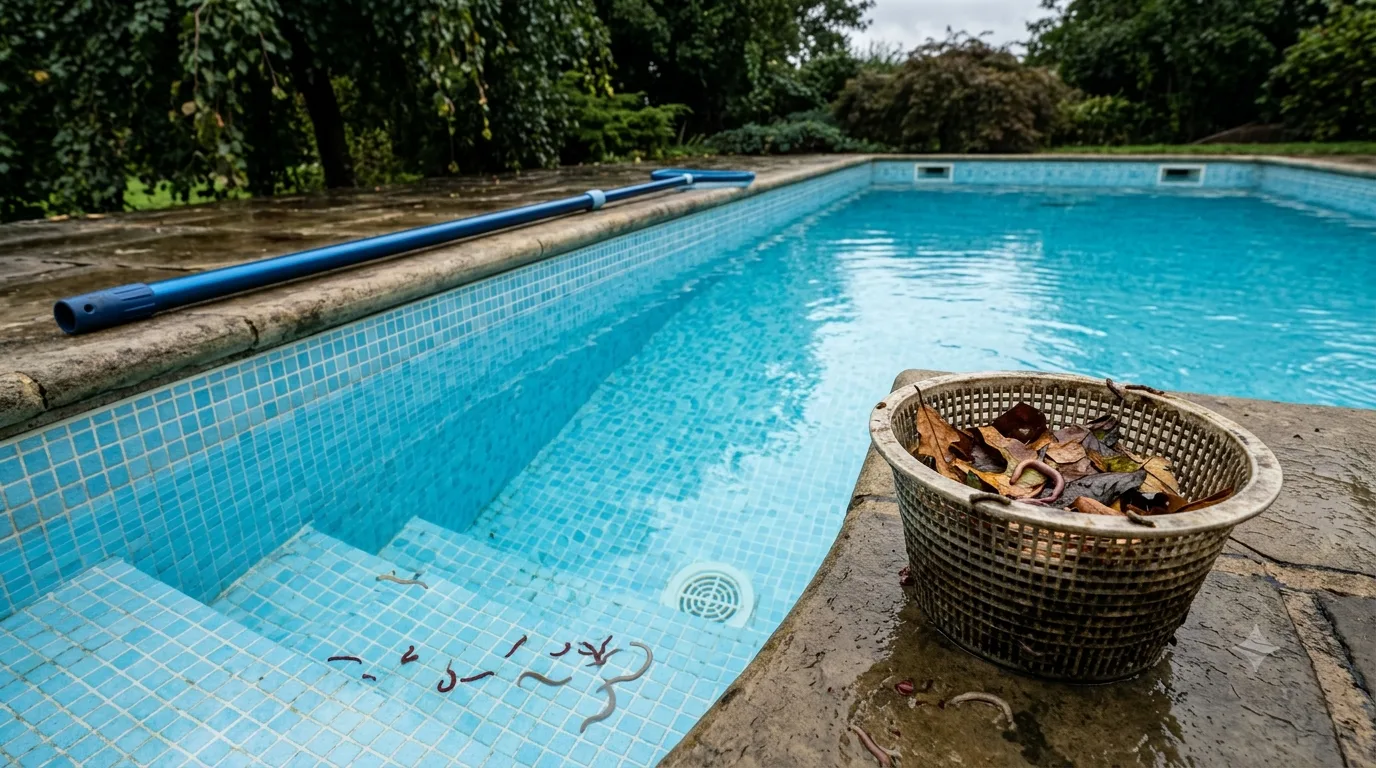
Heavy rain, then a pool floor suddenly covered in worms that weren’t there the day before, is one of the most unsettling surprises for a new pool owner. The short answer: worms aren’t a health risk, and normal chlorine levels kill them within hours — but they’ll keep reappearing after every rain unless you deal with the overhanging trees, drainage, and cover habits letting them in. What to do right now, and how to stop the cycle, is below. It’s a different kind of contamination than the black algae covered elsewhere on the blog, though both thrive in the same low-circulation conditions.
Worms in a pool are unpleasant to find but rarely a health risk. The bigger issue is that they collect in skimmer baskets and along the waterline, and decomposing worms add organic waste that consumes chlorine. Waterfowl create a different kind of mess, and our guide on how to keep ducks out of your pool covers that problem.
Why Is Your Pool Full of Worms?
Heavy rain saturates soil and drives earthworms above ground to avoid drowning underground. Worms near the pool deck end up washed or blown into the water. Overhanging trees and shrubs also drop worms directly into the pool, especially after storms.
Bloodworms, which are midge fly larvae rather than true worms, breed in stagnant water and organic debris — the same conditions that let mosquitoes make your pool their breeding ground. A pool with poor circulation, low chlorine, or a dirty filter creates conditions where bloodworm larvae can establish themselves rather than simply washing in from outside — and the dirty filter is usually holding the fine dirt that ends up at the pool bottom. Those same low-circulation conditions are what let algae take hold, covered in our complete guide to pool algae.
Can You Swim in a Pool If It Has Worms?
Yes. Earthworms and bloodworms are not disease vectors for humans and do not sting or bite. Their presence is an aesthetic and cleanliness issue rather than a health hazard. The indirect risk is water quality: decomposing worms are organic waste, and organic waste consumes free chlorine, so a pool with recurring worm problems can drift toward inadequate sanitation without an obvious cause if chlorine demand isn’t retested.
How Do You Remove Worms From Pool Water?
A hand skimmer net removes visible worms quickly, especially right after rain when numbers spike. Running a robotic or manual vacuum along the floor and steps picks up worms that have sunk before they decompose — and it’s the same pass that retrieves broken glass sunk to the pool floor, which needs its own safety precautions. Skimmer baskets and pump strainer baskets collect worms efficiently since they sit in the main flow path — check and empty these more often during rainy periods. These are the same removal habits covered in our guide to keeping pests out of a pool, which spikes right alongside worms after rain.
Does Chlorine Kill Worms in a Pool?
Standard free chlorine levels of 1 to 3 ppm are lethal to earthworms and bloodworm larvae within a few hours of exposure. Chlorine does not prevent new worms from entering the pool, so a properly sanitized pool can still show worms shortly after they arrive. If bloodworm larvae keep reappearing despite adequate chlorine, the more likely cause is a low-flow dead zone or debris buildup that the sanitizer level in the main body of water doesn’t reach.
How Do You Stop Worms From Getting Into Your Pool?
Trim back overhanging trees and shrubs so fewer worms and leaf litter fall directly into the water. Keep a pool cover on overnight and immediately after rain, which is when worm activity peaks. Address drainage around the pool deck so rainwater doesn’t pool in mulch beds adjacent to the coping — saturated soil next to the pool is the most direct worm source.
What Landscaping Changes Reduce Worm Invasions Long-Term?
Replacing mulch borders near the pool with gravel or stone removes the moist organic material that supports worm populations close to the water’s edge — the same mulch where the colonies behind swarming flying ants around your pool deck take hold. Redirecting downspouts and drainage away from the pool deck reduces how much saturated ground sits adjacent to the pool after storms, which is the single biggest factor in recurring worm invasions.
Frequently Asked Questions
Do worms in the pool mean there’s a leak or drainage problem with the pool itself?
No. Worms entering the water come from surrounding soil and landscaping, not from the pool structure, so a worm invasion says nothing about the shell, plumbing, or waterproofing.
Can a heavy worm invasion clog the pump or filter?
A sudden surge after rain can fill skimmer and pump strainer baskets fast enough to reduce flow if left unchecked, so check both baskets the same day as a big rain event rather than waiting for the next scheduled cleaning.
Does a saltwater pool have fewer worm problems than a chlorine pool?
No. Salt pools generate the same chlorine that kills worms within hours, but salt content in the water doesn’t repel or prevent worms from entering in the first place.
Regular floor and step cleaning is the most reliable way to catch worms before they decompose and add to chlorine demand. An Aiper robotic pool cleaner runs those passes automatically, removing debris like worms between the times you check the pool yourself.
Get more pool and lawn care guides from Aiper on Google