Red Thread Disease on Lawns: When Fungicide Is (and Isn’t) the Answer

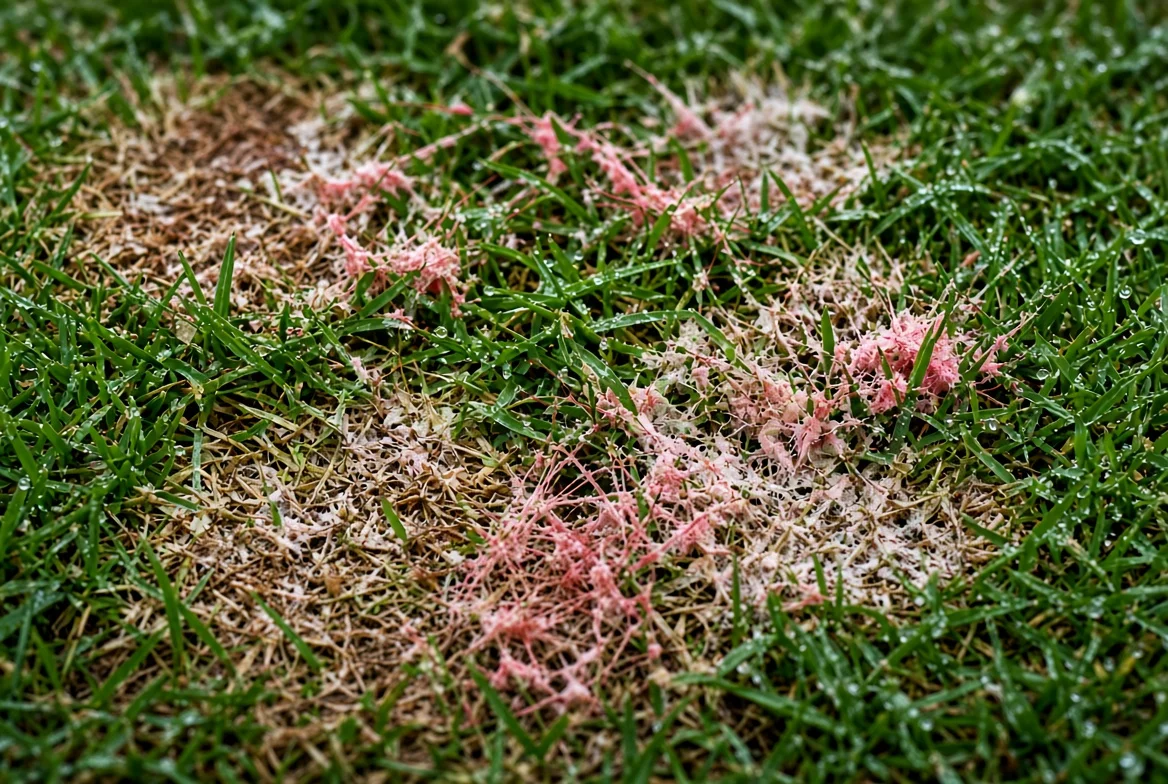
Red thread shows up as pink or reddish patches in the lawn, usually after a run of cool, wet weather. Up close, the grass tips look like they’ve been tangled in fine red string.
It looks alarming, and many homeowners reach for a fungicide right away. In most yards, that’s the wrong first move.
Red thread is mainly a sign of a hungry lawn. Feeding the grass properly clears it up in most cases, and a fungicide only makes sense in a few specific situations.
How to Recognize Red Thread
From a distance, affected areas look like pink, tan, or reddish patches, round or irregular in shape. The grass inside them looks faded and can appear wilted.
The giveaway is on the blades. Look for thin, pinkish-red threads growing from the tips. In heavy cases, the threads bunch together and can look like tiny tufts of pink cotton candy.
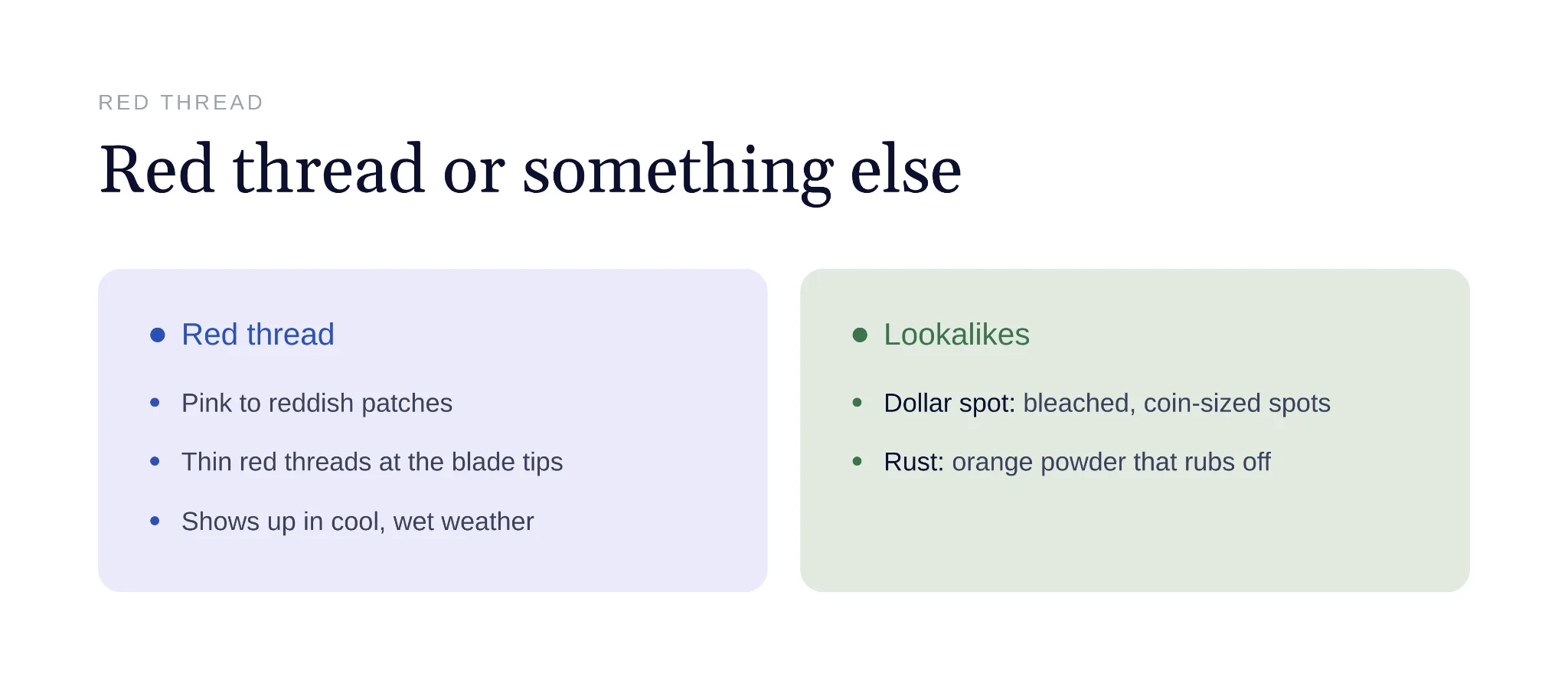
Two other diseases are commonly mistaken for it:
| Disease | Color | What’s on the blades |
|---|---|---|
| Red thread | Pink to reddish patches | Thin red threads at the tips |
| Dollar spot | Bleached, straw-colored spots | Tan lesions with brown borders, white cobweb-like growth on dewy mornings |
| Rust | Yellow-orange cast across the lawn | Orange powder that rubs off on shoes |
Red thread often appears during rainy periods in late spring and early summer, and it can return in fall when the weather turns cool and damp again.
Why Your Lawn Has It
The most common cause is low nitrogen. Penn State Extension notes that red thread is usually found on perennial ryegrass, fine fescue, and Kentucky bluegrass lawns that aren’t getting enough nitrogen.
Slow-growing grass can’t replace damaged blades fast enough, so the fungus spreads. Wet weather adds to the problem, since the fungus needs moisture on the blades to grow.
Shade makes it worse, because shaded grass stays damp longer and grows more slowly. So does drought stress during dry spells.
Treat It With Fertilizer First
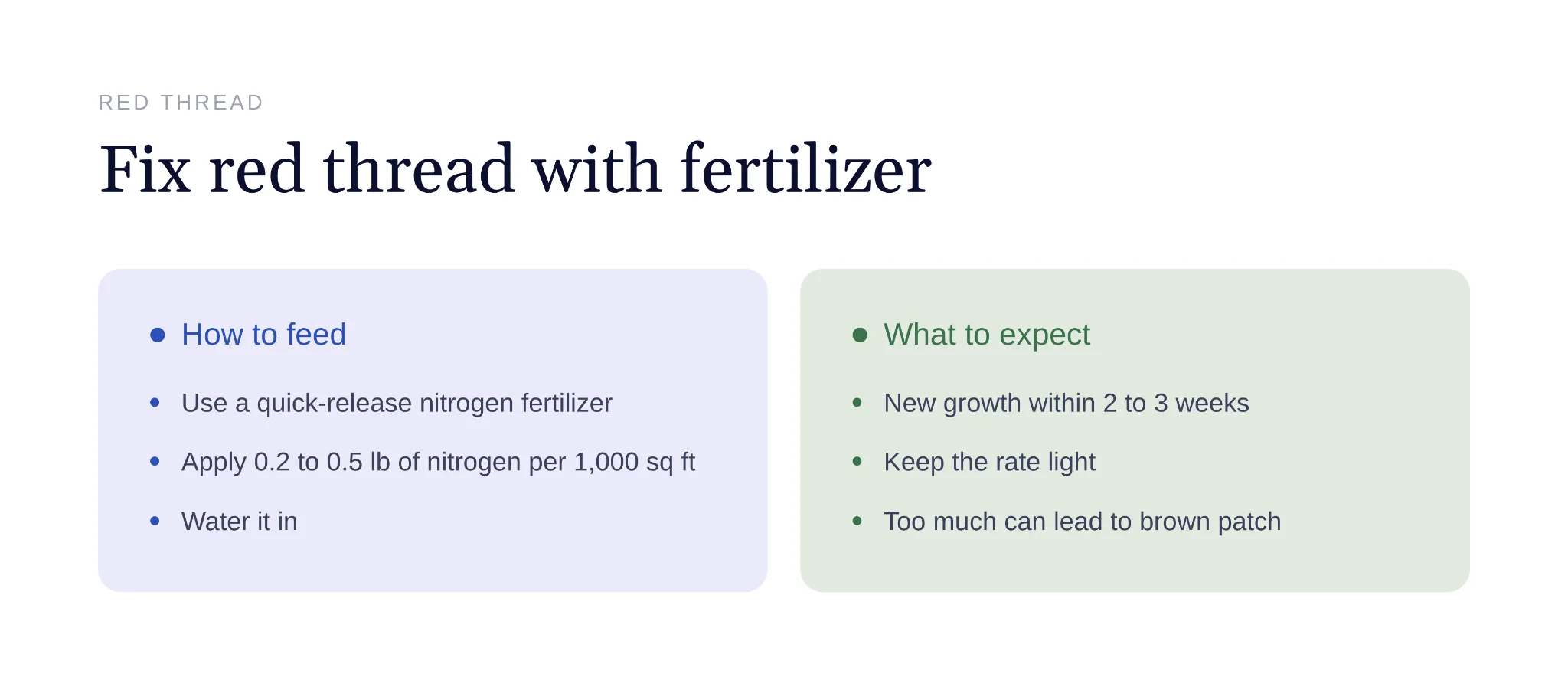
For most home lawns, a light feeding is the whole fix. The goal is to get the grass growing again so it outgrows the damaged tips.
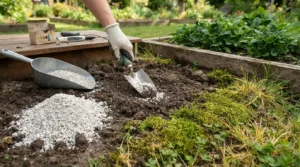
- Check your feeding history. If the lawn hasn’t been fertilized this season, or only lightly, that’s likely the cause. A soil test through your extension office confirms what’s missing.
- Choose a quick-release nitrogen fertilizer. It starts working faster than slow-release products.
- Apply a light rate. Extension recommendations range from about 0.2 pound of nitrogen per 1,000 square feet in mid to late spring up to about 0.5 pound.
- Water it in so the fertilizer reaches the roots.
- Keep mowing on schedule and watch for new growth over the next two to three weeks.
You can see how much fertilizer your lawn needs with this calculator.
To figure out how much product to spread, use the first number on the bag, which is the percentage of nitrogen. A 20-0-10 fertilizer is 20% nitrogen, so 2.5 pounds of it supplies 0.5 pound of nitrogen per 1,000 square feet.
Most lawns recover within a few weeks once they’re growing well.
Keep the rate light. Heavy nitrogen can lead to brown patch and Pythium blight later in the season, especially once the weather turns hot and humid.
When Fungicide Is (and Isn’t) the Answer
Purdue’s turf program says fungicides control red thread easily but are generally not recommended on home lawns. The Pacific Northwest Pest Management Handbook goes further and says the disease can be controlled with cultural practices alone.
The reasoning is simple. The grass usually survives, fertilizer fixes the cause, and a fungicide leaves the underlying nutrient problem in place.
| Situation | Fungicide? |
|---|---|
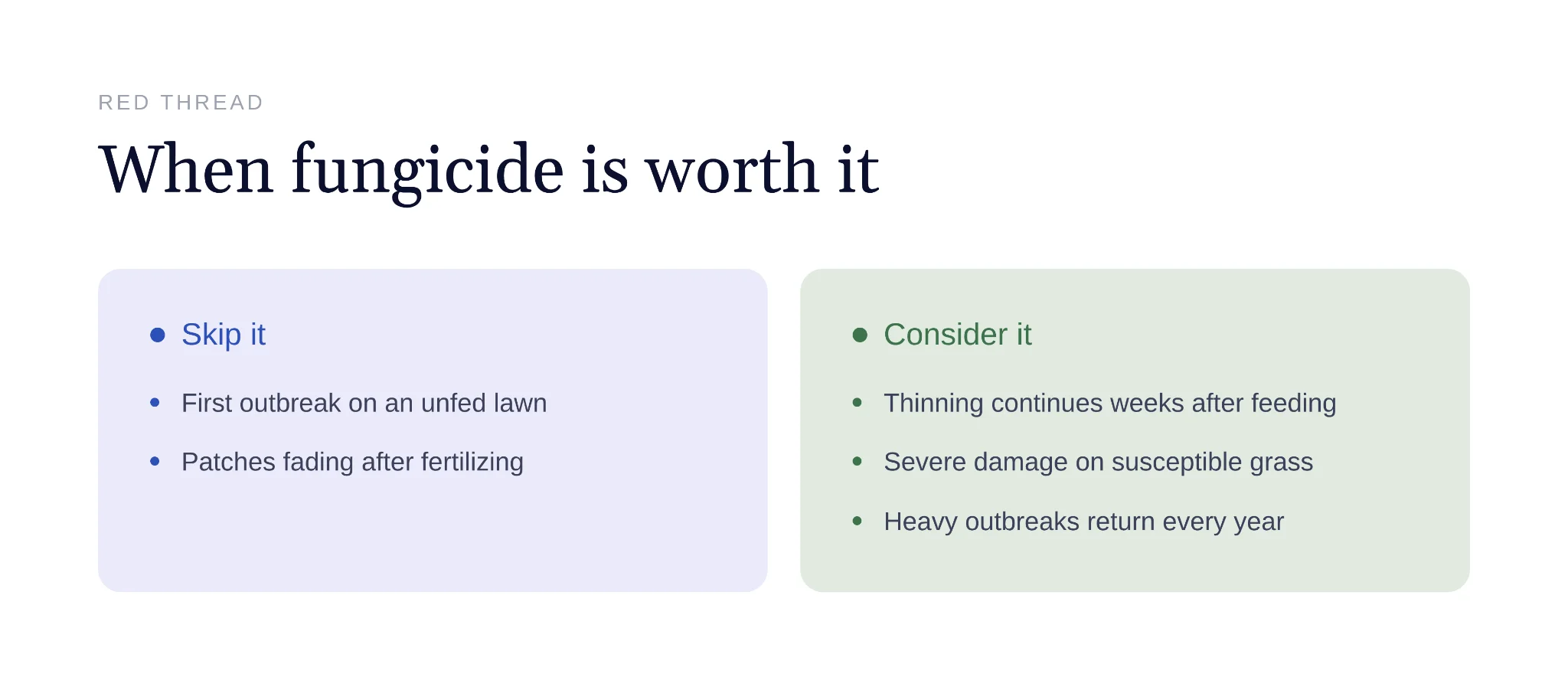
| First outbreak on a lawn that hasn’t been fed | No. Fertilize and wait a few weeks. |
| Light patches that are fading after fertilizing | No |
| Grass is still thinning weeks after a proper feeding | Possibly. Have the disease confirmed first. |
| Severe damage on a lawn of highly susceptible ryegrass, bluegrass, or fine fescue | Yes, it can limit the damage |
| Heavy outbreaks return every year despite good feeding | Yes, as a preventive step while you overseed with resistant grass |
If you do use one, a few details matter.
Pick a product that lists red thread on the label. Fungicides used against it include propiconazole, myclobutanil, and chlorothalonil.
Avoid Group 1 fungicides such as thiophanate-methyl. The Pacific Northwest handbook warns that they can make red thread worse. The group number is printed on the label.
Apply while the disease is active, and follow the label for rate and timing. If you need more than one application in a season, switch to a product from a different group to avoid resistance. Purdue also recommends that fungicides for red thread on residential turf be applied by licensed applicators, so consider hiring a lawn care company for this step.
Mow and Handle Clippings Carefully
The fungus spreads on infected blades, so the way you mow matters while the lawn recovers.
Bag your clippings while the grass is growing slowly. Michigan State University notes that collecting them during slow growth may reduce the amount of fungus returned to the lawn.
Mow only when the grass is dry, keep the blade sharp, and mow infected areas last. Rinse the mower deck when you’re done so you don’t carry the fungus to another part of the yard.
Water to Keep Grass Growing
Red thread benefits from two watering mistakes. Grass that stays wet for hours gives the fungus the moisture it needs, and grass under drought stress grows too slowly to recover. Michigan State lists avoiding drought stress with adequate irrigation as part of managing the disease.
Water early in the morning so the blades dry during the day. Water deeply during dry spells, and skip watering entirely during wet weather, when red thread is most active.
Shaded areas need less water than sunny ones, since they dry out more slowly.
The Aiper IrriSense 2 handles these adjustments for you. You can schedule early morning watering and set a separate amount for each zone, so shaded areas get less than open lawn. Its built-in rain sensor stops watering while rain is falling, which keeps an already damp lawn from getting more water during red thread season.
Prevent It Next Season
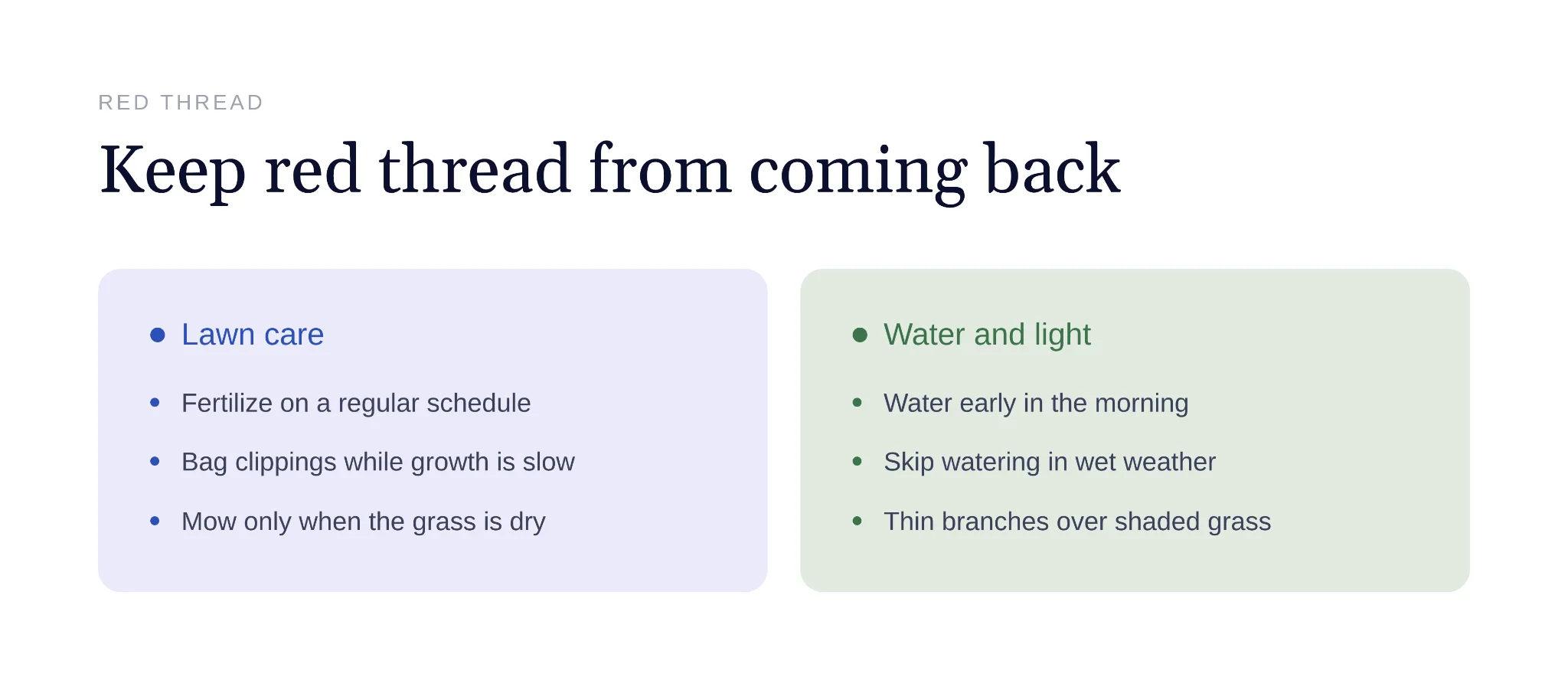
Feed the lawn on a regular schedule. Consistent, moderate fertilizing does more than any single treatment. Your extension office can suggest a schedule for your grass type and region.
Choose grass seed carefully. Resistant varieties of perennial ryegrass, fine fescue, and Kentucky bluegrass are available. Purdue also suggests keeping perennial ryegrass below 10% of a seed mix for new lawns.
Let in more light. Thin low branches and dense shrubs so shaded grass dries faster and grows better.
Check your soil every few years. A soil test shows whether low nutrients or pH are holding the grass back.
Get more pool and lawn care guides from Aiper on Google