How to Fertilize a Lawn: The Homeowner’s Complete Guide

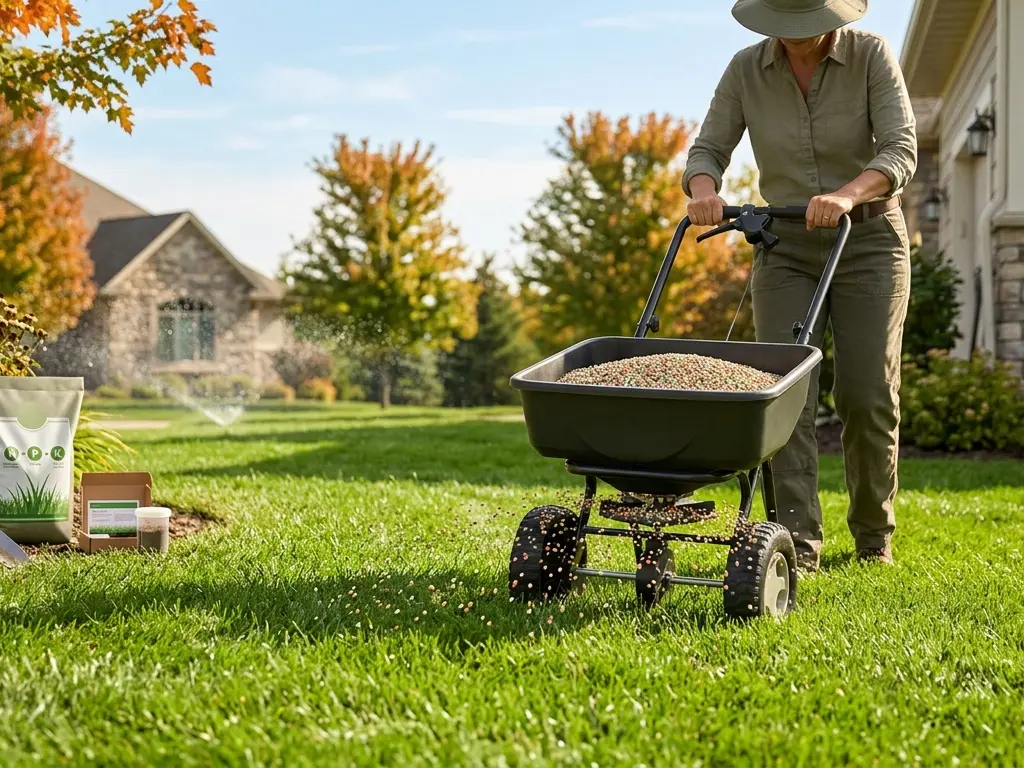
Most people buy a bag of fertilizer in spring, spread it around, and call it done.
Then they wonder why half the lawn is dark green, and the other half looks like it gave up.
Fertilizing isn’t hard, but the order of operations matters more than the product. Get that wrong, and you’re spending money to feed weeds or, worse, burning the grass you were trying to improve.
Start With a Soil Test
Seriously. Test the soil first.
This is the step almost everyone skips, and it’s the reason so much fertilizer gets wasted. A soil test, available through your local cooperative extension office or most garden centers, tells you your pH and what’s actually deficient.
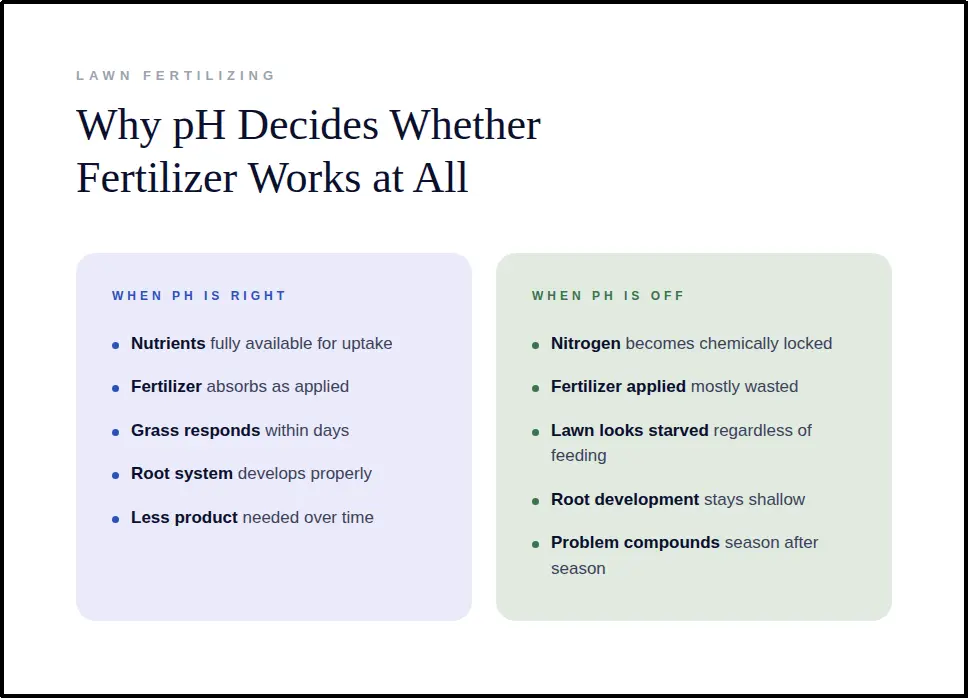
Fertilizer applied to soil with a pH of 5.5 is largely pointless because grass at that pH can’t absorb nutrients properly, regardless of what you put down.
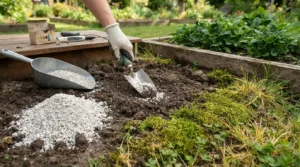
Lawn grass needs a pH between 6.0 and 7.0. Too acidic, add lime. Too alkaline, sulfur brings it down. These corrections take weeks to work, which is why they come before anything else. Before you assume lime is the answer, learn the telltale signs that your lawn needs lime so you treat only a pH that is actually low. No point fertilizing soil that isn’t ready to receive it.
What the Numbers on the Bag Actually Mean
N-P-K. Three numbers, always in that order: nitrogen, phosphorus, potassium.
Nitrogen is the one that matters most for an established lawn. It drives green leafy growth, which is the stuff you’re actually managing week to week.
Phosphorus is for root development, which is critical when you’re seeding or overseeding but largely irrelevant for a lawn that’s already established.
Potassium builds resilience. Heat tolerance, drought resistance, and disease pressure, potassium is working in the background on all of it.
A bag labeled 30-0-4 is a maintenance fertilizer.
That’s what a lawn in decent shape usually needs. A starter fertilizer that reads something like 18-24-6 is heavy on phosphorus because new roots need the help. Don’t use a starter on an older lawn. You’re just encouraging weeds.
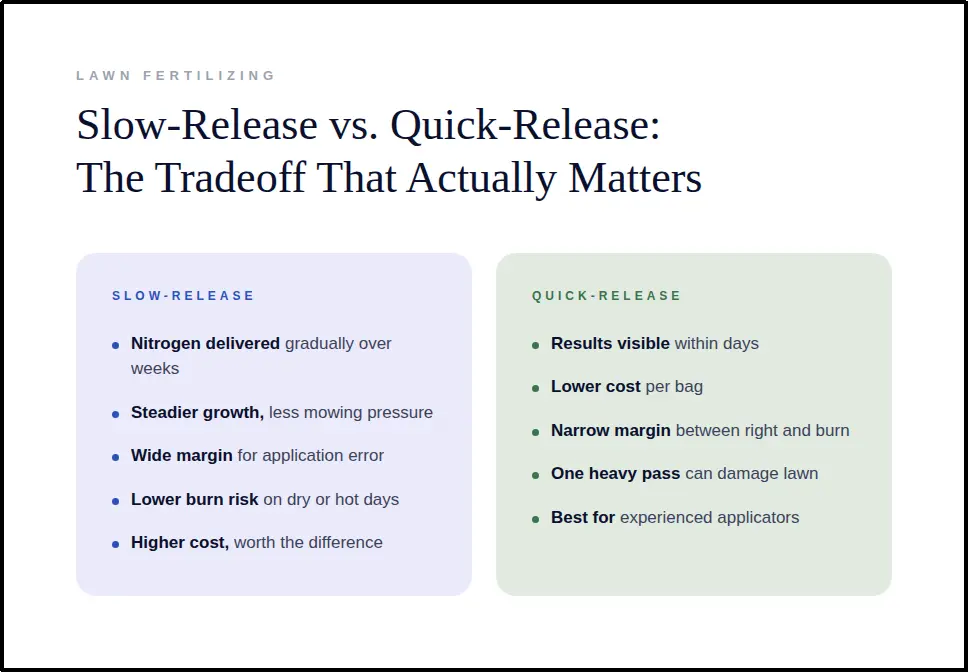
Slow-release fertilizers are worth the price difference. They feed gradually over several weeks, which means steadier growth and far less risk of burning the lawn if your spreader pass isn’t perfectly even.
Quick-release is cheaper and faster. It’s also less forgiving.
Timing Matters More Than Most People Realize
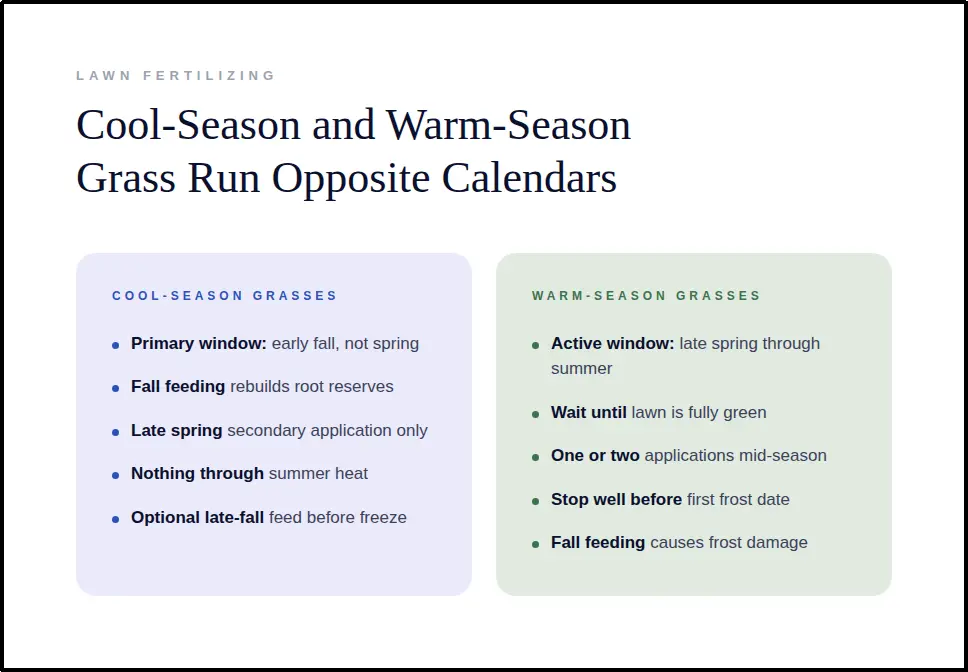
Cool-season grasses, your fescue, bluegrass, and ryegrass, have one truly important fertilizer window: early fall. Not spring. Fall.
That’s when the grass is coming out of summer stress and actively rebuilding root reserves before dormancy. Miss that window, and no amount of spring fertilizing fully compensates for it. A late spring application is worthwhile, but it’s secondary.
Warm-season grasses run the opposite calendar entirely. Bermuda, zoysia, St. Augustine, and centipede need fertilizer when they’re growing hard, which means late spring through summer. Fertilize them in the fall, and you’re pushing soft new growth straight into cold weather.
That’s frost damage waiting to happen.
And don’t jump the gun in spring. Grass that looks like it’s waking up in early March often isn’t ready to use what you put down. Wait until the soil has actually warmed. A few impatient weeks of early feeding, mostly just feed whatever’s opportunistic in the soil.
Application: Where the Mistakes Actually Happen
Two pounds of actual nitrogen per 1,000 square feet per application is the upper working range for most established lawns.
To figure out what that means for your specific bag: if the fertilizer is 25% nitrogen, four pounds of product per 1,000 square feet delivers one pound of actual nitrogen. That’s a reasonable maintenance dose for most situations.
Use a spreader. Calibrate it before you start. The bag has settings, use them.
Walk at a steady pace, keep your lines consistent, and overlap slightly so you don’t leave pale stripes between passes. The spreader technique is where uneven lawns come from, not the fertilizer itself.
Apply to dry grass. Water it in afterward. Half an inch is enough to move granules off the blades and into the soil. Don’t apply before a heavy rainstorm.
A real downpour will push a substantial portion of what you just spread straight into the storm drain. Light rain or irrigation is fine. A forecasted thunderstorm is not.
Never fertilize dormant grass. It cannot use what you’re giving it.
An Actual Annual Schedule
For cool-season grass: something light in early spring, nothing through summer, a full application in early fall, and an optional late-fall feed before the ground freezes.
That last one is worth doing. It supports root development rather than pushing top growth, which is exactly the right priority heading into winter.
For warm-season grass: hold off until late spring when the lawn is genuinely active and green. One or two applications through the summer, depending on how things look. Stop well before the first frost date in your area.
The Mistakes Worth Knowing About
Skipping the soil test is the most expensive habit on this list. Everything downstream of a bad pH is wasted effort — fertilizer included, which is why correcting acidic soil pH before anything else comes first.
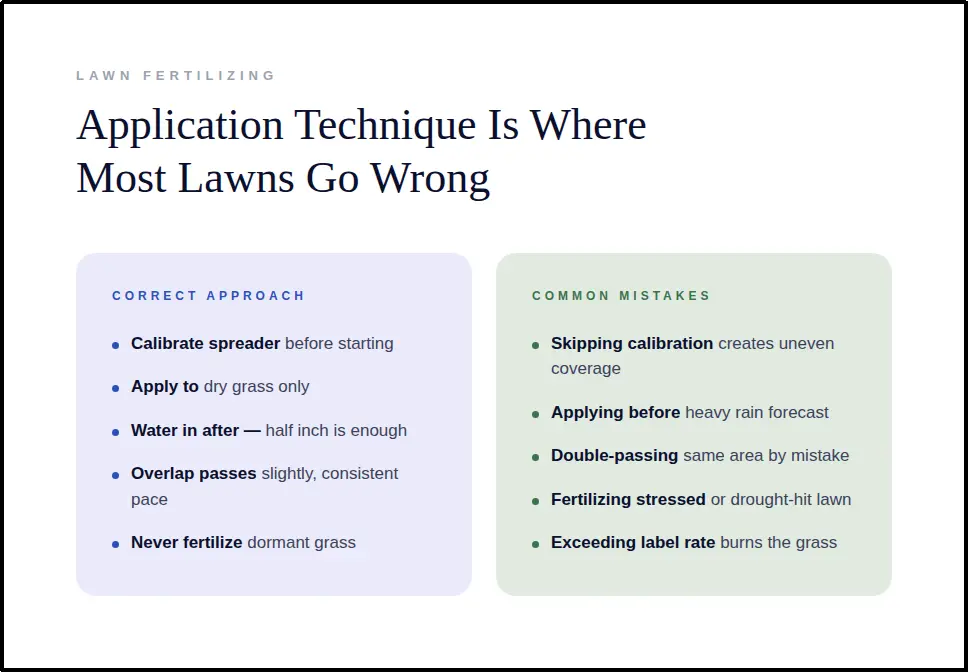
Inconsistent spreader coverage produces the lawn nobody wants, where it’s dark green in some spots, thin and pale in others. Worse than not fertilizing at all, visually.
A stressed lawn doesn’t respond to fertilizer the way a healthy one does. It needs the underlying problem addressed first. Throwing nutrients at a sick lawn usually makes things worse.
And the instinct to apply more than the label suggests is almost always wrong. Excess nitrogen produces fast leafy growth at the expense of root depth.
The lawn looks impressive briefly. Then it struggles through any kind of stress because the roots never had reason to reach down.
The Last Variable Is Water
Fertilizing well gets the lawn to a certain point. What holds it there through a dry stretch or a heat wave is water, specifically, whether it’s getting the right amount at the right time.
The Aiper IrriSense 2 maps up to 10 zones across 4,800 square feet, so different grass types and sun exposures across the same yard get treated differently. Weather-Sense adjusts automatically, so no watering after rain, no dry patches because the timer didn’t know a heat wave came through.
The same logic as fertilizing by soil test instead of guesswork, applied to irrigation.
Get more pool and lawn care guides from Aiper on Google