How to Store Pool Floats Without Them Degrading

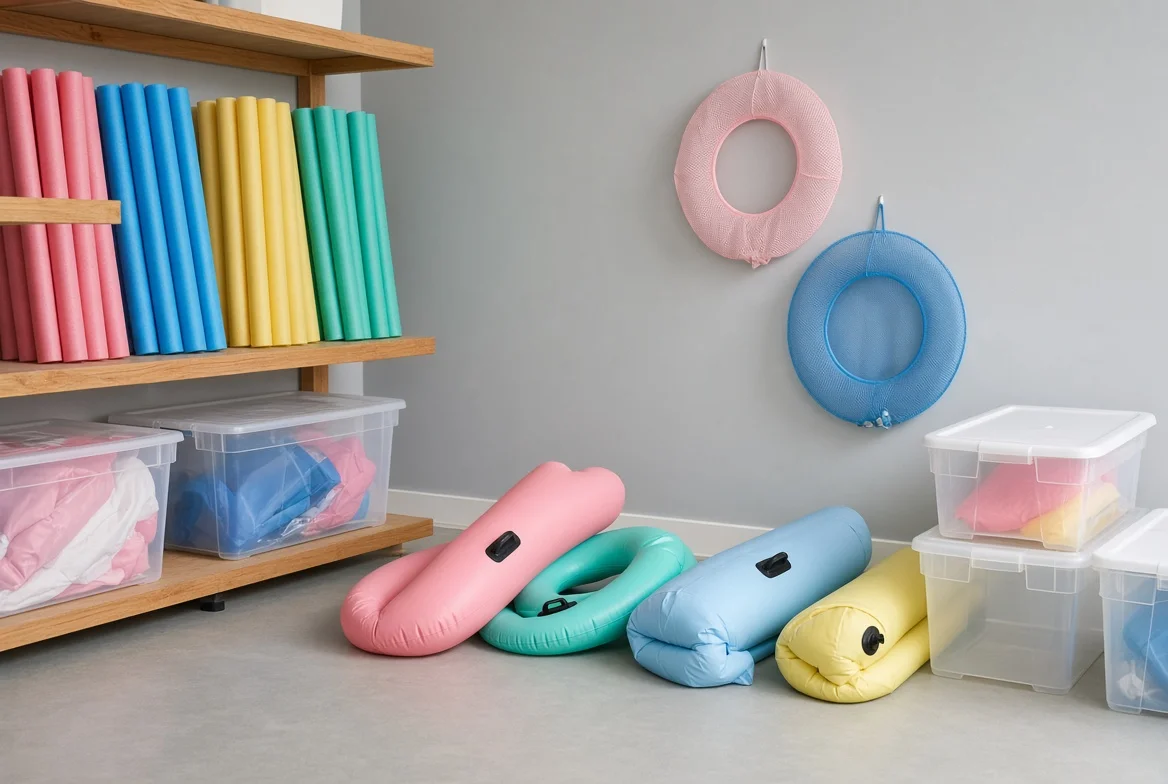
Pool floats usually get damaged in storage because they were put away wet, dirty, or in the wrong conditions. Trapped water can lead to mildew, while extreme heat, cold, and tight folds can weaken the material over time.
Keeping them in good condition starts before they go into the storage bin. Clean them, dry them completely, deflate them properly, and choose a suitable place to store them.
Here’s how to do it without finding cracked or moldy floats next season.
Clean and Dry Pool Floats Before Storage
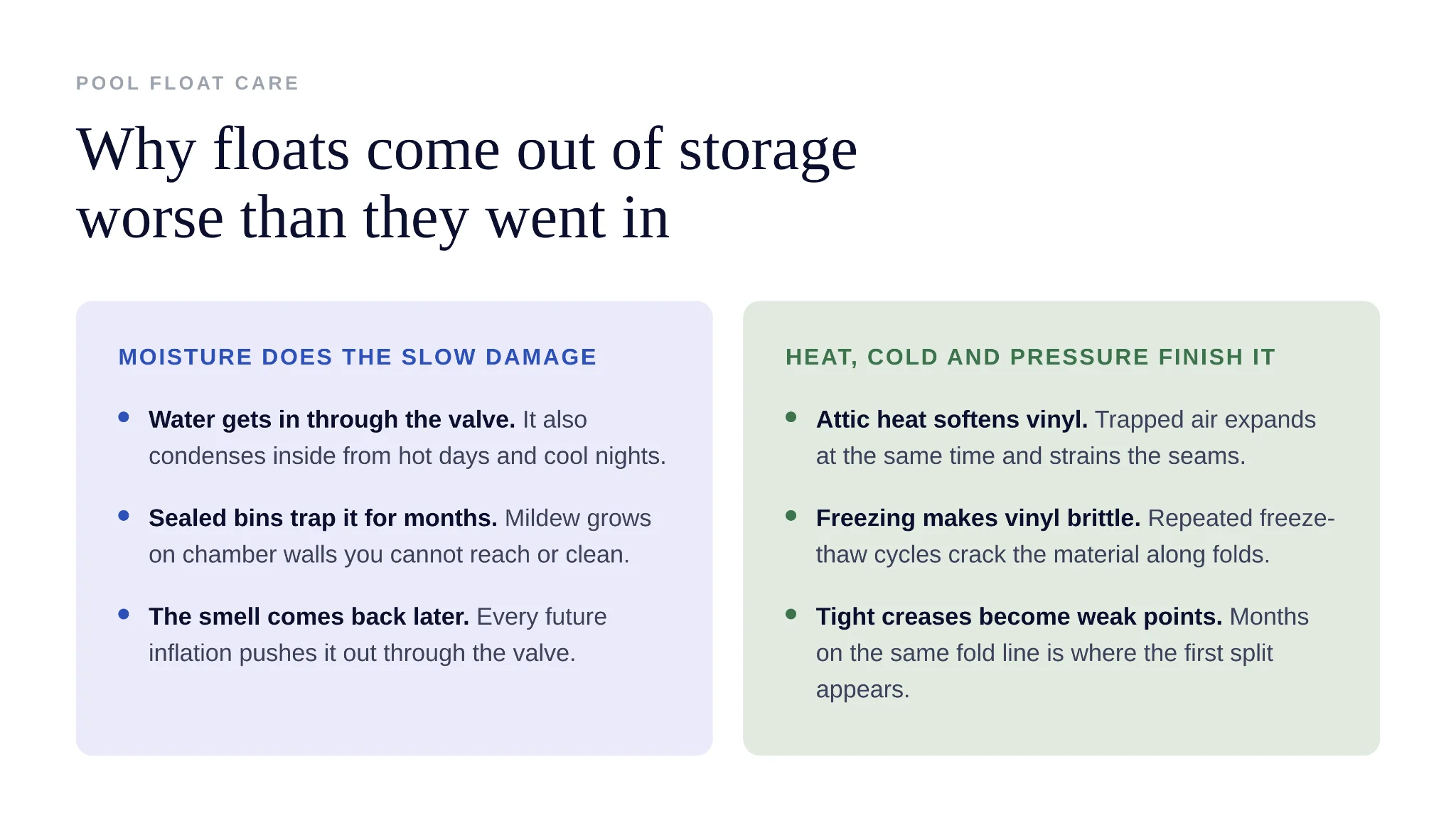
Every inflatable has a low point, and water finds it. It gets in through the valve during normal use or condenses inside over a season of hot days and cool nights.
Seal that moisture inside a bin for six months, and mildew can grow on the inside surface of a chamber you can’t reach or clean. Every future inflation can then push that smell back out through the valve.
Clean off chlorine, salt, and mildew
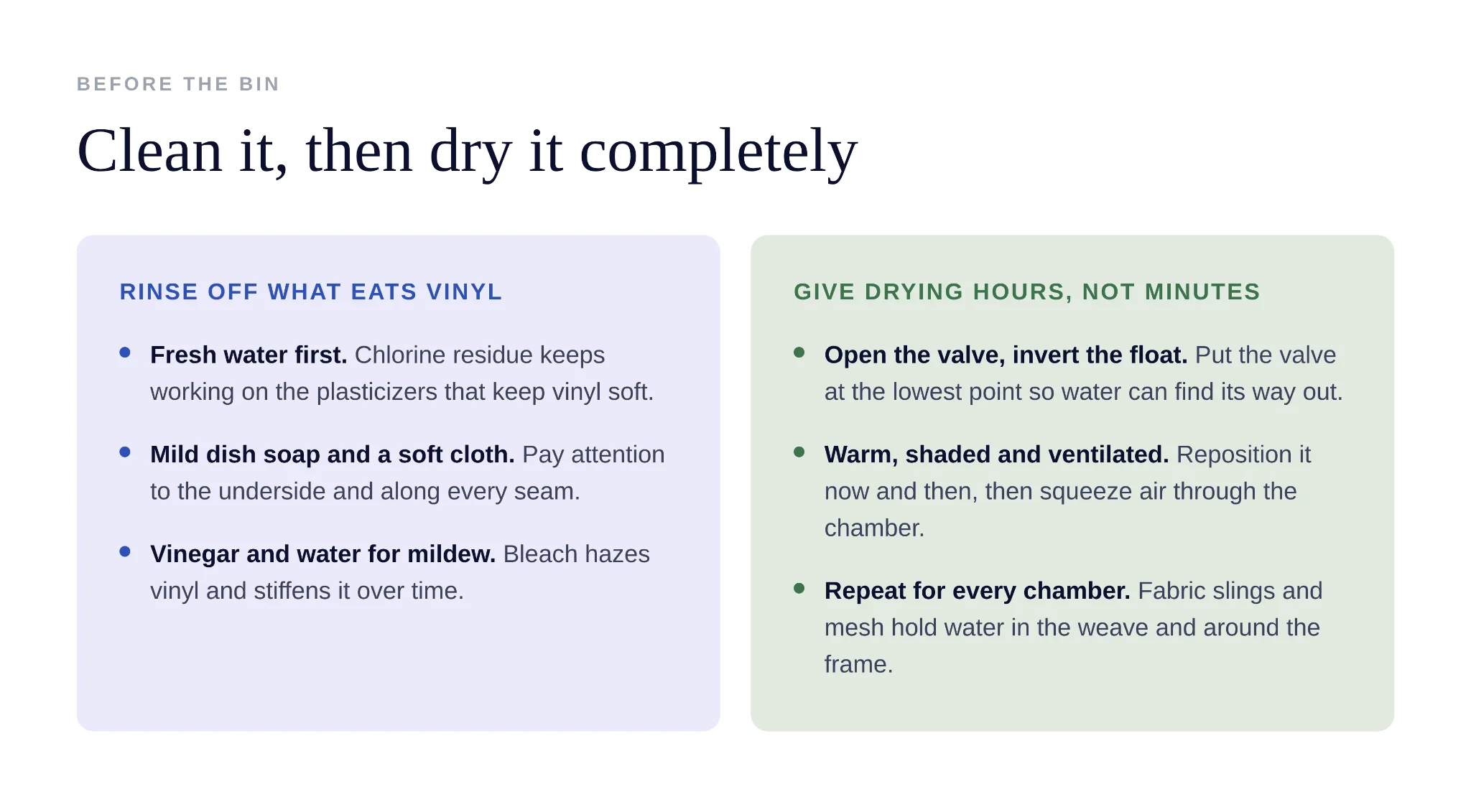
Start by rinsing the float with fresh water. Chlorine residue left on vinyl can continue working on the plasticizers, while salt can damage seams and metal hardware over time.
Then wash it with mild dish soap and a soft cloth, paying particular attention to the underside and seams. If there’s already surface mildew, use a solution of white vinegar and water rather than bleach, which can haze vinyl and stiffen it over time.
Get all the trapped water out
Open the valve, invert the float so the valve is at the lowest point, and leave it somewhere warm, shaded, and well-ventilated. Give it hours, not minutes. Reposition it occasionally so trapped water can reach the opening, then gently squeeze air through the chamber to help move remaining moisture out.
For floats with multiple chambers, repeat the process for every chamber.
The exterior needs to be completely dry too. Fabric-covered floats and mesh loungers take longer because water can remain trapped in the weave and around the frame.
Choose the Right Storage Location
Temperature and sunlight matter almost as much as moisture. A perfectly dry float can still deteriorate if it’s stored somewhere too hot, too cold, or exposed to UV.
Avoid attics and extreme heat
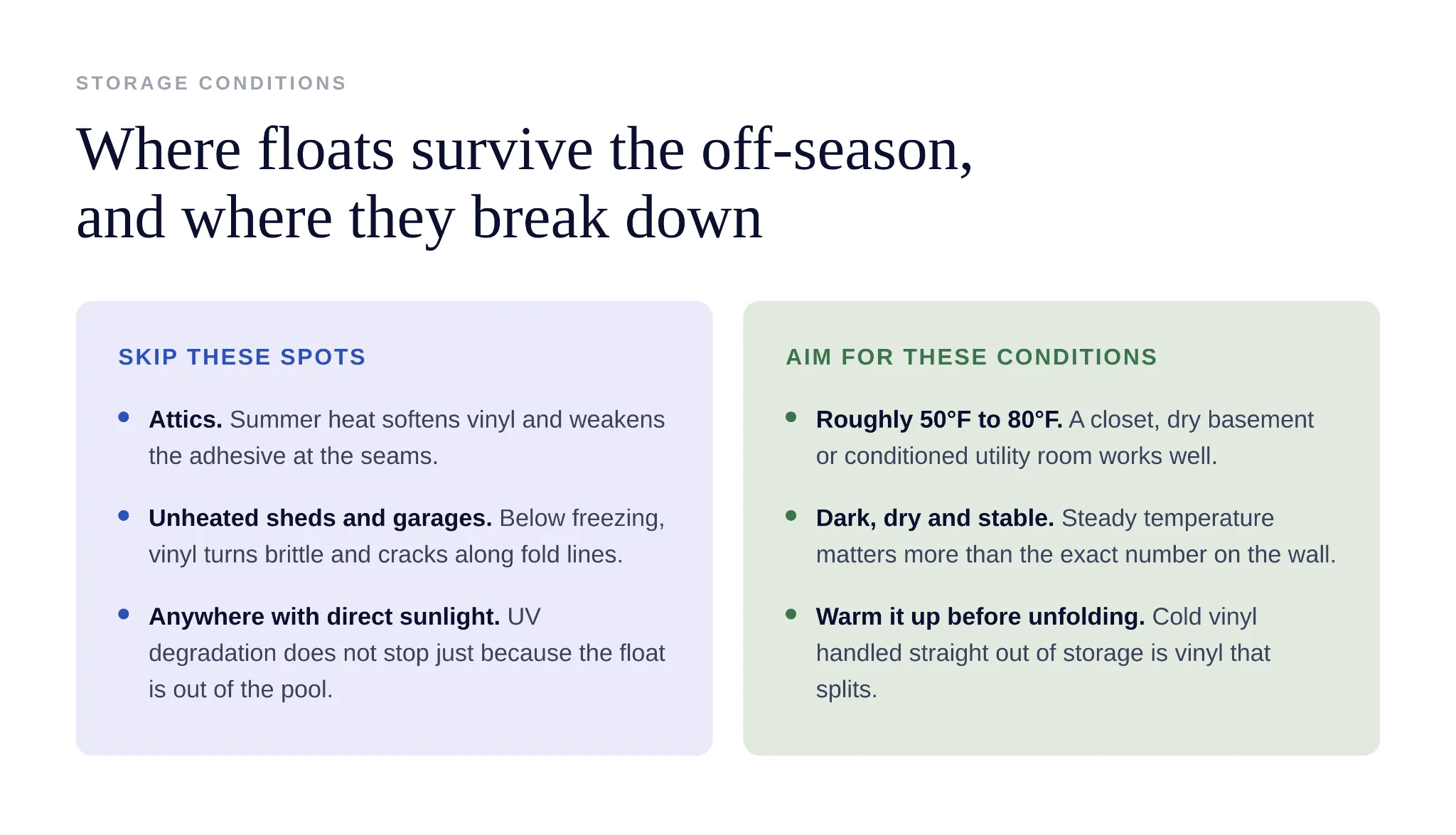
Attics are one of the worst choices. Summer temperatures can get extremely high, softening vinyl and weakening adhesive at the seams. Any air left inside also expands as temperatures rise and puts additional pressure on those seams.
Be careful with cold garages and sheds
Unheated sheds and detached garages create the opposite problem in cold climates. Vinyl becomes brittle below freezing, and repeated freeze-thaw cycles can eventually cause cracks along folds.
If a float has been stored somewhere cold, don’t unfold it immediately. Bring it inside, let it reach room temperature, and then handle it.
Ideally, store floats somewhere between roughly 50°F and 80°F that’s dark, dry, and relatively stable, such as a closet, dry basement, or conditioned utility room.
Keep them out of direct sunlight too. UV degradation doesn’t stop simply because the float isn’t in the pool.
Deflate and Pack Floats Without Damaging Them
How the float sits for several months matters. Tight folds, pressure, and surfaces sticking together can all leave permanent damage.
Roll instead of making sharp folds
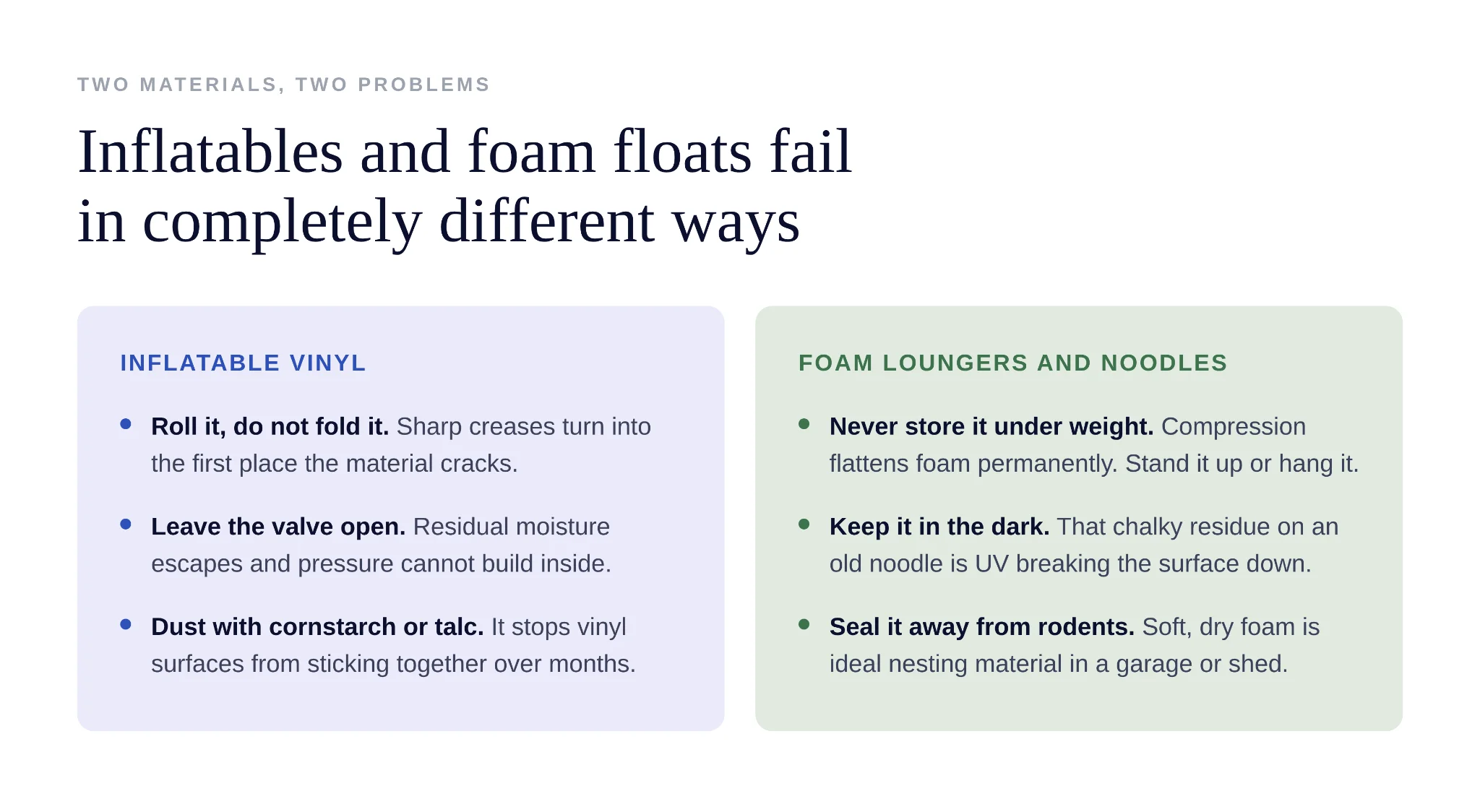
Sharp creases create weak points. Fold vinyl tightly along the same line and leave it there for months, and that line can become the first place the material cracks.
Roll floats loosely instead of folding them when possible. For smaller inflatables, leaving a little air inside can also prevent the walls from pressing into hard creases.
Leave the valve open during storage. That allows residual moisture to escape and prevents temperature changes from building pressure inside a sealed chamber.
Don’t stack heavy objects on top.
Keep vinyl surfaces from sticking together
Vinyl surfaces can also stick together when pressed against each other for months. A light dusting of cornstarch or unscented talc before rolling or folding can prevent this. Avoid fragranced baby powders that contain additional oils.
Storing Foam Pool Floats and Noodles
Foam loungers, noodles, and closed-cell mats don’t have an internal chamber that can develop mildew. Their problems are compression, UV exposure, and pests.
Prevent permanent compression
Compression can become permanent. Foam stored under heavy objects for months may come out with flattened areas that never completely recover. Store it standing upright, hanging, or lying flat with nothing on top.
Protect foam from UV and rodents
UV exposure also breaks foam down. The chalky material that rubs off an old pool noodle is the polyethylene surface degrading, so foam should be stored somewhere dark.
Rodents are another problem, particularly in garages and sheds. Foam is soft, dry, and easy for mice to shred for nesting material.
A sealed storage container helps, but only after the floats are completely dry. That’s the important sequence: dry first, then seal. A dry float in a sealed tote is protected from moisture and pests. A damp one is trapped with the moisture you’re trying to avoid.
Store Fabric and Motorized Pool Floats Properly
Some floats have materials or components that need a little more attention before they’re put away.
Sling loungers with aluminum frames need to dry around the joints, where water can sit inside tubing and around hardware. If they’ve been used in a saltwater pool, rinse the frames thoroughly before storage.
Fabric slings and mesh should be washed, completely dried, and preferably hung rather than tightly folded.
For motorized floats with pumps, lights, or Bluetooth speakers, remove the batteries before storage. Batteries left installed through months of temperature changes can leak and corrode the contacts.
Protect Pool Floats During the Swimming Season
Careful winter storage can’t undo four months of damage from leaving a float in the pool continuously.
Floats left on the water are exposed to chlorine and UV at the same time. Chlorine affects the plasticizers that keep vinyl flexible, while UV breaks down the material itself. Together, they can dramatically shorten a float’s useful life.
Pull floats out regularly when you’re done swimming.
Don’t leave them sitting on a hot deck either. Dark concrete in direct afternoon sun can get hot enough to soften vinyl while the air inside expands and strains the seams.
Put them in the shade, hang them, or stand them against a wall instead.
Taking Pool Floats Out of Storage
If the float has been stored somewhere cold, bring it to room temperature before unfolding or inflating it.
Inflate slowly and stop short of making it drum-tight. Vinyl that has been sitting for months may be stiff, and immediately putting full pressure on a cold seam can expose a weak spot.
Then leave the float inflated overnight and check it the next morning.
Storing floats well only pays off if the pool they go back into is ready for them. An Aiper robotic pool cleaner clears the floor, walls, and waterline before opening weekend, so the first swim isn’t spent scrubbing, and there’s less grit in the water working against vinyl all season.
Get more pool and lawn care guides from Aiper on Google