Dark Bottom Pool vs Light: What Actually Changes

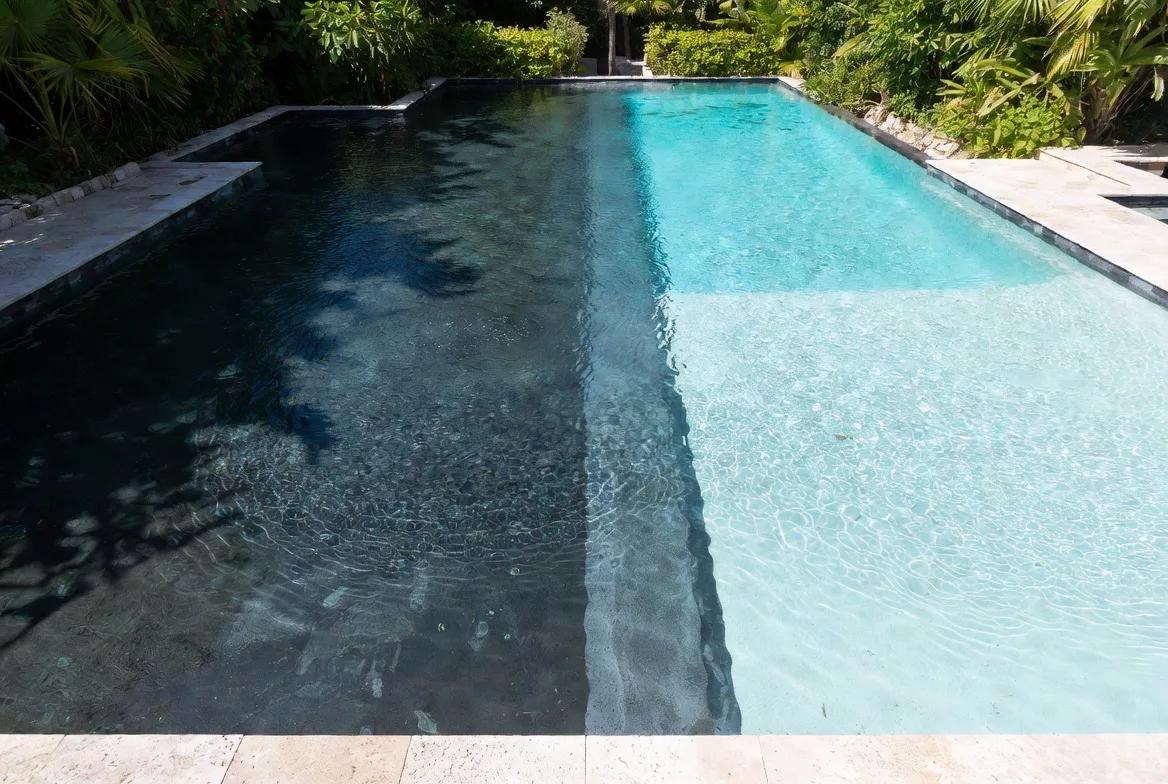
A dark pool bottom absorbs more solar radiation and runs measurably warmer than a light one under the same conditions, often by 5 to 10 degrees Fahrenheit — but that same dark color hides debris, early algae spots, and surface cracks that a light bottom would show right away. Neither color is objectively better; it’s a tradeoff between water temperature and how early you catch maintenance problems, similar to the aesthetic-versus-function tradeoff owners weigh when choosing between a pool safety net and a fence. The full breakdown of both sides is below.
Is It Better to Have a Dark Pool or a Light Pool?
It depends on which tradeoff matters more to you. A dark bottom extends the swim season in cooler climates by holding more heat and gives the water a dramatic, lagoon-like look. A light bottom keeps the classic bright turquoise appearance and makes debris, algae spots, and surface damage far easier to spot before they become bigger problems.
How Much Warmer Does a Dark Bottom Pool Actually Get?
Dark surfaces absorb more solar radiation than light ones, commonly cited at 5 to 10 degrees Fahrenheit warmer under similar sun exposure and conditions. That difference matters most in cooler climates or shoulder seasons, where it can meaningfully extend how many weeks a pool is comfortable to swim in — a factor that also interacts with ambient conditions covered in our guide to pool temperature versus air temperature.
What Is the Best Color for the Bottom of a Pool?
There’s no universal best — it’s a direct tradeoff between heat gain, debris visibility, and aesthetic preference. Medium gray or blue-gray tones are a common middle ground, holding a bit more heat than a true light bottom while still showing debris and problems more clearly than a fully dark surface.
Does a Dark Bottom Pool Hide Problems You’d Otherwise Catch Early?
Yes, and this is a real functional tradeoff, not just an aesthetic one. Debris, early algae spots, and hairline surface cracks show up far less against a dark surface than a light one, which means problems can progress longer before they’re noticed. A light bottom’s biggest practical advantage is exactly this: it surfaces maintenance issues sooner.
Do Dark Pool Surfaces Fade or Wear Faster?
UV exposure and chemical exposure fade dark pigments more visibly than light ones over several years, typically showing up as uneven, blotchy discoloration rather than a uniform fade. This is a consideration separate from which shell material you choose — see our comparison of resin vs steel frames and fiberglass vs concrete shells for how surface material affects long-term wear separately from color.
Is It Better to Have a Lighter or Darker Pool Liner Specifically?
The same heat and visibility tradeoffs apply to vinyl liners as to plaster or fiberglass finishes. Liner color also affects how visible wrinkle press-marks and seam lines are over time — lighter liners tend to show these cosmetic details more than darker patterns, which is worth factoring in alongside the heat and debris-visibility tradeoff.
Dark Bottom vs Light Bottom: Side by Side
| Factor | Dark Bottom | Light Bottom |
|---|---|---|
| Water temperature | Runs 5-10°F warmer under similar sun exposure | Stays cooler |
| Aesthetic | Dramatic, lagoon-like look | Classic bright turquoise |
| Debris and algae visibility | Hides debris and early problems longer | Shows debris and problems early |
| Surface fade over time | More visible, blotchy discoloration | Less visible fading |
| Best for | Cooler climates, extending swim season | Easier day-to-day maintenance monitoring |
Frequently Asked Questions
Does a dark pool bottom make it harder to see swimmers underwater, including for safety monitoring?
Yes, and this is a real safety consideration beyond maintenance visibility. A submerged swimmer in distress is harder to spot against a dark bottom than a light one, particularly in low light or at dusk, which is worth weighing alongside the debris-visibility tradeoff, especially for pools without a lifeguard or constant supervision.
Does a dark pool bottom reduce heating costs?
It can lower supplemental heating costs somewhat, since the extra 5 to 10 degrees Fahrenheit of solar gain reduces how much a gas or electric heater needs to run to hit a target temperature. The savings are modest and weather-dependent, not a replacement for a heater in cold climates or during cloudy stretches.
Can you change a pool from light to dark, or vice versa, after it’s already built?
Yes, but only by resurfacing or re-lining, not with a simple coating. Plaster or fiberglass resurfacing typically runs several thousand dollars, and a vinyl liner replacement is comparatively cheaper, so color is far easier and less expensive to decide on before construction than to change afterward. Choosing between a plaster and pebble finish in the first place also affects color depth and long-term durability, which our detailed head-to-head on pebble finish versus plaster covers in full.
Whichever color you choose, debris and early problems are easier to manage with consistent cleaning. An Aiper robotic pool cleaner handles regular floor and wall passes regardless of how visible debris is against the surface color.
Get more pool and lawn care guides from Aiper on Google