

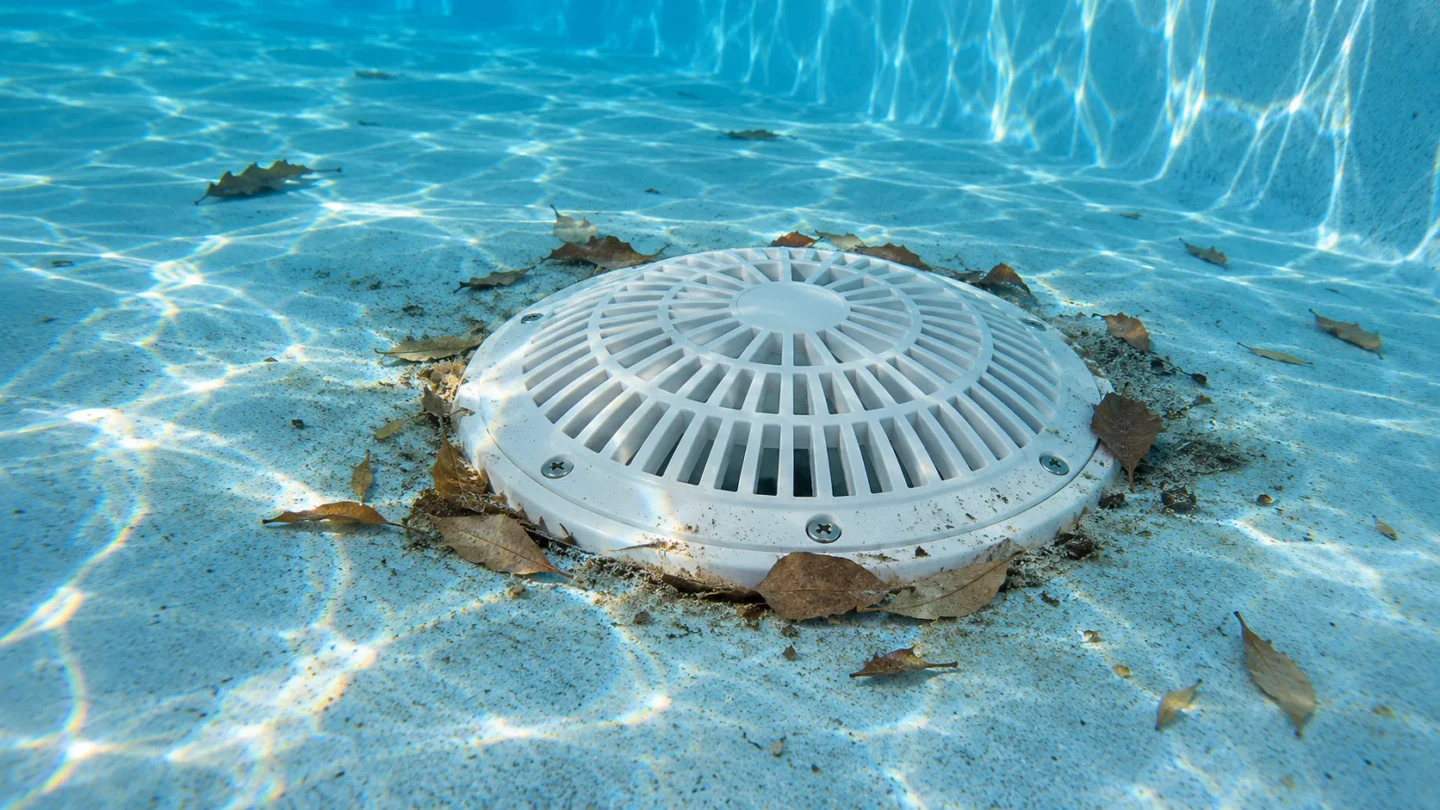
A weak pull at the main drain usually shows up as a pool that won’t clear.
The floor stays dirty, the vacuum loses suction, and the water turns over slower than it should.
Most of the time, the blockage is somewhere between the drain and the pump. The fix depends on finding where.
Shut Off the Pump Before Working
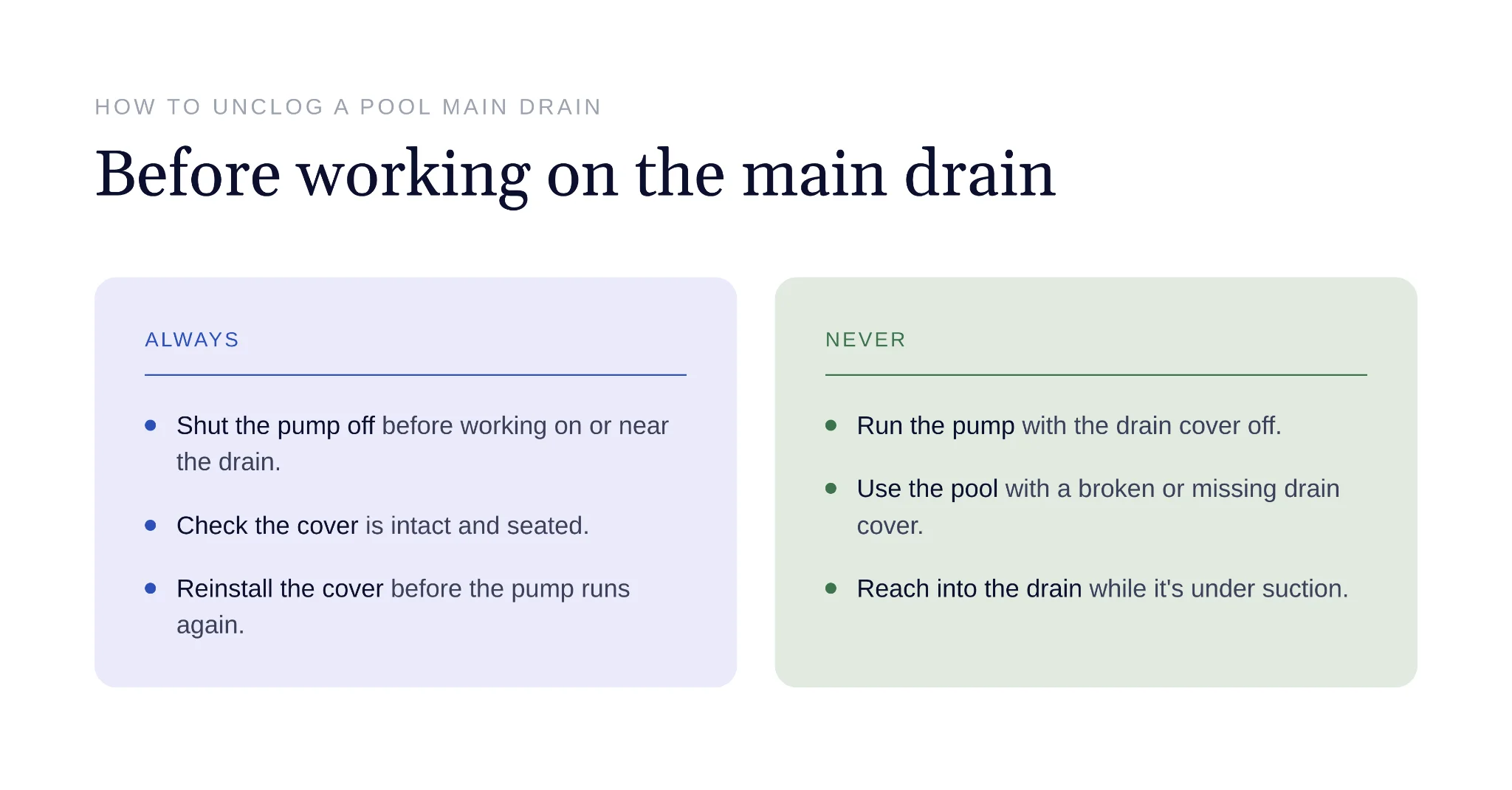
This job carries one real danger, and it comes before any of the steps below.
A main drain under suction can pin a person against it with enough force to hold them underwater.
Flat, single main drains, the kind common on older in-ground pools, carry the greatest entrapment risk, and a pool with a broken or missing drain cover should not be used at all.
The pump goes off before anyone works on or near the drain, every time. The cover goes back on, seated and intact, before the pump runs again.
Federal law requires compliant anti-entrapment covers, and a cracked one should never have suction running through it while a clog gets sorted out. cpsc
Check the Pump and Baskets First
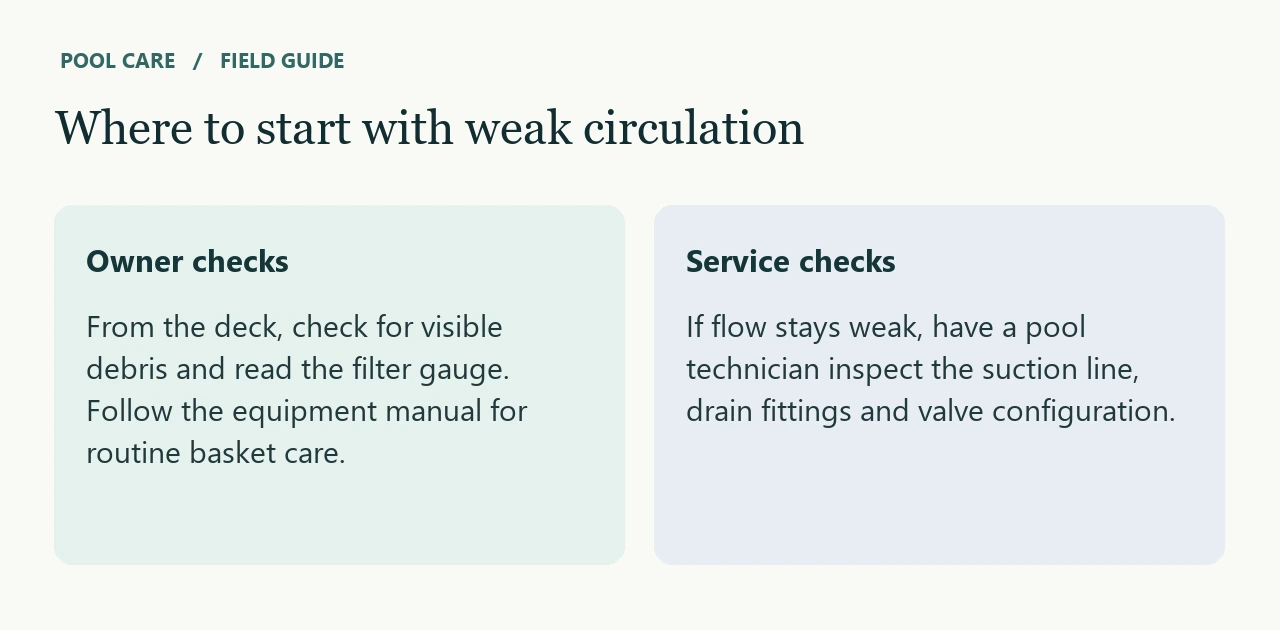
Weak suction at the main drain is far more often caused by a blockage near the pump than by anything stuck in the drain line. Those spots are faster to check and faster to fix.
- Pull the pump basket and clean it. A basket packed with leaves chokes flow before the water reaches the impeller, and that shows up at the drain as weak suction.
- Check the skimmer basket for the same problem one step upstream.
- Look at the valves. A suction valve left half-closed, or a skimmer diverter turned the wrong way, starves the drain line of pull.
- Watch the filter gauge. A high reading means the filter is due for a cleaning or a backwash, and clearing it can bring the suction back on its own.
Clear the Drain Line
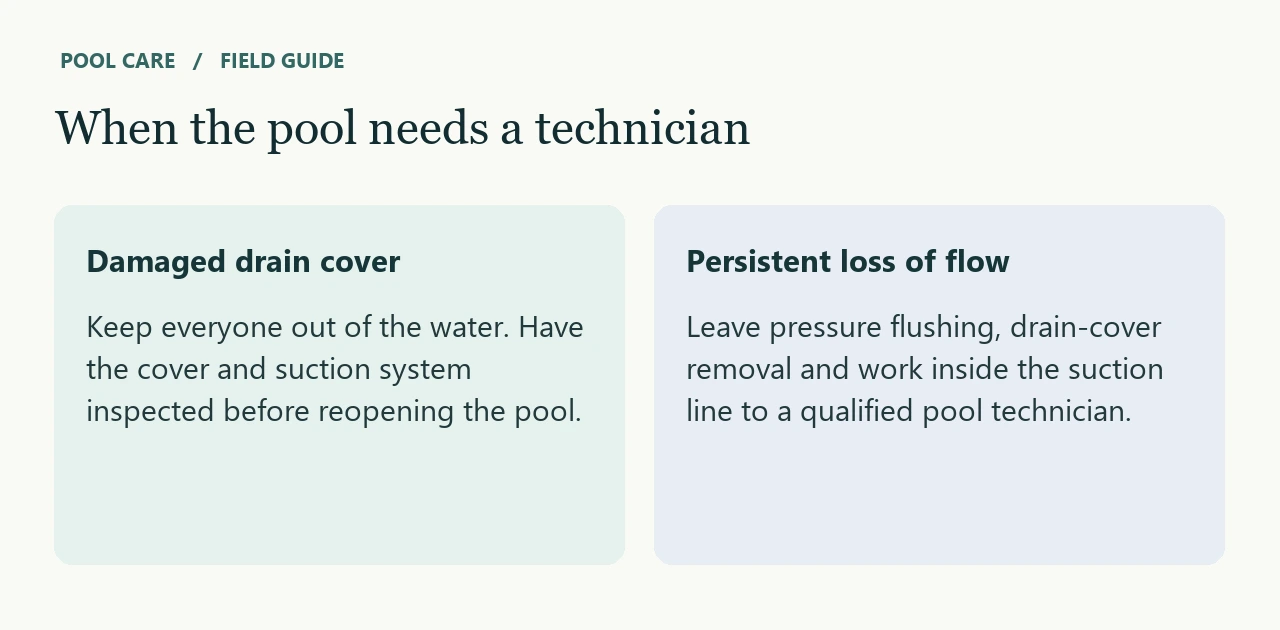
If the baskets, valves, and filter all check out and the drain still won’t pull, the blockage is in the line itself. Three methods clear most of them. Work through them in order.
- Concentrate the pump’s suction on the drain. With the pump off, close the skimmer suction valve and open the main drain valve all the way, then restart. With nothing else drawing on it, the pump’s full pull often drags a soft clog of leaves, silt, or packed debris up the line and into the pump basket, where it can be removed by hand.
- Reverse-flush with a drain bladder. A drain-cleaning bladder, sold as a “drain king,” threads onto a garden hose and seats inside the drain line. Water pressure swells it against the pipe wall, then forces a jet backward through the line to push the clog out the way it came. This moves most clogs the suction method can’t.
- Run a snake through it. A plumber’s auger fed down the line reaches a packed or fibrous blockage that water pressure slides past. Work it slowly so it doesn’t jam against a fitting or damage the plumbing.
Prevent the Next Clog
Most main drain clogs start as debris that settled on the floor and drifted toward the drain: leaves, sediment, and the fine grit that washes in after a storm. The less of that reaches the drain, the less often the line packs up.
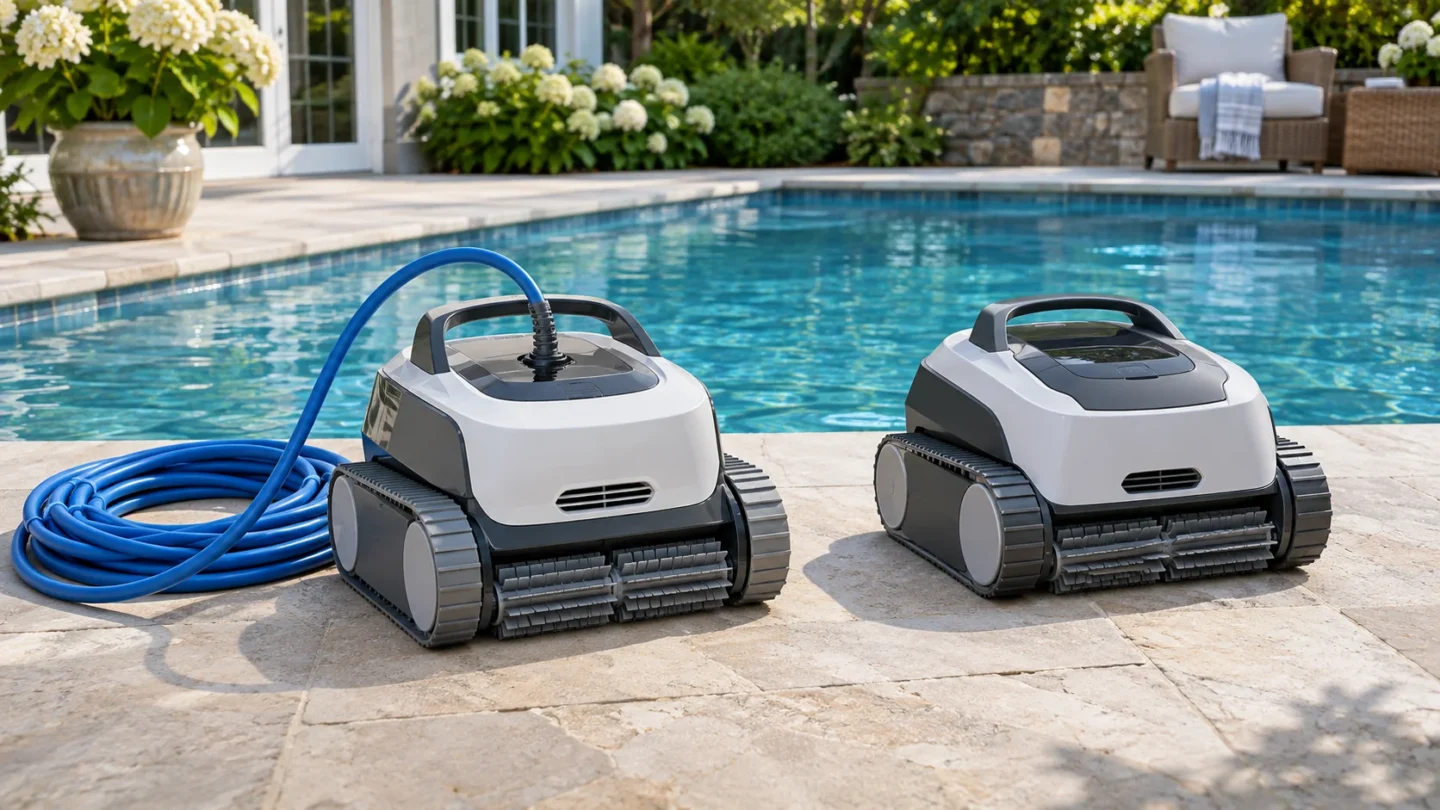
A cordless robotic pool cleaner from Aiper handles that part, lifting leaves and sediment off the floor and steps before they travel to the main drain. It can’t clear a blockage already in the line, but it reduces what gets there in the first place.
Get more pool and lawn care guides from Aiper on Google