How to Unclog Pool Lines

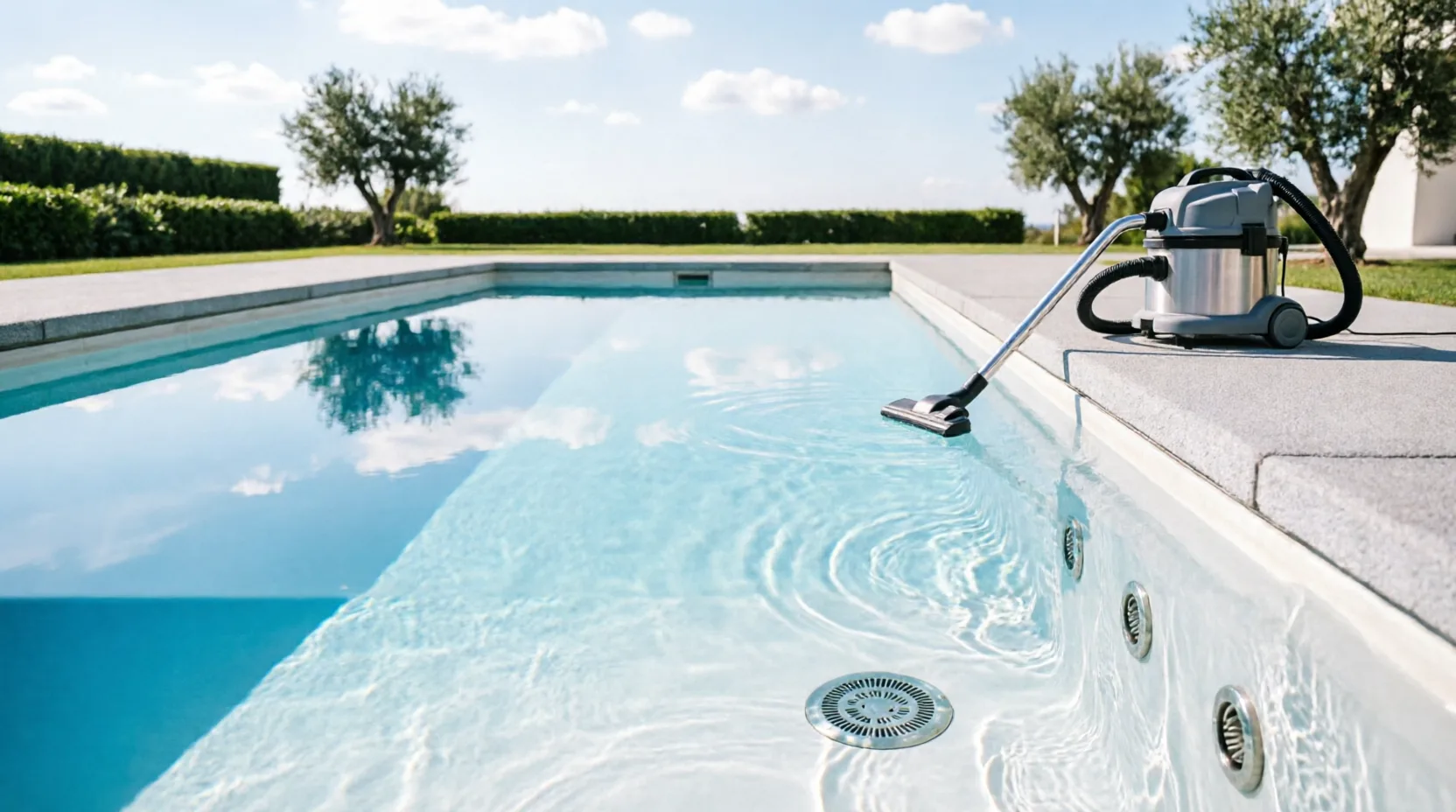
Weak suction at the skimmer or a pressure gauge reading below normal points to a clogged pool line, and clearing it usually doesn’t need a plumber. A wet/dry shop vacuum run in reverse through the return line blows most soft clogs free; a drain auger handles stubborn debris that air or water pressure alone can’t push through. This is the same flow-restriction problem covered in our guide to draining a pool, since a full drain is sometimes the only way to access certain buried lines. The full diagnostic and clearing steps are below.
How Do You Know If Your Pool Pipes Are Clogged?
Reduced flow at the return jets, noticeably weaker suction at the skimmer or vacuum port, and a pressure gauge reading lower than the pump’s normal operating range are the clearest signs. A pump that sounds like it’s straining without moving much water points the same direction — the plumbing, not the pump itself, is usually the actual bottleneck.
Why Is There No Suction in Your Pool Hose?
No suction at all, rather than just reduced flow, usually means either a full blockage somewhere in that specific line or an air leak letting the pump lose prime before it can pull water through — the same issue covered in our guide to priming a pool pump. Isolating whether the problem is one specific line (skimmer, main drain, or a single return) versus the whole system narrows down whether it’s a localized clog or a broader priming or valve issue.
What Tool Do You Use to Blow Out Pool Lines?
A wet/dry shop vacuum with a blower function, connected at an accessible opening like the skimmer or pump union, is the standard tool for pushing soft clogs through with reversed air or water pressure. That same high-volume, low-pressure blowout is the core of winterizing, so see our walkthrough on how to blow out pool lines before winter before you close up. Dedicated pool line blower bags, which seal against the pipe opening for a tighter seal than a bare hose, work more effectively on stubborn clogs than an unsealed shop vac hose alone.
How Do You Clear a Clogged Pool Line Step by Step?
Identify which specific line is affected first — skimmer, main drain, or a return — rather than assuming the whole system is blocked. Turn off the pump, then attach the shop vac or blower bag at the nearest accessible opening and run it in short bursts rather than one continuous push, checking for debris ejecting at the other end of the line.
If blowing from one direction doesn’t clear it, try from the opposite accessible point, since some clogs move more easily one way than the other depending on where the obstruction sits in the pipe run.
When Do You Need a Drain Auger or Plumber’s Snake Instead?
Root intrusion or solid debris that air and water pressure can’t dislodge needs a drain auger or plumber’s snake, which physically breaks up or hooks the blockage rather than trying to push it through. If a shop vac makes no progress after two or three attempts from both directions, that’s the point to switch tools rather than repeating the same approach.
Can You Prevent Pool Lines From Clogging in the First Place?
Keeping skimmer and pump baskets empty prevents most of the debris that eventually works its way further into the line. Addressing tree roots growing near buried pipe runs before they intrude, and clearing heavy debris before a big storm rather than after, both reduce how often a line clogs badly enough to need blowing out. This is also worth checking whenever you’re opening a pool for the season or winterizing it, since both are common times to discover a line that was already partially clogged.
Frequently Asked Questions
How much does it cost to hire a plumber for a clogged pool line versus doing it yourself?
A pool-service plumber typically charges 150 to 400 dollars for a line-clearing visit, depending on how many lines need checking and whether a camera inspection is involved. A shop vac and blower bag, which most pool owners can rent or buy for under 100 dollars, clear the majority of soft clogs without that cost.
Can chemical drain cleaners clear a clogged pool line?
No — chemical drain cleaners made for household plumbing aren’t rated for pool-grade PVC and can damage gaskets, O-rings, and pump seals. Mechanical clearing with air, water pressure, or an auger is the safe approach for pool lines specifically.
How do you tell a clogged line apart from a cracked or broken pipe?
A clog usually clears within a few blower or auger attempts and flow returns to normal once it does; a cracked line keeps losing pressure or air-locking no matter how many times you clear it, and often shows a wet spot in the yard above the pipe run. If clearing attempts make no lasting difference, that points to a break rather than a blockage, which needs a pro to locate and repair. Before calling one, our guide to tracking down a pool leak yourself covers a few DIY tests worth trying first.
Keeping debris out of the lines in the first place reduces how often this comes up at all. An Aiper robotic pool cleaner clears the floor and steps before debris has a chance to work its way toward the skimmer and plumbing.
Get more pool and lawn care guides from Aiper on Google