Lawn Aeration vs Dethatching

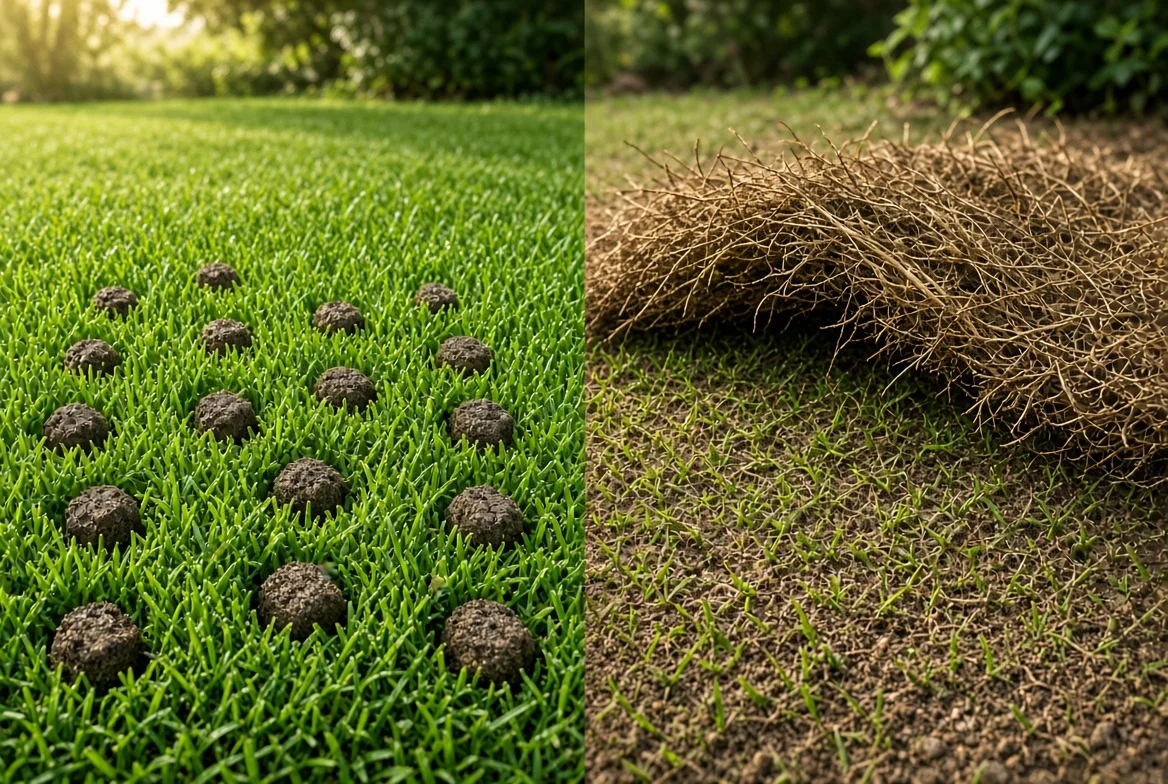
Aeration and dethatching are often recommended for the same lawn problems: thin patches, water pooling, and grass that browns out when the weather turns. They also happen in the same season, which makes it easy to confuse the two.
But they fix entirely different problems. Use the wrong one, and you can waste a weekend and $80 in rental fees while the actual issue keeps getting worse.
This guide explains what each machine does, when to use it, and how to tell which your lawn actually needs.
What Thatch Actually Is
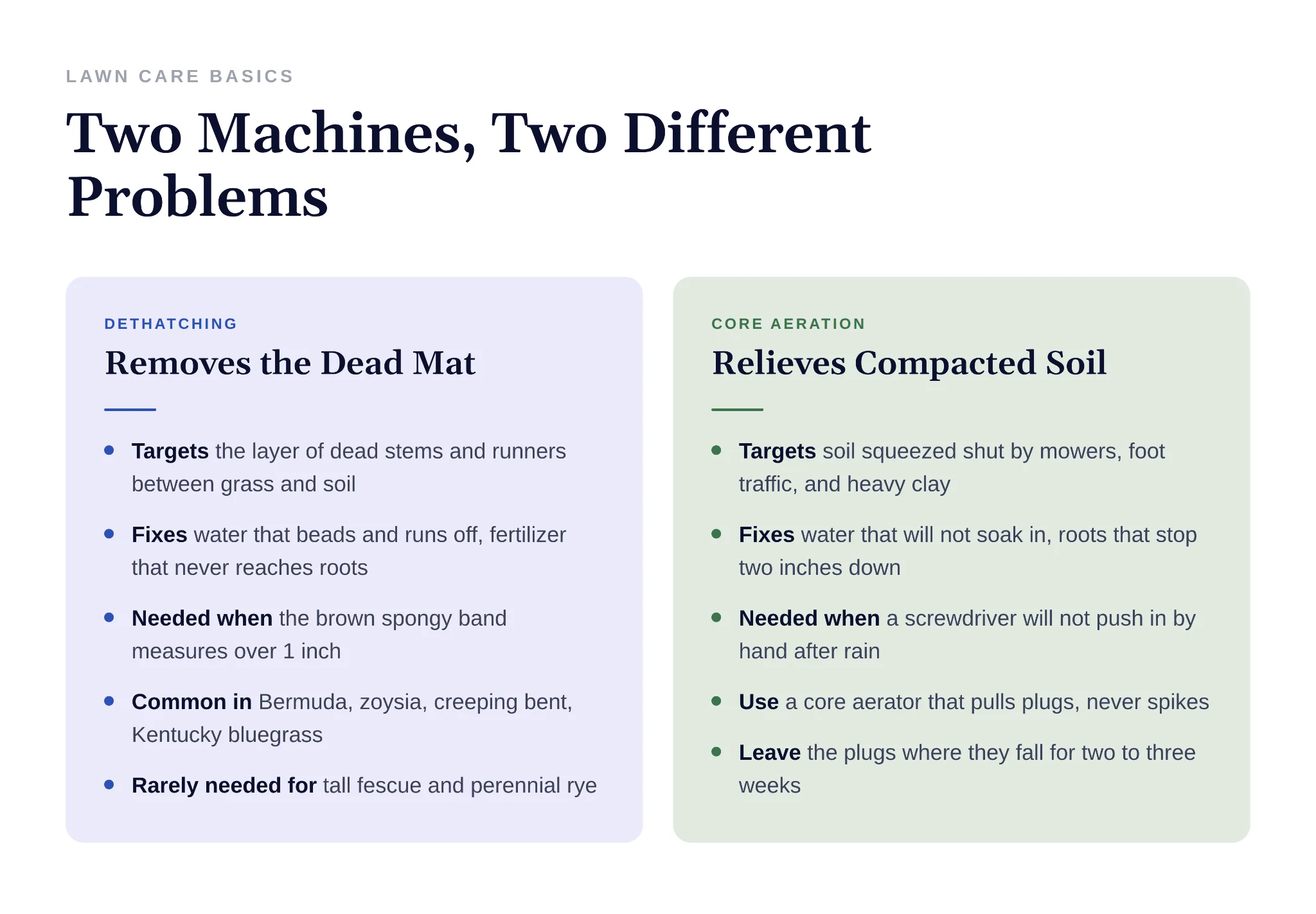
Thatch is the mat of dead stems, roots, and runners sitting between the green blades and the soil.
Not grass clippings. Clippings are mostly water and break down within two weeks.
Half an inch of thatch is fine, good, even. It insulates roots and cushions foot traffic. But past three-quarters of an inch, it turns on you:
- Water beads on the mat and runs off toward the driveway.
- Granular fertilizer lands in the thatch, dissolves in the thatch, and never reaches the root zone.
- Worst of all, the grass starts rooting sideways into the mat instead of down into soil, so the first stretch of 95-degree weather kills a lawn that looked healthy in May.
Bermuda, zoysia, creeping bentgrass, Kentucky bluegrass, these spread by runners and build thatch quickly. Tall fescue and perennial rye barely build any. If someone tells you your fescue lawn needs annual dethatching, they are selling you a service you do not need.
What Aeration Fixes
Soil gets squeezed by mower wheels, kids, dogs, the corner where everyone cuts across, and clay that swells and shrinks through the seasons.
The pore space between soil particles collapses. Roots stop pushing down, water stops soaking in, and oxygen stops reaching anything below the surface.
Core aeration pulls actual plugs of soil out and drops them on the lawn. Spike aerators just push soil sideways and compact the walls of every hole they make. You end up worse off than when you started.
Leave the cores where they fall. They crumble in two or three weeks, and the soil microbes riding in them start digesting the thatch layer from underneath.
Which One Your Lawn Needs
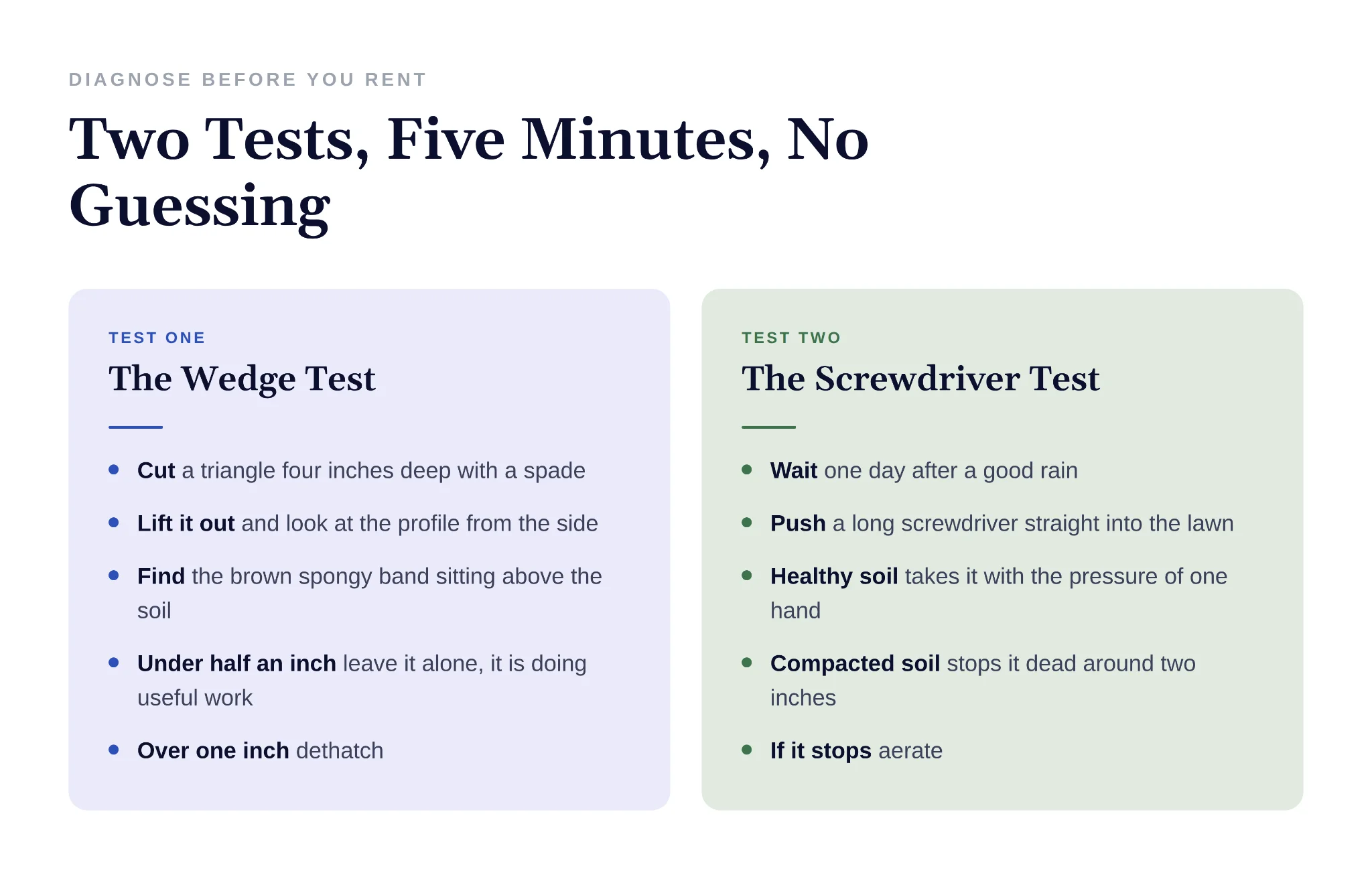
The brown spongy band between soil and green growth is your thatch layer. Measure it against your thumb. Over an inch, dethatch.
Compaction is a separate test. Push a long screwdriver into the ground the day after a decent rain. It should slide in with the pressure of one hand. If you have to lean on it, or it stops dead at two inches, the soil is compacted, and the dethatcher will do nothing about it.
Plenty of lawns come back positive on both.
Doing Both
Dethatch first. Aerate second.
Aerator tines have to reach mineral soil to pull a usable core. Run the machine over a thick thatch mat and the tines punch through spongy debris, come up half full, and the holes seal shut within days. Clearing the mat first means every core comes out clean and full depth.
Not the same weekend, though.
Both operations are injuries: controlled, useful injuries, but injuries. A struggling lawn hit with both inside 48 hours can lose more crown tissue than it can regrow. Two weeks between passes.
When to Do It
Cool-season lawns like fescue, rye, and bluegrass go in early fall. September through mid-October in most of the country. The grass is in its strongest growth window and has eight weeks of good weather to close the wounds before frost.
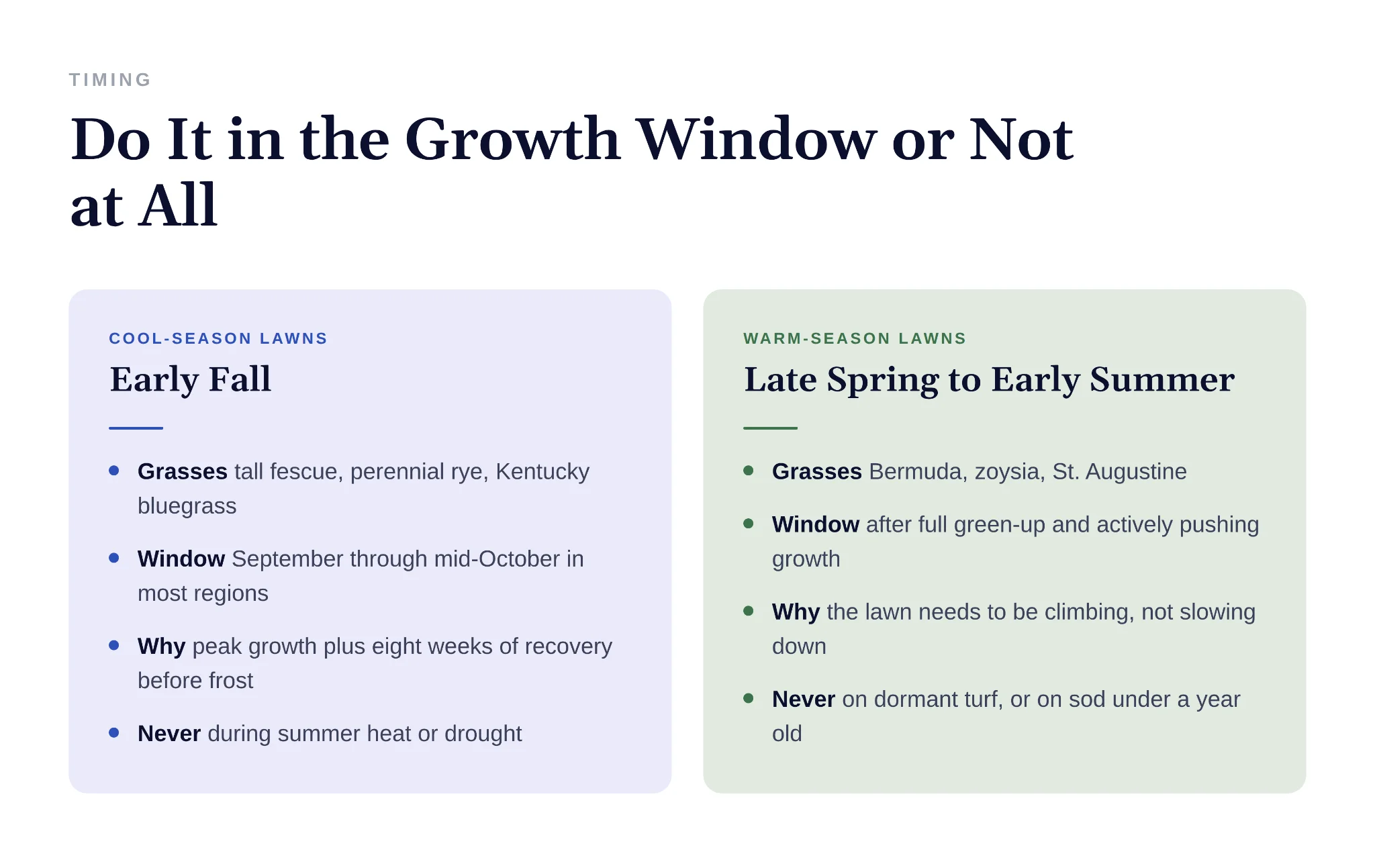
Warm-season lawns, like Bermuda, zoysia, and St. Augustine, go in late spring or early summer, once the lawn has fully greened up and is actively pushing new growth.
Never in summer heat. Never in a drought. Opening a lawn up when it has no capacity to recover is how people turn a thin lawn into a crabgrass field.
New sod or new seed gets a pass entirely for the first full year.
The Part That Gets Skipped
An aerated lawn has thousands of open holes and a stressed root system.
It needs consistently moist soil until the holes close and new roots fill them. Miss that window and the holes dry out, the soil hardens around them, and the compaction returns before Thanksgiving.
Then the schedule has to change back.
Shallow daily watering forever is exactly what created the problem. After recovery, the lawn wants deep and infrequent watering, enough water to wet six inches of soil, two or three times a week.
That switch is where most people fail, because it requires paying attention to something for a month and then remembering to change it.
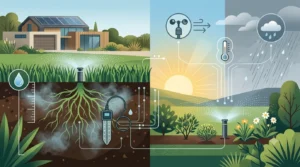
Which is the honest argument for automating it. The Aiper IrriSense 2 handles recovery watering as a zone-by-zone schedule in the app, so the aerated section can run short and frequent while the rest of the yard stays on its normal cycle.
Get more pool and lawn care guides from Aiper on Google