How to Fix Large Bare Spots in a Lawn

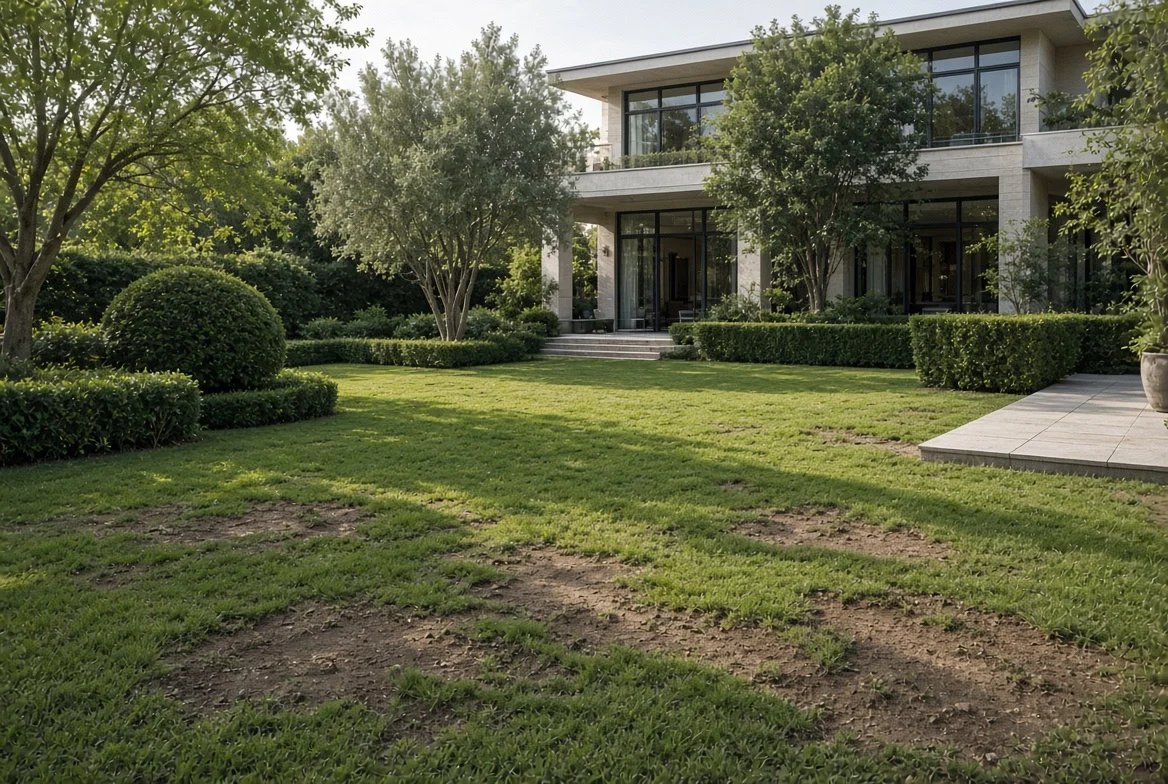
A bare spot the size of a dinner plate fills in on its own in most lawns. Spots measured in square feet don’t, and reseeding them without finding out why the grass died usually means repeating the work next season.
Two decisions come before any seed goes down: what killed the grass, and whether the damage is small enough to patch or widespread enough to renovate the whole lawn.
Find the Cause First
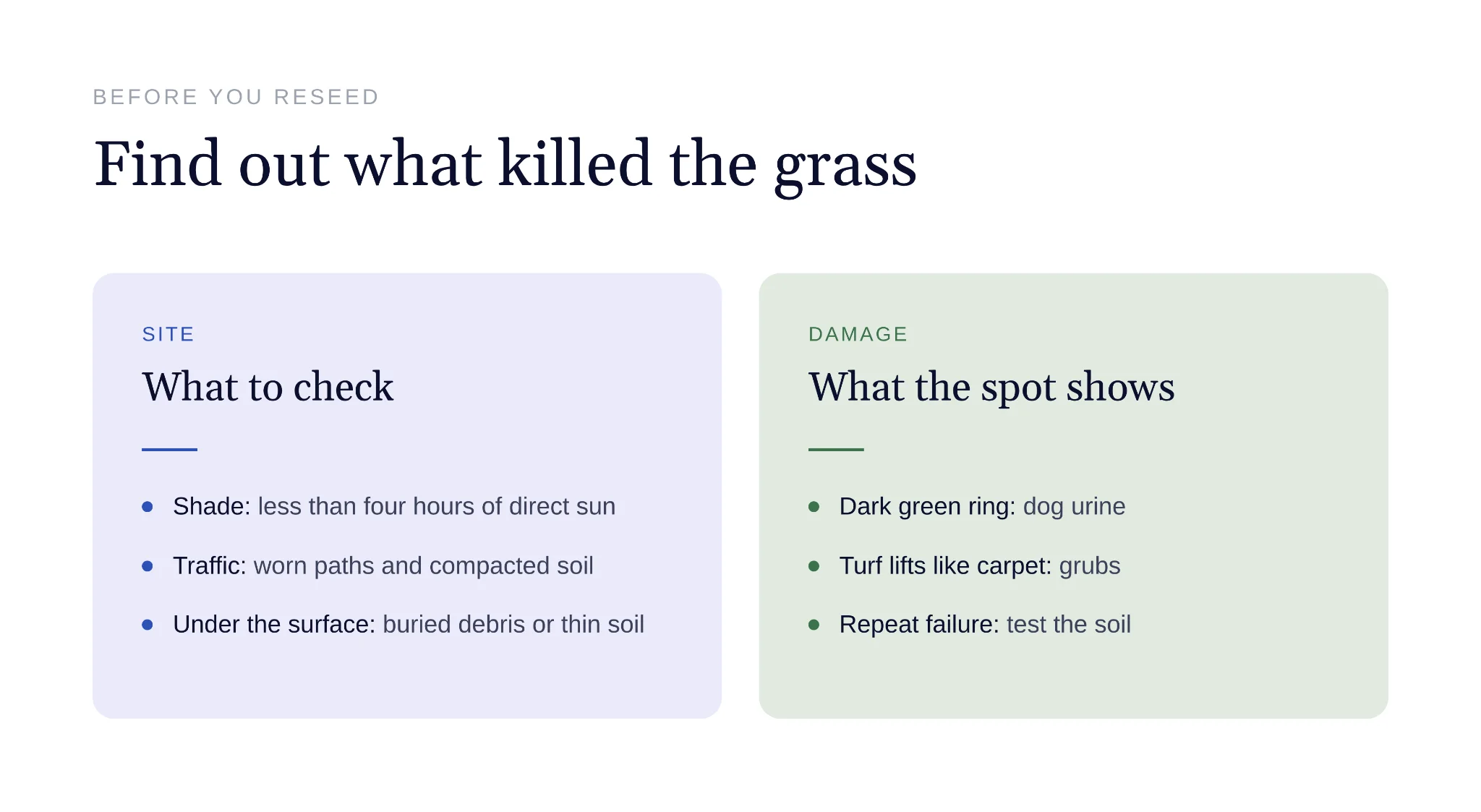
Soil problems are the most common reason a repair fails twice. Test the soil before renovating, since seeding or sodding alone won’t hold if the soil is the reason the turf struggled.
Shade. Even shade-tolerant fescues need a minimum of four hours of direct sun. If a spot gets less, pruning or removing limbs comes first, and a shade planting may be the better answer.
Compaction and traffic. Paths worn by feet, bikes, or parked cars leave soil too dense for roots. Core aeration before seeding opens it up.
Dog urine. Spots with a dark green ring around dead centers point to urine. Flushing the area with water dilutes the salts before you reseed. To stop it recurring, read how to keep dogs off your lawn.
Grubs. Turf that lifts like carpet with no roots underneath means grub damage. Treating the grubs has to happen before the new seed goes in.
Buried debris. Construction leftovers, a buried slab, or a thin layer of soil over gravel show up as spots that die every summer. Dig down a few inches to check before reseeding.
Patch, Renovate, or Start Over
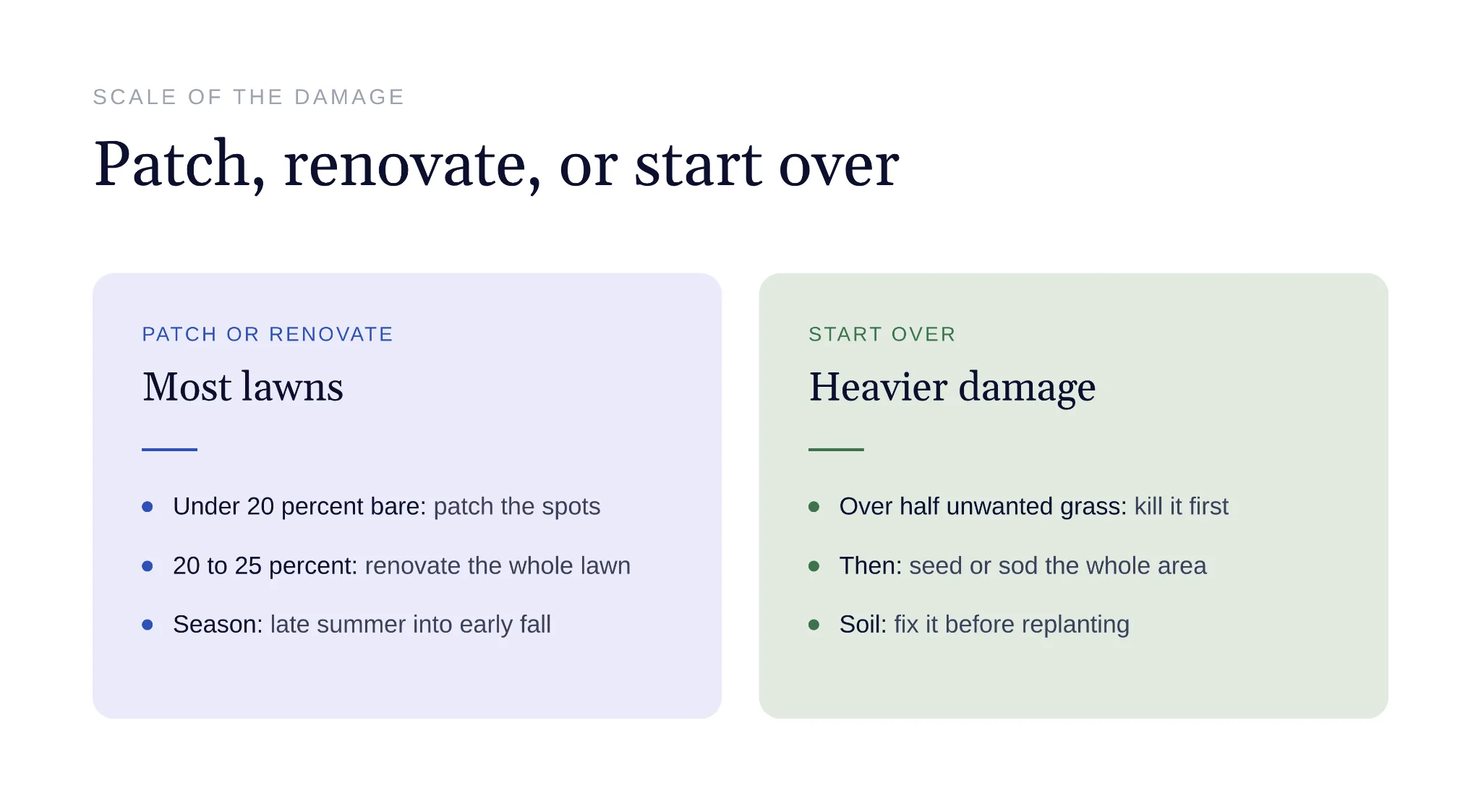
How much of the lawn is damaged determines the approach. Renovation is on the table when roughly 20 to 25% of the lawn is bare or weedy, which means killing the existing vegetation and starting over when less than 50% of the area is the turfgrass you want.
| Condition | Approach | What it involves |
|---|---|---|
| Scattered spots, under 20% of the lawn | Patch | Prep and seed the spots individually |
| 20 to 25% bare or weedy | Renovate | Seed the whole lawn, with extra seed on bare areas |
| More than half unwanted grass or weeds | Start over | Kill everything, then seed or sod |
Most large bare spots fall into the first row. The steps below cover that case, and the same method scales up to a renovation.
When to Seed
Late summer into early fall is the best window for cool-season lawns. Shorter days bring cooler weather, seed germinates quickly, and weed competition is weaker than in spring.
The best seeding window is mid-August to mid-September. Timing shifts later moving south, and warm-season lawns are seeded or sprigged in late spring instead.
Seeding in spring works when it has to, but new seedlings then face summer heat, and crabgrass preventers can’t be used on the area.
How to Repair the Spot
Buy the same grass species as the rest of the lawn so the repair blends in. Maryland Extension makes that point directly: use tall fescue seed alone if that’s what the lawn is, rather than a mix with other species.
- Clear the dead material. Rake out dead grass and thatch until you reach bare soil, and loosen at least the top inch.
- Fix the soil. Work in an inch or two of compost if the soil is poor, along with any lime or fertilizer a soil test calls for.
- Level the area. Rake it smooth and slightly below the surrounding grade, since loose soil settles.
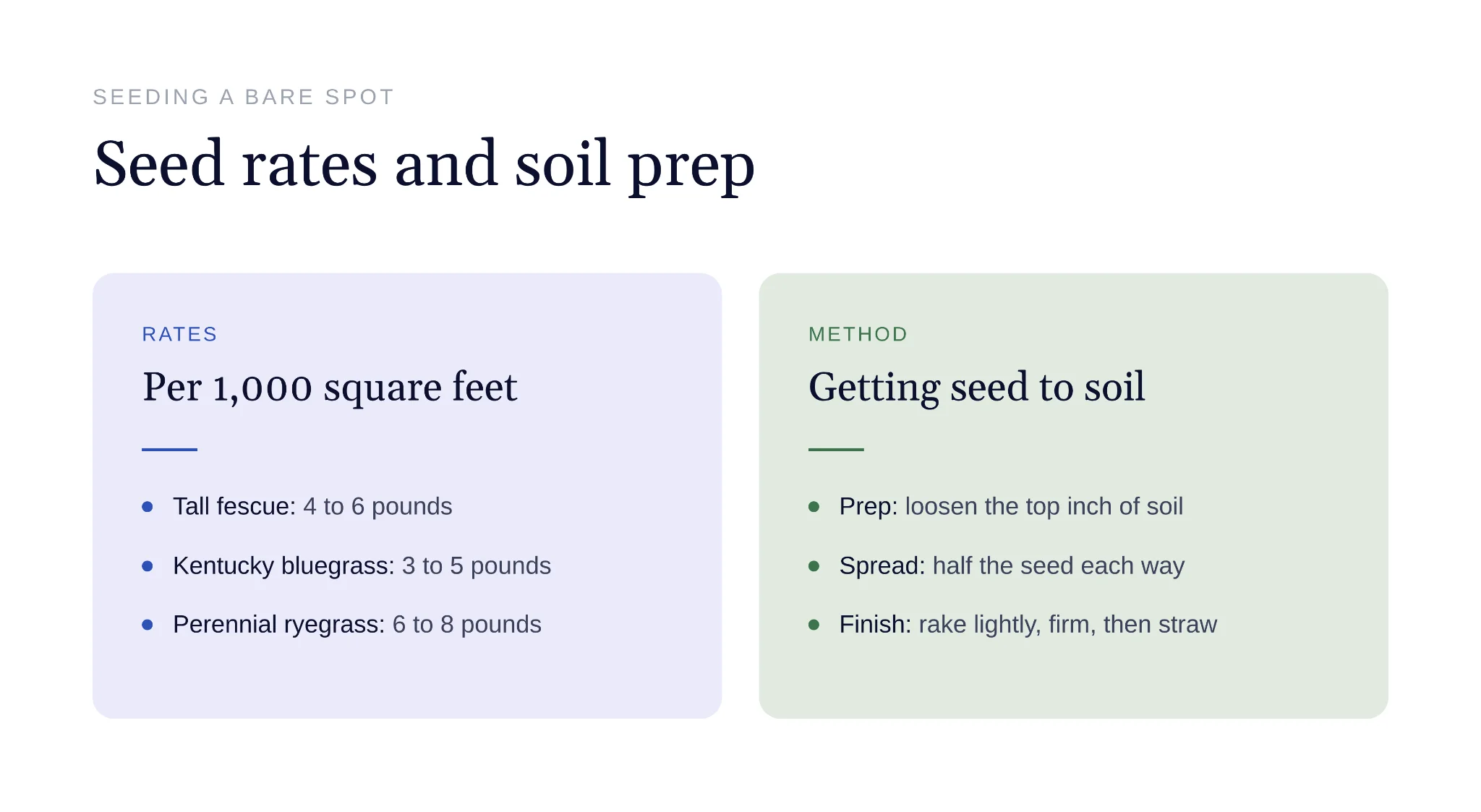
- Measure the spot and the seed. Reseeding rates run about 4 to 6 pounds per 1,000 square feet for turf-type tall fescue, 3 to 5 pounds for Kentucky bluegrass, and 6 to 8 pounds for perennial ryegrass. A 10-by-10-foot spot is 100 square feet, or a tenth of those amounts.
- Spread the seed in two passes. Divide the seed in half and apply one half walking north to south, the other east to west, for even coverage.
- Work the seed in shallowly. Rake lightly so 10 to 15% of the seed still shows, or cover it with an eighth to a quarter inch of soil.
- Firm the soil. Press the seed in with the back of a rake on small areas, or roll larger ones with a light roller of 50 to 75 pounds, such as a water roller with most of the water drained out.
- Mulch with straw. Missouri Extension recommends one to one and a half bales per 1,000 square feet, which keeps the soil moist and protects seedlings. Use clean wheat, oat, or barley straw and avoid rye straw, which carries its own seed.
Watering Until It Fills In
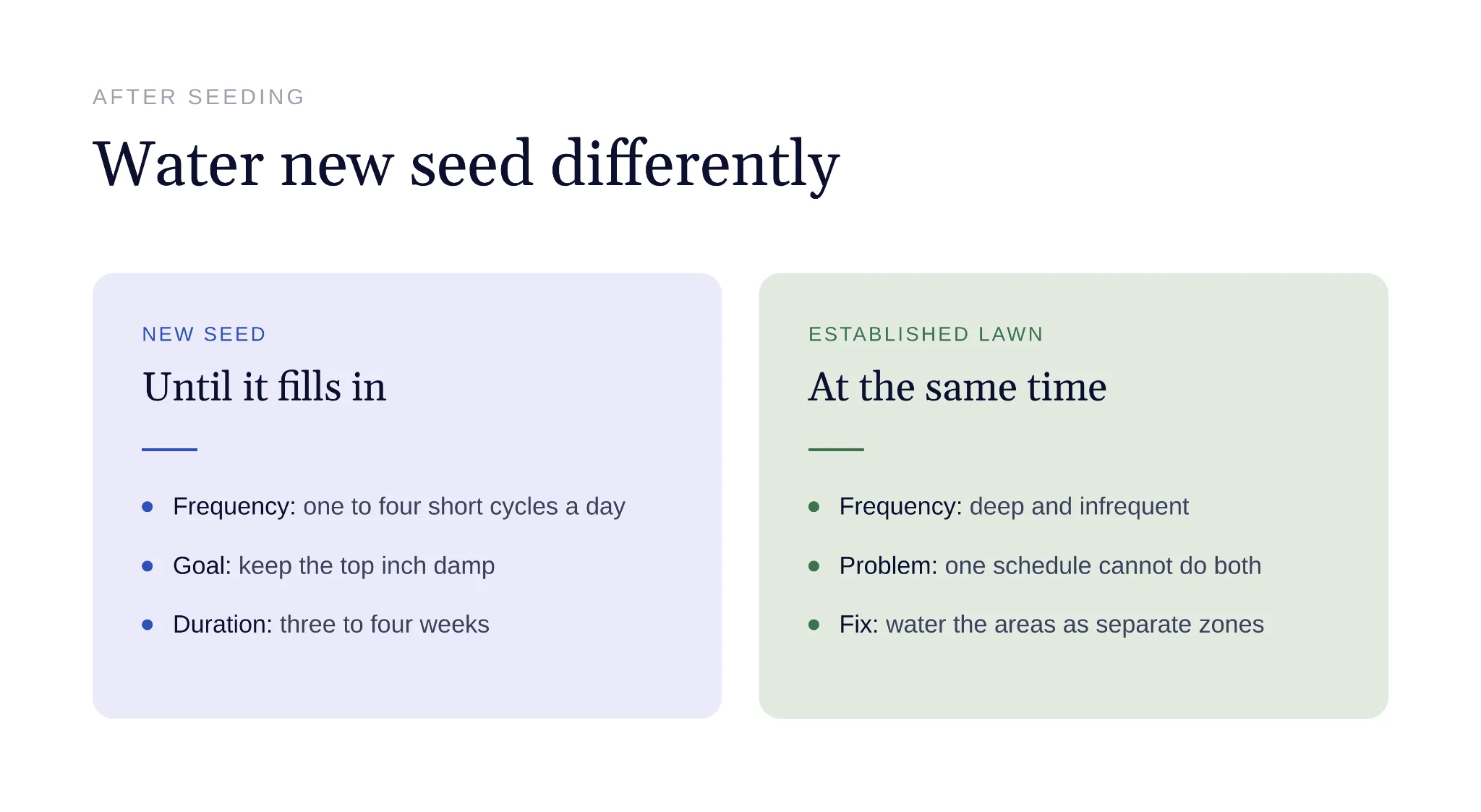
Watering is where most repairs fail. New seed needs the top inch of soil damp at all times, which means several short cycles a day, not the deep weekly soak an established lawn wants.
Missouri Extension recommends a fine spray one to four times per day until seedlings are established, then deeper and less frequent watering as the grass develops. Avoid puddles and runoff at every stage.
Plan for the full germination period before easing off. UMass Extension puts germination and establishment at three to four weeks, with perennial ryegrass the fastest and Kentucky bluegrass the slowest.
Running a repaired spot and the rest of the lawn on one schedule waters one of them wrong. The Aiper IrriSense 2 runs up to 10 zones on separate schedules, so a seeded area can get three short cycles a day while established turf stays on its normal watering, and the schedule can be eased back zone by zone as seedlings root.
Mowing and Aftercare
The existing lawn around a repair competes with seedlings for light. Minnesota Extension suggests keeping the surrounding lawn cut short during establishment, so sunlight reaches the new grass.
A few rules for the first two months:
- Don’t apply crabgrass preventer to a seeded area. It stops grass seed from germinating along with the weeds.
- Keep foot traffic off until after the first mowing.
- Mow the new grass once it reaches about 3 inches, removing no more than a third of the blade.
- Wait until the new grass has been mowed three or four times before using broadleaf weed killers on it.
When Sod Makes More Sense
Sod is worth the extra cost for spots on slopes where seed washes away, in high-traffic areas that can’t be roped off for a month, and any time the repair needs to look finished immediately.
Cut the bare area into a square or rectangle, prepare the soil the same way, then cut sod to fit tightly against the existing turf. Water it deeply right after laying, then keep it damp until the roots knit into the soil below, which takes about two weeks.
Get more pool and lawn care guides from Aiper on Google