Turf vs Lawn: What People Actually Mean by Each

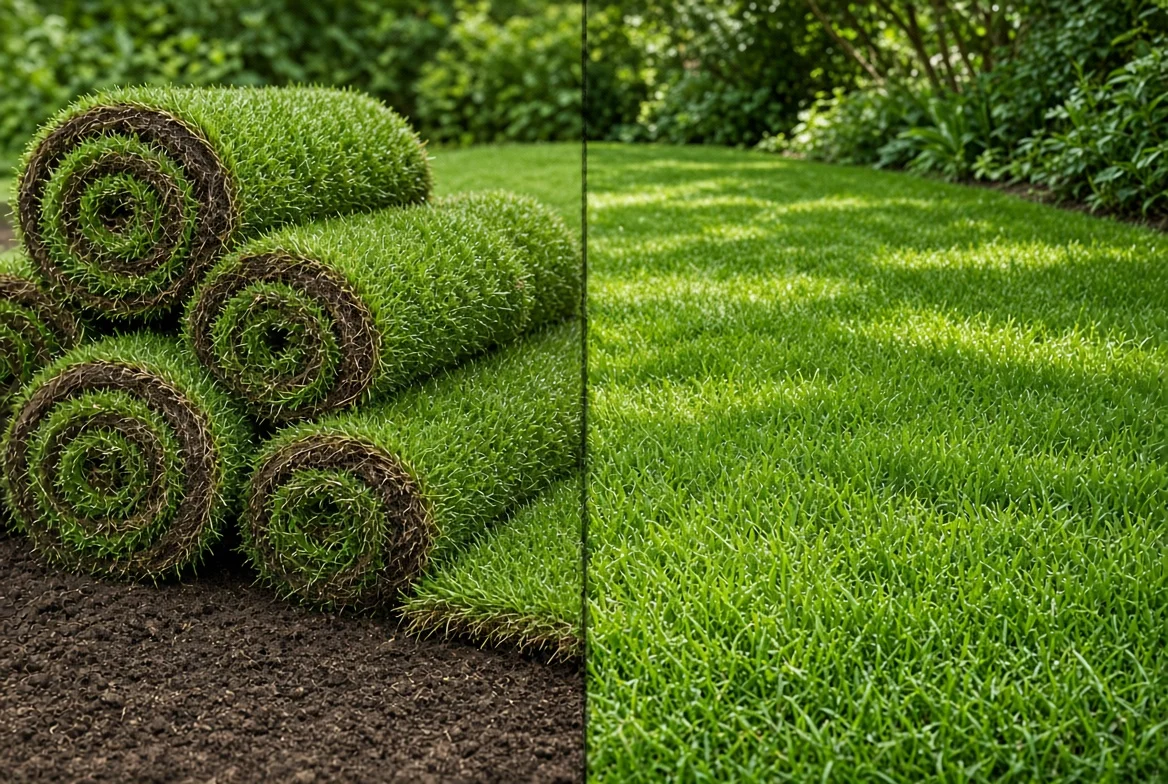
Ask a sod farm, a synthetic grass installer, and a university turf specialist for “turf,” and you will get three different answers. The sod farm means rolls of living grass. The installer means plastic fibers on a backing, and the specialist means any grass kept short by regular mowing.
Lawn is the narrower word. It names the grassed area around a house and says nothing about how it was planted or what it is made of.
Most confusion in quotes, product listings, and neighbor advice comes from the gap between those two words.
This guide separates the meanings and gives the amounts, timings, and thresholds for installing and maintaining each option.
Three Meanings of Turf
The word changes meaning depending on who is using it. Knowing which version a person has in mind tells you what they are pricing and what care it will need.
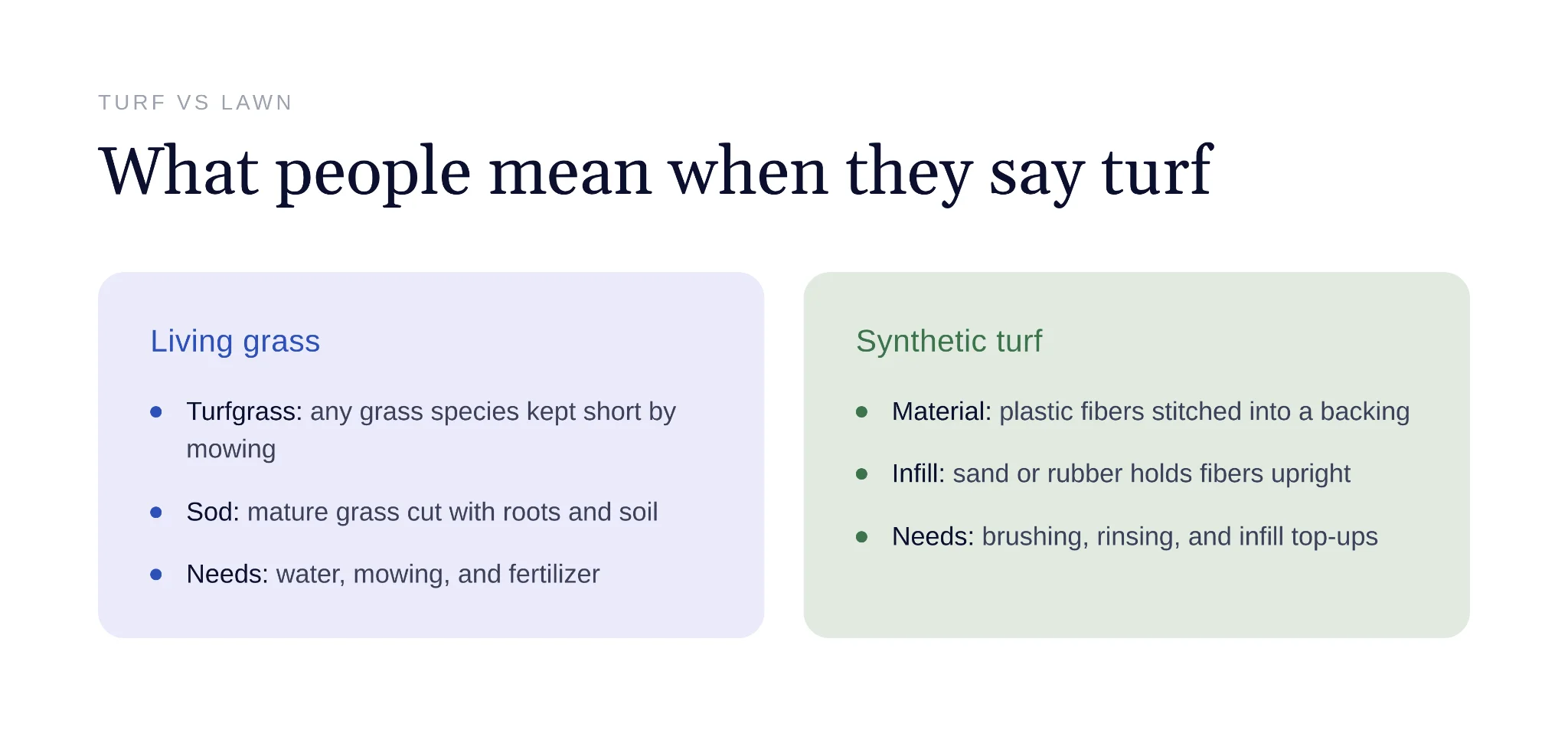
Turfgrass is the term extension services and agronomists use for any grass species maintained by mowing. For northern lawns, that usually means Kentucky bluegrass, fine fescues, turf-type tall fescue, or perennial ryegrass.
Sod is what sod farms and landscapers mean. It is mature grass cut with its roots and a thin layer of soil, then delivered in rolls or slabs.
Artificial or synthetic turf is what retailers and installers of fake grass mean. It’s made of plastic fibers stitched into a backing and held upright by a sand or rubber infill.
When a quote says “turf” with no qualifier, ask which of the three it covers. Sod and synthetic turf are both priced per square foot, and the installed cost of synthetic turf runs several times higher.
What Counts as a Lawn
A lawn is a maintained area of turfgrass around a home. The grass can go in four ways, and the method decides the cost, the timeline, and how much work the first month takes:
- Seed costs the least and takes the longest. It needs nearly a full season to reach a mature, durable lawn, and weeds compete with the seedlings the whole time.
- Sod is finished grass laid in pieces. The yard looks complete the day it goes down.
- Plugs are 2- to 4-inch pieces of sod set at regular intervals. Their stems spread out and fill the bare soil between them over one or more seasons.
- Sprigs are individual stems planted in rows or scattered over the soil. Some warm-season grasses skip seed entirely, and St. Augustine grass is planted as sod, sprigs, or plugs.
Many homeowners who replace grass with synthetic turf still call the area a lawn. Water utilities and local ordinances usually do not, so check the definition before applying for a lawn-removal rebate or signing an HOA landscaping form.
Seed or Sod
For a real grass lawn, the choice usually comes down to seed or sod. Each one wins on different conditions, so match the method to your yard, your budget, and the calendar.
Seed is cheaper, offers more species and varieties, and develops stronger roots because the grass grows in your soil from the start. The catch is timing. The best window for cool-season grass is late summer to early fall, which runs from mid-August to mid-September in Minnesota.
Warm-season grasses such as bermudagrass and zoysiagrass follow the opposite calendar. Seed them in late spring or early summer, once soil temperatures stay above 65°F.
Sod costs more and takes real labor to install, but the calendar barely matters. It can go down almost any time of year when irrigation water is available. The tradeoff is choice, since you are limited to whatever local farms grow.
Slopes settle the question. Sod protects the soil immediately and suits erosion-prone areas, while seed can wash downhill before it germinates.
Prepare the Soil First
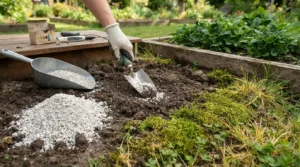
Soil preparation is the same for seed and sod, so finish it before either one goes down. Start by removing existing grass and weeds and grading the surface so it slopes away from the house.
Next, take a soil test and follow the lab’s sampling instructions so the result represents the whole yard. Apply whatever amendments the report prescribes and work them into the top few inches.
Finish by firming the surface lightly with a roller or cultipacker. Your footprints should sink no more than about half an inch.
Laying Sod and the First Month
Sod dries out fast once it is cut, so the order of work matters. Have the soil prepped before the delivery truck arrives, then follow these steps:
- Order sod cut no more than 24 hours before delivery, and lay it within one day of arrival.
- Moisten the soil lightly, then lay the pieces with the seams staggered like brickwork.
- On a slope, run the rows across the slope, stake each piece, and fill any cracks with soil so the edges do not dry out.
- Roll the finished area with a lawn roller about one-third full of water to press the roots against the soil.
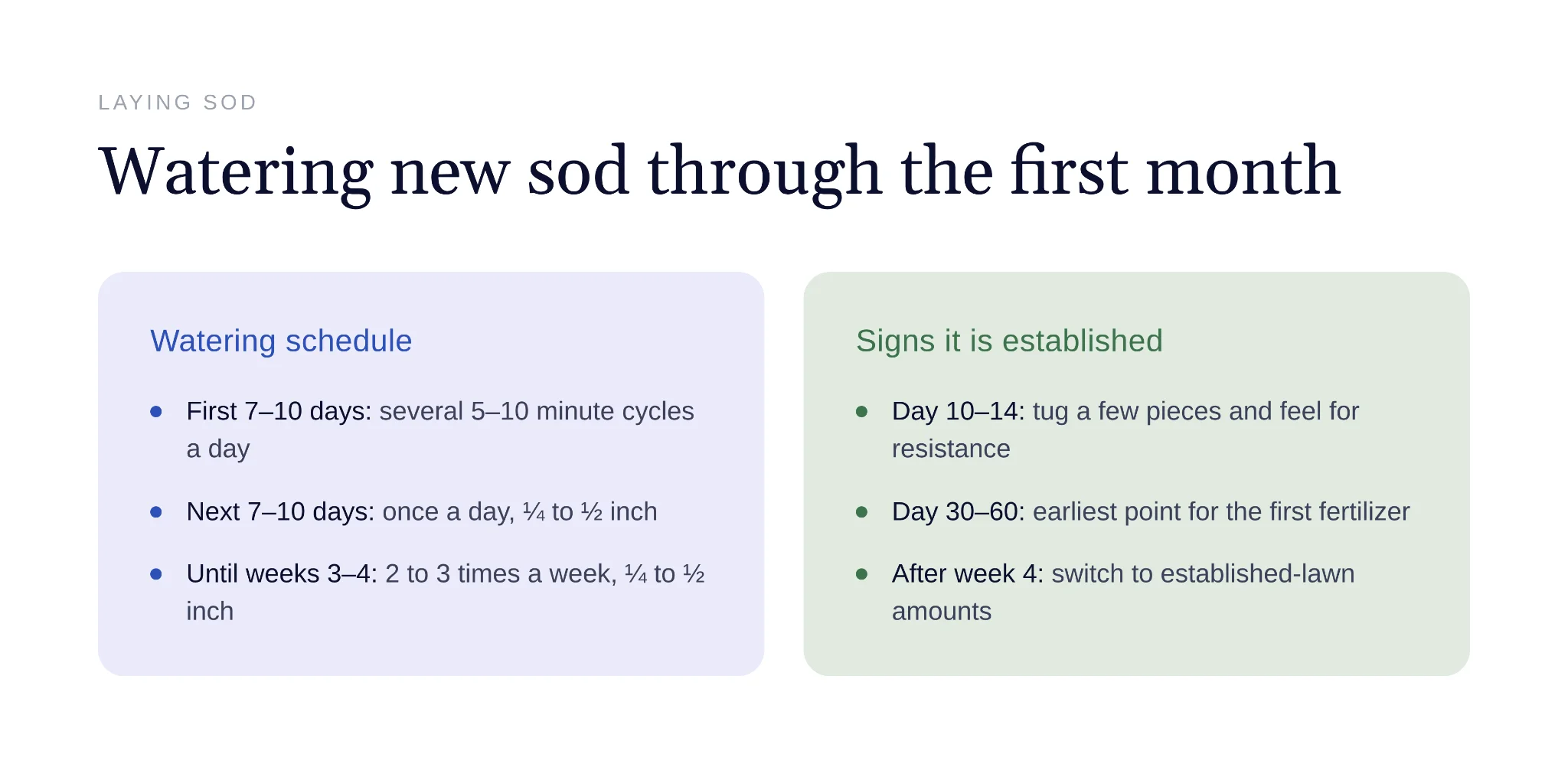
Watering is where most new sod fails. UF/IFAS guidance for newly planted grass tapers the schedule over three to four weeks:
| Time after planting | How often | How much |
|---|---|---|
| First 7–10 days | Several short cycles through the day | 5–10 minutes per cycle |
| Next 7–10 days | Once a day | ¼ to ½ inch |
| Until weeks 3–4 | 2 to 3 times a week | ¼ to ½ inch |
| After weeks 3–4 | As needed | Established-lawn amounts |
That schedule is written for Florida’s sandy soils. On clay, cut each early cycle short as soon as water starts pooling on the surface.
After 10 to 14 days, tug gently on a few pieces. If they resist, the sod has rooted and can be treated as an established lawn.
Hold off on fertilizer, though. A newly planted lawn should not be fertilized for 30 to 60 days.
Seeding Step by Step
Seed needs steady moisture and good contact with the soil. Once the soil is prepped, divide the seed in half and use the new-lawn rate printed on the bag.
Spread the first half walking in one direction and the second half at a right angle to it. This crosswise pattern covers the thin strips a single pass leaves behind.
Rake lightly so 10 to 15 percent of the seed still shows on the surface, then roll the area to press the seed into the soil.
Water once to a depth of 4 to 6 inches. From then until germination, water lightly up to 3 or 4 times a day and skip cycles when it rains. After the seed comes up, water less often as the roots grow deeper.
Expect germination in about 7 to 21 days, depending on the species. Perennial ryegrass comes up first and Kentucky bluegrass last, so a mixed seed bag will look patchy for the first few weeks.
Artificial Turf Heat and Upkeep
Synthetic turf removes mowing and watering from the list, but it brings two issues grass does not have. The first is heat, and the second is grooming.
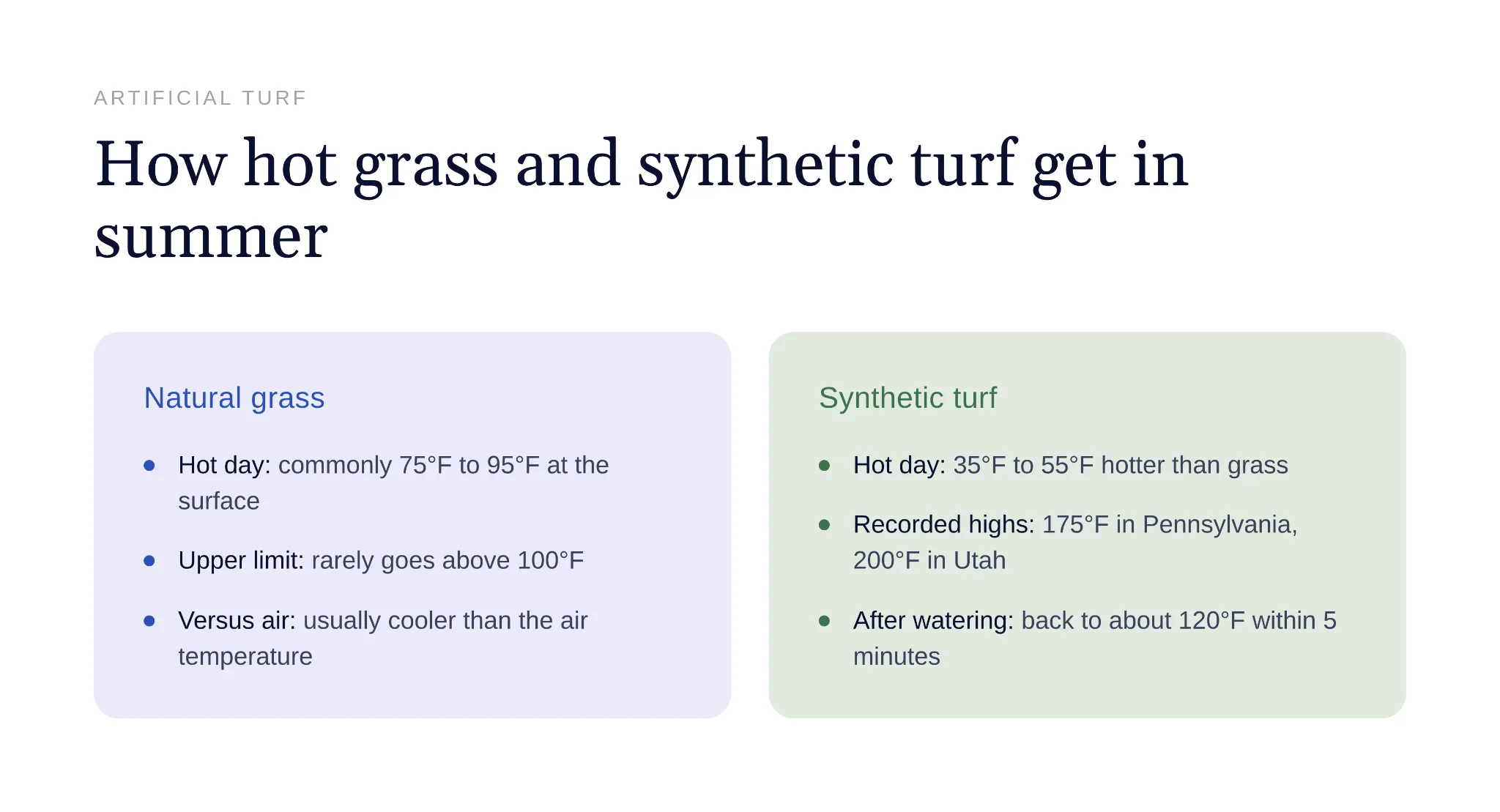
Surface temperature. Penn State’s Center for Sports Surface Research found synthetic turf generally runs 35°F to 55°F hotter than natural grass, which commonly sits between 75°F and 95°F on a hot day. Natural grass rarely goes above 100°F.
Peak readings. The same summary lists a published high of 200°F on a 98°F day in Provo, Utah, and 175°F in central Pennsylvania.
Hosing it down. At Brigham Young University, 30 minutes of irrigation brought a synthetic surface down to about 84°F, and it climbed back to about 120°F within five minutes. Water helps for a short playtime, but it will not hold the surface temperature down through an afternoon.
Grooming. Infill systems need regular brushing to keep the fibers upright and loosen the infill so the surface does not harden. On a home lawn, brush high-traffic areas every few weeks and top up infill wherever the backing starts to show.
Pets. Rinse urine spots with a hose at least weekly in warm weather. Odor builds up in the infill faster than it does in soil.
Keeping a Grass Lawn Going
Once grass is established, three routines decide how it looks: watering, fertilizing, and mowing. Watering takes the most attention because the target changes through the season.
Weekly Water Targets
Established grass typically needs about 1 inch of water per week to stay healthy, and up to 2 inches in summer to stay green. That inch is heavier than it sounds, since 1 inch over 1,000 square feet takes 680 gallons.
University of Nebraska–Lincoln Extension gives monthly amounts for Kentucky bluegrass, counting rain and irrigation together:
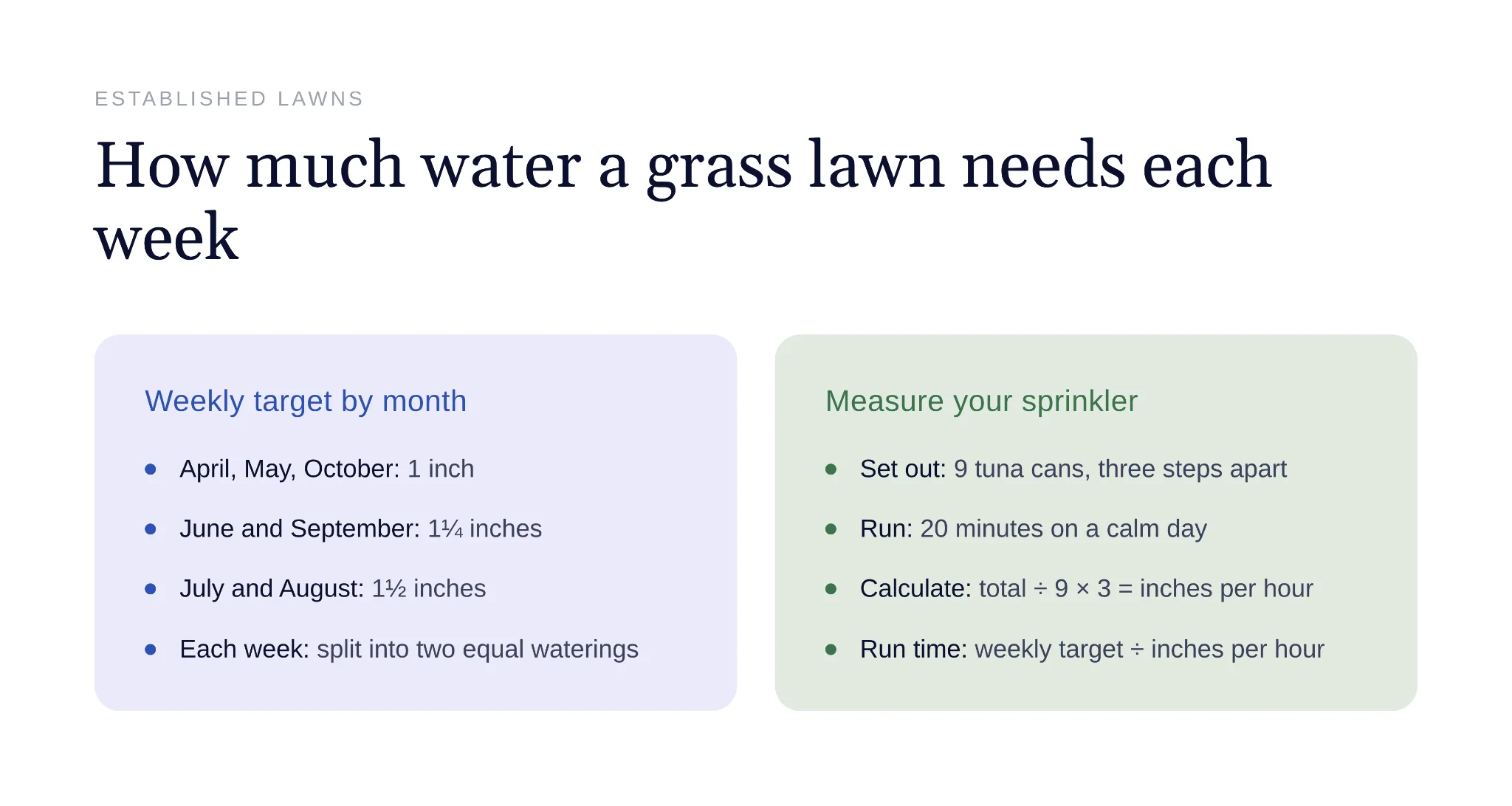
- April, May, and October: 1 inch per week
- June and September: 1¼ inches per week
- July and August: 1½ inches per week
Split each week’s amount into two equal waterings.
Sprinkler Run Time
Run time depends on how much water your sprinkler puts out, so measure it once. The Oklahoma State University Extension method takes about half an hour:
- Set 9 rain gauges or tuna cans in a grid across the lawn, three steps apart.
- Run the sprinkler for 20 minutes on a calm day.
- Add up the water in all the cans, divide by 9, and multiply by 3. The result is the sprinkler’s output in inches per hour.
- Divide the weekly target by that output to get the weekly run time.
A sprinkler that puts out 0.6 inches per hour, for example, needs about 125 minutes a week to deliver June’s 1¼ inches. That works out to two runs of roughly an hour each.
Hitting those targets by hand means changing the timer every month and remembering to skip watering after rain. The Aiper IrriSense 2 maps up to 10 zones across 4,800 square feet with separate schedules for each, and its Weather-Sense system pauses watering when it detects rain.
Fertilizer and Mowing
Utah State University Extension recommends 2 to 4 pounds of actual nitrogen per 1,000 square feet each year, applied 1 pound at a time. A 25-10-10 bag, for example, needs 4 pounds of product to deliver 1 pound of nitrogen.
When mowing, remove no more than one-third of the blade at each cut. For most cool-season lawns, that means mowing at 3 to 3½ inches and cutting when the grass reaches about 4½ to 5 inches.
Questions to Ask Before You Buy
A few direct questions before you pay will tell you what you are getting. Each seller has a different one worth asking.
Sod suppliers should tell you which species and varieties are in the roll. A retailer or installer should know, and can get the answer from the sod grower if not.
Synthetic turf installers should name the infill material, the depth of the crushed-rock base, and how many inches of rain per hour the system drains. Ask whether the warranty covers UV fading, and for how many years.
Seed labels should list named varieties rather than “common” types, with weed seed content below 0.5 percent.
Get more pool and lawn care guides from Aiper on Google