
Pool fencing is not optional — it is legally required in virtually every jurisdiction, and it is also one of the most visible design elements around your pool. A well-chosen fence keeps children safe, satisfies building inspectors, and frames the pool area beautifully. We have gathered 35 of the best pool fence, privacy screen, enclosure, and safety barrier ideas — covering glass, metal, timber, living green walls, retractable enclosures, screened lanais, and childproof gate systems. Each idea includes a real photo and practical guidance on cost, material durability, code compliance, and which pool and landscape style each option suits best.
Glass Pool Fencing: Clear Views, Clean Lines
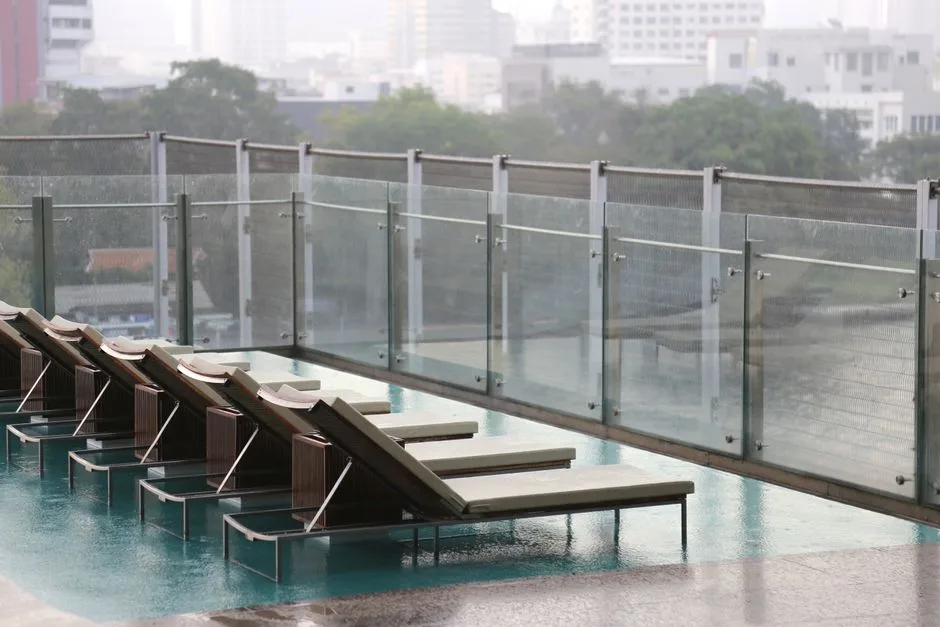
Frameless Glass Pool Fence
Frameless glass fencing — thick tempered glass panels (usually 12mm or 15mm) held in place by minimalist stainless steel spigots — is the gold standard for unobstructed pool views. The glass essentially disappears, making the pool area feel larger and maintaining sightlines from the house to the water. This is the most popular choice for modern and architectural homes where the pool is a visual centerpiece. Installed cost runs $300–$600 per linear meter, with 316 marine-grade stainless steel hardware essential for corrosion resistance near chlorinated water.
Photo by wutthichai charoenburi on Pexels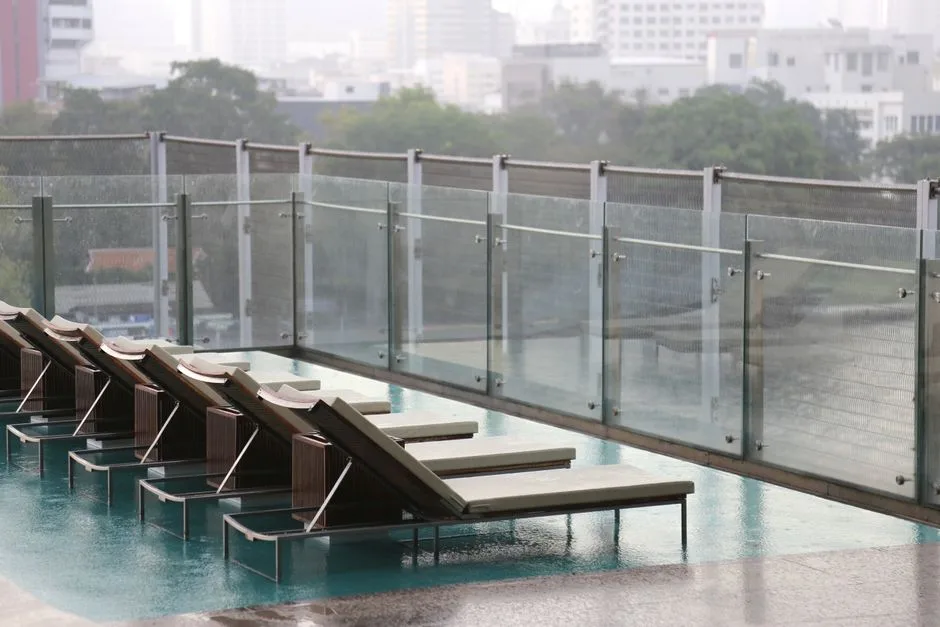
Semi-Frameless Glass Fence
Semi-frameless glass fencing uses glass panels with aluminum or stainless steel posts between each panel — the glass edges are exposed (no top or bottom rail), but the vertical posts are visible. This is a cost-effective compromise at $200–$400 per linear meter, and the posts add structural rigidity that allows for thinner (10mm) glass. Semi-frameless is also easier to DIY-install than frameless, as the posts provide more forgiving alignment tolerance. Choose powder-coated aluminum posts in black or dark bronze for the most contemporary look.
Photo by wutthichai charoenburi on Pexels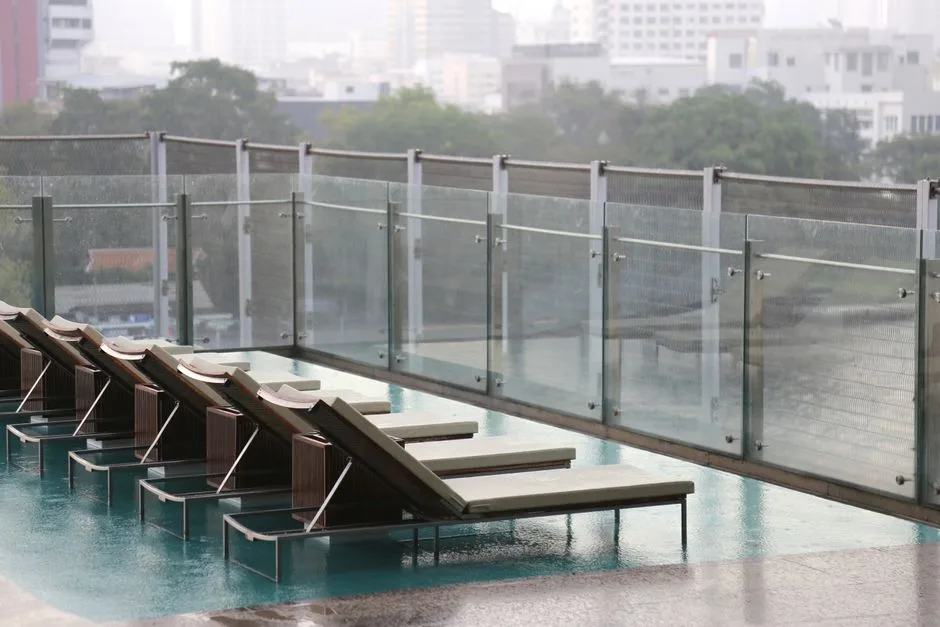
Frosted & Etched Glass Panels
Frosted or acid-etched glass panels provide the same clean lines as clear glass fencing but with built-in privacy — the translucent surface blurs the view through the fence while still letting light pass. This is ideal for pool areas visible from neighboring properties or street-facing side yards. Etched patterns (geometric lines, botanical motifs, or custom designs) add decorative interest beyond plain frost. Frosted glass costs roughly 20–30% more than clear glass per panel, but you save on not needing additional privacy screening.
Photo by wutthichai charoenburi on Pexels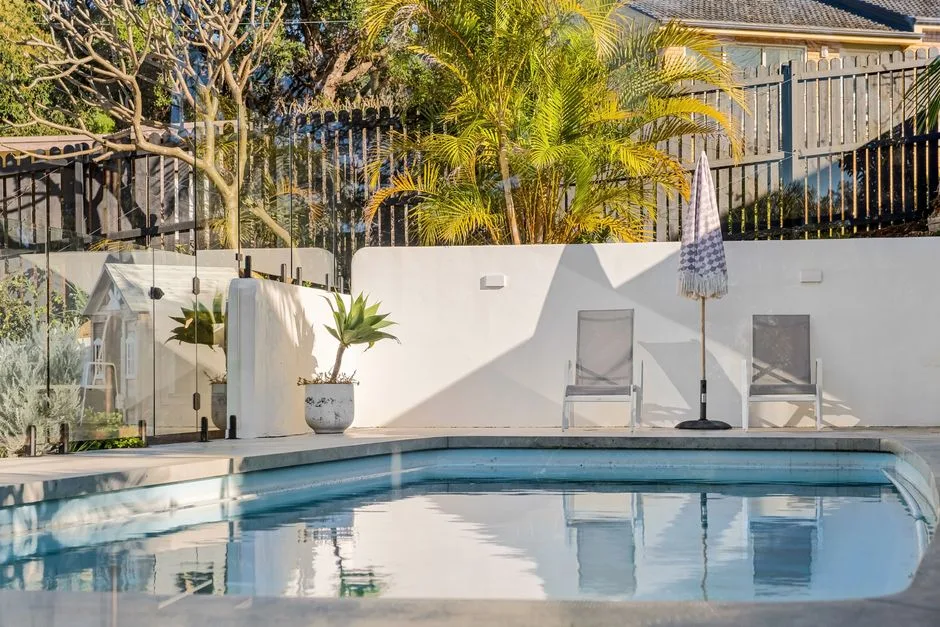
Glass Fence with Stainless Steel Spigots
The spigot (or standoff clamp) is the small but critical hardware piece that holds each glass panel in place — and it is a design detail worth paying attention to. Modern frameless fences use either face-fixed spigots (mounted to the side of the pool beam) or core-drilled spigots (set into holes drilled in the concrete). Square-profile spigots read as contemporary; round spigots are more traditional. 316 marine-grade stainless steel is non-negotiable near saltwater or salt-chlorinated pools — 304 grade will corrode. Quality spigots cost $30–$80 each; a typical fence needs one pair per panel plus corner and gate hardware.
Photo by Lisa Anna on Pexels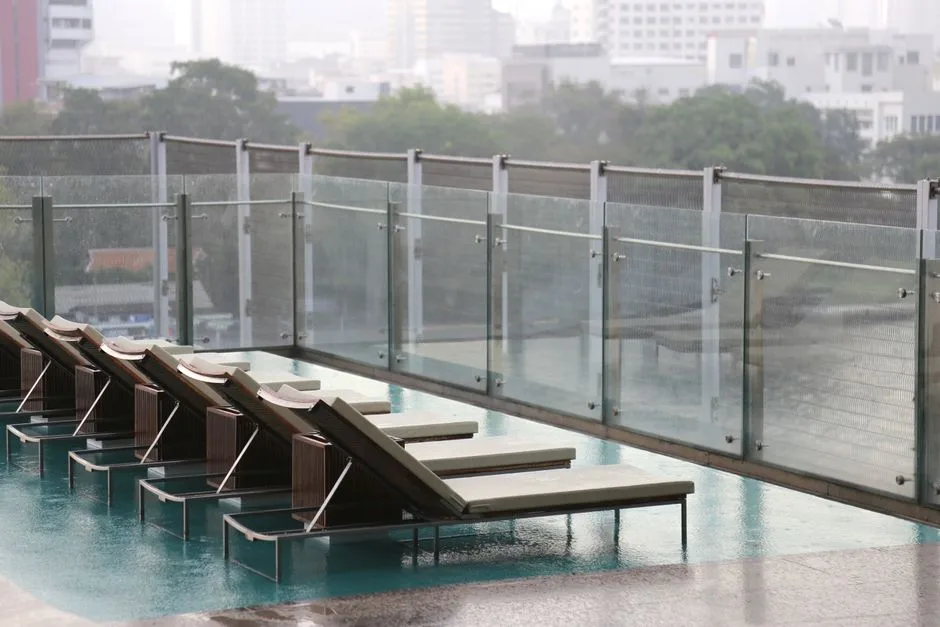
Tinted & Grey Glass Fence
Grey or smoked tinted glass adds a subtle sophistication that clear glass lacks — the darker tint gives the fence visual presence without blocking the view, and it hides water spots and fingerprints better than clear glass. The tint also reduces glare from sunlight reflecting off the pool surface, which can be a real comfort issue on west-facing pool decks. Tinted glass typically adds 15–25% to the per-panel cost versus clear. Available in light grey, dark grey, bronze, and subtle blue-grey tones that complement pool water color.
Photo by wutthichai charoenburi on Pexels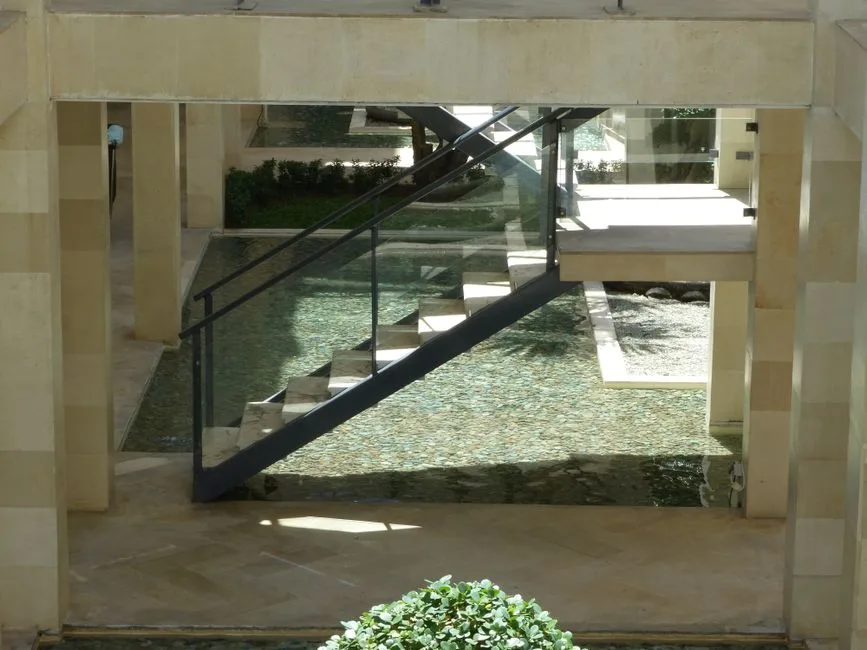
Glass Balustrade (Wider Panel Design)
Glass balustrades use wider panels (often 1.2–1.8 meters per panel versus the 0.9–1.2 meters typical of fence panels) for a more expansive, uninterrupted glass wall effect. The larger panels mean fewer vertical joints and spigots — a cleaner look at a higher per-panel cost ($500–$900 each, as the thicker glass and heavier handling add expense). Glass balustrades work especially well as a pool-to-deck transition rather than a full perimeter fence, creating a seamless visual connection between the pool and outdoor living space.
Photo by pierre matile on Pexels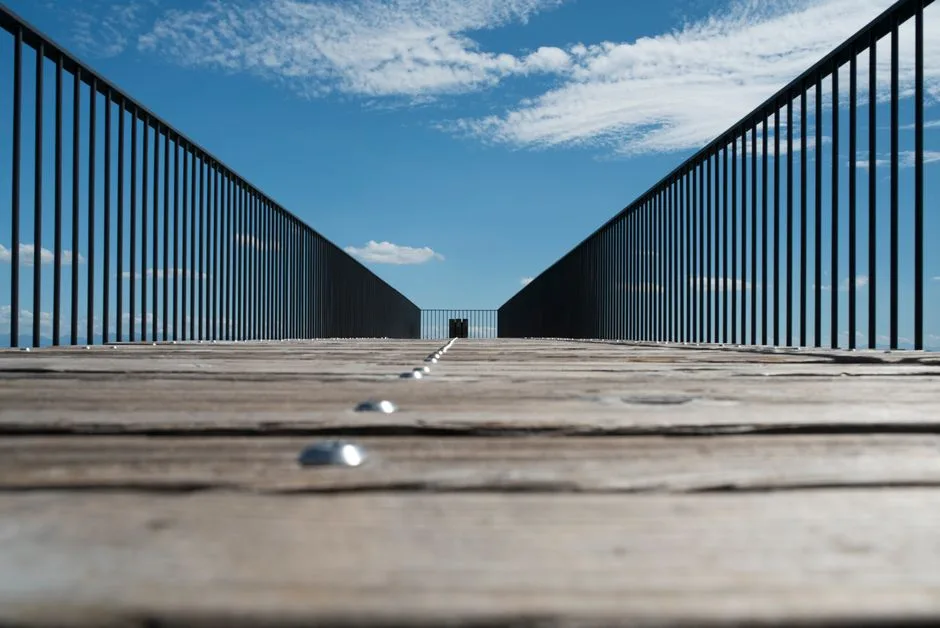
Low-Iron / Ultra-Clear Glass Fence
Standard tempered glass has a slight greenish tint from iron content in the raw material — it is subtle but visible when looking through multiple panels. Low-iron glass (also called starphire or ultra-clear) removes most of the iron during manufacturing, producing glass with exceptional clarity and no green cast. The visual difference is noticeable: low-iron glass makes the pool water color look truer and the fence nearly invisible. The premium is significant — roughly 40–60% more than standard clear glass — so it is most often used for the pool-facing elevation only, with standard glass on the side and rear fence lines.
Photo by Nao Triponez on PexelsMetal & Rod Fencing: Durable & Code-Compliant
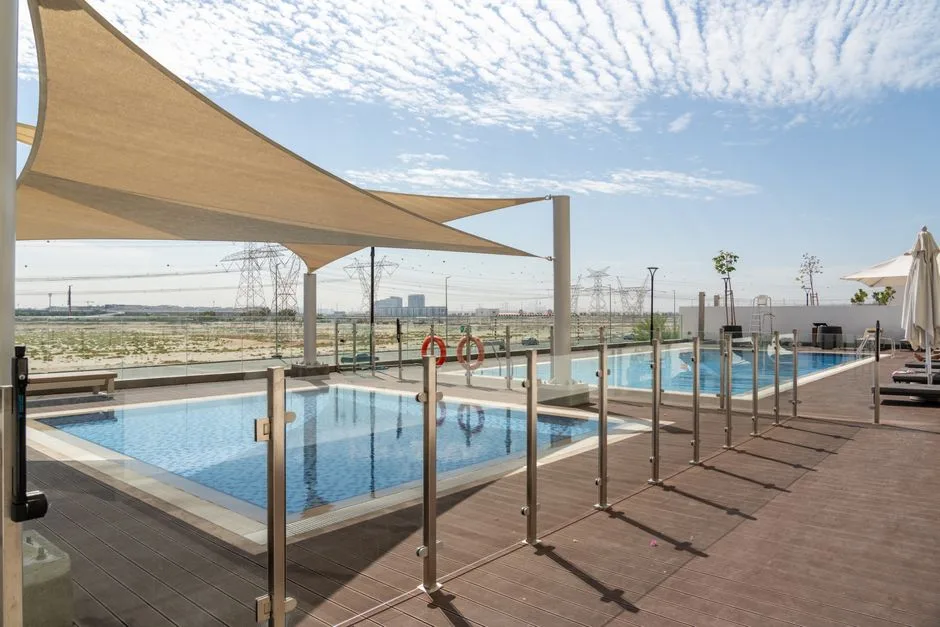
Black Aluminum Pool Fence
Black aluminum fencing is the most widely installed pool fence material in North America — and for good reason. It is rust-proof, lightweight, available in standard panel sizes, meets pool code requirements for spacing between pickets (under 4 inches / 100mm), and costs less than glass or steel ($80–$180 per linear meter installed). The black color recedes visually against landscaping, making the fence less obtrusive than it sounds. Most aluminum pool fences use a powder-coat finish rated for 15–20 years of outdoor exposure. Panels come in flat-top, spear-top, and arched-top profiles.
Photo by AJ Ahamad on Pexels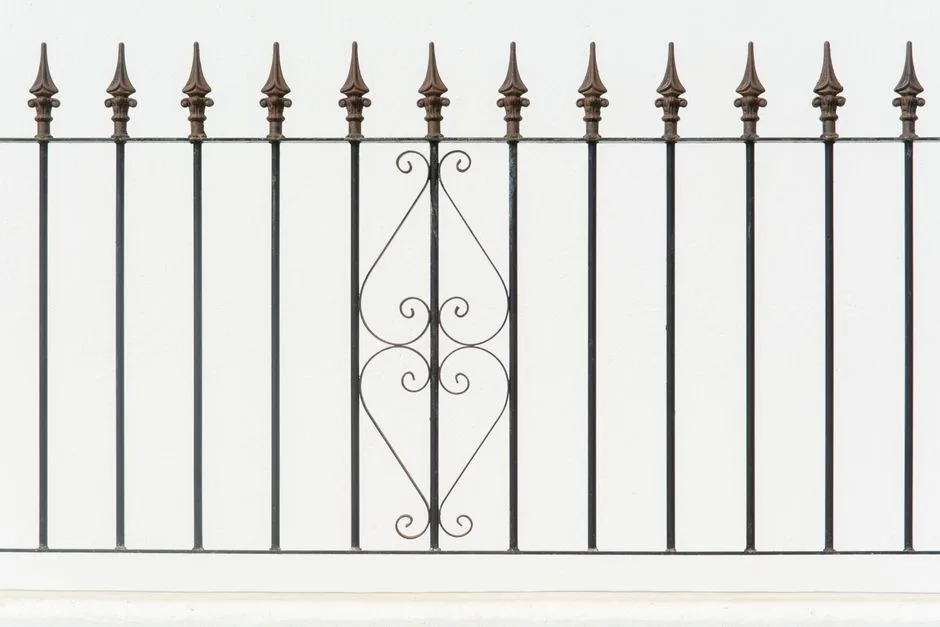
Wrought-Iron Ornamental Fence
Genuine wrought-iron fencing — hand-forged with decorative scrollwork, finials, and custom gate details — brings old-world craftsmanship and permanence that mass-produced aluminum panels cannot match. The heavy, solid feel and intricate detailing make it a statement piece as much as a safety barrier. Wrought iron is heavy, expensive ($250–$500+ per linear meter), and requires periodic painting to prevent rust — but a well-maintained wrought-iron fence lasts 50+ years. Modern steel equivalents (mild steel with hot-dip galvanizing and powder coating) offer a similar look with less maintenance at a lower cost.
Photo by Jan van der Wolf on Pexels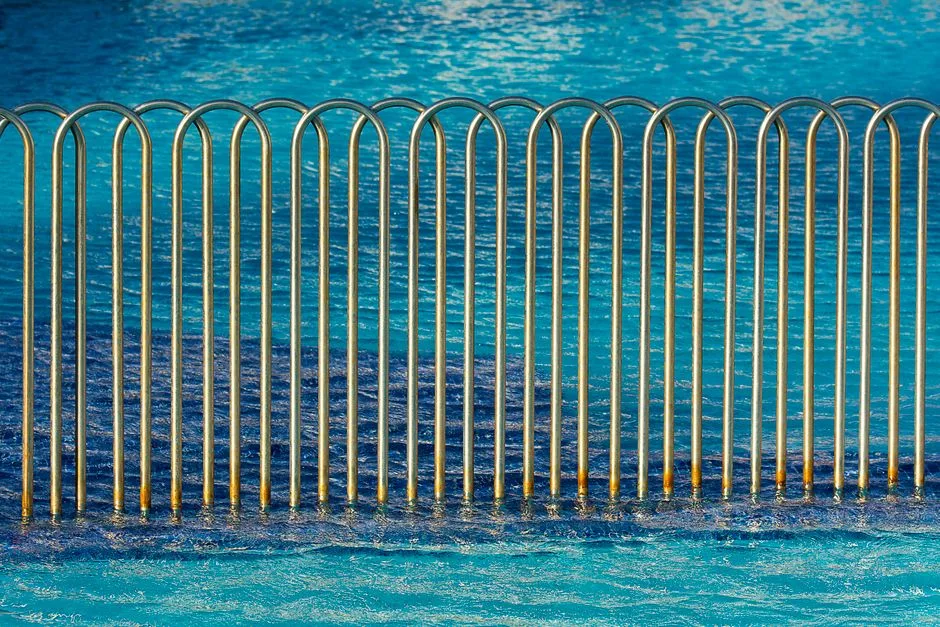
Horizontal Steel Tube Fence
Horizontal bar fencing uses parallel steel or aluminum tubes running between posts — no vertical pickets — for a clean, linear look that reads as modern and architectural. The horizontal lines complement rectangular pools and contemporary homes especially well. The spacing between horizontal bars must still meet pool code (typically under 100mm / 4 inches gap), and the bars must not be climbable — smooth, wide-diameter tubes (40–50mm) without intermediate footholds satisfy this requirement. Cost: $150–$300 per linear meter for powder-coated steel.
Photo by Jan van der Wolf on Pexels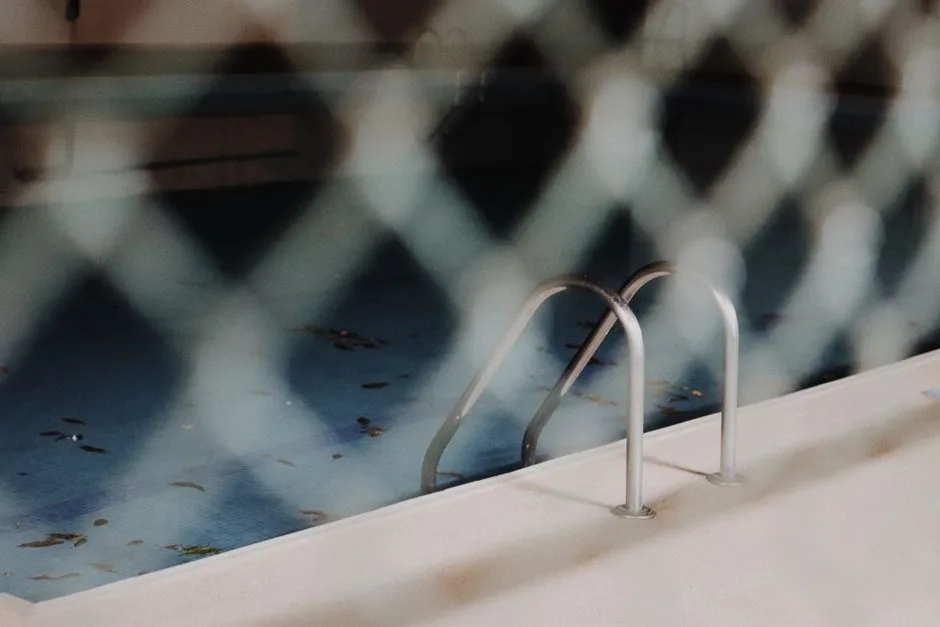
Powder-Coated Color Fence (White, Bronze, Green)
While black dominates the pool fence market, custom powder-coat colors — white, bronze, dark green, charcoal, or even custom-matched to the house trim — open up design possibilities. A white fence reads as crisp and classic in traditional gardens; dark bronze blends with timber decks; dark green disappears into hedging and tropical planting. The color is baked on as a powder coat, so it is far more durable than wet paint. Expect a 15–25% surcharge over the standard black powder coat and a 3–6 week lead time for custom colors.
Photo by Ariel Paredes on Pexels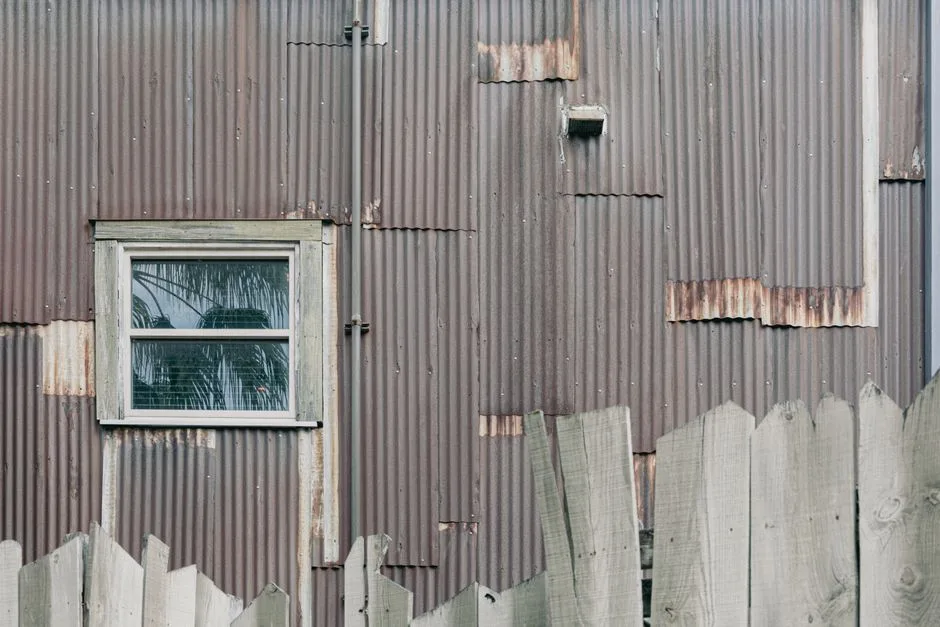
Corrugated Metal Fence Panel
Corrugated metal panels — galvanized steel or Corten (weathering) steel sheets mounted horizontally or vertically between posts — create a solid privacy barrier with an industrial, utilitarian aesthetic that has crossed over into high-end residential design. The corrugated texture catches light and shadow throughout the day, adding visual interest to what would otherwise be a plain metal wall. Galvanized panels cost $60–$120 per linear meter; Corten steel runs $150–$250 per meter. Good for privacy on one or two sides of the pool where transparency is less important and wind protection is valuable.
Photo by Arian Fernandez on Pexels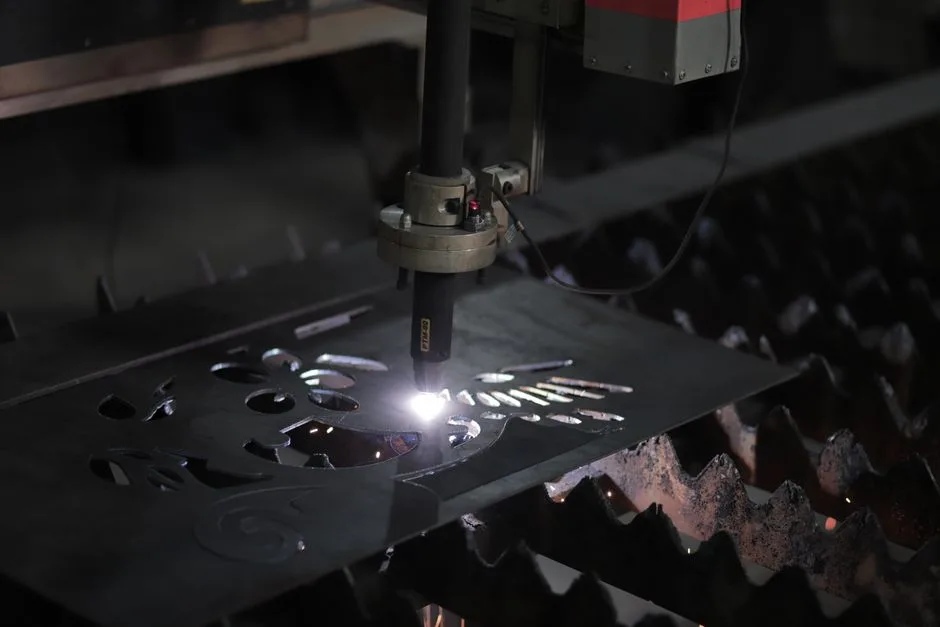
Laser-Cut Decorative Metal Panels
Laser-cut or CNC-routed metal panels — with custom patterns from geometric lattices to botanical silhouettes — turn the pool fence into a design feature. The cutouts allow light, air, and partial views through while the solid portions provide privacy and wind protection. Popular patterns include Moroccan trellis, Japanese wave, Australian native flora, and abstract geometric grids. Custom laser-cut aluminum panels cost $250–$500 per panel (roughly 1.2×1.8m); off-the-shelf decorative panels from specialist suppliers run $100–$250 each. The panels are powder-coated for outdoor durability.
Photo by Ana Victoria Valverde on Pexels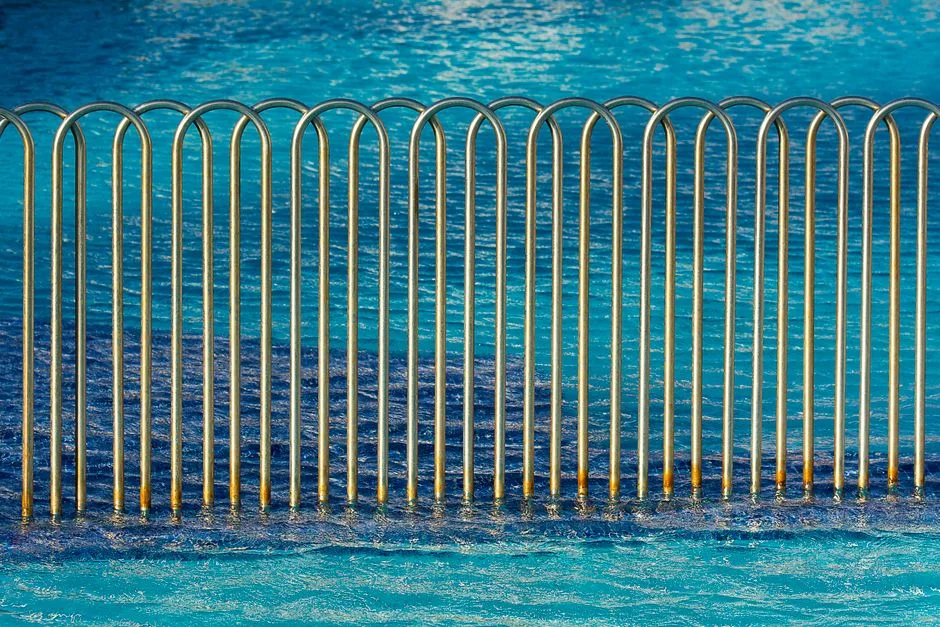
Mixed Metal + Timber Fence
Combining metal posts and frame with timber infill slats or panels brings warmth and texture to pool fencing without sacrificing durability. The metal frame provides the structural strength and corrosion resistance; the timber infill (hardwood like merbau, teak, or thermally modified ash) adds natural color and grain that softens the fence’s appearance. At $180–$350 per linear meter, this hybrid approach is mid-range in cost and works well with transitional and organic-modern landscape styles. The timber will weather to silver-grey unless periodically oiled.
Photo by Jan van der Wolf on PexelsPrivacy Screens & Feature Walls: Block the View, Keep the Style
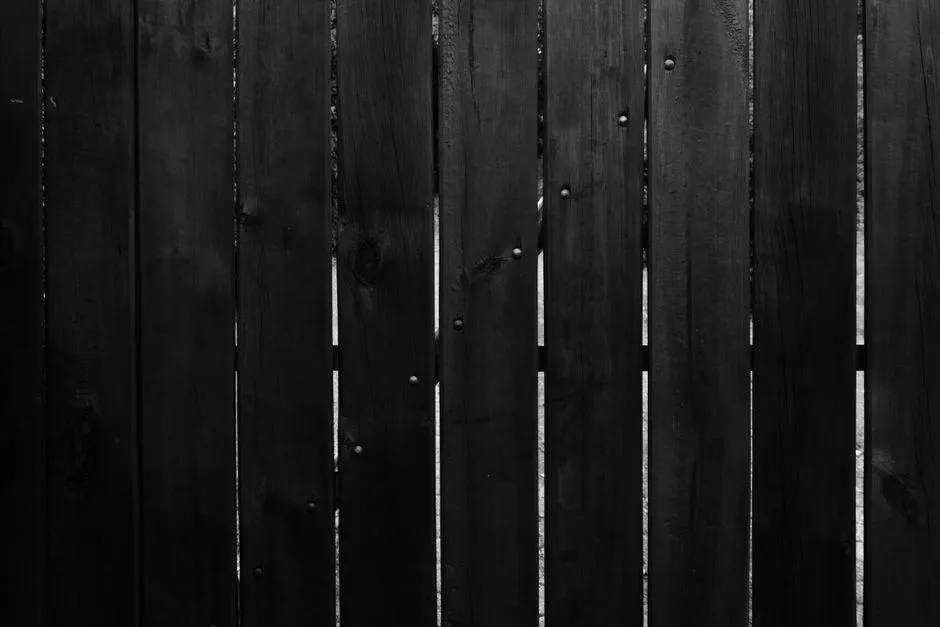
Horizontal Timber Slat Privacy Screen
A horizontal timber slat fence or screen — parallel wooden boards with small gaps between them, mounted between posts — is the most popular pool privacy solution for contemporary homes. The horizontal lines elongate the yard visually, and the gaps allow some airflow (reducing wind load on the fence) while blocking direct sightlines from neighbors. Hardwood species (merbau, spotted gum, ipe) last 25+ years without treatment; treated pine is the budget option at 15–20 years. Budget $150–$300 per linear meter for a quality hardwood slat screen with aluminum or galvanized steel posts.
Photo by David Correa Franco on Pexels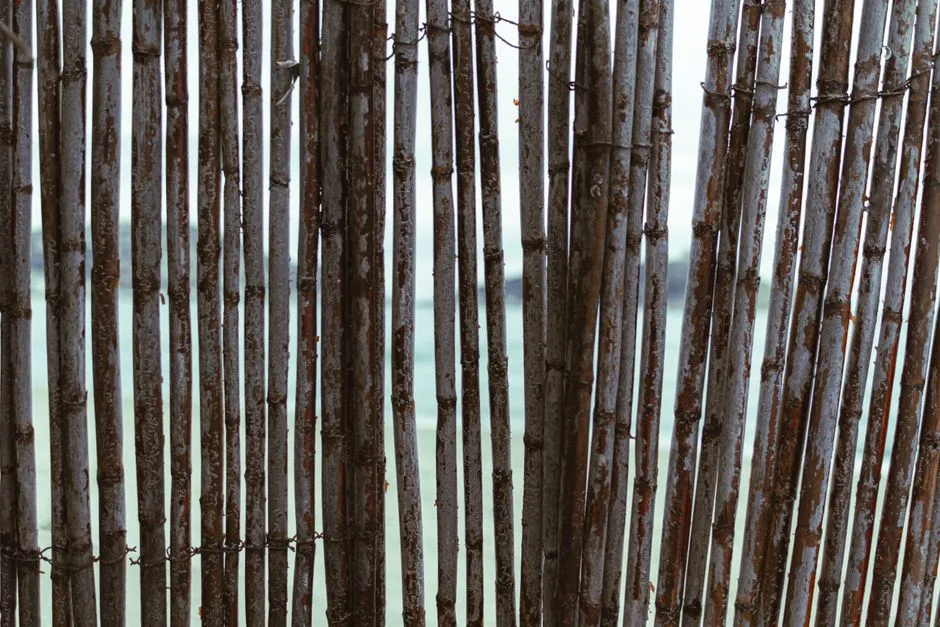
Vertical Batten Privacy Screen
Vertical battens — narrow timber or composite boards fixed vertically with alternating spacing — create a rhythm of light and shadow that changes throughout the day as the sun moves. The vertical orientation draws the eye upward, making the pool area feel taller and more enclosed without feeling claustrophobic. Alternating batten widths (e.g., 42mm / 90mm / 42mm) or varying the gap spacing adds a layer of design intentionality. Composite battens (wood-plastic blend) offer the timber look with zero maintenance and no warping, at $120–$220 per square meter.
Photo by Mahmoud Yahyaoui on Pexels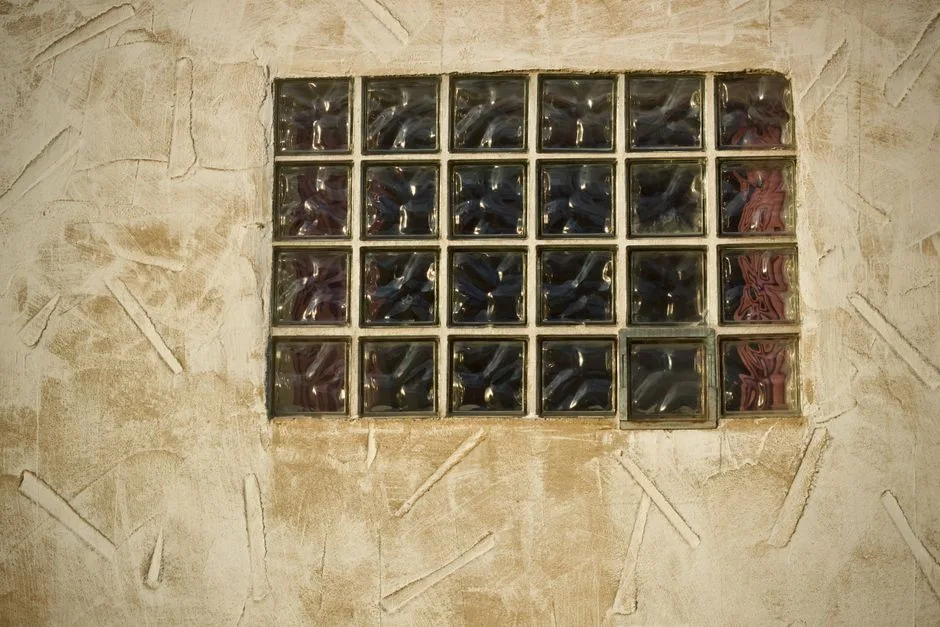
Concrete Breeze Block Wall
Breeze blocks — also called screen blocks or pattern blocks — are decorative concrete masonry units with geometric cutouts that create a semi-transparent wall. Originally a mid-century modern staple (think Palm Springs poolside walls), breeze blocks are experiencing a major design revival. The open pattern provides privacy from direct sightlines while allowing light, air, and dappled shadow patterns through. Standard breeze blocks cost $3–$8 each; a 1.8-meter-tall wall uses roughly 20–25 blocks per linear meter, plus a reinforced concrete footing and intermittent steel columns. The total installed cost runs $200–$400 per linear meter.
Photo by Peter Dyllong on Pexels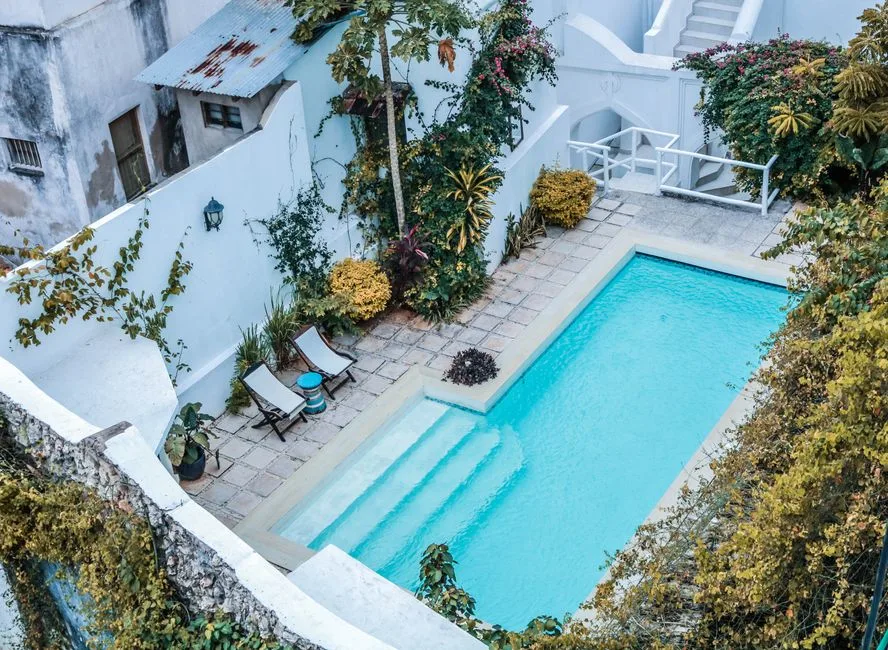
Living Green Wall / Vertical Garden Fence
A living wall — plants growing vertically on a purpose-built structure — is both a privacy screen and a garden feature. Modular green wall systems (with built-in drip irrigation) support a mix of ferns, succulents, trailing plants, and small flowering perennials that create a lush, textured living tapestry. The plants absorb sound, filter dust, and cool the surrounding air through transpiration — real functional benefits beyond just privacy. A professionally installed green wall with automated irrigation costs $400–$800 per square meter. A DIY version using wall-mounted planter pockets and low-maintenance succulents can come in under $100 per square meter.
Photo by ERIC MUFASA on Pexels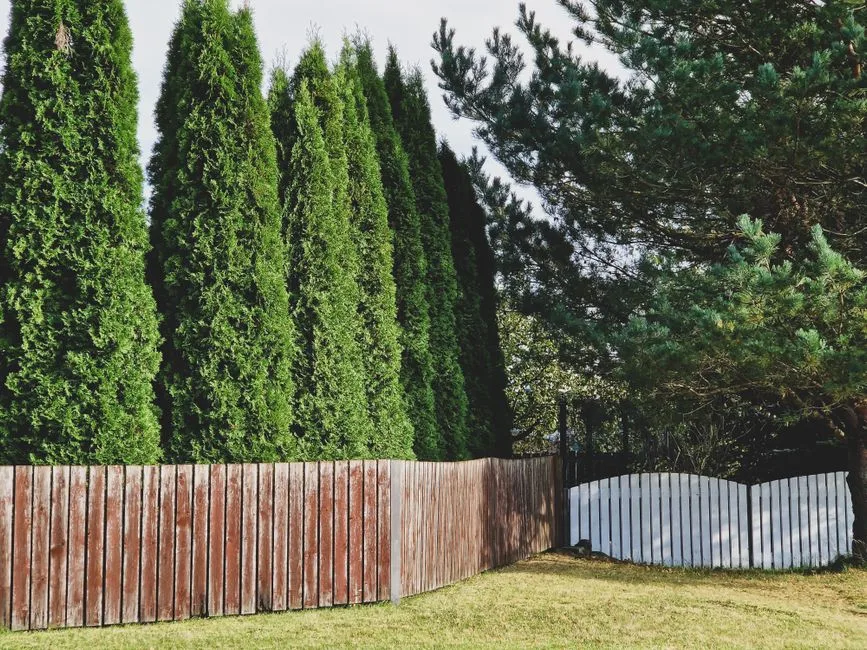
Hedge & Planting Privacy Border
A well-chosen hedge is the most natural-looking privacy screen available — and one of the most affordable over the long term. The best poolside hedging plants: clumping bamboo (non-invasive Gracilis or Oldhamii varieties — avoid running bamboo at all costs), Lilly Pilly / Syzygium (fast-growing Australian native, dense foliage), Pittosporum (salt-tolerant, ideal for coastal pools), and Ficus hillii (classic formal hedge, needs regular trimming). A row of 200mm pot-sized hedging plants costs $20–$40 per plant; space them 0.8–1.2m apart. The catch: hedges take 2–4 years to reach privacy height, and poolside leaf drop can add to your skimming chores. That chore is the easiest one on this page to cancel: a self-driving cleaner sweeps the floor every day, so the hedge can drop its leaves and the pool still looks untouched between swims.
Photo by Hanno on Pexels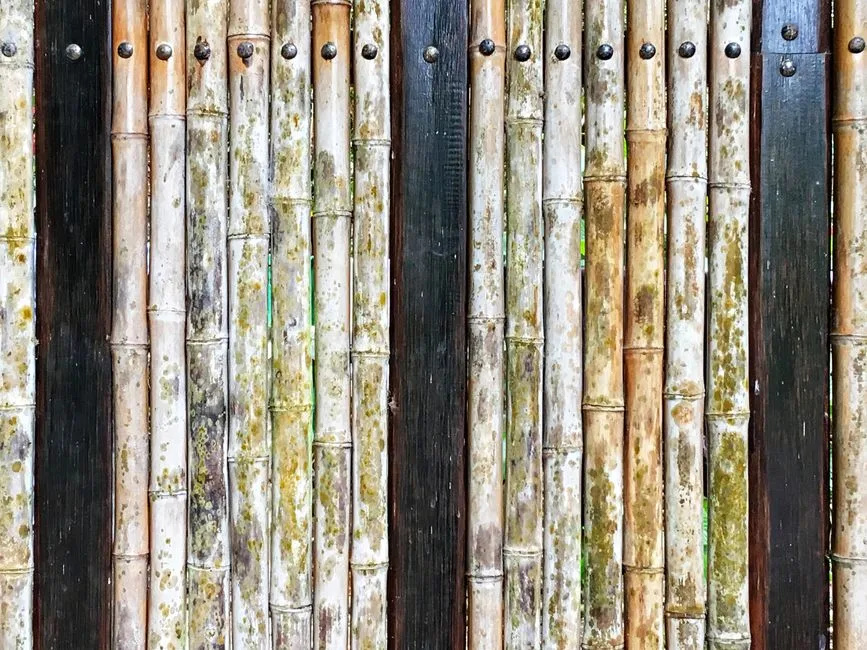
Bamboo Roll Screening
Bamboo roll fencing — natural bamboo poles wired together into a flexible roll — is the quickest and cheapest way to add pool privacy ($30–$80 per linear meter for the material). It attaches to an existing fence or a simple timber post frame with cable ties or U-nails, and installation takes an afternoon. The natural bamboo color and texture bring a tropical, resort-like feel to the pool area. The downside: bamboo roll fencing typically lasts only 5–8 years outdoors before the poles begin to split and degrade. UV-stabilized synthetic bamboo-look rolls last 10–15 years but lose the natural texture.
Photo by DΛVΞ GΛRCIΛ on Pexels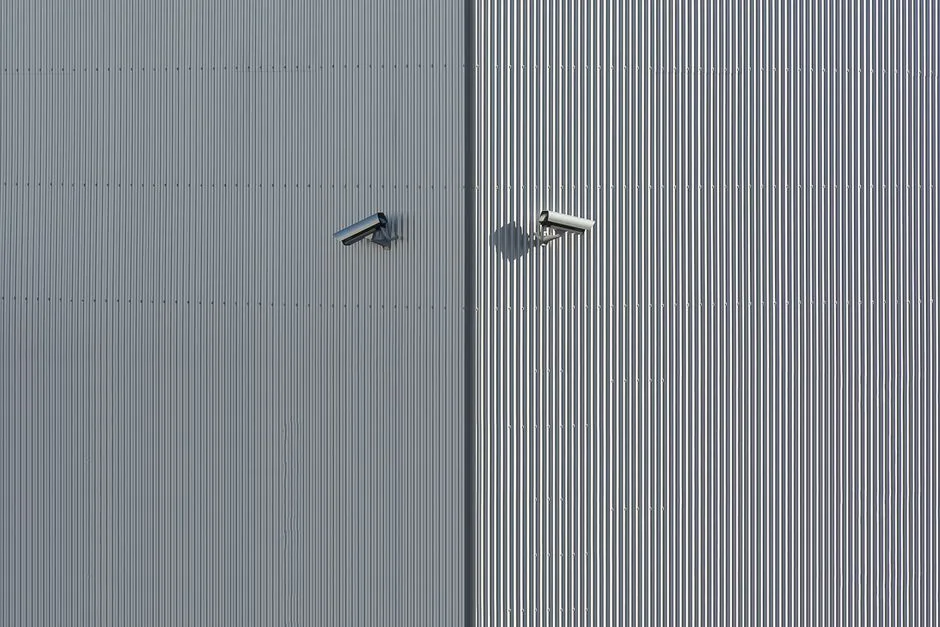
Corrugated Steel Privacy Panel
A single run of corrugated steel panels — rust-finished Corten or powder-coated dark grey — mounted vertically on a steel post frame makes a bold, modern privacy wall. Unlike a full fence, a privacy panel is typically used on just one or two key elevations (the side facing the neighbor’s window or the street) while the remaining pool perimeter uses transparent fencing. The steel panel also acts as a windbreak, making the pool deck more comfortable on breezy days. At $120–$250 per linear meter, a targeted privacy panel is often more cost-effective than screening the entire pool perimeter.
Photo by Jan van der Wolf on Pexels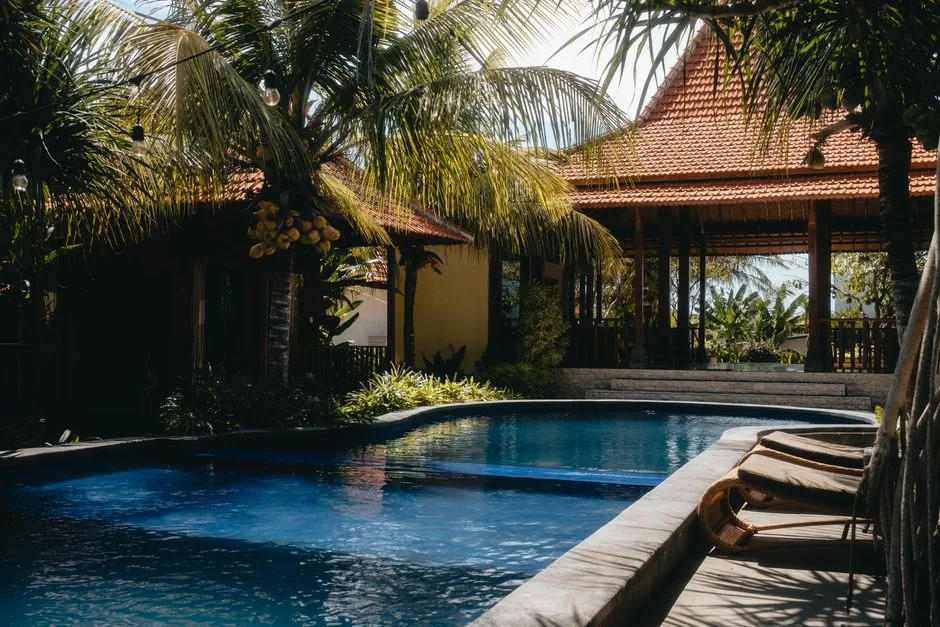
Stone-Clad Masonry Privacy Wall
A rendered and stone-clad masonry wall — concrete block core with natural stone veneer or textured render finish — creates a permanent, substantial privacy barrier that reads as part of the landscape architecture rather than a fence. The wall can incorporate built-in features: a water feature or cascade, recessed niches for plants or sculpture, integrated LED step lights, or even a built-in bench seat along its base. This is the most expensive privacy option at $400–$800+ per linear meter for a 1.8-meter wall with stone cladding, but it adds real property value and requires essentially zero maintenance beyond occasional cleaning.
Photo by Lukas Faust on PexelsPool Enclosures & Covers: Extend the Swim Season
Retractable Telescopic Pool Enclosure
A telescopic enclosure — interlocking glass or polycarbonate segments that slide along tracks to stack at one end — gives you the best of both worlds: an indoor pool in winter (or on cold mornings), and a completely open-air pool in summer. The segments glide on stainless steel rails embedded in the pool deck and can be opened or closed by one person in under a minute. Motorized versions operate with a remote control. These are premium structures at $15,000–$40,000+ depending on pool size and span, but they effectively add 3–5 months to the swimming season in temperate climates and eliminate leaf/debris cleanup entirely when closed.
Photo by An Flamand on Pexels
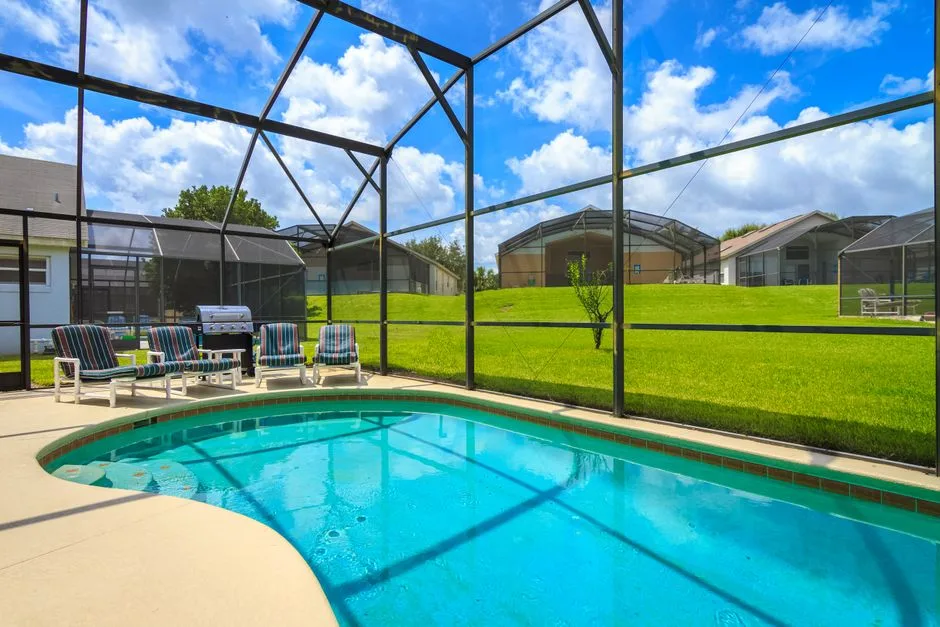
Screened Pool Enclosure / Florida Lanai
The screened pool enclosure — known as a lanai in Florida, where roughly 80% of residential pools have one — is a lightweight aluminum frame structure covered in fine fiberglass insect screen mesh. It keeps out mosquitoes, leaves, and debris while allowing full sunlight, breeze, and views through. The structure is effectively a giant screened room over the pool and adjoining patio. Screen enclosures cost $8,000–$20,000 for an average pool and last 10–15 years before the mesh needs replacing. The screen mesh also provides a mild shading effect (roughly 15–20% sun reduction), which helps reduce UV exposure during peak hours.
Photo by An Flamand on Pexels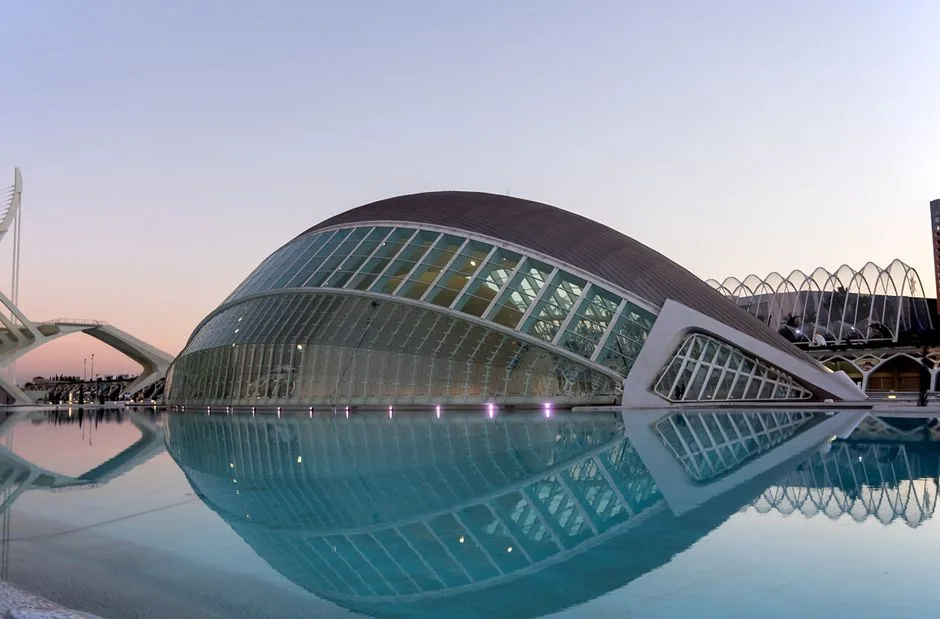
Glass Dome / Atrium Pool Enclosure
A fixed glass or polycarbonate dome over the pool creates a true indoor-outdoor room — the transparent roof and walls keep the weather out while maintaining the sensation of swimming outdoors. The dome structure, usually an aluminum or steel frame with glazed panels, can be arched, gabled, or geodesic in form. These are full-time enclosures (not retractable), so ventilation — motorized roof vents, louvered side panels, or mechanical air handling — is essential to manage humidity and prevent condensation. Fixed glass enclosures run $25,000–$60,000+ for a full pool-spanning structure. They are most practical in cooler climates where the swim season would otherwise be 3–4 months.
Photo by Manuel Torres Garcia on Pexels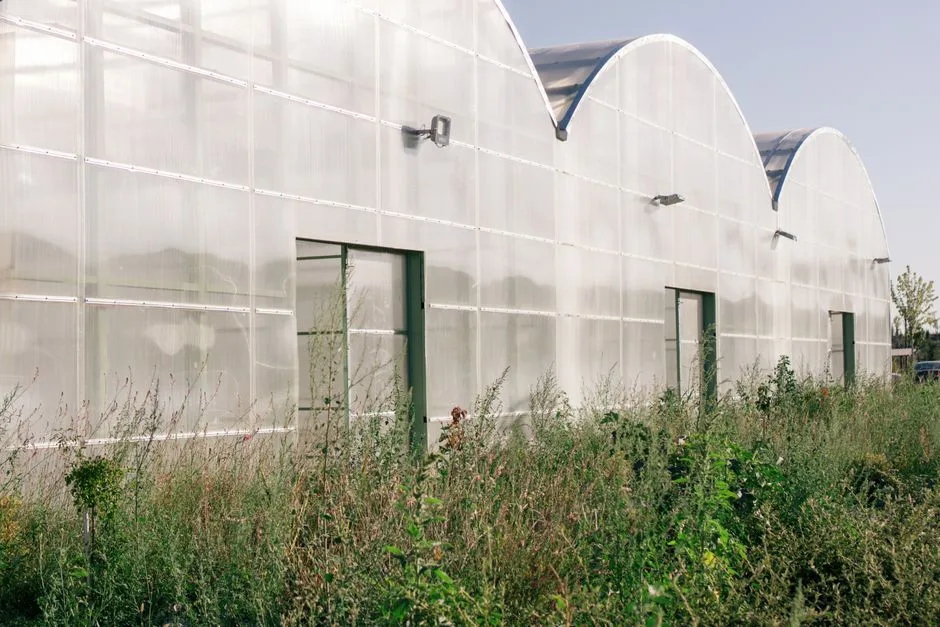
Fixed Polycarbonate Roof Enclosure
A lightweight polycarbonate roof structure — twin-wall or multi-wall polycarbonate sheets on a metal frame — provides weather protection, UV filtering, and substantial heat retention at roughly half the cost of glass. Polycarbonate is virtually unbreakable, weighs far less than glass (simpler, cheaper framing), and the multi-wall construction provides insulation (R-value of 1.5–2.0 versus 0.9 for single glass). The translucent material diffuses sunlight, creating even, shadow-free light over the pool. Budget $10,000–$25,000 for a polycarbonate-enclosed pool; the panels typically have a 10-year warranty against yellowing.
Photo by Berna on Pexels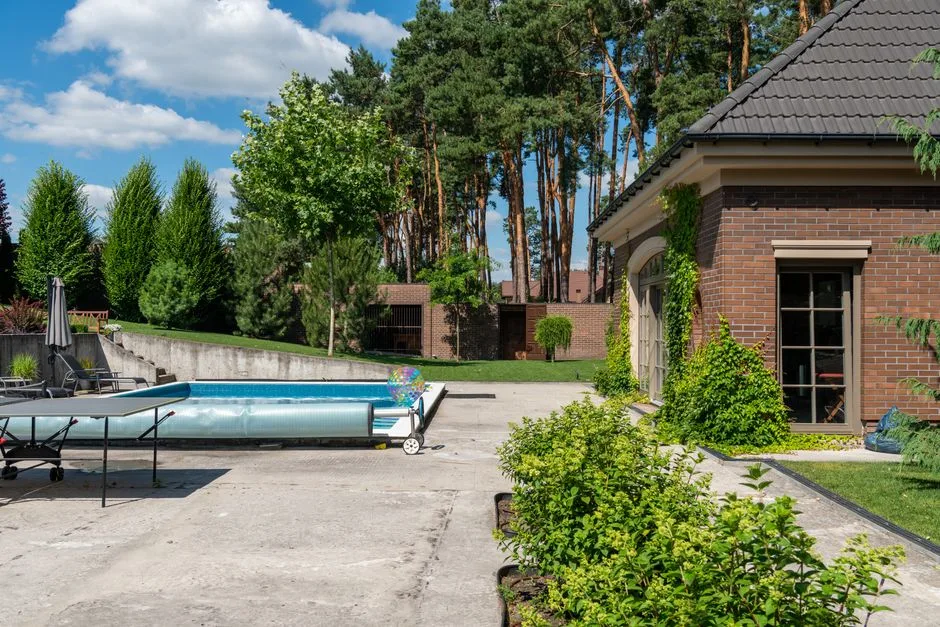
Motorized Slatted Pool Cover
A motorized slatted safety cover — interlocking PVC or polycarbonate slats that roll up into a submerged or deck-level cassette at one end of the pool — serves triple duty: safety barrier (rated to support a child’s weight), thermal blanket (reduces heat loss by 50–70%), and debris shield (keeps leaves and dirt out when the pool is not in use). The cover operates with a key switch or remote and takes 30–60 seconds to open or close. Installed cost runs $8,000–$18,000 for a retrofit cassette system. Unlike a fence, an automatic cover provides active, always-on protection — but it should complement, not replace, perimeter fencing for code compliance in most jurisdictions.
Photo by Max Vakhtbovych on Pexels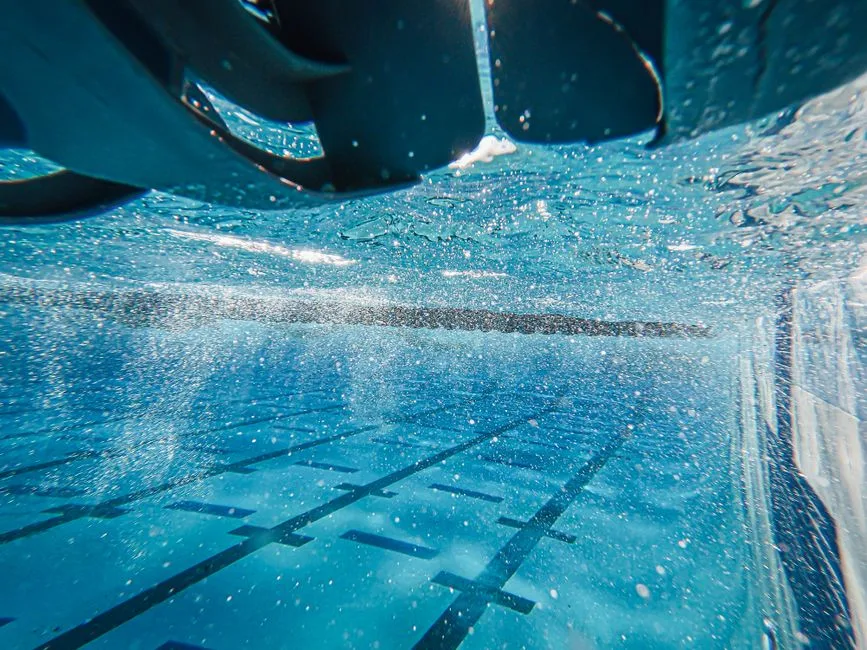
Low-Profile Bubble / Dome Cover for Lap Pool
A low, arched bubble cover — clear PVC or reinforced vinyl stretched over aluminum ribs — is a practical, cost-effective enclosure for narrow lap pools and swim spas. The low profile minimizes the air volume that needs heating, and the clear material creates a greenhouse effect that can raise the water temperature by 5–10°C (9–18°F) on a sunny day. These covers are usually stationary for the cool season and removed for summer, though some designs have a flip-up side for access. Budget $3,000–$8,000 for a lap-pool-length bubble cover. The PVC material has a lifespan of 5–8 years before UV degradation requires replacement.
Photo by Kindel Media on Pexels
Combination Enclosure / Outdoor Room
A hybrid approach that encloses part of the pool (often the shallow end or spa area) while leaving the rest open-air — creating a covered pool room that connects to an outdoor swimming area. The enclosed portion might have glass walls, a solid roof, heating, and lounge furniture; the open portion remains a traditional outdoor pool. A motorized glass wall or large sliding doors separate the two zones. This is a high-end custom design ($30,000–$70,000+) that essentially gives you both an indoor and outdoor pool experience in one. It works best in climates with distinct seasons where year-round swimming is desirable but full-time enclosure feels too disconnected from the outdoors.
Photo by Amonik on PexelsSafety Gates & Child Barriers: Protection You Can Trust
Self-Closing Glass Pool Gate
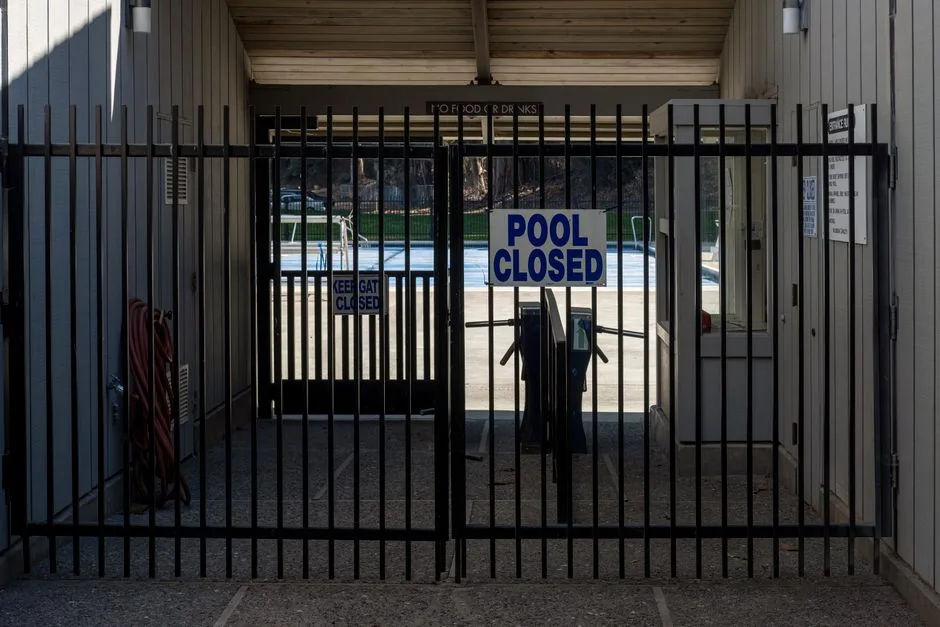
A self-closing gate is the single most important safety component of any pool fence — and it is legally required by pool safety codes in virtually every jurisdiction. The gate must swing outward (away from the pool), self-close from any position, and self-latch at a height unreachable by small children (typically 1.5m / 54 inches above ground). Glass pool gates use the same frameless or semi-frameless panels as the fence, with a hydraulic self-closing hinge and a magnetic latch. A quality self-closing glass gate with compliant hardware costs $1,200–$3,000 installed. Test the self-close mechanism monthly — it is the component most likely to fail over time.
Photo by David McElwee on Pexels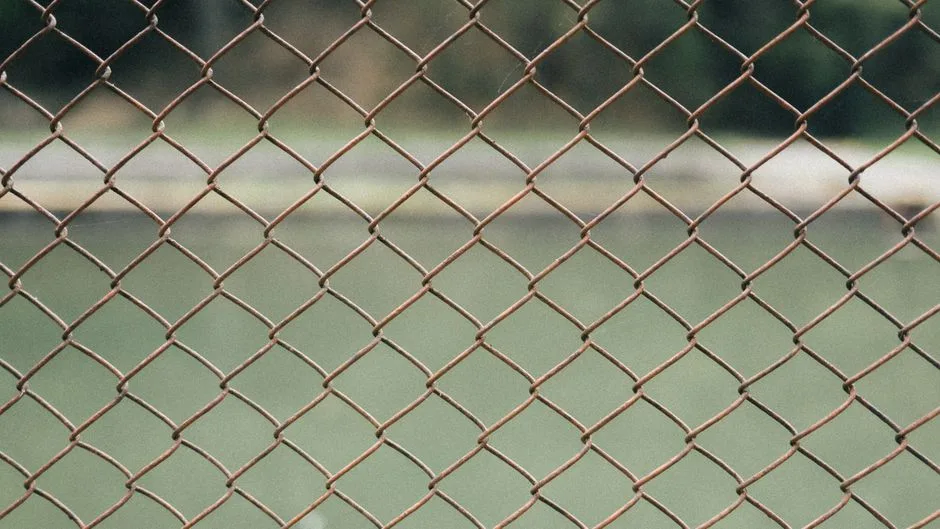
Removable Mesh Pool Fence
Removable mesh pool fencing — tension-based polyester mesh panels that insert into pre-drilled holes in the pool deck with aluminum poles — is the go-to temporary safety solution for families with young children. The mesh is climb-resistant (no horizontal rails, holes too small for toe-holds), transparent enough to see through, and can be removed in minutes for parties or adult-only swimming. It is also one of the most affordable pool fence options at $40–$80 per linear meter. The mesh is UV-stabilized and typically lasts 8–12 years. The fence pulls taut between poles, so it looks neat and intentional — not like a construction barrier.
Photo by Diana ✨ on Pexels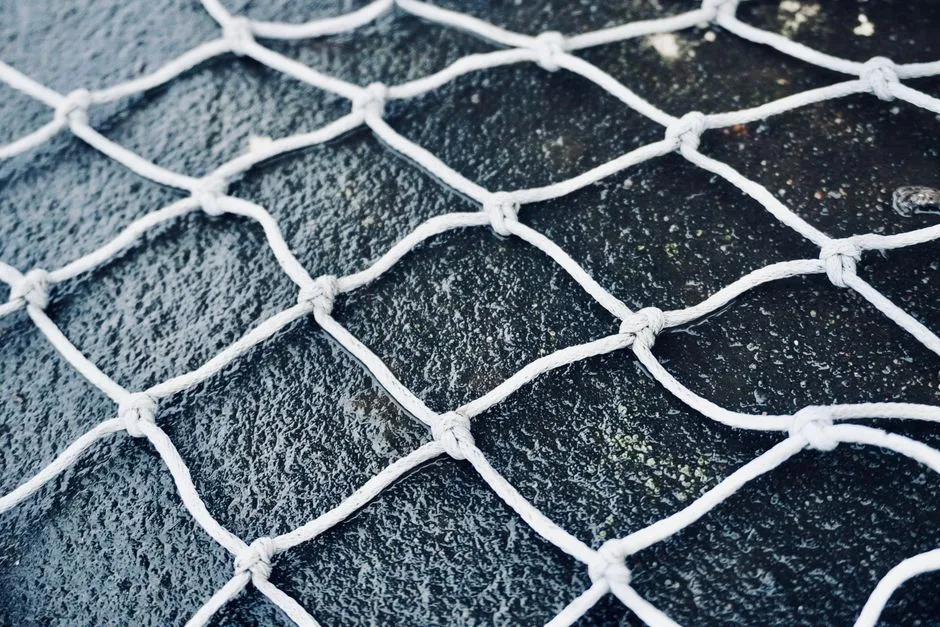
Pool Safety Net Cover
A pool safety net — a tensioned net stretched across the entire pool surface and anchored to bolts around the pool deck — provides passive, always-on protection that requires no action from anyone to be effective. Unlike a fence that can be left open, a properly installed safety net cannot be bypassed. The net uses a central tensioning system that keeps the mesh taut enough to prevent a child from reaching the water. Nets cost $1,500–$4,000 installed and are typically removed for swimming and reinstalled afterward (a 10–15 minute process). They are especially popular for vacation homes and rental properties where the pool may be unattended for extended periods.
Photo by Dhruv Pulipaka on Pexels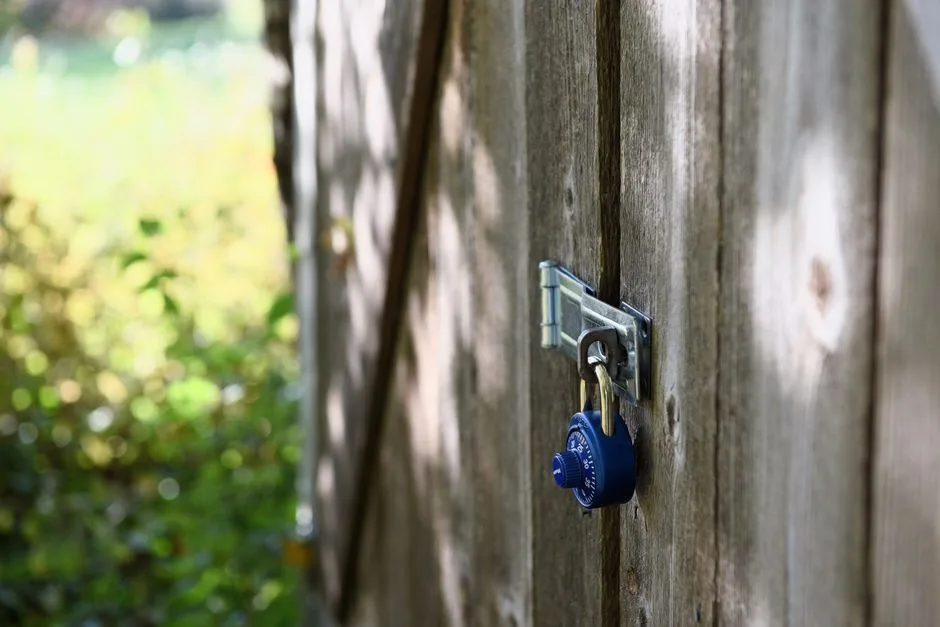
Magnetic Latch & Pool Gate Alarm
Compliant pool gate hardware — specifically a magnetic self-latching mechanism (Magnalatch is the most recognized brand) and optionally a gate alarm — is not a design choice; it is a legal requirement. The magnetic latch must engage automatically when the gate swings closed, and the release knob must be at least 1.5m above ground on the pool side (or require a tool to open). A battery-powered gate alarm ($50–$150) adds an audible alert if the gate is left open for more than 15 seconds — a common code requirement in Australia and increasingly in US jurisdictions. Check your local pool safety standard (ASTM F1908 in the US, AS 1926 in Australia, BS EN 16582 in Europe) for exact requirements.
Photo by Nathaniel Tang on Pexels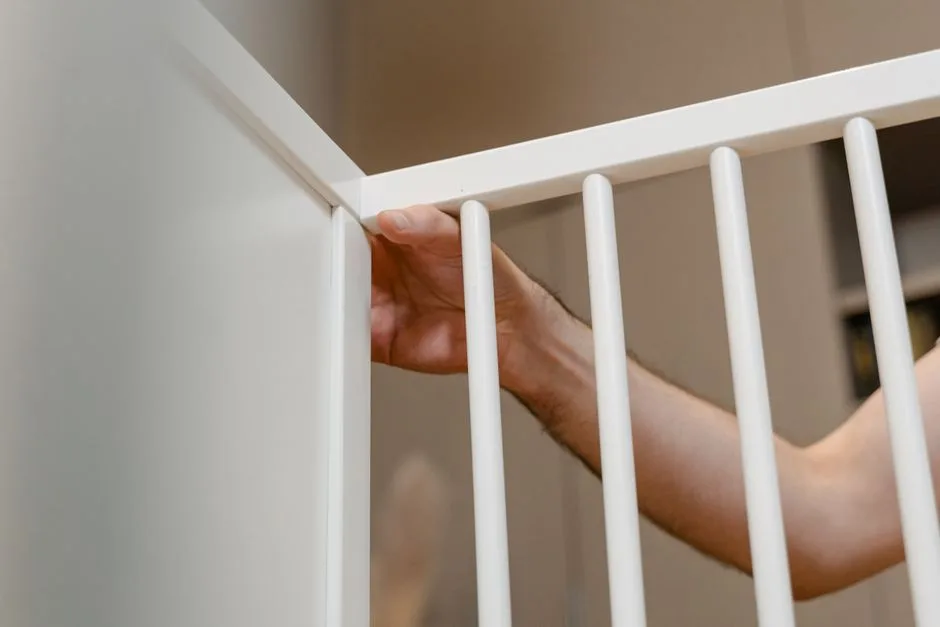
Childproof Vertical-Bar Fence (No Climbable Rails)
A true childproof fence design eliminates any horizontal element that a child could use as a foothold. Vertical bar fences achieve this by using vertical pickets only — no mid-rails, no decorative cross-bracing — with all horizontal structural members on the pool side (where a child approaching from outside the pool area cannot reach them). The picket spacing must be under 100mm (4 inches) so a child cannot squeeze through, and the gap under the fence must be under 100mm to prevent crawling underneath. This is standard aluminum pool fence design, but the detail matters — verify with your local inspector that the specific product meets code for climbability.
Photo by MART PRODUCTION on Pexels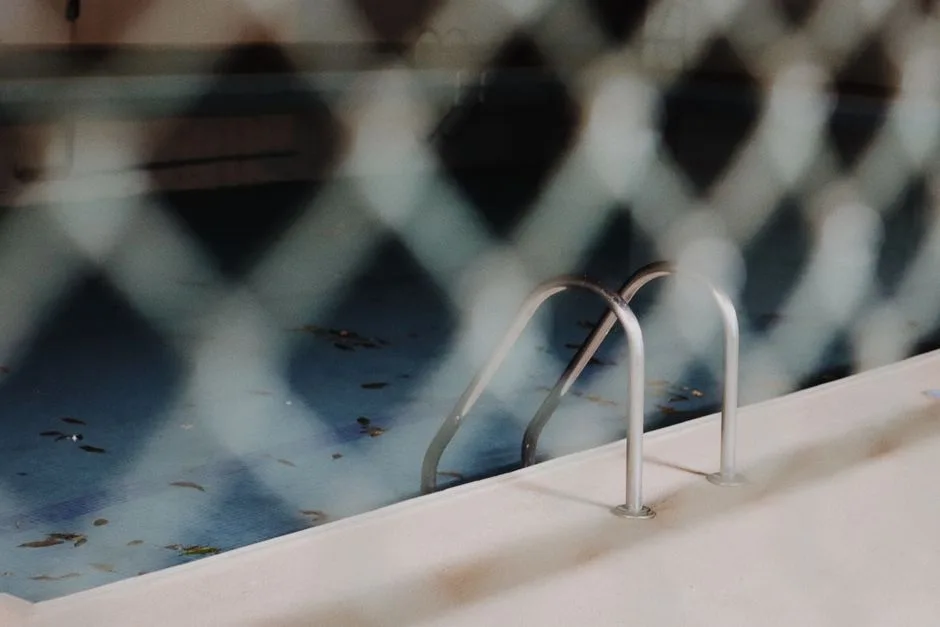
Retractable / Roll-Away Pool Fence
A retractable pool fence — mesh or fabric panels that roll out from wall-mounted cassettes or pull across on a track system — provides a safety barrier that disappears when the pool is in adult-only use. Unlike a removable fence (which requires storing poles and panels), a retractable fence retracts into its own housing in seconds. These systems work well across pool-to-house access points, patio door openings, and other places where a permanent fence would obstruct daily traffic flow. Retractable fences cost $200–$500 per linear meter. They are generally not accepted as the primary pool barrier by code (most codes want a fixed fence), but they serve as an excellent secondary barrier across specific access points.
Photo by Ariel Paredes on PexelsA note from our service team. The right fence does more than meet code — it changes your maintenance routine. Our techs love a solid privacy wall in windy areas because it means dramatically less leaf and dust load in the water; but a fence is not a wildlife barrier, and ducks still find open pools from the air. Before you assume the enclosure solved everything, check the skimmer after a windy week. The skimmer only catches what floats; the rest settles on the floor, where a net never reaches — a cordless floor cleaner covers that half daily, so the fence cuts the load and the cleaner handles what still gets through. If feathered visitors keep landing anyway, our guide to keeping ducks out of your pool covers the humane deterrents we actually recommend to customers.
More Pool Design Inspiration
This is part of our Pool Design Ideas series. Explore the full collection to plan every detail of your dream pool:


