How Much Water (and Money) Can Smart Irrigation Actually Save? The Real Numbers

Smart irrigation gets sold on savings numbers, and the numbers are all over the place.
EPA WaterSense says up to 15,000 gallons a year in one place and 7,600 in another. Manufacturers claim 30 to 50 percent. The largest field study of these systems found an average closer to 6 percent, with four in ten homes using more water than before.
None of those numbers tell you what will happen at your house. So the decision comes down to guesswork, a $200 to $300 purchase, and a lawn you would rather not kill testing the theory.
This walks through how to work it out for your own yard: whether your current watering is wasteful enough for a controller to fix, what your water actually costs, what to repair before you buy anything, which feature genuinely earns the money, and which ones are oversold.
Is an Irrigation System Worth It in the First Place?
Before any of that math matters, there is a more basic question: should there be a system here at all. Ask an AI summary and it will hand you a checklist — yard size, climate, how much you travel. True, but thin. The honest answer depends on three numbers most guides skip: what water costs where you live, how the sewer bill is calculated, and whether a rebate is sitting on the table.
- Saves real time. No dragging hoses or moving a sprinkler every twenty minutes. This is the actual reason most owners buy one, more than the water savings.
- Keeps a lawn alive through neglect. New sod, a recent reseed, or two weeks of vacation in July are the situations where hand-watering fails first.
- Costs real money up front. A trenched, professionally installed system runs from the low thousands to five figures depending on yard size and zone count — this is the number every guide leads with, and the one that kills the deal for a lot of households before they get to the water-savings argument.
- Can raise the water bill, not lower it. A household that used to let the lawn go brown in August and now waters it on a fixed schedule will spend more, not less, even though the system is working exactly as designed.
Cutting through the checklist, six situations settle the decision without much debate.
- Worth it: a yard over a quarter acre, a dry-summer climate, new landscaping that cannot survive a missed week, or an owner who travels often enough that a dead lawn is a real risk.
- Skip it: a yard under 2,000 square feet a hose-end timer can cover in one setting, a climate where rain does the job most weeks, or a lawn the owner is fine watching go dormant in summer.
Quick Estimate: Is It Worth It For Your Yard?
Answer four questions to get a rough verdict, an installation cost range, and an estimated annual watering cost. This uses the same ranges covered in this guide — not a formal quote.
Everything past this point in the guide — the cost breakdown, the real installation experiences, the ongoing math — assumes the answer to this first question is yes.
What a Sprinkler System Actually Costs to Install
Search for this and the first honest numbers usually come from a homeowner forum, not a contractor’s website. That is not an accident — installers quote per job, and the range is wide enough that a single published figure is close to useless. The national average lands around $2,500, but that number hides more than it reveals. Here is the range broken into the variables that actually move the price.
- By yard size. Figure roughly $0.20 to $1 per square foot. A small yard (under 2,500 sq ft, 3-4 zones) typically runs $1,800 to $3,500. A standard quarter-acre lot (4-8 zones) runs $3,000 to $6,000. A large property over an acre can pass $10,000, particularly with hardscape or slope to trench around.
- By zone. The first zone is the expensive one, usually $500 to $1,000, because it absorbs the fixed cost of the controller and backflow device. Every zone after that runs $600 to $2,000 — use this number, not the total, when comparing quotes that list different zone counts.
- The backflow preventer. Most municipalities require one by code, and it rarely appears on the headline price. The device alone runs $100 to $600; with professional installation and permit, the bundled cost is usually $280 to $600, more for a commercial-grade device some jurisdictions mandate.
- DIY versus professional. Labor is roughly 60 percent of a professional bill, so a homeowner comfortable trenching and gluing PVC can cut the total by 50 to 70 percent depending on yard complexity. The tradeoff is time — a weekend project becomes several, and a mistake on head spacing is the same coverage problem covered earlier in this guide, just self-inflicted.
None of this is a one-time cost. A basic 3-4 zone system needs a professional blowout before winter in cold climates, typically $60 to $150 a visit; a larger 7-8 zone system can run closer to $250 because of the extra time involved. A broken or clogged head runs roughly $10 to $50 to replace. Budget for both before deciding the sticker price is the whole story.
A smart controller can only save water that is currently being wasted. So the first thing to establish is how much waste is actually there, and the answer is sitting on the garage wall.
The homes that post 30 or 40 percent reductions share a recognizable setup. The timer was programmed once in April and has not been touched since. Every zone runs the same twelve minutes in the cool of May that it runs in the worst week of August. The sprinklers come on at full pressure during a thunderstorm because no rain sensor was ever installed.
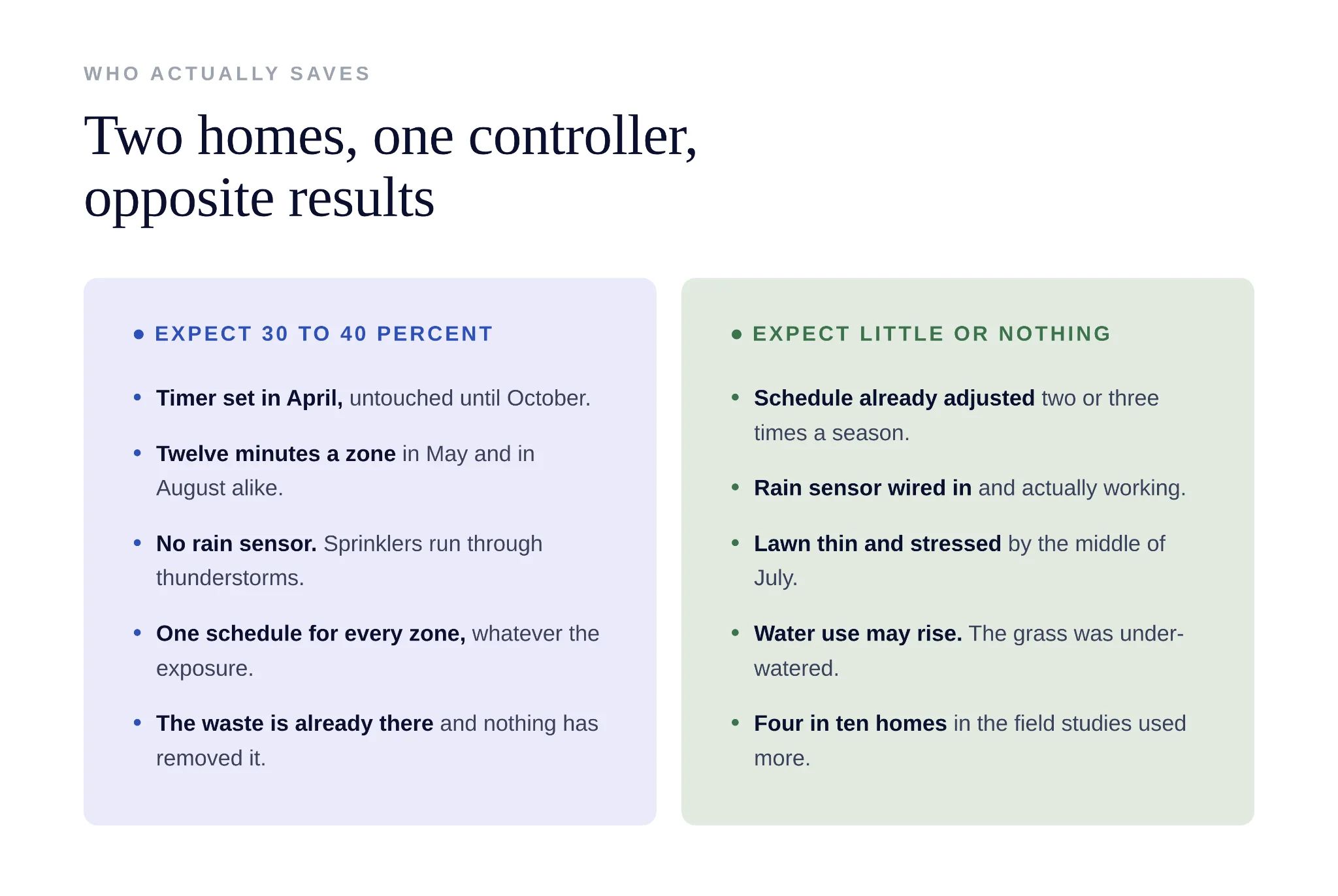
Three profiles cover almost everyone, and each one points to a different outcome.
- The timer was set in spring and never adjusted. Expect a reduction of 30 to 40 percent. The controller will look like a miracle, but most of what it delivers could have been captured for free by anyone willing to turn the seasonal adjust dial four times a year.
- The schedule already gets adjusted seasonally, and a rain sensor is wired in. Expect very little, and possibly nothing, that shows up on a bill. The waste has already been removed.
- The lawn runs thin, stressed, and hard underfoot by mid-July. Expect water use to rise. That is not a malfunction. The controller is calculating what the grass actually needs, and the honest answer is more than it has been getting.
That last group is roughly four in ten households, which is exactly why the average savings figure across all the field studies looks so unimpressive.
Then Read Your Water Bill
Gallons saved and money saved are different questions, and the second one varies far more than the first. Three lines on the bill decide it.
- The volumetric rate. Residential water runs from under $3 per thousand gallons in inexpensive districts to $12 and above in costly ones.
- The tier structure. Summer irrigation is exactly what pushes a household into the upper blocks, where the price per thousand can multiply several times over.
- How sewer is calculated. Some utilities bill sewer on every gallon that passes the meter, including water that lands on the lawn, which roughly doubles the cost of irrigating. Others cap the charge at your winter average, or offer a separate irrigation meter that removes it entirely.
The same 7,600 gallons saved is worth about $38 a year in one town and comfortably past $150 in another. Payback is decided by the zip code far more than by the controller.
Two situations remove the financial case altogether. On a private well, the only saving is a small amount of pump electricity. On a flat-rate municipal bill, usage does not affect the total at all. Watering well still matters in both cases, but the purchase has to be justified on something other than the bill.
Then check the rebate, because it changes the arithmetic more than any feature on any spec sheet. Water agencies across the West and Southwest have handed back anywhere from $50 to several hundred dollars on WaterSense labeled controllers for years. Buying from a district-approved list is usually worth more than buying from whichever retailer is cheapest.
Putting the Two Together
The estimate takes about five minutes and needs no equipment.
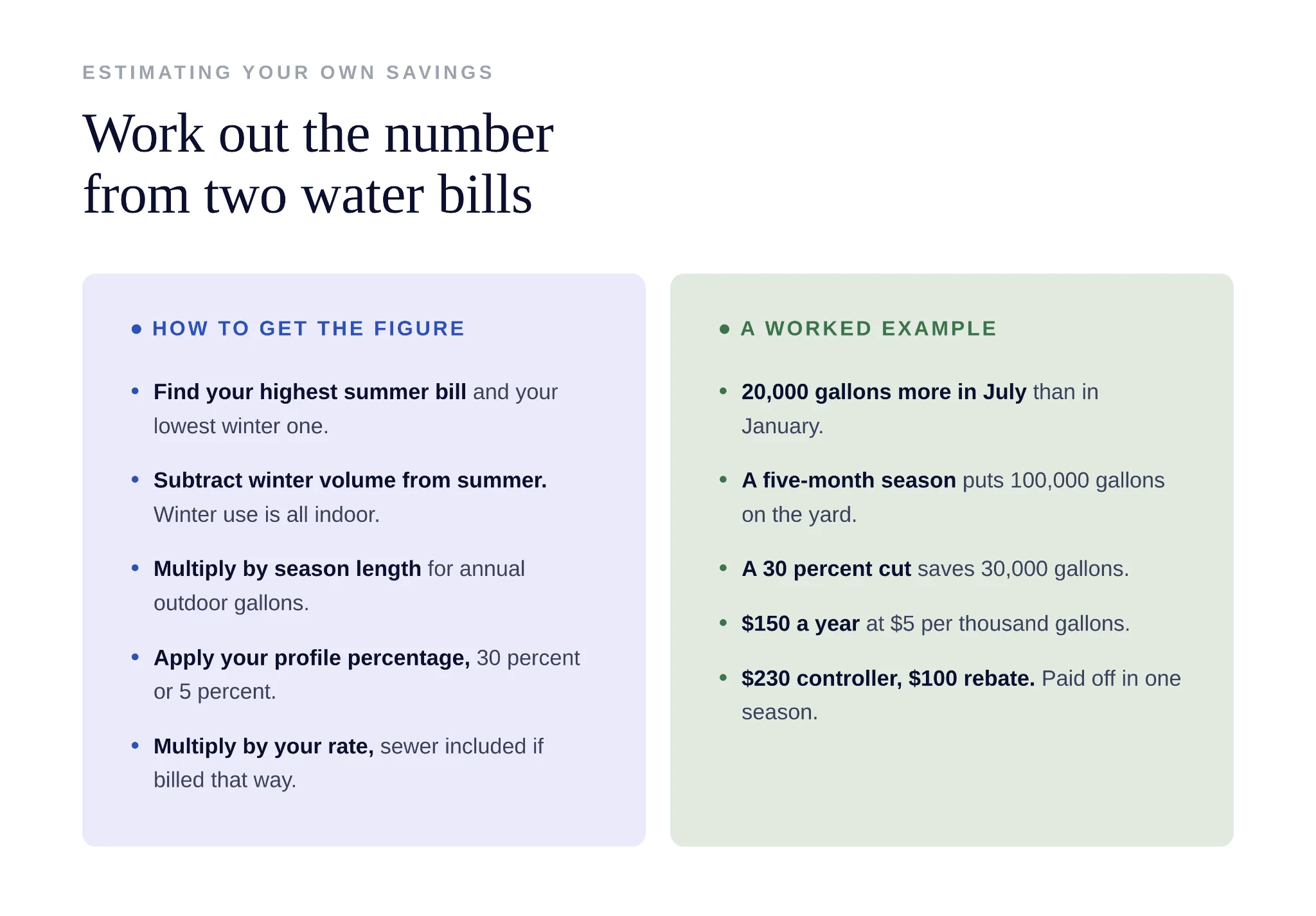
Find your highest summer water bill and your lowest winter one, and subtract the winter volume from the summer volume. Winter use is essentially all indoor, so the difference is what the irrigation system consumes in a peak month. Multiply that by the length of your watering season to get a rough annual outdoor figure.
Apply the percentage from your profile above. Multiply by your rate per thousand gallons, including sewer if your utility bills it that way.
A worked version: a household using 20,000 gallons more in July than in January, over a five-month season, is buying roughly 100,000 gallons a year for the yard. In the never-adjusted group, a 30 percent cut is 30,000 gallons. At $5 per thousand, that is $150 a year, against a $230 controller with a $100 rebate, so it pays for itself inside a season.
Run the same arithmetic in the already-careful group, and the cut is closer to 5 percent, or $25 a year, and the payback stretches past five years. Same product, same install, entirely different decision.
Fix the Sprinklers Before Buying the Brain
For most yards, the controller is the wrong first purchase, and the industry has little incentive to say so.
A controller decides how long to run a zone. It has no way of knowing whether that zone distributes water evenly, and on a typical residential system it does not. Heads sink below grade. Nozzles get replaced with whatever was on the truck. Arcs drift until a quarter of the spray is watering the fence.
The test costs nothing.
Set a dozen straight-sided cans around one zone, run it for fifteen minutes, and measure what lands in each. If the driest cans hold roughly half of what the average cans hold, which is common, then delivering a real inch to the dry corner means putting nearly two inches everywhere else. That is 80 percent more water than the grass requires, bought every week of the season, and no amount of weather forecasting will touch it.
Matched precipitation rotary nozzles cost six or seven dollars each and thread onto spray bodies already in the ground. An afternoon spent straightening heads and swapping nozzles will out-save a $250 controller on a neglected system, and it keeps doing so every year afterward.
Buy the controller second. It will calculate the right volume for a system that can deliver it, and precisely the wrong volume for one that cannot.
What Homeowners Actually Say
Strip the marketing language and the recurring themes across homeowner forums land in three places, and none of them are the pitch on the box.
- The time savings is what people actually mention first. Water bill numbers come up, but “I stopped thinking about it” comes up more often. That is worth pricing at whatever an hour of your week is worth, separate from the utility math.
- Regret shows up on small yards more than large ones. The complaint pattern is consistent: a yard small enough that a hose-end timer would have done the job, but the owner installed a full zoned system anyway and is now maintaining infrastructure that was never necessary.
- Nobody regrets it on a drought-climate, quarter-acre-plus lot. The same forums that produce skeptics on small properties are close to unanimous on larger ones — the complaint there is almost always about a bad installer, not the decision to install.
The pattern lines up with the profile breakdown earlier in this guide: the system rewards the people whose alternative is genuinely difficult, and adds cost and upkeep for the people whose alternative was a five-minute chore twice a week.
The One Feature Worth Paying For
Flow monitoring receives a fraction of the attention that weather-based scheduling gets, and it is the only feature on these systems capable of paying for the whole installation in a single night.
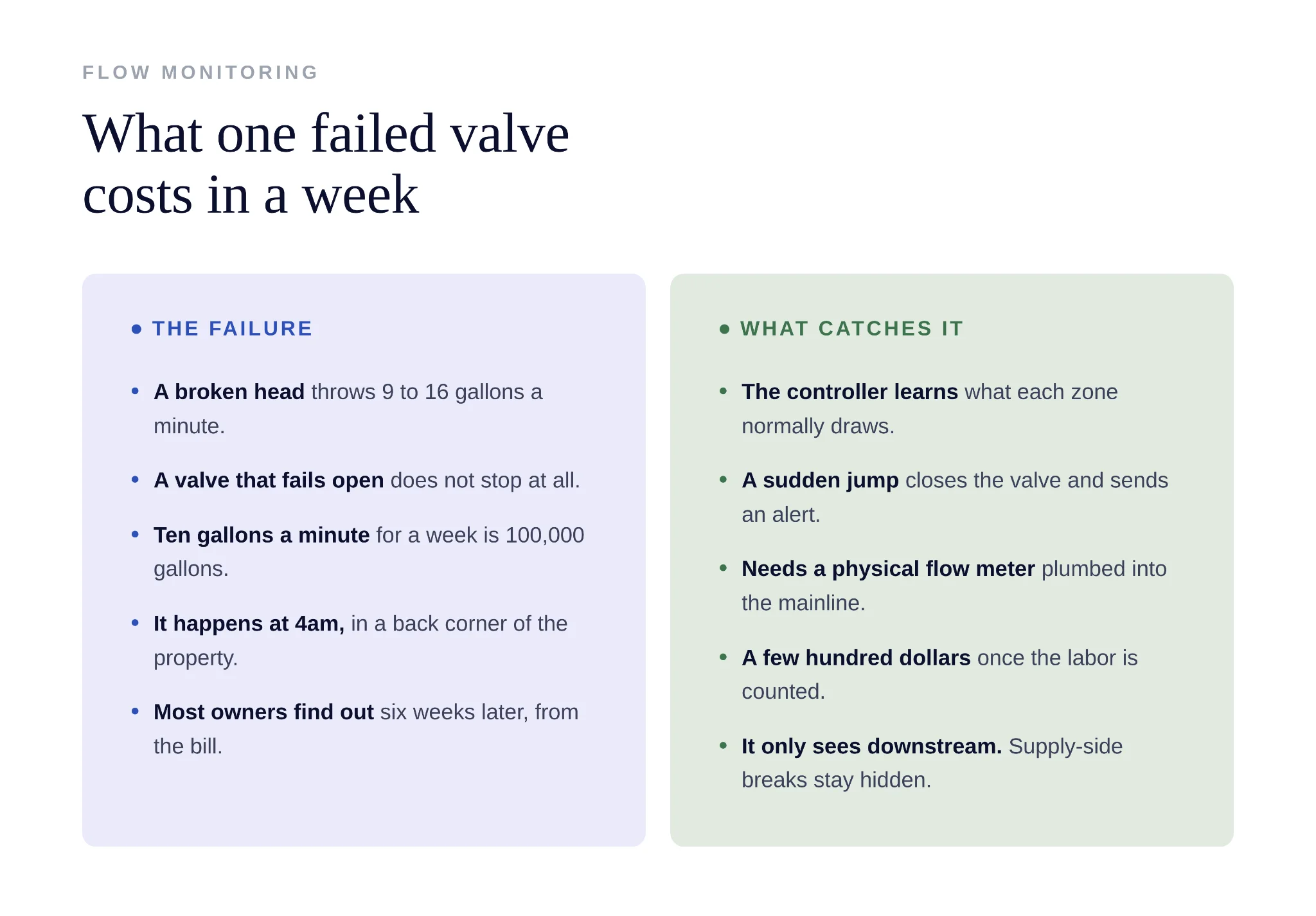
A broken head throws somewhere between 9 and 16 gallons a minute. A valve that fails open does not stop at all, and ten gallons a minute running unnoticed for a week comes to more than 100,000 gallons. These failures happen at 4 am, in a back corner of the property, and the homeowner usually finds out from the bill six weeks later.
A controller paired with a flow meter learns what each zone normally draws, notices when one suddenly pulls half again as much, closes the valve, and sends an alert. Two limits are worth knowing before buying on the strength of it.

- The controller cannot do this by itself. A physical flow meter has to be plumbed into the mainline and wired in, which adds a few hundred dollars once labor is counted.
- It only sees what sits downstream of the meter. A break on the supply side stays invisible.
For a large property, a mainline running under a driveway, or any history of root or shovel damage, this is the reason to buy a smart controller. The scheduling is a bonus.
What’s Oversold
Evapotranspiration scheduling is real, and modest. It earns its keep in May and September, when a schedule sized for July heat applies roughly double what the grass is using. It also does much the same job as the seasonal adjust dial that controllers have carried since the 1990s, for anyone who ever bothered to turn it.
Rain skip is genuinely useful and nearly free. A basic rain sensor costs around $30 and wires into whatever controller is already on the wall. Anyone shopping for a smart system purely to stop the sprinklers running during storms is about to spend $250 on a $30 problem.
Cycle and soak deserves more credit than it gets, particularly on clay and slopes, because it stops the last third of every run cycle from sheeting into the street. It works by respecting how quickly the soil can absorb water.
The app does something the spec sheet will not claim. People who can see their water use tend to use less of it, and evaluations of these programs have struggled to separate the scheduling algorithm from the plain fact of a homeowner paying attention for the first time in a decade.
Who Should Actually Buy One
Buy one if the yard is large, the pipe is old, or the water is expensive, and buy it with a flow meter. That combination earns its cost back.
Skip it if the bill is flat-rate or the water comes from a well, unless the convenience by itself is worth $200. That is a perfectly respectable reason to buy, and simply not the one printed on the box.
Frequently Asked Questions
Usually not. Under roughly 2,000 square feet, a hose-end timer covers the same ground for under $50 with no trenching or zoning. The forum regret pattern skews heavily toward small yards where a full system was installed anyway.
It rarely returns its cost dollar-for-dollar at resale, but it consistently helps a listing’s curb appeal and shows better than a patchy lawn during a showing. Treat it as a livability upgrade, not a line-item investment.
Yes, and it cuts the total by 50 to 70 percent versus a professional quote, mostly because labor makes up around 60 percent of a professional bill. The two places DIY installs go wrong are head spacing (covered earlier in this guide) and skipping the code-required backflow preventer, which most jurisdictions will catch at inspection.
A professional crew usually finishes a standard yard in one to three days, depending on zone count and how much trenching the layout requires. A DIY install on the same yard typically stretches across several weekends, mostly because trenching and pipe gluing take longer without a crew splitting the work.
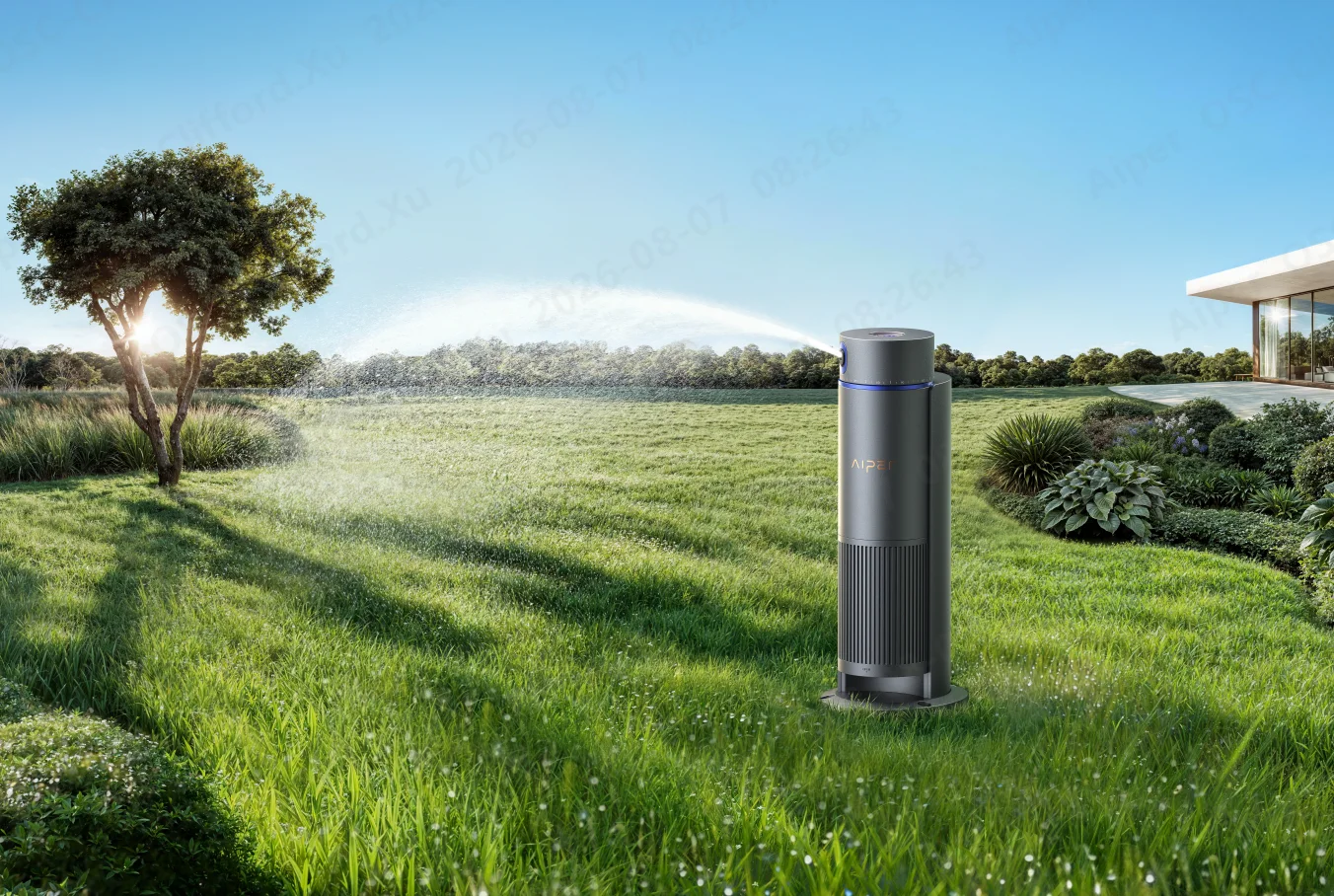
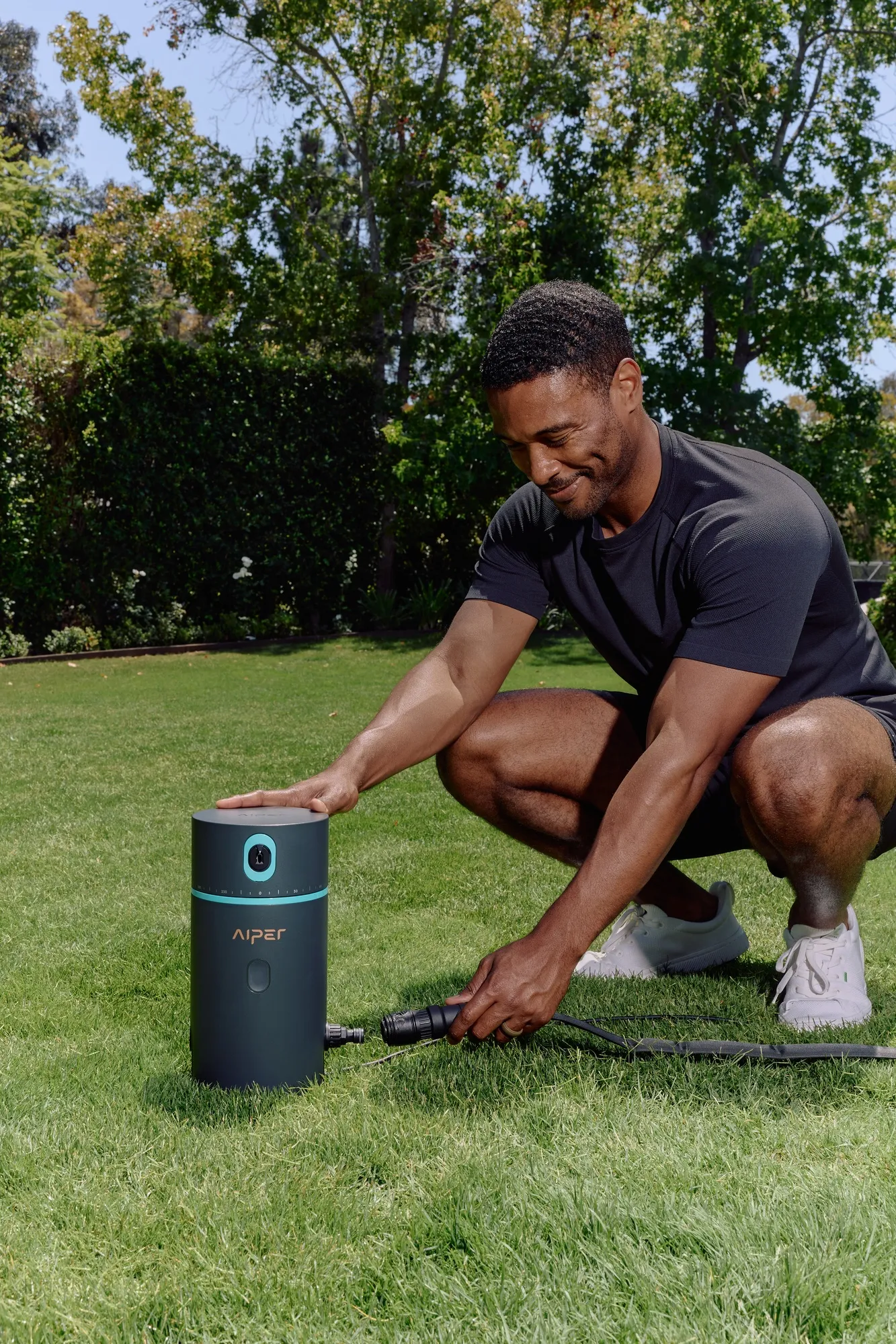
There is also a third option that the full-system-or-nothing framing above tends to miss. Aiper’s IrriSense 2 replaces the controller, the sprinklers, the valves, and the feeder in a single unit, plugs in, connects to a hose, and installs in about fifteen minutes without trenching the yard. It covers up to 4,800 square feet divided into ten customizable zones.
Get more pool and lawn care guides from Aiper on Google