Can You Put Shock in a Saltwater Pool?

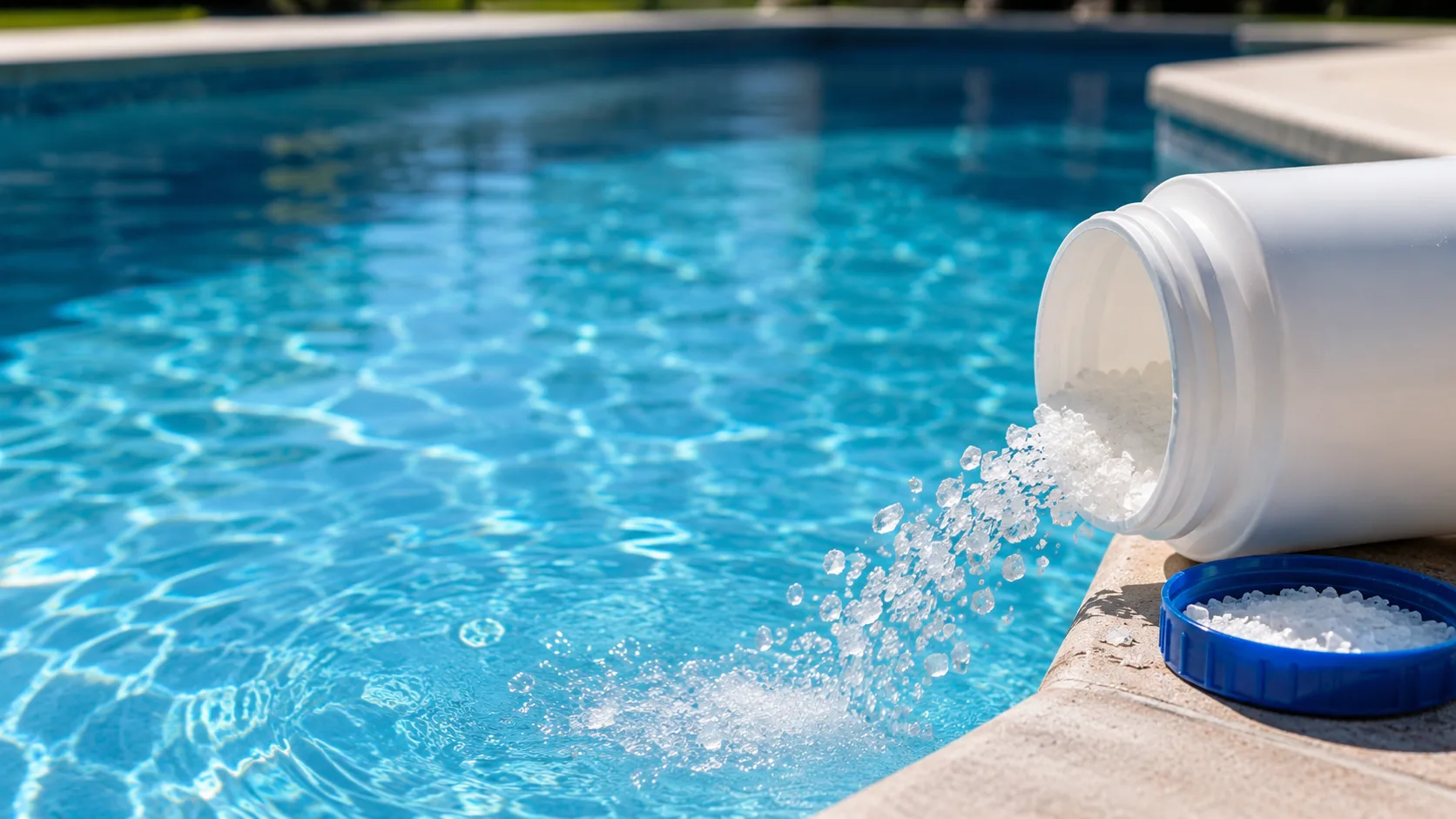
What shock is safe to use on a salt pool is a question that comes up constantly despite salt systems generating their own chlorine. The short answer: yes, use non-chlorine shock for routine maintenance, or cal-hypo or dichlor when algae needs a faster knockout, and either way wait for chlorine to drop back to normal range before swimming. When to shock, which type to use, and what can go wrong, is covered below. Metal contamination is a separate but related risk for salt systems, covered in our guide to getting iron out of pool water.
Can You Put Shock in a Saltwater Pool?
Yes. A salt system generates chlorine continuously through electrolysis, but at a rate designed for routine maintenance, not for handling a sudden spike in demand. Heavy bather load, an algae bloom, or a contamination event can outpace what the cell produces, and manual shock closes that gap the same way it does in a traditionally chlorinated pool.
When Should You Shock a Saltwater Pool?
After a pool party or unusually heavy swimmer traffic, after visible algae growth, when water turns cloudy despite normal salt cell operation, following heavy rain or storm runoff, and when opening the pool for the season are the situations that typically call for a manual shock dose on top of the cell’s normal output. The same timing signals apply to standard chlorinated pools, covered in our guide to shocking a pool properly.
What Type of Shock Should You Use in a Saltwater Pool?
Non-chlorine shock, typically potassium monopersulfate, oxidizes contaminants without adding chlorine or dissolved solids, making it a common choice for routine maintenance shock that doesn’t affect salt levels. Cal-hypo and dichlor shock both add chlorine directly and work faster against algae, but dichlor also adds a small amount of cyanuric acid and cal-hypo adds calcium, so either needs to be accounted for in the pool’s overall chemistry, not just treated as a drop-in fix.
How Do You Shock a Saltwater Pool for the First Time?
Test and balance pH, alkalinity, and stabilizer before adding shock, since shocking an already unbalanced pool compounds the imbalance rather than fixing it. Check your salt cell manufacturer’s guidance on whether to run or pause the cell during shock treatment — some recommend continuing normal operation, others recommend a pause during high-chlorine periods. Dose according to pool volume, run the filter continuously, and wait for free chlorine to drop back to normal swimming range, typically 1 to 3 ppm, before resuming regular swimming.
What Can Ruin a Saltwater Pool?
Shocking without waiting for chlorine to normalize before swimming, mixing incompatible chemicals directly, neglecting calcium hardness or stabilizer balance over time, and running the salt cell continuously through severely imbalanced water are the most common ways owners damage salt system components or surfaces. Salt cells are more sensitive to scale buildup from high calcium hardness than a standard chlorinator, which makes water balance maintenance more consequential, not less, in a salt pool.
Are Saltwater Pools Healthier Than Chlorinated Pools?
Not in the way the term “saltwater” implies — salt pools still sanitize with chlorine, just generated on-site rather than added in bottles or tablets. The softer feel some swimmers notice comes from more stable, lower free-chlorine spikes rather than the absence of chlorine. Salt pools still need occasional manual shock, as covered above, so “salt water” doesn’t mean chlorine-free maintenance — and when the season ends, the shutdown steps differ too, covered in our guide on how to winterize a salt water pool step by step.
Frequently Asked Questions
How long should the salt cell stay off after shocking?
Many manufacturers recommend pausing the cell for 24 to 48 hours after a heavy shock dose, then testing chlorine before resuming normal cell output. Always check the specific manufacturer’s guidance, since some cells are rated to keep running through a shock treatment without issue.
Can you use regular liquid chlorine to shock a saltwater pool instead of cal-hypo or dichlor?
Yes. Liquid chlorine, or sodium hypochlorite, works as a shock in a salt pool and adds no calcium or cyanuric acid, unlike cal-hypo or dichlor. It degrades faster in sunlight and storage, so it’s typically bought fresh right before use rather than stockpiled.
Does shocking a saltwater pool change the salt level itself?
No, not measurably. Standard shock products don’t add meaningful salt to the water, so a shock treatment doesn’t require retesting or adjusting salt ppm afterward the way it requires rechecking chlorine.
Whichever shock type you use, clearing dead algae and debris afterward is what actually finishes the job. An Aiper robotic pool cleaner keeps the floor and walls clean between treatments, whether the pool runs on salt or standard chlorine.
Get more pool and lawn care guides from Aiper on Google