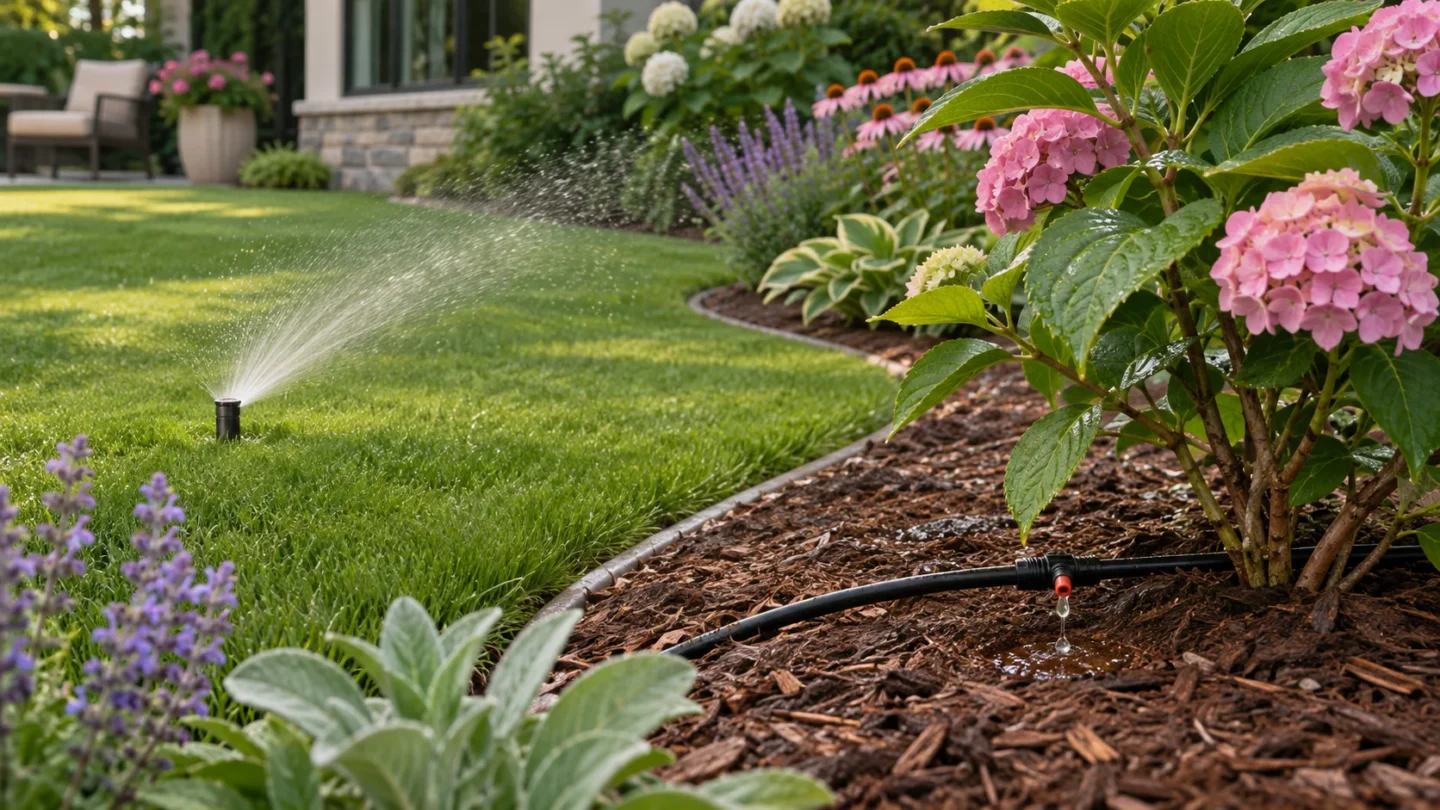



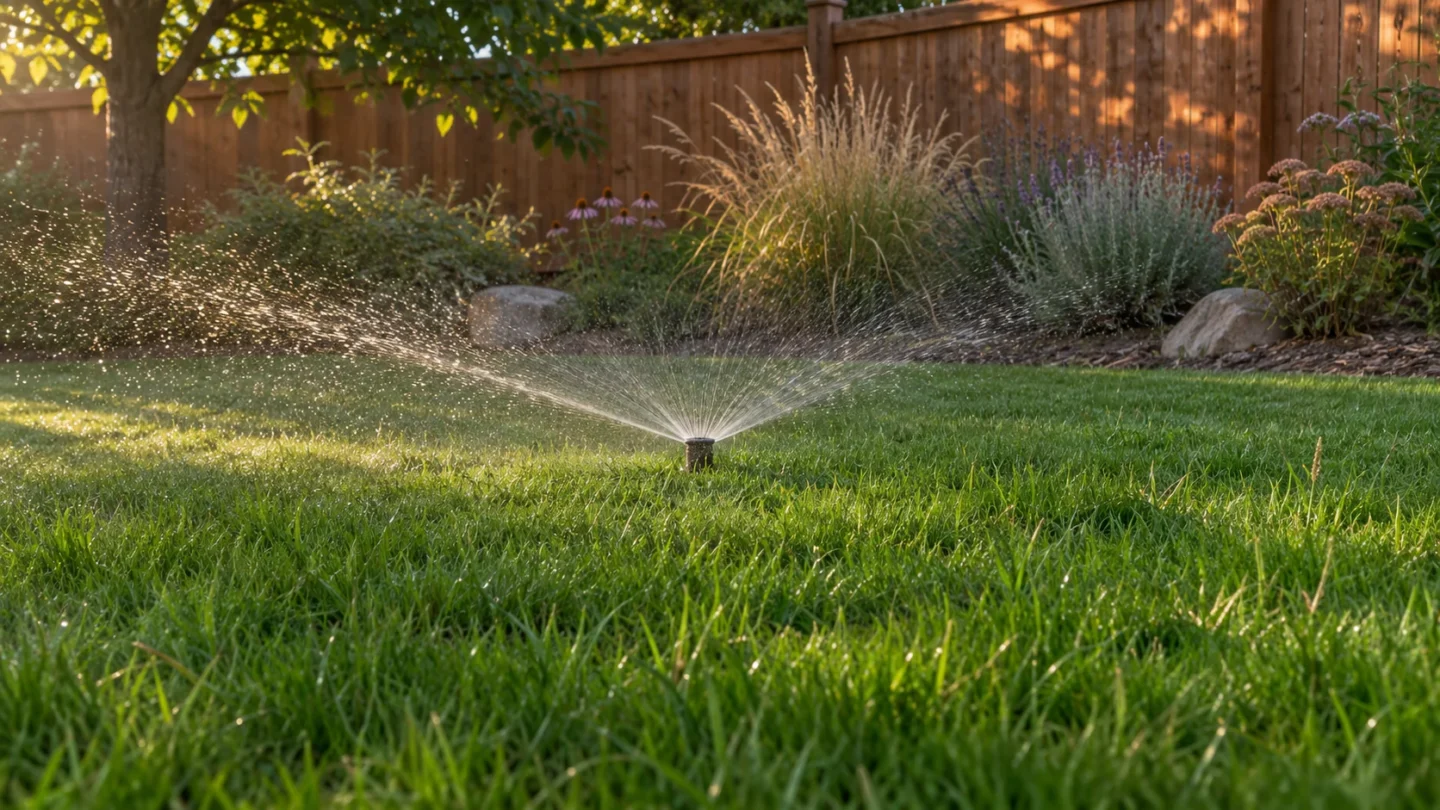
You don’t have to tear out your grass to get a lawn that survives a dry summer.
Most lawns that struggle in drought are struggling because of how they’re watered and mowed, not because of the grass itself.
Change those habits and add a couple of soil and seed upgrades, and the same lawn can go much longer between waterings.
Water Less Often, but Deeper
Watering habits are the biggest factor, and most lawns are trained the wrong way. Utah State University Extension has found that lawns are often overwatered, which leads to shallow root systems and more vulnerability to heat and drought stress.
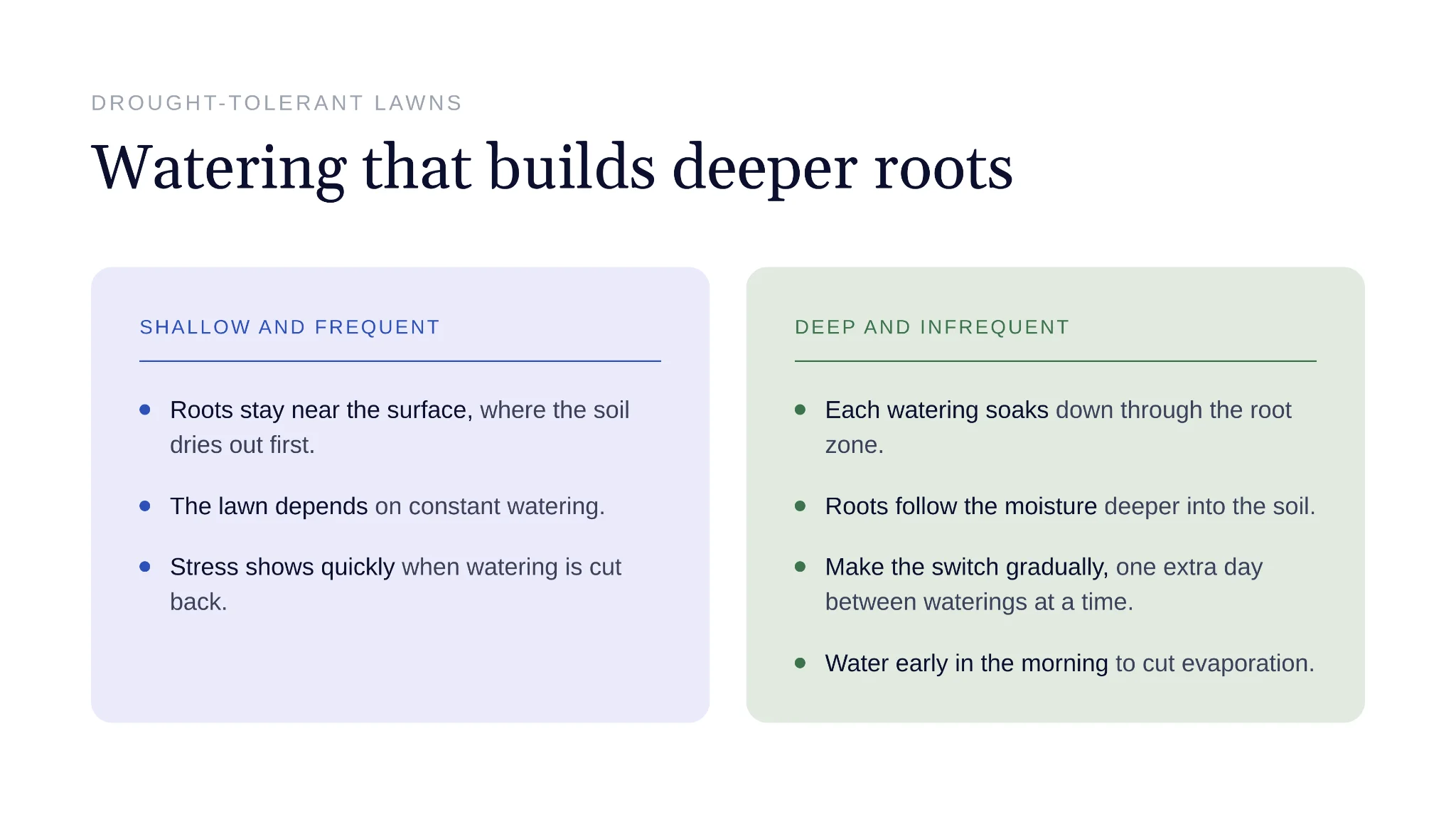
A lawn watered a little every day keeps its roots near the surface, where the soil dries out first.
Deep, infrequent watering reverses this.
Each time you water, soak the soil down through the root zone, then wait until the lawn actually needs water again. Roots follow the moisture down, and deeper roots can draw on water the surface no longer holds.
Make the switch gradually. If your lawn is used to daily watering, a sudden jump to once a week will stress it. Stretch the gap by a day at a time over a few weeks.
To know when to water, watch the grass instead of the calendar. According to University of Illinois Extension, deep, infrequent watering to the depth of the root system is ideal, done when lawns show the first signs of drought stress, such as wilting, darkening color, and footprints remaining after walking across the lawn.
Water early in the morning. Less is lost to evaporation, and the grass dries off during the day instead of sitting wet overnight.
Raise Your Mowing Height
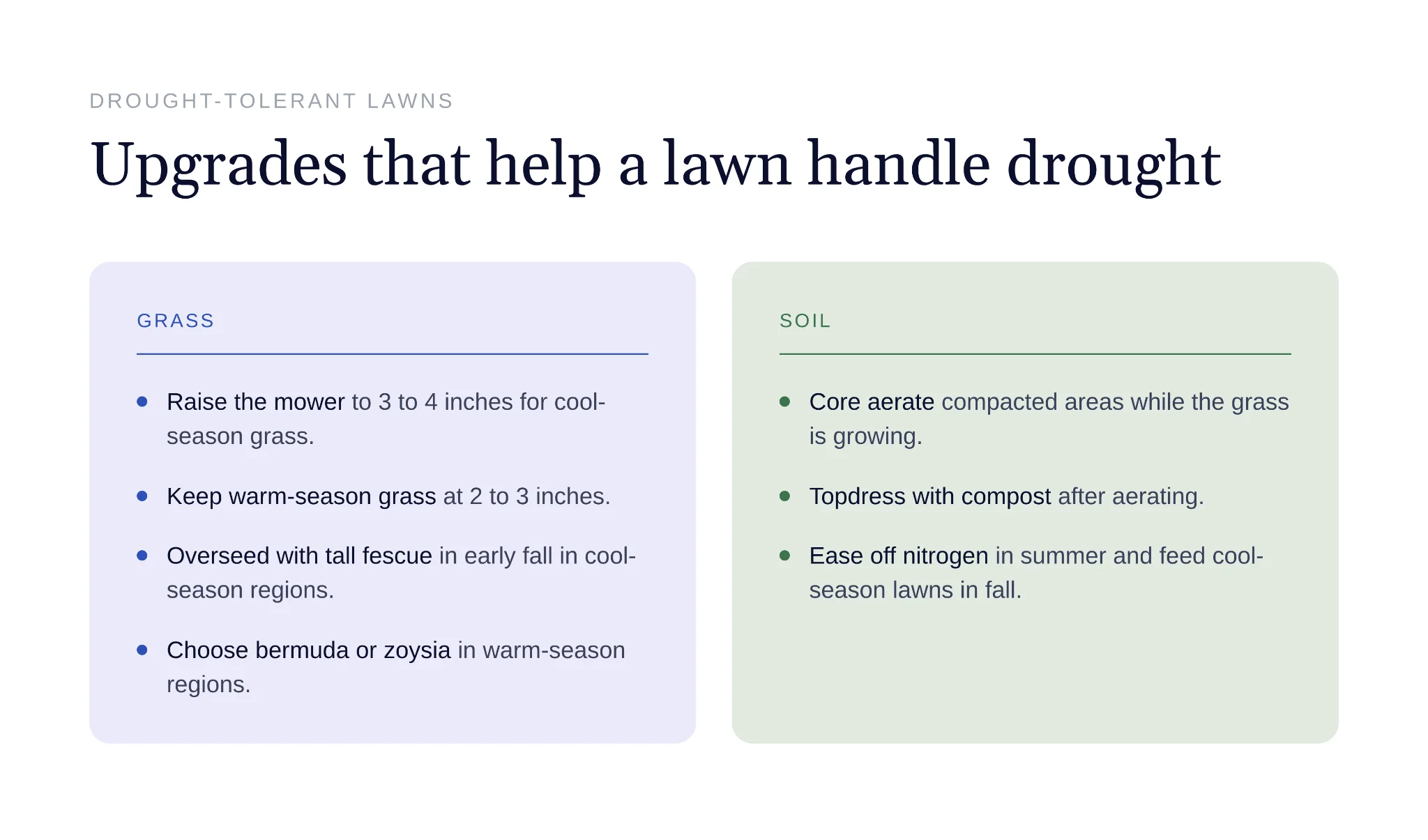
Taller grass shades the soil, keeps it cooler, and slows evaporation. It also supports deeper rooting. Raising the mower deck is the easiest drought upgrade there is, and it costs nothing.
Oklahoma State University Extension recommends a higher mowing height throughout the growing season, ideally 2 to 3 inches for warm-season grasses and 3 to 4 inches for cool-season grasses.
| Grass type | Examples | Drought mowing height |
|---|---|---|
| Cool-season | Tall fescue, Kentucky bluegrass, perennial ryegrass | 3 to 4 inches |
| Warm-season | Bermuda, zoysia, St. Augustine | 2 to 3 inches |
Keep the blade sharp. A dull blade tears the grass, and torn tips lose more water.
Let Cool-Season Lawns Go Dormant
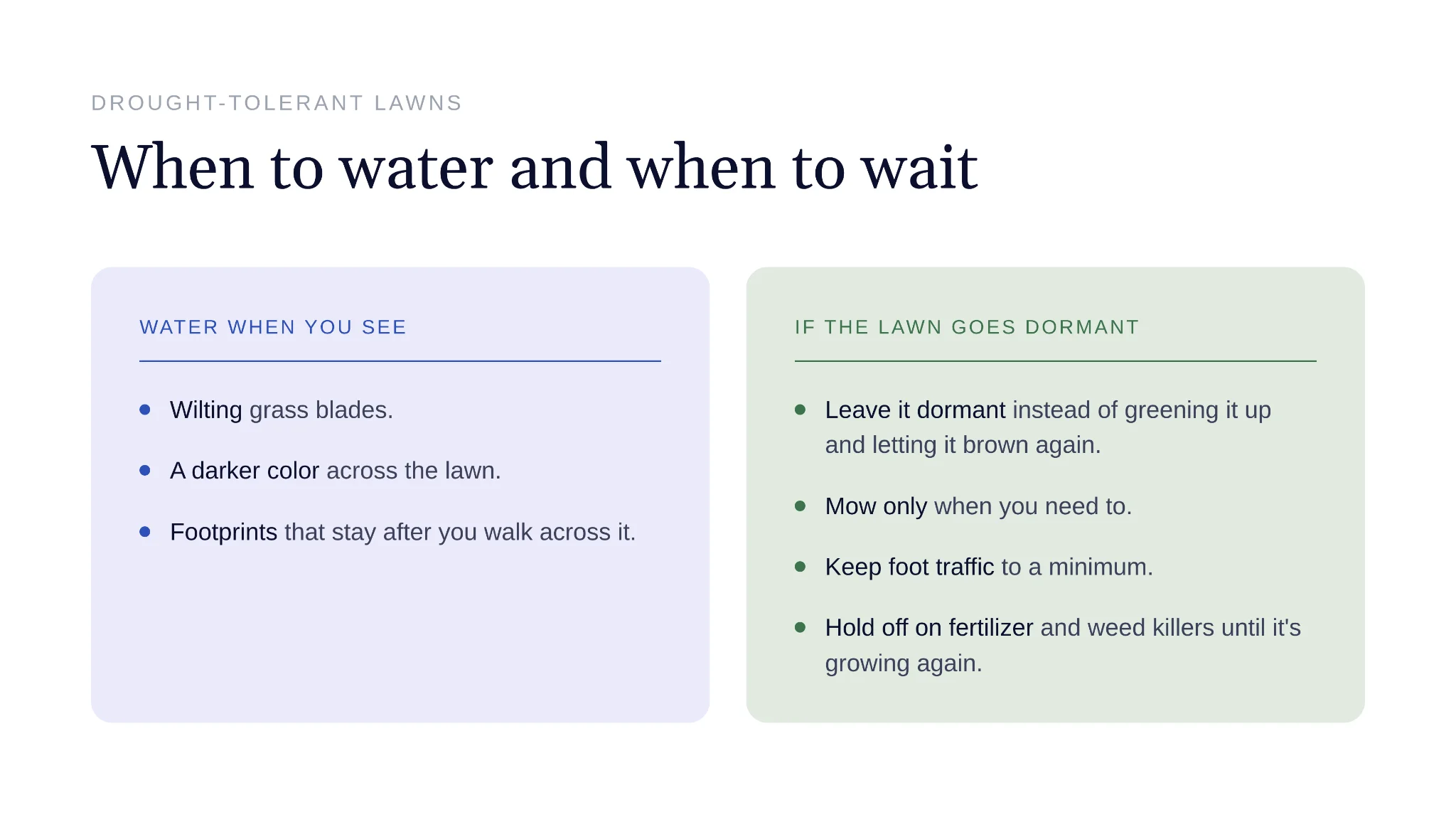
A brown cool-season lawn in midsummer is usually dormant, not dead. Dormancy is how the grass protects itself through drought, and it greens up again when cooler weather and rain return.
The mistake is pulling the lawn in and out of dormancy.
Breaking dormancy drains reserves within the plant, and if conditions stay dry and hot, the plant is not likely to replace those reserves. If watering restrictions or cost mean you can’t keep the lawn green all summer, pick one approach and stick with it.
Either water deeply on a regular schedule, or let it go dormant and leave it.
While the lawn is dormant, mow only when you need to, keep foot traffic to a minimum, and hold off on weed killers and fertilizer until it’s growing again.
Overseed With Tougher Grass
Some grasses handle drought far better than others, and you can shift your lawn toward them without starting over.
In cool-season regions, tall fescue is the usual choice. It has a deeper root system than Kentucky bluegrass or perennial ryegrass. Lawns made up mostly of turf-type tall fescue will withstand drought conditions unless they’re newly seeded or sodded. Overseed in early fall, when the soil is still warm and rain is more reliable.
In warm-season regions, Bermuda and zoysia hold up well in heat and dry spells. These are usually established with sod or plugs rather than overseeded into an existing lawn.
Fix the Soil Underneath
Even deep watering doesn’t help if the water can’t get in. Compacted soil sheds water as runoff and blocks roots from growing down.
- Core aerate compacted areas. Aeration pulls small plugs of soil out, which opens channels for water and air. Do it during the grass’s active growing season, not in the middle of a drought.
- Topdress with compost after aerating. A thin layer worked into the holes improves how well the soil holds moisture.
- Ease off nitrogen in summer. Heavy summer fertilizing pushes leaf growth the lawn can’t support with the water available. Feed cool-season lawns in fall instead.
Water Each Part of the Yard Differently
Most yards have spots that dry out at different rates.
Full sun, slopes, and strips next to driveways dry fastest. Shaded areas and low spots hold moisture much longer. Watering the whole lawn on one schedule overwaters some areas and underwaters others.
Split the lawn into zones and give each one its own schedule. The Aiper IrriSense 2 handles that from one unit, with mapped multi-zone watering and smart scheduling that adjusts for the weather. That makes deep, infrequent watering easier to stick to through a dry summer.
Get more pool and lawn care guides from Aiper on Google