How to Get Rid of Bermuda Grass When It’s Invading Your Lawn

Bermuda grass spreads in two ways.
Runners creep across the surface and root as they go, much like foxtail seed heads spreading through a lawn, and underground stems spread through the top few inches of soil the way chickweed roots at every stem node. A single spray or an afternoon of pulling won’t clear either one.
Getting rid of Bermuda takes repeated treatments, the right timing, and a plan that fits where it’s growing. Bahia grass spreads in a similarly coarse, clumping pattern, and the removal steps for getting rid of bahia grass in a lawn follow much the same logic.
This guide covers what to do in cool-season lawns, warm-season lawns, and garden beds, and how to keep it from coming back.
Make Sure It’s Bermuda Grass
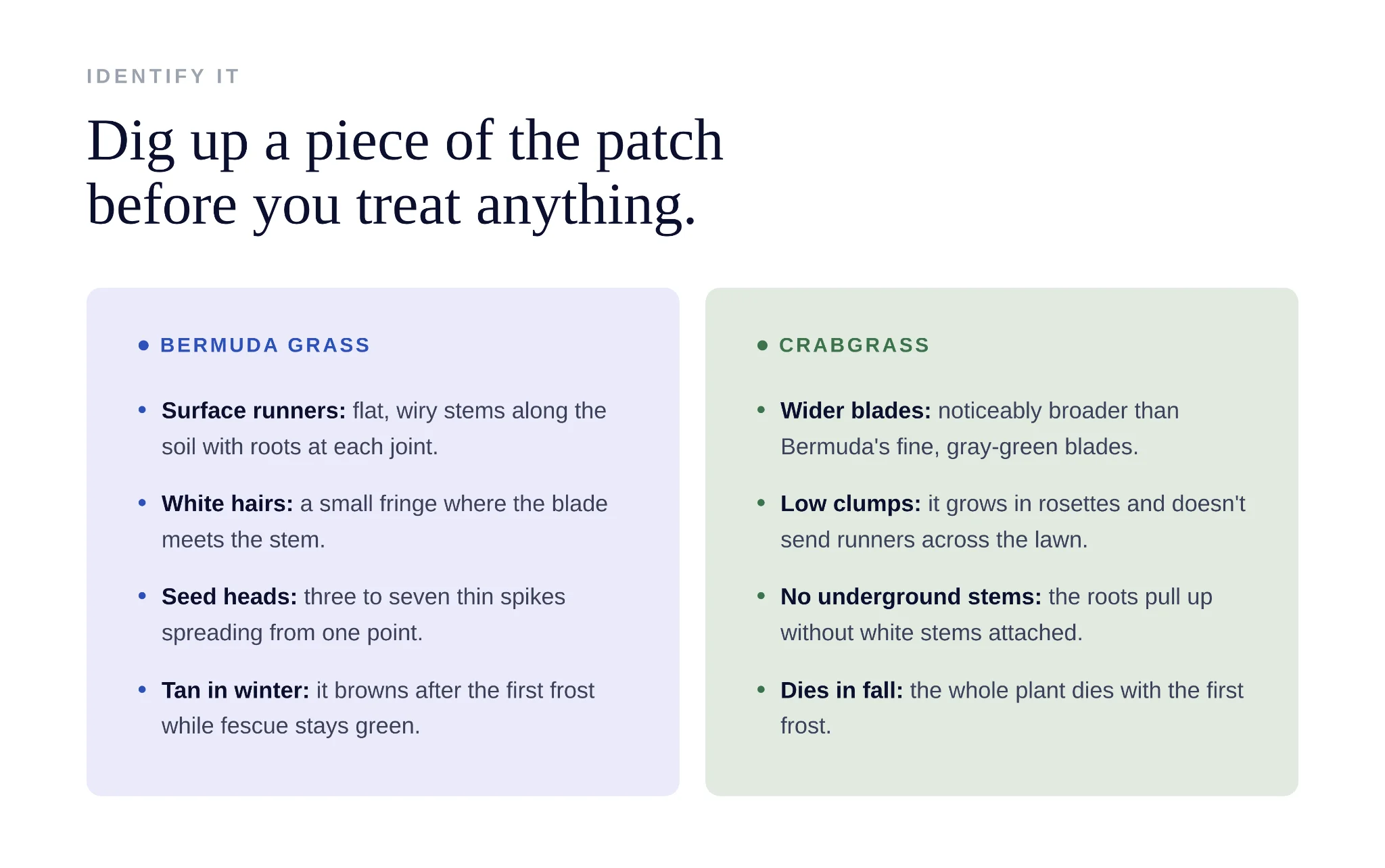
Check for these signs: Johnsongrass spreads even more aggressively through underground rhizomes, and getting rid of johnsongrass in a home lawn takes a more persistent approach than bermuda control.
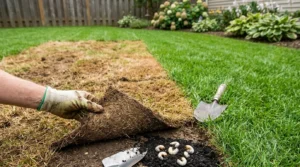
- Runners on the surface. Pull back the grass and look for flat, wiry stems running along the soil, with roots and new blades at each joint.
- Hairs at the base of the blade. Bend a blade back where it meets the stem. Bermuda has a small fringe of white hairs there.
- Finger-like seed heads. Three to seven thin spikes spread out from the top of the stem.
- Brown in winter. Bermuda turns tan after the first frost and stays that way until late spring, while fescue and bluegrass stay green.
Crabgrass gets mistaken for Bermuda all the time because the seed heads look similar. Crabgrass has wider blades, grows in low clumps, and dies in fall. Dig up a piece of the patch. If you find tough runners and white underground stems, it’s Bermuda.
Read our guide on how to identify and kill crabgrass.
Avoid Tilling It
Tilling a Bermuda patch chops the underground stems into hundreds of short pieces and mixes them through the soil. Almost every piece with a joint can sprout. A patch the size of a doormat can fill an entire bed by the next summer.
Hand pulling has the same problem on a smaller scale. It works on a patch that’s new, small, and growing in loose soil, and only if you get every piece. After rain, dig with a garden fork, sift through the soil for the white underground stems, and check the spot every couple of weeks for regrowth.
For anything bigger, kill it with herbicide before you dig or till.
Treat It in Summer
Bermuda has to be green and actively growing for herbicide to work. Spraying brown, dormant Bermuda in early spring wastes the product.
Plan treatments between early summer and early September, when the weather is hot and Bermuda is growing fast. Before each application:
- Water two or three days ahead if it hasn’t rained. Drought-stressed Bermuda absorbs very little herbicide.
- Skip mowing for two days before and after. The herbicide goes in through the leaves, so leave them on the plant.
- Spray on a calm morning, before it gets above 85°F. Wind and afternoon heat can carry spray onto shrubs and garden plants.
- Check the forecast. Look at the label for how long the product needs to stay dry, and don’t spray if rain is due before then.
Bermuda in a Cool-Season Lawn
This is the most common situation and the hardest one. Bermuda is a grass growing inside another grass, and no product removes it completely without affecting the surrounding lawn.
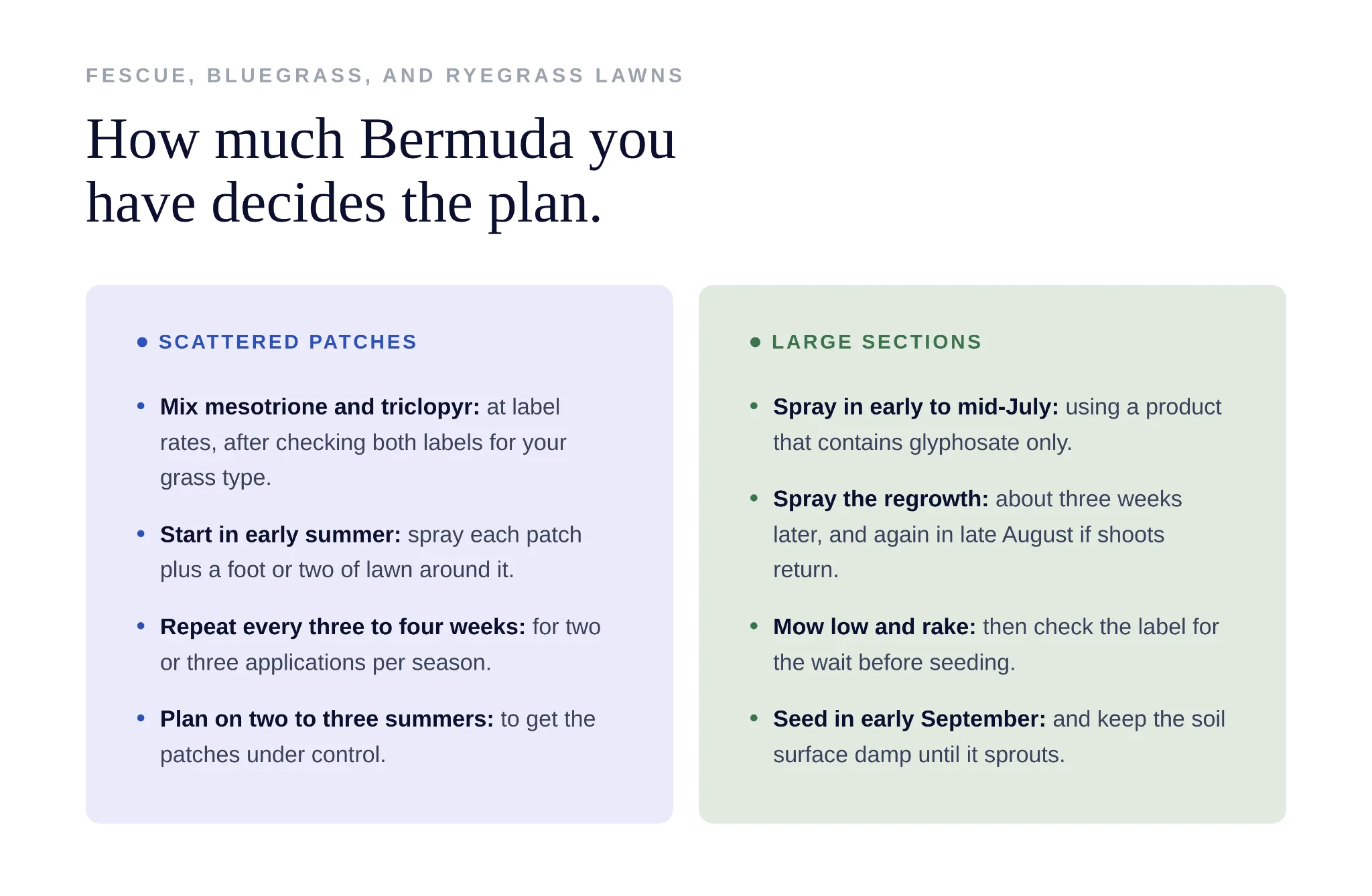
Start by looking at how much of the lawn it covers.
If the Bermuda is in scattered patches, weaken it with a selective herbicide over several summers. If it has taken over large sections, kill those sections and reseed. Selective spraying on a lawn that’s mostly Bermuda leaves you with thin, patchy turf for years.
The most effective combination available to homeowners is mesotrione plus triclopyr, mixed in the same sprayer.
- Check both labels for your grass type. Tall fescue, Kentucky bluegrass, and perennial ryegrass are listed on most. Some fine fescues and bentgrass are not.
- Mix at label rates. Add a surfactant if the mesotrione label calls for one.
- Spray in early summer. Cover each Bermuda patch plus a foot or two of lawn around the edges, where runners are spreading.
- Repeat every three to four weeks for two or three applications. Stay within the label’s limit for the season.
- Start again next summer.
Within a week or two, the Bermuda turns white, then brown. The fescue or bluegrass around it may yellow slightly and recover.
Once the treated patches go brown, rake out the dead runners with a leaf rake or dethatcher and put down a light dose of nitrogen. Pulling out the dead surface growth and feeding the grass around it closes the bare spots faster than waiting for the lawn to fill in on its own.
Plan on two to three summers. After the first, the patches come back smaller and thinner in spring. After the second, they come back weaker and in fewer spots. Stopping after one good season is how most people end up starting over.
If you can’t find mesotrione, fenoxaprop mixed with triclopyr is another option on the same schedule.
On Kentucky bluegrass specifically, topramezone is the stronger option and the one most lawn-care forums point to first. It costs more and is usually sold in small quantities, but a few ounces treat a typical yard. Expect the Bermuda to bleach white within about a week of spraying, with the older growth dying off over the following two to three weeks.
Skip fluazifop-only products in a cool-season lawn. It’s labeled for zoysia lawns and garden beds elsewhere in this guide, but on tall fescue or bluegrass it can scorch the turf you’re trying to save, sometimes as badly as the Bermuda itself.
Kill and Reseed Large Areas
This takes a full summer, and the schedule is built around fall seeding.
Start in July.
- Water the area well for a week or two so the Bermuda is green and growing hard.
- Spray with a glyphosate-only product in early to mid-July. Read the ingredient list. Products sold for extended or season-long control contain added herbicides that can keep grass seed from growing for months.
- Wait about three weeks. Green shoots will come up from underground stems that survived.
- Spray the regrowth once it’s green and a few inches long.
- Spray a third time in late August if shoots are still coming up. Many lawns need it.
- Mow the dead grass as low as possible and rake out the debris. Check the label for how long to wait between spraying and seeding.
- Seed in early September. Core aerate or use a slit seeder first, so the seed makes good contact with the soil.
- Keep the soil surface damp until the seed sprouts. That usually means light watering once or twice a day for two to three weeks. Once the grass is up, water less often and more deeply.
Starting late costs you the season. A first spray in mid-August pushes seeding into October, and new cool-season grass has very little time to establish before winter.
Skip the Herbicide: Solarize a Bare Area
If you’re clearing a section down to bare dirt anyway, whether it’s a full renovation or a spot you’ve given up managing, solarization uses summer heat instead of chemicals.
- Mow the area as low as possible and rake up the clippings.
- Water the soil deeply so it conducts heat well.
- Cover it tightly with clear plastic sheeting, not black, and bury or weigh down every edge so no air gets underneath. Clear plastic traps more heat than black.
- Leave it in place for 6 to 8 weeks during the hottest stretch of summer. The heat underneath cooks both the runners and the seed bank.
- Pull the plastic, rake out the dead material, and reseed or resod.
It takes a full summer and a section of yard out of use, so it fits a renovation timeline better than a lawn you’re still using. For a smaller patch or a bed, the cardboard-and-mulch method described below does the same job more slowly.
Bermuda in a Warm-Season Lawn
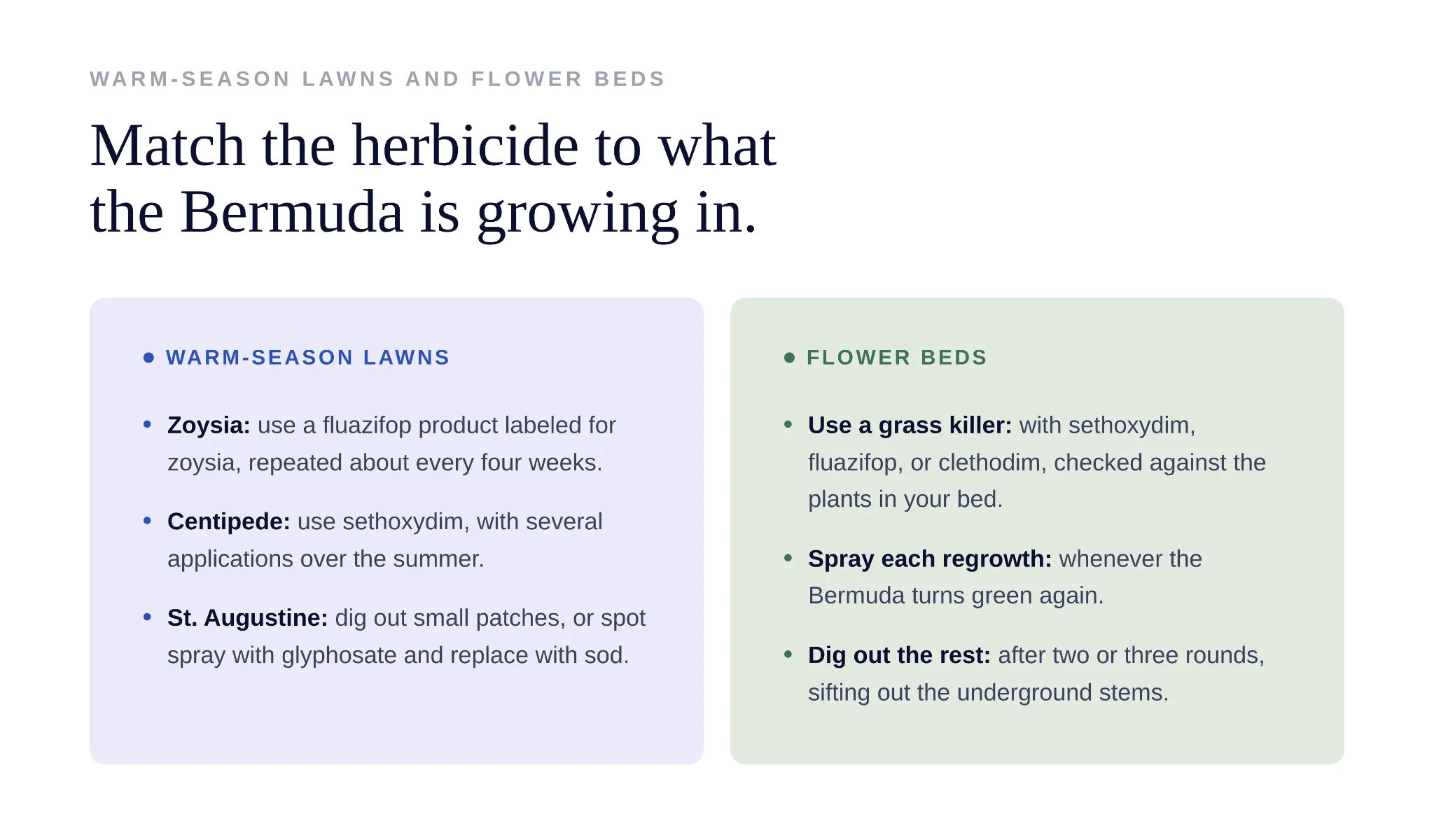
What to use depends on your grass.
- Zoysia: Use a fluazifop product labeled for Zoysia. Spray when the Bermuda is growing and repeat about every four weeks through summer. The zoysia may yellow for a short time after each application.
- Centipede: Use sethoxydim. It weakens Bermuda without harming centipede, and it takes several applications over the summer.
- St. Augustine: No selective herbicide controls Bermuda well in St. Augustine. Dig out small patches. For larger ones, spot spray with glyphosate, which kills the St. Augustine as well, then replace the area with sod or plugs once the Bermuda stops coming back.
Bermuda in Flower Beds
Beds are easier than lawns. Herbicides that kill only grasses can go right over most flowers and shrubs.
Look for a grass killer with sethoxydim, fluazifop, or clethodim as the active ingredient. Check the label for the specific plants in your bed, especially vegetables. Spray whenever the Bermuda is green, and spray again each time it regrows. Mix in a labeled surfactant, or a few drops of dish soap if the label allows it, so the spray sticks to Bermuda’s waxy blades instead of beading off.
After two or three rounds, dig out what’s left with a garden fork and sift out the underground stems.
Landscape fabric alone doesn’t stop it. Runners grow through the seams and across the top into the mulch. Overlapping cardboard works better, but only if you leave it down for months, not weeks: lay it thick enough to block all light, soak it, and top it with about 3 inches of mulch, then leave it undisturbed for four to six months so the underground stems run out of stored energy in the dark.
Stop It at the Edge
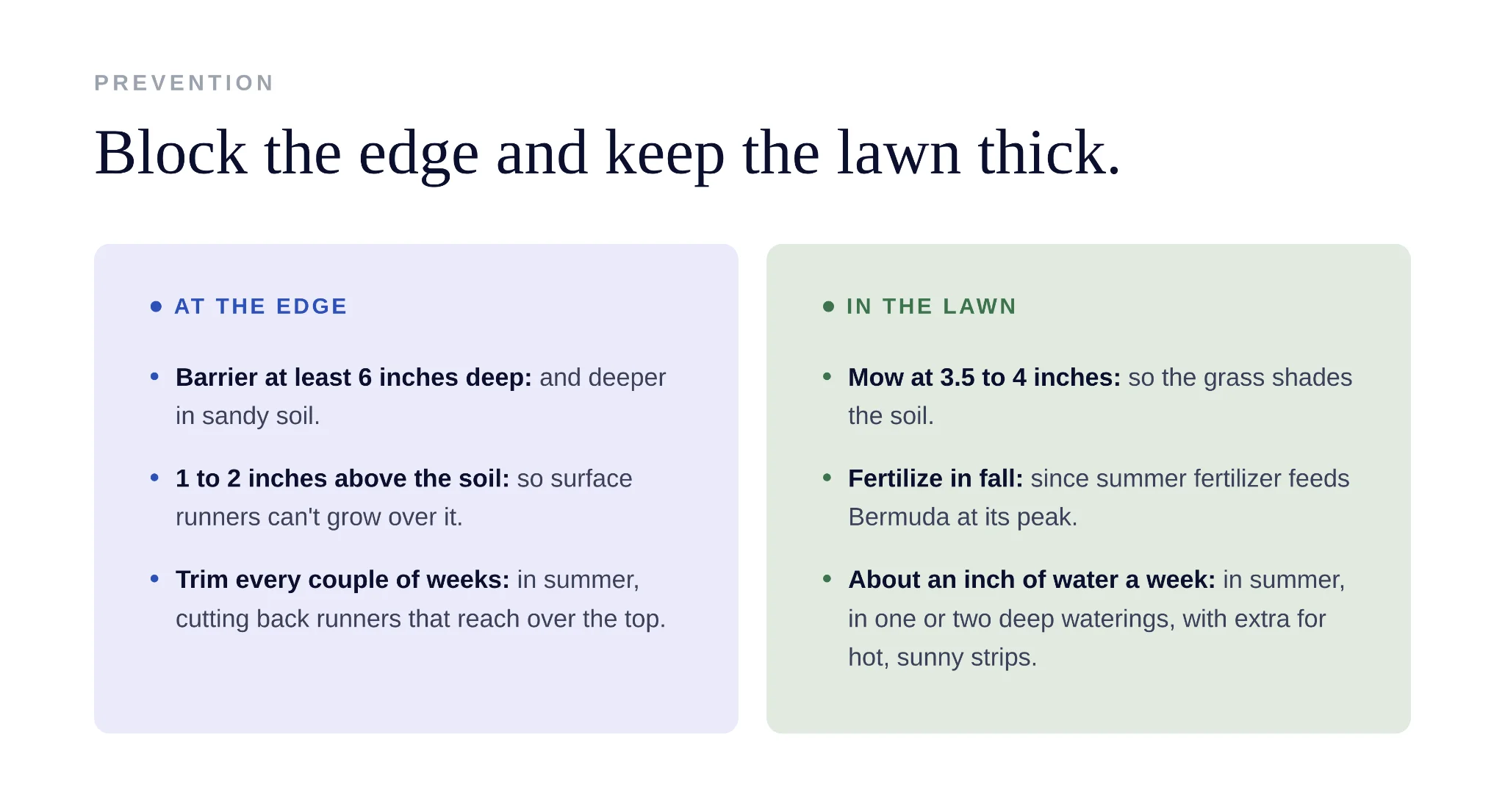
If Bermuda is coming from a neighbor’s yard or an unmanaged strip, it will keep coming. Make the edge hard to cross.
- Install a solid barrier at least 6 inches deep. Go deeper in sandy soil, where underground stems spread lower. Standard 4-inch lawn edging is too shallow.
- Leave 1 to 2 inches of the barrier above the soil. Surface runners grow right over anything flush with the ground.
- Trim along the barrier every couple of weeks in summer. Cut back any runners reaching over the top with a string trimmer or edger.
Keep the Lawn Thick
Bermuda spreads fastest into grass that’s thin, mowed short, and dried out.
- Mow fescue and bluegrass at 3.5 to 4 inches. Tall grass shades the soil, and Bermuda grows poorly in shade. A low mowing height helps Bermuda more than your lawn.
- Fertilize in fall. Put most of the year’s fertilizer down between September and November. Summer fertilizer feeds Bermuda when it’s growing fastest.
- Water through the summer heat. Give the lawn about an inch a week, including rain, in one or two deep waterings. Fescue that runs short on water in July and August thins out or goes dormant, and Bermuda handles drought easily and moves into the gaps.
The sunny strips along driveways, sidewalks, and south-facing edges dry out first. That’s usually where Bermuda gets in, and those spots often need more water than the rest of the lawn.
Keeping a lawn evenly watered through a hot summer is hard with a hose-end sprinkler, especially when parts of the yard dry out at different rates.
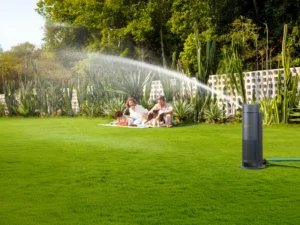
The Aiper IrriSense makes it easier. It combines a controller, valve, and rotor sprinkler in one unit, covers up to 4,800 square feet with a 39-foot reach, and connects to a standard garden hose in about 15 minutes with four ground stakes and no digging.
Here’s how it helps against Bermuda:
- Zone mapping. Give the hot strip along the driveway or sidewalk its own schedule, so the grass there stays thick through August.
- Watering by depth. Set the amount of water in the app, so the lawn gets a deep soaking every week of summer.
- Rain and weather awareness. Built-in rain sensing and weather-aware scheduling skip watering when rain is on the way.
- Even coverage. EvenRain spreads water like light rainfall, which also keeps fresh seed from washing away after a fall renovation.
Mark the Patches Before Spring
Bermuda is easiest to find in November and April, when it’s tan and the rest of the lawn is green. By June, it blends in.
Walk the lawn during one of those months and push a small wire flag into every patch, including the thin ones along the edges. When summer comes, spray every flagged spot, even the ones that look like they’re gone.
Get more pool and lawn care guides from Aiper on Google