How to Get Rid of Horseweed (Mare’s Tail) in a Lawn


Horseweed starts as a flat rosette that is easy to miss in a lawn. By early summer, it can send up a single stalk several feet tall, and by late summer that stalk releases thousands of seeds on the wind.
The plant goes by several names: horseweed, marestail, mare’s tail, and Canada fleabane. Whatever you call it, control comes down to timing. A small rosette is easy to kill, while a tall, bolted plant resists most treatments.
This guide covers how to recognize horseweed at each stage, when to act, which lawn herbicides work on it, and how to keep it from coming back.
How to Identify Horseweed
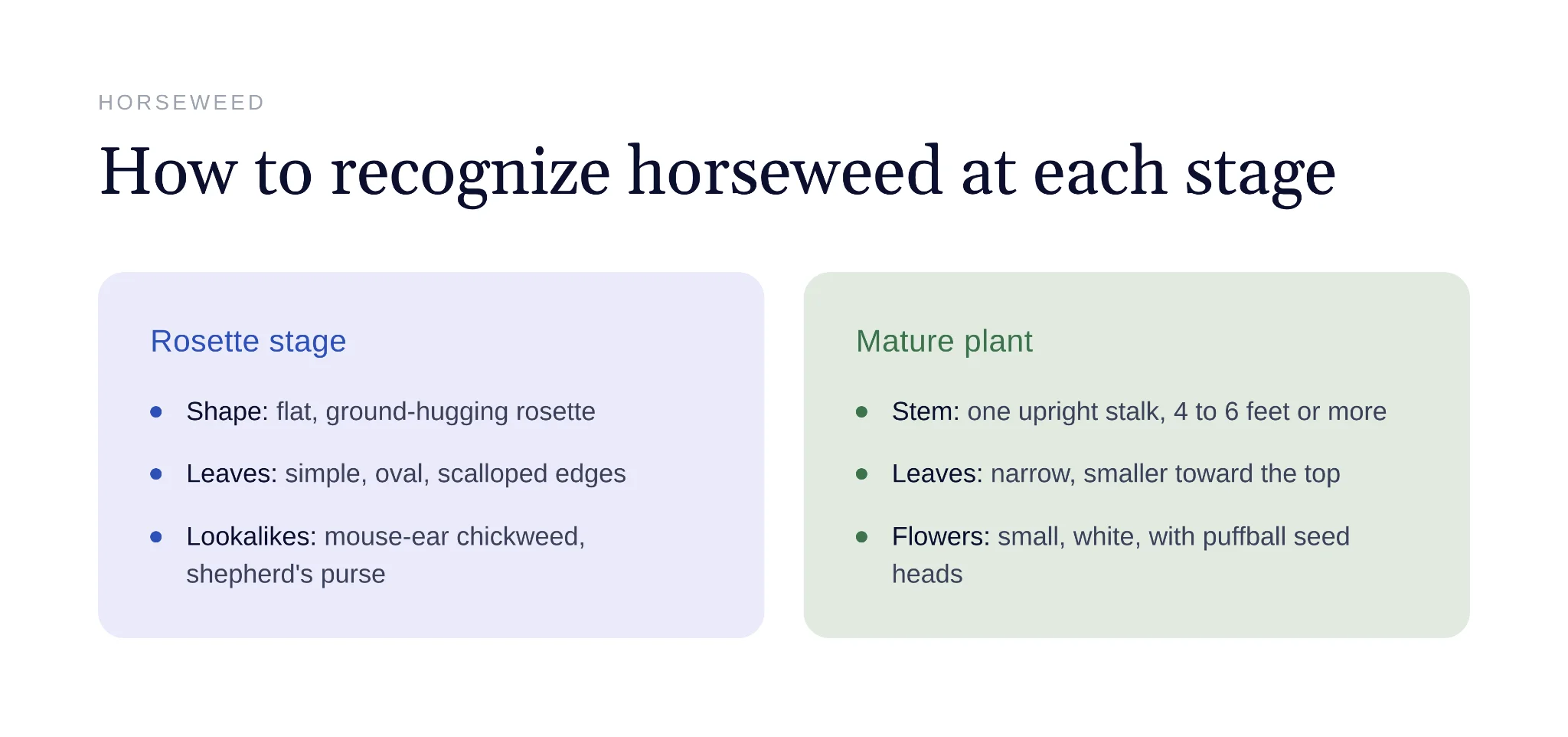
Horseweed looks like two different plants depending on the time of year. The young rosette looks much different from the mature plant, so check for these features at each stage:
- Rosette stage: Seedlings grow as a ground-hugging rosette of simple, oval leaves with scalloped edges.
- Stalk: The plant bolts into a single upright stem, usually hairy and branched near the top. On an unmowed plant, that stem can reach 4 to 6 feet or more.
- Leaves on the stalk: Lower leaves are 1 to 4 inches long and toothed, while the leaves along the stem are narrow and smooth, getting smaller toward the top.
- Flowers and seed: Small white flowers form seed heads that look like tiny dandelion puffballs.
Horseweed can be mistaken for mouse-ear chickweed, shepherd’s purse, or annual fleabane. Confirm the ID before you buy a product, since herbicide labels list the weeds they control.
Why It Shows Up in Lawns
Most horseweed in a lawn arrives from somewhere else. One mature plant produces an average of 200,000 wind-blown seeds that can travel more than a quarter mile, and one study found 125 seeds per square yard 400 feet from the parent plant.
Those seeds need no rest period. They can sprout as soon as there is enough moisture, usually with the first rains.
Where they land decides whether they take hold. Horseweed handles drought well, prefers undisturbed soil, and does not tolerate much shade, which makes thin, sunny, dry patches of lawn the easiest places for it to establish.
When to Control It
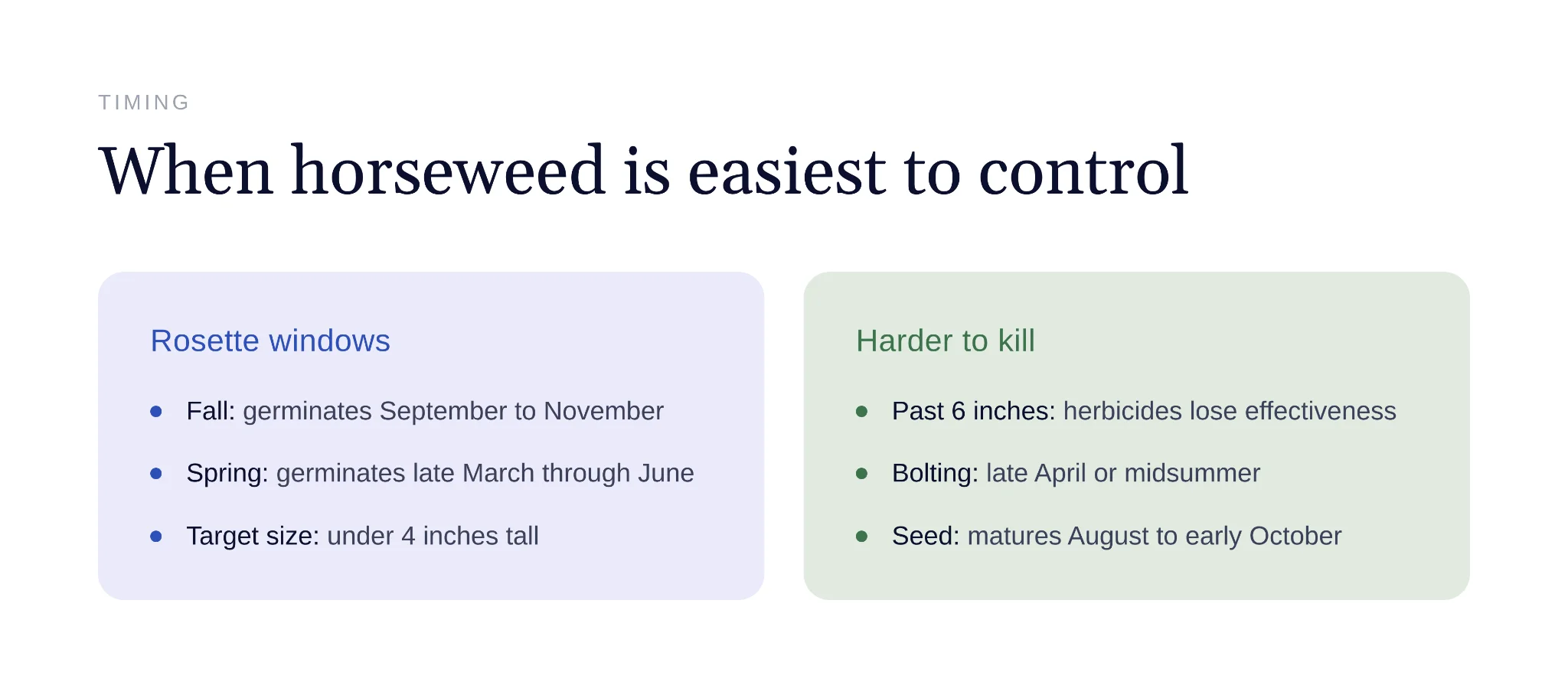
Horseweed germinates in two waves, so there are two windows each year to catch it small. Maryland Extension’s timeline shows how the stages line up:
| Stage | When it happens | What works |
|---|---|---|
| Fall rosettes | Germinate September to November and overwinter as rosettes | Herbicide or hand removal |
| Spring rosettes | Germinate late March through June | Herbicide or hand removal |
| Bolting | Fall-emerged plants bolt in late April, spring-emerged plants in midsummer | Hand removal; herbicides lose effectiveness |
| Seed | Seeds mature from August through early October | Remove the whole plant before seed heads open |
The cutoff to remember is 6 inches. Herbicides become much less effective once plants pass 6 inches and the stem starts to elongate.
Fall plants need the most attention. Fall seedlings that overwinter can be harder to control than spring seedlings, because they develop larger root systems.
Pulling and Mowing
For a handful of plants, removal by hand is the fastest fix. Pull seedlings while they are small, before they flower and set seed.
Larger plants need more care. Remove the whole plant and cut the root below the soil surface, since horseweed can re-sprout from broken stems.
Regular mowing helps once plants start to bolt. Frequent mowing removes the reproductive parts of many weeds, which limits their ability to spread.
Herbicides That Work in Lawns
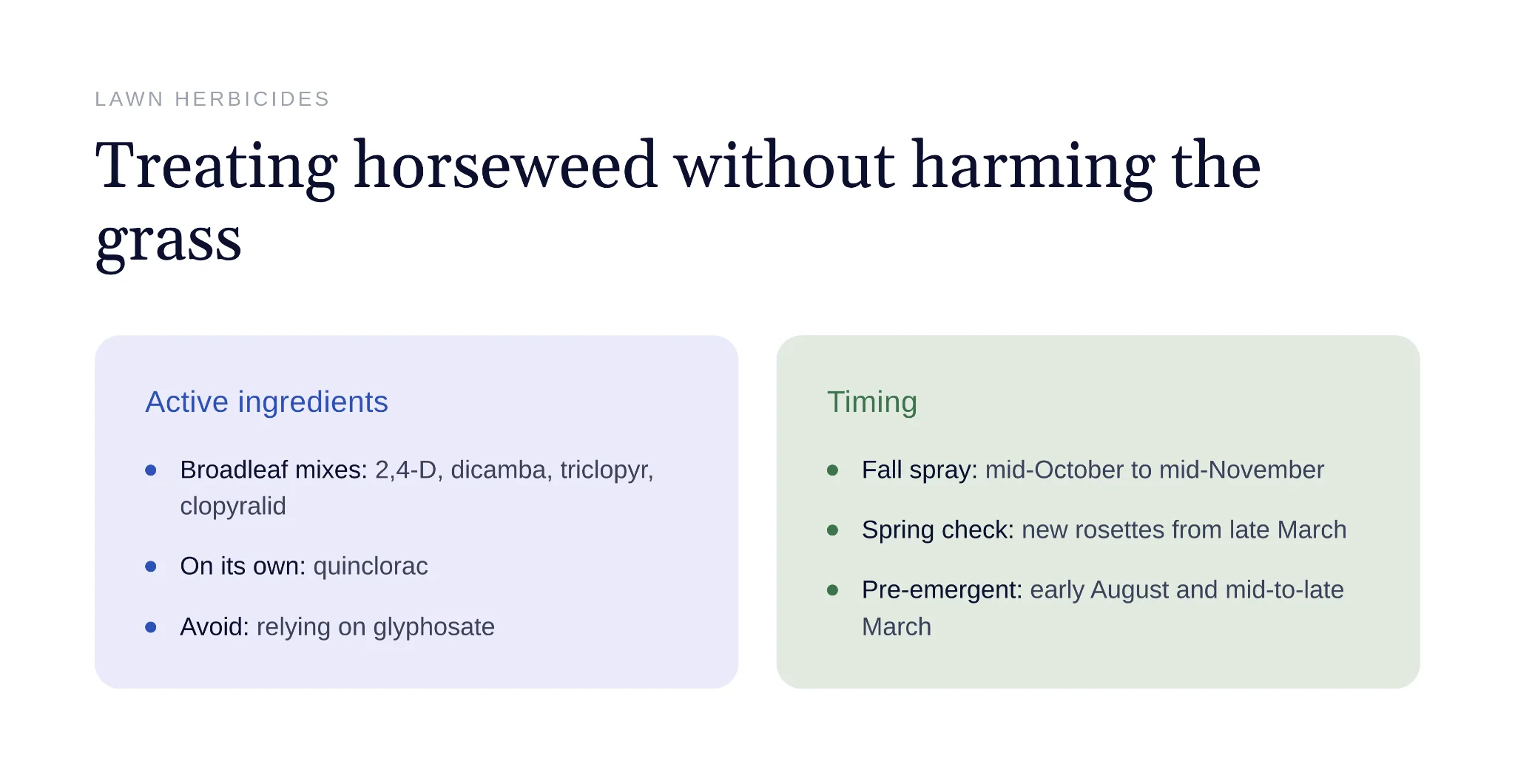
For a larger infestation, a selective broadleaf herbicide kills horseweed without killing the grass. We recommend products containing any combination of 2,4-D, dicamba, triclopyr, and clopyralid, or quinclorac on its own.
Leave glyphosate out of the plan, since horseweed populations have developed resistance to glyphosate and several other herbicides.
To get the most out of a broadleaf herbicide:
- Check the label. Make sure both your turf type and the weed you are targeting are listed.
- Spray rosettes, preferably under 4 inches tall and before flowering.
- Treat when the plants are actively growing.
- Plan a fall treatment. Postemergent herbicides applied from mid-October to mid-November may control emerged plants better than spring applications.
- Check again in spring. A fall treatment may not control plants that emerge in spring, so look for new rosettes from late March on.
Pre-emergent herbicides can stop seedlings before they appear. Horseweed germinates before other winter annuals, so fall pre-emergents must go down by early August, and spring pre-emergents by mid-to-late March.
Check that the product label lists horseweed and your grass.
Keeping Turf Dense
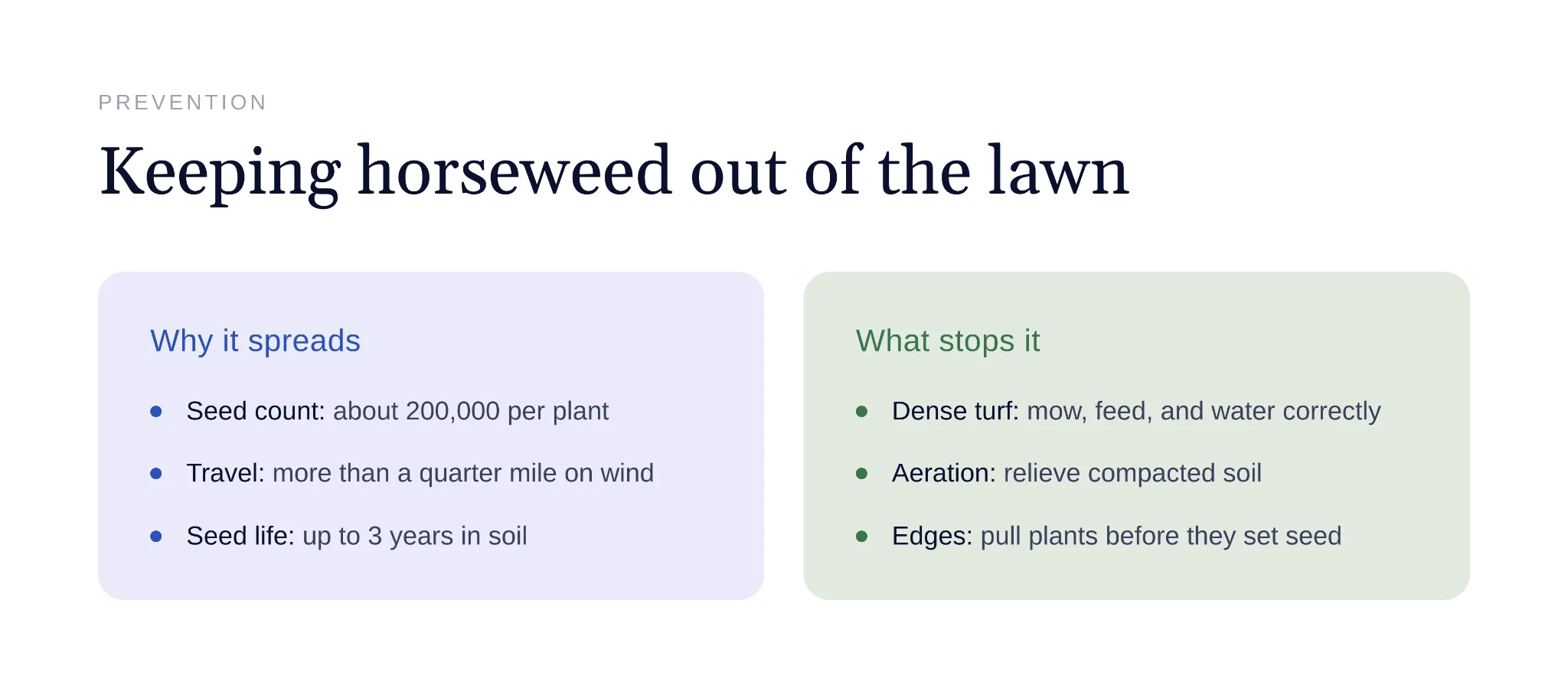
A thick lawn is the long-term fix, since horseweed seeds need open soil and sun to establish. NC State Extension’s advice is to maintain a dense, actively growing turf through proper mowing, fertilizing, and watering, and to mow at the right height for your grass.
Two conditions make turf thin out and open the door. Turfgrass needs about 8 hours of direct sun for optimum growth, and compacted soil weakens it, which is why core aeration and traffic control encourage the grass to compete.
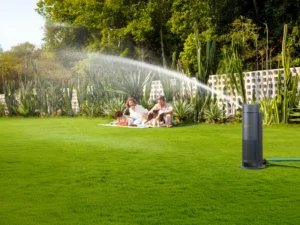
Dry patches are the other weak spot, since horseweed tolerates drought better than most lawn grasses. The Aiper IrriSense 2 maps up to 10 zones across 4,800 square feet with separate schedules, so the sunny, fast-drying sections where horseweed tends to show up can get more water than the rest of the yard.
Plan for More Than One Season
Clearing the lawn once rarely finishes the job. Horseweed seed survives up to 3 years in the soil, so expect new rosettes for a few seasons after the first cleanup.
New seed can also blow in from nearby lots, roadsides, and fields. Removing mature plants before they set seed helps long-term control, particularly against new seed from neighboring areas, so pull any plants along fence lines and property edges as well.
Get more pool and lawn care guides from Aiper on Google