How to Get Rid of Onion Grass (Wild Garlic) in a Lawn

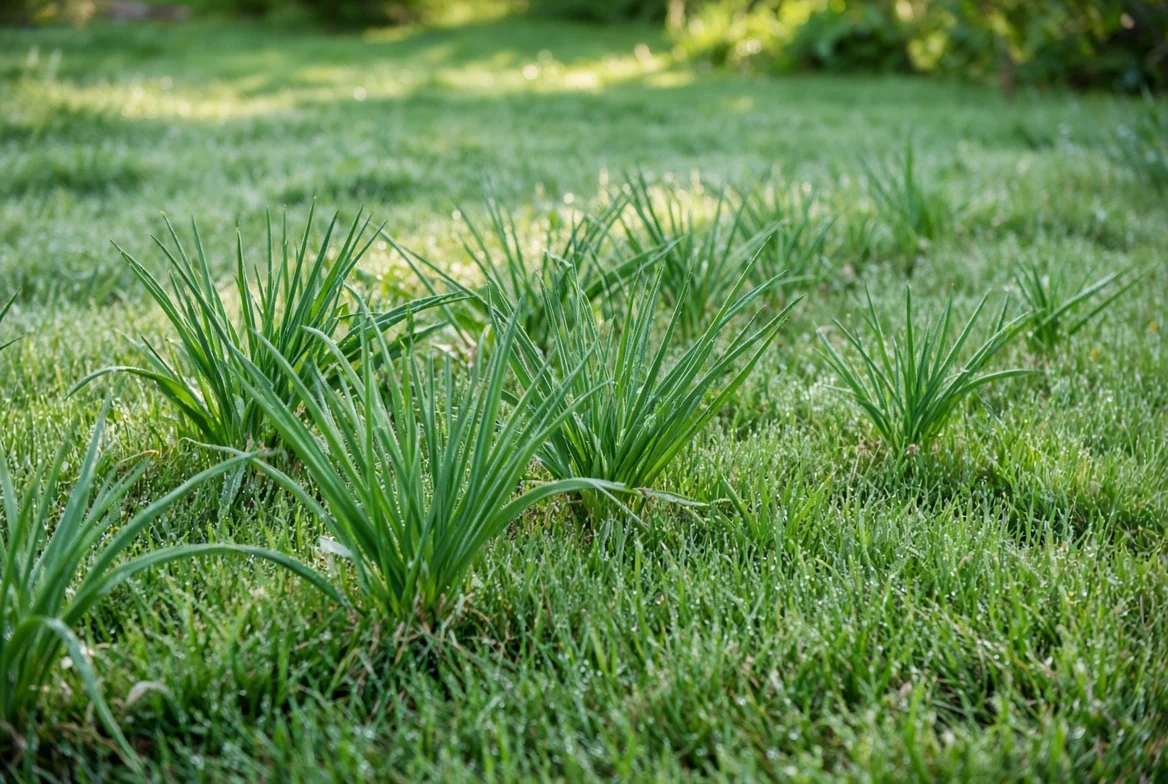
You usually smell it before you see it. Somewhere around the second mow of spring, the whole yard comes up smelling like a cutting board, and when you go looking, you find those slick dark-green spikes standing a head above everything else, in clumps, always in the same spots as last year.
That’s Allium vineale, or its cousin Allium canadense, and the reason it’s in the same spots as last year is that it never left. It went dormant in June, sat out the heat, and came back when the soil cooled.
Make Sure You’re Fighting the Right Plant
Snap a leaf and smell it. Onion or garlic means allium, and everything below applies.
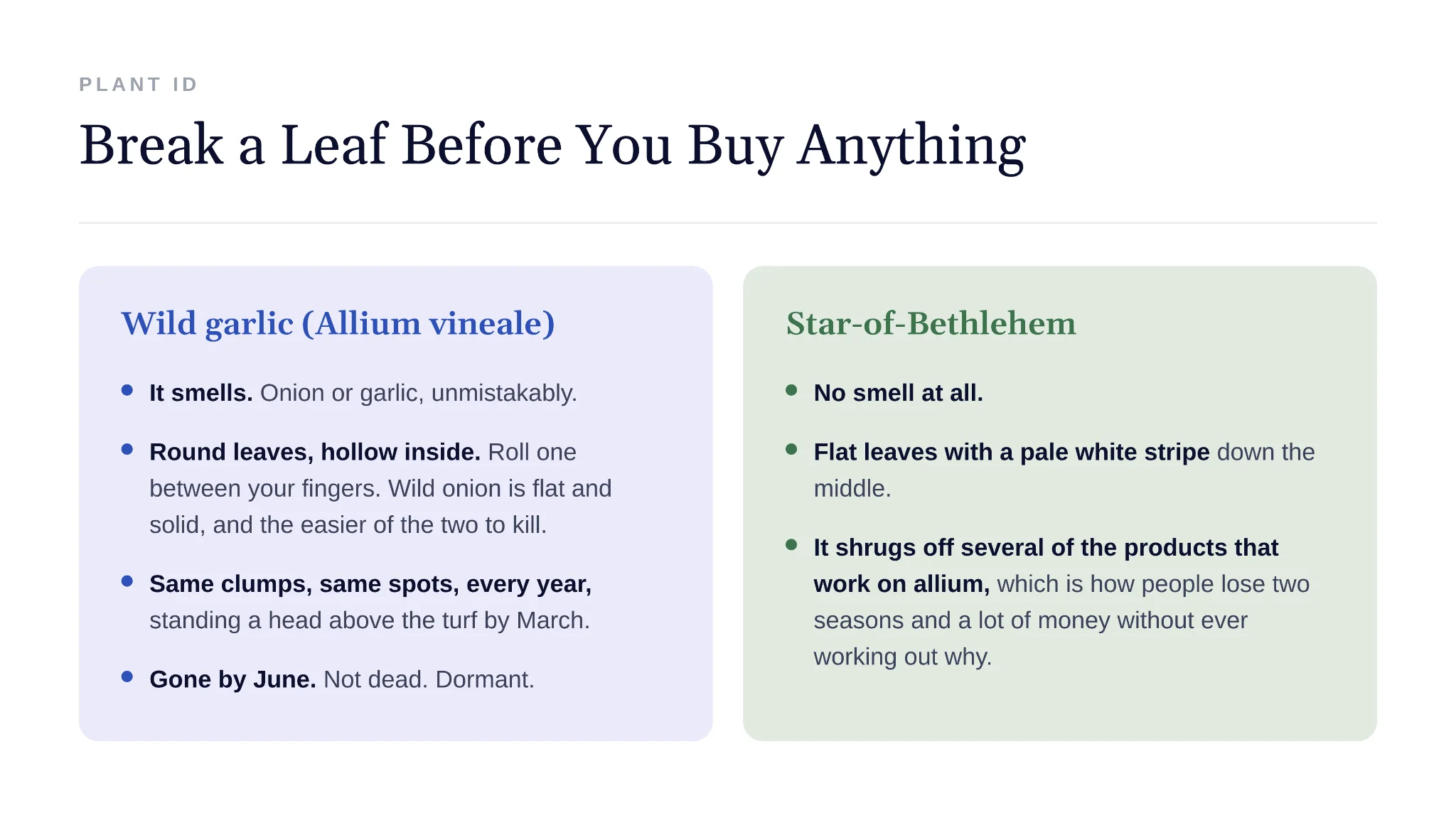
If there’s no smell, stop. The common lookalike is star-of-Bethlehem, same season, same clumping habit, but flat leaves with a pale white stripe down the middle. It’s controlled differently, and it shrugs off several of the products people reach for.
Then roll a leaf between your fingers.
Round and hollow is wild garlic. Flat and solid is wild onion. Wild garlic is the more common lawn invader and the harder of the two to kill, because a hollow tube gives a droplet almost nothing to sit on.
Pulling It Is Worse, Dig Instead
The leaves emerge from a sheath at the top of the bulb and are engineered to detach there. You grab a clump, feel it give, come away with a handful of green and a little white base, and think you’ve won.
But the bulb is still down there with its cluster of offsets, and you’ve just removed the only tissue that would have absorbed an herbicide.
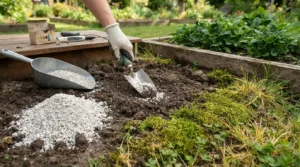
So don’t dig around it. Go in a few inches out with a narrow trowel, lever up the entire plug intact, then break it apart in your hand over a bucket where you can see what you’re doing. Damp soil, not saturated. Dry soil crumbles and the offsets stay behind.
This is realistic for a dozen clumps along a fence line. It is not realistic for 4,000 square feet, which is where most people actually are.
The Spray Window Is Narrower Than Anyone Tells You
Wild garlic emerges in fall, grows through winter, pushes hard in early spring, and by late May it’s yellowing and heading for dormancy. Once it’s dormant, there’s nothing above ground to treat. You can spray all July and accomplish nothing.
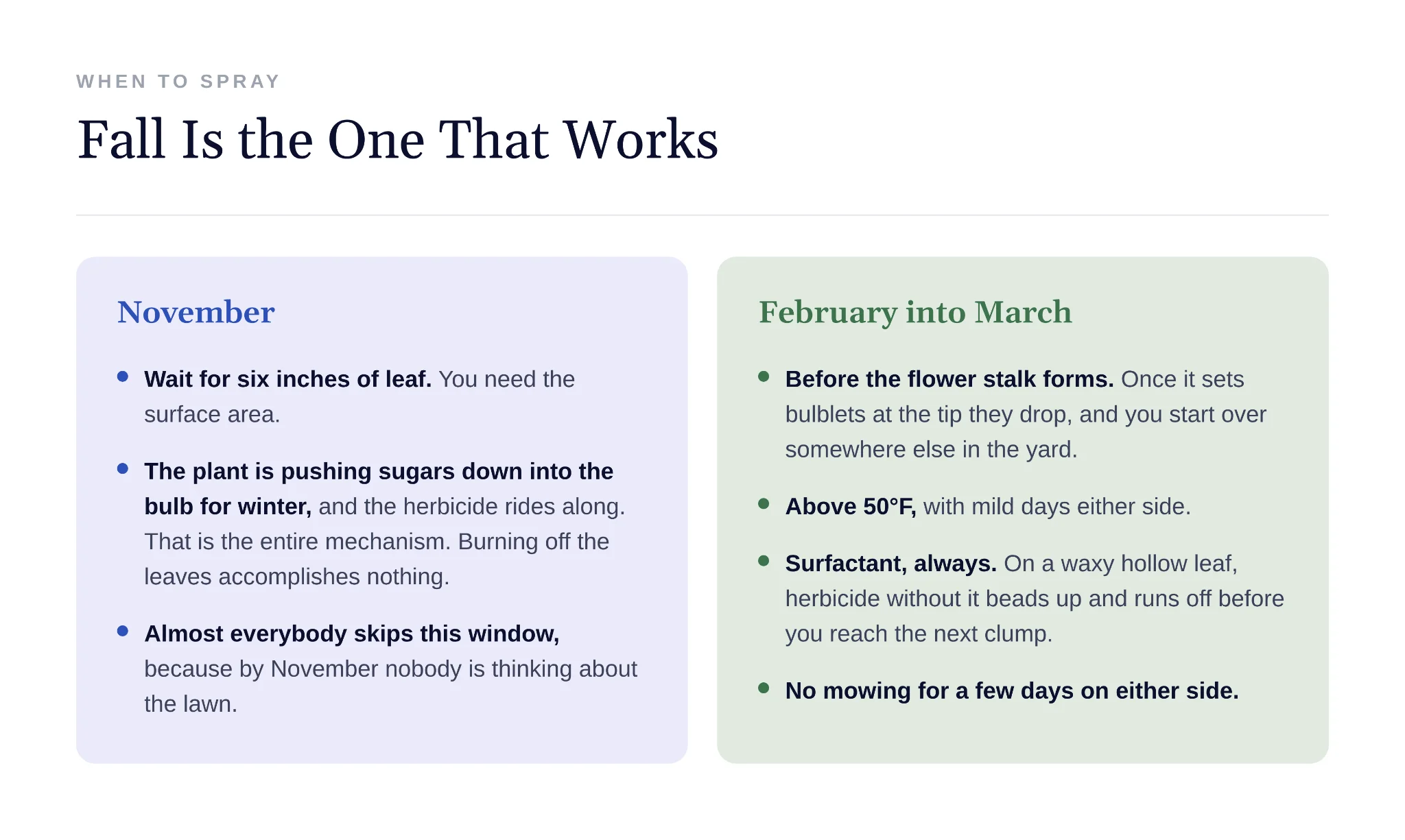
That leaves two windows, and you want both.
Late fall
Around November, once six inches or so of leaf is showing. This is the better of the two and the one almost everyone skips, because by November they’ve stopped thinking about the lawn.
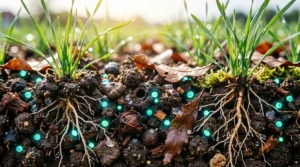
Fall application catches the plant while it’s moving sugars down into the bulb for winter, which means it carries the herbicide down with it.
You are trying to get a systemic chemical into a bulb four inches underground, and the plant’s own downward flow is the only delivery system you have.
Early spring
February into March, before the flower stalk forms. Once that stalk comes up and sets aerial bulblets at the tip, you’re on a clock.
Spray above about 50°F, with mild days on either side, so the plant is genuinely growing and not just standing there. Cold tissue doesn’t translocate.
Two more things, neither optional:
- Add a non-ionic surfactant at whatever rate the label gives, usually a quarter percent by volume. On a waxy, hollow leaf, herbicide without surfactant beads up and runs off in about the time it takes you to walk to the next clump.
- And give it time on the leaf. No rain in the forecast for several hours, and no mowing for a few days on either side.
If you’re on an automatic system, that includes your own irrigation.
A scheduled cycle four hours after you spray will strip the herbicide off before it has moved anywhere. Anything app-controlled makes this a thirty-second job, and with the Aiper IrriSense 2 you skip the affected zone for a day from your phone, and the weather-adaptive scheduling picks back up on its own.
What Works, and What You Can Put on Your Grass
Read the label. The difference between a product that’s safe on tall fescue and one that will kill every blade of it is printed right there.
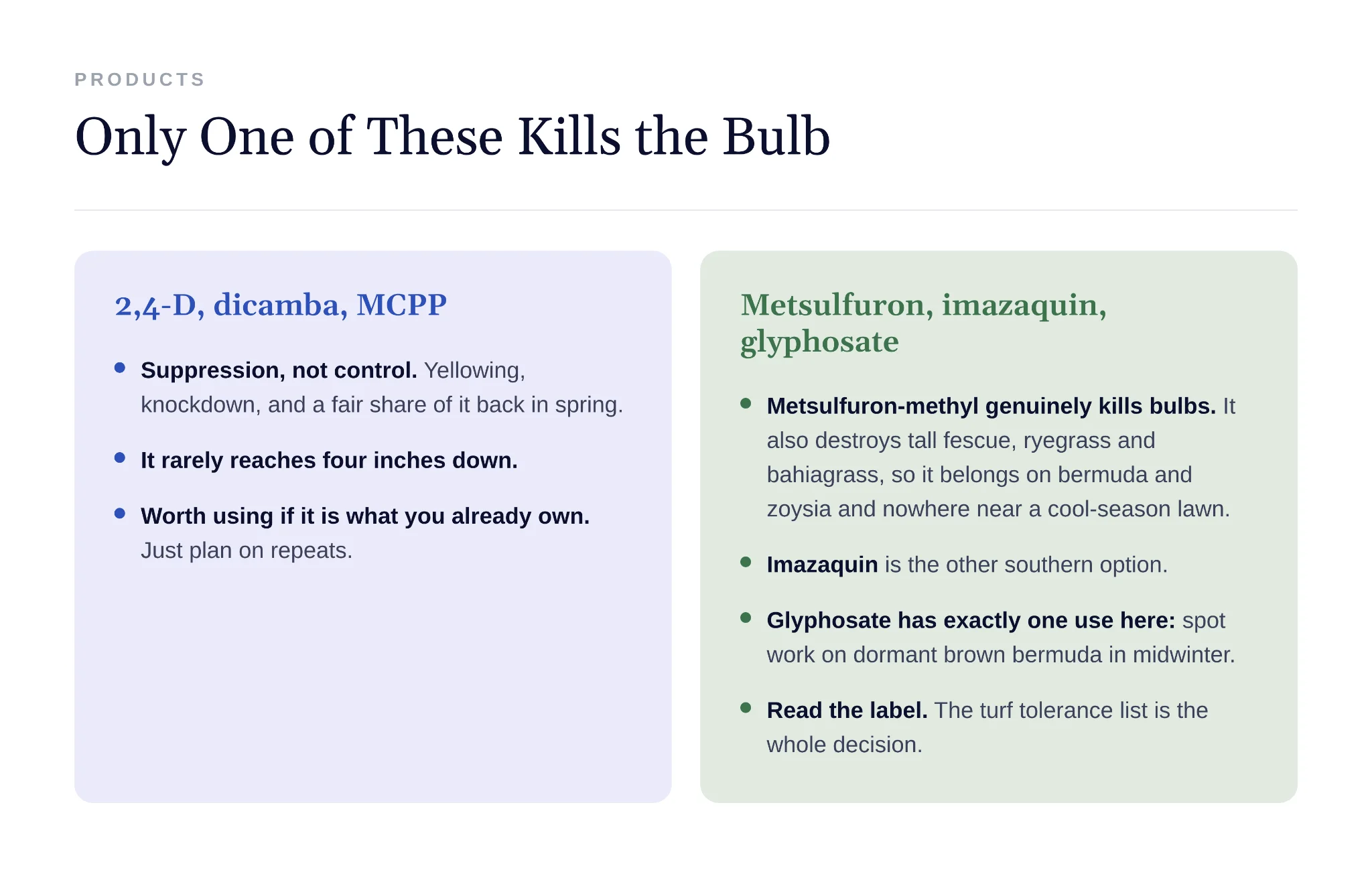
The three-way broadleaf herbicides: 2,4-D, dicamba, MCPP (the standard hardware store stuff) will suppress wild garlic.
But you’ll get yellowing and knockdown, and a fair share comes back, because those chemicals don’t reliably kill the bulb. Use it if that’s what you have, but plan on repeats.
The materials that genuinely kill bulbs are the sulfonylureas.
Metsulfuron-methyl is very effective and will also devastate tall fescue, ryegrass, and bahiagrass. It belongs on bermuda and zoysia. Imazaquin is the other common option for southern turf. If you’re in the North with fescue or bluegrass, your options are narrower and slower, and repeat three-way applications plus digging in the heavy spots is often the practical route.
Spot-spraying glyphosate is legitimate in exactly one situation: fully dormant brown bermuda in midwinter, when the allium is green, and the turf isn’t. Anywhere else it just leaves dead circles.
Thick Turf Is the Part You Can’t Buy
Wild garlic establishes where turf is thin, think compacted ground along a walkway, the dry strip by the driveway, and shady low corners that hold moisture.
Aerate the compaction. Fix the drainage in the low spot instead of fighting the symptom every March. Overseed hard in fall and keep fertility where it should be for your grass type, because dense turf leaves a bulb very little room to put up a leaf, and a bulb that can’t put up a leaf can’t refill itself.
Late this November, when the yard’s mostly asleep and nothing else out there is demanding attention, go walk it.
You’ll find them standing green against dormant grass, obvious in a way they never are in May. That’s the day to spray.
Get more pool and lawn care guides from Aiper on Google