
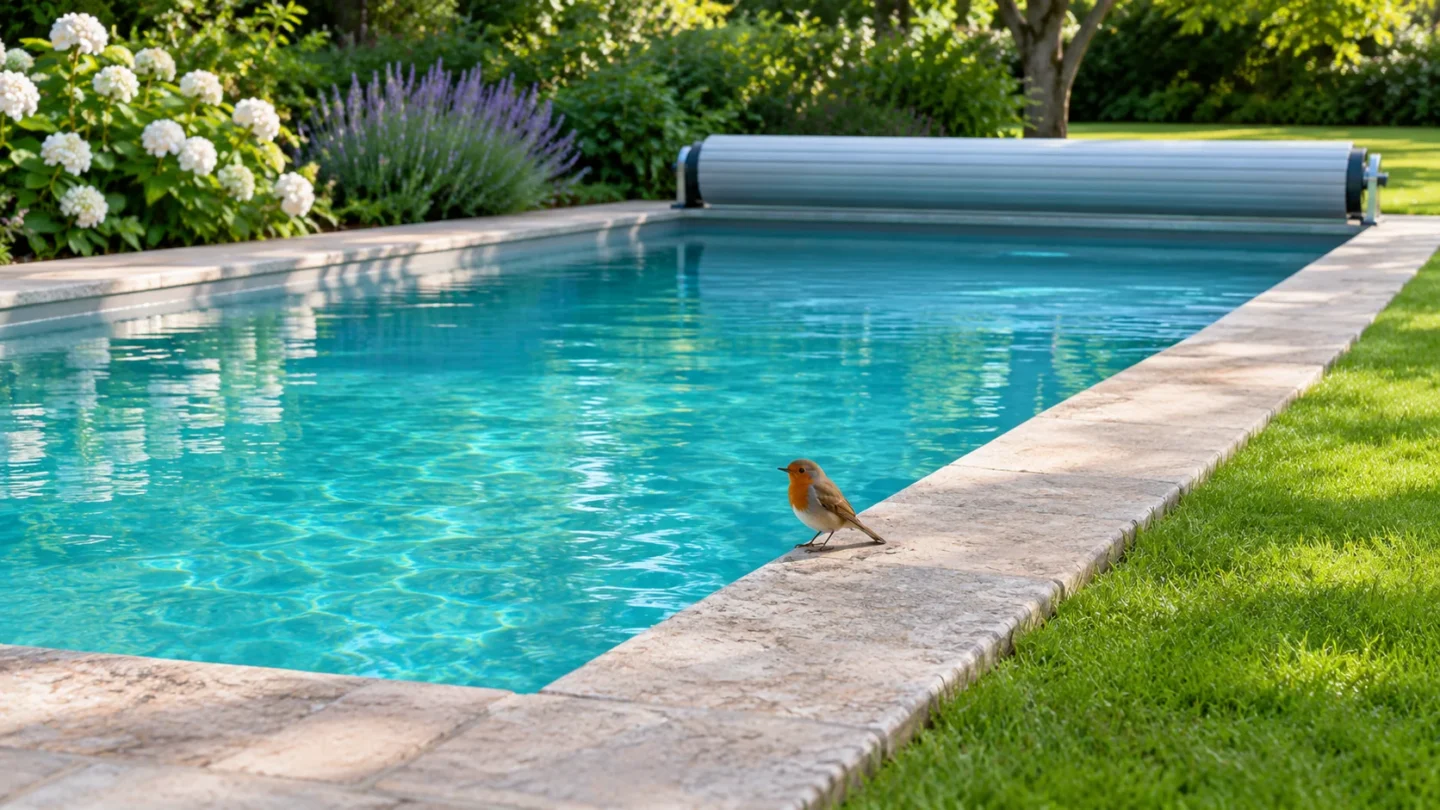
Birds don’t land on a pool by accident. A clean, open body of water sitting in a dry backyard is a resource, and a bird reads it as one, which is the thing worth understanding before any money goes toward spikes and decoys, because a deterrent only works when it’s aimed at whatever actually drew the bird there.
The droppings are the damage. The pull is the cause, and most of the frustration people have with birds comes from fighting the first while ignoring the second.
What a Pool Offers a Bird
Water is the headline, but a bird is reading the whole yard, not just the blue rectangle.
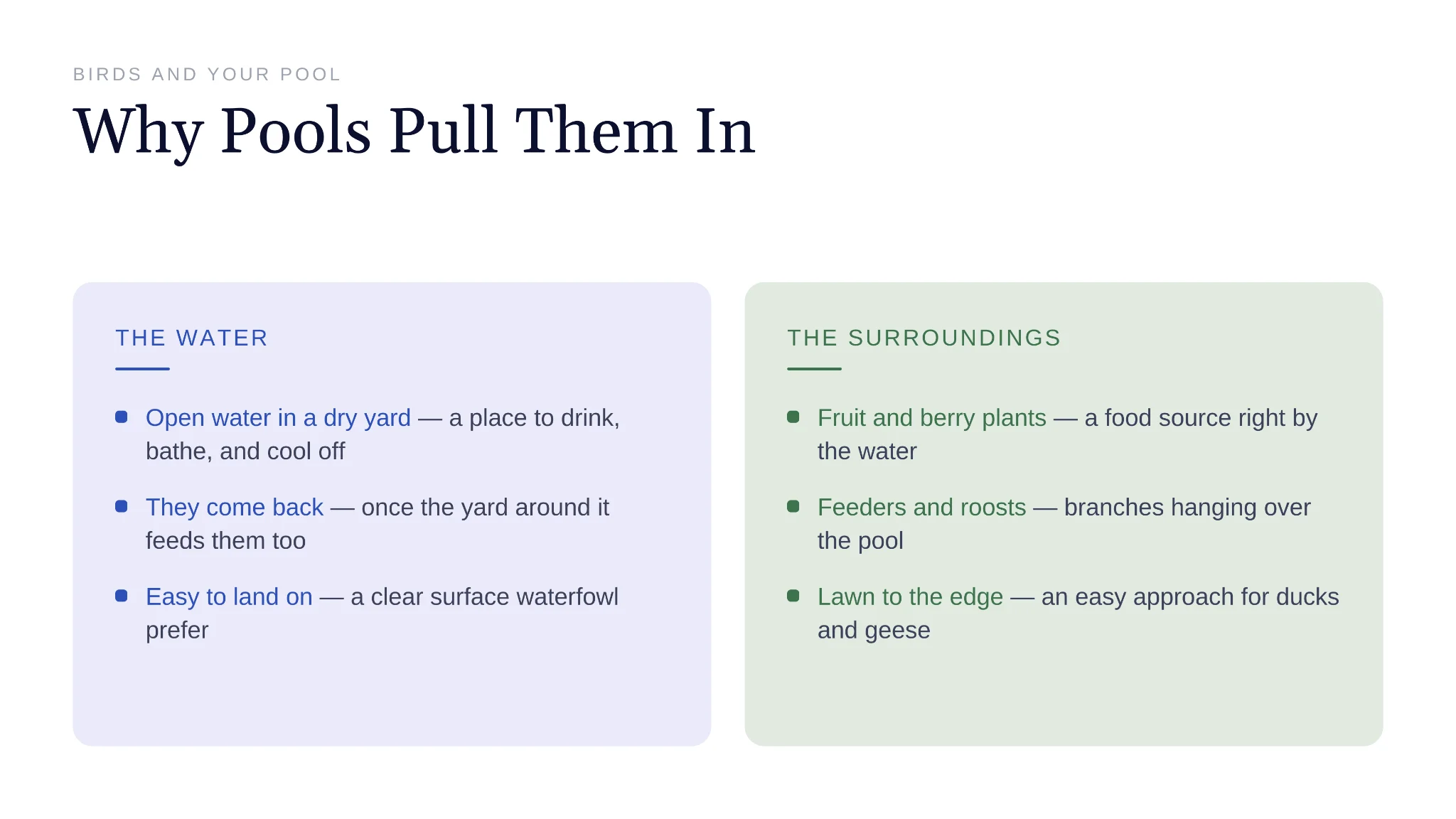
Open water that stays clean and full, day after day, is more reliable than most of what a bird finds in a dry spell: a place to drink and to bathe, sitting out in the open where it’s easy to reach.
Around it, the yard usually throws in the rest without anyone intending to. A fruiting tree dropping seeds and berries, a feeder stocked all summer, shrubs and branches reaching over the water to perch on.
The pool stops being just water at that point and becomes water with food and cover attached, which is the combination birds actually settle into rather than pass over.
Insects are the draw people miss. A pool pulls bugs to its surface, especially at dusk, and the birds working low over the water at twilight are hunting those insects, not drinking. The water brought the bugs; the bugs brought the birds.
The Pull Isn’t the Same for Every Bird
Reading which bird, and why, tells more than any single fix, because the motivation sets how bad the problem gets.
A few sparrows and finches coming in to drink and splash are a minor matter. They make a light, scattered mess the chemistry mostly shrugs off.
Birds hunting insects at dusk are a slightly different case, there for the bugs and gone once the bugs are dealt with. Waterfowl are the real escalation. A duck, and worse, a goose, doesn’t visit a pool so much as try to move into it, treating it as a pond to claim, and the droppings from a pair of geese dwarf anything a flock of small birds leaves, dropped by a large animal that keeps coming back to water it’s decided is home.
The gap between a sparrow’s visit and a goose family settling in is the gap between a cosmetic annoyance and a genuine contamination problem.
Why the Droppings Matter More Than the Mess
This is the part that separates a stain on the step from a health concern, and it’s the reason birds are worth keeping off the water at all.
Duck and goose droppings can carry E. coli, Salmonella, Campylobacter, and Cryptosporidium straight into the water. A pool holding its chlorine kills most of that within minutes.
Crypto is the holdout, a parasite with a shell tough enough to survive for days even when the chlorine sits exactly where it belongs, which is what moves bird droppings out of the nuisance column and into something to handle properly.
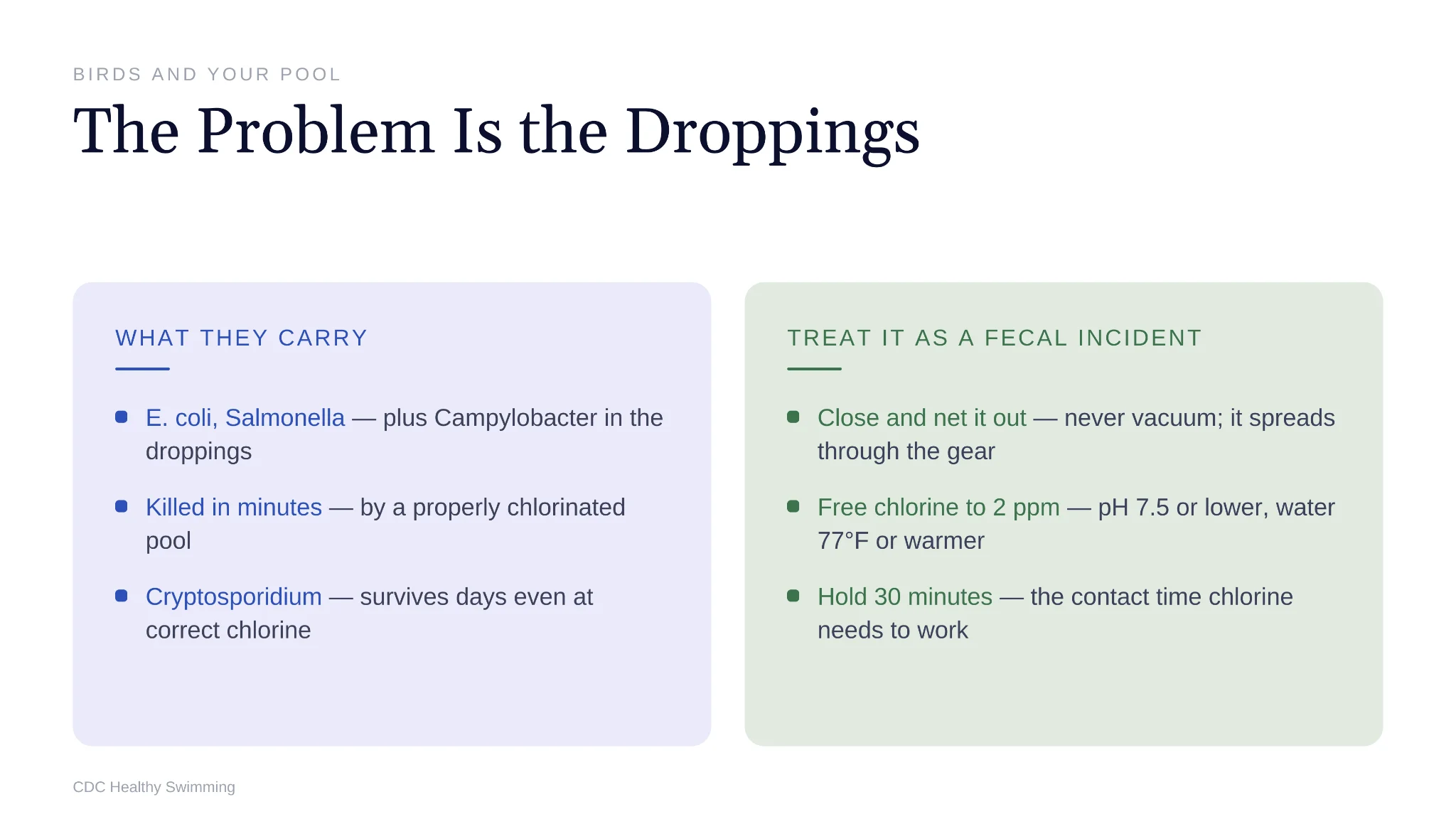
The CDC treats a dropping in the pool as a fecal incident, the same as if a person had had an accident in the water, and the response is specific rather than a quick skim.
The pool gets closed, and the droppings are lifted out with a net. Once it’s out, free chlorine goes to 2 ppm with the pH held at 7.5 or lower and the water at 77°F or warmer, and it stays at those levels for a full 30 minutes with the filter running before anyone gets back in.
The timed hold is the whole point. Chlorine needs that contact to actually disinfect, so a fast shock followed by a jump back in doesn’t finish the job.
Making It Less of a Target
Keeping birds off comes down to making the yard dull, and the deterrent tactics for that (clearing the perch above the water, cutting the food draws, a cover for when the pool sits unused) are a longer subject in their own right.
The principle underneath all of them is the same: take away whatever the bird came for, aimed at the specific draw rather than scattered across the yard.
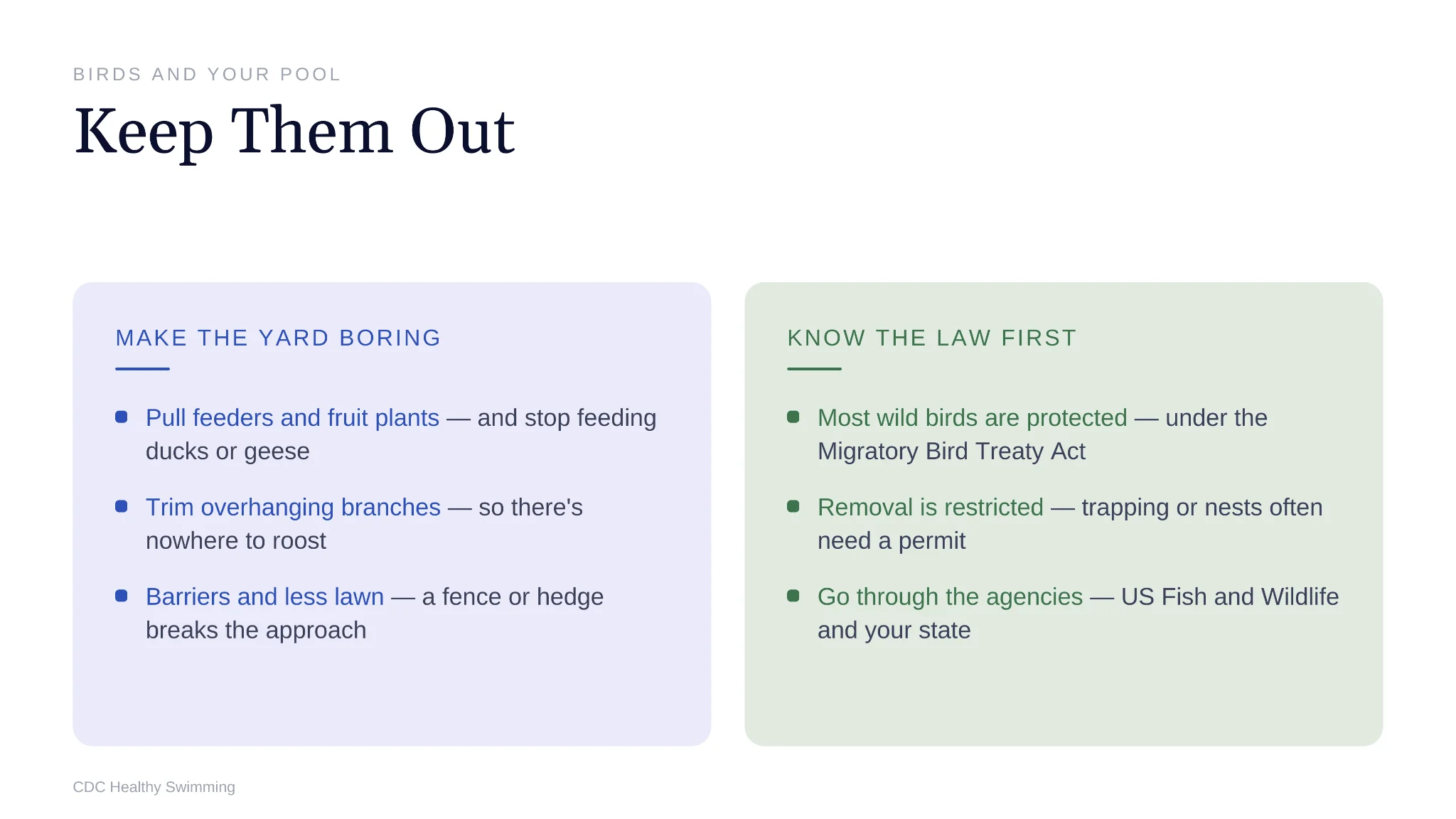
One limit is worth knowing before going at the birds directly. Nearly every wild bird in the US is protected under the Federal Migratory Bird Treaty Act and state law, so trapping, removing, or disturbing a nest is restricted and often needs a permit.
Changing the habitat is open to anyone; anything past that goes through the US Fish and Wildlife Service and the state wildlife agency.
Keep the Water Uninviting
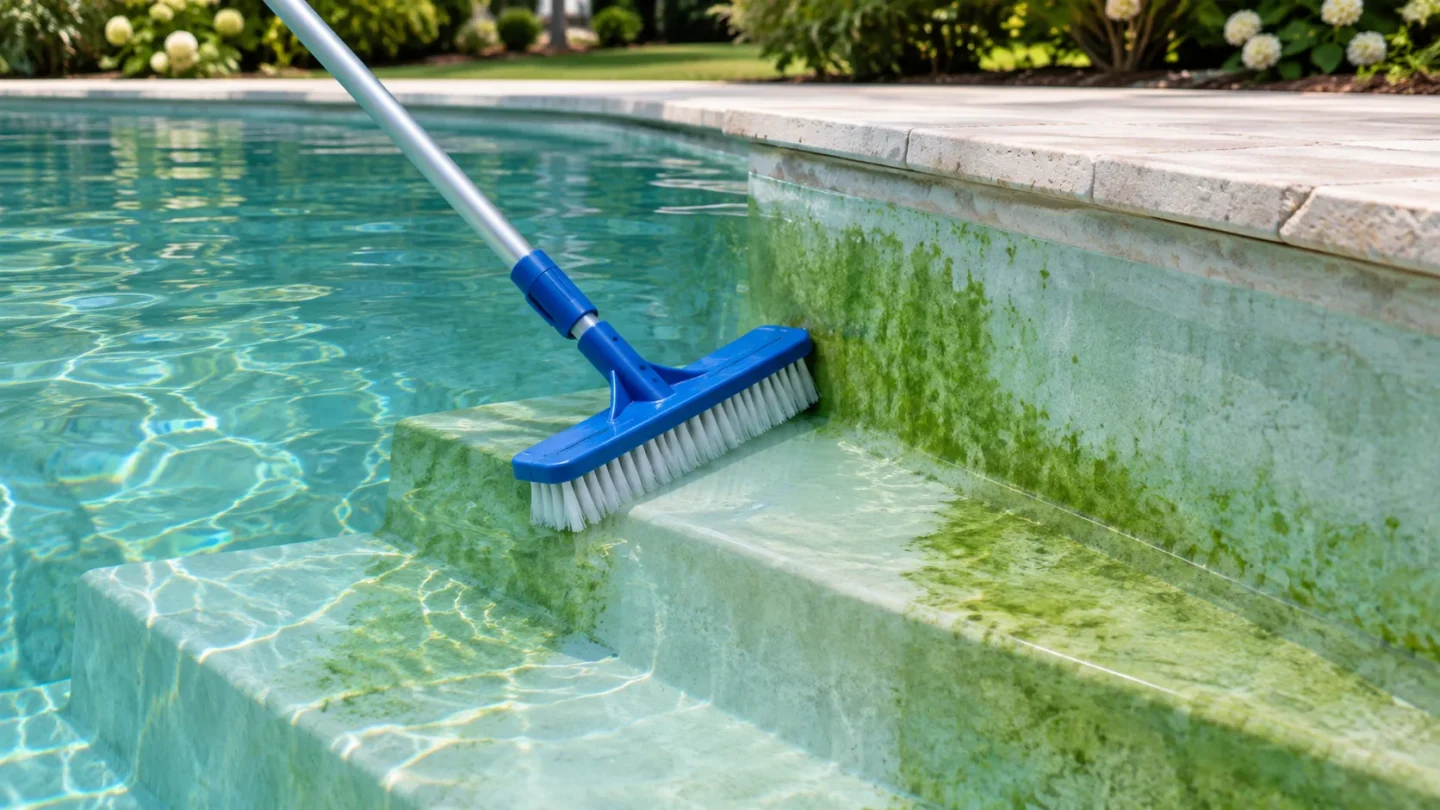
A pool collecting drowned insects and settled debris gives a foraging bird more reason to visit than clear water does, and the same grime wears down the chlorine that has to deal with whatever lands in it.
Keeping the floor and surface clear works both ends. There’s less to forage, and a sanitizer that isn’t already spent.
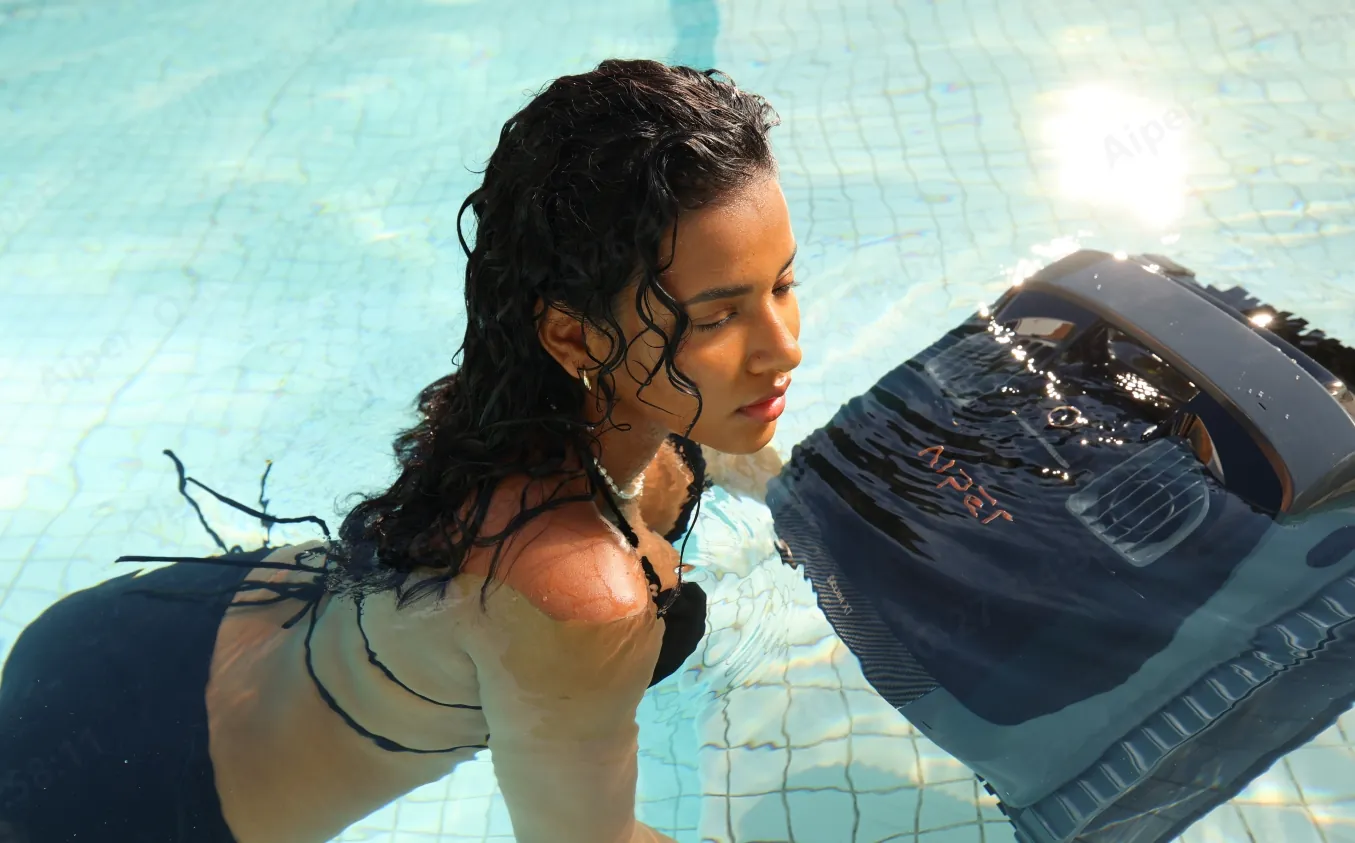
That steady clearing is a job a robot takes off the list. An Aiper robotic pool cleaner runs the floor and walls and lifts the insects, leaves, and settled debris that build up between skims, working off its own battery rather than the circulation pump.
A fresh dropping isn’t its job. That’s the netted, gloved removal the CDC spells out, and no cleaner belongs anywhere near it. What it does is keep the water clear enough that the pool reads as less of a destination to begin with.
Get more pool and lawn care guides from Aiper on Google