How to Keep Geese Off Your Lawn

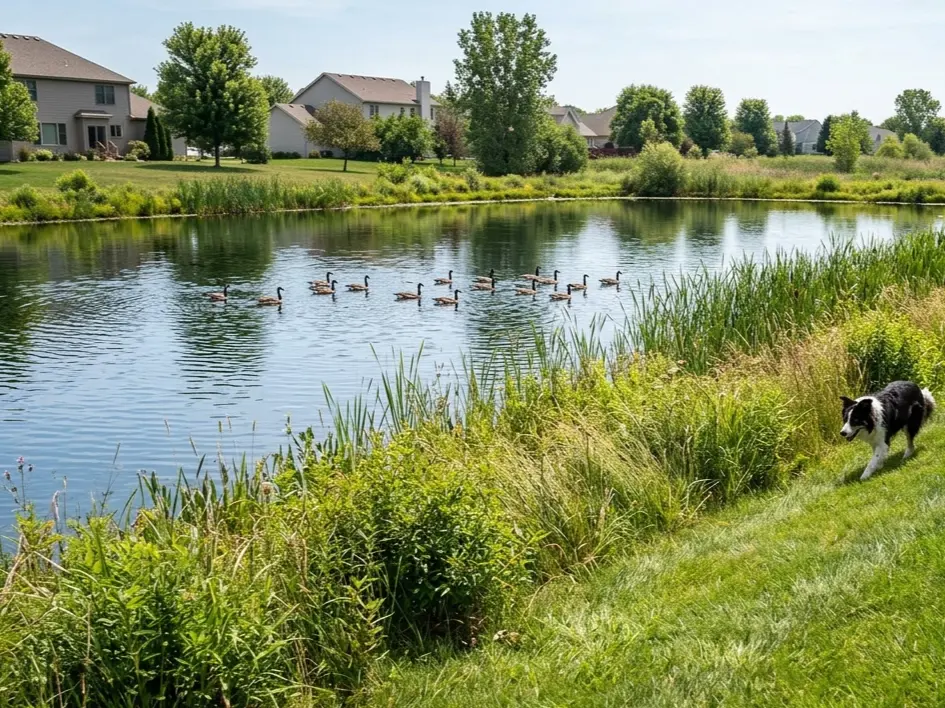
Geese don’t wander onto a lawn by accident.
They case it first, usually from the air, sometimes for days before they ever land, and by the time you notice the first dropping on the grass, they’ve already decided your yard meets the criteria.
Open sightlines. Water nearby. Grass short enough to graze without effort. Once that decision gets made, it doesn’t reverse on its own.
You can mow around the problem for a season, or you can actually change the conditions that made your lawn attractive in the first place. Only one of those works.
This isn’t really about scaring geese. People show up wanting a device, a spray, a sound that makes them leave. Devices help, sometimes a lot, but they’re the smallest part of the answer.
The lawns that stay goose-free are the ones where the underlying logic of the space has changed.
Why They Picked Your Lawn
Canada geese graze the way cattle do, on constant, low-effort, mouth-down feeding on short, tender grass. A lawn cut to two inches and watered on a schedule is basically a buffet with a “please eat here” sign on it.
Golf courses know this. HOA-managed lawns near retention ponds know this even better, usually after the fact.
But grass alone doesn’t bring them in. Geese are prey animals at heart, and everything about how they choose ground comes down to one question: can I see a predator coming, and can I get back to water before it reaches me?
A lawn that slopes gently down to a pond, with no tall plantings interrupting the view, is exactly the kind of terrain a goose’s nervous system is built to love.
They want 360 degrees of visibility and a short sprint to safety. Give them both, and they’ll come back every day, often at the same time, often in the same spot near the shoreline.
Take away either one, the sightline or the easy escape, and the math stops working for them.
None of this works if someone nearby is tossing bread or feed corn at the pond. A fed flock stays put no matter what the sightlines look like.
The Decoy Trap
Skip the plastic owls. Skip the inflatable coyote, too.
Geese are smart enough to clock a stationary object within a few days and stop reacting to it entirely. A goose walks past a coyote decoy and grazes six feet from it like it was a garden gnome.
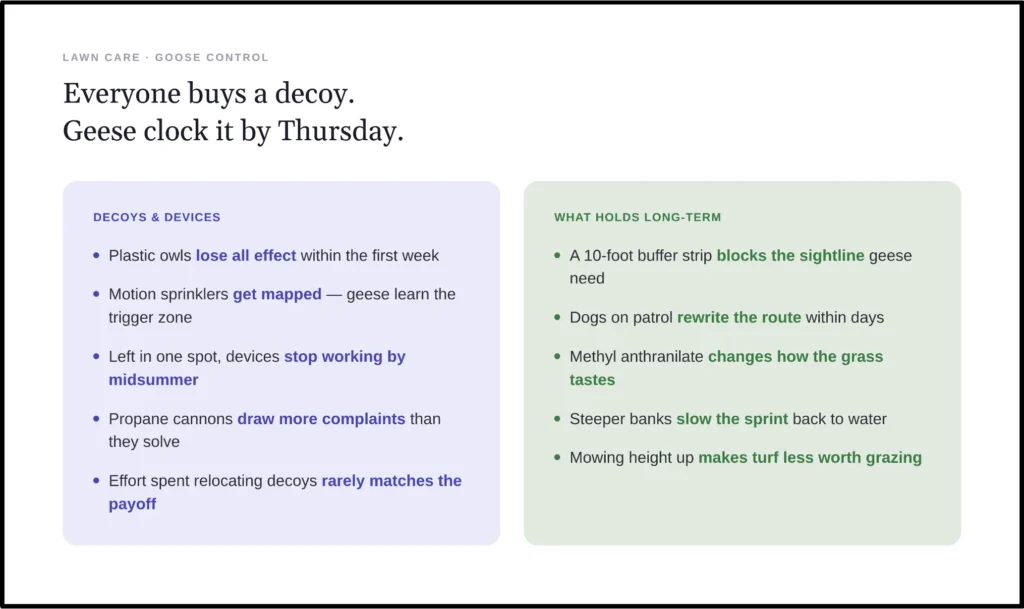
The only way decoys work at all is if you move them constantly, different spots, different angles, every couple of days, and most people don’t have the patience for that kind of upkeep on a fake predator.
The effort-to-result ratio is bad. Spend that energy somewhere it actually compounds.
A Rope Line Buys You Time
A buffer strip takes a season to fill in. If you need something working this week, string fishing line, poultry wire, or bright flagging tape 18 to 30 inches off the ground along the shoreline or wherever geese are walking onto the lawn. Geese walk to water, they don’t hop obstacles to get there, and a line at that height reads as one even though any of them could clear it in a single wingbeat if they bothered to fly.
It’s a bridge, not a fix. Use it to hold the line while the buffer strip below establishes, or through a single spring before you’re ready to commit to the vegetation route.
Break the Sightline
This is the section that matters most, and it’s the one people skip because it’s slower than buying a sprinkler.
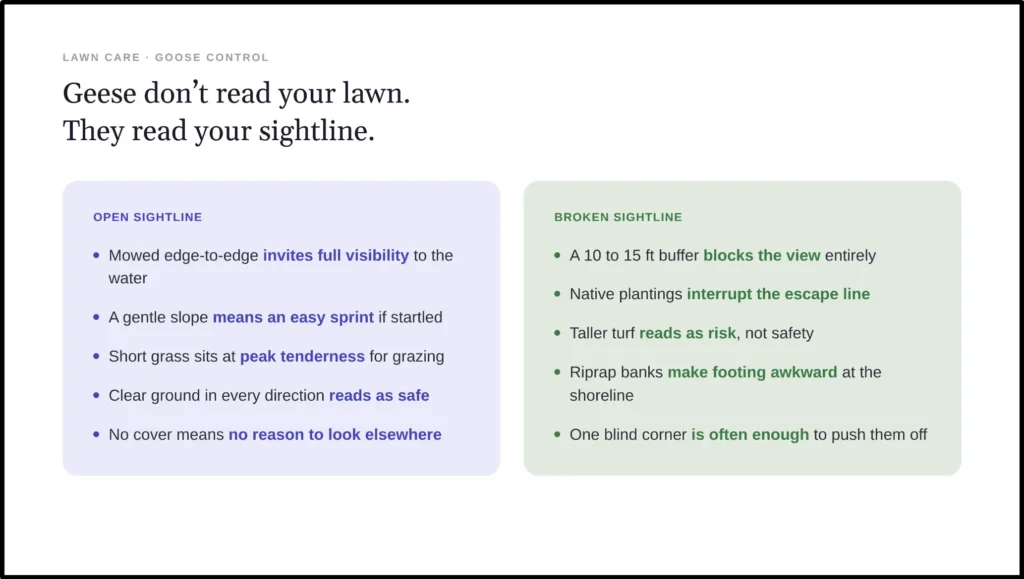
Geese avoid tall vegetation near the shoreline because it blocks their view and slows their escape.
A buffer strip of unmowed grass, native plantings, or shrubs, even a strip ten to fifteen feet wide running along the water’s edge, changes the entire calculation for them.
They won’t land if they can’t see what’s on the other side of it. This is the single most durable fix available, and it’s the one municipalities and golf courses lean on once they’re tired of chasing geese with noise machines that stop working after a month.
The catch: it takes a season or two to establish, and it changes the look of the property. Some people don’t want a “wild” strip along their pond. Fair. But that wild strip is doing more work than every motion sensor you could buy. Just keep an eye on it once it fills in — an unmowed buffer is also prime real estate for tree seedlings to take root, and our guide on clearing tree saplings from a lawn covers pulling them before the roots get established.
Mowing height matters here, too, separate from the buffer. Letting turf grow to four inches instead of two makes the grass less palatable and the terrain less appealing for grazing.
Geese prefer short, tender shoots, the same texture that makes a putting green so appealing to them in the first place.
Raise the mower deck, and you’ve already made the lawn slightly less interesting before you’ve spent a dollar on anything else.
Water Access Is the Real Variable
If there’s a pond, retention basin, or even a low spot that collects water after rain, that’s the actual anchor point. The lawn is secondary.
Geese will tolerate worse grass if the water access is good, and they’ll abandon great grass if the water access gets cut off.
Steep banks help. A drop-off of even a foot or two at the shoreline makes the in-and-out transition harder for a goose, especially with goslings in tow later in the season.
Riprap (loose stone along the bank) does something similar by making footing awkward.
This is also why suburban retention ponds attract geese at a rate that seems almost unfair.
Gentle slope, mowed right to the edge, totally open. It’s a goose habitat built by accident, by people optimizing for drainage and curb appeal who never once thought about predator visibility.
Dogs
A dog that’s allowed to chase geese, even occasionally, will do more long-term behavioral work than almost anything on this list.
Geese remember which properties have an active threat and which don’t, and they update their routes accordingly within days.
You don’t need the dog out there constantly. A border collie on patrol two or three times a day, especially during the morning and early evening windows when geese typically feed, is usually enough to make them choose a different shoreline.
This only works if the dog is actually allowed off-leash to give chase. A dog barking from a porch doesn’t register the same way.
Repellents That Actually Do Something
Methyl anthranilate is the compound that makes grapes smell the way they do, and it is one of two goose repellents with real research behind it. Anthraquinone, covered below, is the other.
Sprayed on turf, it makes the grass taste bad to geese without harming them or the lawn. It breaks down with rain and UV exposure, so it needs reapplication, usually every week or two during peak grazing season, more often after heavy rain.
Most of the other sprays on the shelf are some version of garlic or capsaicin, and the results on those are inconsistent at best. I wouldn’t build a strategy around them. Use methyl anthranilate as one layer in a system, not the whole plan.
Noise and Motion
Motion-activated sprinklers work for a while. The element of surprise does the heavy lifting, and like the decoys, geese eventually learn the pattern, where the trigger zone starts, how long the burst lasts, and whether it’s worth the risk to push through anyway.
Moving the sprinkler’s position every so often extends its usefulness. Leaving it static guarantees it stops working by midsummer.
Propane cannons and ultrasonic devices get sold hard to anyone googling this problem. Skip them near residential property unless you enjoy explaining yourself to neighbors.
A green laser pointer, swept across the grass or water near a resting flock at dusk or dawn, moves geese along without touching them. Low light is when it actually registers, since they can barely see the beam in daylight. Keep it aimed at the ground or water, never at the birds or toward any flight path, and treat it as a right-now tool for an active flock rather than something that changes long-term behavior.
Deterrents and Repellents by Name
For the methods above that involve buying something, these are the products worth the money and what each is for.
Liquid Fence Goose Repellent: The homeowner-scale methyl anthranilate concentrate, about 20% active. Mix 16 ounces per gallon and spray either the whole grazing area or a 30-foot band around the water’s edge, keeping it off the water itself. One bottle covers a typical suburban yard for a few applications.
Avian Control: Also 20% methyl anthranilate, sold in larger sizes for bigger properties and HOA common areas. It replaced the older Migrate product and can be fogged as well as sprayed, which matters if you are treating an acre rather than a lawn.
Flight Control Plus: A different active ingredient, anthraquinone, that gives geese a stomach upset they learn to associate with the treated grass. Longer-lasting than methyl anthranilate but sold through professional applicators, so this is what a golf course or property manager uses rather than a homeowner.
Orbit Yard Enforcer: The motion-activated sprinkler most people end up with. Runs on a hose connection and a 9-volt battery, with day, night, or always settings and a 40-foot detection range. Set it to day-only so it isn’t soaking the raccoons, and move it every week or two.
Bird-B-Gone Flash Tape or any mylar scare tape: Cheap, and useful for a few weeks in the strip between the water and the lawn while a buffer planting establishes. Geese habituate to it the same way they do to decoys, so it is a bridge, not a plan.
What to skip on the shelf: garlic and capsaicin “goose and duck” sprays, ultrasonic boxes, and any decoy sold as a permanent fix. None of them has research behind it, and the section above explains why the decoys fail.
Goose Droppings: Health Risk and Cleanup
An adult Canada goose leaves roughly a pound of droppings a day, and a flock of twenty can make a lawn unusable within a week. This is usually what turns a goose nuisance into a goose problem.
The droppings can carry E. coli, salmonella, giardia, and cryptosporidium. The realistic exposure is hand-to-mouth: a toddler on the grass, a dog that eats droppings and then licks faces, a lawn mower throwing dried material into the air. Healthy adults walking across the lawn are at low risk. Small children, dogs, and anyone with a weak immune system are the concern.
Near a pond, the bigger effect is on the water. Goose waste loads a small pond with nitrogen and phosphorus, which feeds algae blooms and can push E. coli counts above swimming limits. This is why beaches near resident flocks get closed in late summer.
- Wear gloves. Scoop fresh droppings with a flat shovel or a poop scoop into a bag for the trash. Don’t compost them.
- Rake up dried droppings before mowing so the mower doesn’t turn them into dust, and bag the clippings from that area.
- Hose hard surfaces toward a drain, not toward the pond. A diluted bleach solution, about a cup per gallon, is fine on concrete and decking. Keep it off the grass.
- Keep kids and dogs off the area until it has been cleaned and has dried, and wash hands afterward.
For a lawn that is already covered, a leaf blower or a lawn sweeper clears dried droppings faster than raking. Then the only real fix is the rest of this article, because cleanup without changing the habitat is a daily job.
Timing and the Legal Wrinkle
Spring changes everything. Once geese pair off and start nesting, usually by March or April, depending on latitude, they become far more aggressive about defending territory, and removal of nests or eggs without a permit runs straight into the Migratory Bird Treaty Act.
This is a federal law, and it applies even to nests built somewhere genuinely inconvenient, like the corner of a parking lot or the base of an HVAC unit.
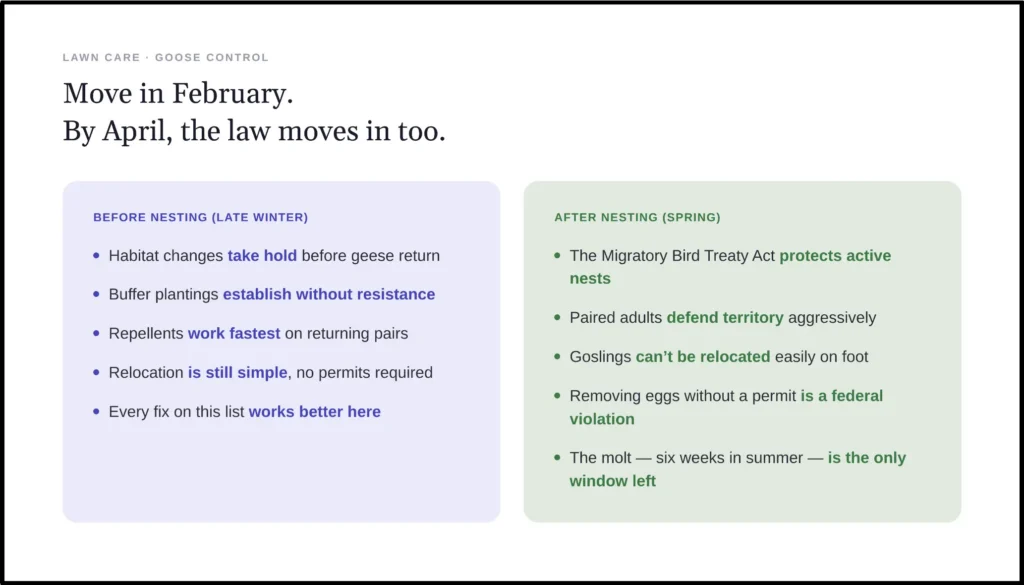
Everything in this article works better before nesting season starts. Once goslings are on the ground, geese won’t relocate easily, and your options narrow to waiting out the molt — six to eight weeks in midsummer when adults can’t fly, or calling in a wildlife professional with the right permits for relocation.
The lawns that win this fight long-term are the ones where the work happened in late winter, before the geese ever showed up to scout.
Water Is Still Part of This
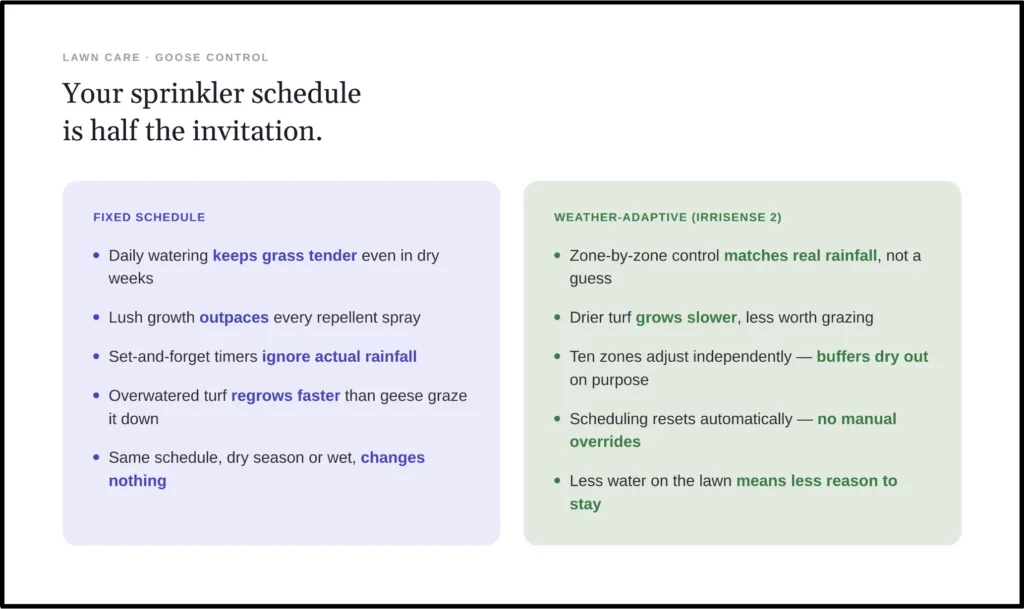
Everything above changes what the geese can see and how hard it is to graze. There’s one more variable that’s easy to ignore: how much water hits that lawn on a fixed schedule, no matter what.
The Aiper IrriSense 2 runs up to 10 independent zones across 4,800 square feet, so a buffer strip near the water can be left to dry out and toughen up while the rest of the lawn gets what it actually needs.
Weather-Sense adjusts the schedule automatically for rain that has already fallen, instead of running a cycle that makes the grass thicker right when you’re trying to make it less appealing.
It won’t replace a buffer strip or a dog with the right instincts. It just stops working against them.
Common Questions
Grape. Methyl anthranilate is the grape-flavoring compound, and it irritates a goose’s nose and mouth without registering much to a person. Every other “smell” claim, from garlic to peppermint to predator urine, has no consistent evidence behind it.
Briefly, on a small pond. Geese do avoid nesting swans, which are territorial and much larger, but a swan that never moves gets treated like every other decoy within a week or two. Tether it so it drifts with the wind instead of sitting still.
Yes. Harassment that doesn’t touch or injure the birds is allowed year-round without a permit. Stop once goslings are on the ground or adults are in the molt, since flightless birds can’t leave and the harassment only stresses them.
Yes, with free registration. The federal Nest and Egg Depredation Order lets homeowners, HOAs, and property managers destroy or treat resident goose nests and eggs between March 1 and June 30, provided they register online with the US Fish and Wildlife Service first, any time from January 1 through June 30. Most people oil or addle the eggs so they don’t hatch, then return them to the nest so the adults keep sitting instead of laying again. Some states require their own permit too, so check your state wildlife agency.
Resident Canada geese don’t migrate. The flock on a suburban pond is there in January. The geese that do migrate pass through in fall and spring and add to the count for a few weeks, then move on.
Stack the changes: a rope line or buffer strip at the water, taller mowing, a dog that chases, and egg treatment so the local flock stops growing. Resident geese return to hatch at the pond where they were born, so a flock that keeps hatching goslings on your water keeps replacing itself. Habitat changes stop the adults from choosing you, and egg treatment stops the next generation from being born there.
Get more pool and lawn care guides from Aiper on Google