
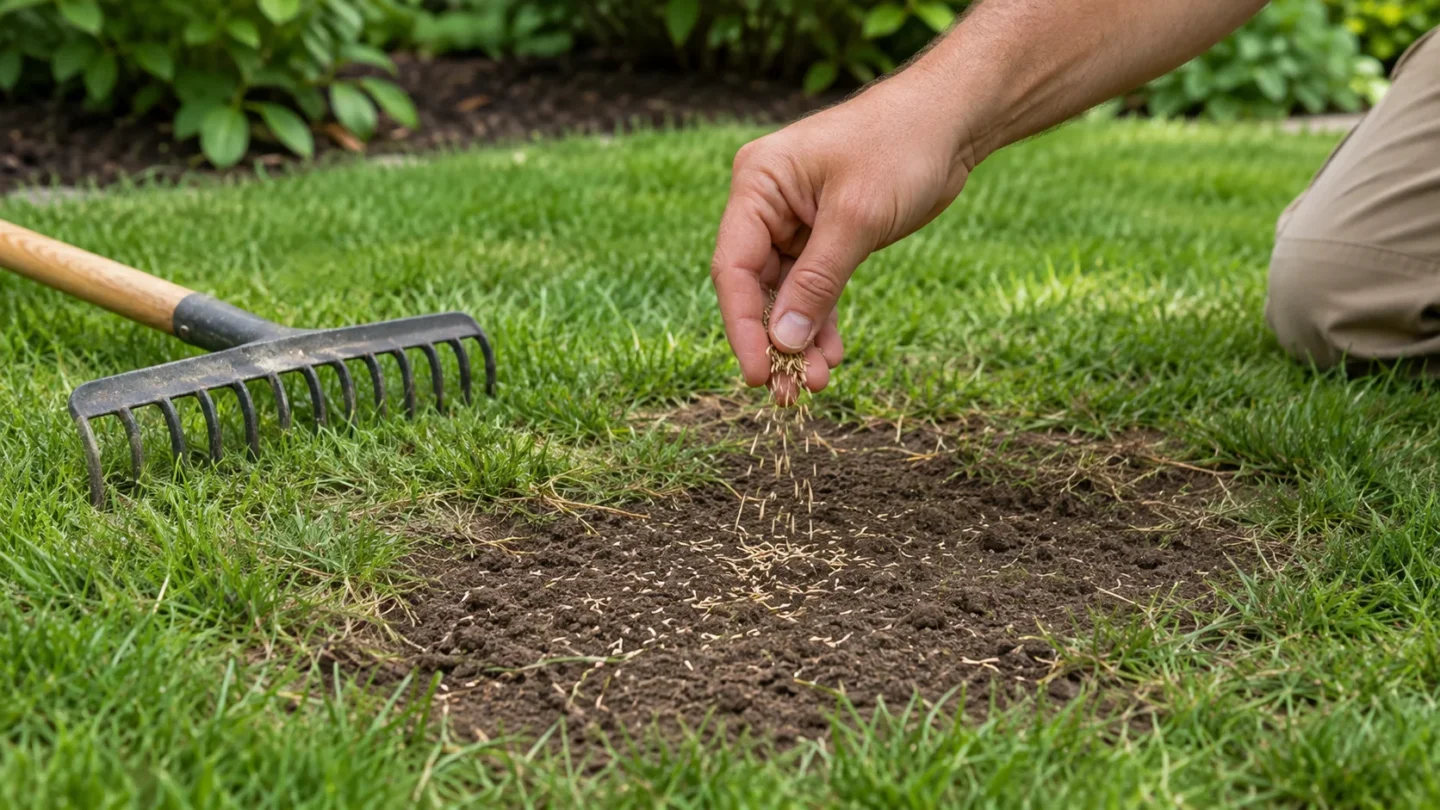
Overseeding is just spreading fresh grass seed over a lawn you already have, to thicken what’s thin and fill the bare patches summer chewed up.
Every guide tells you to aerate first. Rent the machine, pull the plugs, then seed. Most of the time that’s good advice.
But aerating is a rental, a half-day of work, and a lawn that looks like it got peppered with buckshot for a week, so the question comes up every fall: can you skip it?
You can. Sometimes. Whether it works comes down to two things: what the aerator was doing for you, and whether you still get them done some other way.
What Aeration Actually Does
Pulling cores does two separate jobs, and people blur them together.
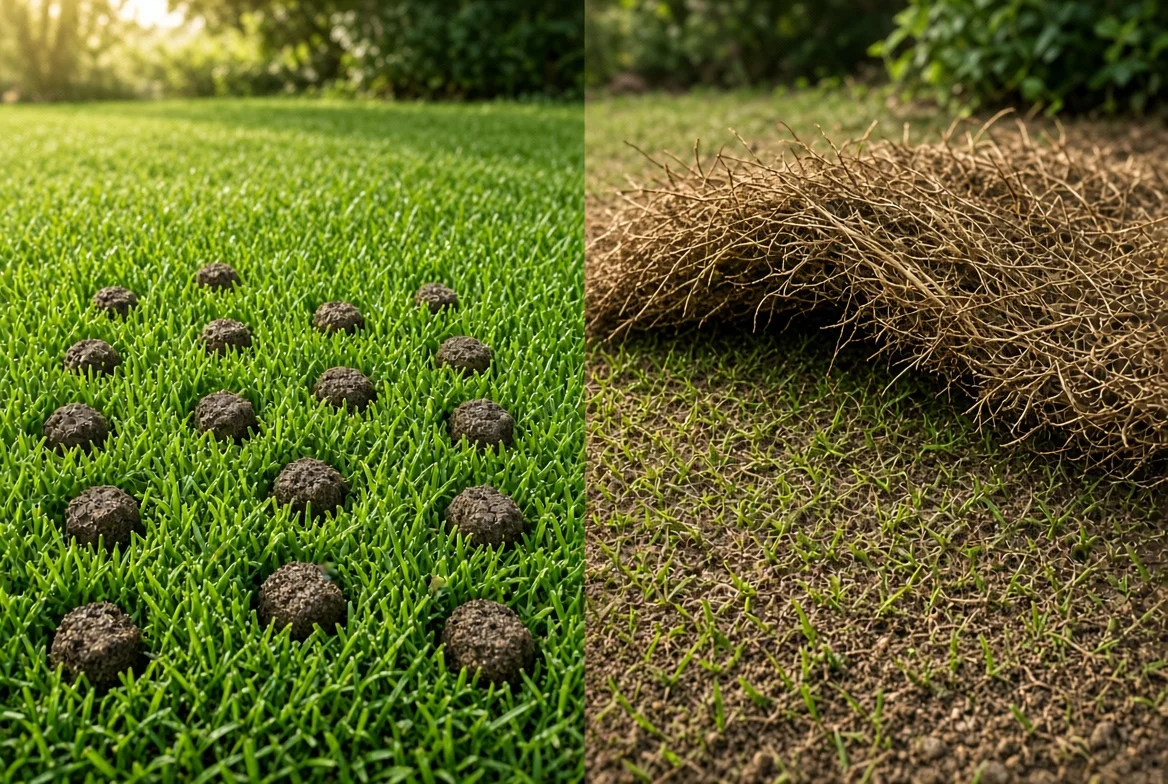
The first is simple: the holes catch seed. Grass seed that lands on bare soil or drops into a core hole is touching dirt, and touching dirt is the whole game — seed left sitting up in the turf or the thatch sprouts in a damp spell and then dies the first dry week, because the root never reaches soil.
Raking, slicing, vertical mowing, a thin layer of topdressing — any of those gets you the same seed-to-soil contact with no core aerator in sight.
The second job is the one you can’t fake: relieving compaction. That’s the fork in the road.
If your soil’s loose, core aeration was only buying you seed contact, and you can get that cheaper. If your soil’s packed hard, aeration was doing structural work, and skipping it means skipping the actual repair.
When You Can Skip It
Start with the calendar, because the best prep in the world won’t save seed thrown down at the wrong time. For cool-season grass — fescue, bluegrass, rye — mid-August through mid-September is the window: soil still warm enough to germinate fast, air cooling so the seedlings aren’t fried, and far fewer weed seeds coming up to crowd them out. Warm-season grass wants late spring instead. Seed outside that window and no amount of raking rescues it.
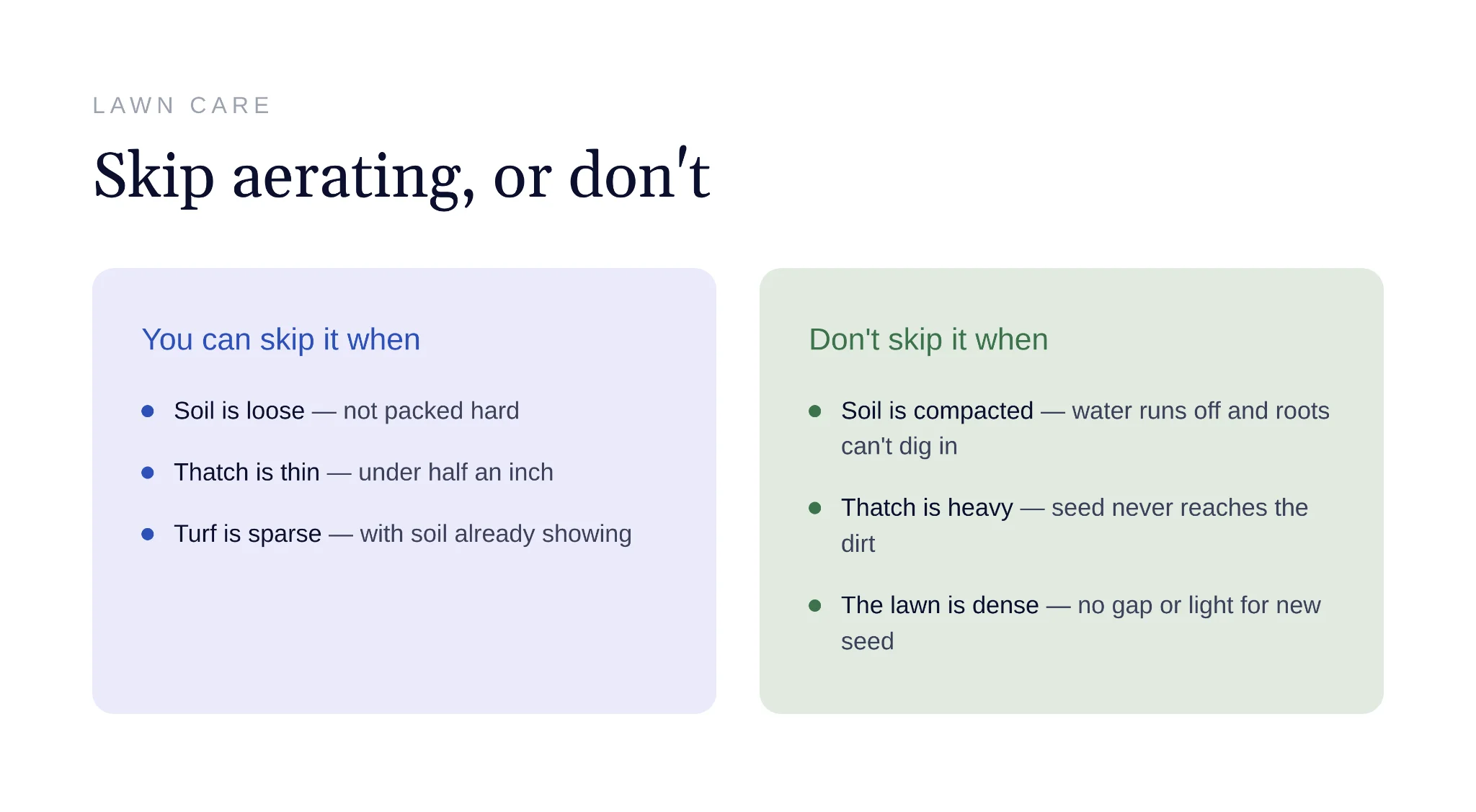
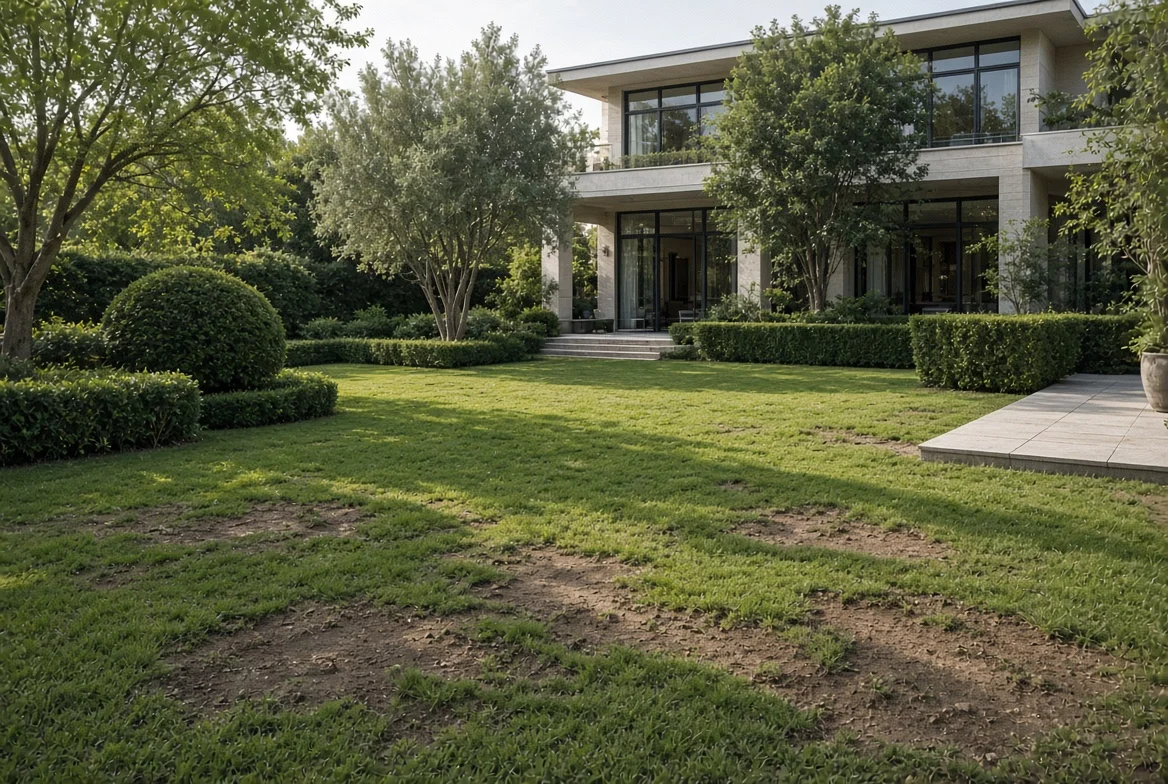
Skipping lawn aeration works when your lawn is thin, not compacted.
If you have patchy turf with soil already showing through, and you can push a screwdriver into it without leaning on it, with thatch under half an inch, that lawn doesn’t need holes punched in it. The seed can reach dirt on its own, with a little help.
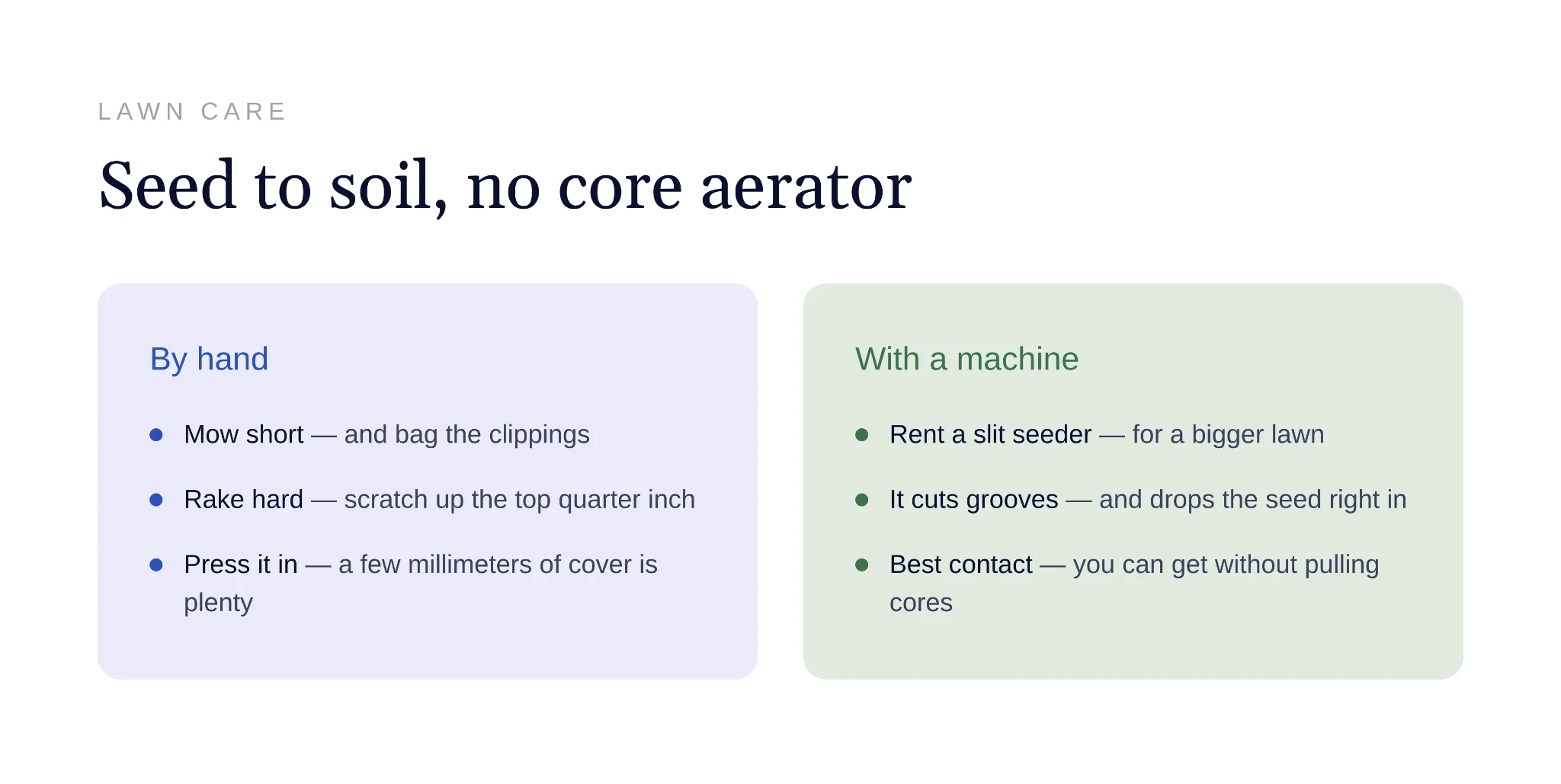
Here’s the help:
- Mow it short. Drop the deck to an inch or so and bag the clippings. Short grass lets seed fall through to the soil and keeps the existing turf from shading out the seedlings before they get going.
- Rake it hard. Dig in and scratch up the surface, tear out the loose dead stuff, rough up the top quarter inch so there’s open soil for seed to settle into.
- Spread the seed at the overseeding rate, which is lower than you’d guess. Overseeding uses roughly half what you’d put on bare dirt; pile it on, and the seedlings choke each other out and come up weak and crowded.
- Work it in and firm it down. Drag the back of the rake over it so the seed settles into that scratched-up surface, then roll it or walk it flat. A few millimeters of cover is plenty — bury it deeper, and it won’t come up.
- For a bigger lawn, rent a slit seeder instead of doing all that by hand. It cuts shallow grooves and drops seed right into them, which is the best seed-to-soil contact you can get without pulling cores.
That last option matters more than it sounds. A slit seeder gets you everything aeration was giving the seed, and does it better, so “without aerating” doesn’t have to mean “worse.”
When Skipping It Backfires
Compacted soil is where this goes wrong, and it’s common: clay ground, or a lawn that’s been walked, parked on, and run over by kids and dogs for years.
You can rake a compacted lawn, seed it, baby it, and still watch it fail, because the problem was never contact. Water sheets off packed soil instead of soaking in. Roots hit a layer they can’t push through.
A compacted layer as little as a quarter to half an inch thick chokes off the water and air the grass needs, and there’s no raking your way around that. It’s the exact thing core aeration exists to fix. Overseed a compacted lawn without touching the compaction, and you’ve planted grass into the same trap that thinned it out to begin with.
Heavy thatch is the other dealbreaker.
More than half an inch of that spongy brown layer between the green and the soil, and your seed never reaches dirt at all. It lodges in the thatch, drinks one rain, sprouts, and dies. That lawn needs dethatching first — not a core aerator, necessarily, but something that rips the thatch out.
A thick, genuinely dense lawn is a poor candidate from the start. If the turf’s already full, there’s no gap in the soil for new seed and no light reaching it through the canopy. Overseeding is for thin and tired, not lush.
The Step That Decides It
Here’s what sinks more overseeding jobs than aeration ever did: the seedbed drying out.
Germinating seed has no roots yet. It’s living on whatever moisture sits in the top half inch of soil, and if that dries out once — one hot afternoon, one skipped day — a lot of it dies right there, and you don’t find out until the patches never fill in.
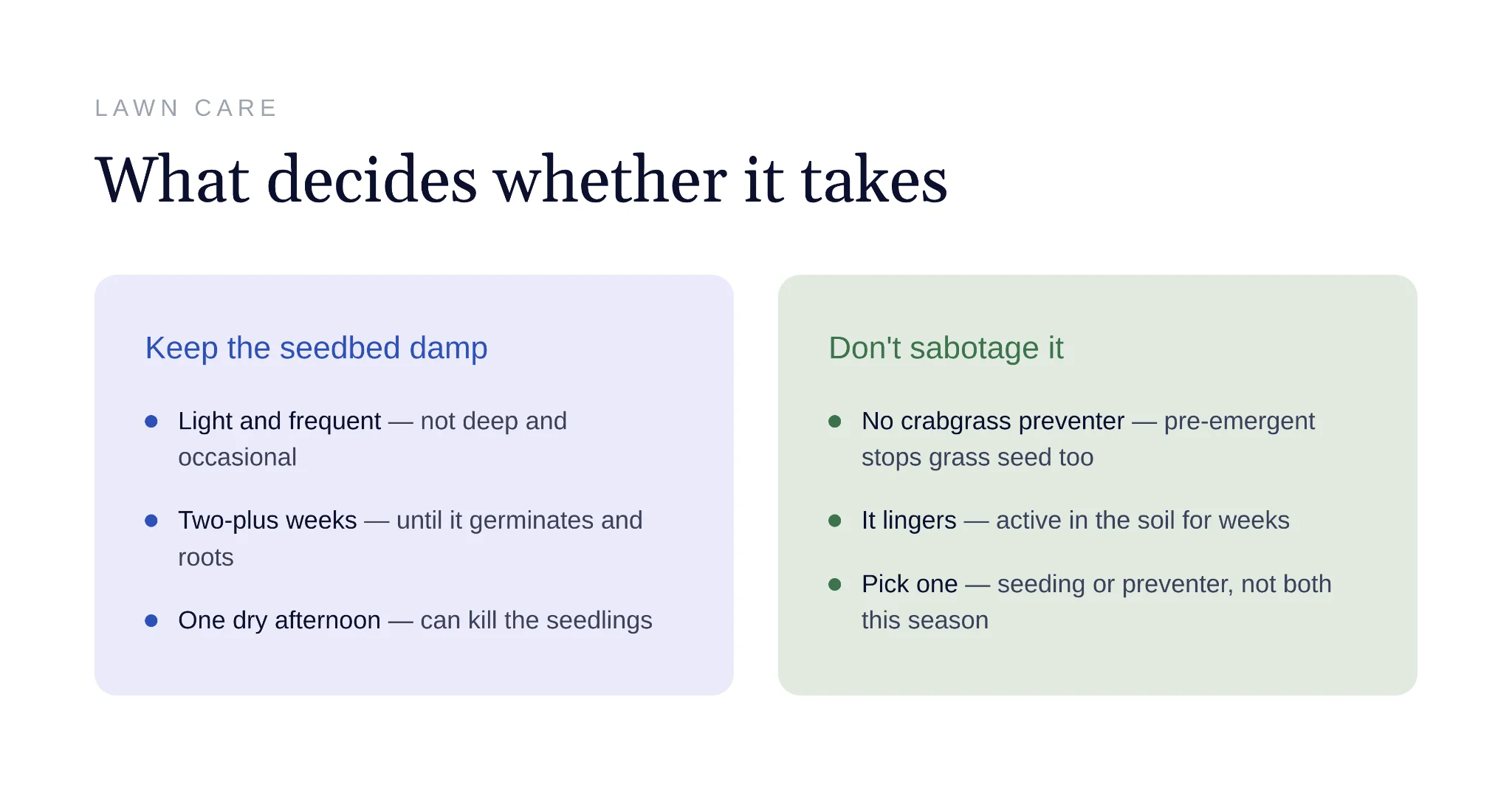
So you water light and often, and hold off on the deep soaks until the grass is actually up. Keep the surface damp for the two-plus weeks it takes to germinate and establish, short bursts a few times a day in warm weather, enough that it never crusts over and bakes dry. Once the new grass is rooting, back off to deeper, less frequent watering.
And don’t sabotage it. If you put down crabgrass preventer in spring, almost every pre-emergent stops your grass seed from germinating too, and it stays active in the soil for weeks. Overseeding and crabgrass preventer don’t share a season. Pick one.
Let the Watering Run Itself
Everything above is doable by hand. The watering is the piece that breaks, because keeping a seedbed damp through a warm early-fall stretch means showing up with the hose three or four times a day for two weeks, and nobody’s home for all of those. Miss a couple and the thin spots you were trying to fix come back half-grown.
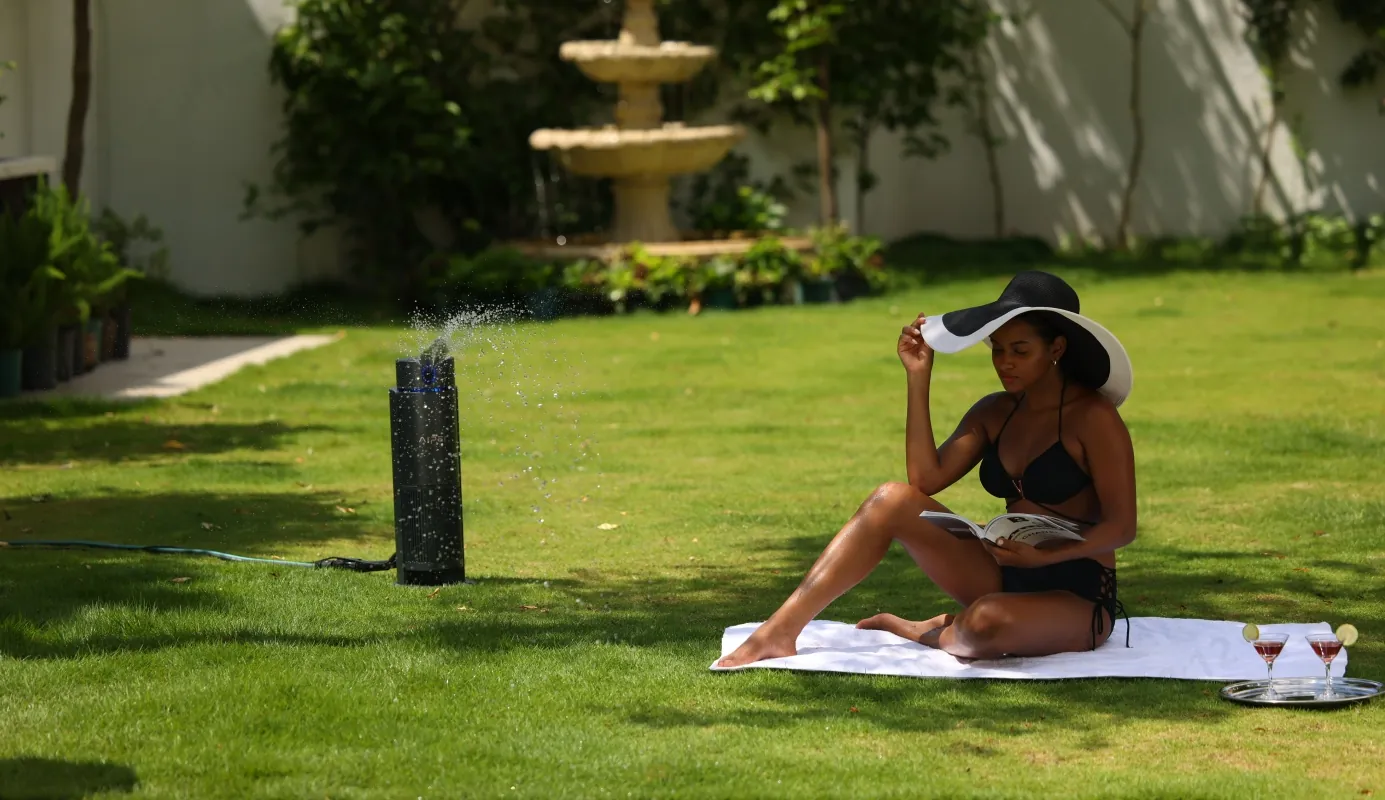
That’s the argument for putting it on a system. An Aiper IrriSense 2 runs the light, frequent cycles a new seeding lives on while the seed’s germinating, then shifts to deeper, spaced-out watering once it’s rooted, with no one standing in the yard at noon.
For the two or three weeks that decide whether the overseeding took, steady moisture is the one thing the seed can’t do without, and it’s the hardest thing to keep up by hand.
Get more pool and lawn care guides from Aiper on Google