How to Quiet a Noisy Pool Pump

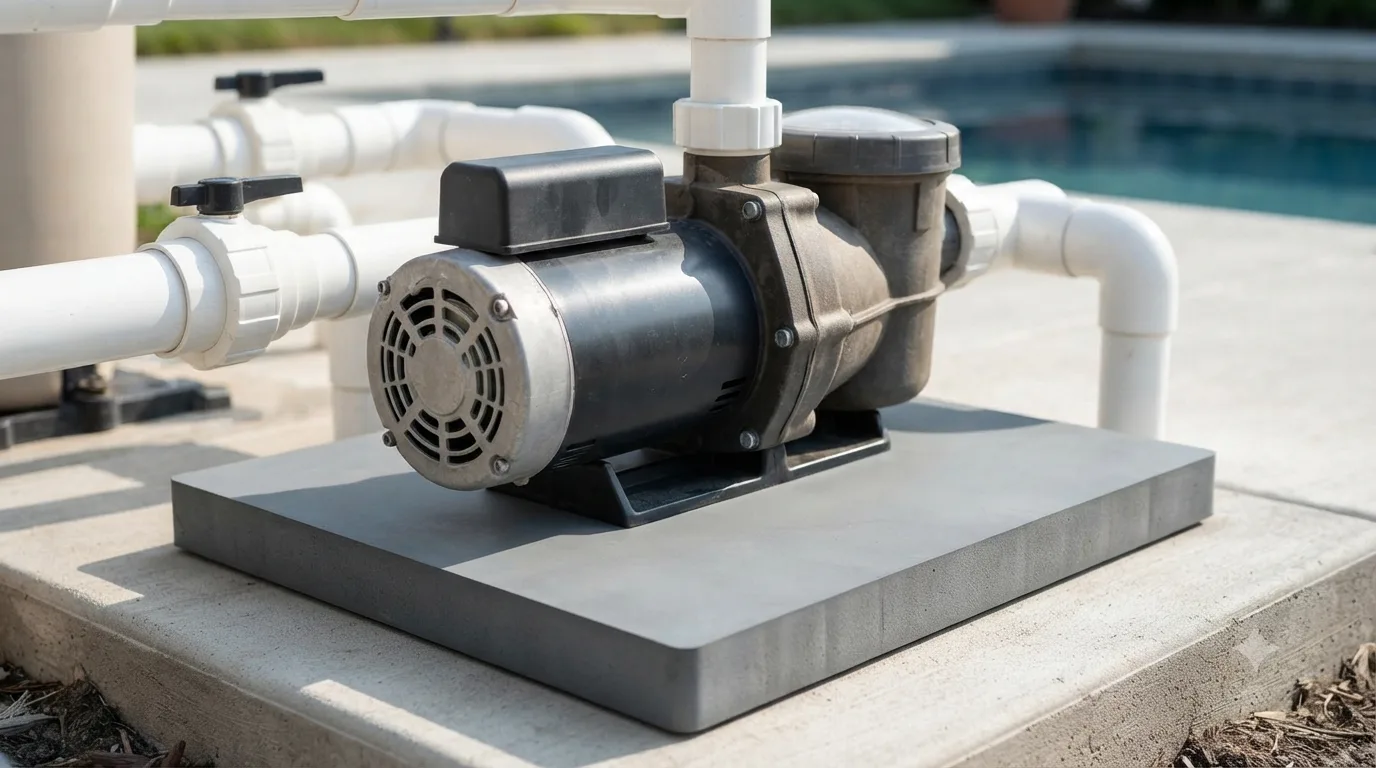
A pool pump that’s suddenly noisier than usual is almost always one of three things: cavitation from restricted water flow, a worn motor bearing, or vibration being transmitted through the equipment pad — and each has a different fix. Cavitation, the most common and cheapest to fix, usually clears up once a blocked basket or low water level is corrected. This is the same flow-restriction issue covered in our guide to backwashing a pool filter, since a clogged filter restricts flow the same way a blocked basket does. How to diagnose which of the three you have, and fix it, is below.
Why Is Your Pool Pump Suddenly So Loud?
A sudden change, rather than gradual noise buildup, usually points to one specific new problem: a worn bearing that’s crossed a wear threshold, cavitation from a newly restricted intake, or something that’s come loose and started vibrating against the pad or housing. The kind of sound narrows it down fast — grinding or high-pitched whining suggests a bearing, while a rattling or marble-like sound suggests cavitation.
Is the Noise Cavitation, a Bearing, or Vibration?
Cavitation sounds like marbles or gravel rattling inside the pump and points to restricted intake flow, often from a clogged skimmer or pump basket. A worn bearing produces a steady, high-pitched whine or grinding that gets worse as pump speed increases — the same kind of wear issue that eventually shows up in pump priming problems too. Vibration or rattling that changes when you touch different parts of the pump or nearby pipes points to a loose mount or a pipe making direct contact with the equipment pad.
Pool Pump Noise: Sound, Cause, and Fix
| Sound | Likely Cause | Fix |
|---|---|---|
| Marbles or gravel rattling | Cavitation — restricted intake flow | Clear skimmer/pump baskets, check water level, check intake valves |
| Steady high-pitched whine or grinding, worse at higher speed | Worn motor bearing | Bearing replacement, typically a professional job |
| Rattling that changes when touching the pump or nearby pipes | Vibration — loose mount or pipe contact | Rubber isolation pads; check for rigid pipe contact with the housing |
How Do You Fix Cavitation Noise in a Pool Pump?
Clear the skimmer and pump baskets first, since a clogged basket is the most common cause of restricted intake flow. Check the pool’s water level — if it’s dropped low enough to expose the skimmer opening to air, the pump draws air along with water, which causes the same rattling sound as a physical blockage. Confirm no valve on the intake side is partially closed, restricting flow the same way a clog would. Restricted flow near the main drain causes a related problem elsewhere in the system too — it’s often why a pool robot gets stuck there.
Can You Soundproof a Pool Pump?
Yes, to a meaningful degree. A ventilated enclosure or quiet box around the pump reduces airborne noise without trapping heat that could damage the motor over time — ventilation is the key detail, since a sealed box without airflow causes more problems than it solves. Foam vibration-dampening pads placed under the pump reduce structure-borne noise transmitted through the equipment pad separately from the airborne noise an enclosure addresses.
How Do You Reduce Pump Noise From Vibration?
Rubber isolation pads or mounts between the pump and the equipment pad absorb vibration before it transmits into the pad and surrounding structure. Check that no pipe is rigidly touching the pump housing at a point where vibration can transfer directly — even a small point of contact can carry noise much further than the vibration itself would otherwise travel.
What Can You Do If a Neighbor’s Pool Pump Is Loud?
A ventilated quiet enclosure or a timing adjustment, running the pump during less sensitive hours rather than early morning or late evening, are both inexpensive fixes worth raising directly, since most pump noise issues are cheap to address once identified. Mentioning the specific type of noise (grinding versus rattling) can help point them toward the actual fix rather than a generic complaint. If the pump itself can’t be quieted enough, that’s also a reason some owners shift cleaning duties to self-contained equipment, covered in our comparison of pool cleaner types.
Frequently Asked Questions
How much does it cost to fix a noisy pool pump?
Clearing a basket or adding vibration-dampening pads costs next to nothing, usually under $20. A bearing replacement typically runs $150 to $400 in parts and labor if done professionally, and once that price approaches the cost of a new motor, replacing the whole motor is often the better value.
Is it safe to keep running a pump that’s grinding?
Not for long. A grinding bearing that’s ignored can seize completely, and a seized bearing can damage the motor shaft or windings, turning a $150 repair into a full motor replacement. Address grinding noise within a few days rather than letting it run through a full season.
Are variable-speed pumps quieter than single-speed pumps?
Generally yes. Variable-speed pumps run most of the day at a lower RPM than a single-speed pump needs to move the same water, and lower RPM means less motor noise and less risk of cavitation from high flow demand. At full speed, though, a variable-speed pump can be just as loud as a single-speed one — and racket is often the first clue the impeller needs cleaning inside your pool pump.
A pump running smoothly and quietly also tends to circulate more effectively, which matters for whatever’s cleaning the pool day to day. An Aiper robotic pool cleaner works independently of the pump’s condition, but a well-maintained pump means better overall water circulation alongside it.
Get more pool and lawn care guides from Aiper on Google