


Wood ash carries potassium and calcium carbonate, and the carbonate is what pushes soil pH up. On acidic ground, that helps a lawn. Lay down too much, though, and the soil tips alkaline, at which point the grass struggles to pull nutrients out of it.
A soil pH test settles whether any of this applies. Ground that already sits near neutral or alkaline gets nothing good from ash, and often gets hurt. Acidic soil that’s short on the nutrients ash carries is the case where a small, measured amount earns its place. What the soil needs is the thing to establish first.
What the Ash Does in the Soil
Wood ash is alkaline. On soil, it lifts pH the way garden lime does, though weaker, somewhere between a third and half the strength of ground limestone, and where it lands depends on the wood.
Potassium comes with it too, the “potash” the old name points to, alongside calcium and magnesium, a bit of phosphorus, and trace minerals. Hardwood ash holds close to twice the potassium of softwood.
What it does not hold is nitrogen. That burned off in the fire. What the lawn gets, then, is a pH shift and a potassium bump. For the deep green a nitrogen feed produces, ash does nothing.
Test First
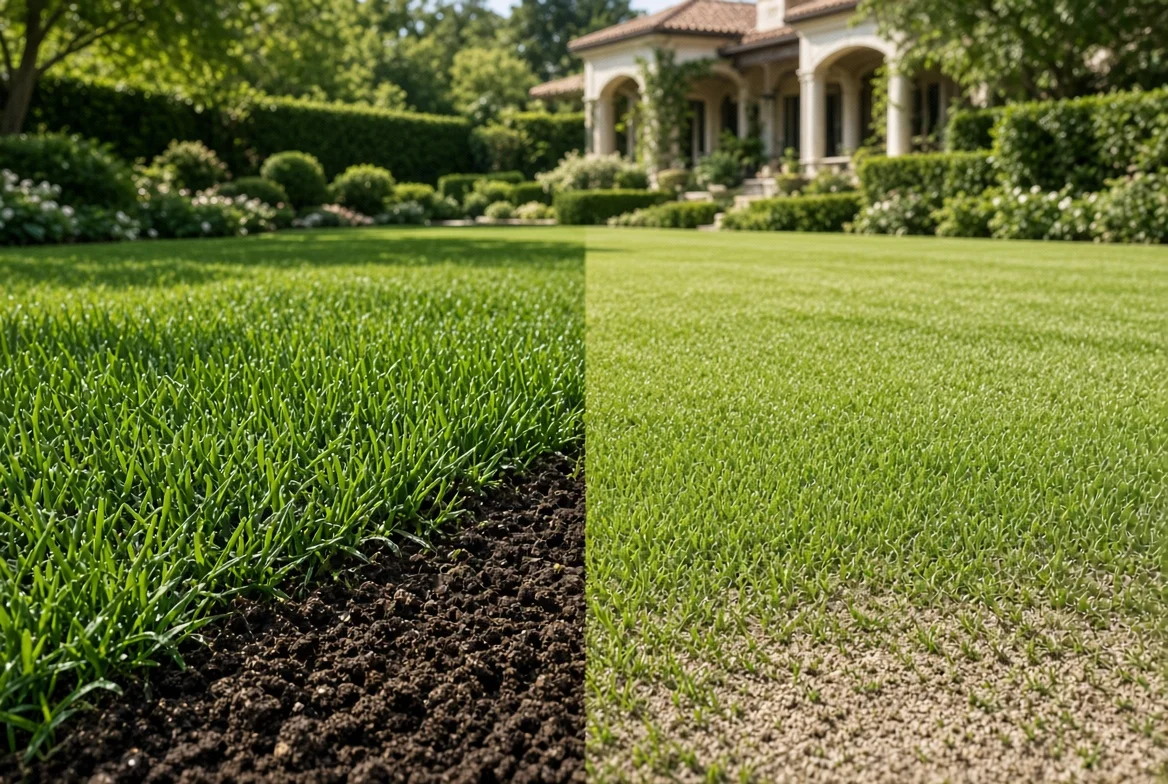
Turf grass wants soil somewhere around 6.0 to 7.0. If the soil is already in that band, or above it, ash pushes it too far alkaline and starts locking nutrients away from the roots, iron and manganese especially, which is what turns a lawn pale and blotchy for no reason anyone can see.
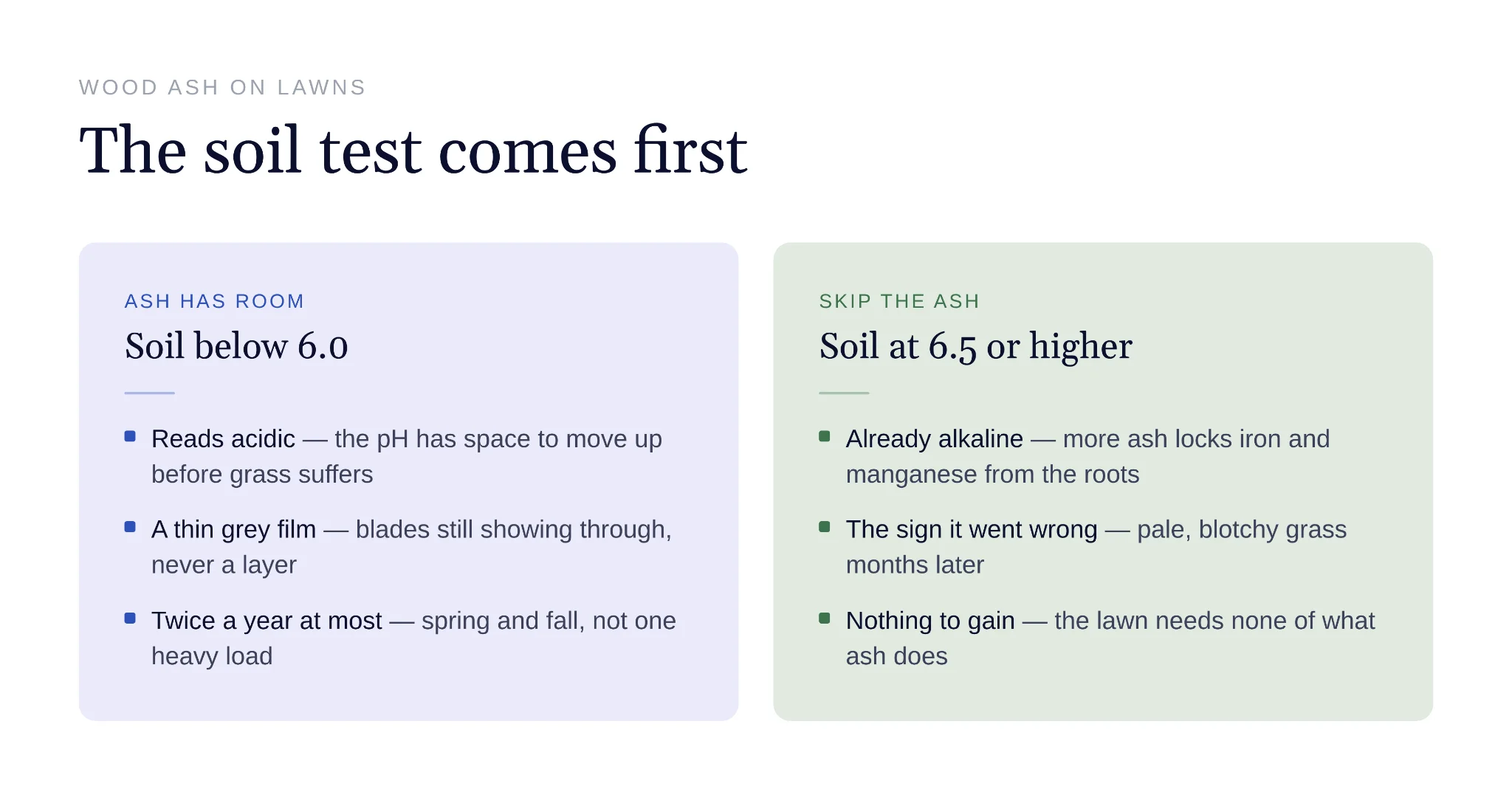
A cheap soil pH test tells you whether there’s any room to work with. It costs a few dollars and ten minutes. Skipping it means guessing, and the guess usually goes bad slowly enough that by the time the grass looks sick, the ash is months in the ground and hard to pull back out.
If the test comes back at 6.5 or higher, stop here. The lawn doesn’t need what ash does.
Where the Ash Came From Matters
Only ash from clean, untreated wood goes anywhere near grass. Logs, branches, lumber offcuts with no finish on them.
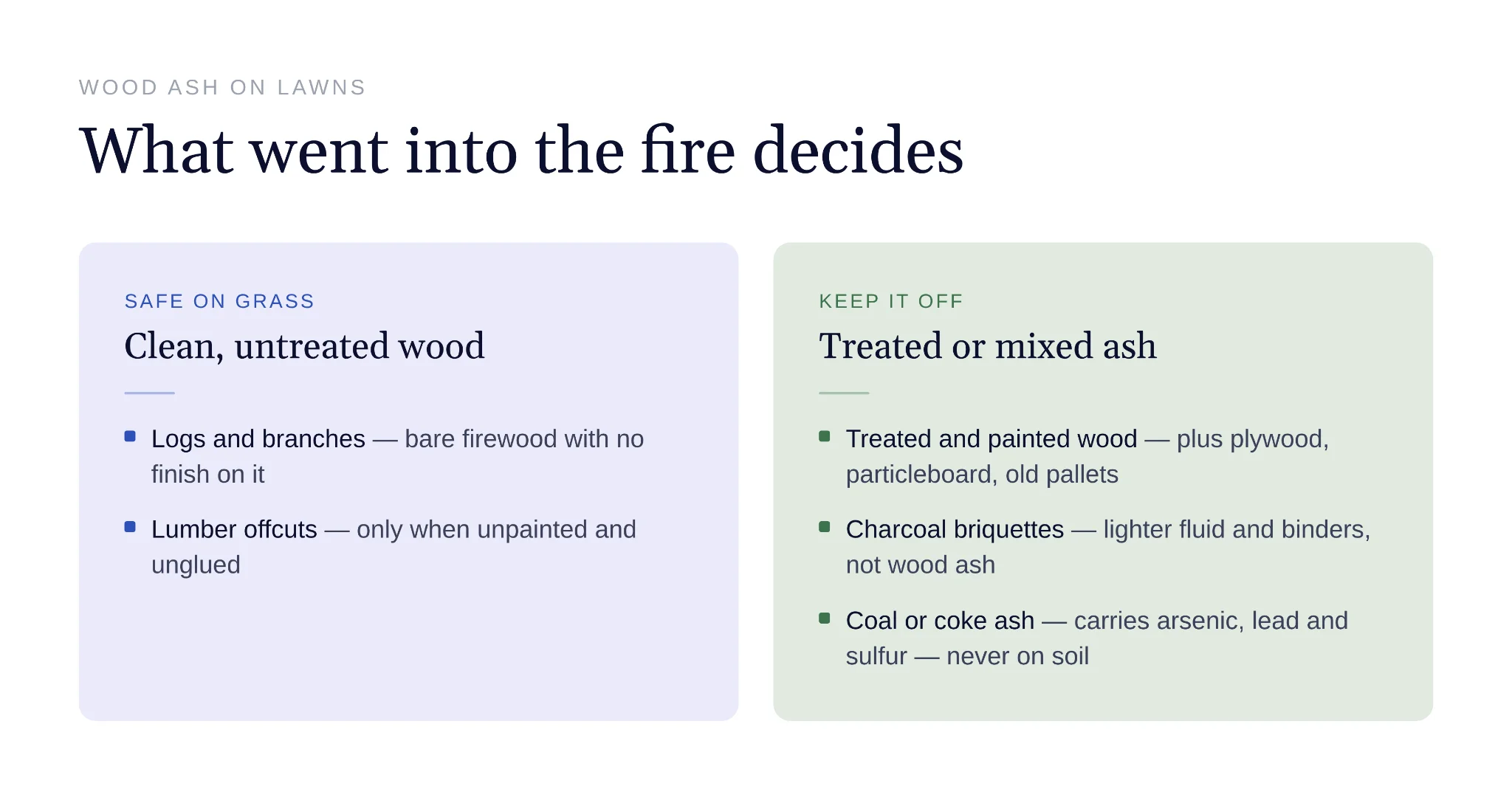
Everything else stays out:
- Pressure-treated lumber, painted or stained wood, plywood, particleboard, old pallets — the treatments and glues leave residue you don’t want in soil kids and pets walk on.
- Charcoal briquettes. The additives and lighter fluid binders aren’t wood ash and don’t behave like it.
- Coal or coke ash. This one is a real hazard, not a preference. Coal ash carries heavy metals (arsenic, lead, sulfur), and none of that belongs on a lawn at any rate.
If the bucket is a mix, or you’re not sure what went into the fire, it’s not lawn ash.
How Much a Lawn Can Actually Take
Here’s the part that undoes most people’s plan.
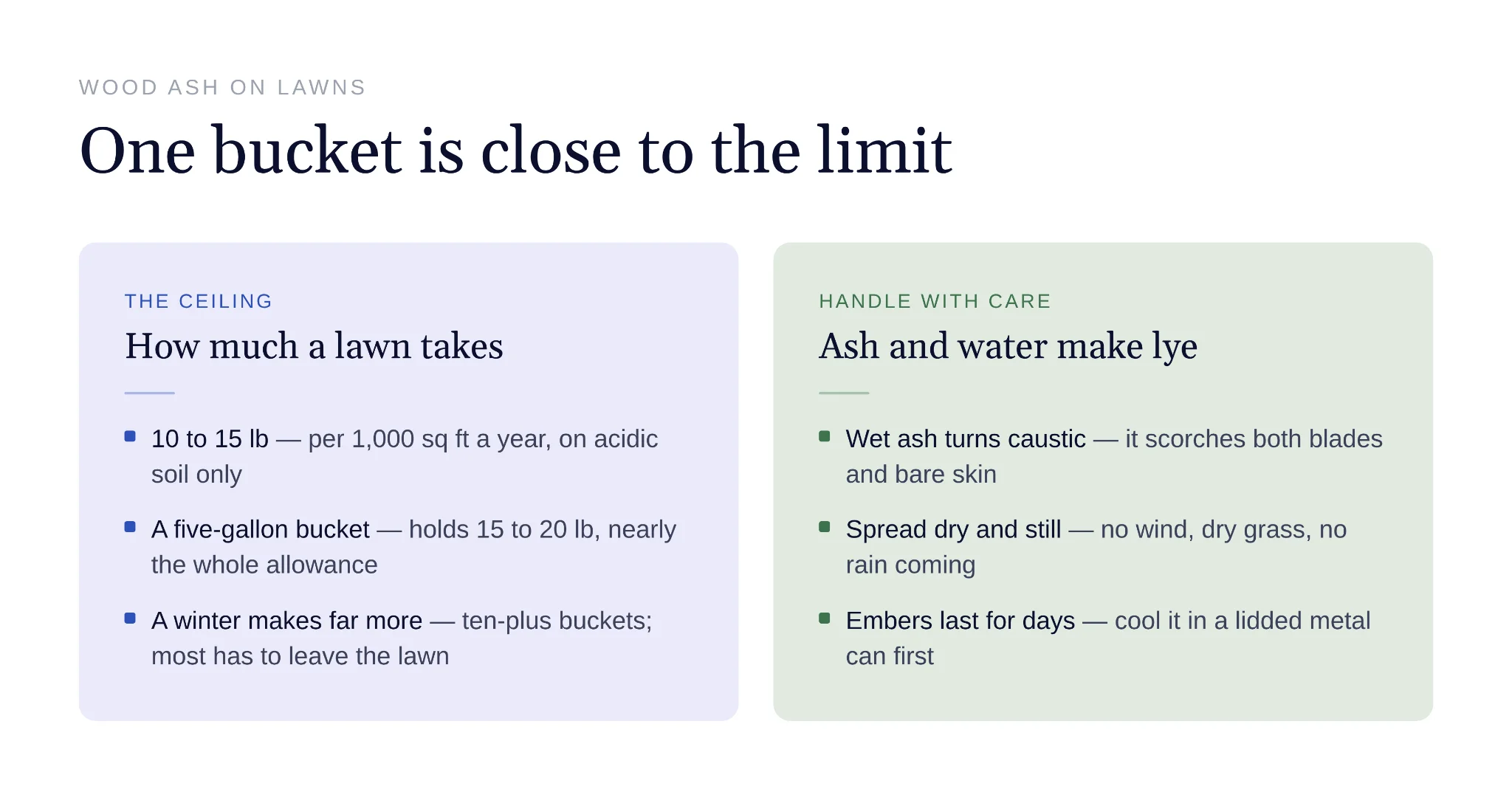
On acidic soil that has room, the usual ceiling is around 10 to 15 pounds per 1,000 square feet in a year. On soil near neutral, far less or none.
A five-gallon bucket of ash runs 15 to 20 pounds. So a single bucket, spread thin, can be close to the entire annual allowance for a decent-sized patch of grass.
A winter of wood heat produces far more ash than that. Ten, fifteen buckets, easily. The lawn cannot absorb it, and spreading the surplus just to be rid of it is how a healthy lawn ends up alkaline and yellow by June.
The lawn is not a disposal site for the season’s ash. Most of it has to go somewhere else.
Spreading It Without Killing Patches
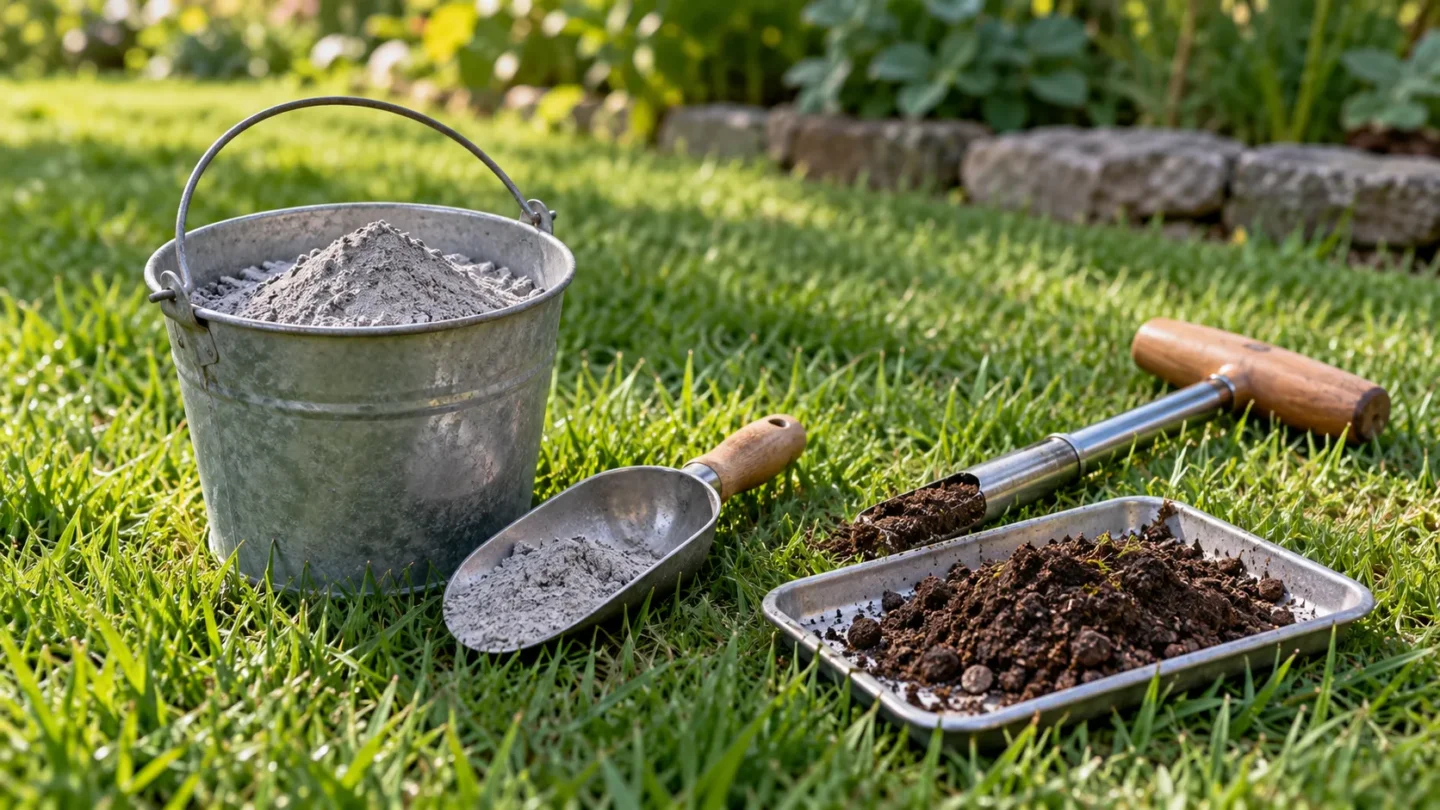
Sift the ash before it touches the lawn. Chunks of charcoal, nails, bits of unburned wood, the occasional screw. Pull those out over a bucket with a bit of hardware cloth, or just pick through it.
Then spread it thin. A grey haze, the kind where the grass blades still show through. Not a layer, not a dusting you’d notice from across the yard.
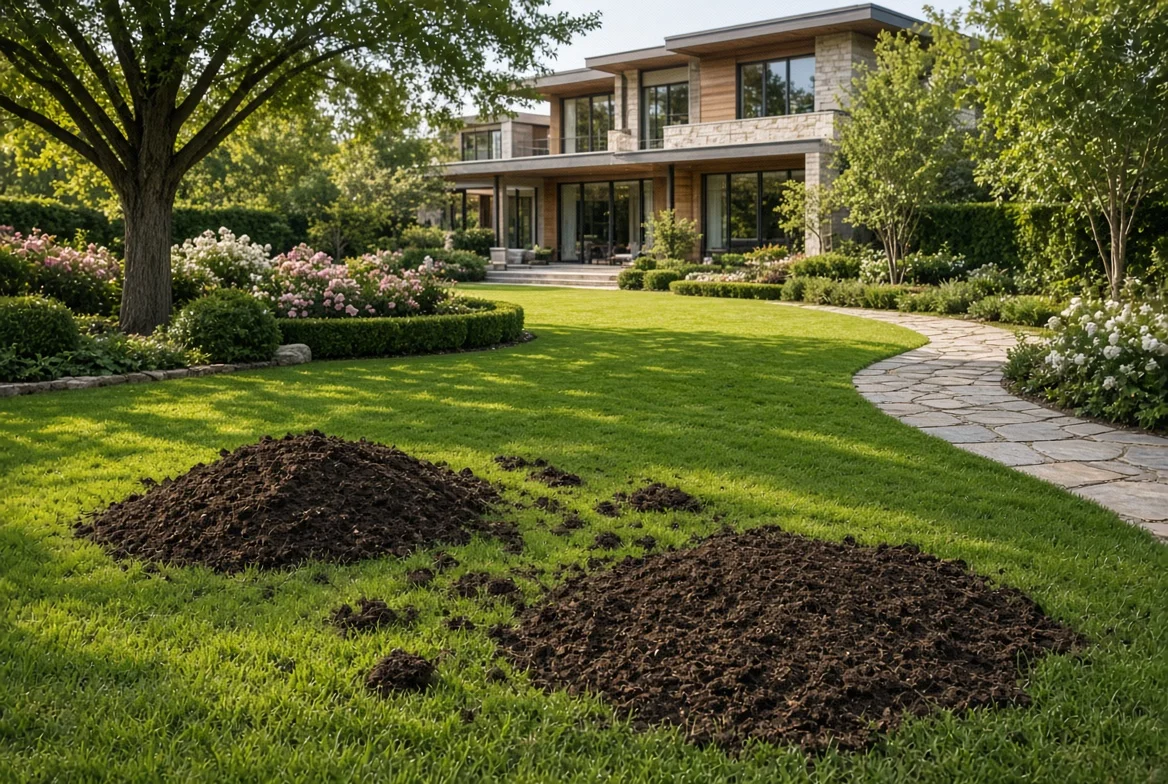
A heaped trowelful dropped in one place behaves like a chemical burn, it spikes the pH in that spot, the grass yellows, and a few weeks later there’s a dead ring where the pile sat. Those rings take a long time to fill back in.
For a larger area, a drop or broadcast spreader gives you even coverage and keeps it off your hands. For a small lawn, gloved by hand works, scattering as thin as you can manage and keeping it moving.
Water it in lightly afterward. That settles the ash into the soil surface and stops the next gust from carrying it onto the patio, the car, or the neighbor’s beds.
Wet Ash Turns to Lye
Ash and water make potassium hydroxide. Lye. The same stuff in drain cleaner.
A dusting that gets rained on hard, or ash spread onto wet grass on a warm day, can turn into a caustic slurry that scorches the blades and isn’t kind to bare skin either.
The fine dust is its own problem, like alkaline, light, and quick to get into your eyes and throat. Gloves and a dust mask aren’t optional with this, and neither are long sleeves if there’s any wind.
So the application window is narrow. A still day, dry grass, no heavy rain in the forecast. Spreading right before a downpour sends the ash straight off the lawn as runoff, alkaline, phosphorus-carrying runoff heading for the storm drain.
One more thing people learn the hard way: ash holds live embers for days. A bucket that looks stone cold can still have heat buried in it, and bagged ash has reignited and started fires a week after the fire went out. Cool it in a metal container with a lid, well away from the house, before it goes anywhere.
When to Skip It
Plenty of situations where the right amount of ash is none:
- Soil already at 6.5 or above. Covered already, but it’s the one that sends the most lawns backward.
- Newly seeded or young grass. Too caustic, too big a pH swing for anything still establishing.
- The only ash on hand is the wrong kind: treated wood, briquettes, coal. No rate makes those safe.
- Anywhere near a well, pond, stream, or storm drain. Alkalinity and phosphorus moving into water is a problem you don’t want your name on.
And the moss case, which comes up constantly. Moss on a lawn gets blamed on acidic soil, and ash gets reached for to fix it. Sometimes the pH is genuinely low and raising it helps. But moss usually means shade, compaction, and poor drainage, and those three bring it back no matter what the pH does.
Ash on a mossy lawn without fixing the shade and the drainage is effort spent on the symptom.
The honest version of all this: a small share of the ash, spread in a thin grey film a couple of times a year on soil a test says has room, that’s the amount a lawn can use. The rest of the winter’s bucket belongs in the trash or in small doses on the compost pile, not on the grass.
The thread running through all of this is that a lawn does better on what it actually needs than on guesswork, and watering is where guesswork does the most damage. Aiper IrriSense reads soil and weather conditions and waters off that instead of a fixed timer, so the grass gets the right amount at the right time rather than a blanket soak.
Get more pool and lawn care guides from Aiper on Google