How to Spread Compost on a Lawn for Natural Fertility


Spreading a thin layer of compost over an established lawn, called topdressing, adds organic matter to the soil and feeds the grass slowly over the season. The standard rate is a quarter inch, once or twice a year, worked into the soil right after core aeration.
The layer has to stay thin. Too much compost smothers the grass and forms a crust that sheds water, so the work comes down to buying the right amount of the right compost and spreading it evenly.
What Compost Does for a Lawn
Compost improves the soil the grass grows in. In clay, it loosens the soil so air and water move through it; in sandy soil, it helps the ground hold water and nutrients longer.
It also feeds the lawn, though slowly. Compost releases nutrients over months as soil microbes break it down, so the lawn gets a steady supply of fertility through the season.
For most lawns, compost cuts down how much fertilizer you need without replacing it completely. A soil test tells you what the lawn still lacks after topdressing.
Choosing Compost for Topdressing
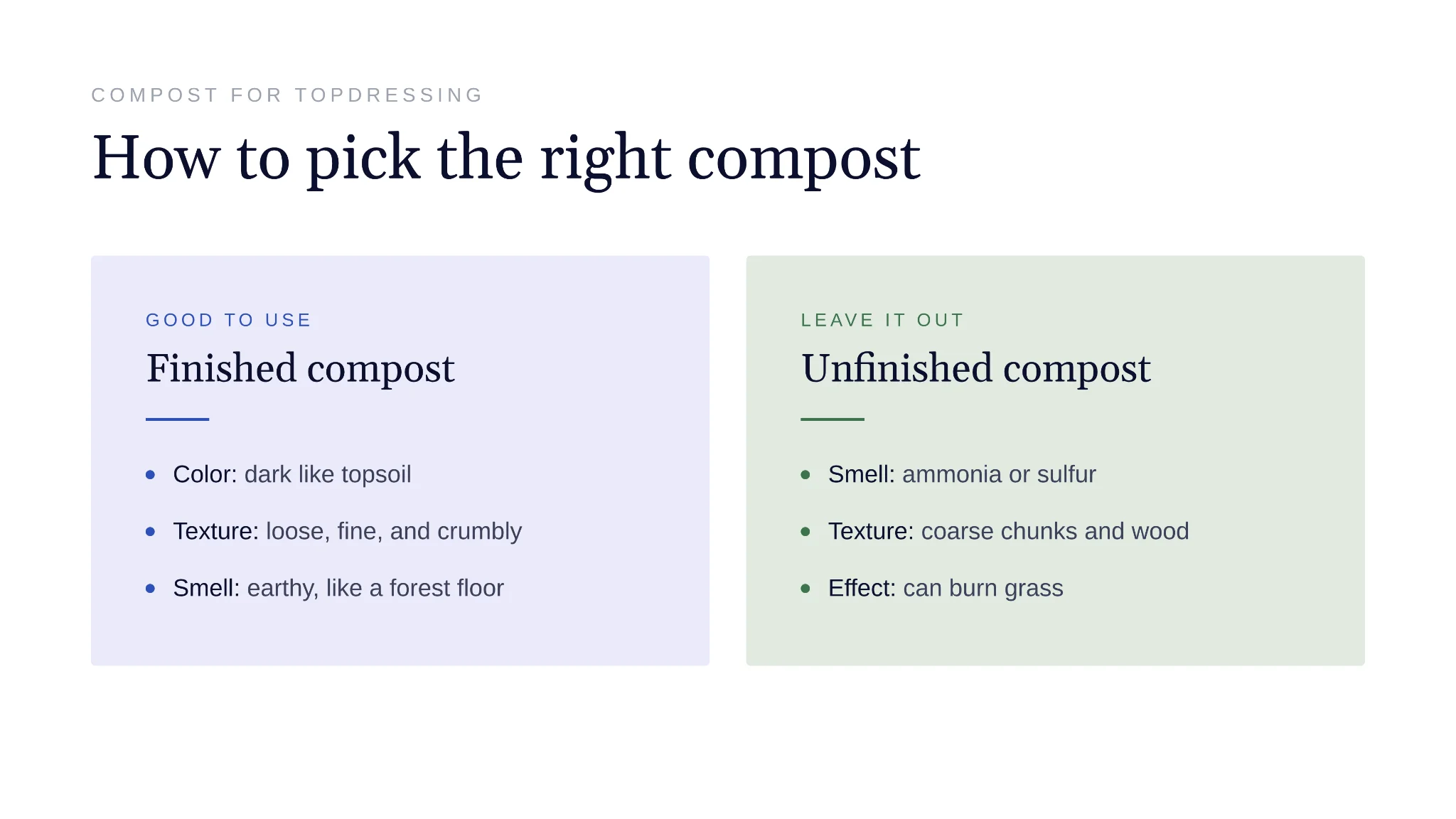
Compost varies more than most people expect, since it can be made from yard trimmings, manure, food waste, or biosolids. For topdressing, the texture and maturity matter more than the source.
Penn State turfgrass researchers give a simple checklist you can use at the garden center or bulk yard:
- Color and feel: dark like topsoil, loose and crumbly
- Particle size: fine enough to pass through a 1/4-inch screen, so it settles down between grass blades
- Smell: earthy, like a forest floor. A strong ammonia or sulfur smell means it isn’t fully composted
- Debris: no glass, plastic, stones, or large chunks of wood
Unfinished compost is the one to avoid. It can burn grass and pull nitrogen out of the soil while it continues to break down.
How Much Compost to Buy
To figure out how much you need, use this formula from Virginia Cooperative Extension: lawn area in square feet × depth in inches × 0.0031 = cubic yards of compost.
At a quarter inch, that works out to:
| Lawn size | Bulk compost | 2-cubic-foot bags |
|---|---|---|
| 1,000 sq ft | 0.8 cubic yards | 11 bags |
| 2,500 sq ft | 1.9 cubic yards | 27 bags |
| 5,000 sq ft | 3.9 cubic yards | 53 bags |
| 10,000 sq ft | 7.8 cubic yards | 105 bags |
Past about a thousand square feet, bulk compost delivered by the cubic yard is usually cheaper and far less work than bags. Have it dumped on a tarp in the driveway, close to the lawn.
When to Spread It
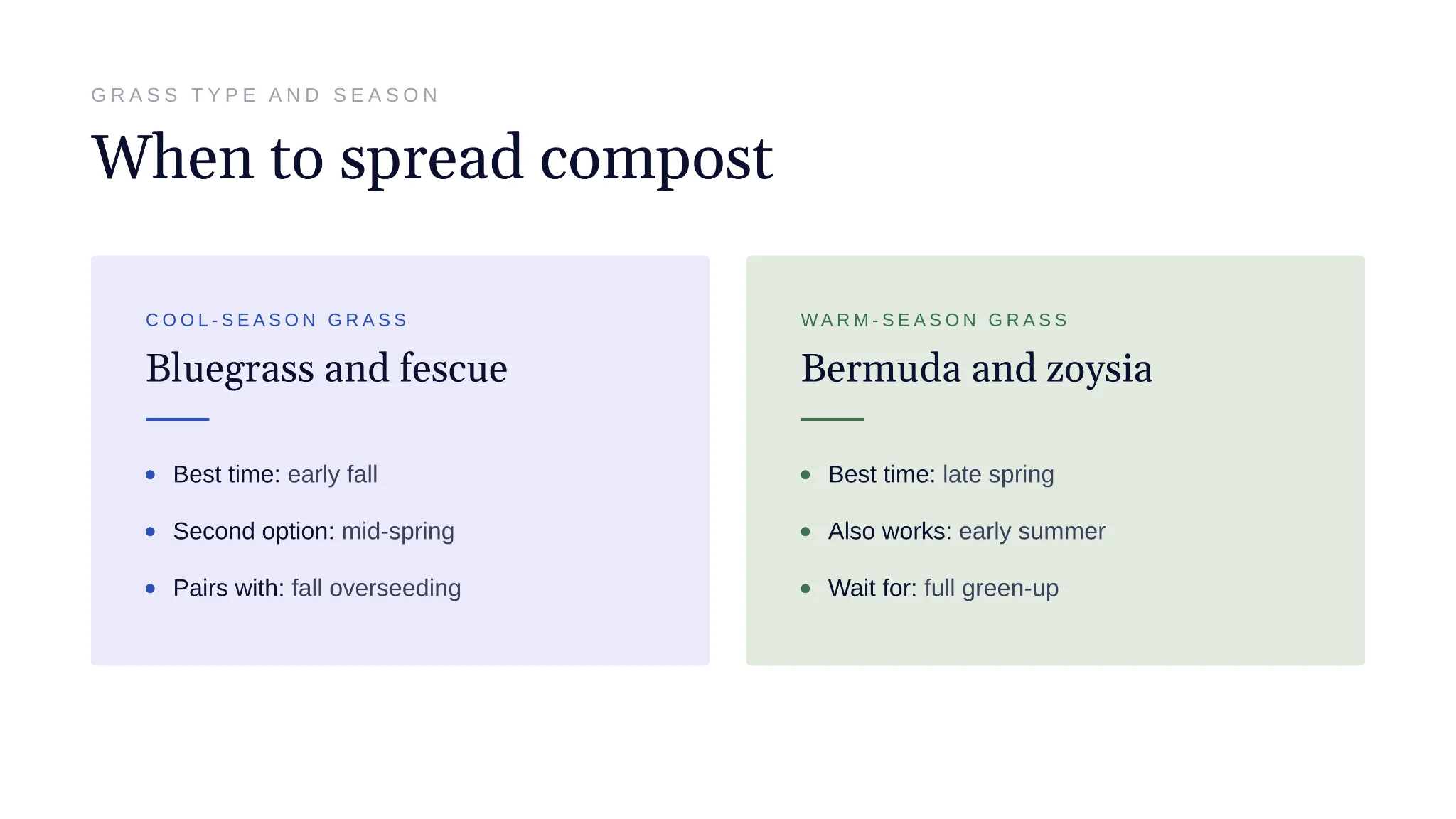
Spread compost while the grass is actively growing and the soil is moist, so the lawn grows up through the layer within a week or two. Avoid hot, dry stretches, when aeration and the extra surface layer stress the grass.
- Cool-season lawns (Kentucky bluegrass, tall fescue, ryegrass): early fall is the best window, with mid-spring as a second option.
- Warm-season lawns (Bermuda, zoysia, St. Augustine): late spring through early summer, once the grass has fully greened up.
Fall topdressing on a cool-season lawn pairs well with overseeding. The compost gives new seed a good bed to sprout in.
How to Spread Compost on Your Lawn
Virginia Cooperative Extension recommends aerating first and spreading compost after. The holes from core aeration carry the compost down to the root zone.
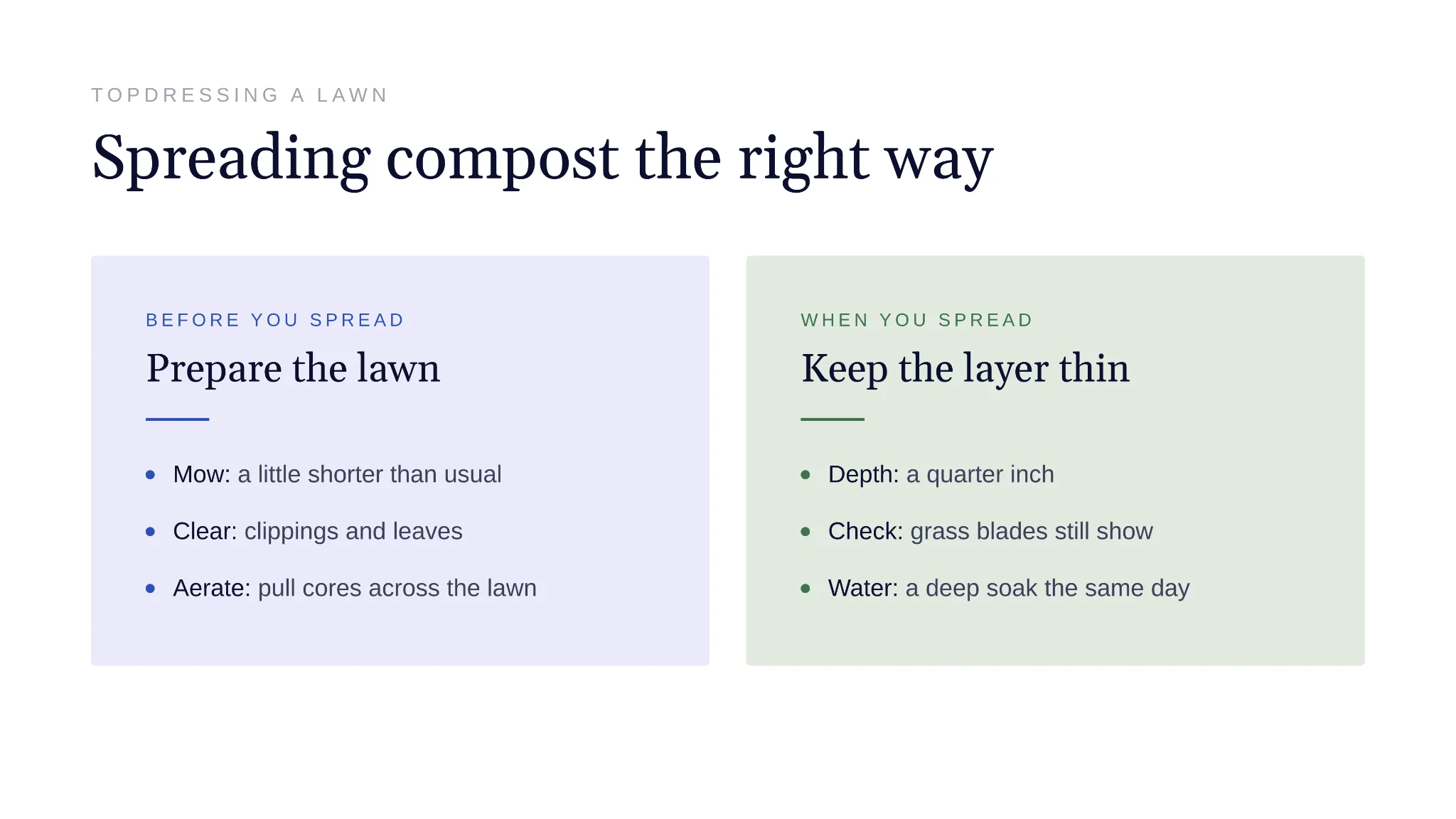
To topdress your lawn with compost:
- Mow the lawn a little shorter than usual and rake up clippings and leaves.
- Core aerate the whole lawn. Leave the soil plugs on the surface, since they break down and mix with the compost.
- Spread the compost. On small lawns, dump shovelfuls in small piles every few feet. On larger lawns, use a rotary or drop spreader if the compost flows through it, as NC State Extension suggests.
- Rake the piles out to an even quarter-inch layer using the back of a level rake or landscape rake. The grass blades should still poke through.
- Drag the rake back over the lawn to work compost into the aeration holes and break up the soil plugs.
- If the lawn is thin, overseed now, while the compost is fresh and the holes are open.
- Water the lawn thoroughly the same day.
If you can’t see grass blades after raking, the layer is too thick. Rake the excess onto thin spots or bare patches.
Watering It In
Watering settles the compost into the aeration holes and down around the grass crowns. It also flushes out any salts in the compost, which Penn State’s researchers recommend after every surface application.
Give the lawn a deep soak the day you spread. If you have overseeded, keep the top half inch of soil lightly moist every day until the seed sprouts, then taper back to deeper, less frequent watering.
That daily schedule is easy to miss. The Aiper IrriSense 2 runs it automatically, with separate zones so overseeded sections get short daily cycles while the rest of the lawn stays on its normal routine, and it pauses on its own when it rains.
Adding Fertilizer After Compost
Compost already contains phosphorus. We advise against using products high in phosphorus unless you are seeding a new lawn or a soil test shows the soil needs it.
If the lawn still needs feeding after topdressing, choose a fertilizer with zero or low phosphorus (the middle number on the bag). Wait until the grass is growing well through the compost layer before applying it.
What to Expect Over Time
One application improves the soil a little. The real change shows after two or three years of topdressing once or twice a season, as the soil darkens, holds water longer, and supports thicker grass.
Retest your soil every three to five years, as Virginia Cooperative Extension recommends. Regular compost can shift pH and nutrient levels, and the test will tell you how much fertilizer the lawn still needs.
Get more pool and lawn care guides from Aiper on Google