
Think of the grass in your lawn that thins out in the same strips every year. Or puddles that sit for hours after rain, or a screwdriver that won’t push into the ground past an inch.
That’s compaction. The soil particles have been pressed together until there’s no air left between them, and roots can’t breathe or push through packed earth any better than you could run through wet sand.
The reflex is to rip the whole thing up, till it, and start over.
That’s rarely necessary, and it’s a miserable amount of work. Compacted soil can be opened back up with the grass still on it. It just takes longer than a weekend, and it takes understanding what pressed the soil down in the first place, because fixing the soil without fixing the cause buys a season at most.
The Screwdriver Tells You What You’re Dealing With
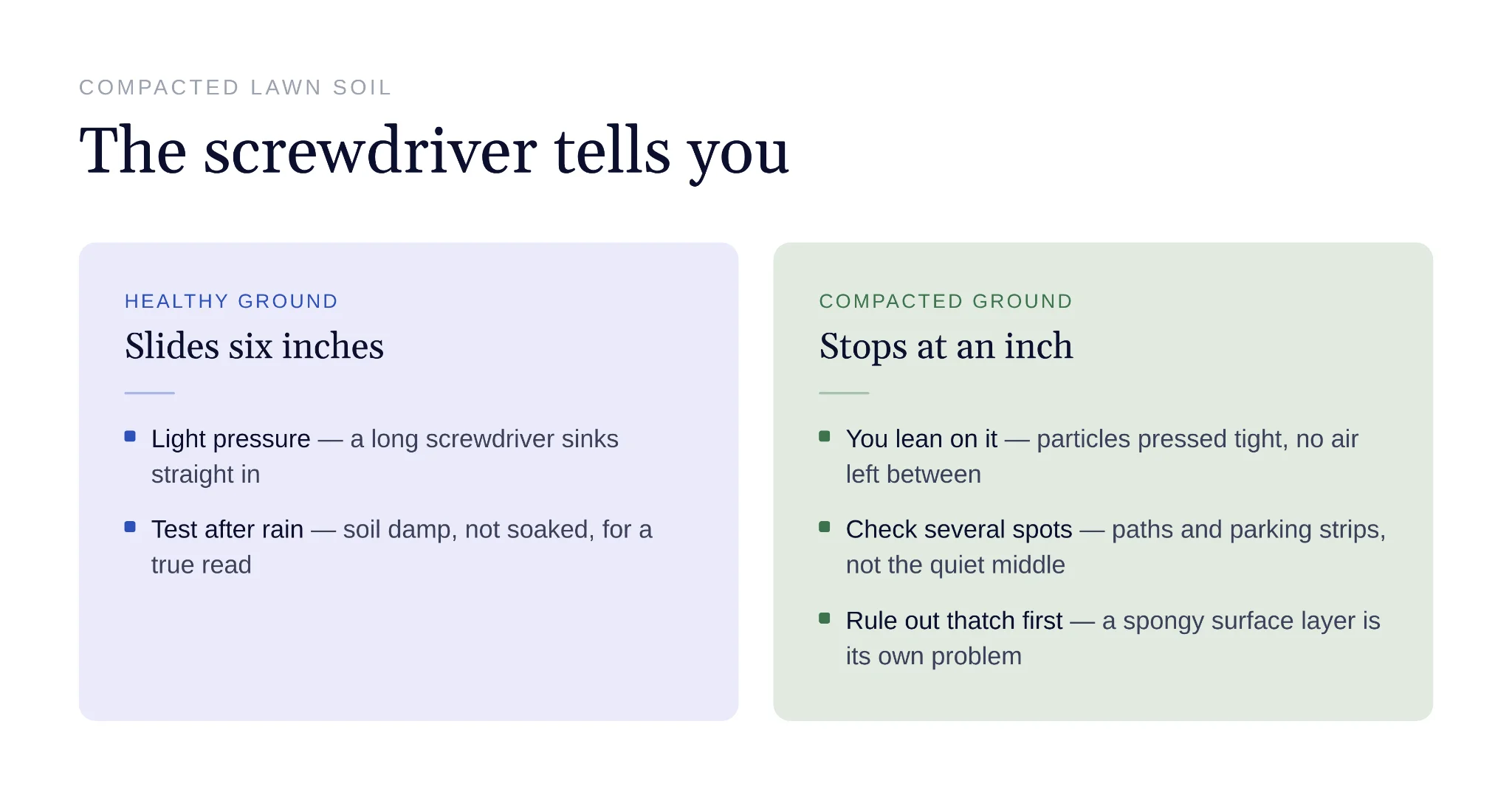
Push a long screwdriver into the lawn a day after a good rain, when the soil is damp but not soaked. In healthy ground, it slides down six inches with light pressure. In compacted ground it stops at an inch or two, and you’re leaning on it.
Do this in a few spots. Compaction is rarely uniform. It’s the footpath across the yard, the strip where the car parks half on the grass, the arc where kids wheel around on bikes.
The middle of the lawn nobody walks on is usually fine. Knowing which spots are hard and which aren’t tells you where the work actually goes.
One thing to rule out first. A spongy layer at the surface that your finger sinks into, grass that feels like a mattress underfoot, that’s thatch, not compaction, and it’s a different problem with a different fix. Thatch sits on top. Compaction is the soil itself, underneath.
Core Aeration Is the One That Works
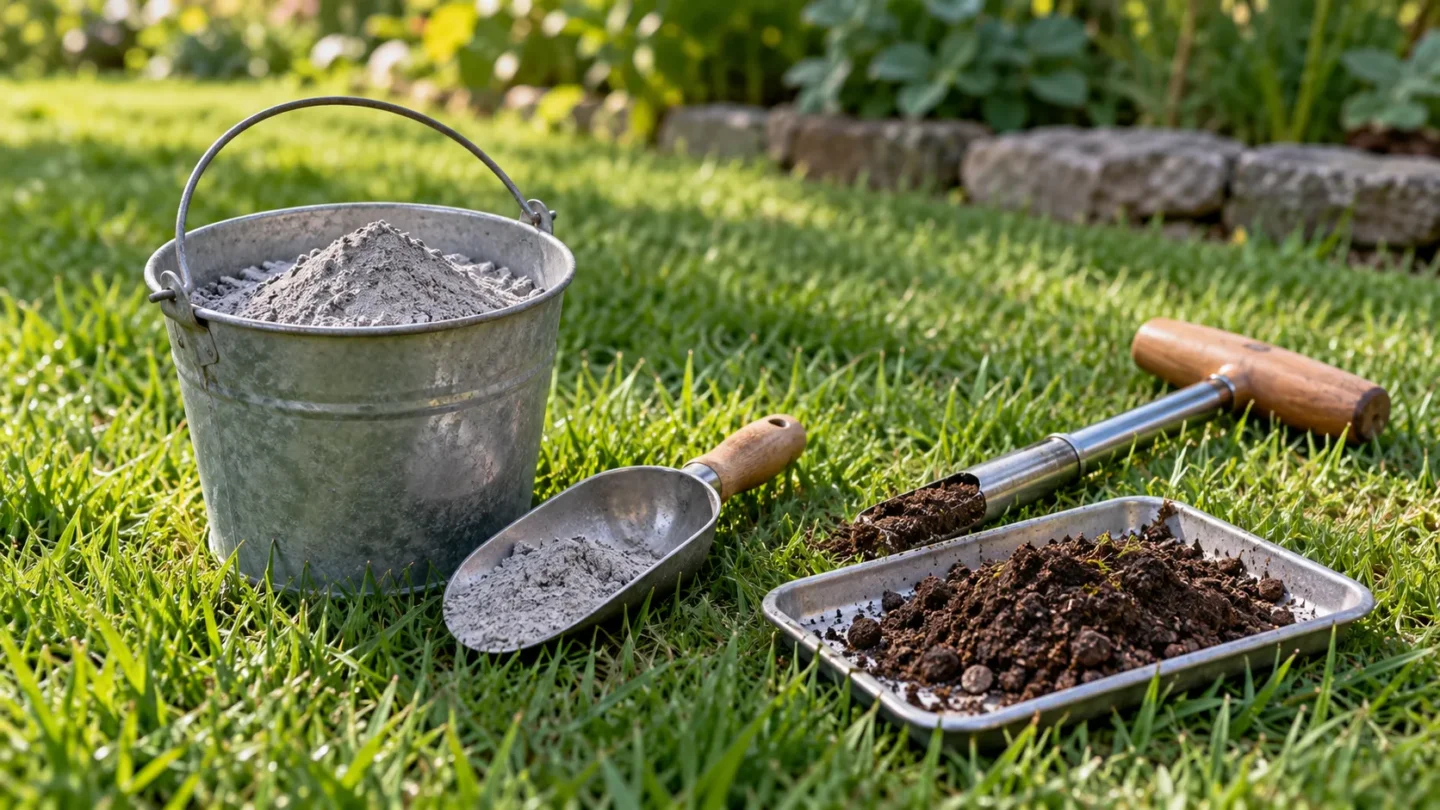
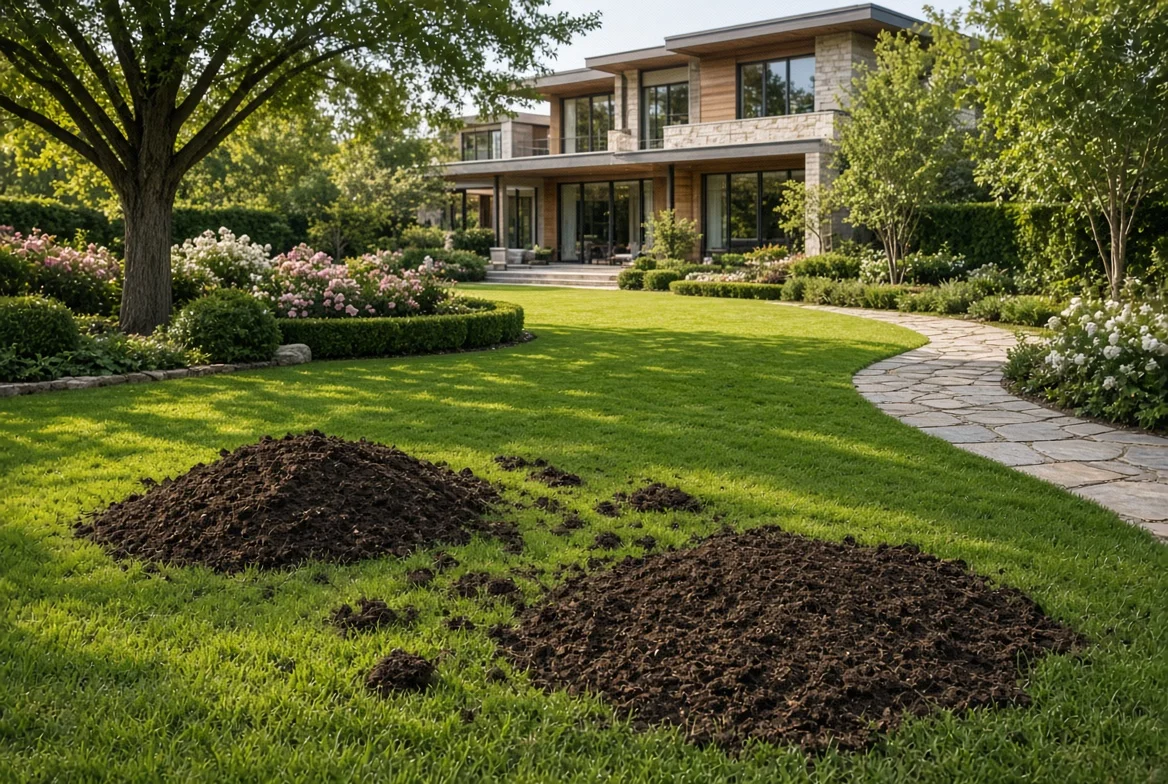
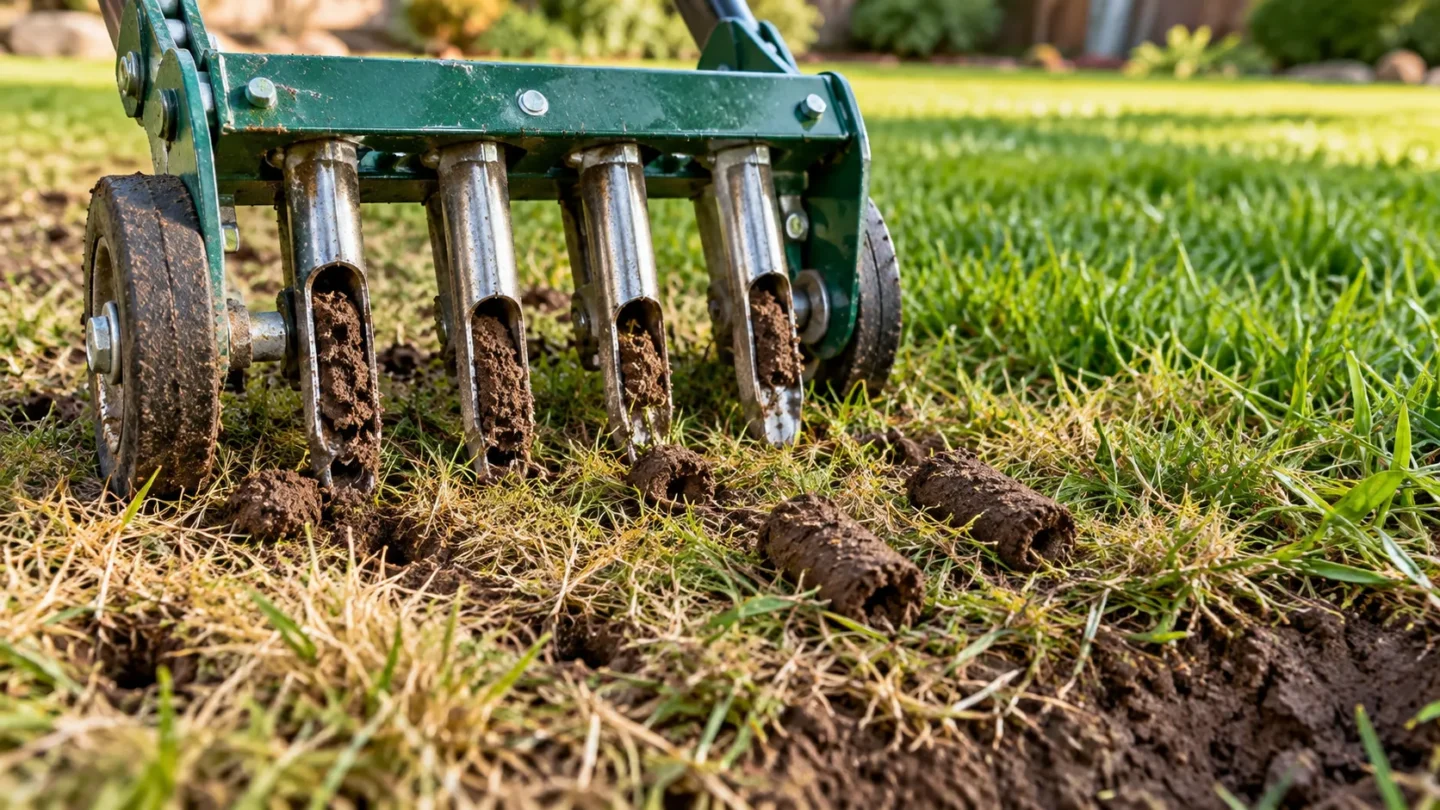
Hollow-tine aeration pulls thousands of plugs of soil out of the lawn and drops them on the surface. Each hole is a channel for air, water, and roots to move into ground that was sealed. The plugs break down over a week or two and get washed back in.
This is the fix. Everything else on the list supports it or substitutes poorly for it.
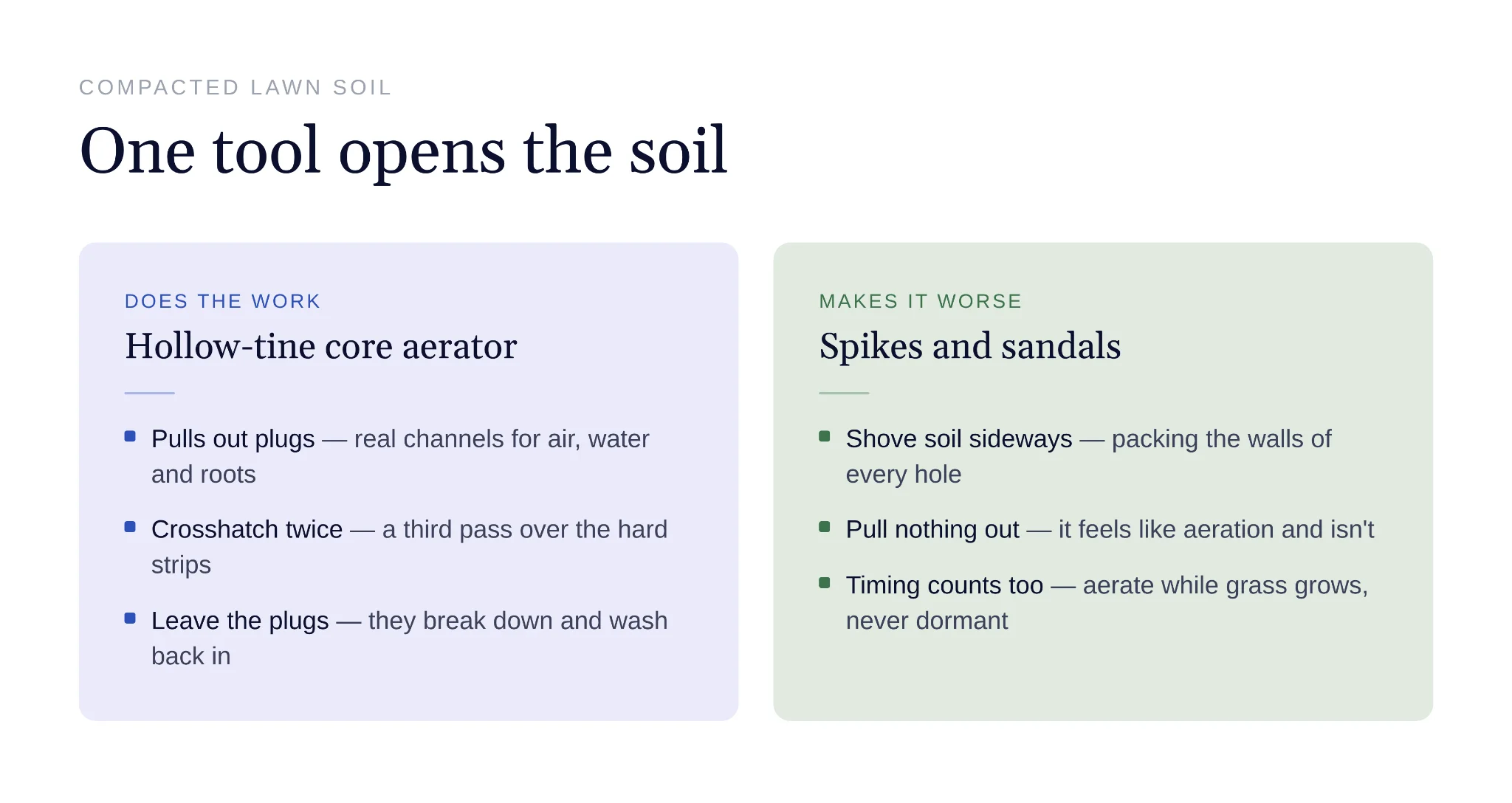
The machine matters. A core aerator, the heavy rolling drum with hollow spoons, rented by the day or run by a lawn service, is the real tool. The spike aerators people buy, the sandals with nails, the rolling spike drums, don’t pull anything out.
They punch holes by shoving soil sideways, which compacts the walls of the hole and makes the problem marginally worse right where you’re trying to help. Spikes feel like aeration. They aren’t.
Go over the lawn twice in a crosshatch, and go over the hard strips a third time. The plugs should be sitting two to three inches apart when you’re done. Leave them where they fall.
Timing isn’t optional. Cool-season grass gets aerated in early fall, warm-season grass in late spring into early summer, in both cases while the grass is growing hard enough to heal the holes and fill back in. Aerate a dormant lawn, and you’ve opened thousands of wounds it can’t close, and weeds move into the gaps before the grass does.
The ground has to be damp. Aerating bone-dry soil barely pulls a plug, the tines bounce off, and you’ve rented a machine to scratch the surface. Aerating mud is worse; the holes smear shut and you’re compacting as you go. Water deeply a day or two ahead and wait for it to firm up.
Topdress Into the Holes
The step most people skip, and it’s the one that makes aeration stick.
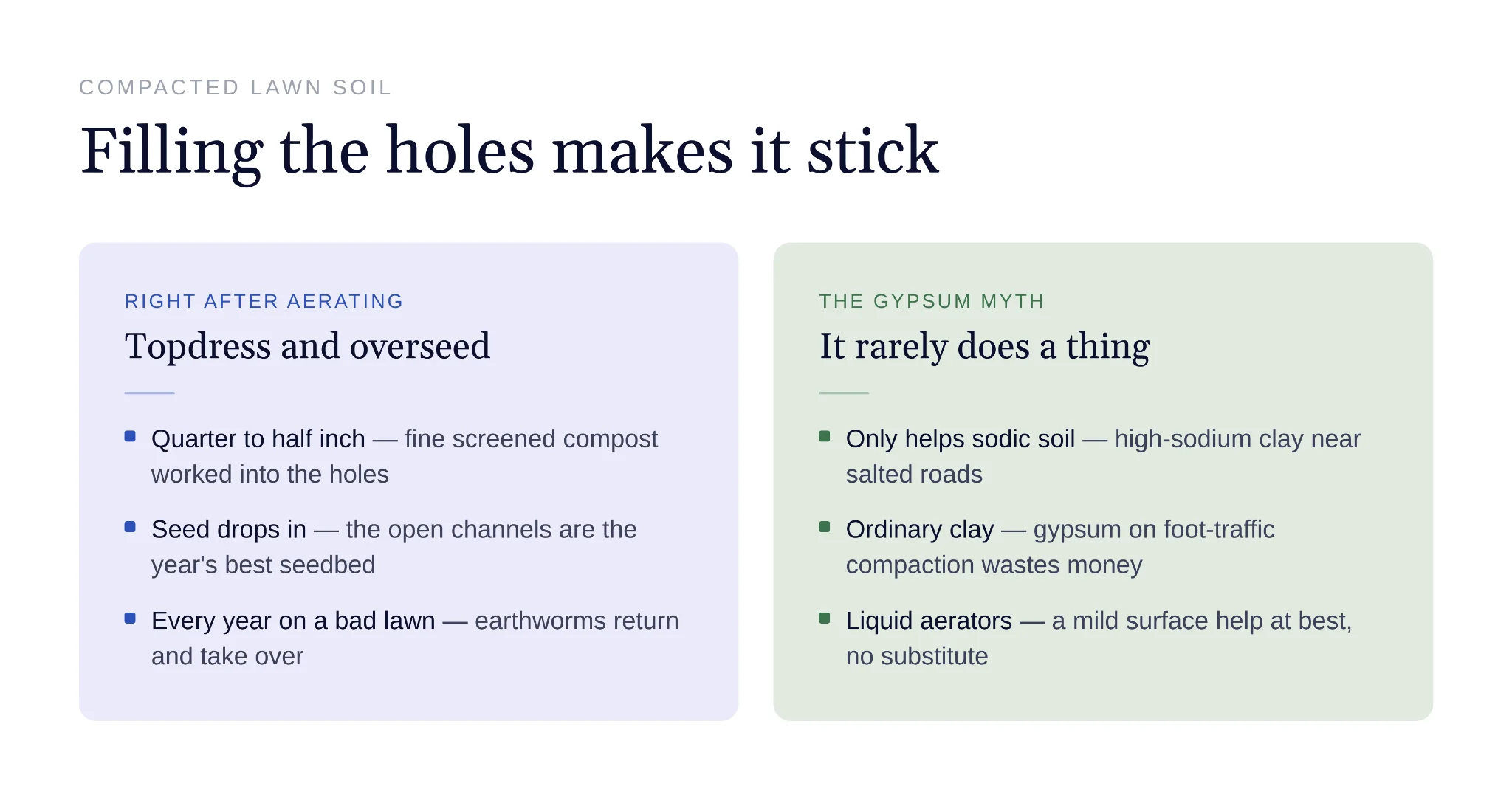
Right after aerating, spread a thin layer of good compost over the lawn and work it in, a stiff rake, the back of a leaf rake, or just drag a section of chain-link fence across it. The compost falls into the open holes and down into the soil column.
That’s the point. You’ve made thousands of channels; filling them with organic matter instead of letting them collapse back to the same packed clay is what changes the soil over time.
Quarter to half an inch of compost, no more. Enough to work into the holes, not enough to bury the grass. Fine, screened, fully finished compost, chunky half-rotted stuff sits on top and smothers.
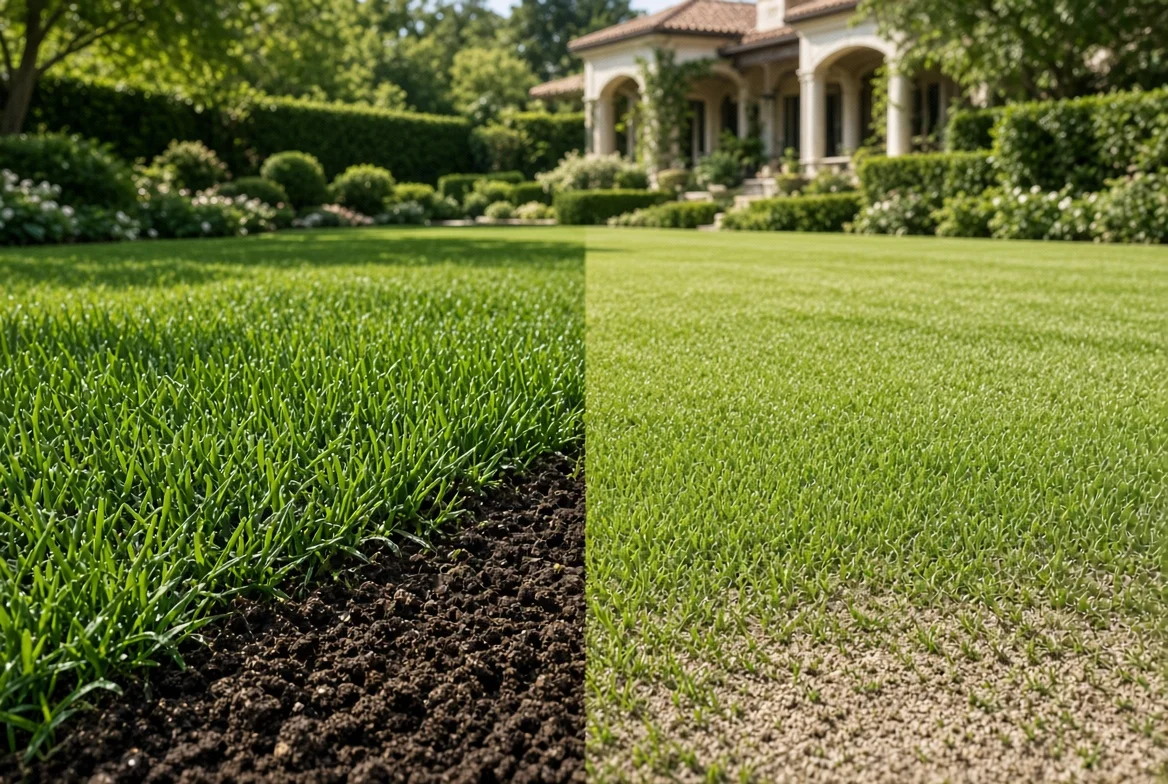
Do this every year on a bad lawn and the soil genuinely changes. Earthworms come back, which is the real long-term aeration, the kind that never stops. The compaction that took years of traffic to build up takes a few seasons of this to undo.
About Gypsum
Garden centers sell gypsum as the thing that breaks up clay, and people buy bags of it for compacted lawns expecting the clay to loosen.
For most lawns it does nothing.
Gypsum only improves structure in sodic soils, with clay that’s gone tight specifically because of high sodium, which is a real condition in some arid regions and near roads that get heavily salted in winter.
On ordinary clay compacted by foot traffic, which is the overwhelming majority of compacted lawns, scattering gypsum is money on the grass that doesn’t move the needle. A soil test is the only way to know if yours is the exception, and it almost certainly isn’t.
The liquid “aeration in a bottle” products are a softer version of the same story. Some contain surfactants that help water penetrate a crust, which can be a genuine small help on a mild surface seal. None of them pull a plug of soil out of the ground, and nothing that stays liquid is going to reopen six inches of packed clay. They’re a supplement to coring at best, and a substitute for it never.
Stop Doing the Thing That Packed It Down
A fixed lawn gets re-compacted by the same traffic that compacted it the first time, and faster, because the soil remembers the path.
The desire line across the yard the route everyone takes to the gate, the shed, the bins — is never going to grow grass if everyone keeps walking it. Put a stepping-stone path or a mulch strip down that exact line and let people use it. Fighting the path with reseeding, year after year, loses every time.
Keep cars off the grass. A single car parked on a lawn through a wet spell compacts soil deeper than a season of footsteps, and the ruts don’t come back on their own.
And stay off it when it’s saturated. Soil is at its most vulnerable when soaked, as that’s when weight presses the particles together hardest. The lawn mowed the morning after heavy rain, the game of catch on soggy ground, those do real damage that dry-weather traffic wouldn’t. Wait a day for it to drain.
Overwatering keeps the same ground soft enough to compact under every pass of a mower or a foot. A timer that runs the same minutes regardless of weather is the usual culprit, soaking soil that didn’t need it and leaving it defenseless. A system like Aiper IrriSense waters based on actual soil and weather conditions instead of a clock, so the lawn isn’t sitting wet going into the traffic that does the damage. Drier ground between waterings holds up to footfall in a way saturated ground never will.
When the Lawn Comes Back Thin
Compacted ground that’s been thin and weedy for years won’t be holding much grass seed in reserve. Aeration and topdressing open the door; often there’s just not enough grass left to walk through it.
Overseed right after you aerate and topdress.
The holes and the loose compost are the best seedbed the lawn will have all year, seed drops into the channels, makes contact with soil instead of sitting on a hard crust, and the open ground gives the new seedlings somewhere to root without fighting packed earth from day one.
Aerate, topdress, overseed, water. One afternoon, in that order, does more than any of the three alone.
Severe cases, like ground so hard it’s effectively a parking lot, a new-build lot where the topsoil was scraped off and the subsoil driven over by heavy equipment for months, sometimes sit past what coring reaches.
That’s where a lawn service with a deep-tine aerator earns the call, or where the honest answer is that a few inches of imported topsoil over the top will get you a lawn faster than a decade of trying to resurrect the subsoil underneath.
Get more pool and lawn care guides from Aiper on Google