Pebble Pool Finish vs Plaster: The Long-Term Tradeoffs

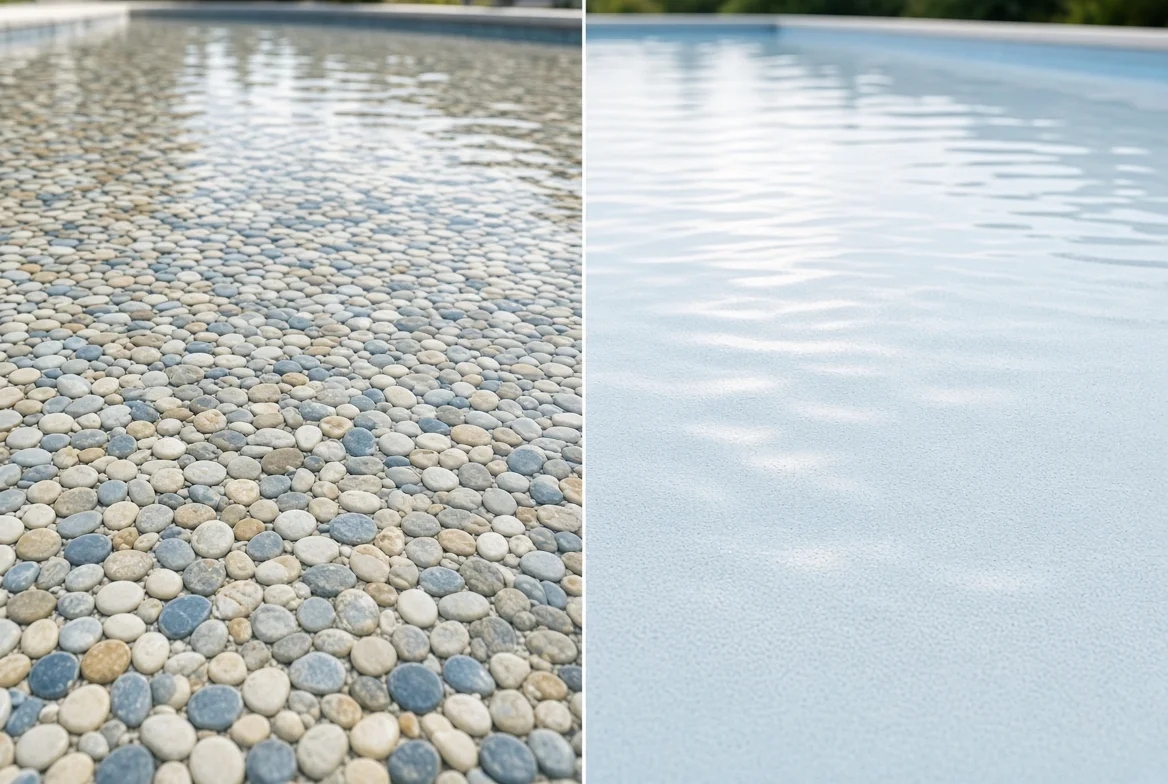
Plaster is the cheaper finish to install, and pebble lasts roughly twice as long. For most concrete pools, the decision comes down to how long you plan to own the pool, how closely you manage water chemistry, and how much the rougher texture matters to the people swimming in it.
The upfront price gap narrows when you factor in how many times each finish must be replaced over the pool’s life. Texture and cleaning, on the other hand, affect every swim.
What Each Finish Is
Both finishes are cement-based coatings troweled over the pool’s concrete shell. The difference is what gets mixed into the cement and how much of it ends up at the surface.
- Plaster is white cement mixed with fine white sand, usually limestone or marble, and troweled smooth. It can be tinted, but standard white plaster gives the classic light-blue water color.
- Pebble finishes mix small, rounded stones into the cement. After application, the top layer of cement is washed or polished away to expose the stones, so the water touches pebble rather than cement.
That exposed stone is the source of most of the differences below. Cement is the part of any pool finish that water chemistry attacks, and a pebble finish has less of it at the surface.
How the Two Compare
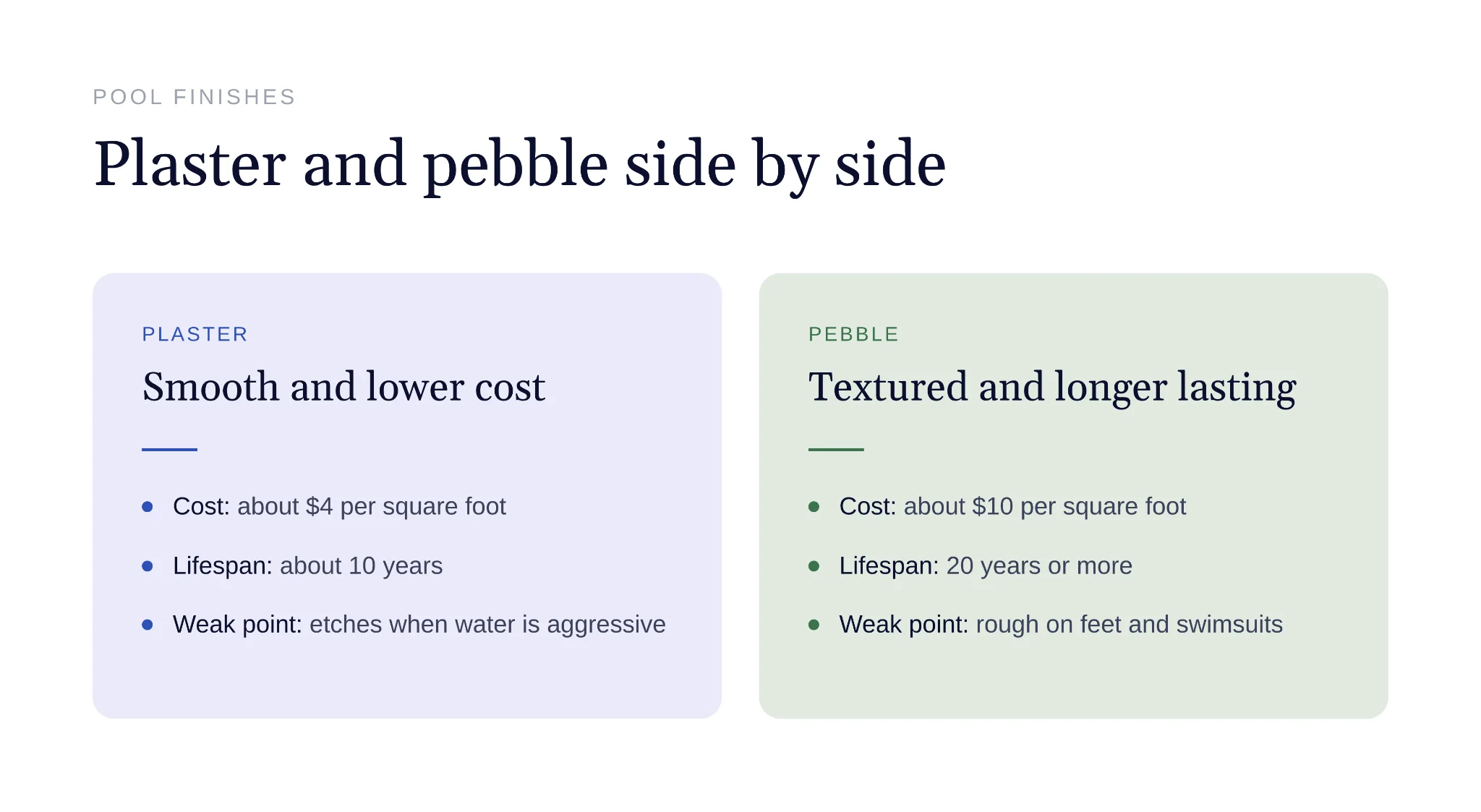
Price and lifespan figures vary by region, installer, and brand, but the gap between the two finishes is consistent. Angi’s national cost guide puts plaster at about $4 per square foot with a 10-year lifespan, and pebble at about $10 per square foot with a lifespan of 20 years or more.
| Plaster | Pebble | |
|---|---|---|
| Installed cost | About $4 per sq ft | About $10 per sq ft; premium brands $10 to $20 |
| Typical lifespan | About 10 years | 20 years or more |
| Surface feel | Smooth | Textured to bumpy; polished versions are smoother |
| Tolerance for chemistry mistakes | Low; etches and stains quickly | Higher; stones resist chemical attack |
| How wear shows | Rough patches, etching, mottled color | Loose stones, exposed cement between stones |
Cost Over the Life of the Pool
The upfront difference looks large, and over 20 years it shrinks. A typical backyard pool has 400 to 800 square feet of interior surface, and Pebble Tec, the best-known brand, runs $4,000 to $16,000 to resurface a pool that size.
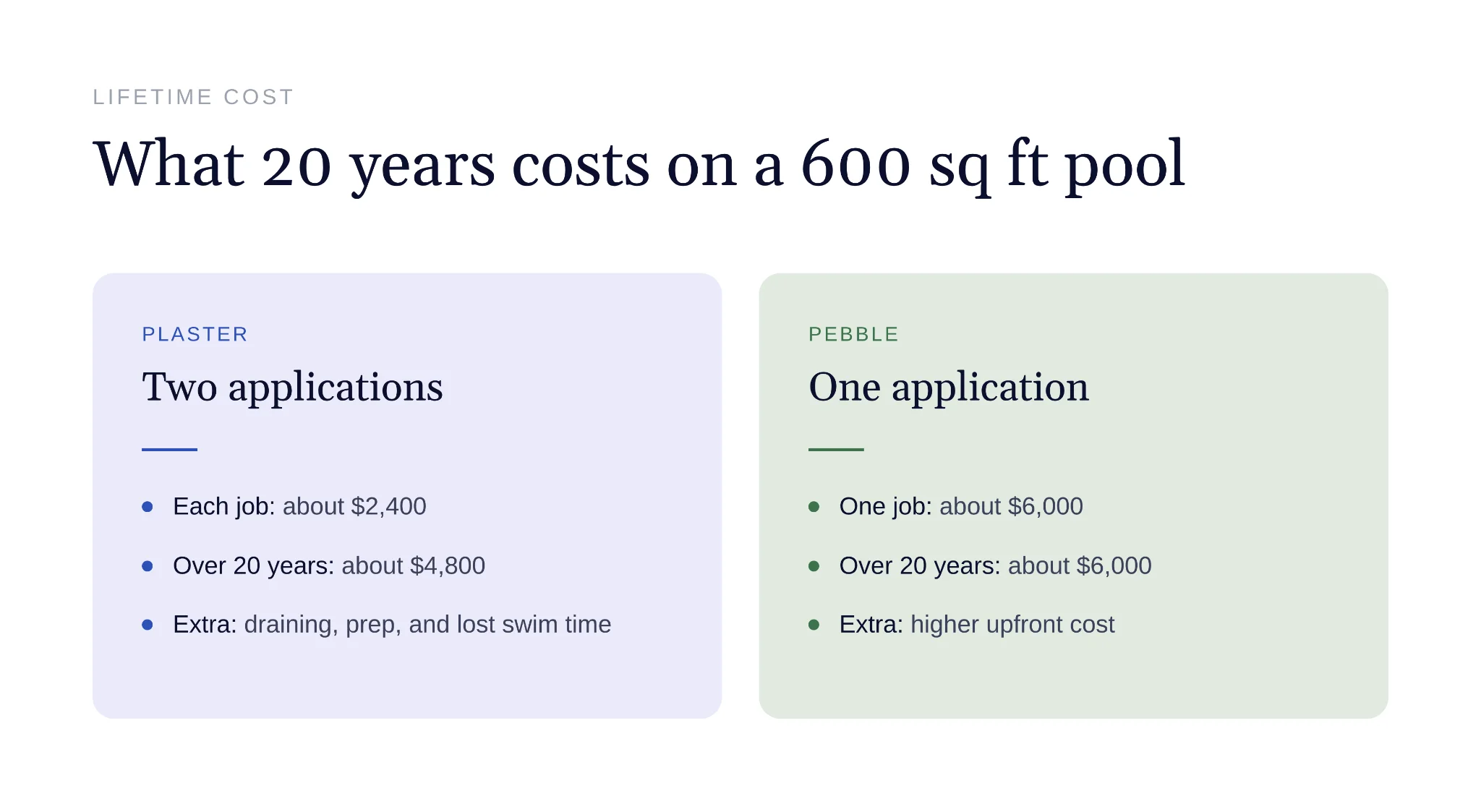
Take a pool with 600 square feet of interior surface:
- Plaster at $4 per square foot costs about $2,400 per application. Over 20 years, it needs one resurfacing, for a total of about $4,800. Over 25 years, it may need a third application.
- Pebble at $10 per square foot costs about $6,000 once and should last the full 20 years.
On finish cost alone, plaster still comes out ahead in this example. Each resurfacing, though, also means draining the pool, chipping or preparing the old surface, refilling, rebalancing the new water, and losing one to two weeks of use. Those costs make the two options closer than the per-square-foot numbers suggest.
Short ownership favors plaster. If you plan to sell within 10 years, you are unlikely to pay for a second plaster job, and the savings are real.
Long ownership favors pebble. Owners who expect to keep the pool 20 years or more avoid at least one full resurfacing cycle.
How Each Holds Up to Water Chemistry
Water chemistry is where the two finishes separate most over time. The National Plasterers Council notes that a cement finish’s life expectancy can be severely reduced when water stays aggressive for extended periods. Aggressive water is water with low calcium hardness, low pH, low alkalinity, or a combination, and it dissolves the cement in the finish.
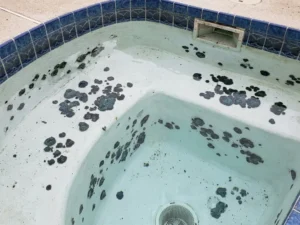
Etching shows first as small spots around aggregate particles, tile edges, and fittings, where the cement is most porous. The NPC also notes that smooth troweled finishes show these cosmetic flaws more than exposed aggregate finishes do.
Plaster has more exposed cement, so a few weeks of low pH or low calcium do visible damage. Pebble has the same cement between the stones, but far less of it faces the water, and some high-durability aggregate finishes can tolerate slightly aggressive water for short periods.
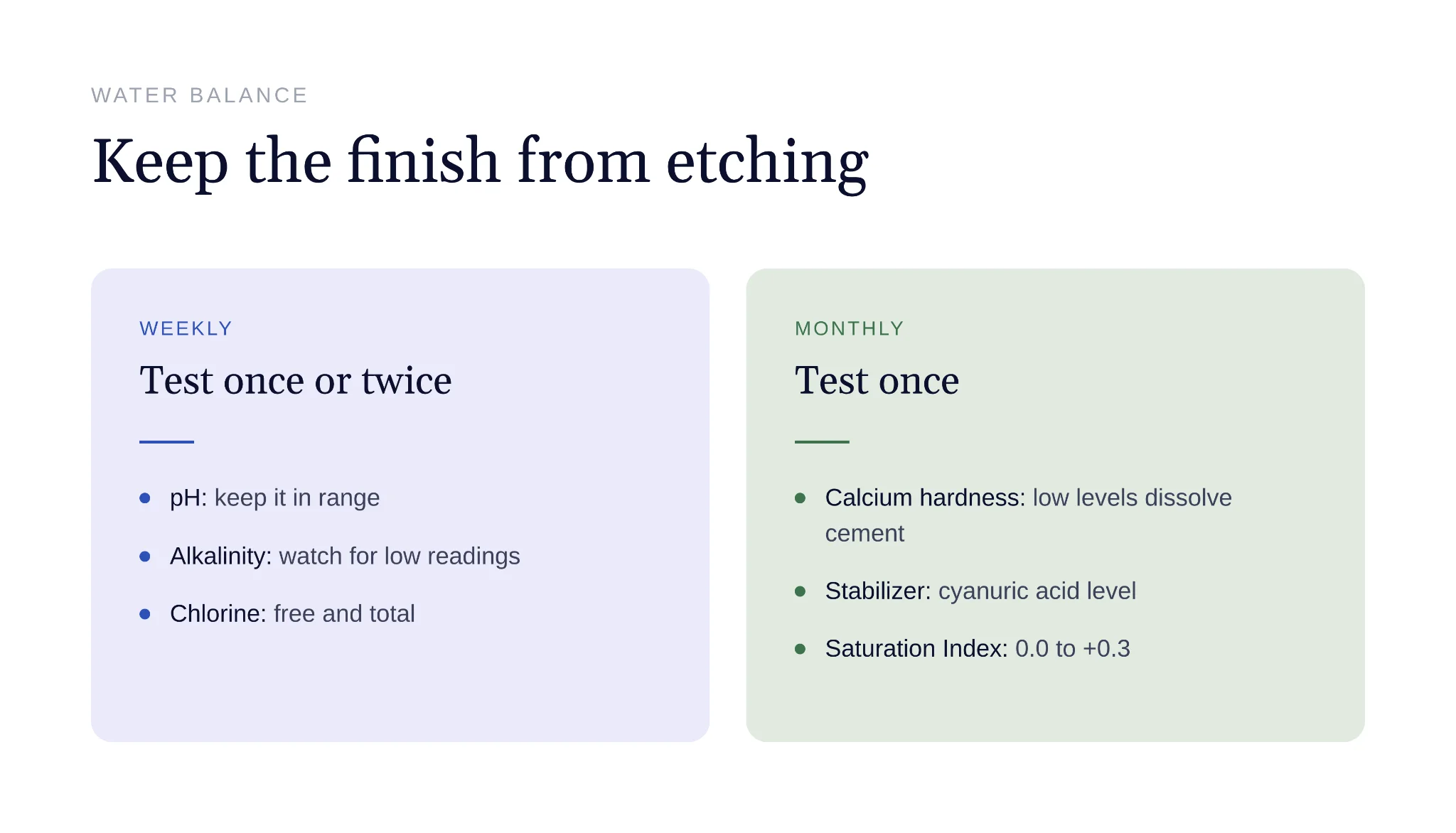
Neither finish lasts its full lifespan without balanced water. The NPC recommends this testing schedule:
- Test pH, total alkalinity, and free and total chlorine one to two times a week.
- Test calcium hardness, cyanuric acid (stabilizer), and total dissolved solids once a month.
- Keep the Saturation Index, a combined measure of water balance, between 0.0 and +0.3.
Salt pools need extra attention. The NPC notes that higher salt levels can make water more aggressive toward cement finishes.
Texture and Comfort
Texture is the main complaint about pebble finishes, and it doesn’t go away with age. Standard exposed pebble feels bumpy underfoot, can scrape knees and toes, and can snag swimsuits.
Polished pebble finishes grind the stones flatter and feel much closer to plaster. They cost more than standard pebble.
For pools used mostly by young children or by swimmers who spend time sitting on steps and benches, plaster’s smooth surface is a real advantage. Pools used mostly for lounging and occasional swims are less affected by texture.
Cleaning and Algae
Plaster is porous, and algae can take hold in the tiny pits of its surface, especially as it ages and roughens. Regular brushing of the walls and floor keeps algae from establishing, and older plaster needs it more often.
Pebble finishes resist staining better, and the stones give algae less to grip. Debris can settle in the gaps between stones, though, and a stiff brush takes more effort on a bumpy surface.
Either finish benefits from scrubbing on a regular schedule rather than only when algae shows up. A robotic cleaner handles most of that work between manual brushings. The Aiper robotic pool cleaners scrub the floor, walls, and waterline on their own, which keeps both smooth plaster and textured pebble clean without daily brushing.
Which Finish Fits Your Pool
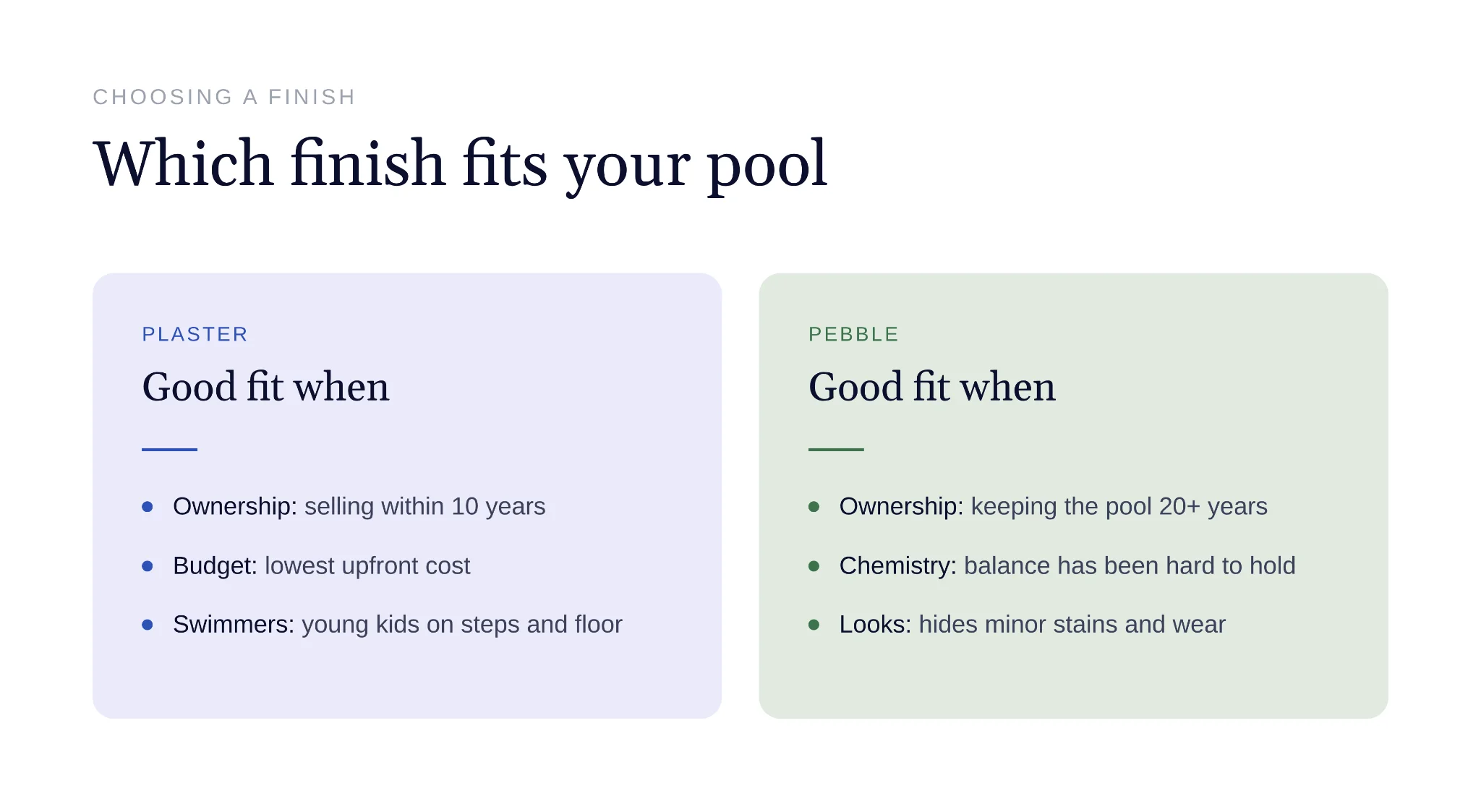
The right finish depends more on how you use and maintain the pool than on the finish itself. Match your situation to the options below.
- Choose plaster if you plan to sell within 10 years, want the lowest upfront cost, or have young children who spend a lot of time on the pool floor and steps.
- Choose pebble if you plan to keep the pool 20 years or more, have had trouble keeping water balanced, or want a finish that hides minor stains and wear.
- Consider polished pebble if you want pebble’s lifespan and chemical resistance, but the texture of standard pebble is a concern.
With any finish, water balance determines whether it reaches the long end of its lifespan or the short end. A plaster finish in well-balanced water can outlast a pebble finish in water that stays aggressive for months.
Get more pool and lawn care guides from Aiper on Google