Pool Resurfacing vs. Replastering: Are They the Same Thing?

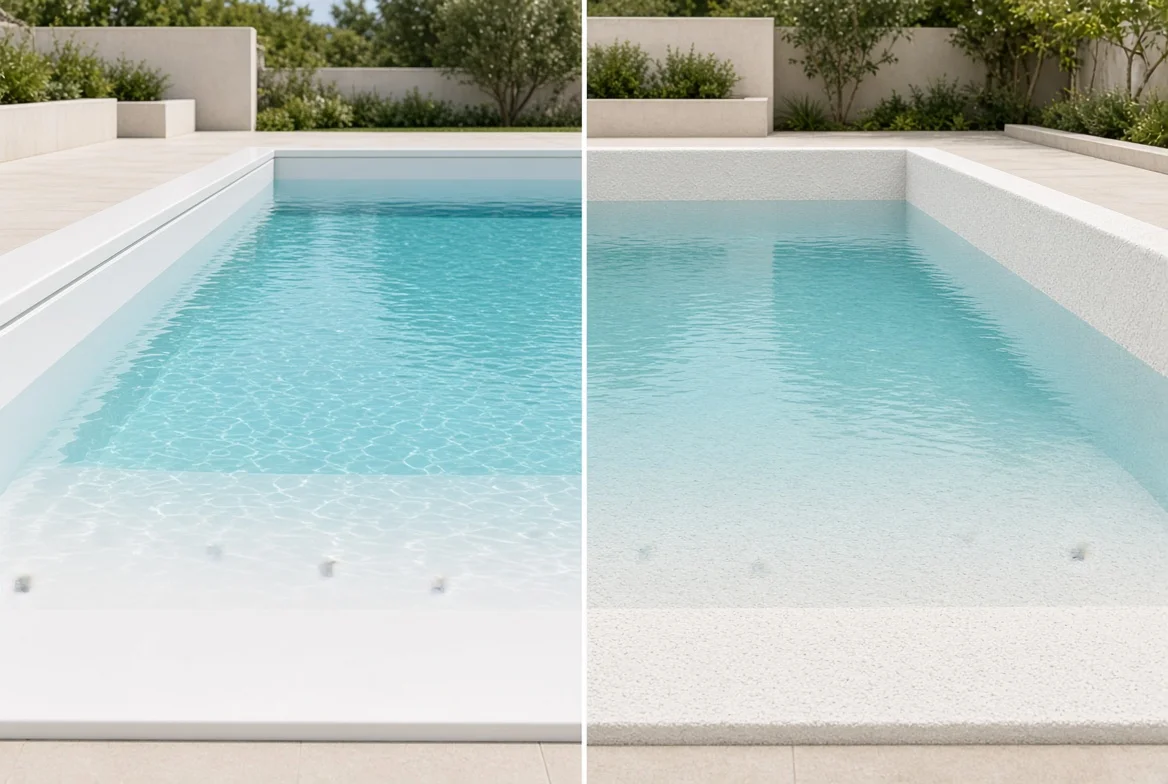
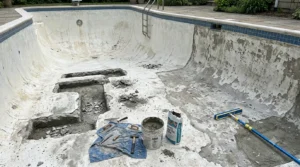
Pool resurfacing is any job that replaces the interior finish of a pool. Replastering is one specific kind of resurfacing: stripping or roughening the old plaster on a concrete or gunite pool and applying a new coat of plaster.
Contractors often use the two words loosely, so a quote for “resurfacing” could mean plaster, a quartz or pebble finish, or a fresh coat on a fiberglass shell. The finish named on the quote decides the price, how the pool feels underfoot, and how long the surface lasts.
What Each Term Covers
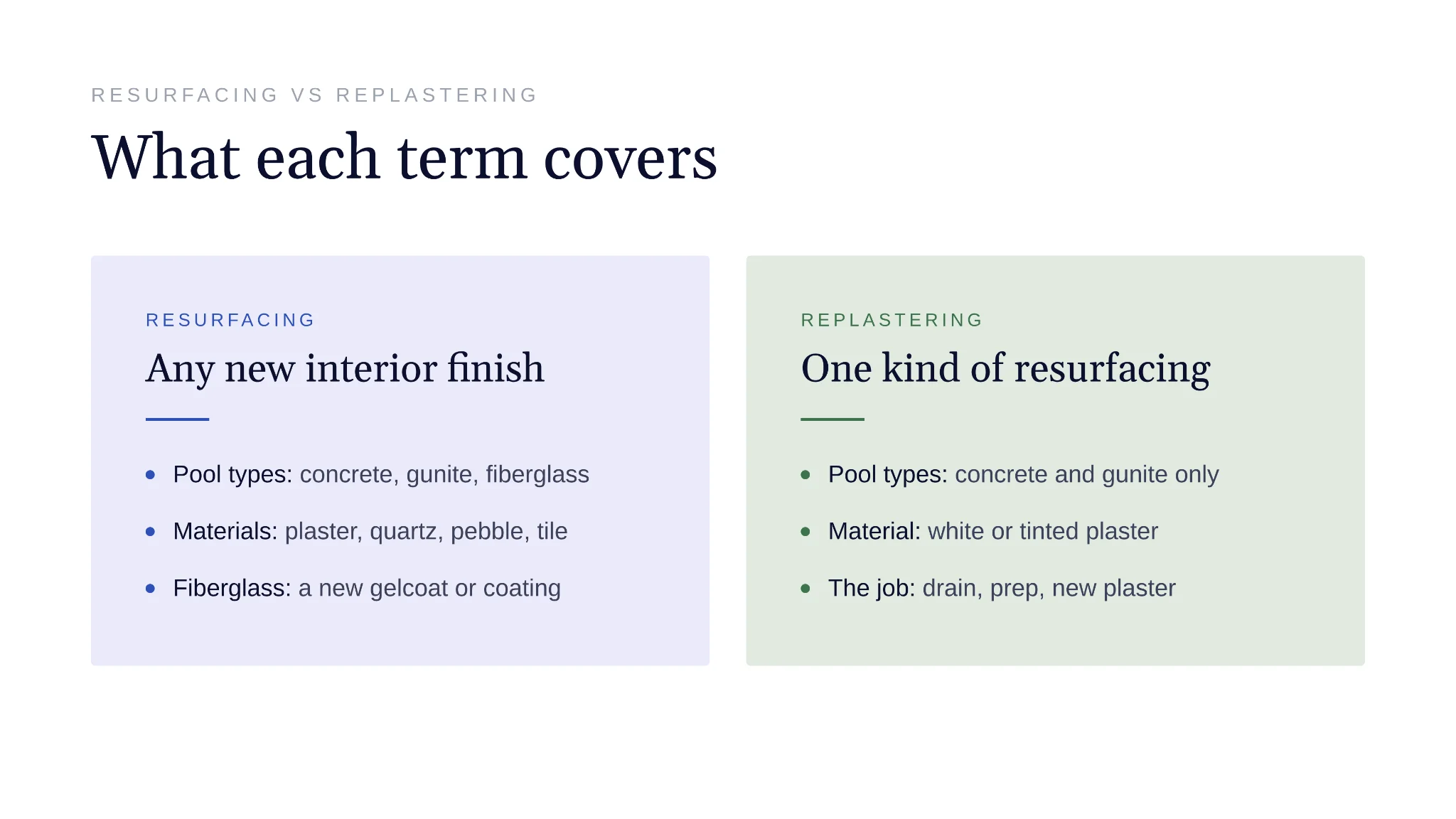
- Resurfacing is the umbrella term. It covers every material used to refinish a pool interior, on any pool type that has a finish to replace.
- Replastering applies only to concrete and gunite pools. The crew drains the pool, removes loose or failing plaster, and trowels on a new layer of white or tinted plaster.
On a concrete pool, the finish options go well beyond standard plaster. Most of the cost difference between two resurfacing quotes comes from which of these the contractor is proposing.
Finish Options for Concrete Pools
All of the finishes below go onto a concrete or gunite shell. They differ mainly in what is mixed into the cement and how much of it is exposed at the surface.
| Finish | What it is | How it feels | Relative lifespan |
|---|---|---|---|
| Standard plaster | White cement and marble dust, sometimes tinted | Smooth | Shortest; most prone to staining and etching |
| Quartz aggregate | Plaster mixed with colored quartz granules | Smooth with slight texture | Longer than standard plaster |
| Exposed pebble | Small river pebbles set in cement, with the top layer washed away to expose them | Textured, bumpy underfoot | Long |
| Polished pebble | Smaller pebbles ground smooth after application | Smooth with fine texture | Long |
| Full tile | Glass or ceramic tile over the entire interior | Smooth | Longest |
Standard plaster costs the least to apply and to redo. Pebble and tile cost more upfront and need resurfacing far less often, which matters if you plan to keep the house for a decade or more.
Fiberglass and Vinyl Pools
Neither of these pool types gets plaster. A quote that offers to plaster a fiberglass or vinyl pool is a sign to find another contractor.
- Fiberglass pools have a gelcoat finish molded into the shell. When it fades, chalks, or develops small cracks, the shell is refinished with a new gelcoat or a marine-grade coating.
- Vinyl pools have a liner instead of a surface. When the liner fades, tears, or pulls away from the wall, it is replaced. Contractors usually quote this as liner replacement.
Some older concrete pools are painted with epoxy or rubber-based pool paint. Repainting is the cheapest refinish but has to be redone far more often than plaster.
Signs a Pool Needs a New Surface
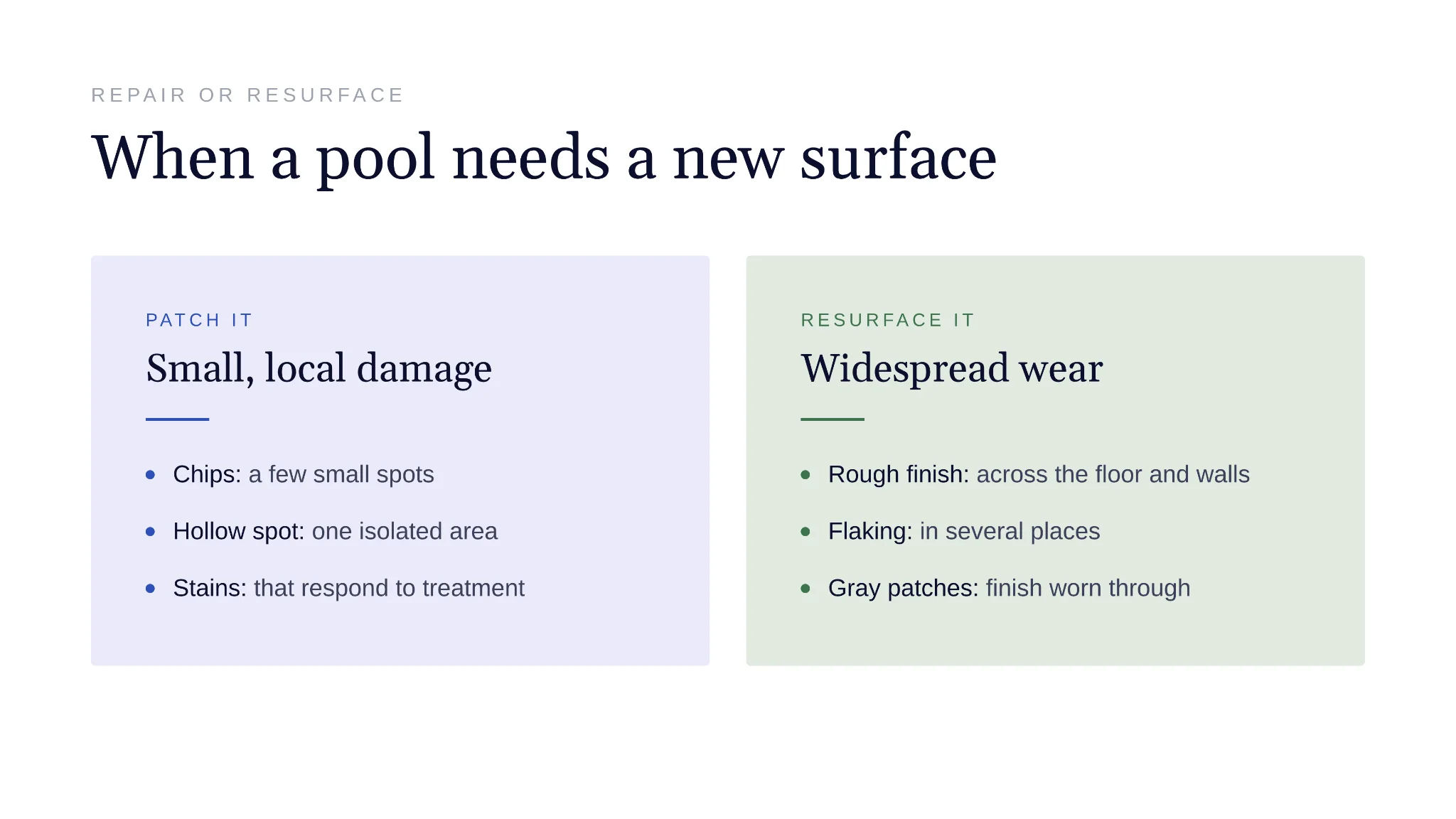
A worn finish shows itself in a few predictable ways. Most of these are cosmetic at first and become structural problems if left alone.
- Rough patches. Plaster that feels like sandpaper on feet or snags swimsuits has etched, usually from water that ran too acidic for too long.
- Stains that won’t brush or treat out. Metal stains and deep organic stains that survive a chemical stain treatment have usually set into the plaster.
- Hollow-sounding or flaking areas. Tap the surface near the waterline and steps with the handle of a brush. A hollow sound means the plaster has separated from the shell, and those areas will eventually flake off.
- Exposed concrete or rebar stains. Gray patches show the finish has worn through. Rust-colored spots can mean water is reaching the steel inside the shell, which needs attention before any new finish goes on.
A few small chips or a single hollow spot can often be patched. Widespread roughness, staining, or flaking means the whole surface is due.
What to Check on a Resurfacing Quote
Two quotes can both say “resurfacing” and describe very different jobs. Before you compare prices, confirm each quote covers the same scope:
- The exact finish, including the brand, product line, and color
- Surface preparation, and whether the old plaster will be fully removed down to the shell or roughened with a bond coat applied over it
- Waterline tile and coping, and whether they are being replaced, cleaned, or left alone
- Repairs to the shell, such as cracks or exposed rebar, and how those are priced if found after draining
- Start-up, meaning whether the contractor handles water chemistry and brushing for the first weeks after filling
- The warranty, and what it requires from you, since many are voided by poor water chemistry during start-up
The First 28 Days After Resurfacing
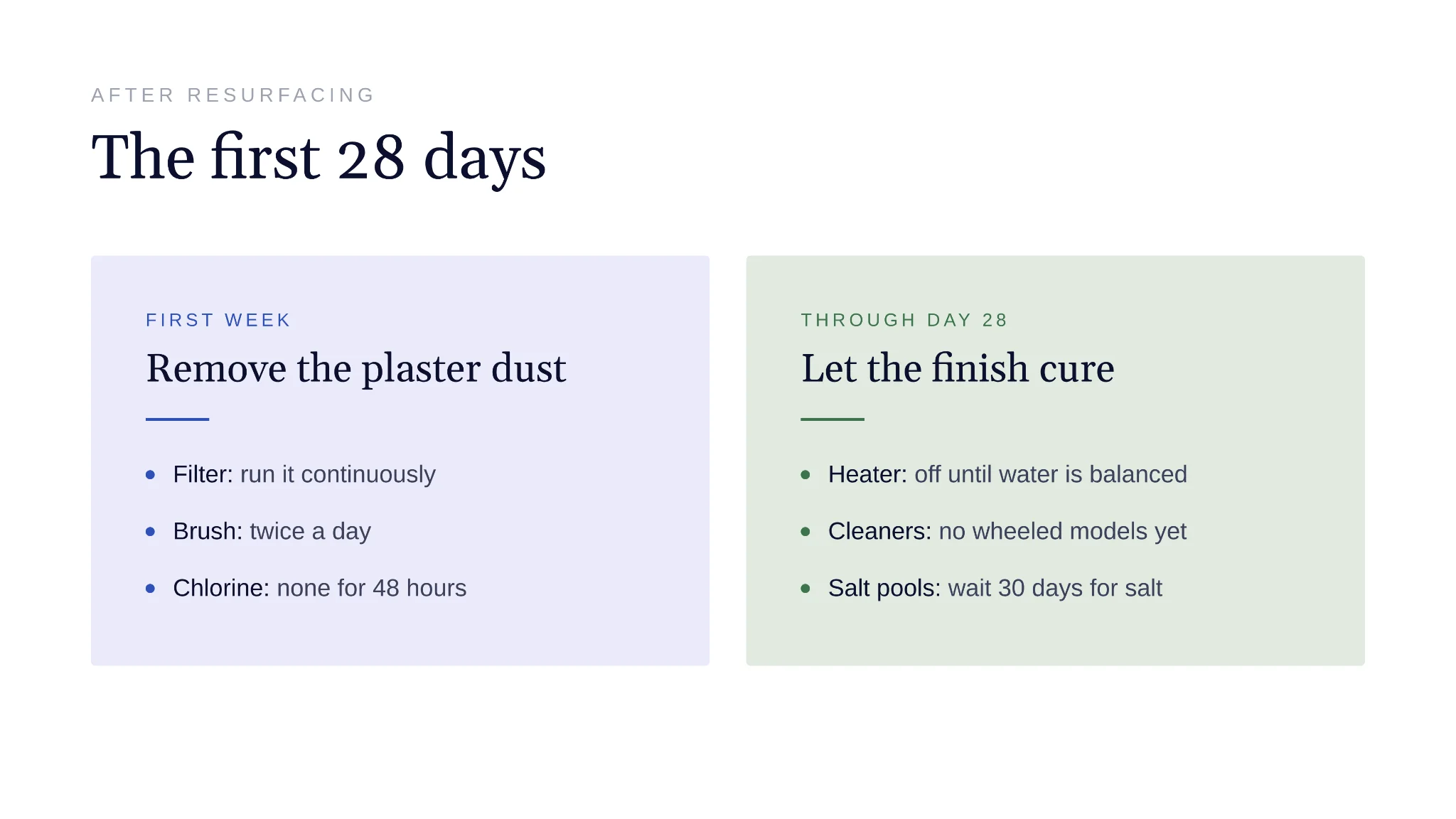
New plaster and plaster-based finishes cure under water. The first four weeks decide how smooth and even the finish stays, and dust left on the surface during that time can harden into a permanent rough film.
The National Plasterers Council start-up procedure is the standard most contractors follow. If your contractor doesn’t handle start-up, follow these steps:
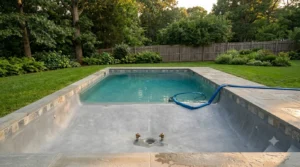
- Fill the pool without stopping, with a clean cloth tied over the end of the hose and the hose resting in the deep end.
- Start the filter as soon as the water reaches the skimmer, and run it continuously until the water is clear and the plaster dust is gone.
- Test the fill water, then adjust total alkalinity first and pH second. Keep pH between 7.2 and 7.6.
- Hold off on chlorine for the first 48 hours.
- Brush the entire surface at least twice a day for the first week to remove plaster dust.
- Keep the heater off until the dust is gone and the water is balanced.
- Use only a brush-type vacuum or a cleaner without wheels for the first 28 days.
- On a saltwater pool, wait 30 days before adding salt.
After the first week, brush only when debris appears or after adding chemicals. Keep testing the water every few days through the end of the first month.
Keeping the New Finish Clean
Debris that sits on a new finish stains it, and leaves and dirt that settle on the floor are the most common culprits. Regular vacuuming and brushing after the start-up period keep the surface looking new for longer.
Once the 28 days are up, wheeled and tracked cleaners are safe to use. A robotic cleaner scrubs the floor and walls on a schedule, which handles most of that routine brushing. Check that a model is rated for your pool’s finish before buying, and compare options in the Aiper robotic pool cleaners collection.
Balanced water protects the surface as much as cleaning does. Water that runs low on pH or calcium etches plaster, and water that runs high leaves scale, so test weekly and adjust as soon as readings drift.
Get more pool and lawn care guides from Aiper on Google