Best Sand for a Pool Filter

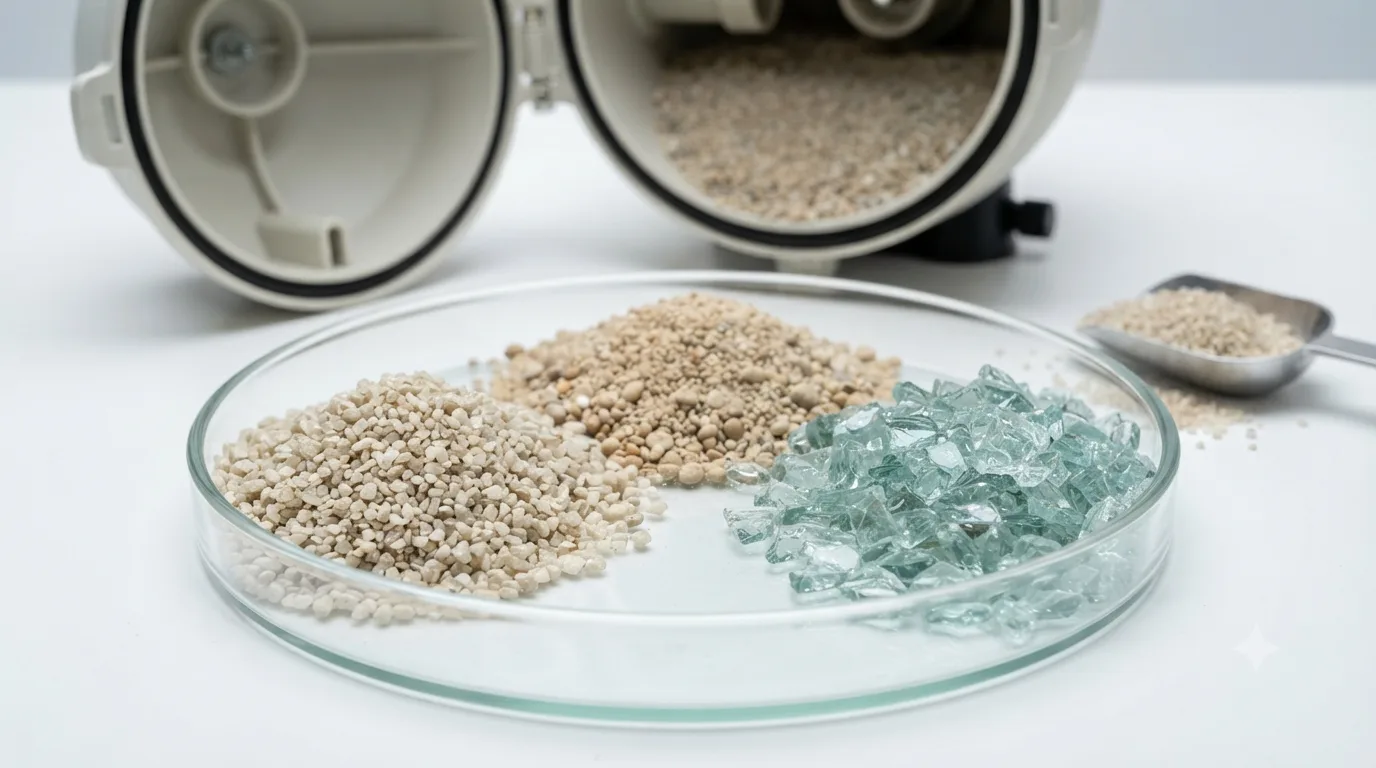
Pool-specific filter sand, commonly labeled #20 silica sand at a 0.45 to 0.55mm effective size, is the correct media for a sand filter — generic play sand or mason sand is the wrong grain size and shape, and causes channeling or clogging instead of filtering properly. Filter media choice is one of several equipment specifics that matter no matter which type of cleaner does the daily work, covered in our comparison of pool cleaner types. The full breakdown, including whether glass media is worth the upgrade, is below.
What Type of Sand Is Best for a Pool Filter?
Pool-specific filter sand, graded and sized specifically for sand filter media, is the correct choice — often labeled #20 silica sand on the bag. It’s manufactured to a consistent grain size that generic construction sand doesn’t match. That same media-lifespan question is central to choosing between a sand filter and a cartridge filter in the first place — our comparison of sand versus cartridge pool filters covers which suits which pool.
Why Can’t You Use Regular Play Sand or Mason Sand in a Pool Filter?
Play sand and mason sand have the wrong grain size and shape for filtration — either too fine, too rounded, or too inconsistent in size compared to graded filter sand. That mismatch causes channeling, where water finds paths around the media instead of through it, or clogging, both of which reduce filtration quality even though the tank still looks full of sand — the exact condition in which mustard algae keeps coming back after a shock.
Is Glass Filter Media Better Than Sand?
Recycled crushed glass media filters finer particles than traditional silica sand, resists compacting over time better, and typically lasts longer between replacements — though it costs more upfront. It’s a meaningful upgrade for pools dealing with fine particulate that traditional sand lets through, and it pairs well with consistent backwashing to maintain that finer filtration over time.
Filter Media Comparison
| Media Type | Grain Size | Typical Lifespan | Cost |
|---|---|---|---|
| Pool filter sand (#20 silica) | 0.45-0.55mm effective size | 3-5 years | Lower upfront cost |
| Play sand / mason sand | Wrong size and shape for filtration | Not applicable — causes channeling or clogging | Cheap, but the wrong tool for the job |
| Recycled glass media | Filters finer particles than sand | Longer than traditional sand | Higher upfront cost |
What Size Sand Do You Need for a Pool Filter?
0.45 to 0.55mm effective size, commonly sold as #20 silica sand, is the standard specification for residential sand filters. Check your specific filter manufacturer’s recommendation before buying, since undersized or oversized media both reduce filtration efficiency even if the bag is labeled “pool filter sand.”
How Much Sand Does a Pool Filter Need?
The right amount varies by filter tank size, so follow the manufacturer’s fill level specification exactly rather than guessing. Overfilling restricts backwash flow, and underfilling reduces how much contact time water gets with the filter bed — both problems that show up as reduced filtration quality even with the correct sand grade, similar to how a pump that’s lost its prime loses effectiveness even with everything else correctly set up.
How Often Do You Need to Replace Pool Filter Sand?
Traditional filter sand is typically recommended for replacement every 3 to 5 years, since it gradually wears smooth and loses its filtering effectiveness even without an obvious clog. Glass media is commonly rated for a longer service life before it needs replacing, which is part of its cost tradeoff. A filter that’s overdue for new media can show symptoms similar to restricted flow near the main drain, since both point back to reduced circulation somewhere in the system.
Frequently Asked Questions
Is silica dust exposure a safety concern when replacing pool filter sand?
Yes — pouring dry #20 silica sand kicks up fine dust that can be inhaled, so wear a dust mask and work outdoors or in a ventilated area. Repeated exposure to crystalline silica dust without protection is a genuine respiratory hazard, not just a nuisance.
How many bags of sand does a typical residential sand filter need?
Most residential tanks hold roughly 200 to 300 pounds of media, which usually works out to about 4 to 6 standard 50-pound bags. The exact number depends on tank diameter, so confirm against the manufacturer’s fill spec rather than estimating from tank size alone.
Can you top off a sand filter with new sand instead of fully replacing it?
No. Sand wears down as a whole bed over its service life, so adding fresh sand on top of old, smoothed-out grains mixes the two unevenly and doesn’t restore filtration performance. A proper changeout empties the tank completely rather than topping it off — the full routine, from draining to refilling, is covered in our guide to how often to change pool filter sand.
Good filter media only helps if debris gets to the filter to begin with. An Aiper robotic pool cleaner clears the floor and walls directly, reducing the load your filter has to handle on its own.
Get more pool and lawn care guides from Aiper on Google