Topsoil vs Lawn Soil: Which You Actually Need

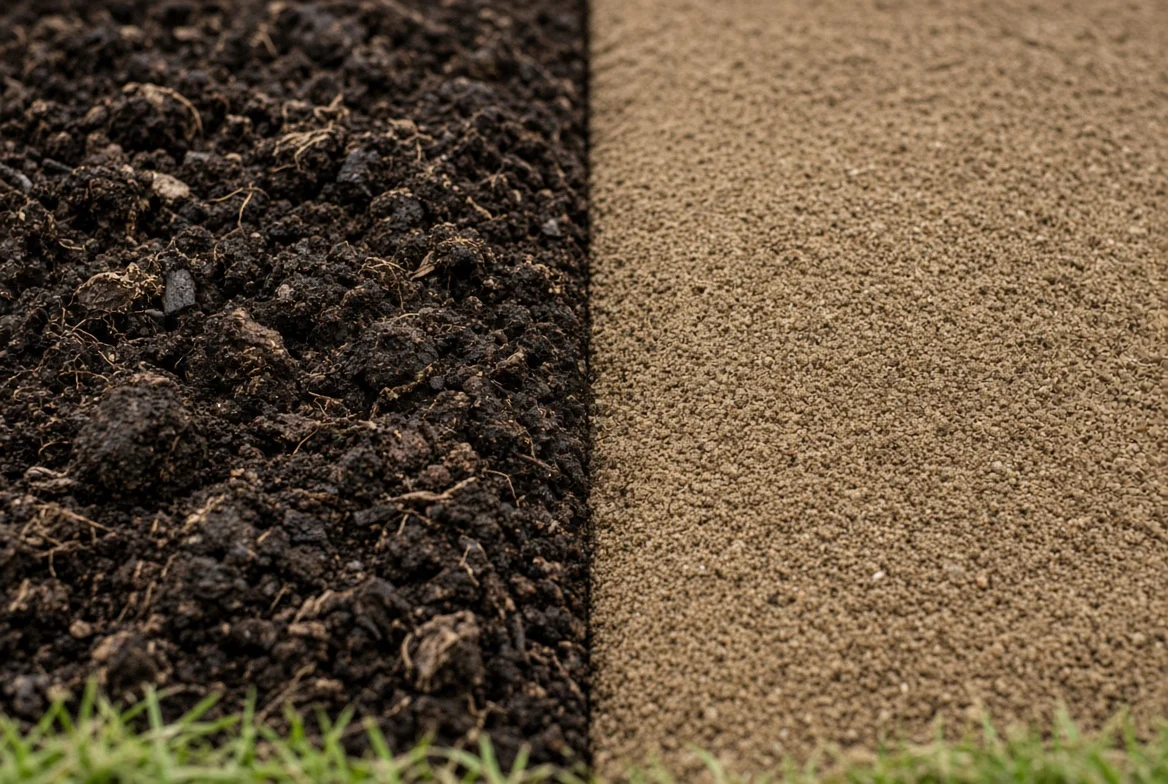
Topsoil is bulk material, sold by the cubic yard and delivered by truck. Lawn soil is a bagged blend of screened soil, compost, and sometimes fertilizer, sold for patching bare spots and covering seed.
The choice comes down to how much depth you need to add. Filling low areas or rebuilding soil across a whole yard calls for bulk topsoil. Covering seed or repairing a few square feet of damage calls for bags.
What Each One Is
Neither term guarantees anything about what’s in the material. No legal marketing standards exist for topsoil, and “topsoil” and “loam” are used interchangeably even though not all topsoils are loams.
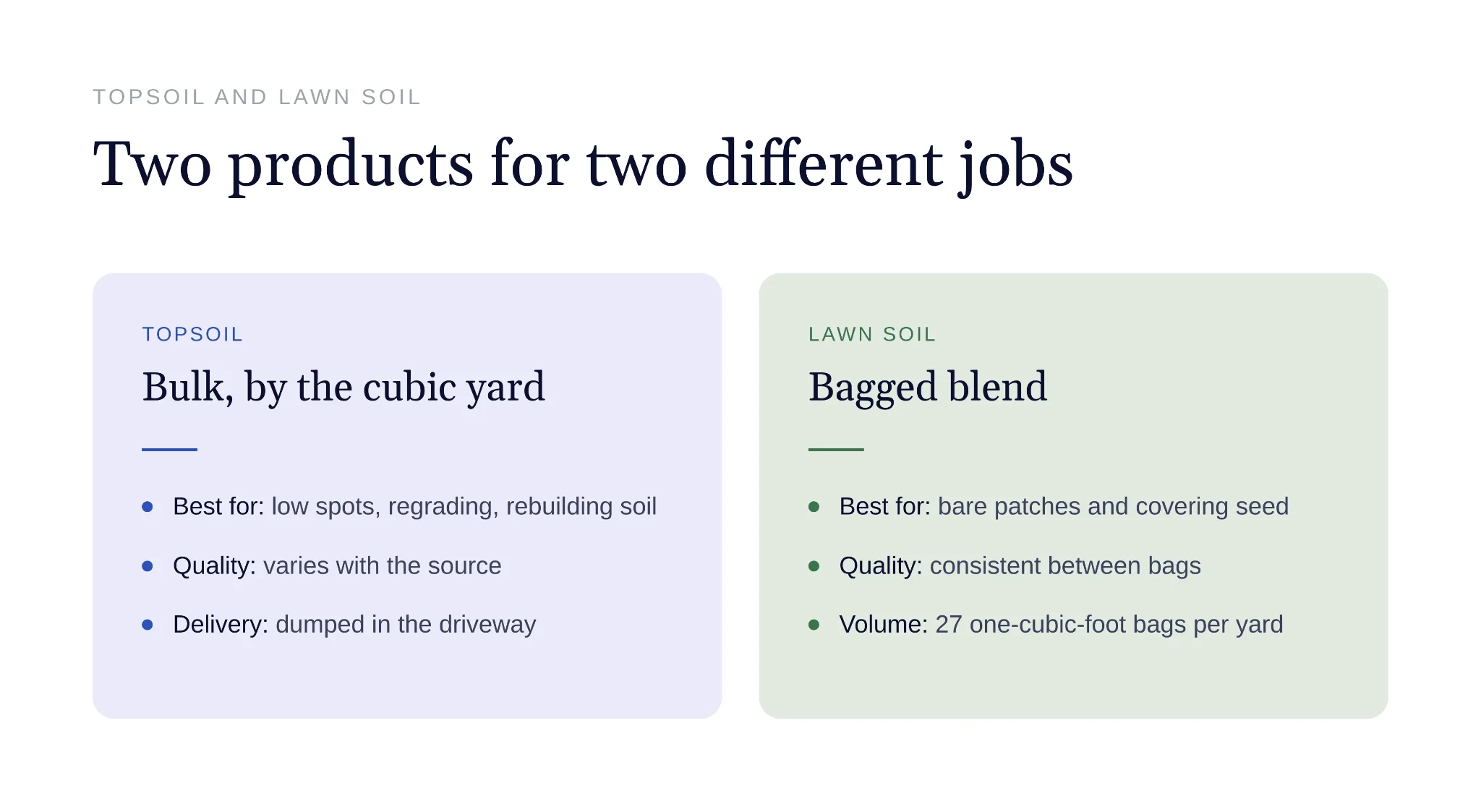
Topsoil is whatever a supplier stripped from the top layer of a site and, in most cases, screened to remove rocks and roots. Quality swings from excellent to unusable depending on where it came from. University of Kentucky Extension warns that material sold as topsoil is sometimes less suitable for a lawn than the subsoil already on the property.
Lawn soil is a manufactured product. Bags are consistent from one to the next, already screened, and usually amended with compost, which makes them predictable in a way bulk topsoil is not.
That consistency comes at a steep price per volume. A cubic yard holds 27 cubic feet, so covering the same ground with 1-cubic-foot bags means buying 27 of them.
How They Compare
Use this to match the material to the job before you price anything out.
| Topsoil | Lawn soil | |
|---|---|---|
| Sold as | Bulk, by the cubic yard | Bags, usually 0.75 to 1.5 cubic feet |
| Best for | Filling low spots, regrading, rebuilding soil before a new lawn | Patching bare spots, covering seed, small top-dressing jobs |
| Consistency | Varies by supplier and load | Consistent between bags |
| Delivery | Dumped in the driveway; you move it | Carried home in the car |
| What to verify | Source, screening, texture, pH | Whether fertilizer is included |
When Topsoil Is the Right Choice
Bulk topsoil makes sense when the yard needs depth. That usually means one of three situations: builders stripped the topsoil during construction, the grade needs correcting, or the existing soil is too shallow to support turf roots.
We recommend adding 6 inches of topsoil where possible, but any amount helps. Check the site for compaction before ordering, because spreading good soil over compacted ground leaves roots stuck in a shallow layer.
Bags stop making financial sense somewhere around 50 to 60 square feet at any real depth. Past that, the cost and the labor of hauling bags both climb faster than a bulk delivery.
Before You Buy Bulk Topsoil
You can’t judge topsoil by looking at the pile. It’s impossible to judge topsoil quality just by looking, which leaves asking questions as the only real protection.
Ask the supplier:
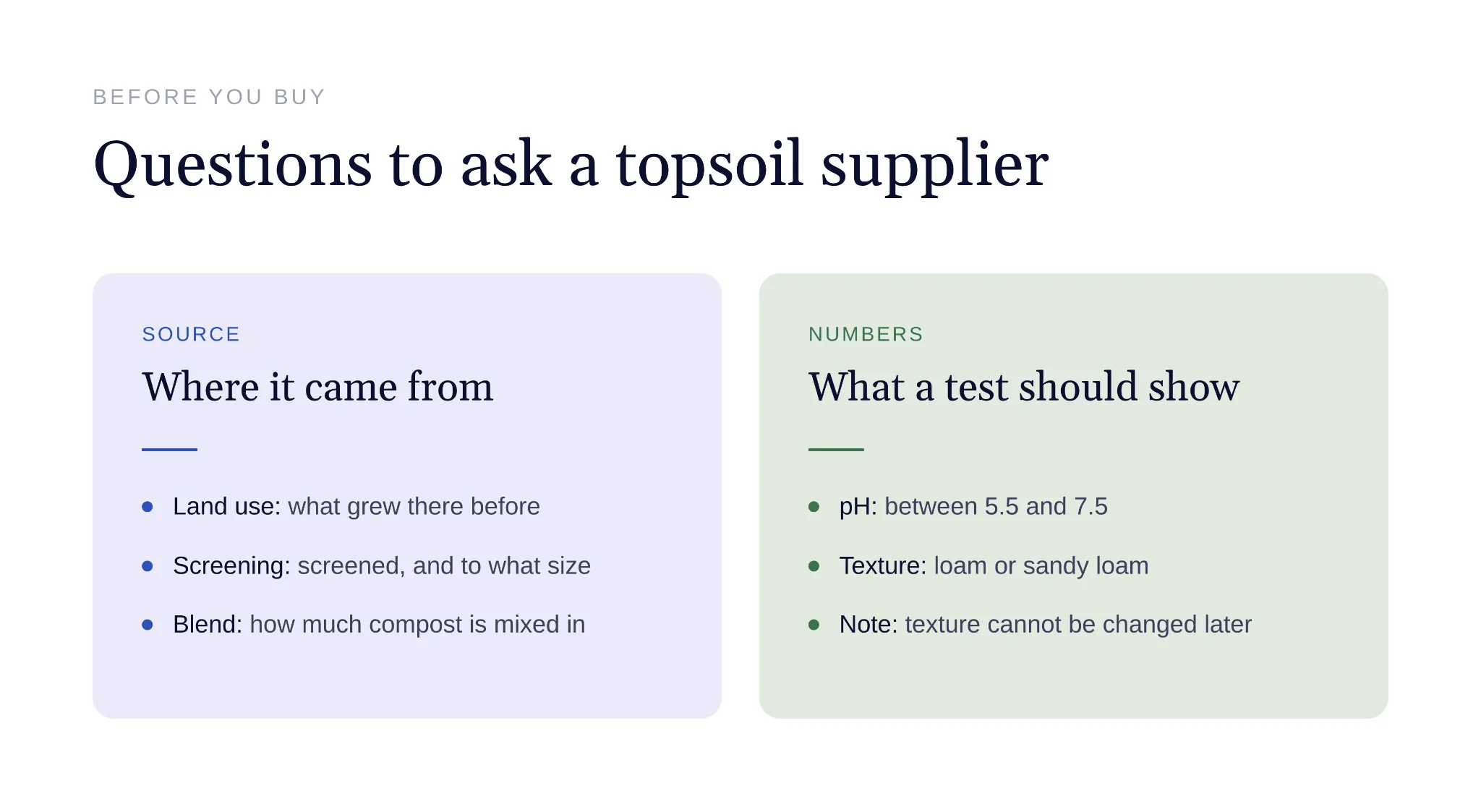
- Where did this soil come from, and what was growing on that land?
- Has it been screened, and to what size?
- Do you have a recent soil test for this material?
- Is compost already mixed in, and how much?
- Is it sold for lawn use, or for grading and fill?
Two numbers matter most on any test. A pH between 5.5 and 7.5 is acceptable, and a texture class of loam or sandy loam is best, because pH and nutrients can be corrected later while texture cannot.
One more thing to consider is what might come with the soil. Poorly sourced soil can carry contaminants that aren’t obvious to the eye, including residues from past land use, which is why the source question matters more than the price.
Test Your Own Soil First
Buying soil is the wrong first move if the problem is chemistry rather than depth. A soil test on your existing lawn costs very little through a county extension office and shows pH and nutrient levels.
If the test comes back showing low pH or low fertility, lime and fertilizer will fix that for a fraction of what a truckload costs. Adding soil on top changes nothing about what’s underneath.
How Much to Order
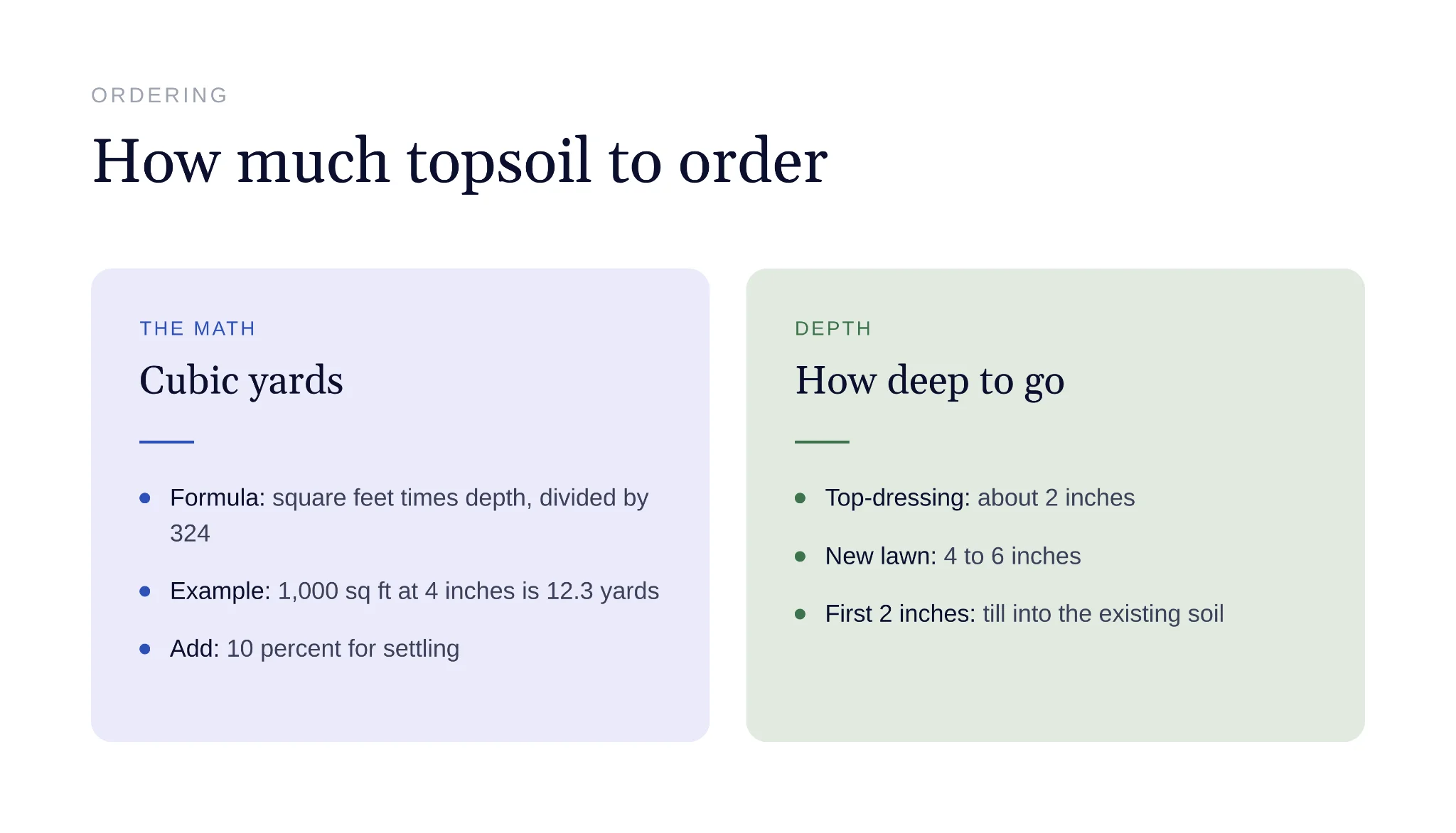
Topsoil is priced and delivered by the cubic yard, so the math starts with square footage.
- Measure the area. Multiply length by width in feet for each section you plan to cover.
- Decide on a depth. Two inches for top-dressing an existing lawn, 4 to 6 inches for rebuilding soil before seeding or sodding.
- Convert to cubic yards. Multiply square feet by depth in inches, then divide by 324. A 1,000 square foot area at 4 inches deep needs about 12.3 cubic yards.
- Add 10% for settling. Soil compacts as it settles and after the first few waterings.
For bagged lawn soil, one 1-cubic-foot bag covers about 24 square feet at half an inch deep, or 12 square feet at an inch.
Spreading It Without Creating a Layer
Dumping fine soil on top of a different soil type creates a boundary that roots and water struggle to cross. Avoiding that boundary is the difference between soil that helps and soil that makes drainage worse.
Add and incorporate the first 2 inches into the existing soil before adding the rest, so the change in texture is gradual.
- Loosen the existing soil to 4 to 6 inches with a tiller or garden fork before anything goes down.
- Spread the first 2 inches of new soil and till it into the loosened ground.
- Spread the rest and rake it to the finished grade, sloping away from the house.
- Water lightly and let it settle for several days, then fill any low spots that appear.
- Seed or sod once the surface is firm enough to walk on without leaving deep prints.
What New Soil Won’t Fix
Soil is one of three things that determine whether turf establishes, and the other two get less attention.
Compaction under the new soil keeps roots shallow no matter how good the material on top is. Loosening or breaking up the layer underneath has to happen before the new soil goes down.
Watering decides whether new seed germinates and whether roots grow deep. Fresh topsoil dries out quickly at the surface, so newly seeded areas need short, frequent watering while the rest of the lawn needs the opposite.
Running both schedules off one timer usually means one area is wrong. The Aiper IrriSense 2 runs up to 10 zones on separate schedules and adjusts for weather, so a newly soiled and seeded area can get several short cycles a day while established turf stays on a deep weekly soak.
Get more pool and lawn care guides from Aiper on Google