How to Fill Low Spots in a Lawn Without Creating New Ones


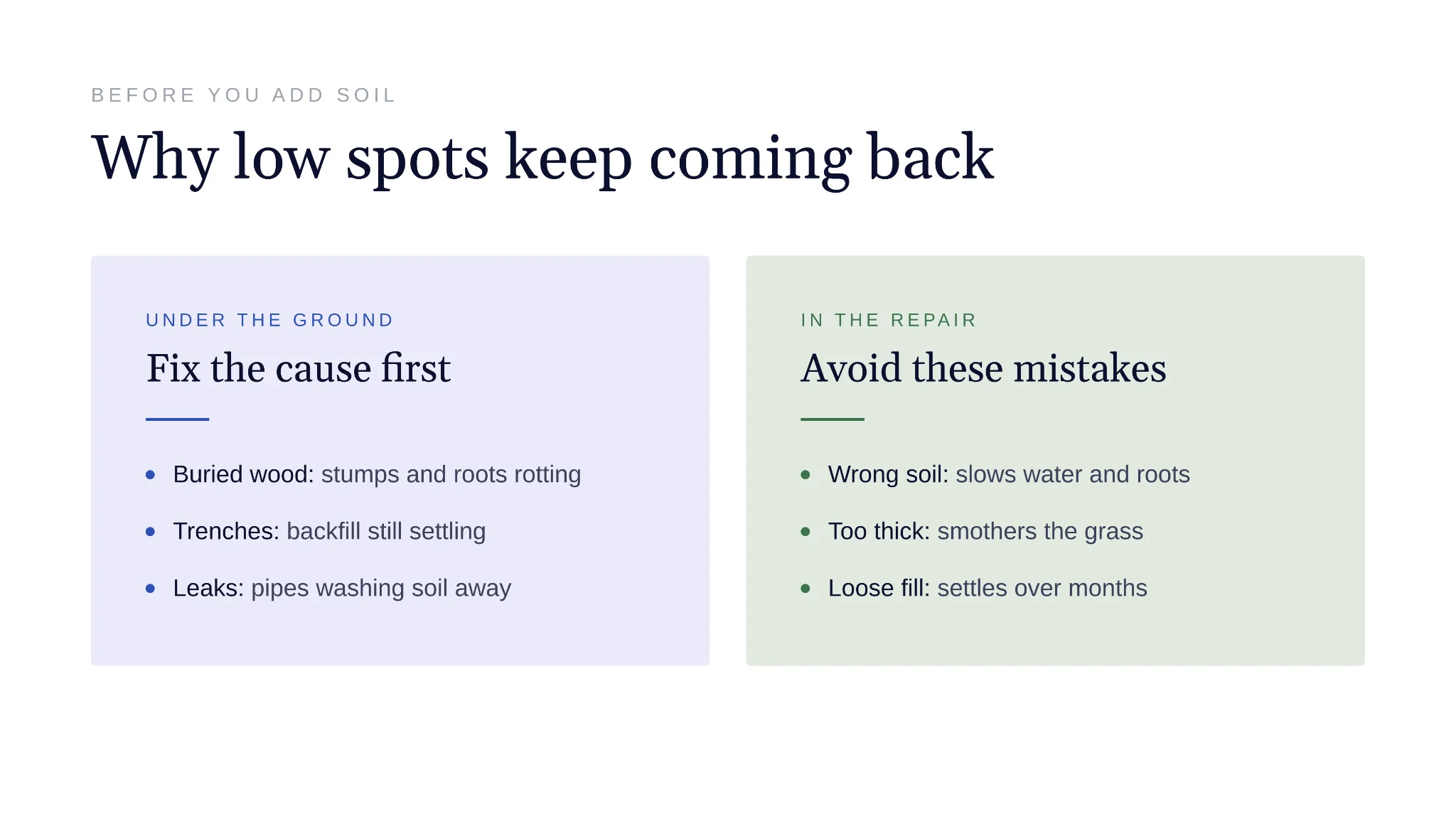
Most low spots that come back were filled with the wrong material, filled too thick in one go, or filled without fixing what made the ground sink. The fill settles, the grass under it thins out, and a new dip forms in the same place or right next to it.
A repair that lasts starts with the cause, uses soil that matches what is already there, and adds material in amounts the grass can grow through. How you fill depends on how deep the spot is.
Find Out Why the Ground Sank
A low spot is a symptom. Before adding any soil, figure out what pulled the ground down, because fill placed over an active cause will sink again.
Push a long screwdriver or a thin metal rod into the low area and the ground around it. Soft, spongy ground, a hollow feel, or a sudden drop all point to something underneath. The common causes are:
- Buried wood. Old stumps, roots from a removed tree, and construction scraps rot slowly and leave voids as they break down.
- Utility or irrigation trenches. Backfill over a pipe or cable line often settles for a year or more, leaving a long, narrow dip.
- A leaking pipe or sprinkler line. Constant moisture softens the soil and washes it away. A spot that stays wet in dry weather is a strong sign.
- Downspouts and runoff. Water pouring off a roof or driveway carries soil away each time it rains.
- Burrowing animals. Moles and voles leave raised ridges and soft tunnels that collapse under foot traffic.
Fix the cause first: repair the leak, extend the downspout, or dig out the rotting wood. Before digging any deeper than a few inches, call 811 so buried utility lines get marked.
Match the Fill to Your Soil
The material you add has to behave like the soil under it. A layer of something different stops water and roots at the boundary, and the grass above it thins out, which is how a filled spot turns into a new problem.
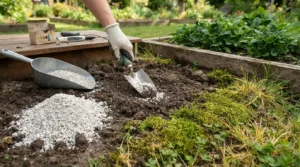
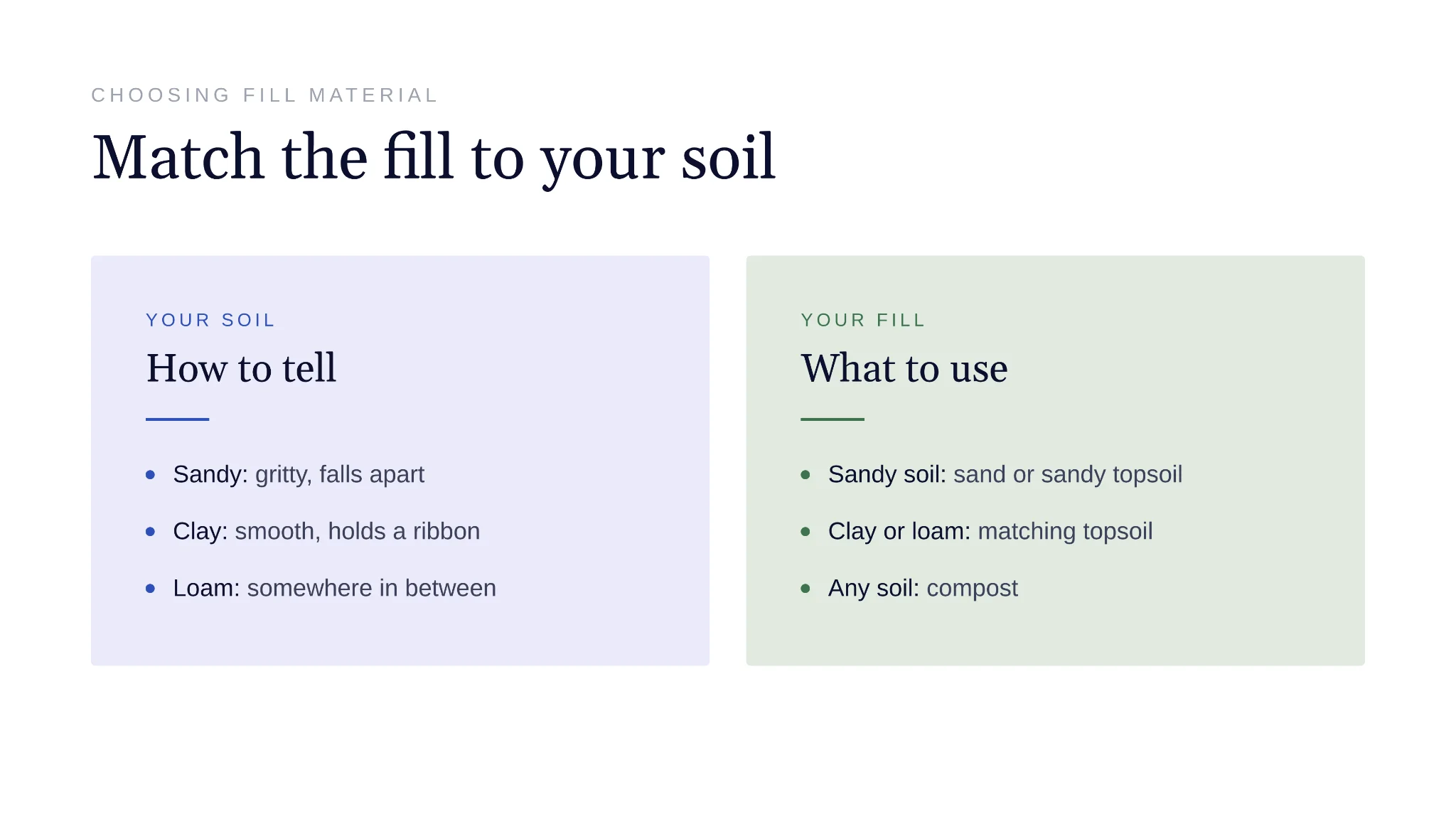
Clemson Cooperative Extension’s guide to topdressing a home lawn recommends sand only when the native soil is already sandy. For loam and clay, use a topsoil close in texture to what you already have. Compost works on any soil type.
To check your soil, dig up a handful from a few inches down and squeeze it while damp. Gritty soil that falls apart is sandy, a smooth ribbon that holds together is clay, and anything in between is loam.
Clemson also warns that bagged topsoil and river sand can carry weed seeds. Buy screened material from a supplier who can tell you where it came from, and expect to pull a few weeds from the patched area either way.
Choose a Method by Depth
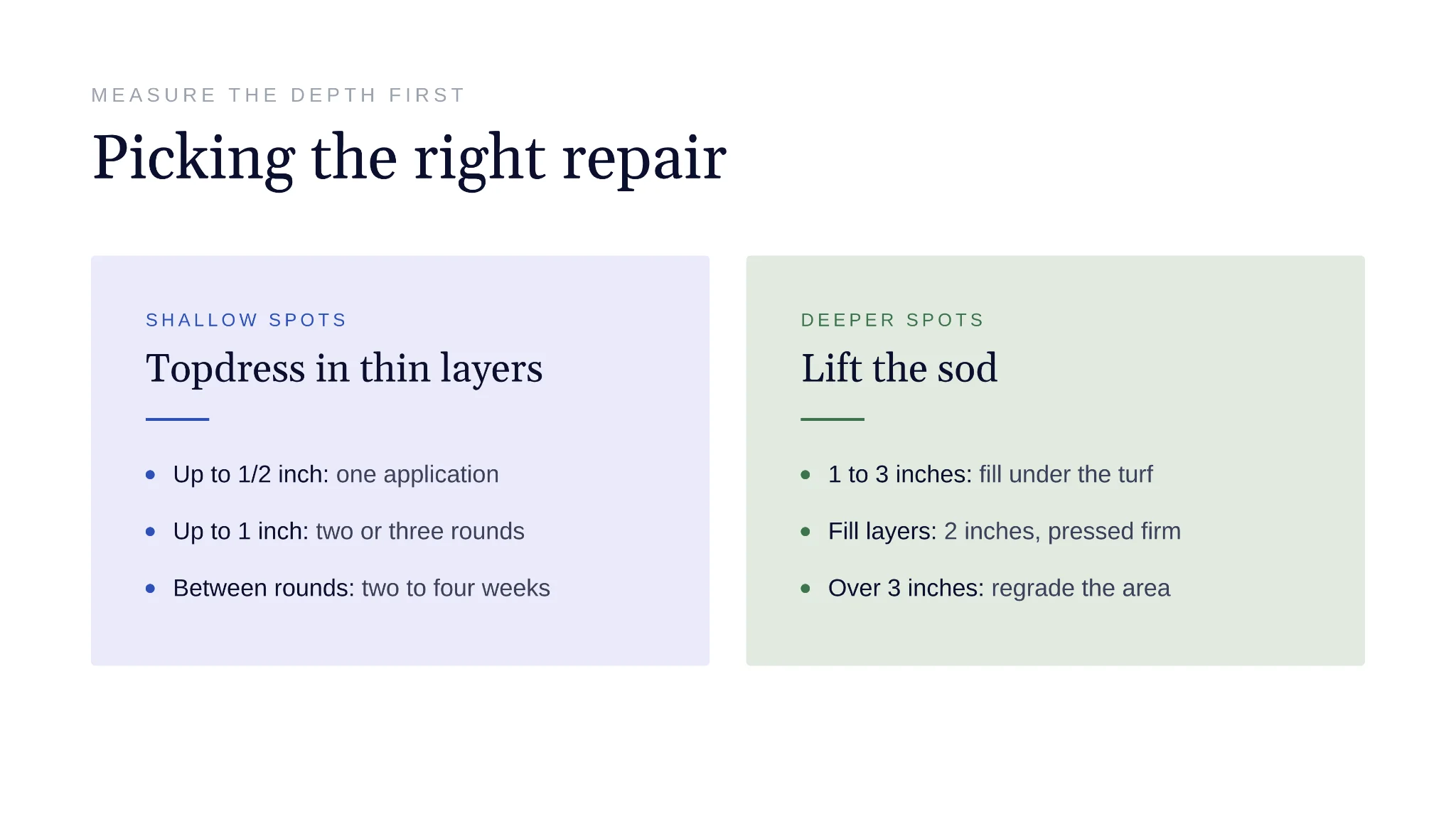
Measure the deepest point by laying a straight board across the low spot and checking the gap underneath. The depth decides which repair to use.
| Depth of the low spot | Method | Why |
|---|---|---|
| Up to 1/2 inch | Topdress once | Grass grows through a thin layer within a week or two |
| 1/2 inch to about 1 inch | Topdress in two or three rounds | Thicker layers smother the grass |
| 1 to 3 inches | Lift the sod, fill underneath, replace it | Keeps healthy grass on top of the new soil |
| Deeper than 3 inches, or water flows toward the house | Regrade, often with a contractor | The problem is the slope of the yard |
Clemson’s limit is 1/2 inch of material per application. Anything thicker can stunt or shade the grass, leaving a thin patch that erodes and sinks again.
Topdressing Shallow Spots
Topdress while the grass is actively growing, so it recovers quickly. For cool-season lawns that means early fall or spring, and for warm-season lawns, late spring through summer.
To topdress a shallow low spot:
- Mow the area at your normal height and rake out clippings and thatch.
- Shovel a small pile of fill into the center of the low spot.
- Spread it with the back of a level rake to no more than 1/2 inch deep, feathering the edges out into the surrounding lawn.
- Work the material down between the grass blades with a push broom or the back of the rake. At least half the length of each blade should still show.
- Water lightly to settle the soil around the grass.
- Wait until the grass has grown through and been mowed twice, usually two to four weeks, before adding another layer.
Check the spot with the straight board before each new round. Stop when the gap is gone, since a slight hump will settle within a few weeks.
Lifting Sod for Deeper Spots
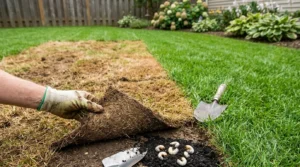
Spots deeper than about an inch take too many rounds of topdressing. Lifting the grass, filling beneath it, and setting it back down fixes them in one afternoon.
To fill a deeper low spot under the sod:
- Water the area the day before so the sod holds together when you lift it.
- Cut an H-shape through the turf with a flat spade: one line across the middle of the low spot, and one along each side.
- Slide the spade 2 inches under the grass and peel each flap back, keeping the roots attached.
- Add fill in layers no thicker than 2 inches, pressing each layer down firmly with your foot or the back of a shovel.
- Water each layer lightly to settle it, then add more until the soil sits about 1/4 inch above the surrounding grade.
- Fold the sod back into place and press it down so the roots make full contact with the new soil.
- Water deeply and keep the patch moist for two weeks while the roots knit back in.
Firming each layer is the step most people skip. Loose fill can drop an inch or more over the following months, recreating the dip under fresh grass.
When to Call a Professional
Some low spots signal a grading problem the whole yard shares. A homeowner question answered on Ask Extension advised dealing promptly with any low area that sends water toward the house and bringing in a professional for complex grading.
Call a landscaper or grading contractor if the low area holds standing water for more than a day after rain, runs along the foundation, or covers a large share of the lawn. Persistent wet spots far from the house may suit a rain garden better than fill.
Keeping Filled Spots From Sinking Again
New fill keeps settling for a few months, especially after heavy rain. Recheck patched areas with the straight board in a month, and add a thin topdressing if they have dropped.
Watering matters most in the first few weeks. Heavy watering washes fresh topdressing into the lowest point and can undercut lifted sod, while too little water lets the grass dry out before its roots reach the new soil.
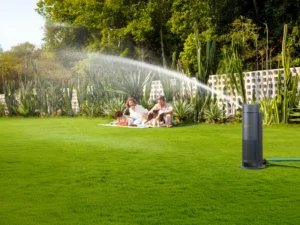
The Aiper IrriSense 2 lets you map the patched areas as their own zones and give them short, frequent cycles while they establish. The rest of the lawn keeps its normal schedule, and watering pauses automatically when it rains.
Get more pool and lawn care guides from Aiper on Google