How to Level a Bumpy Lawn: Diagnosis and Fix

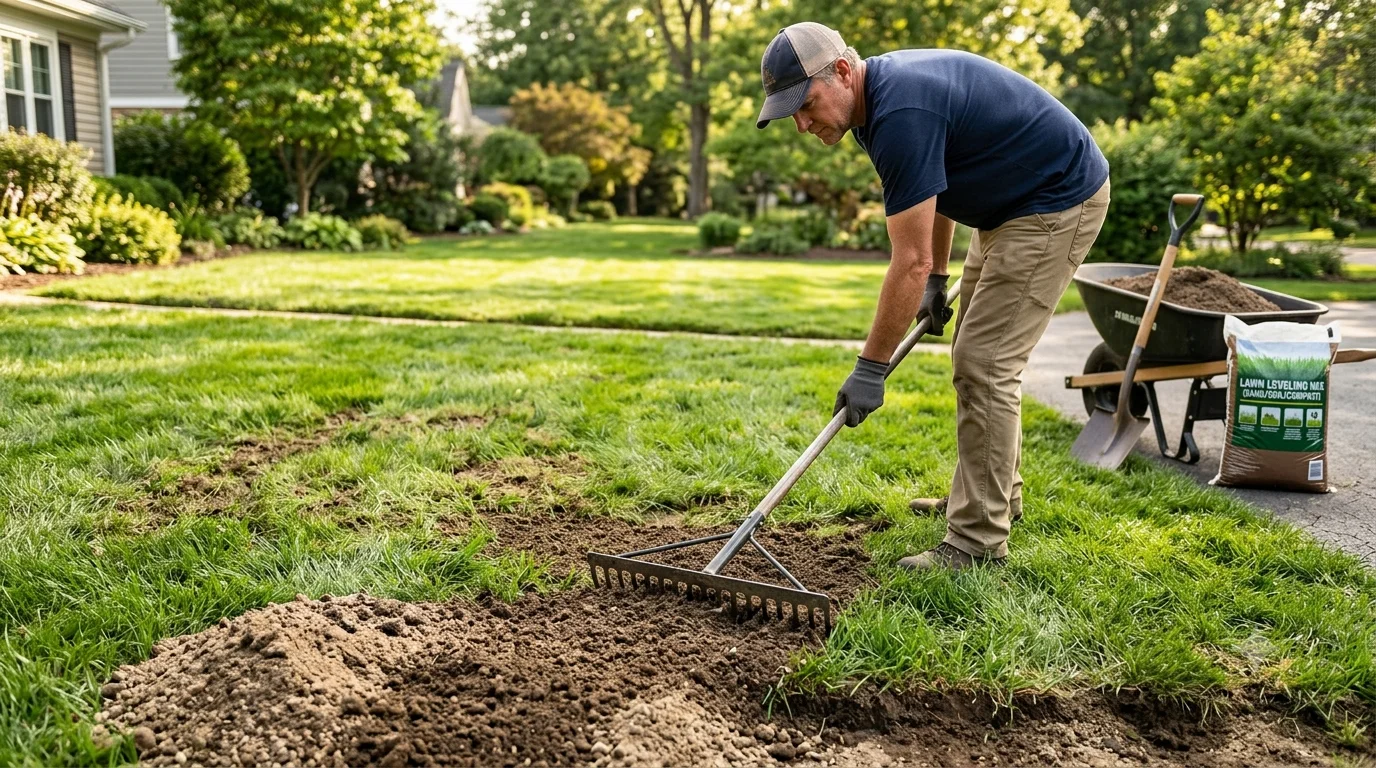
A bumpy lawn is a symptom, not a condition. Something made it bumpy: water, animals, rot, frost, a trench somebody backfilled in a hurry, and if you smooth the surface without figuring out which one, you’ll be back out there with a wheelbarrow doing the same job in two years.
Sometimes two months.
So the actual sequence is diagnose, fix the cause, then level. Most guides skip straight to the sand. That’s how the sand keeps selling.
Reading the Bumps
Depressions and raised bumps are different stories, and the shape tells you most of it. A crisp, well-maintained edge belongs on that same maintenance checklist — see our guide to lawn edging tools, technique, and timing for how to do it right.
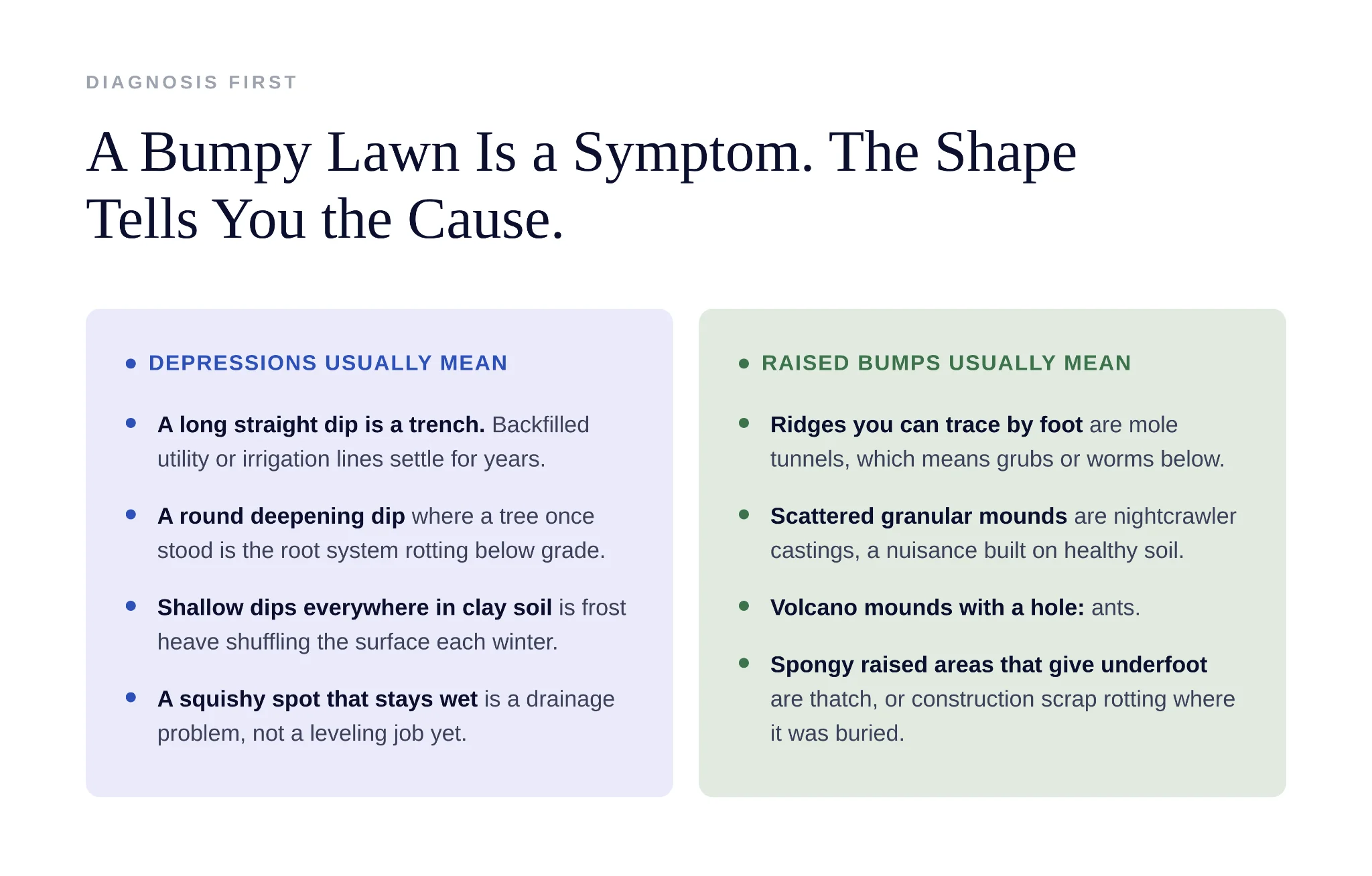
A long, straight depression is almost always a trench. Utility line, irrigation pipe, drain run, backfilled soil settles for years, and a trench that wasn’t compacted in lifts will keep sinking long after everyone’s forgotten it’s there. If it lines up with your water meter, your septic run, or the neighbor’s fiber install, you have your answer.
A round, gradually deepening dip in a lawn that used to have a tree in it is the stump and root system rotting away below grade. This one keeps giving, big roots take a decade or more to fully decompose, and the surface follows them down the whole way. Fill it, expect to fill it again.
Random shallow depressions across the whole lawn, especially in clay soil, in a climate with real winters: frost heave. The freeze-thaw cycle shuffles the surface a little every year. Annoying, cosmetic, and never really finished.
Raised bumps are a shorter list. Ridges you can trace with your foot are mole tunnels, and a mole in the lawn means grubs or earthworms in the soil, which is a diet problem before it’s a surface problem.
Little scattered mounds of granular soil are nightcrawler castings, which are technically a sign of excellent soil biology and practically a nuisance on close-mowed lawns. Volcano-shaped mounds with a hole: ants.
Spongy raised areas that give underfoot are usually thatch or buried organic debris. Construction crews love burying scrap wood, and twenty years later the lawn tells on them.
Squishy low spots that stay wet after everything else drains? That’s not a leveling job yet. That’s drainage, and soil dumped into a wet hole just makes a higher wet hole.
Shallow Unevenness: Topdressing
For general lumpiness under about half an inch, topdressing is the whole job:
Mow short first. If there’s a thick spongy thatch layer, dethatch before you start, topdressing over an inch of thatch is money spread onto a sponge.
Then broadcast your mix across the low areas and work it in with a leveling rake, the back of a landscape rake, or a drag mat if you’re doing real square footage. A scrap of plywood dragged on a rope works.
The material should disappear down between the grass blades, not sit on top of them.
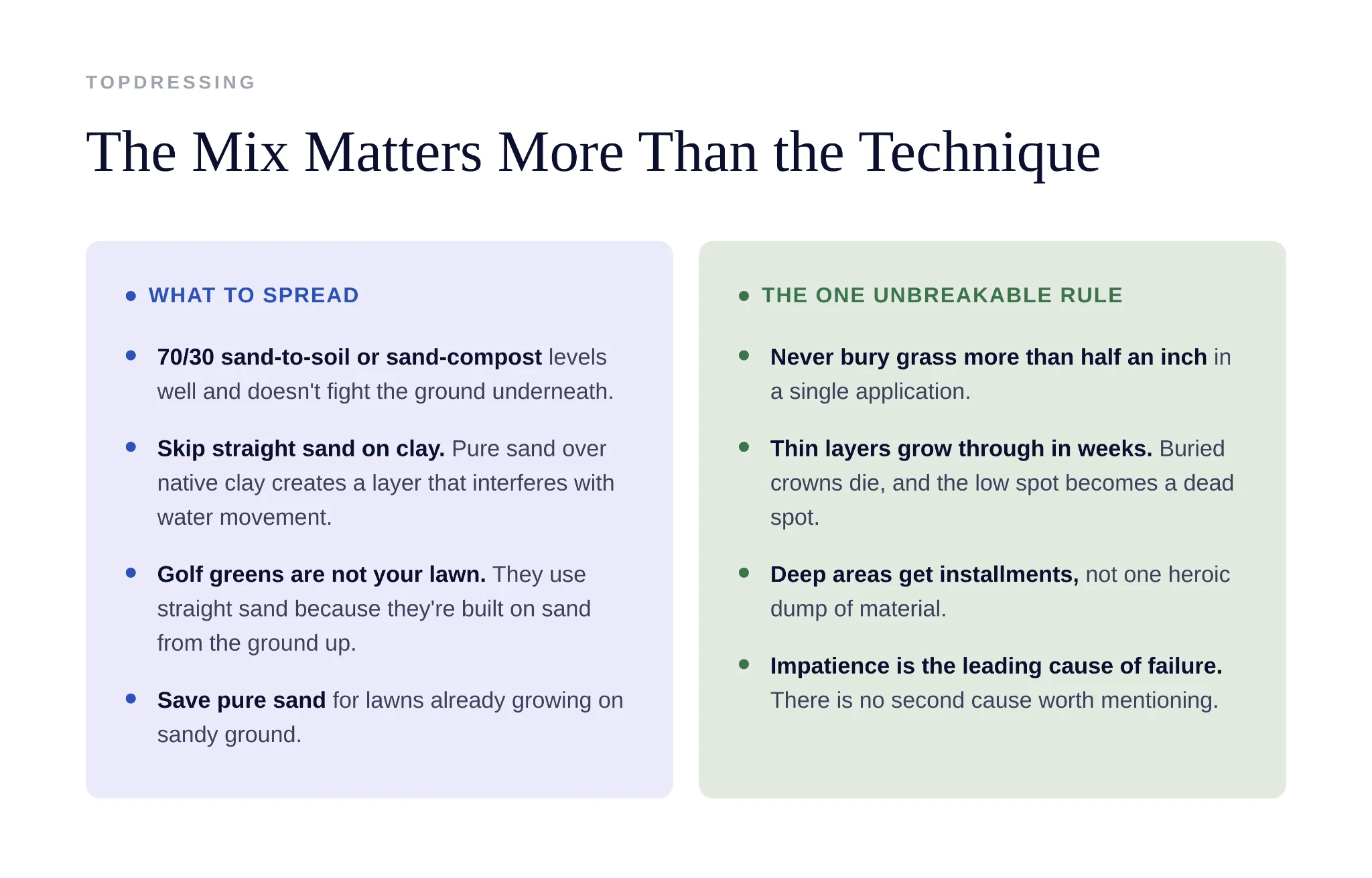
The one rule that cannot be broken: never bury the grass more than about half an inch at a time.
Grass grows up through a thin layer within a couple of weeks. Bury the crowns entirely, and it dies, and now the low spot is also a dead spot. Deep areas get leveled in installments, half an inch, wait two or three weeks for the grass to grow through, repeat. Impatience is the leading cause of failure at this stage. There is no second cause worth mentioning.
The mix matters more than the technique.
Straight sand is what golf courses use, and homeowners copy it. On most home lawns, it’s the wrong call. Greens are built on sand from the ground up, and layering pure sand over native clay creates an abrupt texture change that interferes with how water moves through the profile.
For a normal lawn, a 70/30 sand-to-soil or sand-compost blend levels well, stays workable, and doesn’t fight the soil underneath it. Save straight sand for lawns already growing on sandy ground.
Timing: the grass has to be actively growing to grow through anything. Cool-season lawns, that’s spring or early fall. Warm-season, late spring into early summer, when Bermuda and zoysia are at full aggression and will eat half an inch of topdressing without blinking.
Real Depressions: Lift the Sod
Anything deeper than an inch or two, and installment topdressing turns into a season-long project. Faster to open the surface.
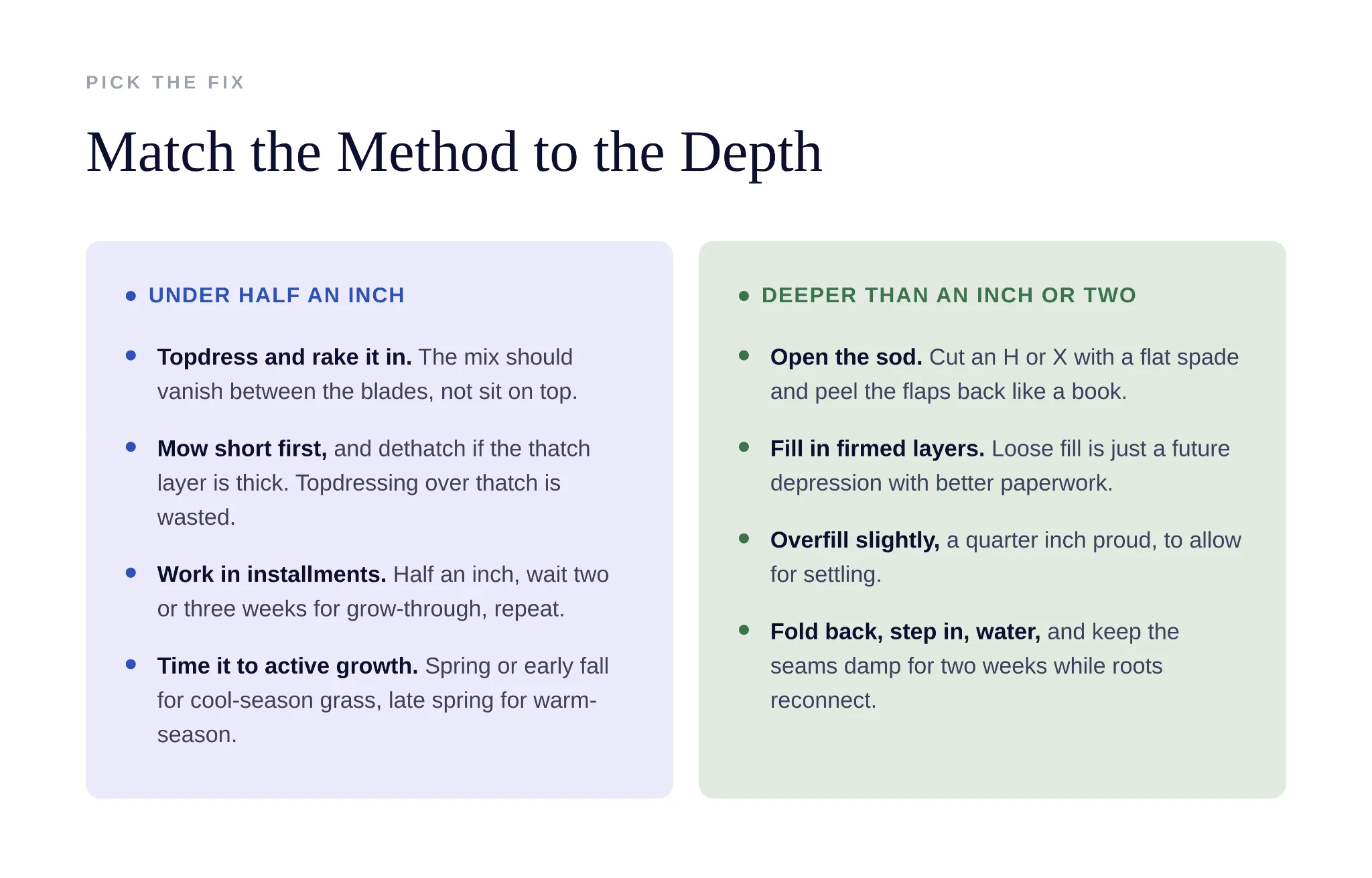
Cut an H or an X through the sod across the depression with a flat spade, and peel the flaps back like opening a book. Fill underneath with topsoil, added in layers, each one firmed down with your foot, because loose fill is just a future depression with better paperwork. For the full process, see how to fill low spots in a lawn.
Slightly overfill, maybe a quarter inch proud, to allow for settling. Fold the flaps back, step them in, water thoroughly, and keep the seams damp for a couple of weeks while the roots reconnect.
For wide sunken areas, same idea at scale: strip the sod in sections, regrade underneath, compact in lifts, relay. If the sod comes apart in your hands, skip the relay, grade the soil, and reseed. Sometimes the honest answer is that the patch was mostly weeds anyway.
About the Roller
Every spring the rental places do brisk business in lawn rollers, and every spring some lawns get worse.
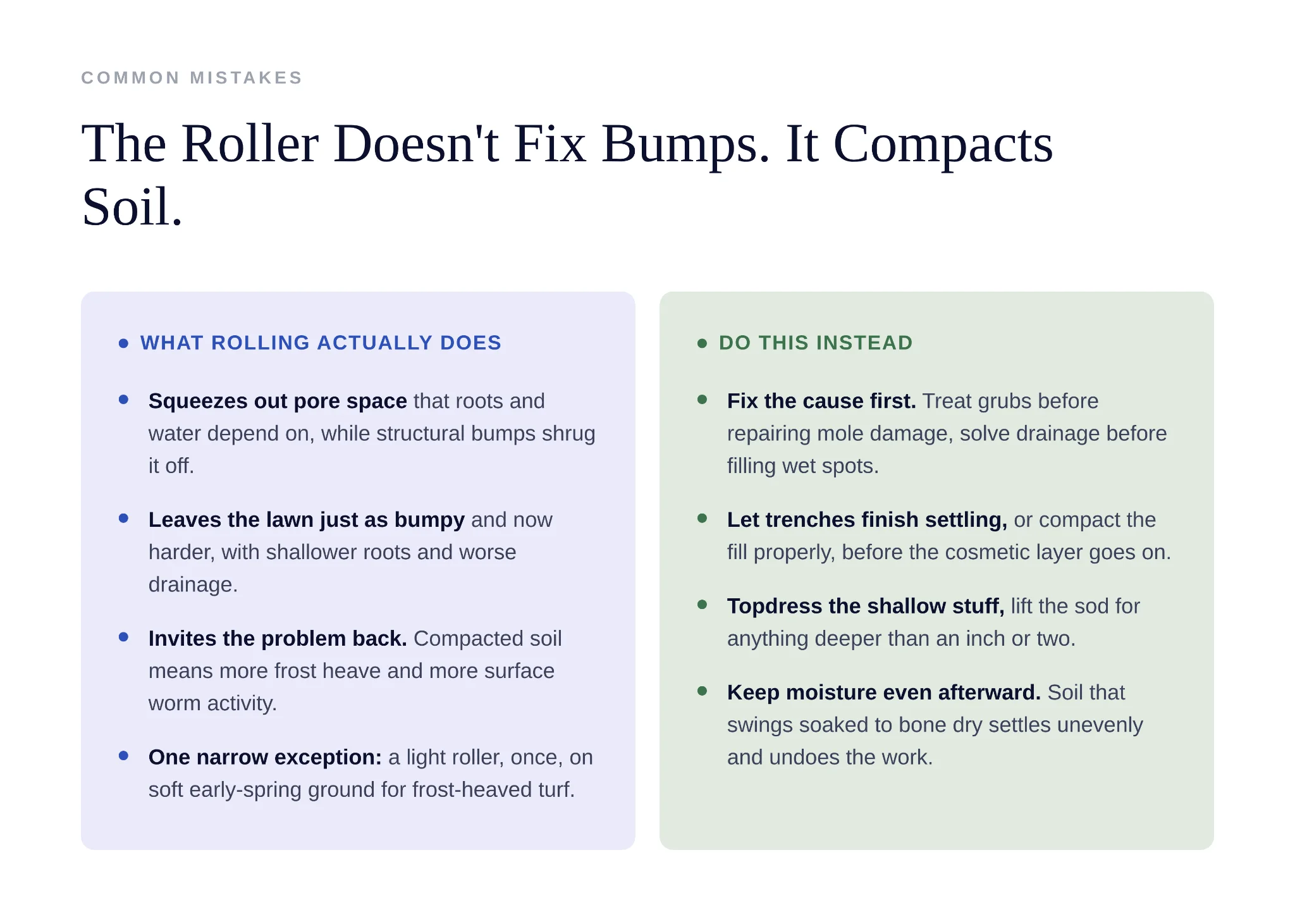
A roller does not push high spots down into the earth. Soil doesn’t work that way. What a heavy roller actually does is compact the soil surface, squeezing out the pore space that roots and water depend on, while the structural bumps mostly shrug it off.
The lawn ends up just as bumpy and now harder, which means shallower roots and worse drainage, which means more frost heave and more worm activity at the surface. A worse version of the original problem, delivered at rental-day prices.
The narrow exception: a light roller, used once on soft ground in early spring, can press down frost-heaved turf and worm-cast texture. Light. Once. Everything beyond that is topdressing work wearing the wrong costume.
Keeping It Level
A lawn that’s been leveled stays level when the things that move soil stay boring: drainage working, grubs controlled, fill settled, and moisture even.
Soil that swings between soaked and bone dry expands, shrinks, and settles unevenly, and a sprinkler pattern that drowns one zone while starving another is re-sculpting the grade you just fixed.
A smart irrigation system like the Aiper IrriSense 2 maps the lawn into zones across up to 4,800 square feet and adjusts to the weather on its own, keeping moisture uniform enough that the ground under your grass finally has a reason to stay where you put it.
Get more pool and lawn care guides from Aiper on Google