How to Scalp a Lawn (and When You Should Never Do It)

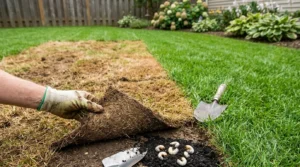
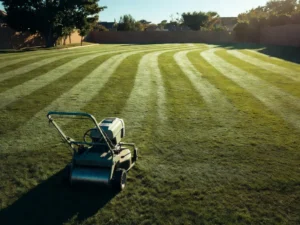
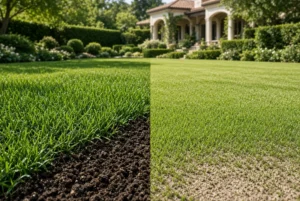
Scalping means mowing a dormant warm-season lawn far shorter than usual in early spring, cutting away last year’s brown growth down to the base of the grass. Done on the right grass at the right time, it clears the dead material so sunlight reaches the soil and the lawn greens up faster.
It works on only two common lawn grasses, Bermuda and zoysia. On every other lawn, or at the wrong time of year, it strips away the leaf the grass needs and can leave patches that never recover.
What Scalping Does
A dormant warm-season lawn carries a layer of brown leaf from last season. That layer shades the soil and keeps it cooler, which slows the new shoots coming up from below.
Removing it lets the sun warm the soil sooner, which helps the lawn green up faster. University of Tennessee Extension notes it can also help with thatch removal, though not every lawn needs it.
Scalping is a one-time spring job. Bermuda or zoysia that is mowed at the right height all year will green up on its own, just a little more slowly.
Grasses You Can and Can’t Scalp
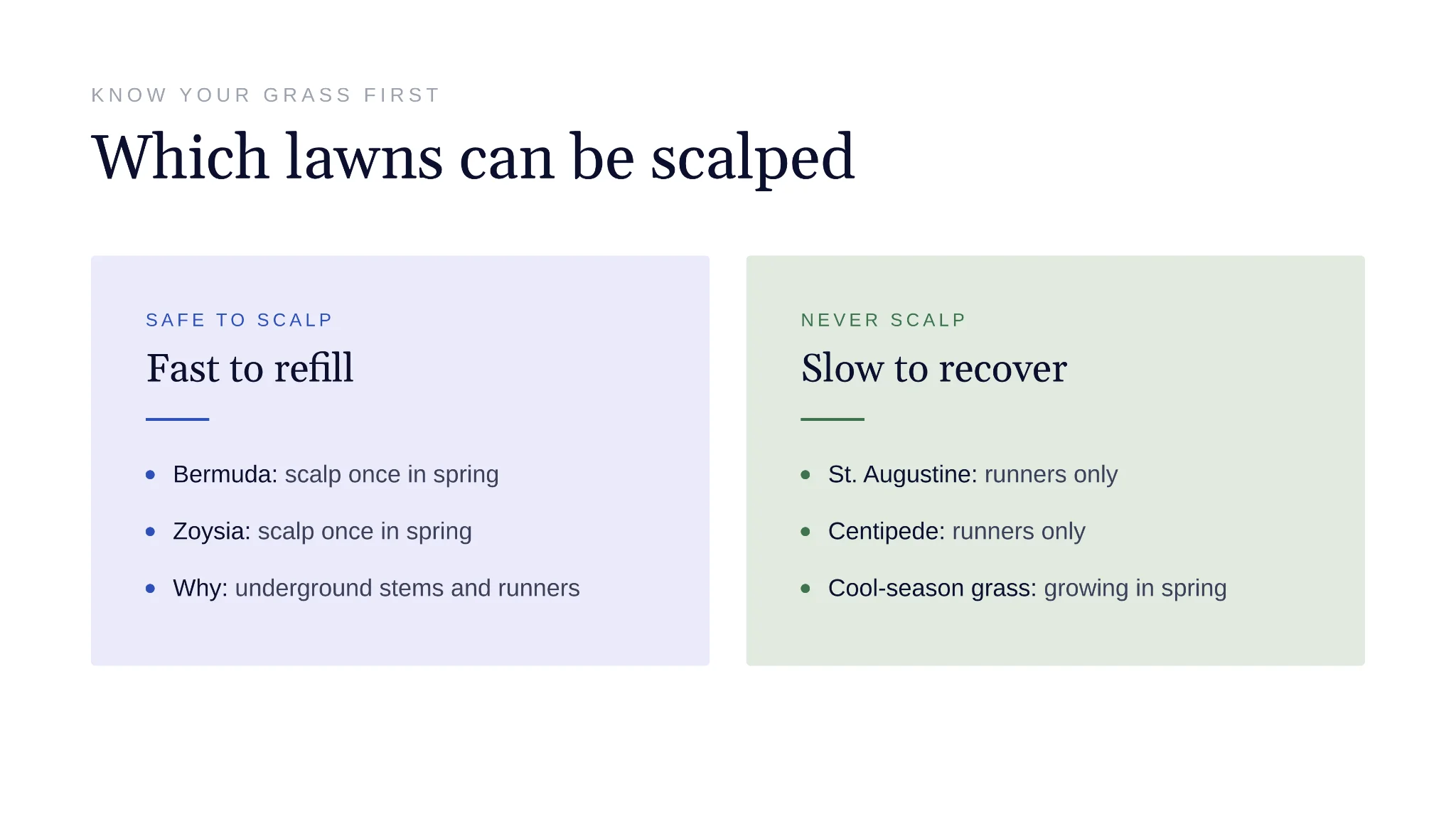
Whether a grass survives scalping depends on how it regrows. Mississippi State University Extension explains that Bermuda and zoysia spread by both underground stems and surface runners, so they refill a scalped lawn quickly. St. Augustine and centipede spread by surface runners only and should never be scalped.
| Grass | Scalp in spring? | What to do instead |
|---|---|---|
| Bermuda | Yes | Scalp once, then mow at spring height |
| Zoysia | Yes | Scalp once, then mow at spring height |
| St. Augustine | No | First mowing slightly below normal height |
| Centipede | No | First mowing slightly below normal height |
| Tall fescue, Kentucky bluegrass, ryegrass | No | Mow at normal height from the first cut |
Cool-season grasses like tall fescue are already growing in spring and need every bit of leaf to fuel that growth. Cutting them short at the start of the season sets them back just as warm weather and weeds arrive.
If you don’t know your grass type, don’t scalp. Take a sample to your county extension office for identification first.
When to Scalp
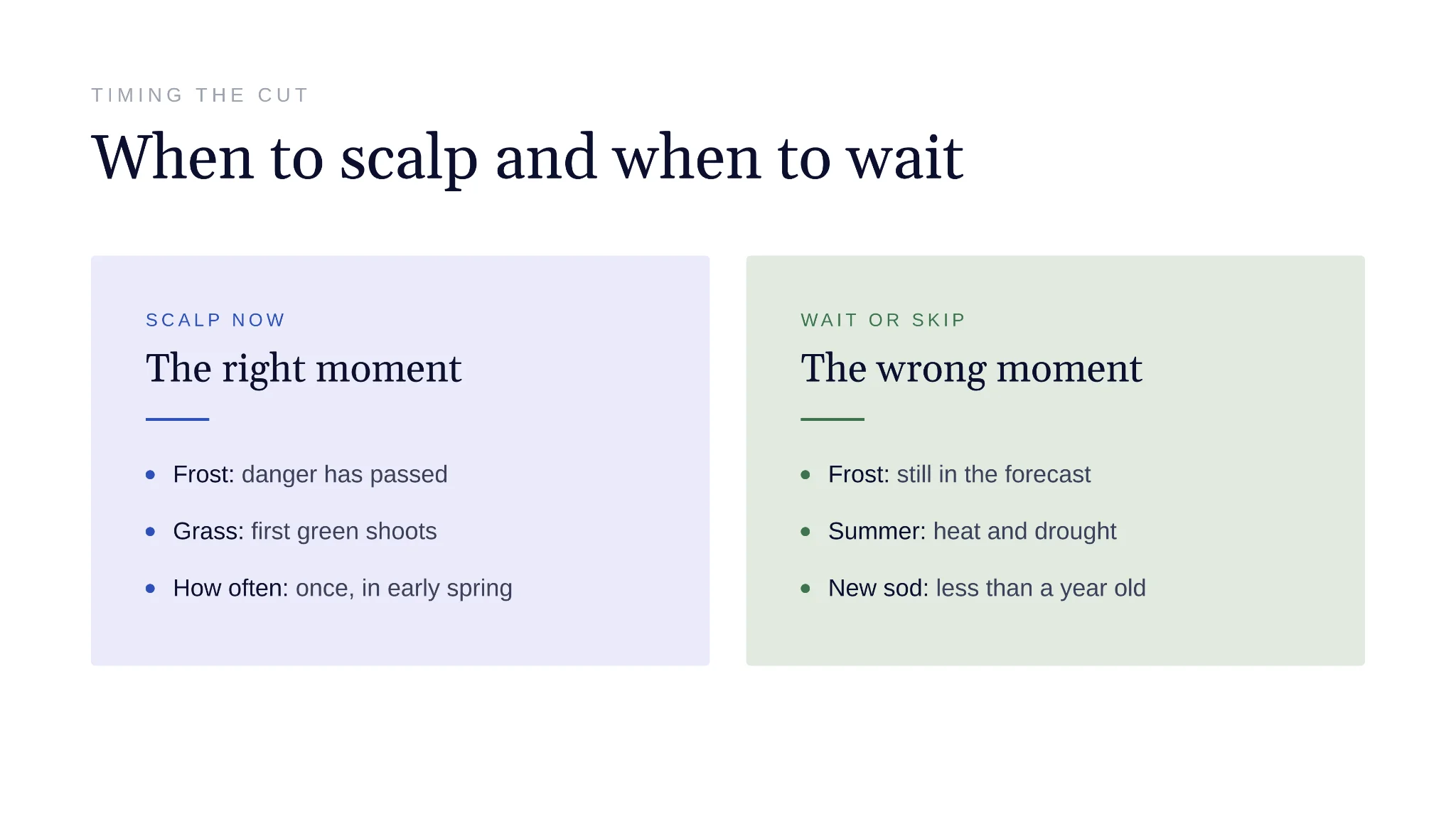
Timing decides whether scalping helps or hurts. The goal is to scalp just as the grass starts waking up, after the last frost, so new growth comes in soon after the cut.
Wait until the risk of frost has passed. A hard frost on freshly scalped Bermuda damages the new shoots, which have no dead leaf left above them for cover.
Look for the first green shoots pushing up through the brown, and check your area’s average last frost date. When both line up, scalp within the next week or two.
Mississippi State notes scalping is done once, at the start of spring growth. Repeated scalping through the season keeps stripping the leaf the grass needs to recover.
How to Scalp a Bermuda or Zoysia Lawn
Plan for more passes than a normal mow, since the mower has to work through a thick layer of dead growth. Have plenty of lawn bags ready.
To scalp a warm-season lawn:
- Check the 10-day forecast and make sure no frost is expected.
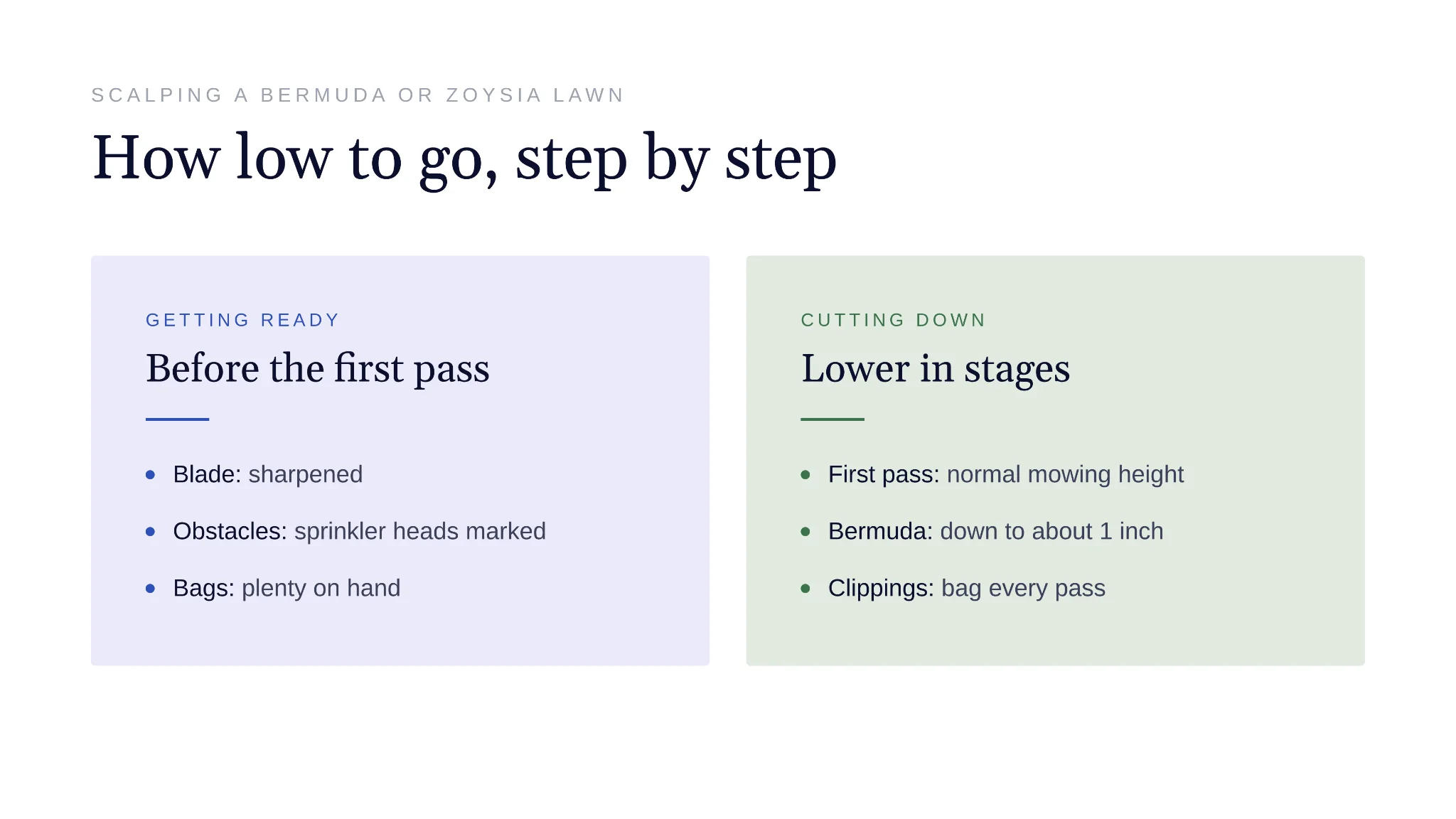
- Sharpen the mower blade. A dull blade tears dormant grass and leaves ragged stubble.
- Mark sprinkler heads, valve boxes, and edging so you don’t hit them at the low setting.
- Make the first pass at your normal mowing height and bag the clippings.
- Lower the deck one notch and mow again, bagging as you go. Repeat until you reach about 1 inch for Bermuda or 1 to 1.5 inches for zoysia.
- Rake or blow off any dead material left on the surface. Bag clippings so they don’t smother new growth.
- Raise the mower to your spring mowing height for the next cut.
Lowering the deck in stages keeps the mower from bogging down or tearing out runners. If you see bare soil or pale, chewed-up stems, raise the deck back one notch.
When You Should Never Scalp
Scalping can kill grass outright in some situations. Skip it or wait if any of these apply:
- The grass is St. Augustine, centipede, or any cool-season grass. Only Bermuda and zoysia recover reliably from a cut this low.
- Frost is still in the forecast. Wait until the danger has passed.
- It’s the middle of summer. Kansas State University’s lawn mowing guide warns that severely scalped turf may not recover, and summer heat and drought make that far more likely.
- The lawn is thin or weedy. Scalping exposes more soil to sunlight, which favors weeds.
- The lawn was sodded last year. Give new sod a full season to root in before cutting it this short.
- The Bermuda grows in shade. Shaded Bermuda is already thin and weak, and scalping can leave it bare.
Kansas State’s rule for routine mowing is to cut no more than a third of the leaf at a time. Scalping breaks that rule on purpose. It is safe only because nearly everything removed is dead leaf from last season.
Watering After Scalping
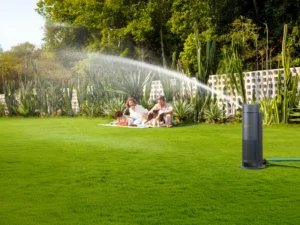
A scalped lawn has more bare soil exposed to sun and wind, so the surface dries faster than usual. Once green shoots are growing, keep the top inch of soil from drying out completely.
As the lawn fills in, move to about an inch of water a week, including rain, applied in one or two deep sessions. Early spring weather swings between dry spells and heavy rain, which makes a fixed sprinkler timer easy to get wrong.
The Aiper IrriSense 2 adjusts for that by pausing when it rains and running on a schedule the rest of the time. Its zones let you give sunny, faster-drying parts of the lawn more water than shaded corners.
Fixing Accidental Scalping
Scalped strips in the middle of summer are usually a mowing problem. Kansas State lists uneven ground, heavy thatch, letting the grass grow too long between mowings, and a poorly adjusted mower as common causes.
Raise the deck one notch, mow the high spots at an angle, and level any bumps once the grass recovers. If the scalped patch stays brown for more than three weeks during the growing season, reseed or patch it.
Get more pool and lawn care guides from Aiper on Google