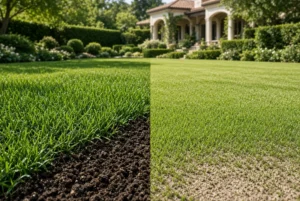
How to Edge a Lawn: Tools, Technique, and Timing


Edging cuts a clean vertical line where the lawn meets a sidewalk, driveway, or planting bed. Trimming handles the grass a mower can’t reach around posts and trees, while edging defines the border itself.
Once an edge is established, keeping it sharp takes a few minutes per mow. Cutting a new edge or reclaiming one that has grown over the pavement takes longer and usually calls for a different tool.
Choose the Right Tool
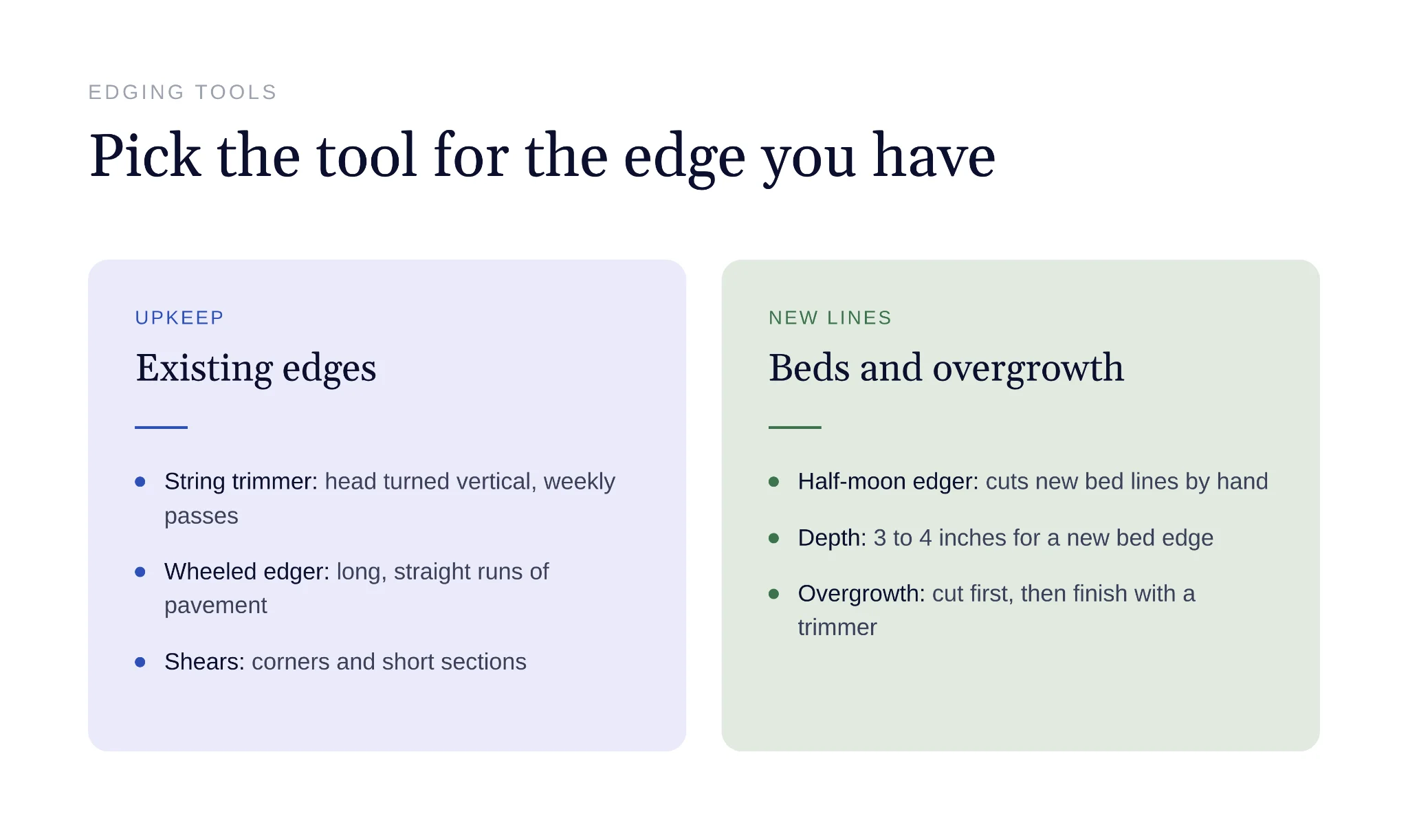
Most homeowners can edge with a string trimmer they already own. A dedicated edger or hand tool makes sense for long runs of pavement, heavy overgrowth, or new bed lines.
| Tool | Best for | Limits |
|---|---|---|
| String trimmer, head turned vertical | Maintaining existing edges along pavement and beds | Takes practice to hold a straight line; wide cut can look ragged |
| Wheeled power edger with a metal blade | Long, straight runs of sidewalk and driveway | Poor on tight curves; blade can cut through buried objects, splinter concrete, or throw sparks |
| Manual half-moon edger | Cutting new bed lines and reclaiming overgrown edges | Slow on long runs |
| Edging shears | Touching up short sections and corners | Hand fatigue on anything longer than a few feet |
For a typical suburban lot, a string trimmer for weekly upkeep and a half-moon edger for new lines cover almost every job.
Before You Start
Edging throws debris at high speed, and eye injuries make up a large share of trimmer and edger accidents. In a 1989 Consumer Product Safety Commission count, about a third of the 4,600 emergency room injuries from power trimmers and edgers were to the eye.
Texas A&M AgriLife Extension recommends this gear for trimming and edging:
- Safety glasses or goggles
- Earplugs
- Gloves
- Long pants and a long-sleeve shirt
- Hard boots
Walk the edge before starting and pick up rocks, glass, sticks, and trash that the line or blade could throw. Look for exposed wires, cables, and extension cords, and keep children and pets well away from the work area.
If you plan to cut a new bed edge deeper than a few inches, call 811 a few days ahead. The call is free, and local utilities will mark buried gas, electric, telecom, water, and sewer lines near the dig area.
How to Edge Along a Sidewalk or Driveway
Pavement gives you a fixed guide, which makes this the easiest edge to keep straight. The steps are the same for a string trimmer and a wheeled edger, with small differences in setup.
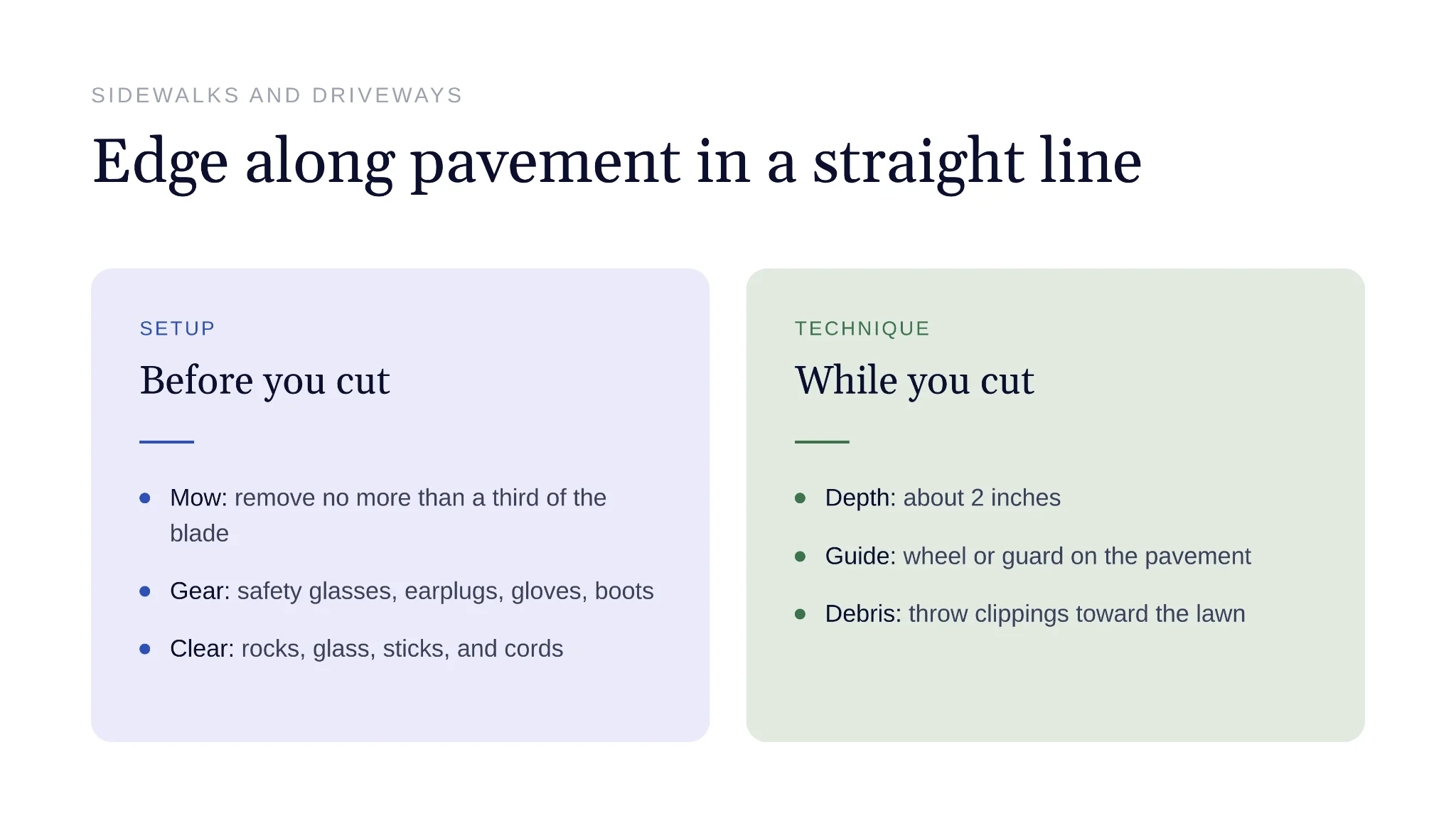
- Mow first. A freshly mowed lawn shows exactly where the grass ends. Keep the mower set so each cut removes no more than a third of the leaf blade.
- Set up the tool. On a string trimmer, rotate the head so the line spins vertically and the guard sits between you and the line. On a wheeled edger, set the blade depth and make sure the blade is off the ground before starting, since a blade touching the ground can jerk the machine toward your feet.
- Set the depth to about 2 inches. Deeper cuts loosen soil along the pavement and damage roots without improving the look of the edge.
- Position along the seam. Run the edger’s wheel or the trimmer’s guard on the pavement, with the line or blade in the gap between concrete and turf.
- Walk slowly and hold the tool level. Keep a steady pace and let the tool cut. Rushing is the main cause of wavy lines. Run power edgers at full blade speed.
- Throw debris toward the lawn. Check the rotation arrow on the trimmer guard and walk in the direction that sends clippings onto the grass instead of the pavement.
- Clean the pavement. Sweep or blow clippings and soil back onto the lawn.
Along roadways, stay as close to the curb as possible to limit exposure to passing traffic.
How to Cut a New Edge Around a Bed
A bed edge has no hard surface to follow, so the line has to be marked first. The first cut takes the most work, and later passes with a trimmer keep it clean.
- Mark the line. Lay a garden hose to shape curves, or use stakes and string for straight runs. Stand back and adjust until the curve looks right from the house and the street.
- Cut straight down along the line. Push a half-moon edger 3 to 4 inches into the soil by stepping on the top of the blade, then pull it out and move over half a blade width.
- Remove the strip. Slice under the turf on the bed side and lift out the grass and roots.
- Angle the bed side. Slope the soil on the bed side down toward the vertical cut so the edge forms a small trench. The trench stops runners from reaching the bed and holds mulch in place.
- Mulch up to the edge. Fill the bed with mulch, keeping it below the level of the turf so it doesn’t wash over the lawn.
Calculate how much mulch you need.
How Often to Edge
Edging frequency follows how fast your grass grows and how it spreads. A lawn that grows upright needs less edging than one that sends runners across the pavement.
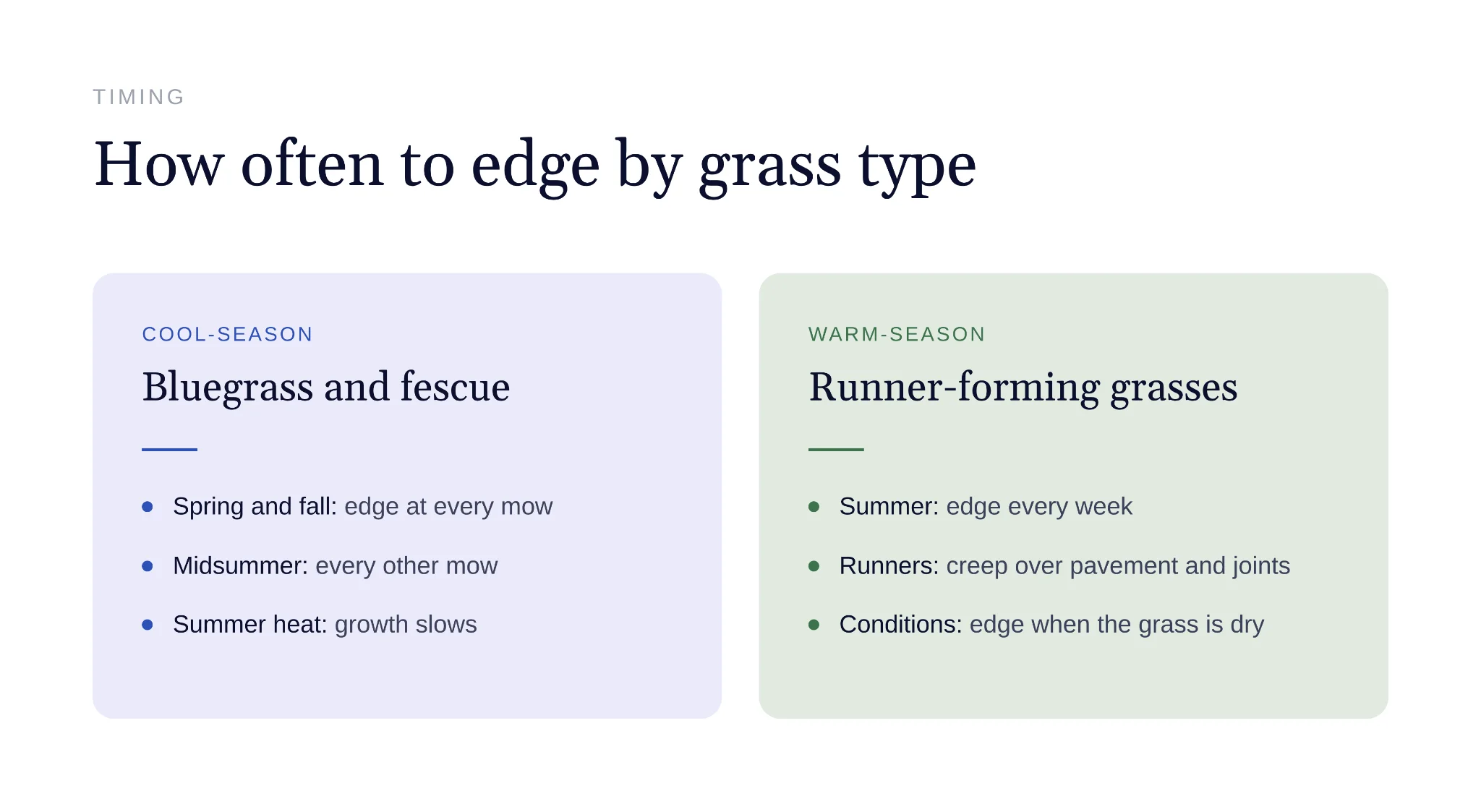
Cool-season lawns such as bluegrass and fescue grow fastest in spring and fall and slow down during summer heat. Edge at every mow during those peak periods and every other mow in midsummer.
Warm-season lawns grow most in summer, and several of them spread by runners that creep over pavement. Bermuda grass spreads by stolons and rhizomes and can quickly move into areas outside the lawn, and St. Augustine and centipede also spread by stolons. Edge these lawns every week during summer to keep runners from rooting in sidewalk joints.
Edge when the grass is dry. Wet clippings smear across pavement, footing is worse, and electric tools should not be run in wet conditions.
Watch for Sprinkler Heads Along the Edge
Pop-up sprinkler heads installed along sidewalks and driveways sit directly in the path of an edger blade or trimmer line. A cracked or sheared head leaks or sprays uncontrolled the next time the system runs.
Flag every head along the edge before you start, and slow down as you pass each one. Spray from heads set at the lawn border often lands on the pavement too, and UF/IFAS advises making sure irrigation water lands on grass rather than pavement.
An above-ground system avoids both problems. The Aiper IrriSense 2 is a single unit that maps its watering zones to the shape of the lawn, so there are no buried heads along the edge to hit, and the spray stays on the grass instead of the freshly edged sidewalk.
Fixing an Overgrown Edge
Grass that has crept several inches over the pavement takes more than one pass to reclaim. Running a string trimmer through thick runners wastes line and leaves a ragged cut.
Cut a vertical line along the original pavement edge with a half-moon edger or a wheeled edger. Pry up the strip of runners and soil on top of the concrete and discard it. Finish with a string trimmer, then keep the edge on a regular schedule so the overgrowth doesn’t return.
Get more pool and lawn care guides from Aiper on Google