How to Get Rid of Lawn Fungus: Identification and Treatment

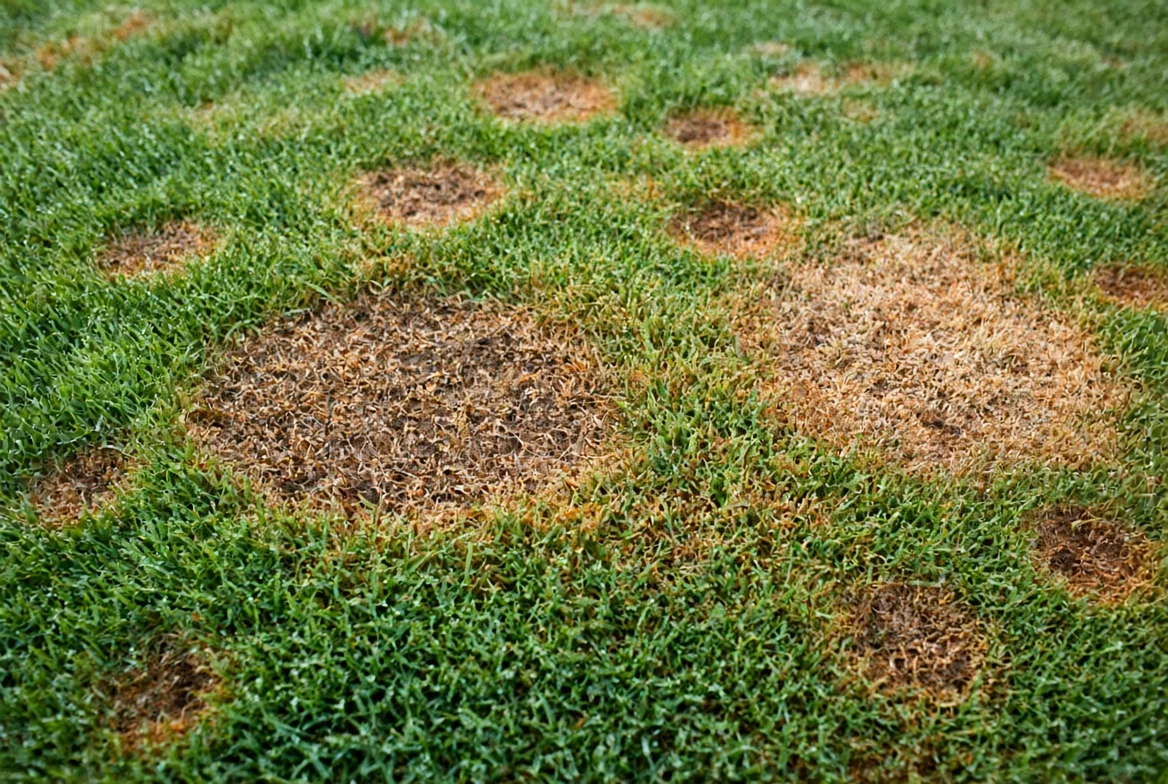
Lawn fungus usually shows up after a stretch of warm, humid weather. Brown circles appear overnight, pale spots spread across the yard, or your shoes come off the grass coated in orange dust.
Most lawns recover. The key is figuring out which disease you have, because the fix for one can make another worse. Extra fertilizer, for example, helps grass outgrow dollar spot but feeds brown patch.
Watering habits are behind most outbreaks, and changing them does more long-term good than any spray.
Make Sure It’s Fungus
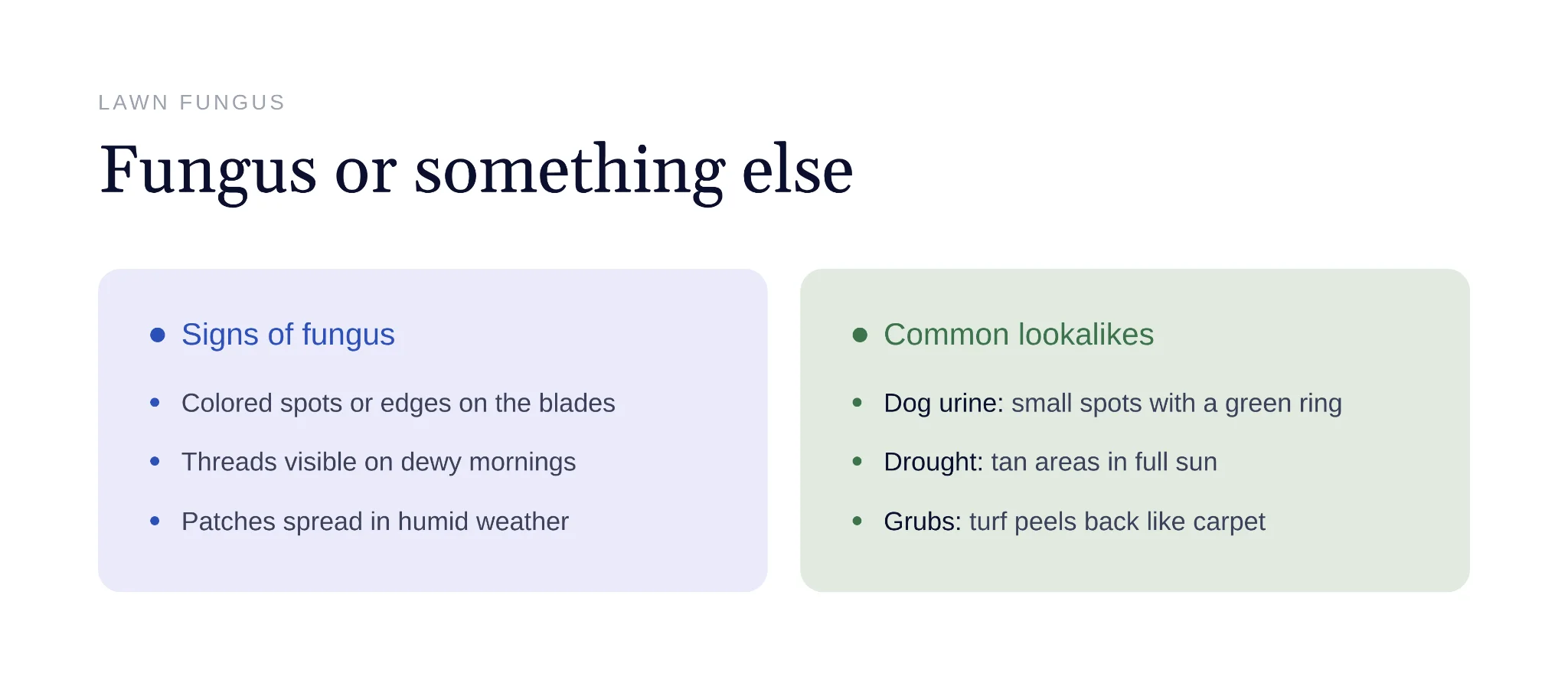
Several common lawn problems look like disease. Rule these out first:
- Dog urine: small, round dead spots, often with a ring of dark green grass around the edge
- Drought: large areas in full sun turn dull and tan, and footprints stay pressed into the grass
- Grubs: the dead turf peels back like a carpet because the roots have been eaten
- Dull mower blades: torn, whitish tips across the whole lawn right after mowing
Fungus usually leaves clues on the blades themselves. Check early in the morning, while dew is still on the grass. That’s when fungal threads and colored edges are easiest to see.
Common Lawn Diseases and How to Spot Them
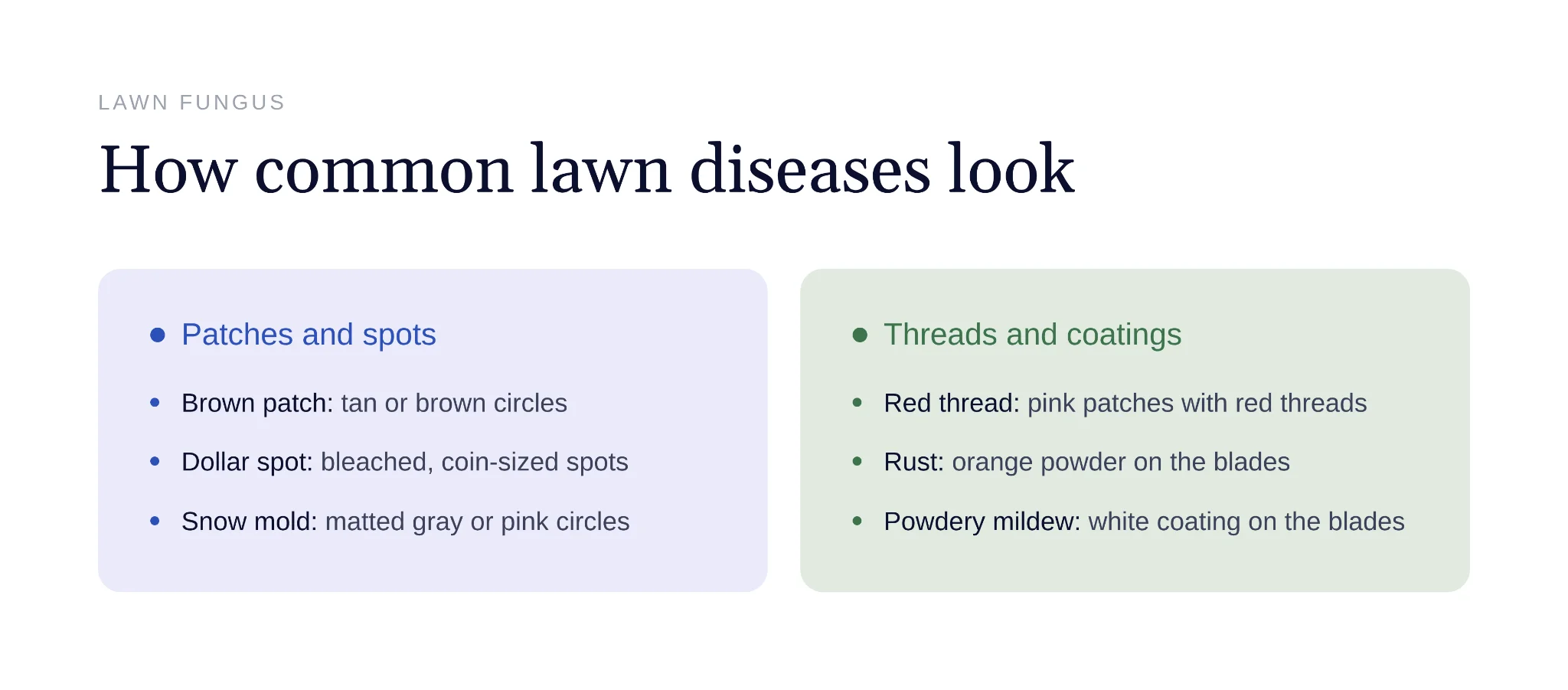
| Disease | What it looks like | When it shows up |
|---|---|---|
| Brown patch | Tan or brown circles from a few inches to several feet wide, often with a darker edge in the morning | Hot, humid weather with warm nights |
| Dollar spot | Bleached spots about the size of a silver dollar that can merge into larger patches | Warm, humid weather with heavy dew |
| Red thread | Pink or reddish patches with thin red threads at the blade tips | Cool, wet weather in spring and fall |
| Rust | Yellow-orange powder that rubs off on shoes and mowers | Late summer into fall |
| Powdery mildew | White or gray dusty coating on the blades | Shady spots with little airflow |
| Snow mold | Matted gray or pinkish circles | Late winter, as snow melts |
| Fairy ring | Rings of dark green grass, sometimes with mushrooms or a band of dead grass | Often after heavy rain |
Dollar spot and brown patch are the two most often confused. Look closely at a single blade. Dollar spot leaves a tan lesion that pinches the blade into an hourglass shape, which brown patch doesn’t.
In home lawns, brown patch doesn’t always form clean circles. It can show up as thinning, browning grass scattered across the yard.
If you still can’t tell, cut a few affected blades with some healthy ones, place them in a sealed bag, and bring them to your county extension office. Many offices will identify the disease for free or for a small fee.
Why Fungus Takes Hold
Fungal spores are in almost every lawn. They cause damage when conditions let them spread.
The most common trigger is grass that stays wet for long periods. Evening watering is the usual cause, since the blades stay damp all night. Heavy shade, poor drainage, and compacted soil keep the lawn wet longer too.
Mowing plays a part. Grass cut too short gets stressed, and dull blades leave torn tips that fungus can enter easily.
Fertilizer matters more than most people expect, and in both directions. Grass that’s underfed is more likely to get dollar spot, red thread, and rust. On cool-season lawns, too much nitrogen raises the risk of brown patch and leaf spot.
How to Treat Lawn Fungus
There are a few basic steps you can take to start treating lawn fungus:
- Identify the disease. Use the table above or a sample from your extension office. Treatment depends on it.
- Move watering to early morning. Stop evening watering right away. Water deeply and less often instead of a little every day.
- Limit the spread. Mow only when the grass is dry. Mow infected areas last, bag those clippings, and rinse the mower deck afterward.
- Raise the mowing height. Keep cool-season lawns around 3 to 4 inches, never cut more than a third of the blade at once, and sharpen the blade.
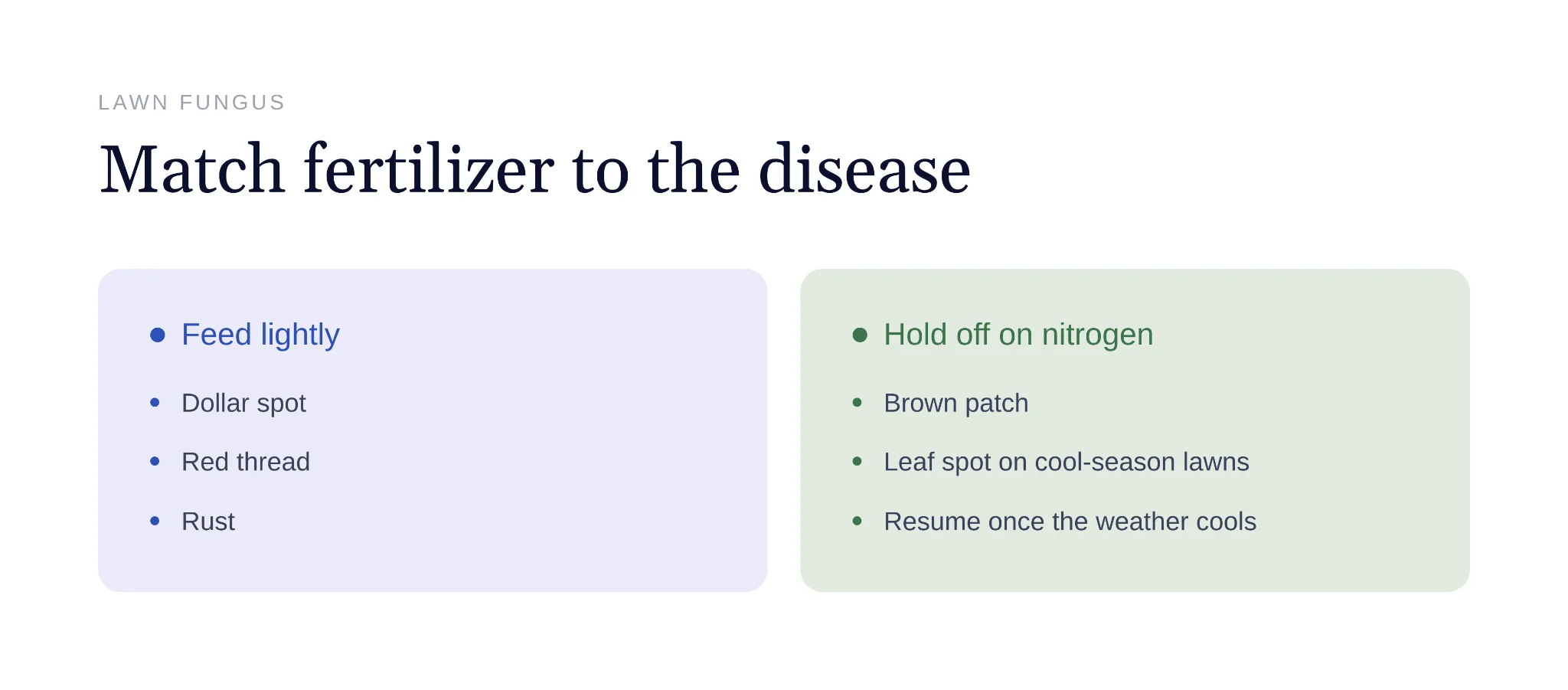
- Adjust fertilizer to the disease. For dollar spot, red thread, and rust, a light feeding helps the grass grow past the damage. For brown patch, hold off on nitrogen until the weather cools.
- Use a fungicide if it keeps spreading. See the next section.
- Repair the damage. Once the disease stops spreading, rake out the dead grass and reseed bare spots. Early fall is the best time for cool-season lawns.
Some diseases need less. Snow mold usually clears up once you rake the matted grass in spring and let it dry. Brown patch often fades once nights cool down, as long as watering is fixed.
When a Fungicide Makes Sense
Most home lawns get through a fungus outbreak with watering and mowing changes alone. A fungicide is worth it when a disease spreads fast even after those changes, or when the same disease returns every year.
Choose a product that lists your specific disease on the label. Common active ingredients in home lawn fungicides include azoxystrobin and propiconazole.
Fungicides work best early, before the damage spreads. They protect healthy grass but won’t bring back grass that’s already dead.
Follow the label for how much to use and how often to reapply. If you need several applications in a season, alternate between products with different active ingredients so the fungus doesn’t build resistance.
Keep kids and pets off the lawn until the product has dried, or for as long as the label says.
Fungicides do little for fairy ring and powdery mildew. For fairy ring, aerate the ring and water it deeply. For powdery mildew, prune nearby trees and shrubs so more sun and air reach the grass.
Watering Habits That Prevent Fungus
Nearly every lawn disease needs wet grass to spread. The goal is to water enough for healthy roots while keeping the blades dry as long as possible.
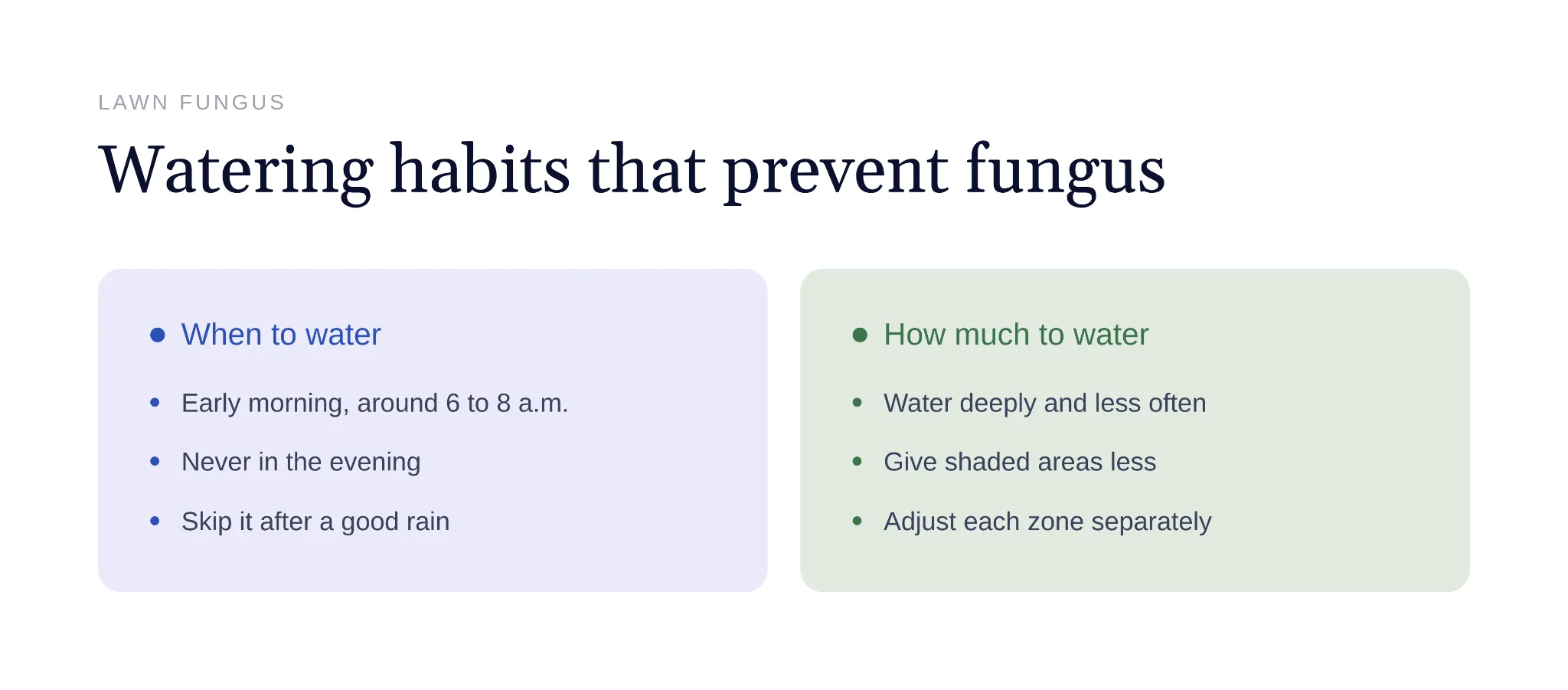
Set watering for early morning. The University of Maryland Extension recommends running irrigation around 6 to 8 a.m. so the blades dry before evening.
Water deeply and less often. Daily light watering keeps the surface damp and roots shallow.
Give shaded areas less water than sunny ones, since they dry more slowly. Skip watering after a good rain.
The Aiper IrriSense 2 makes these habits easier to keep. You can set early morning schedules and a different watering amount for each zone, so shaded areas get less than open lawn. Its built-in rain sensor stops watering while rain is falling, and its EvenRain spray pattern spreads water gently so it soaks in rather than pooling.
Other Ways to Prevent Fungus
Take these steps to prevent fungus.
Aerate compacted soil. Pulling small plugs from the lawn helps water drain, and roots breathe. Early fall works well for cool-season grass.
Remove heavy thatch. A thick layer of dead stems holds moisture right where fungus grows. Dethatch when it’s more than about half an inch deep.
Let in sun and air. Thin out low branches and dense shrubs around shaded parts of the lawn.
Test your soil. Low potassium makes grass less tolerant of heat and drought, which raises the risk of summer patch. Low pH is also linked to brown patch. A soil test shows what to correct.
Overseed with resistant grass. When you reseed, look for varieties labeled as resistant to the diseases common in your area.
When to Call a Professional
Get help if patches are spreading across large parts of the lawn within days, if you’ve ruled out grubs and drought but can’t identify the disease, or if the same problem returns after a full season of changes. Your county extension office or a licensed lawn care company can confirm the disease and recommend a treatment plan.
Get more pool and lawn care guides from Aiper on Google