Mesh vs Solid Pool Cover: Winter Protection Tradeoffs

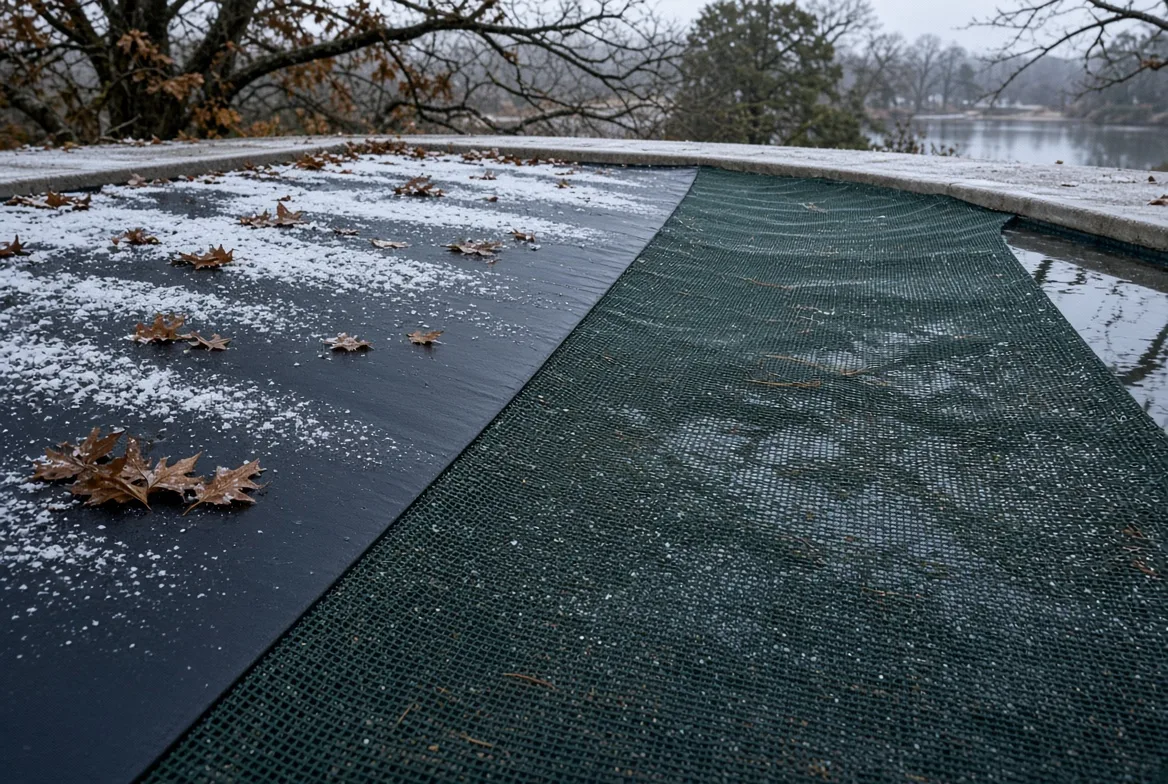
The cover decision usually gets made in about four minutes. October, over the phone, while you’re doing something else. Then you live with it for twelve to twenty years.
Both types work.
Both are safety covers when they’re rated and anchored right. Both hold an adult standing on them, and both keep a kid or a dog out of the water.
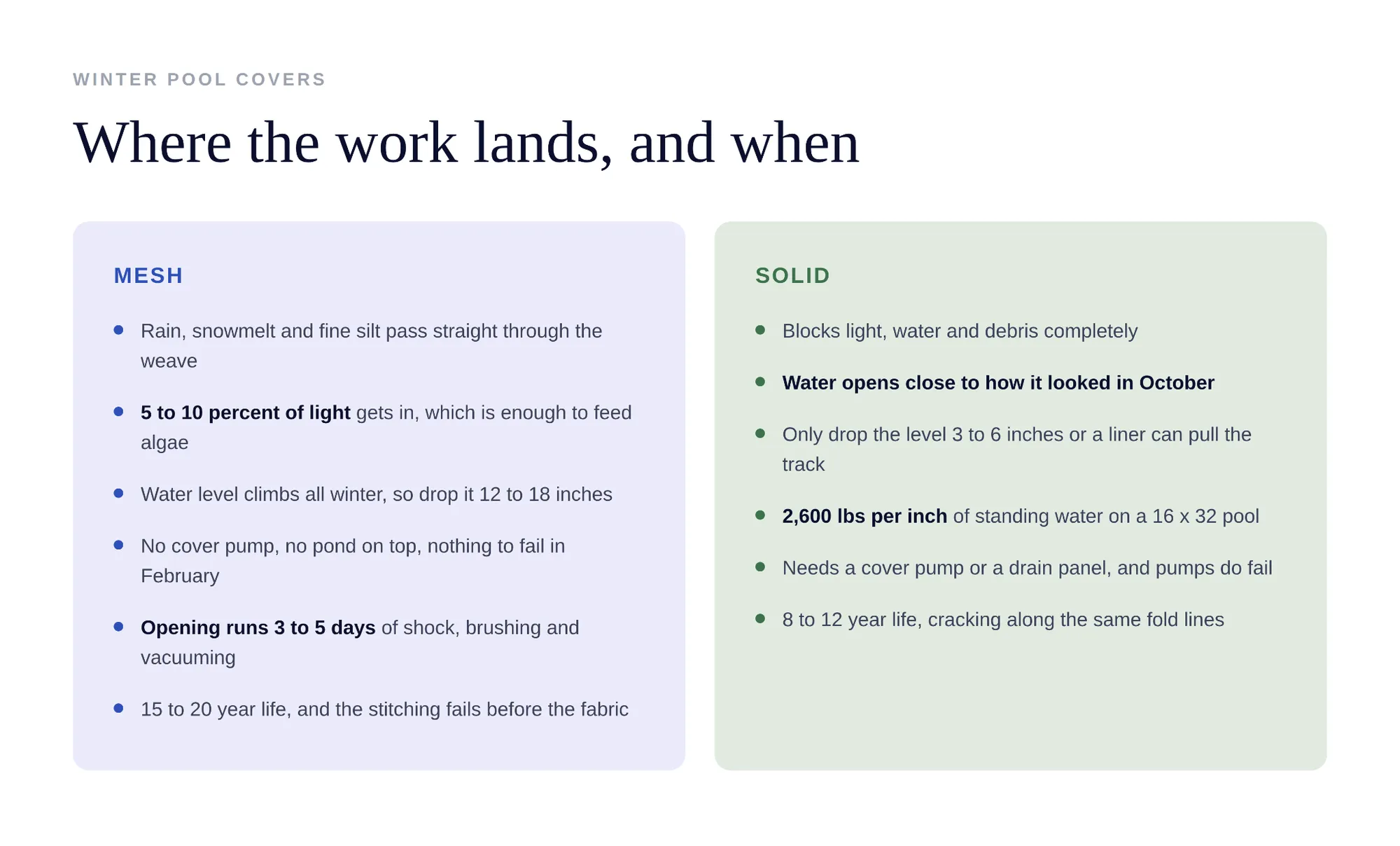
What separates them is where the labor lands and when. Mesh moves it to spring. Solid spreads it across the winter and asks you to pay attention in February, the month nobody thinks about their pool.
Which one belongs on your deck comes down to your trees, your climate, and how you want to spend the first warm weekend of the year.
What Gets Through The Fabric
Standard mesh is woven polypropylene with an open weave. Rain, snowmelt, and a little sunlight go through.
A little sunlight sounds like nothing. Run it across four months in a pool whose chlorine residual hit zero sometime in December, and little is plenty.
Algae needs light, water above roughly fifty degrees for part of the season, and phosphates. Mesh hands it all three.
What else gets through is the part people underestimate. The weave stops leaves, but it does not stop silt, pollen, roof grit, fine sand, or the dust that comes off a gravel driveway in a March windstorm.
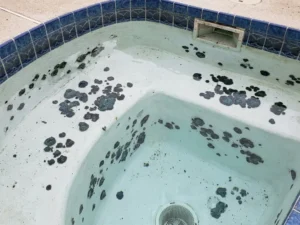
All of it filters down with every rain and settles on the floor as a soft brown layer you won’t see until you pull the cover and find water the color of weak tea over a two-millimeter carpet on the plaster.
Pine needles are their own problem. A needle doesn’t sit on top of mesh. It threads through, point first, and half ends up in your water while the other half stays woven into the fabric until you pick it out by hand in spring.
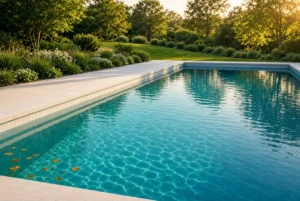
Solid stops everything. No light, no water, no fines. The water underneath in April looks close to the way it looked in October.
The Water Level Problem
The right level flips depending on which cover you bought, and this is where most winterizing mistakes happen.
With mesh, drop the water twelve to eighteen inches below the skimmer, more in a wet climate. It won’t stay there. Rain and melt pour through the fabric all winter, and the level climbs.
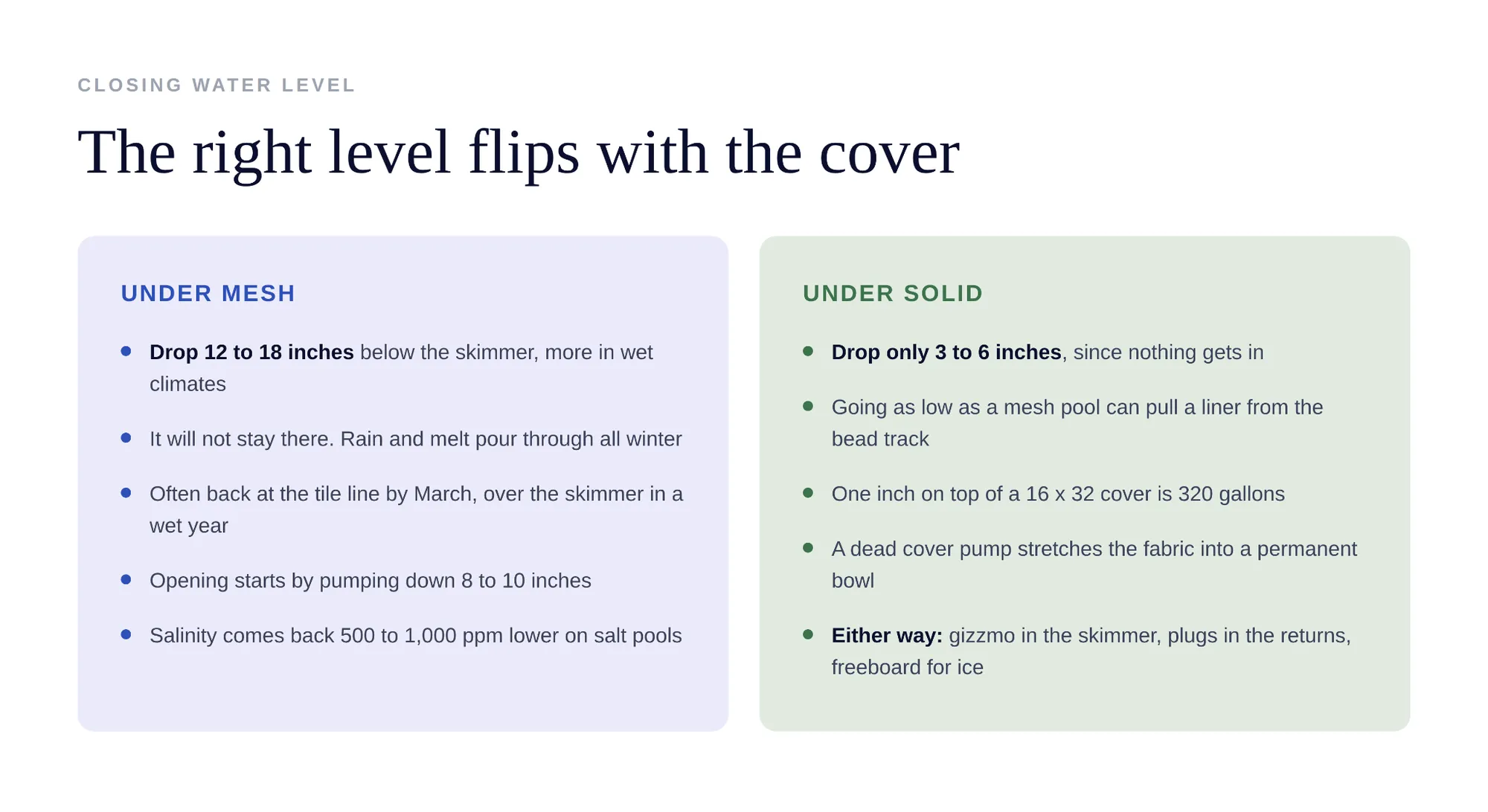
A pool sitting eighteen inches down in November is often at the tile line by March, and in a heavy year it’s over the skimmer with the cover half floating.
Solid keeps all of it out, so you only take the water down three to six inches.
Take a solid-covered pool as low as a mesh pool, and you create a different failure. Vinyl liners shrink in the cold. With no water pressure holding it against the wall through a January cold snap, a liner can pull out of the bead track along the shallow end. You find out in April when you refill and it won’t seat.
Ice does its damage by expanding outward across the surface, cracking tile and splitting skimmer throats. A Gizzmo in the skimmer, plugs in the returns, and enough freeboard for the sheet to push into. Getting the level right is not a formality.
Solid Covers And The Pump You Will Forget About
A solid cover holds water on top of it. Which means you now own a second piece of equipment, and its failure is invisible until it isn’t.
One inch of standing water on a sixteen by thirty-two pool is about 320 gallons. Roughly 2,600 pounds. Four inches and you’re carrying five tons on a fabric sheet suspended over a hole, held by springs and brass anchors sunk in concrete.
The cover is built for it. The anchors usually hold. The pump is what fails.
Cover pumps die in predictable ways:
- The float switch sticks under a soaked oak leaf
- The intake screen clogs with silt
- The unit freezes into the ice it was supposed to prevent
Or someone unplugs the extension cord in November to hang holiday lights. Any of those and the pond grows.
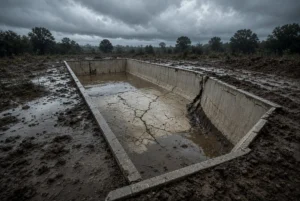
By the time you notice there’s a shallow black lake on the cover with a winter of leaf litter rotting in it, and the fabric has stretched into a bowl at the deep end it will never fully lose.
Then you go to drain the lake, and it siphons the wrong way. Anaerobic, tannin-loaded water pours into the pool you spent five months keeping clean.
Drain panels help. Many solid covers come with a mesh section in the center that handles volume passively.
No pump, no outdoor outlet, no cord anyone can trip over. The panel does let some fine sediment through directly beneath it. Fair trade on most pools, and most people would take it over a pump on any property where nobody walks out to check things every few weeks.
Wind is the other one. A tight solid cover is fine. A loose one is a sail, and a sail works the springs and grommets all winter until something tears.
Spring Opening Is Where The Bill Comes Due
A mesh opening, hour by hour:
- You pull the cover off the water, somewhere between green and brown, and pump it down eight or ten inches to get back to operating level.
- You brush. Silt lifts into suspension and visibility drops to nothing for the next twenty minutes.
- You shock hard, run the filter continuously, and clean cartridges or backwash more than once because the load is heavy.
- Twenty-four hours later, the water clears enough to see the floor and whatever is still sitting on it.
- You vacuum.
- You test and find chlorine demand is still high, so you shock again.
Somewhere in there you may reach for a flocculant to drop the fines and vacuum them to waste, which costs you water on top of chemicals.
Three to five days of tending it. Every spring, for the life of the cover.
The floor work is the piece to automate.
A cordless robot running cycles while you handle chemistry and filtration keeps you off your knees with a manual vac head, and a debris canister suits a heavy silt-and-leaf load better than pushing it all through a sand filter.
A solid-cover opening, assuming the pump held and nothing siphoned back: cover off, water clear enough to read the main drain grate, pump on, balance, brush the walls, swim by the weekend.
Multiply that gap by fifteen springs and the cheaper cover starts looking like the more expensive one.
Trees Change The Answer
If you have oaks, this decides it.
Oak leaves leach tannins. Tannin staining on white plaster or a light liner stops being cosmetic once it sits long enough against the surface, and a normal shock won’t fully lift it. Mesh gives you a whole autumn and winter of tannin tea straining down into the water. Solid holds it on top where you sweep it off.
Cottonwood is worse in its own way. The seed fluff passes most weaves and blinds a filter. Sweetgum balls sit there being ugly and nothing else. Pine spears through.
Open sky and no canopy makes mesh an easy call. Under a mature hardwood, pay for solid or high-shade every time.
High-Shade Mesh, The Option You Have To Ask For
There’s a third category most homeowners never hear about, because it’s a step up in price on a quote that already stings.
They have a tighter weave, sometimes a bonded layer, and block ninety-five to ninety-nine percent of light instead of ninety. It still drains. No pump, no pond on top, no siphon risk. Water level still climbs the way it does under standard mesh.
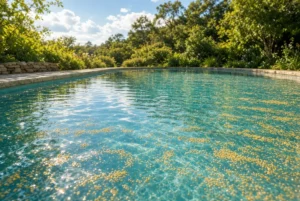
The opening lands close to what a solid cover gives you. Water in April is usually clear or lightly cloudy instead of green, because you starved the algae. Some fines still get in. The four-day cleanup doesn’t happen.
Costs are what you’d expect. Twenty to forty percent over standard mesh, heavier to handle wet, slower to drain. During a hard rain, you’ll see puddles standing on the fabric for a few hours before they clear, which is normal for the material and looks alarming the first time.
For a pool under moderate tree cover with an owner who doesn’t want to think about a cover pump, this is the answer. It also gets quoted least.
Handling, Storage, And The Fifteenth Winter
Mesh dries on the deck in an hour of sun. Fold it, bag it, done. One person can handle a small pool’s cover, though anything past sixteen by thirty-two wants two.
Solid does not dry in an hour. Fold a damp one into a bag in April and open that bag in October to a black mildew bloom and a smell you’ll remember. It has to be spread, hosed, and dry before storage. Plan an afternoon.
Solid covers fail at the fold lines first. Same creases every year until the vinyl coating cracks along them. Refolding on different lines each season buys you years. Most people fold it whatever way fits the bag and get eight to twelve.
Mesh outlasts it. Fifteen to twenty, with prorated warranties that run about that long, and the common failure isn’t the fabric. It’s the stitching at the strap webbing, and a cover shop restitches that for a fraction of replacement cost. A torn seam is exactly where how to repair a damaged pool cover starts before you spend money on a whole new cover.
A wet solid cover on an eighteen by thirty-six is past a hundred pounds of shifting, uncooperative weight. Two people, slick deck, and the likeliest moment in the whole process for somebody to get hurt.
How to Choose
If you have an open sky, dry climate, cheapest reliable path, and you don’t mind a working weekend in spring: standard mesh.
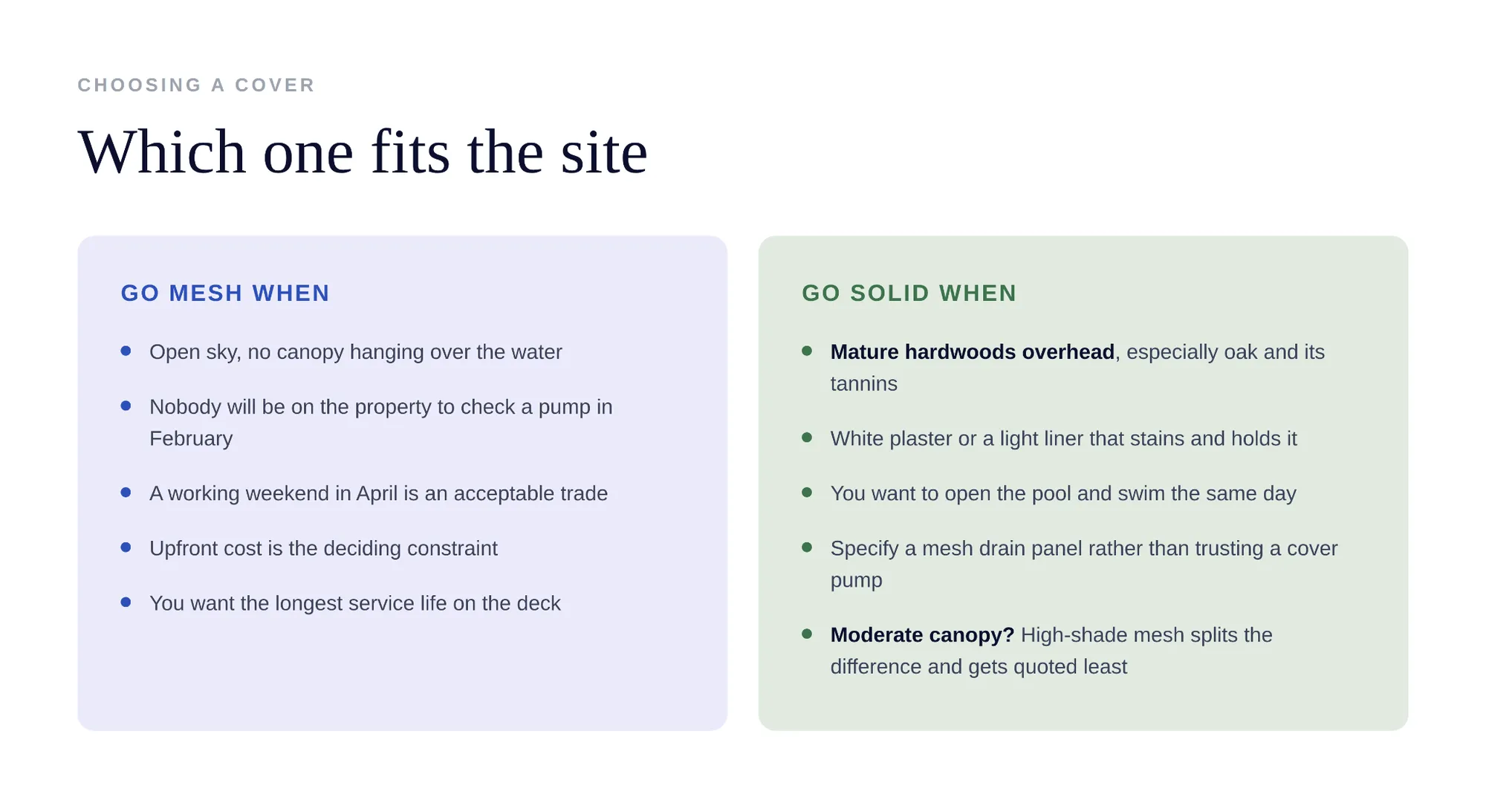
If there is heavy canopy, especially oak, or plaster you care about, or you want to open the pool and swim in it that same day: solid with a drain panel, not a cover pump.
Everything in between, which is most pools: high-shade mesh. Don’t let the quote talk you out of it.
The combination to avoid is a solid cover on a property nobody visits in winter with a pump as the only defense. That’s what produces the March phone calls.
Get more pool and lawn care guides from Aiper on Google