
Pool renovations and backyard makeovers are among the most rewarding home improvement projects — they transform an aging, dated, or poorly functioning pool into a modern, beautiful, and more efficient centerpiece of outdoor living. Whether you are planning a focused single-scope upgrade (like a replaster or equipment retrofit) or a comprehensive backyard transformation that reimagines every surface, material, and system, the key is understanding what each renovation involves, what it costs, how long it takes, and what return it delivers in daily enjoyment and property value. We have gathered 39 of the best pool renovation and makeover ideas — covering surface and finish upgrades, structural and shape changes, equipment and energy retrofits, deck and coping makeovers, and complete backyard transformations with before-and-after inspiration. Each idea includes a real photo and practical guidance on cost, timeline, contractor selection, and ROI.
Surface & Finish Upgrades: A Brand-New Look Without Rebuilding
Replastering: White to Colored Plaster
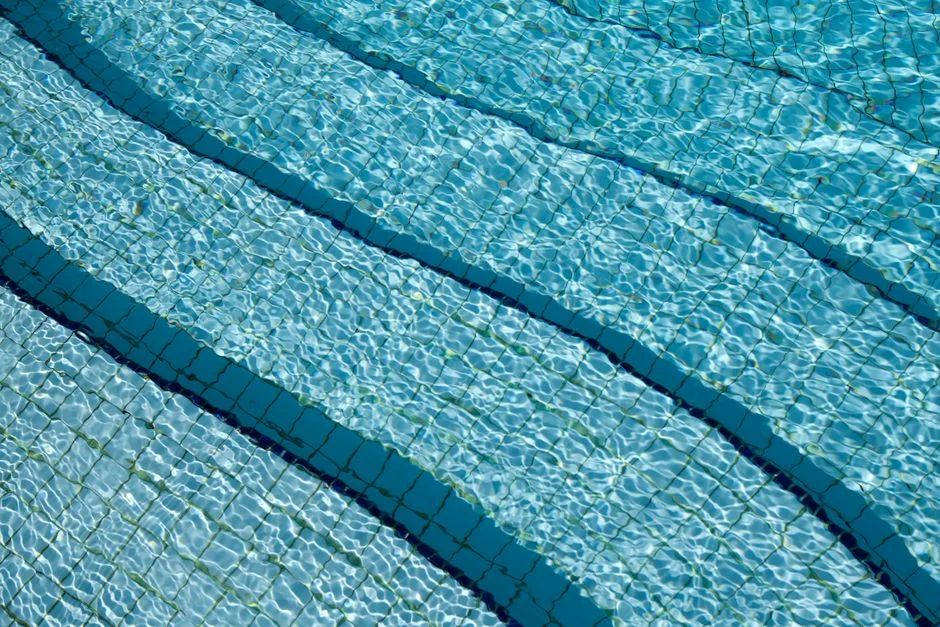
Replacing old, stained, or rough white plaster with fresh colored plaster is the single most common pool renovation — and the one with the most dramatic visual impact for the cost. Modern colored plaster (available in white, blue, grey, black, green, and custom blends) transforms the water color entirely: white plaster produces a classic light blue pool; medium grey or blue plaster creates a deeper, more reflective lagoon look; dark charcoal or black plaster produces a stunning mirror-like surface that reflects the sky and surrounding landscape. A full replaster job for an average 15m × 8m / 50ft × 25ft pool costs $6,000-$15,000 depending on your market and takes 5-10 days including draining, chipping out the old plaster, applying the new plaster, filling, and balancing the water chemistry. The new plaster surface lasts 10-15 years with proper water chemistry maintenance. This is the renovation that single-handedly makes an old pool look brand new.
Photo by Jeffry Surianto on Pexels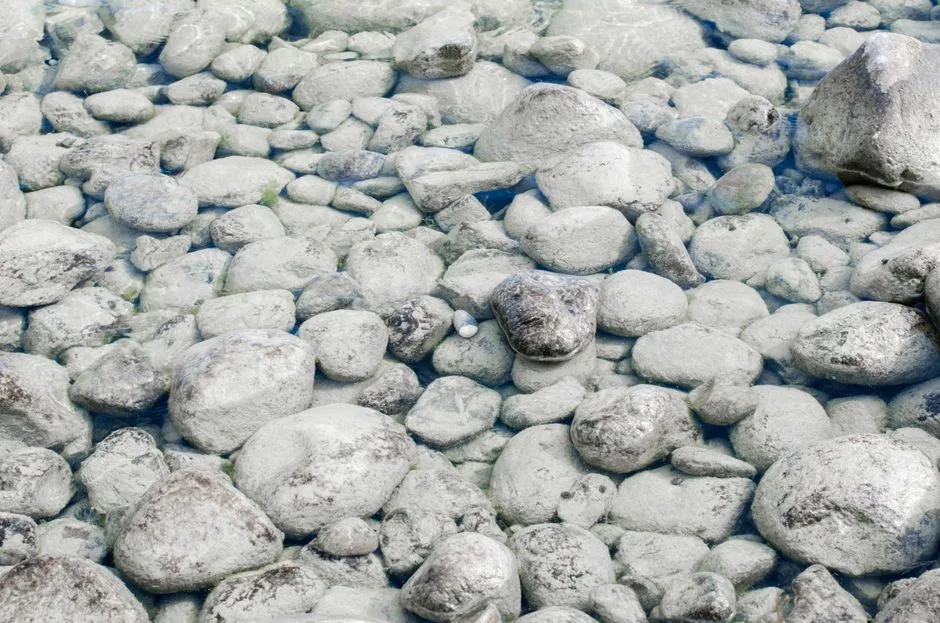
Pebble Finish Conversion (Pebble Tec / Pebble Sheen)
Converting a plaster pool to a pebble aggregate finish — where small, smooth natural pebbles are mixed into the cement-and-resin coating and then the surface is water-washed to expose the pebble texture — is the most popular surface upgrade for good reason. The pebble surface is dramatically more durable than plain plaster (15-25 year lifespan versus 10-15 for plaster), more resistant to staining and etching from pool chemicals, and the natural stone aggregate creates a richer, more organic-looking water color with subtle sparkle from the exposed quartz. Standard Pebble Tec (larger pebbles, more texture) costs $8,000-$18,000 for an average pool; Pebble Sheen or Pebble Fina (smaller pebbles, smoother finish, more polished look) runs $10,000-$22,000. The surface texture is a personal preference decision — some swimmers prefer the smoother feel of polished aggregate, while others appreciate the grip and natural feel of the slightly rougher standard pebble. The renovation takes 7-14 days and requires the old plaster to be completely chipped out to the gunite shell.
Photo by Nika Benedictova on Pexels
Waterline Tile Replacement & Upgrade
Replacing old, cracked, or dated waterline tile with new glass, porcelain, or natural stone tile is a relatively quick renovation (3-5 days) that has an outsized visual impact because the waterline tile band is at eye level — it is the first thing you see when you look at the pool. Glass mosaic tile in iridescent blues, teals, and greens ($20-$50 per square foot for the tile material) creates a luminous, jewel-like band that catches light and sparkles; large-format porcelain or stone tiles ($10-$30/sq ft) read as more architectural and contemporary. The renovation involves removing the old tile and the mortar bed behind it, installing a waterproof membrane, and setting new tile. Budget $3,000-$8,000 for a full waterline tile replacement on an average pool, including demolition, waterproofing, tile material, installation, and grouting. This is also the ideal moment to add a decorative mosaic accent band or a custom tile pattern — the incremental material cost is small when the labor for tile removal and replacement is already happening.
Photo by Mau Torres V on Pexels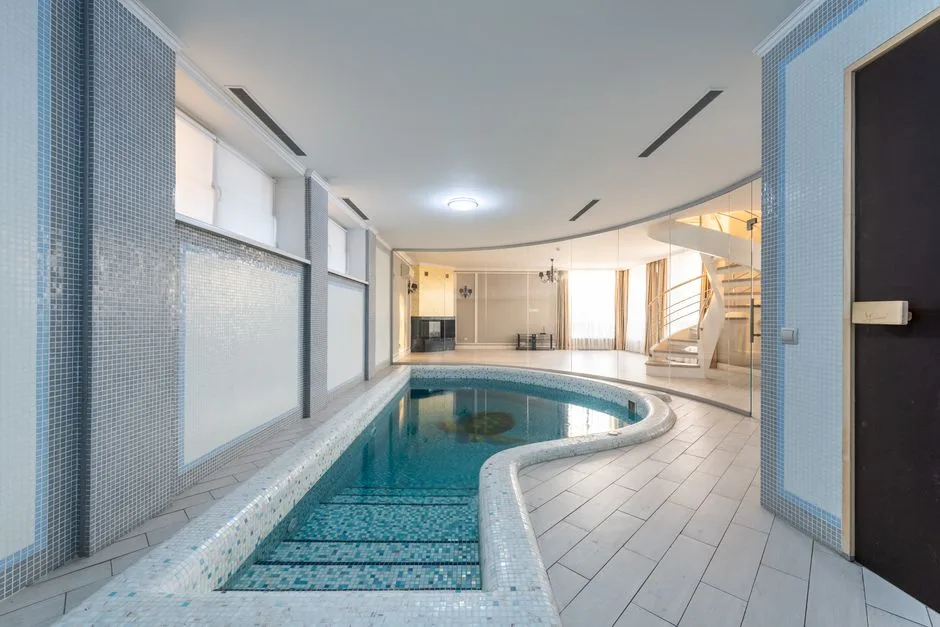
Full Glass / Porcelain Tile Interior
For the ultimate surface upgrade: replacing the entire pool interior surface (not just the waterline) with fully tiled glass or porcelain mosaic. A fully tiled pool is the most durable interior finish available — glass tile is impervious to pool chemicals, never stains or etches, never needs resurfacing, and produces an unmatched luminous, reflective water quality that plaster and pebble simply cannot achieve. The trade-off is cost: a full glass tile interior for an average pool runs $30,000-$70,000+ depending on the tile chosen and the complexity of the pool shape. The installation takes 4-8 weeks and requires specialized tile setters experienced in submerged applications with epoxy grout and expansion joints. This is a once-in-a-lifetime renovation — the tile will last the life of the pool shell (50+ years) if properly installed. For most pools, a more practical approach is full tile on the waterline, steps, benches, and tanning ledge, with a pebble or quartz finish on the main floor and walls — roughly 60% of the visual impact at 30% of the cost.
Photo by Max Vakhtbovych on Pexels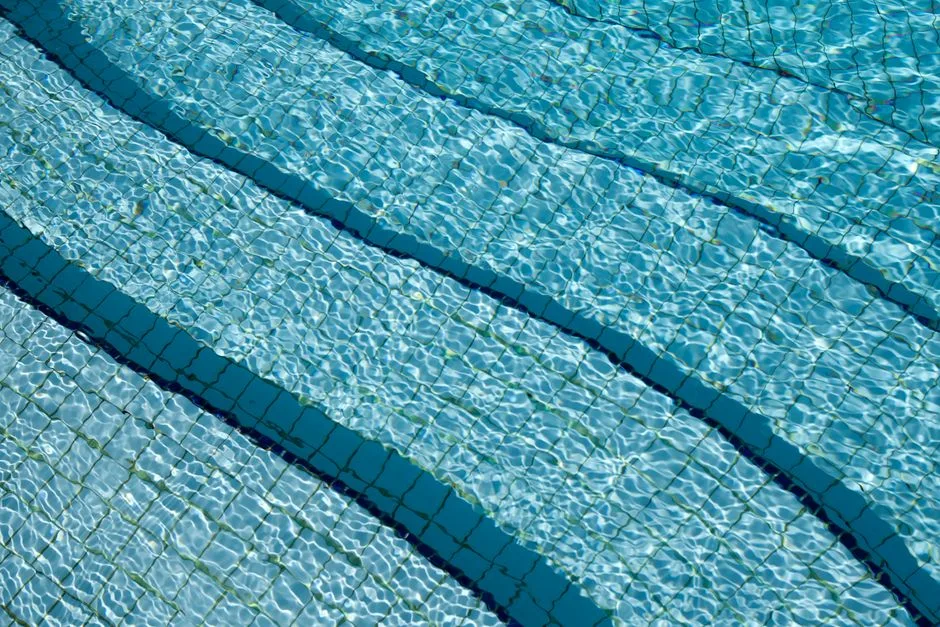
Quartz Aggregate Finish Upgrade
Quartz aggregate pool finishes — where colored quartz crystals are blended into the plaster mix to create a smooth but sparkly surface with quartz granules visible just beneath the surface — sit in the sweet spot between plain plaster and textured pebble. The quartz adds durability (12-18 year lifespan), UV resistance (color stays truer longer than pigmented plaster), and a subtle shimmer that catches sunlight beautifully. Quartz finishes like 3M ColorQuartz or Diamond Brite (which combines quartz with other aggregates) cost $7,000-$14,000 for an average pool — roughly 20-30% more than standard colored plaster but 20-30% less than full pebble. The surface feel is smoother than pebble (comparable to plaster) and comfortable for swimmers who find pebble texture too rough. Quartz aggregate is an excellent value proposition for the renovation budget-conscious owner who wants a meaningful upgrade from plaster without the full investment of pebble. Installation takes 5-8 days.
Photo by Jeffry Surianto on Pexels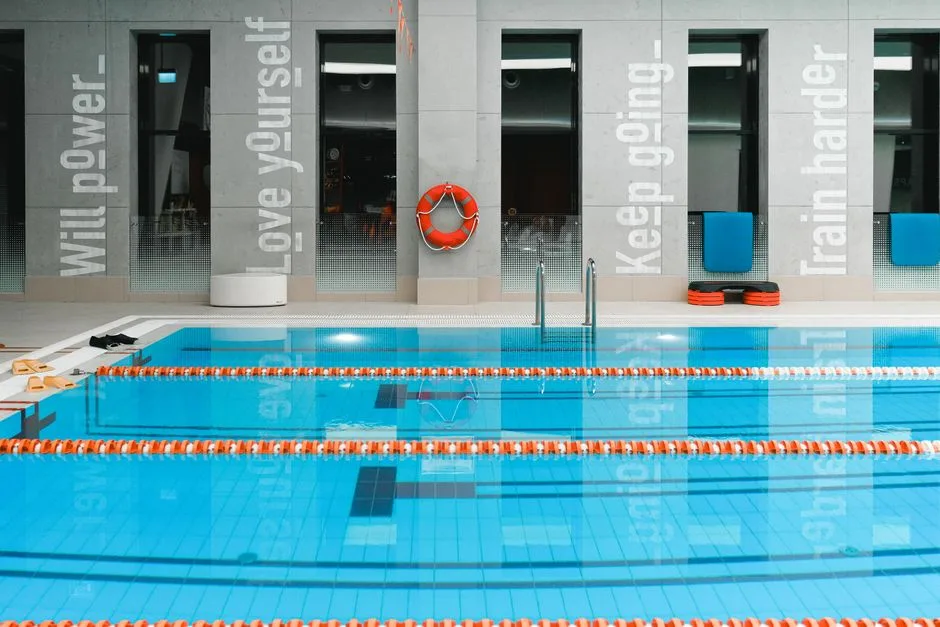
Epoxy Pool Paint Refinish (Budget Option)
Epoxy pool paint — a two-part epoxy coating applied directly over the existing plaster surface after acid etching or sandblasting to create a mechanical bond — is the most affordable pool surface renovation option. A complete epoxy paint job for an average pool costs $2,000-$5,000 including draining, surface preparation, primer, and two coats of epoxy. The finish is smooth, glossy, and available in a range of colors including white, light blue, medium blue, and dark grey. The critical limitation: epoxy paint lasts only 3-7 years before it begins to chalk, fade, and delaminate — at which point it must be sandblasted off completely before a new surface can be applied, adding $2,000-$4,000 to the next renovation. Epoxy paint is best understood as a holding strategy: it buys you 3-7 years of a fresh-looking pool at minimal cost while you save for a permanent plaster, quartz, or pebble renovation. It is also appropriate for rental properties, homes being prepared for sale, and above-ground pools where a premium surface is harder to justify.
Photo by SHVETS production on Pexels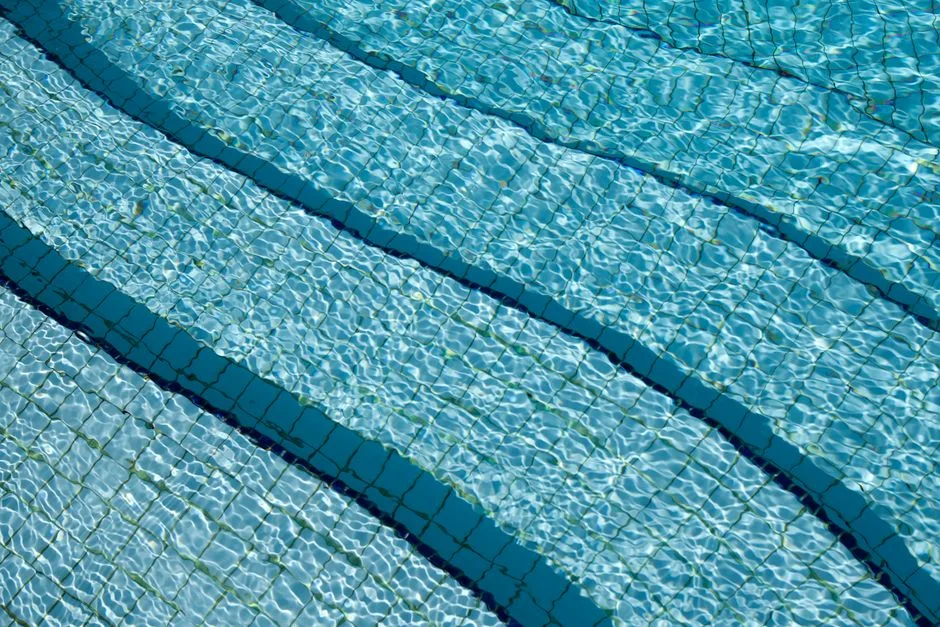
Diamond Brite / Exposed Aggregate Finish
Diamond Brite — a proprietary blend of quartz aggregate, Portland cement, and polymers that is hand-troweled and then acid-washed to expose the aggregate — delivers a smooth, durable, slightly sparkly surface that has been one of the most specified pool finishes for over 30 years. The finish is available in over 30 colors from crisp white through Caribbean blues, deep lagoon greens, French grey, and onyx black. Diamond Brite costs $7,000-$14,000 for an average pool, lasts 12-18 years, and the quartz aggregate resists the etching, mottling, and staining that plague plain colored plaster. Compared to pebble finishes, Diamond Brite is smoother underfoot (no exposed pebbles that can feel rough on bare feet) while still providing the durability and color richness of an aggregate finish. It is a particularly popular choice in the southern US and coastal markets where the smooth-but-durable balance and wide color range match what homeowners are looking for in a mid-to-upper-tier pool renovation.
Photo by Jeffry Surianto on Pexels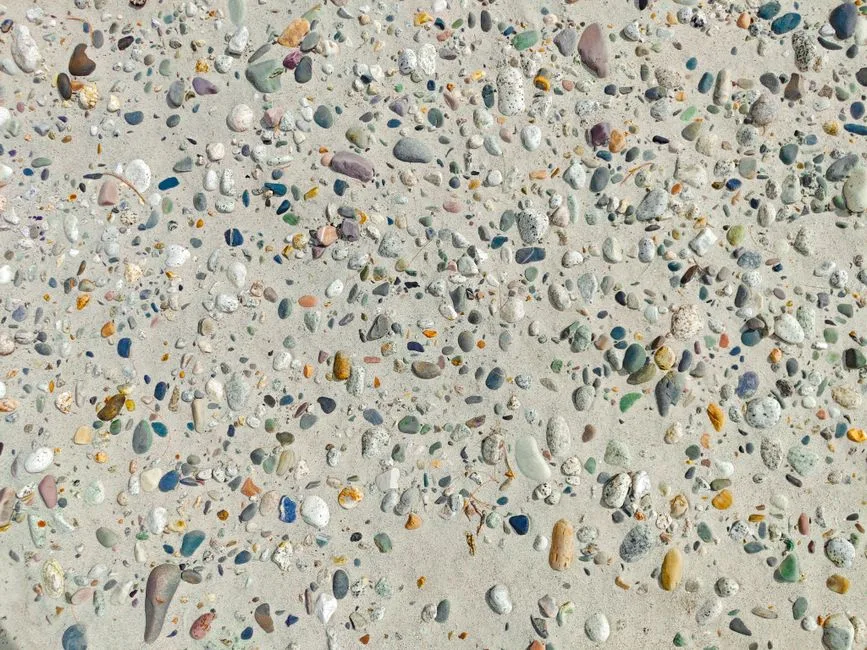
Micro-Pebble & Polished Aggregate Finish
For owners who want the durability of pebble with the smoothness of plaster: micro-pebble and polished aggregate finishes use very small pebbles (1-3mm versus 5-8mm for standard pebble) that are mechanically polished after exposure to create a surface that feels almost as smooth as plaster but with the chemical resistance and longevity of aggregate. Brands like Pebble Fina, Stonescapes Mini, and NPT JewelScape occupy this premium niche. The polished surface has a subtle, satin-like sheen and the small aggregate size creates a more uniform, consistent appearance than standard pebble. Cost: $10,000-$20,000 for an average pool. Lifespan: 15-20 years. The polished micro-pebble surface is increasingly the default choice for high-end renovations where the feel of the surface matters as much as the look — especially for pools where young children, elderly swimmers, or anyone who spends hours in the water (not just beside it) will appreciate the smoother texture.
Photo by Prabhav Shandilya on Pexels
Dark Bottom Pool Conversion
Converting a light-bottom pool (white or light blue plaster) to a dark bottom (charcoal, navy, deep green, or black plaster or pebble) is one of the most dramatic single-surface changes you can make — and it is a growing trend in high-end residential and resort pool design. A dark pool bottom creates a mirror-like reflective surface that perfectly mirrors the sky, surrounding trees, and landscape lighting. The water appears deeper, more mysterious, and lagoon-like. The trade-offs are real and should be understood before committing: dark surfaces show calcium deposits, dust, and debris more visibly than light surfaces (requiring more frequent cleaning), they absorb more solar heat (the water will be 3-5°C / 5-9°F warmer in summer, which can be a benefit or a problem depending on your climate), and the dark pigment in plaster fades and mottles more noticeably over time than white plaster (dark pebble finishes are far more color-stable than dark plaster). Budget: $8,000-$18,000 for pebble, $12,000-$25,000 for full glass tile in dark tones. The reflective, moody aesthetic is genuinely stunning when done well — it transforms the pool into a landscape mirror that changes appearance dramatically with the weather, time of day, and season.
Photo by Andrea Piacquadio on PexelsShape & Structural Changes: Rethinking the Pool Itself

Adding a Tanning Ledge / Baja Shelf
Adding a tanning ledge — a wide, flat, shallow platform (15-30cm / 6-12 inches deep) built into one end or side of the pool — is the most-requested structural addition in pool renovations. The ledge creates a dedicated lounging zone where adults can place in-pool chairs and sunbathe semi-submerged, toddlers and small children can safely splash, and everyone has a shallow entry point. Retrofitting a tanning ledge into an existing pool involves cutting back a section of the pool wall and floor, forming and pouring a new gunite or shotcrete shelf, tying the rebar into the existing shell, and replastering the entire pool so the new and old surfaces match. Budget: $8,000-$18,000 for the ledge addition including the associated full replaster. The renovation takes 3-5 weeks. The best location for a retrofit ledge is the shallow end, expanding it outward and making it wider and flatter. This renovation also typically requires a pool deck modification — the deck must be cut back to match the new pool edge profile where the ledge extends the pool’s footprint.
Photo by Gustavo Fring on Pexels
Adding or Expanding a Raised Spa
Adding a raised spa to an existing pool — or expanding a small, outdated spa into a larger modern one — combines therapeutic value (hot hydrotherapy jets) with aesthetic value (the raised spa becomes a visual focal point and the spillover into the pool adds a water feature). A new raised spa addition involves extending the pool shell with new gunite/shotcrete walls to contain the spa, running dedicated plumbing for the spa jets, installing a separate spa pump and heater (or a combined pool/spa system with automated valves), tying into the existing pool plumbing and electrical, and replastering the entire pool. Budget: $15,000-$35,000 for a quality raised spa addition with 6-8 jets, LED lighting, and a spillover edge. Timeline: 6-10 weeks. The spa is typically positioned at the far end of the pool (creating a symmetrical composition) or along one side (creating a more casual, asymmetrical layout). The equipment pad will likely need upgrading — a spa requires higher flow rates and heating capacity than a pool-only system, which may mean upsizing the pump and adding or upgrading the heater.
Photo by cottonbro studio on Pexels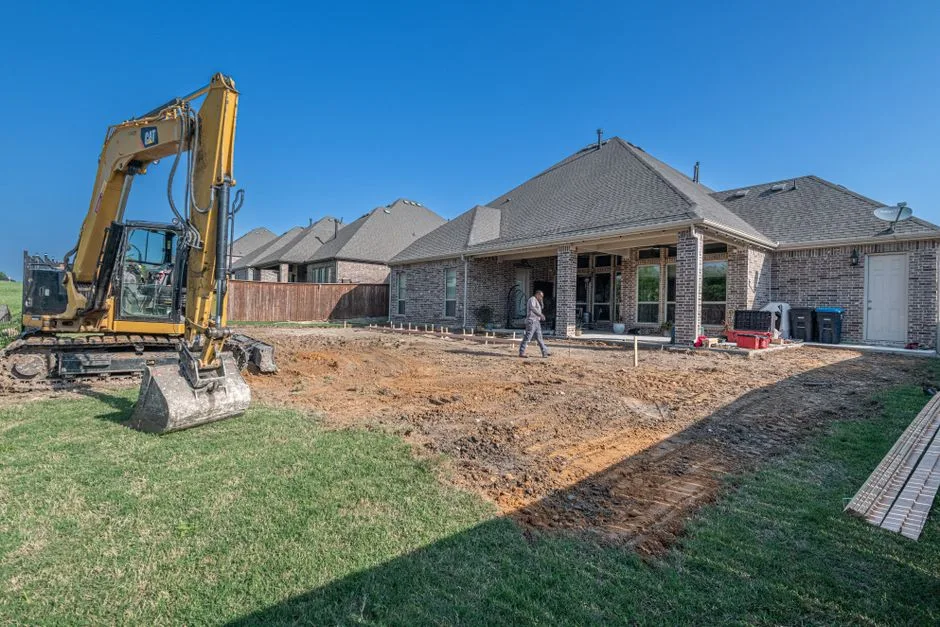
Deepening or Reshaping the Pool Floor
Deepening a pool — for example, taking a uniform 1.2-1.5m / 4-5ft deep play pool and excavating one end to create a 2.0-2.5m / 6.5-8ft deep end for diving and cannonballs — is a major structural renovation that fundamentally changes how the pool is used. The process involves draining the pool, jackhammering out the existing floor in the area to be deepened, excavating deeper into the ground beneath the pool, forming and pouring a new deeper floor section with rebar tied into the existing shell, and replastering the entire pool. This is only feasible if the pool shell and surrounding soil conditions allow deeper excavation (water table depth, soil type, and proximity to structures all factor in). Budget: $12,000-$30,000. The renovation typically takes 6-10 weeks. Less extreme floor reshaping options — smoothing out an uneven plaster floor, adding a small deeper zone, or creating a sloped entry rather than steps — are less expensive ($5,000-$12,000) and less structurally complex while still meaningfully improving the pool’s usability.
Photo by Ryan Stephens on Pexels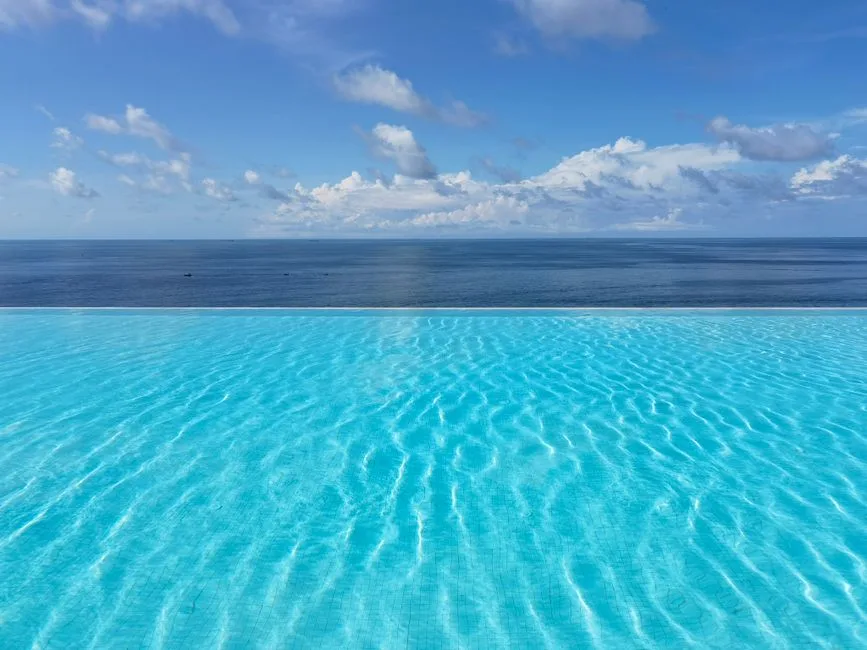
Adding a Vanishing Edge (Retrofit)
Retrofitting a vanishing (infinity) edge onto an existing pool is rarely straightforward — it requires building out a new lowered catch basin on the view side of the pool, cutting down and re-forming the pool wall on that side to create the precisely level overflow weir, adding a surge tank and dedicated edge circulation pump, and replastering the entire pool. This is one of the most expensive and technically demanding pool renovations possible. Budget: $25,000-$50,000+ for a single edge on a pool with a suitable view and topography. The renovation takes 8-14 weeks. It is only worth considering if: (a) the pool is already positioned on a slope or elevated deck with a clear, unobstructed view beyond the edge, (b) the pool’s structural shell can support the modification, and (c) you are committed to the higher ongoing pump electricity costs and increased water evaporation that vanishing edges entail. For most pools without an ideal site, a more practical alternative is adding a perimeter overflow slot system (all four sides overflow into a hidden slot drain) — still expensive at $20,000-$40,000 but less structurally invasive since all four sides are modified symmetrically and no catch basin extension is required.
Photo by John Kong on Pexels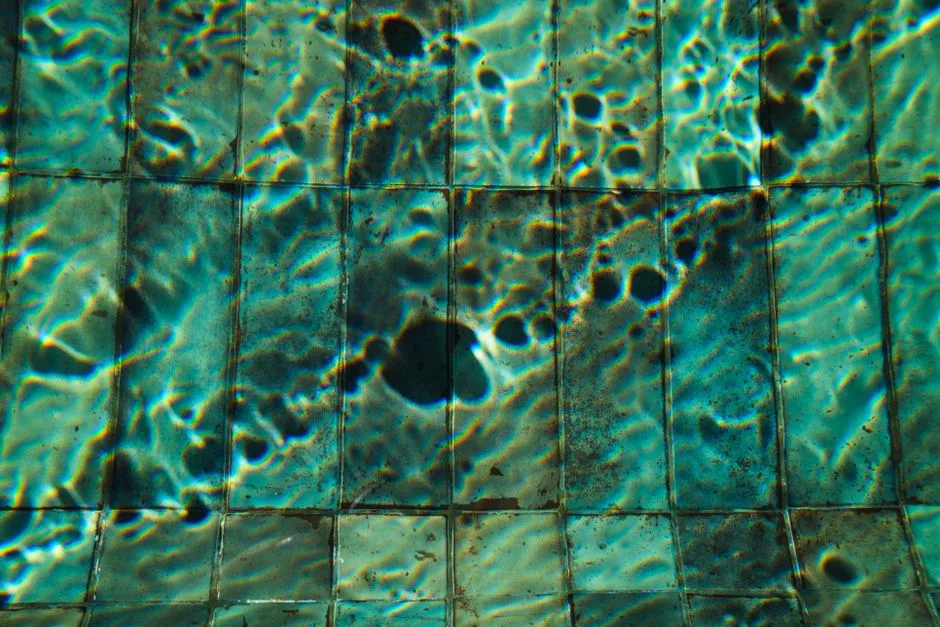
Converting Pool Shape (Freeform to Geometric)
Converting a freeform or kidney-shaped pool to a clean rectangular or geometric shape is a fundamental transformation that modernizes the entire backyard aesthetic — but it typically means substantial demolition and rebuild rather than modification of the existing shell. Most shape conversions involve partially demolishing the irregular portions of the existing pool (the curved lobes of a kidney shape, the wavy edge of a lagoon pool), squaring off or straightening the remaining walls, and building new pool wall sections to complete the desired rectangular outline. In many cases, it is more cost-effective and structurally sound to fully demolish the old pool and build a new one from scratch — a full demo-and-rebuild for an average pool in the same footprint costs $40,000-$70,000 versus $25,000-$50,000 for a partial shape conversion that compromises on the result. The partial conversion approach works best when the existing pool is already close to the desired shape — squaring off a single curved end, for example, rather than reshaping the entire perimeter. Always get at least three quotes and ask each contractor specifically whether they recommend partial conversion or full rebuild for your particular pool shape and condition.
Photo by Anthony Dalesandro on Pexels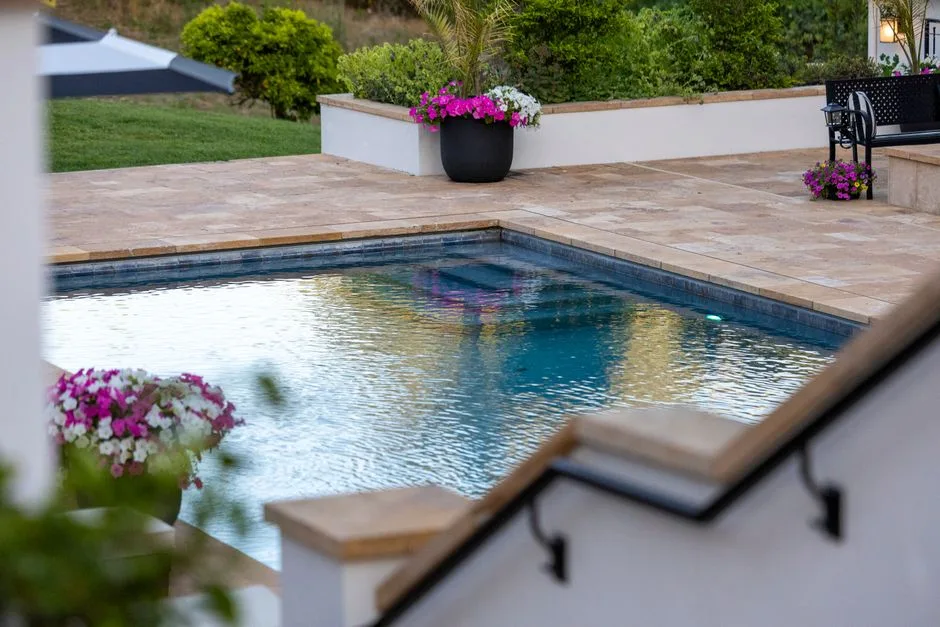
Adding Built-In Stools, Benches & Swim-Up Seating
Adding built-in in-pool seating — a swim-up bar with submerged stools along one wall, a continuous bench seat spanning the deep end, or individual conversation niches with seating ledges — transforms how people use the pool, encouraging them to spend time in the water socializing rather than just swimming laps and getting out. These additions are formed with new gunite/shotcrete bench structures tied into the existing pool shell with epoxy-set rebar dowels, then plastered to match the pool interior. Adding a bench along one wall or a corner seating group costs $3,000-$8,000 and takes 2-4 weeks including the necessary full replaster. A full swim-up bar with a raised countertop at the pool edge (the bar top sits just above the water surface, with submerged stools inside the pool) is a larger project at $10,000-$25,000 — it involves building out the pool wall to create the bar structure, running plumbing and electrical for a sink and under-counter fridge in the bar, and coordinating the pool renovation with the outdoor kitchen contractor. Swim-up bars are among the highest-satisfaction pool renovations — they genuinely change the social dynamics of pool use.
Photo by Stephen Leonardi on Pexels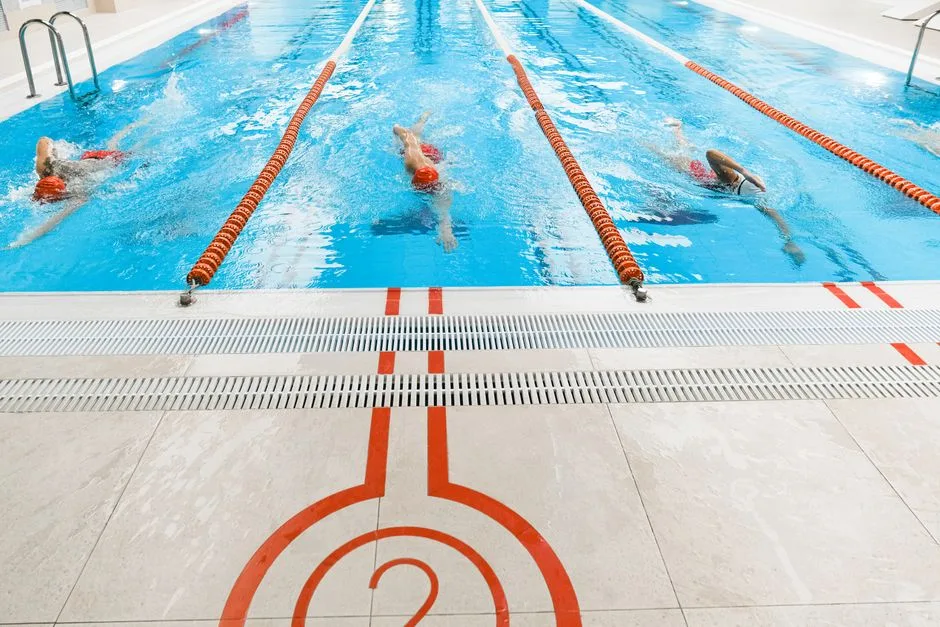
Expanding Pool Size / Adding a Lap Lane
Expanding a pool — extending one end to add length for lap swimming, or widening one side to add more lounging area — is a major structural project that involves partial demolition of one pool wall or end, excavation to extend the pool footprint, forming and pouring the new pool shell extension with rebar tied into the existing shell, and replastering the entire pool. An extension of 2-3 meters / 6-10ft in length costs $15,000-$30,000 and takes 8-12 weeks. The deck must also be extended to match — budget an additional $3,000-$8,000 for deck demolition and new pour in the extended area. Pool expansion is most justified when the existing pool is genuinely too small for how the family wants to use it (serious lap swimmers stuck with a 10m / 33ft pool, or a pool that is too narrow for more than one person to float comfortably) and the property has the available land to extend into. Before committing to expansion, explore whether reconfiguring the existing pool (adding a swim tether for lap swimming in place, or removing an obstructive feature to free up existing swim space) could solve the problem without the cost and disruption of physical expansion.
Photo by SHVETS production on PexelsEquipment & Energy Upgrades: Smarter, Quieter, Cheaper to Run
Variable Speed Pump Retrofit
Replacing an old single-speed pool pump (typically 1.5-2.0 HP, consuming 1,500-2,500W continuously whenever it runs) with a modern variable speed pump (which runs at lower speeds for filtration — typically 1,200-1,800 RPM consuming just 150-400W — and ramps up to higher speeds only for vacuuming, heating, or water features) is the single most impactful energy-saving upgrade you can make to a pool. A variable speed pump typically reduces pool pump electricity consumption by 60-80%, saving $300-$800 per year depending on local electricity rates and daily pump runtime. Quality variable speed pumps (Pentair IntelliFlo, Hayward TriStar VS, Jandy VS FloPro) cost $800-$1,800 for the pump plus $300-$600 for professional installation including any PVC plumbing adaptation needed. The pump pays for itself in 2-4 years of electricity savings. Many US states and Australian states offer rebates ($200-$500) for replacing single-speed pumps with variable speed models. Bonus: variable speed pumps are dramatically quieter — a unit running at 1,500 RPM for filtration is nearly silent compared to the constant roar of an old single-speed pump.
Photo by Jan van der Wolf on Pexels
Salt Chlorine Generator (SWG) Conversion
Converting a traditional chlorine pool (where you manually add chlorine tablets, granules, or liquid) to a saltwater pool (where a salt chlorine generator cell uses electrolysis to convert dissolved salt in the water into chlorine automatically) is the most popular equipment upgrade among pool owners who are tired of handling and storing chlorine chemicals. A salt system produces chlorine steadily and automatically, maintaining more consistent sanitizer levels, and the lower-concentration continuous chlorine production eliminates the sharp chlorine smell and eye irritation that come from the peaks and valleys of manual chlorination. The water also feels noticeably softer on skin and hair — it is the same principle as a water softener. A quality salt chlorine generator (Pentair IntelliChlor, Hayward AquaRite, Jandy AquaPure) costs $800-$1,800 for the control unit and salt cell plus $400-$800 for installation. The salt cell needs replacement every 3-7 years ($300-$700). The pool needs approximately 1,300-1,800 ppm of salt (the ocean is 35,000 ppm for reference — pool salt levels are barely perceptible, roughly the salinity of a teardrop). Note: saltwater pools still contain chlorine — the SWG just produces it on-site from salt rather than you adding it manually.
Photo by Andrea Piacquadio on Pexels
Heat Pump / Solar Heating Addition
Adding a pool heat pump or solar heating system extends the swim season by 2-4 months at each end — turning a pool that is swimmable from June through August into one that is comfortable from April through October (in temperate climates). An electric heat pump (which works like a reverse air conditioner, extracting heat from the outside air and transferring it to the pool water at roughly 5:1 efficiency — 1kW of electricity in, 5kW of heat out) costs $3,000-$6,000 installed and adds $50-$150/month to the electricity bill during the months it is actively heating. Solar pool heating (black polypropylene panels mounted on a south-facing roof, through which pool water is circulated and warmed by the sun) costs $3,000-$7,000 installed and has near-zero operating cost — but it only produces heat on sunny days and the heat output is lower than a heat pump. A hybrid approach — solar as the primary heat source, heat pump as the booster for cloudy weeks and shoulder-season swimming — is the ideal setup where budget allows. A pool cover is essential with any heating system; an uncovered heated pool loses 70-80% of its heat through evaporation at the surface.
Photo by Steward Masweneng on Pexels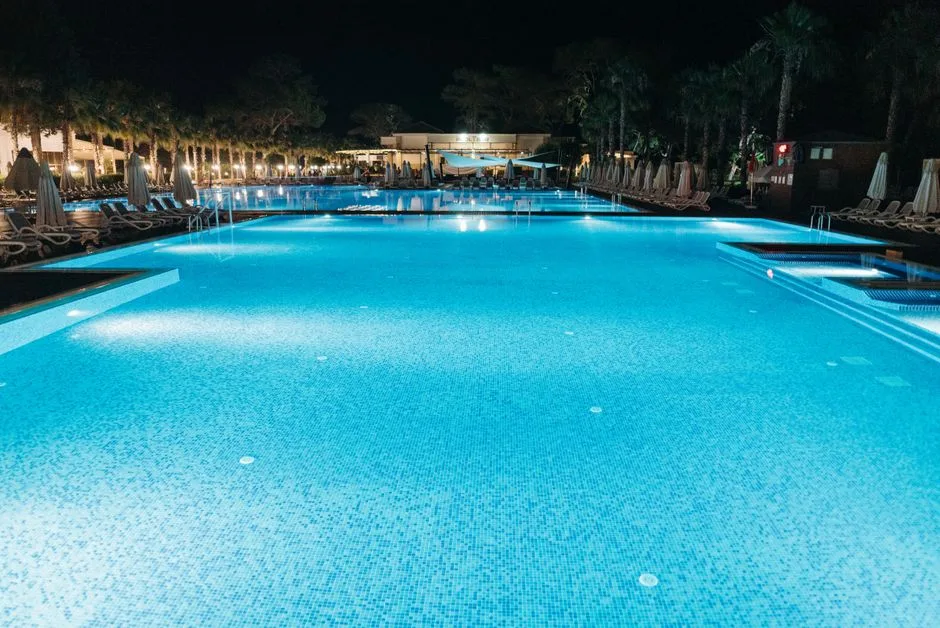
LED Lighting Retrofit (Old to New)
Retrofitting old incandescent or halogen pool lights to modern RGB+W LED fixtures transforms the pool’s nighttime appearance from a single-color underwater glow to a programmable, color-changing light show. The LED retrofit path depends on the existing niche type: if the pool has standard 11.5-inch or 5.5-inch wet niches with the original light cord, a direct-fit LED replacement bulb ($200-$600 per bulb) screws into the existing niche in 30 minutes per light with the pool full — the simplest, cheapest path, and the swap itself is covered in our guide to changing a pool light with the water still in. If the niches are damaged, non-standard, or missing entirely, a new nicheless LED fixture can be installed by core-drilling a hole through the pool wall from the outside (requires excavation to access the outside of the pool shell at each light location), running new conduit and cord, and patching and replastering around the new fixture. This costs $1,500-$3,500 per new nicheless light installed. Budget $600-$2,000 for a simple 2-3 light LED bulb retrofit, or $5,000-$15,000 for a full new LED system with 4-6 fixtures and a smart controller. The energy savings (300W → 45W per light) and the color-changing capability combine to make this one of the highest-satisfaction pool renovations.
Photo by Pavel Danilyuk on Pexels
Pool Automation System Installation
Installing a pool automation system — a central control hub with a smartphone app that manages pump speeds, valve positions, heater temperature, light colors, water features, and chemical monitoring — retrofits modern intelligence onto any pool built in any era. An automation retrofit typically involves: replacing the mechanical time clock with a digital automation panel, adding electronic valve actuators to the existing manual valves (so the system can switch between pool and spa mode, or turn water features on and off, without you touching a valve), connecting the pump, heater, salt cell, and lights to the automation hub via communication cables, and setting up the app on your phone. Budget $2,500-$6,000 for a complete automation retrofit depending on the number of controlled devices. The major brands (Pentair IntelliCenter, Hayward OmniLogic, Jandy iAquaLink) each have their own ecosystem — components from one brand generally do not communicate with another brand’s controller, so choose the brand that matches your existing pump and heater if possible. The ability to turn on the spa heater from your phone 30 minutes before you leave work, or check that the pump is running during a freeze warning while you are on vacation, rapidly moves from luxury to expectation once you have it.
Photo by Akashni Weimers on Pexels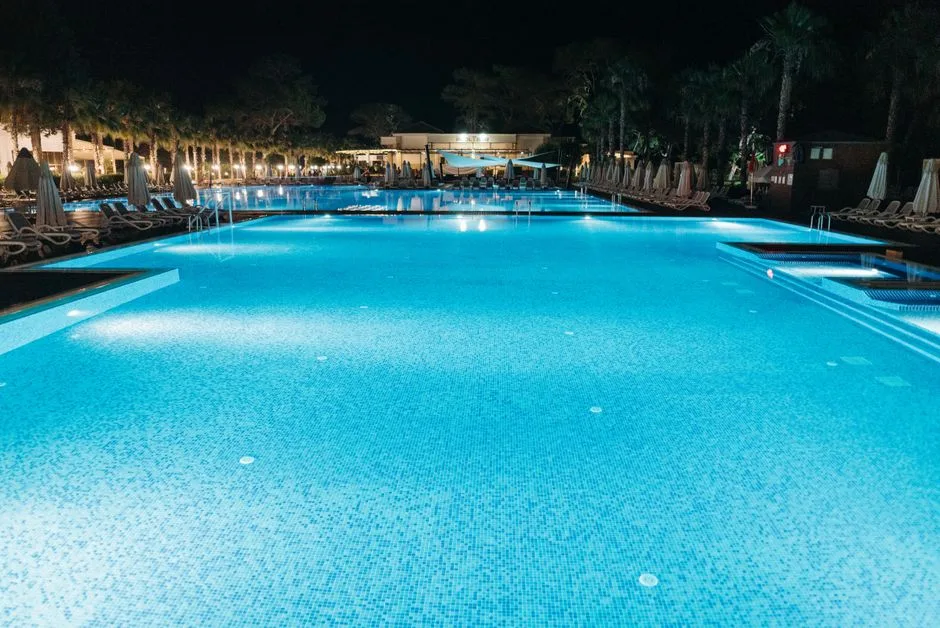
UV & Ozone Sanitation Upgrade
Adding a UV (ultraviolet) or ozone sanitation system as a secondary disinfectant — working alongside a reduced level of chlorine or salt-generated chlorine — dramatically reduces the amount of chlorine needed to maintain safe water. UV systems pass pool water through a chamber containing a high-intensity UV-C lamp that destroys bacteria, viruses, and algae cells as they pass through; ozone systems inject ozone gas (O₃), a powerful oxidizer, into the water. Both systems reduce combined chlorine (chloramines — the compounds that cause red eyes, skin irritation, and that characteristic chlorine smell) and allow you to run the primary chlorine/salt level at 0.5-1.0 ppm instead of the standard 1.0-3.0 ppm. A quality UV or ozone system costs $800-$2,000 installed. The UV lamp or ozone generator cell needs annual replacement ($100-$300). These are supplemental systems — they do not replace chlorine entirely because they only treat water as it passes through the equipment pad (not the pool itself), but they reduce chlorine demand by roughly 50-70% and produce noticeably softer-feeling, less irritating water. Particularly worthwhile for indoor pools (where off-gassing chloramines accumulate in the enclosed air space) and for swimmers with sensitive skin or chlorine allergies.
Photo by Pavel Danilyuk on Pexels
Cartridge Filter Upgrade
Replacing an old sand filter or diatomaceous earth (DE) filter with a modern large-capacity cartridge filter is a practical upgrade that reduces maintenance, eliminates backwashing, and saves water. Cartridge filters use pleated polyester filter elements that capture particles down to 10-15 microns (comparable to DE and finer than sand at 20-40 microns). Unlike sand and DE filters, cartridge filters never need backwashing — you simply remove the cartridge elements every 3-6 months and hose them clean, which takes 15 minutes and wastes zero water. What reaches the filter decides how often that chore comes around: a battery-powered robotic pool cleaner running daily lifts leaves, grit, and lotion residue out of the water before the cartridge sees them, so the 3–6 month interval stretches toward the long end and each cleaning is lighter. Over a year in a drought-prone region, eliminating backwashing can save 10,000-30,000 liters / 2,600-8,000 gallons of water. A quality large-capacity cartridge filter (Pentair Clean & Clear, Hayward SwimClear) sized for the pool costs $600-$1,500 plus $200-$400 for installation. The cartridge elements need replacement every 2-3 years ($100-$300 per set). The filter upgrade is often done alongside a variable speed pump replacement since the reduced pump flow rates of a VS pump pair perfectly with the lower-resistance flow characteristics of a cartridge filter. The combination maximizes both energy and water savings.
Photo by Jeffry Surianto on Pexels
Auto-Fill & Overflow System
Installing an automatic water level control system — a float-valve or electronic sensor mounted in the pool wall or skimmer that automatically adds water when the level drops below a set point, and an overflow drain that removes excess water after heavy rain — eliminates the chore of monitoring and adjusting the pool water level. An auto-fill connects to a dedicated water supply line (garden hose connection or hard-piped to the house water line) and adds water gradually as evaporation and splash-out lower the level. The overflow drain (typically a pipe set at the maximum water level that drains to the yard, a storm drain, or a dry well) prevents the pool from overflowing onto the deck and into the house during heavy rain. An auto-fill with overflow costs $500-$1,500 installed including the plumbing connection, level sensor or float valve, and overflow pipe. In hot, dry climates where a pool can lose 5-10cm / 2-4 inches of water per week to evaporation, an auto-fill is practically essential — manually topping up the pool with a garden hose every 3-4 days gets old fast. The system also prevents the pump from running dry (and burning out) if the water level drops below the skimmer mouth during a period when you are away from home.
Photo by Kindel Media on PexelsDeck & Coping Makeovers: The Frame Around Your Water
Concrete Deck Resurfacing with Stamped Overlay
Resurfacing an old, cracked, or stained concrete pool deck with a stamped concrete overlay — a thin (6-12mm / 1/4-1/2 inch) layer of polymer-modified cement applied over the existing concrete, stamped with a pattern (stone, slate, tile, brick, or wood plank texture), and colored with integral pigment and release agent — gives you a brand-new deck surface at roughly 40-60% of the cost of full demolition and replacement. A stamped overlay on an average pool deck (roughly 80-120m² / 860-1,300ft²) costs $5,000-$12,000 and takes 5-8 days including surface preparation (pressure washing, crack repair, bonding agent application), overlay application, stamping, and sealing. The overlay also allows you to change the deck color and pattern — turning a plain grey broom-finished slab into a warm, textured flagstone or slate look that transforms the entire pool area’s character. The overlay typically lasts 10-15 years before needing a re-coat or re-seal. Important limitation: the existing concrete slab must be structurally sound — an overlay will not fix a slab with active settlement, heaving, or deep structural cracks; those require partial or full slab replacement first.
Photo by Pixabay on Pexels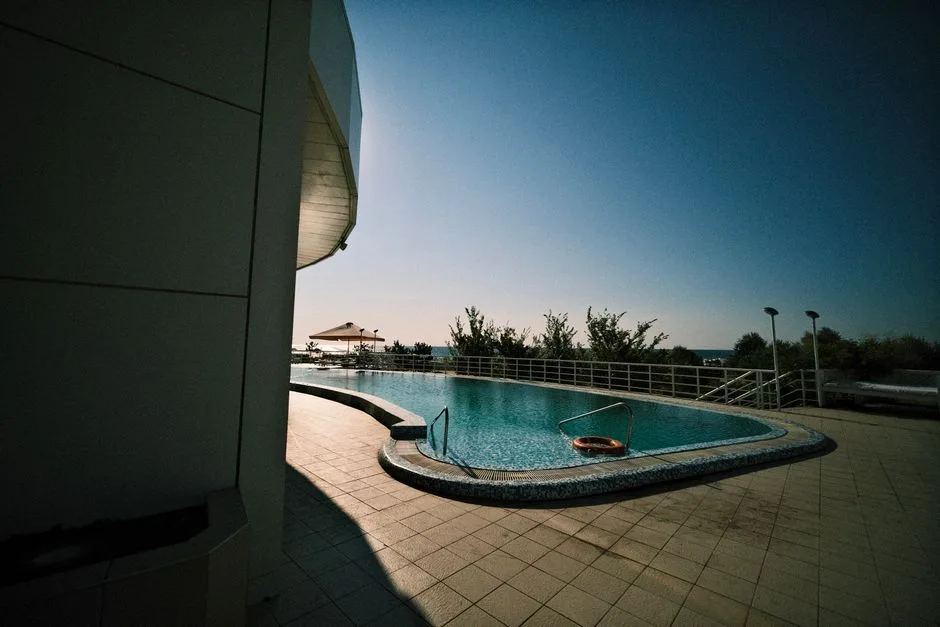
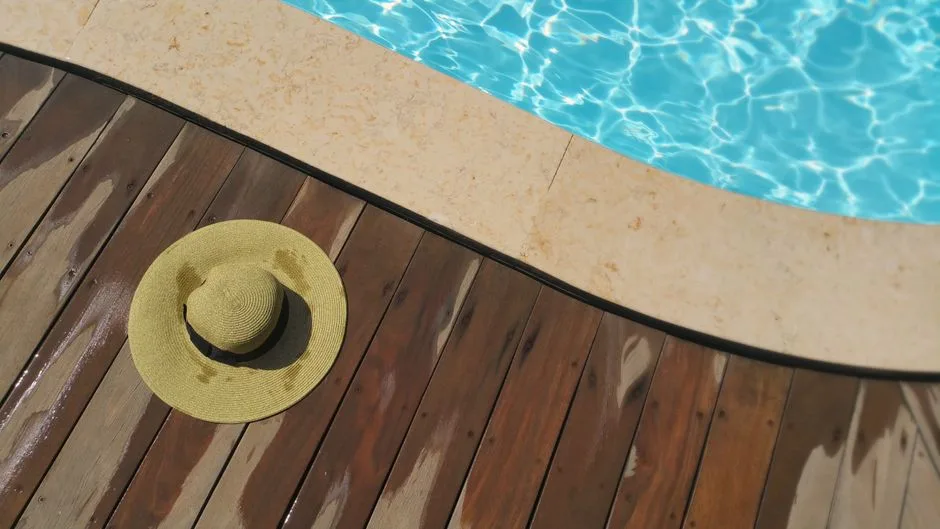
Travertine Coping Replacement
Replacing old, cracked, or dated concrete bullnose coping with natural travertine coping — warm beige, ivory, or walnut-colored tumbled or honed stone — is the single most impactful coping upgrade and one of the most popular pool deck renovations overall. Travertine coping brings natural stone warmth, texture, and timelessness that concrete and brick cannot match. The stone stays cool underfoot even in direct sun (travertine is naturally porous and does not absorb and hold heat the way concrete and brick do), and the tumbled edges create a soft, organic transition between deck and water. Travertine coping costs $30-$60 per linear foot installed, so a full coping replacement around an average pool perimeter (roughly 30-45m / 100-150 linear feet) runs $3,000-$8,000. The renovation takes 3-5 days and involves removing the old coping, preparing the bond beam, and setting the new stone coping with thin-set mortar and grout. Travertine is a sedimentary stone and benefits from periodic sealing ($200-$400 every 3-5 years) to prevent staining from pool chemicals, sunscreen, and organic debris. The color range (ivory, walnut, silver, and gold tones) pairs beautifully with almost any deck material.
Photo by Egor Komarov on Pexels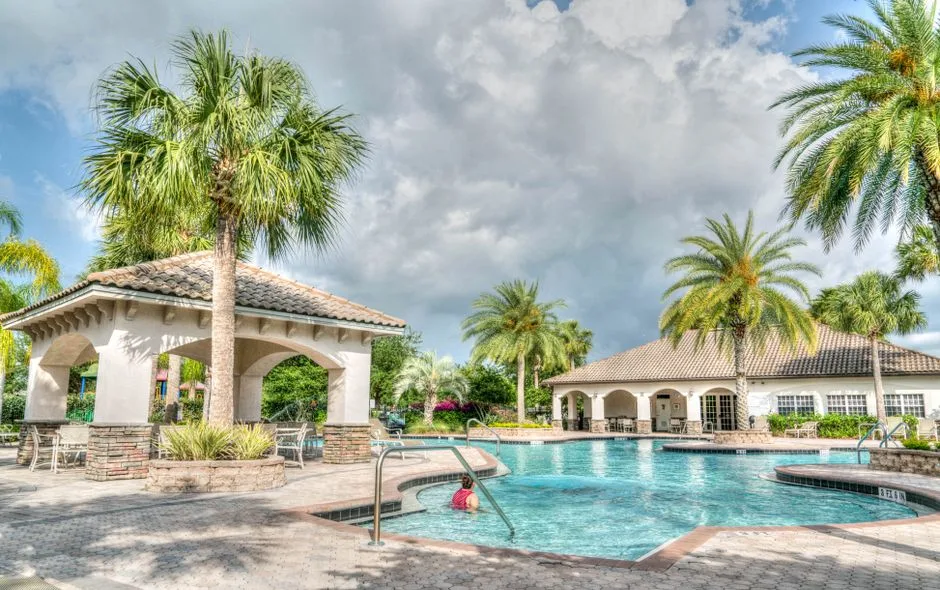
Paver Deck Overlay (Over Existing Concrete)
Installing concrete pavers or natural stone pavers directly over an existing structurally sound concrete deck slab — using a thin sand setting bed and edge restraint system — gives you the premium look and permeability of a paver deck without the cost and disruption of demolishing the existing slab. The pavers are laid on a 1-2cm / 1/2-3/4 inch sand bed over the existing concrete, with a perimeter edge restraint to lock the pavers in place. Permeable pavers (with wider joints filled with permeable aggregate) allow rainwater to drain through rather than running off, which can help with deck drainage issues that developed with the original solid slab. Budget $10-$25 per square foot installed, so an average pool deck costs $8,000-$25,000. The renovation takes 5-10 days. The key limitation: the existing slab must be at a height that allows the paver surface to end up flush with or slightly below the pool coping — if the slab is already too high relative to the coping, adding pavers will create a trip hazard at the coping-to-deck transition. In that case, the existing slab must be demolished or mechanically ground down before pavers can be installed.
Photo by Pixabay on Pexels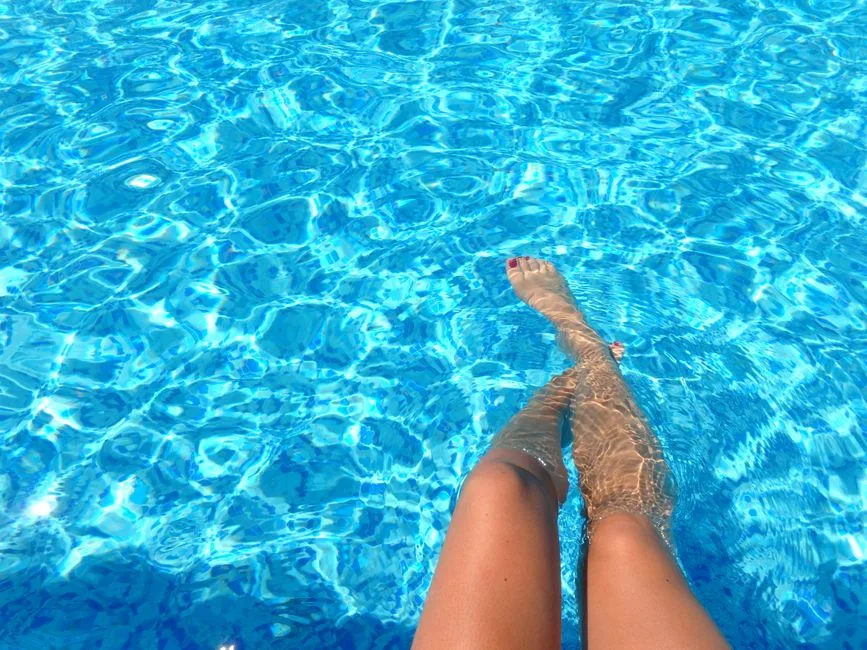
Cool Deck Coating (Acrylic / Kool Deck)
Applying an acrylic cool-deck coating — a textured, reflective acrylic finish sprayed or troweled over the existing concrete deck — is the most cost-effective deck resurfacing option and the best-performing surface for staying cool underfoot in hot, sunny climates. Products like Kool Deck (the original, by Mortex), SunDek, or Spray-Crete use a cement-acrylic base with reflective pigments and a textured surface that reduces surface temperature by 15-25°C / 25-45°F versus uncoated concrete or brick on a 35°C / 95°F day. The textured finish also provides reliable non-slip grip even when wet. A cool-deck coating on an average pool deck costs $3,000-$7,000 and takes 3-5 days. The coating lasts 8-12 years before needing a re-coat. Color options typically range through light earth tones (sand, ivory, terracotta, light grey) — darker colors absorb more heat and defeat the purpose of a cool-deck product. This is the ideal budget deck makeover for hot-climate pools, particularly in the southwestern US, Texas, Florida, and Australia where bare concrete pool decks become painfully hot and essentially unusable in bare feet during summer afternoons.
Photo by Sarah Schorer on Pexels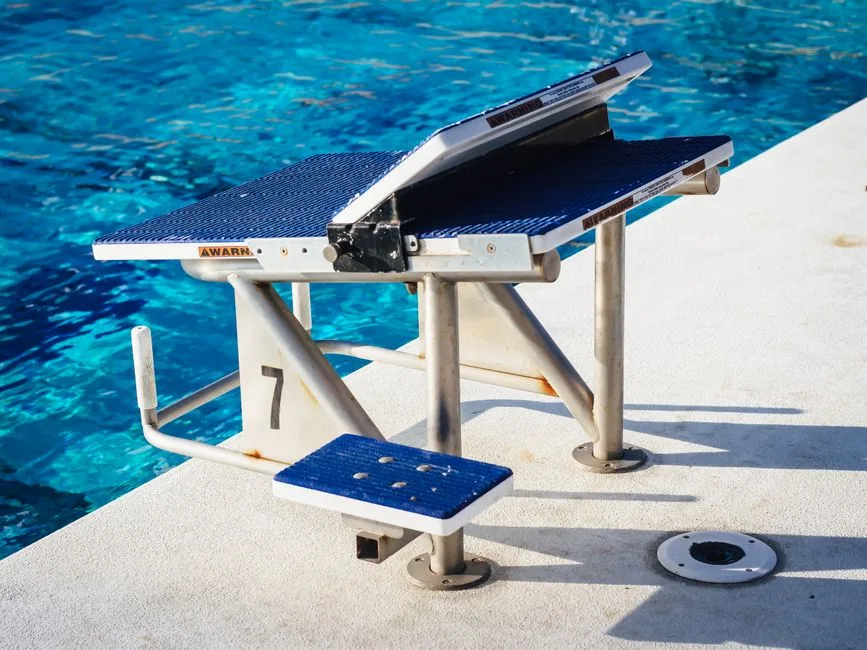
Stamped Concrete Deck Makeover
If the existing concrete deck slab is in good structural condition but visually tired, a stamped concrete overlay (thicker and more durable than the thin resurfacing overlay described in item #28) can be applied at 2-4cm / 3/4-1.5 inches thick, stamped with a deep, three-dimensional stone, slate, tile, or wood-plank pattern, and integrally colored for a permanent, fade-resistant finish. Stamped concrete reads convincingly as natural stone from any distance beyond arm’s length, and the thicker overlay can bridge minor surface cracking and spalling in the original slab. Budget $8-$18 per square foot installed for a quality stamped overlay with two-color release (a base color plus a contrasting color pressed into the texture for depth and realism). An average pool deck runs $6,000-$18,000. The renovation takes 5-8 days. The stamped surface should be sealed with a high-quality acrylic or polyurethane sealer and re-sealed every 2-3 years ($300-$600 per application) to maintain color vibrancy and stain resistance. Stamped concrete looks best when the pattern scale matches the space — use larger stamp patterns (slate, large flagstone) on larger decks and smaller patterns (cobblestone, brick) on compact decks.
Photo by Kindel Media on Pexels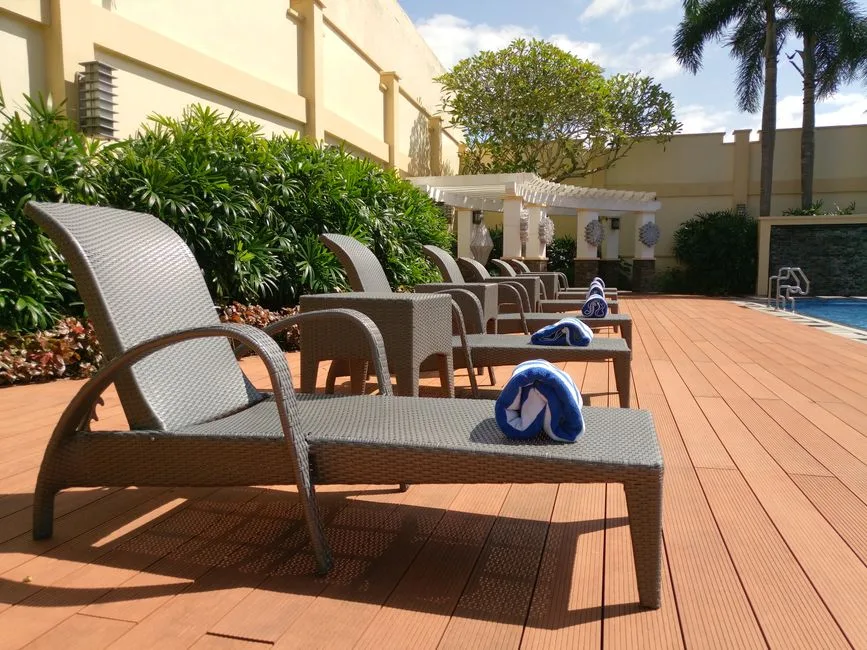
Wood / Composite Deck Addition
Adding a wood or composite deck section — typically as a raised platform adjoining the pool on one side, or as a bridge transition between the house patio and the pool deck — brings warmth, texture, and organic material contrast that concrete and stone alone cannot provide. For poolside use, hardwood decking like ipe, cumaru, or teak ($12-$25 per linear foot for the decking material) provides natural durability (25-40 year lifespan) with rich, warm color that weathers to a silvery grey. Capped composite decking (Trex, TimberTech, AZEK at $8-$15 per linear foot) provides the wood look with zero maintenance — no sanding, staining, or sealing, and complete resistance to pool chemicals and UV. A raised wood/composite deck section of 15-25m² / 160-270ft² costs $4,000-$12,000. The deck structure underneath (pressure-treated joists on concrete footings) must be engineered for the span and load. Wood decking around pools has one special requirement: the deck boards should be installed with slightly wider gaps (6-8mm / 1/4-5/16 inch) than standard to allow for expansion when wet from pool splash and to allow pool water to drain through rather than pooling on the surface. All fasteners must be 316 marine-grade stainless steel — standard deck screws will leave rust stains within the first season.
Photo by dansev on Pexels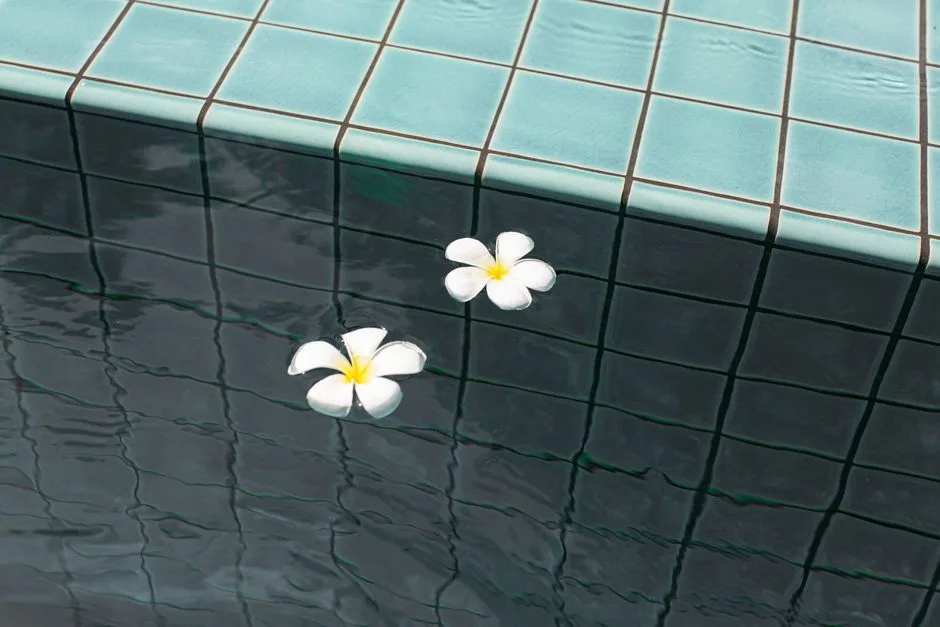
Natural Stone / Flagstone Coping Upgrade
Replacing standard concrete coping with natural flagstone — irregular, cleft-faced stone slabs in earthy tones (Oklahoma flagstone, Arizona flagstone, Pennsylvania bluestone, or Tennessee crab orchard stone) — gives the pool edge an organic, naturalistic character that pairs perfectly with freeform, lagoon, and rustic pool designs. Each flagstone piece is unique in shape and color variation, creating a one-of-a-kind pool edge that manufactured materials cannot replicate. Flagstone coping costs $25-$50 per linear foot installed, so a full perimeter runs $3,000-$8,000. The irregular, cleft surface provides excellent wet-footing grip — a safety advantage at the pool edge. Flagstone should be sealed with a penetrating natural-stone sealer ($200-$400 every 3-5 years) to prevent staining and enhance the natural color without adding shine. In freeze-thaw climates, flagstone must be set on a proper mortar bed over a waterproof membrane on the bond beam to prevent water from penetrating behind the stone, freezing, and popping pieces off. In warm climates where freeze-thaw is not a concern, flagstone can also be dry-set in sand or gravel for a more rustic, permeable installation.
Photo by Cup of Couple on PexelsFull Backyard Transformations: The Complete Before & After
Complete Pool + Landscape Renovation
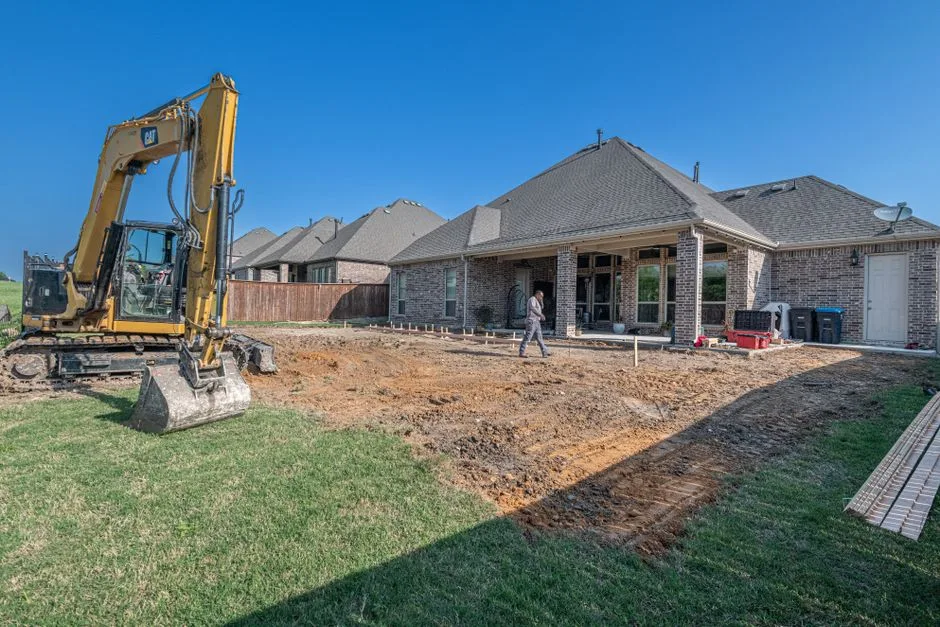
A full-scope pool and landscape renovation — resurfacing the pool, replacing the deck and coping, upgrading equipment, re-landscaping the planting beds, and adding new features like a fire pit, pergola, or outdoor kitchen — done as a single integrated project rather than piecemeal over several years. The primary advantage of a comprehensive renovation is design coherence: the colors, materials, and style of every element are chosen together, creating a unified result that piecemeal renovations rarely achieve. A full-scope renovation for an average backyard with a pool costs $50,000-$120,000+ and takes 8-16 weeks. The pool component (replaster, new tile, new coping, equipment upgrade) typically accounts for 40-50% of the total; the hardscape (deck, paths, walls, steps) accounts for 25-35%; the softscape (plants, soil, mulch, irrigation, lighting) accounts for 15-25%. The single most important decision: hire a design-build firm that does both pool and landscape work in-house, or hire a landscape architect to produce a unified plan and then separately contract the pool and landscape contractors — what you want to avoid is the pool contractor and landscape contractor working from different visions without coordination. The integrated approach is more expensive up front but almost always produces a better result and costs less than doing the same work in separate phases due to shared mobilization, excavation, and site access.
Photo by Ryan Stephens on Pexels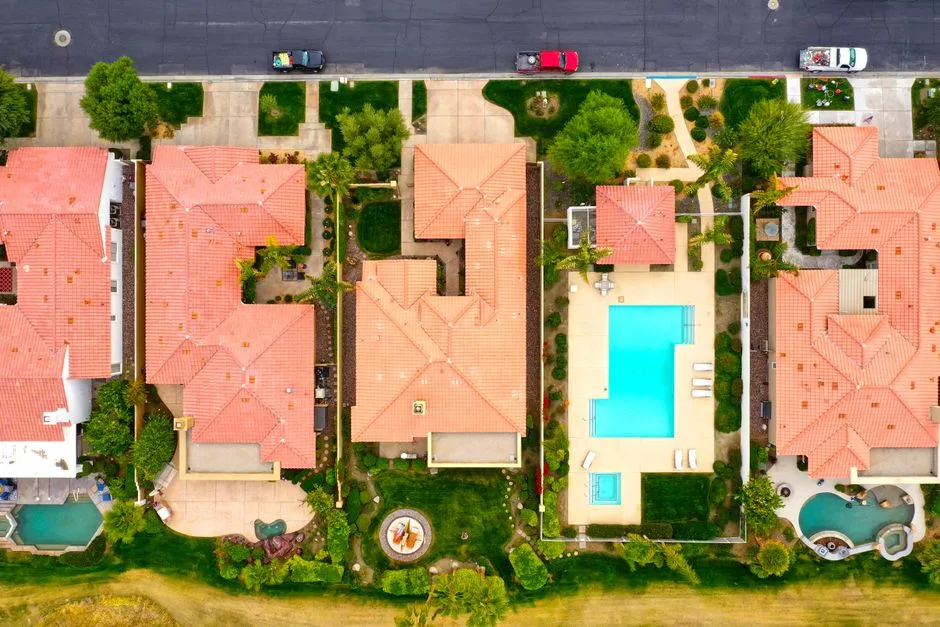
Before & After: 1980s/90s Pool Modernization
The classic pool renovation archetype: an aging 1980s or 1990s pool with a tired blue plaster surface, cracked concrete coping, a bleached-out grey concrete deck, a noisy single-speed pump, a single white underwater light, and a dated kidney or freeform shape — transformed into a modern pool with a charcoal or navy pebble finish, travertine coping, a stamped concrete or paver deck in warm earth tones, a silent variable speed pump, color-changing LED lights, and new features like a tanning ledge, fire bowls on columns, and an automated control system. This type of modernization typically costs $40,000-$80,000 and takes 8-12 weeks. The transformation is transformative — not just for the pool but for how the entire backyard feels and functions. The key to a successful era modernization is respecting the pool’s existing bones (a well-built 1980s gunite shell is often structurally excellent and does not need replacement) while updating every visible surface, every piece of equipment, and the entire material palette to current aesthetics. The before/after photos from this type of renovation are genuinely jaw-dropping — the same pool shell, unrecognizably transformed by surfaces, materials, lighting, and landscaping.
Photo by jd garrett on Pexels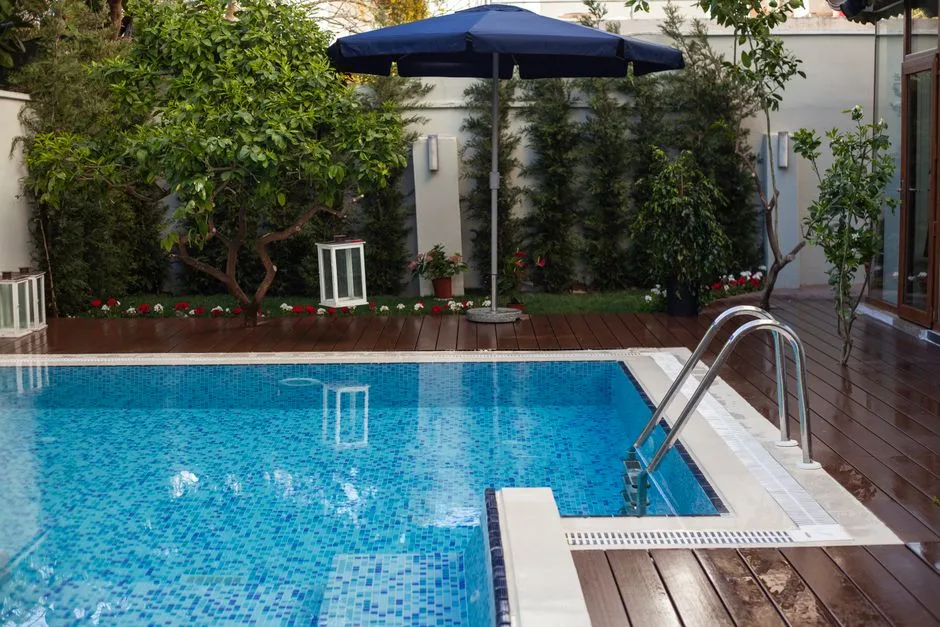
Small / Tiny Yard Pool Transformation
Transforming a tiny backyard — 30-60m² / 320-650ft² of total outdoor space — with a compact pool or spa, space-maximizing deck design, and clever vertical landscaping demonstrates that you do not need a large property to have a stunning pool area. Small-yard pool renovations often involve: replacing an oversized or awkwardly shaped existing pool with a more space-efficient rectangular plunge pool or swim spa, using the same material across the entire yard (deck, coping, and even vertical surfaces) to eliminate visual boundaries that make the space feel smaller, installing a retractable pool cover that doubles as a deck surface when closed, using built-in bench seating along the perimeter walls rather than freestanding furniture that consumes floor space, and vertical gardening on the boundary walls and fences to add lushness without consuming square footage. Budget: $30,000-$70,000 for a complete small-yard transformation including pool, deck, planting, and lighting. The design principles that make small pools work — clean lines, restrained material palette, dual-purpose every element, and a single strong focal point — often produce more memorable and magazine-worthy results than larger budgets spread across a bigger, less thoughtfully designed space.
Photo by Engin Akyurt on Pexels
Natural Pool / Swim Pond Conversion
Converting a traditional chemically-treated pool into a natural swimming pool or swim pond — where aquatic plants in a separate regeneration zone filter and clean the water biologically instead of using chlorine or salt — is a niche but growing renovation category driven by owners who want a chemical-free swimming experience and a more ecologically integrated backyard. The conversion involves: dividing the existing pool into a swimming zone (60-70% of the surface area) and a planted regeneration zone (30-40%), or building a separate planted filter pond adjacent to the existing pool with water circulated between them; removing all chlorine/salt equipment; installing a biological filter, skimmer, and circulation pump designed for natural pools; and planting the regeneration zone with aquatic filter plants (water lilies, irises, rushes, cattails, water hyacinth). Budget: $20,000-$50,000 for a natural conversion of an existing pool. The water in a properly designed natural pool is clear (not murky — the plants and beneficial bacteria do the filtering), slightly tea-colored from natural tannins, and completely free of chemicals. The regeneration zone becomes a wildlife habitat — dragonflies, frogs, and birds appear within weeks of planting. The swimming experience is fundamentally different: silky, soft water without the chemical sensation of a traditional pool. Note: natural pools require more surface area than conventional pools (the regeneration zone needs roughly equal area to the swimming zone) and the water temperature fluctuates more — they are warm in summer and cold in winter like a natural pond.
Photo by Pavel Danilyuk on Pexels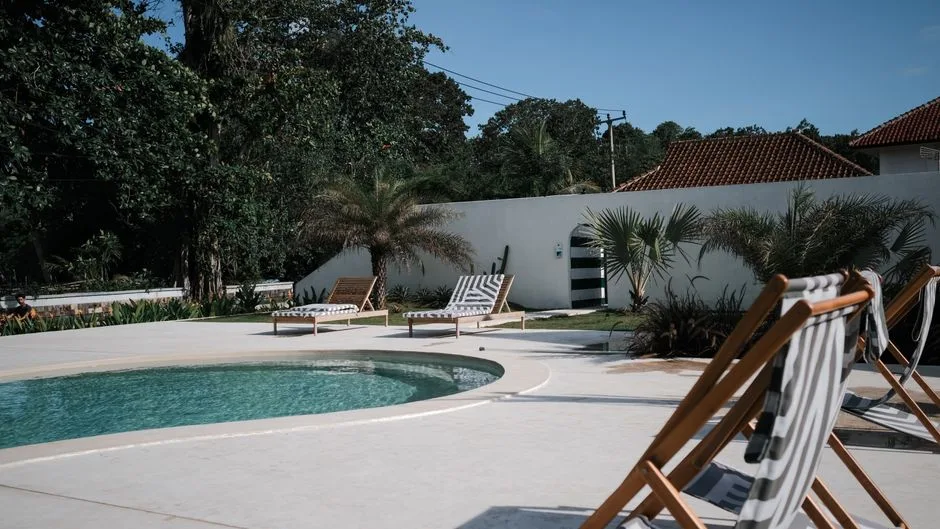
Resort-Style Backyard Makeover
A resort-style makeover — designing the entire pool and backyard to evoke the feeling of a luxury tropical or Mediterranean resort — is driven by atmosphere and experience rather than any single feature. The key elements: a dark or reflective pool surface that mirrors the sky and landscaping, lush layered tropical planting (large-leaf plants, ornamental grasses, and flowering shrubs in dense, overlapping layers), multiple distinct lounge zones at different levels (a raised daybed platform, a sunken conversation pit, a shaded dining pergola), atmospheric lighting at multiple heights (uplighting in trees, path lights, underwater LED, and lanterns at seating level), and the sound of moving water from at least one source (a sheer descent waterfall, deck jets, or a bubbling fountain). A full resort makeover costs $60,000-$150,000+ and takes 10-20 weeks. The atmosphere-first approach means every material, plant, and furnishing choice serves the cohesive resort concept — there is no piece that reads as generic big-box outdoor furniture or purely functional equipment-pad thinking. The result is a backyard that feels like a vacation destination rather than a suburban pool — and that genuinely changes how much time the family spends outside, how they entertain, and how the home feels as a whole.
Photo by Mochammad Algi on Pexels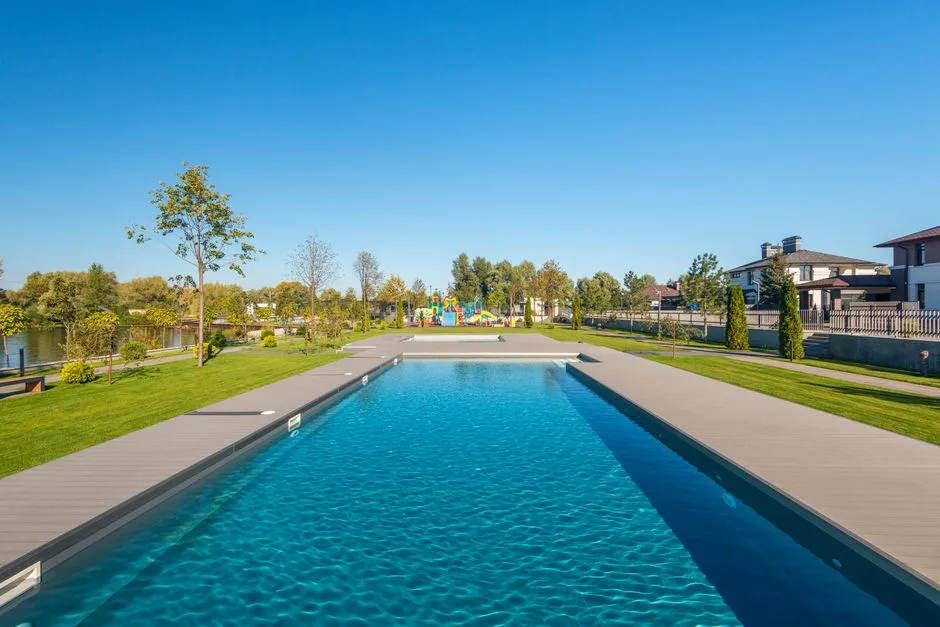
Family-Friendly Pool Redesign
Redesigning a pool that was built for a previous owner’s lifestyle (or a previous phase of the current family’s life) into a multi-generational family pool that works for toddlers, school-age kids, teenagers, parents, and grandparents simultaneously requires deliberate design choices. Key family-friendly renovation elements: adding a large tanning ledge / baja shelf (safe shallow zone for toddlers, in-pool lounging for adults), converting a diving board end into graduated-depth steps with a handrail (safe entry for grandparents and small children), adding a dedicated play zone with bubblers and deck jets (endless kid entertainment without taking over the whole pool), installing a safety ledge or bench along the deep end wall (a rest stop for swimmers who need a break), upgrading to a salt chlorine generator (gentler on skin and eyes for kids who spend hours in the water), and replacing a noisy single-speed pump with a quiet variable speed model (the pool equipment pad is often near a bedroom window or the main seating area). Budget: $30,000-$70,000 for a comprehensive family-oriented renovation including structural changes, new surface, equipment, and deck work. The renovation should also address safety: verify that the pool fence, gate latch, and any door alarms meet current code — safety codes have tightened significantly in the last 20 years, and a pool that met code when built may not meet current standards.
Photo by Max Vakhtbovych on Pexels
Luxury Pool + Outdoor Kitchen Pavilion
Adding a fully equipped outdoor kitchen and dining pavilion connected to the pool area — with a built-in grill, sink, refrigerator, ice maker, bar seating, and a weatherproof dining set under a solid-roof pavilion or pergola — transforms the pool from a standalone feature into the centerpiece of a complete outdoor entertaining compound. The pavilion structure (typically 4m × 5m / 13ft × 16ft or larger) costs $15,000-$40,000 depending on materials (timber frame with shingle roof, powder-coated aluminum with louvered roof, or masonry with tile roof). The outdoor kitchen within it costs $10,000-$30,000 depending on appliance quality and countertop material. Combined with a $30,000-$60,000 pool renovation (new surface, coping, deck, equipment, lighting), the total integrated project runs $55,000-$130,000 and takes 12-20 weeks. The pavilion’s roof provides critical shade over the dining area — outdoor dining without shade is essentially non-functional in summer — and protects the kitchen appliances from direct weather exposure. Position the pavilion close enough to the pool for easy traffic flow between swimming and eating (5-8m / 16-26ft is ideal) but far enough that grill smoke and cooking sounds do not dominate the lounging area. Run gas, water, electrical, and data conduits from the house to the pavilion in a single trench during the renovation — the incremental cost of running extra empty conduit is negligible compared to digging a second trench later.
Photo by Lee Salem on Pexels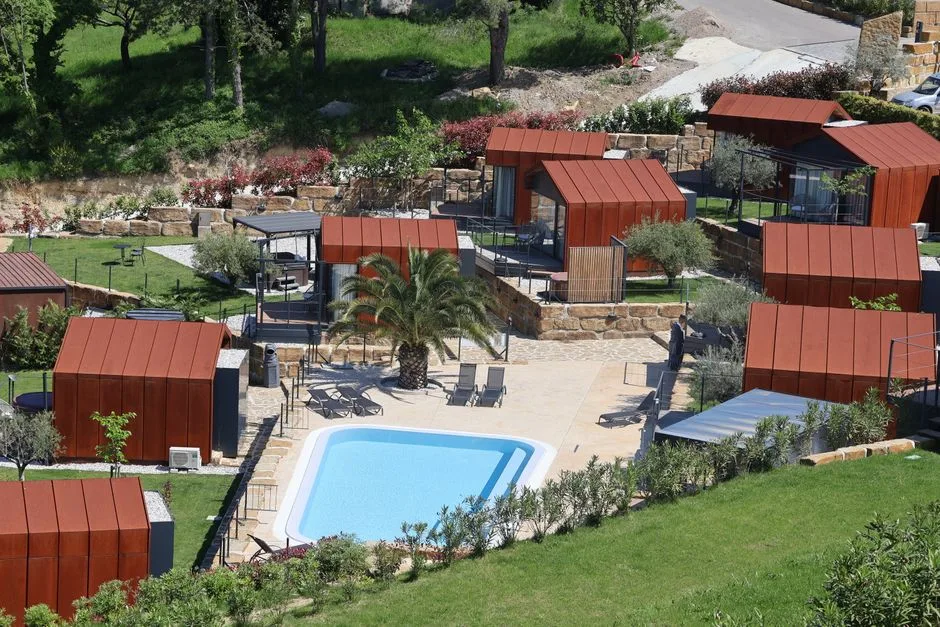
Eco-Friendly / Sustainable Pool Retrofit
A sustainability-focused pool renovation — reducing the pool’s energy consumption, water usage, and chemical load as much as practically possible while maintaining a beautiful, swimmable pool — is an increasingly popular approach driven by both environmental values and long-term operating cost savings. Key elements: variable speed pump (60-80% energy reduction versus single-speed), cartridge filter (zero backwash water waste), salt chlorine generator (eliminates manufactured/transported chlorine chemicals), solar pool heating or a high-efficiency heat pump (minimizing fossil fuel heating), a high-quality pool cover (reduces evaporation by 90-95%, which is both the largest source of water loss and the largest source of heat loss — an uncovered pool loses 70-80% of its heat through evaporation), LED lighting (80-90% less energy than incandescent), automated chemical monitoring (prevents over-chlorination and re-balancing chemical waste), and planting native, drought-tolerant landscaping around the pool (minimizing irrigation demand). A comprehensive eco-retrofit costs $10,000-$25,000 and typically reduces annual pool operating costs by 40-60%, with a payback period of 4-8 years depending on local energy and water rates. The pool cover alone — at $2,000-$5,000 installed — is the single highest-impact eco-upgrade: it saves water, saves heat, saves chemicals (less UV degradation when covered), and saves cleaning time (less debris in the pool).
Photo by Janez Temlin on PexelsA note from our service team. The week after a resurface or replaster is when the pool needs you most, and it’s the step most owners skip. Fresh plaster cures by pulling calcium and pH into the water, so your chemistry swings hard for the first two to three weeks — we tell every renovation customer to test daily, brush twice a day, and run the pump longer, even if the water looks perfect. The brushing itself is the easy part to automate: running a robotic cleaner nightly through the cure keeps every square foot of new finish gently swept, more consistently than a twice-a-day manual round. The finish you just paid for is at its most fragile while it cures. If the numbers won’t settle or the water clouds up mid-cure, our troubleshooting wizard will tell you whether it’s the plaster or the balance.
Protect the renovation from day one
You just paid for a fresh surface; daily cleaning keeps it looking that way for the full 8–15 year lifespan instead of 5. A robotic cleaner works the floor, walls, and waterline overnight, so the new finish never sits under a layer of the dirt that etches and stains it.
Browse Aiper pool cleanersMore Pool Design Inspiration
This is part of our Pool Design Ideas series. Explore the full collection to plan every detail of your dream pool:


