Fall Lawn Overhaul: Aerate, Overseed, Fertilize, In the Right Order

Aeration, overseeding, and fertilizing can all improve a lawn, but the order matters. Do them out of sequence, and you can waste seed, fertilizer, and a weekend of work.
This is a cool-season plan for fescue, ryegrass, and bluegrass. It covers when to aerate, overseed, and fertilize, plus the weed control, leaf cleanup, and dethatching around it.
If you have Bermuda, zoysia, or St. Augustine, skip the overseeding steps. Fall for you means a light feeding in early autumn, not a renovation.
Start With the Calendar
Count back 45 days from your average first frost. That is your last possible seeding date, and hitting it with room to spare is the goal.
New seedlings need to germinate, root, and put on enough top growth to survive a hard freeze. Tall fescue germinates in 7 to 14 days. Bluegrass takes 14 to 21 days and sometimes longer if the soil has already cooled. Do that math before you buy anything.
Across most of the northern half of the country, that puts the work in the last week of August through mid-September. South of that, late September into early October.
Fall overhaul day calculator
Enter your average first frost date to get your two working days.
Enter your first frost month and day first.
Day A:
Weed control
Day B:
Mow, aerate, overseed, fertilize
Then water lightly, 3 times a day, for the next 3 weeks.
Handle Weeds First, Not After
Handle broadleaf weeds about a month before your seeding day. Dandelions and clover are pulling nutrients down into their roots for winter.
A systemic herbicide travels down with them at that point. One application now beats three summer sprays.
Skip a standard pre-emergent or weed-and-feed product here, even though the timing lines up. It can’t tell your new grass seed from crabgrass seed, and it will stop both.
If weeds are still active when you seed, mesotrione (sold as Tenacity) is the one herbicide labeled safe at or shortly after seeding. It doesn’t interfere with germination the way most pre-emergents do.
Clear The Leaves Before You Start
A layer of leaves blocks light and traps moisture, the same as it does on established turf. Clear them before you mow low and aerate, not after.
New seedlings can’t push through a mat of wet leaves the way mature grass can. See our guide to leaves for raking versus mulching them in place.
Mow Low First
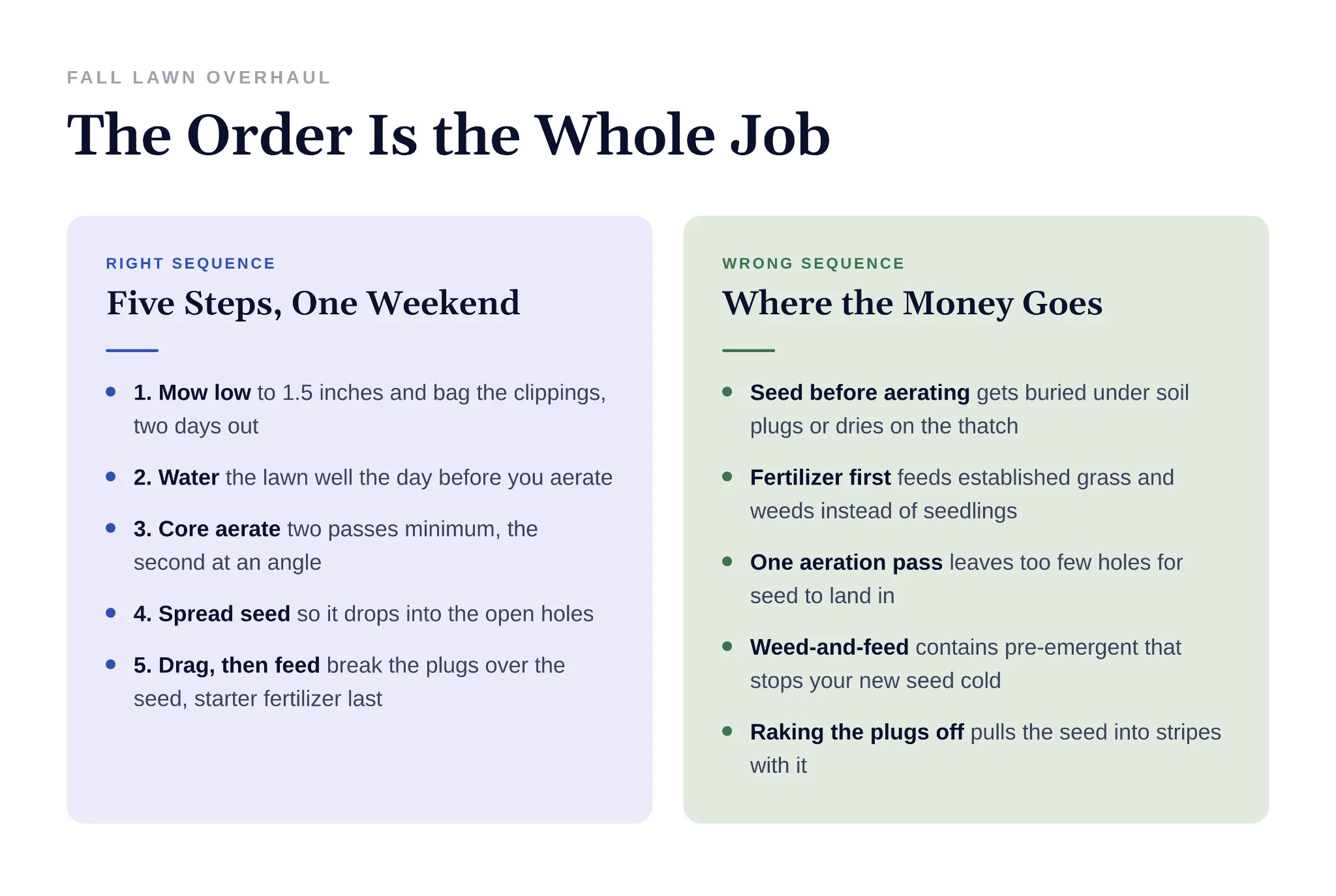
Two days before, drop the mower to its lowest reasonable setting, an inch and a half, maybe two, and bag the clippings.
Short grass lets seed fall through to soil instead of hanging in the canopy. It lets light reach the seedlings, which are competing with mature grass that has a year’s head start on them. And it means you can go three weeks without mowing while the new grass establishes.
Water the lawn well the day before you aerate. Dry soil is why rental aerators bounce.
Dethatch If You Need To
Pull back the grass at a few spots around the yard. If the spongy brown layer between soil and green blades is thicker than half an inch, dethatch before you aerate.
Thinner than that, skip it and go straight to aerating. See our guide to dethatch for the process.
Aerate
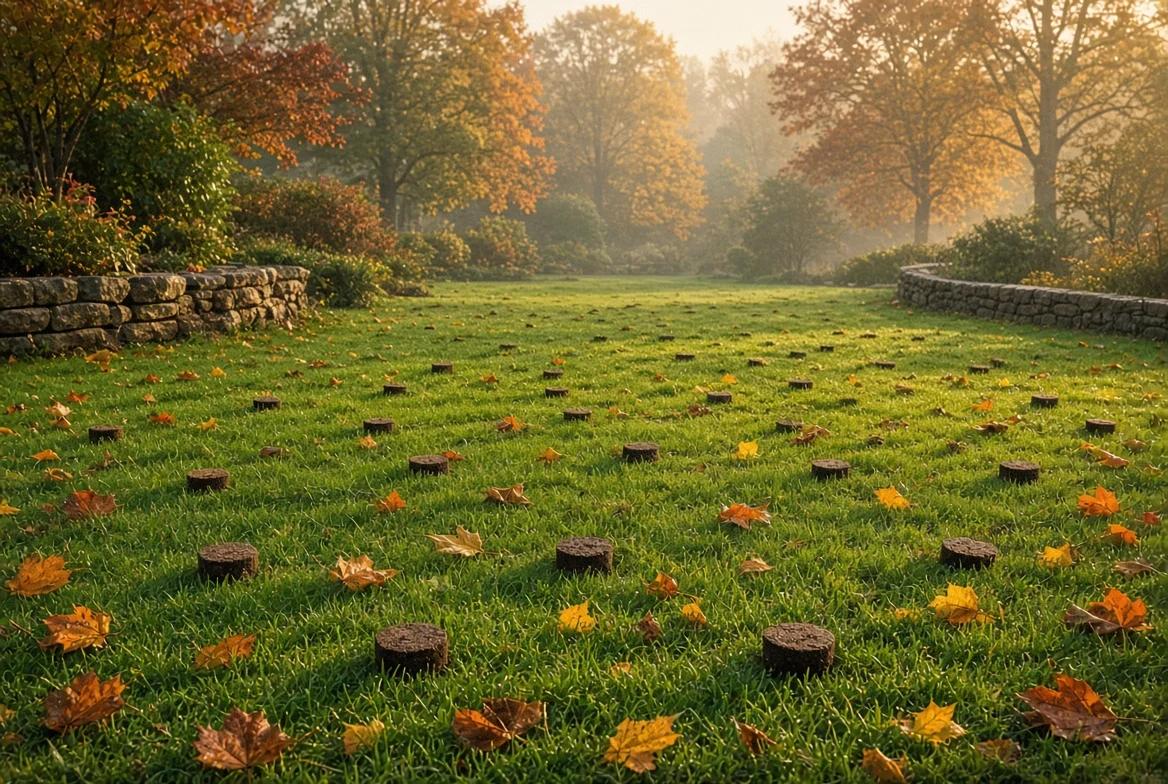
Core aerator. Plugs on the ground.
One pass is not enough for an overseeding job. Two passes minimum, the second at an angle to the first, three if the soil is heavy clay. You want roughly 20 to 30 holes per square foot, dense enough that the lawn looks genuinely damaged when you are done. It should look bad. That is the point.
Leave every plug where it fell.
Seed Into the Holes
Now the seed goes down, and the holes are what you are aiming for. Each one is a small protected pocket with soil on all sides, shade from the sun, and moisture that holds hours longer than the surface does. Seed that lands in a core hole germinates at a much higher rate than seed sitting on flat ground.
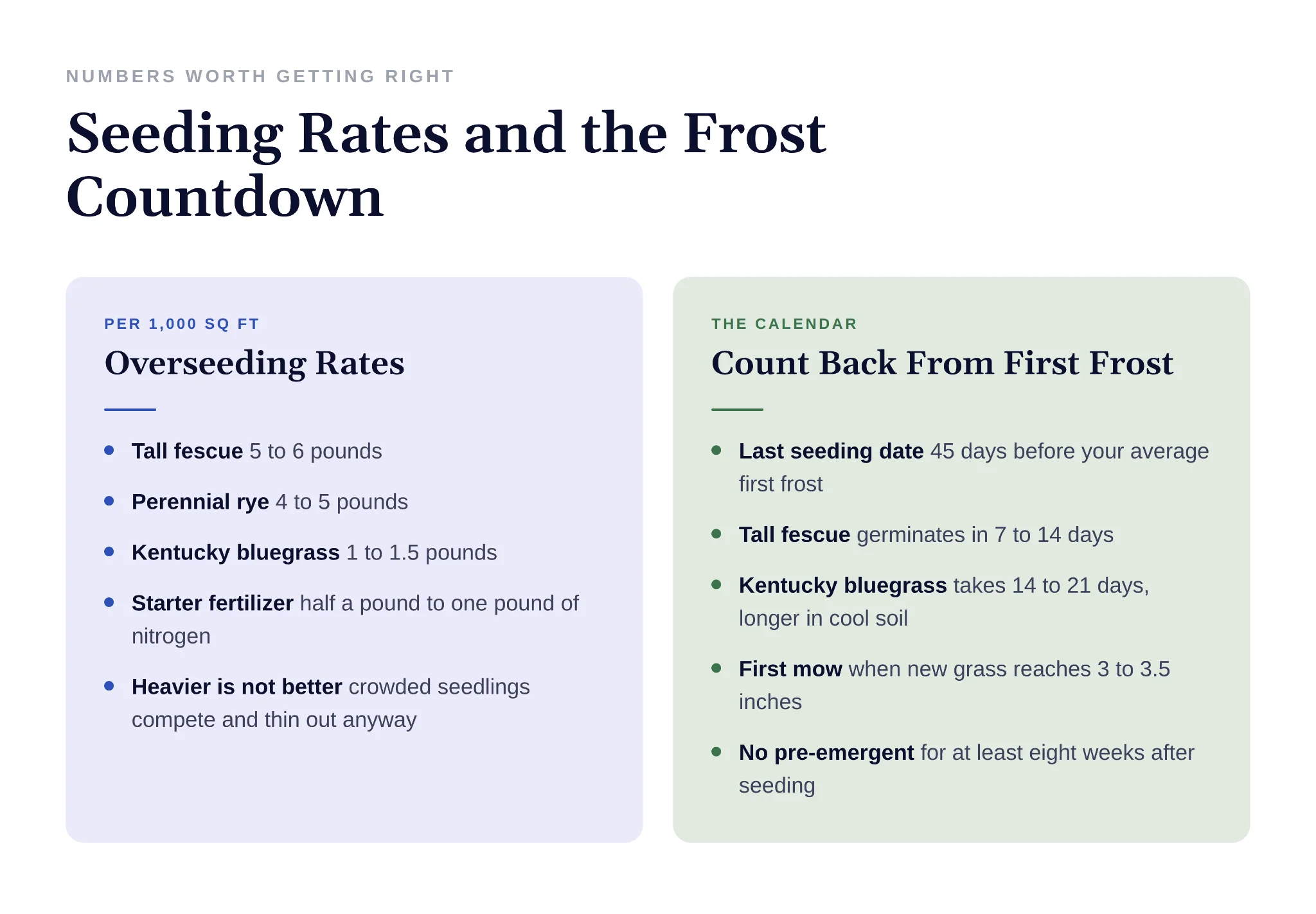
Overseeding rates, per 1,000 square feet: tall fescue at 5 to 6 pounds, perennial rye at 4 to 5, Kentucky bluegrass at 1 to 1.5. Heavier is not better. Overcrowded seedlings compete with each other and thin out anyway.
After spreading, drag a section of chain-link fence or a stiff doormat across the lawn to break the plugs apart. The crumbled soil falls over the seed and gives it the contact it needs. Skip the leaf rake, it will pull seed into windrows and leave you with stripes.
Buy seed with a current test date on the tag and a weed seed percentage at or near zero. The bargain bag at the big-box store is cheap for a reason, and that reason is usually annual ryegrass filler that dies in July.
Fertilize Last
Starter fertilizer, applied after the seed is down and dragged in.
Starter blends carry phosphorus, which mature lawns rarely need, and new roots absolutely do. Something in the range of a 12-24-12 or similar. Half a pound to one pound of nitrogen per 1,000 square feet, enough to push establishment, not enough to force soft top growth going into cold weather.
The Next Three Weeks Decide It
Everything to this point is one weekend of work. Whether it worked is determined entirely by moisture, and the requirement is unforgiving: the top quarter inch of soil cannot be allowed to dry out. Not for an afternoon.
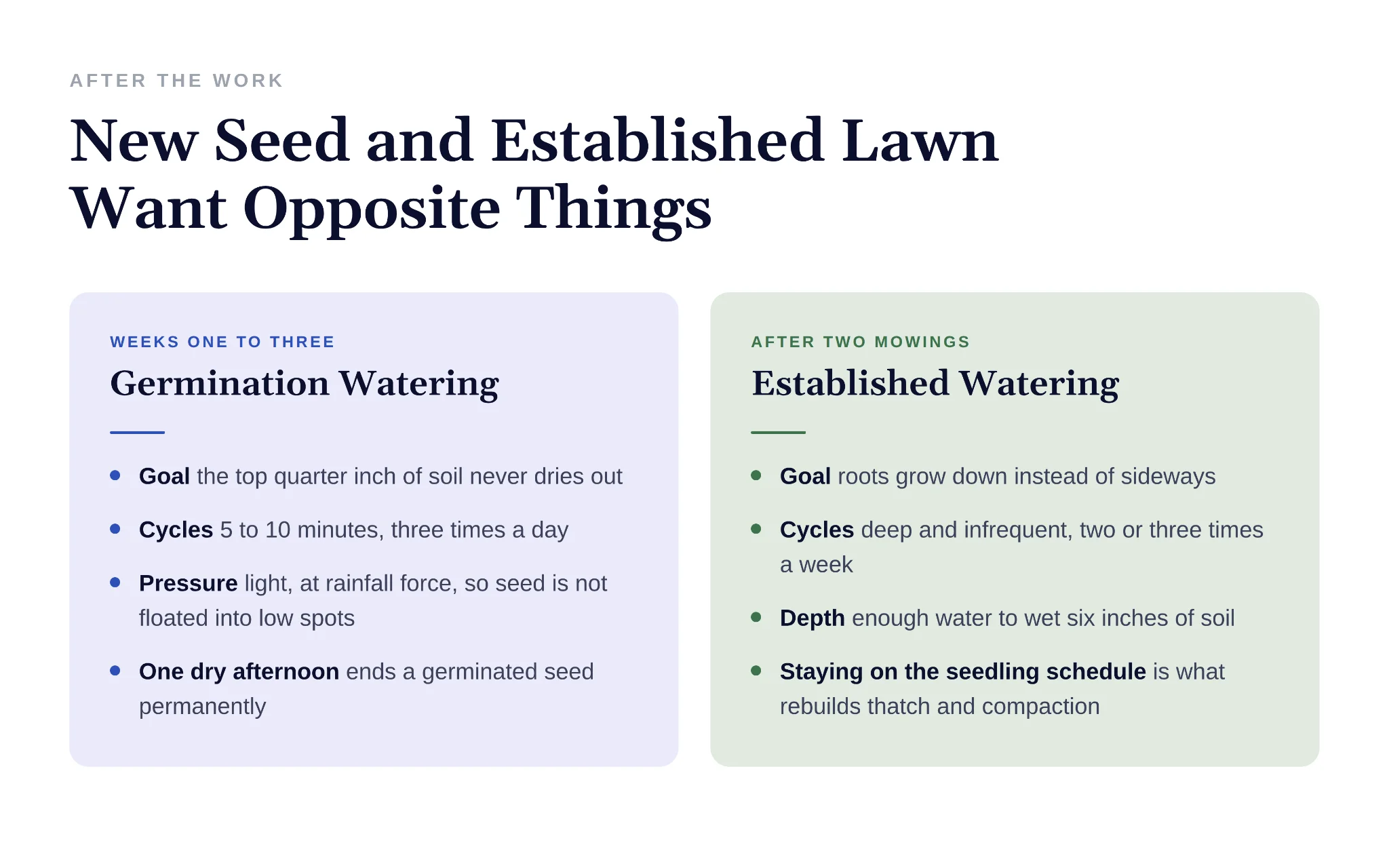
A seed that germinates and then dries has used up its stored energy and is finished. There is no second attempt.
That means short cycles, several times a day, roughly 5 to 10 minutes in the morning, at midday, and in the late afternoon, adjusted for heat and wind.
Three cycles a day for three weeks is 60-odd manual waterings, and the day you forget is usually the day it hits 88 degrees. The Aiper IrriSense 2 runs the seedbed as its own zone on its own frequency while the established parts of the yard stay on a normal schedule, and the built-in rain sensing pauses the cycle when the weather covers it.
The Rest Of The Lawn, Meanwhile
Areas you didn’t overseed don’t need the frequent watering the new seed does. Cut established turf back to about an inch a week as temperatures drop.
Keep watering deeply until you’re within a couple of weeks of the first hard freeze. See our full winterizing guide for shutting everything else down for the season.
Get more pool and lawn care guides from Aiper on Google