Gas vs. Electric Pool Heater: How to Decide

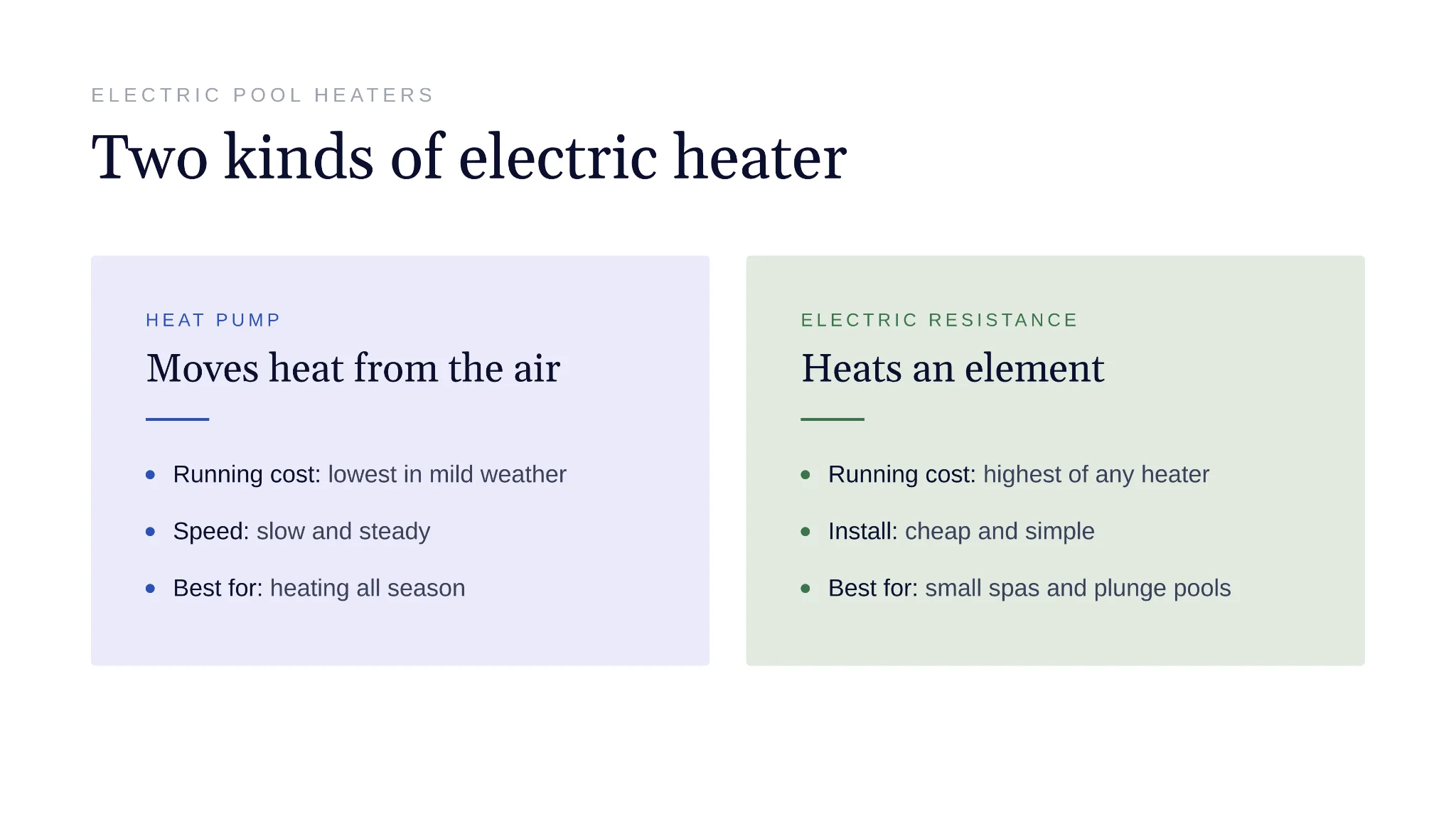
Electric pool heaters cover two very different machines. A heat pump uses electricity to pull warmth from the air and is one of the cheapest ways to heat a pool. An electric resistance heater turns electricity directly into heat, like a kettle, and is one of the most expensive.
That makes three real options: gas, a heat pump, or electric resistance. What your house can supply, how often you swim, and how cold it gets during your season will narrow it to one.
The Three Heater Types
Each type makes heat in a different way, which is why their running costs are so far apart. The table compares them on the points that decide most purchases.
| Gas | Electric heat pump | Electric resistance | |
|---|---|---|---|
| How it heats | Burns natural gas or propane | Moves heat from the outdoor air into the water | Runs current through a heating element |
| Running cost | Moderate to high, tied to fuel prices | Lowest of the three in mild weather | Highest of the three |
| Heating speed | Fast | Slow | Moderate, but only practical for small volumes |
| Cold weather | Works in any air temperature | Struggles once air drops below about 50°F | Works in any air temperature |
| Best fit | Occasional use, spas, cool climates | All-season heating in mild climates | Small spas and plunge pools |
Electric Resistance: A Narrow Fit
Resistance heaters cost little to buy and install. On a full-size pool, the higher electric bill outweighs those savings within the first season.
Resistance heating still has a place on a small spa or a plunge pool. With so little water to heat, the higher rate matters less than the low purchase price and simple installation.
What Your House Can Supply
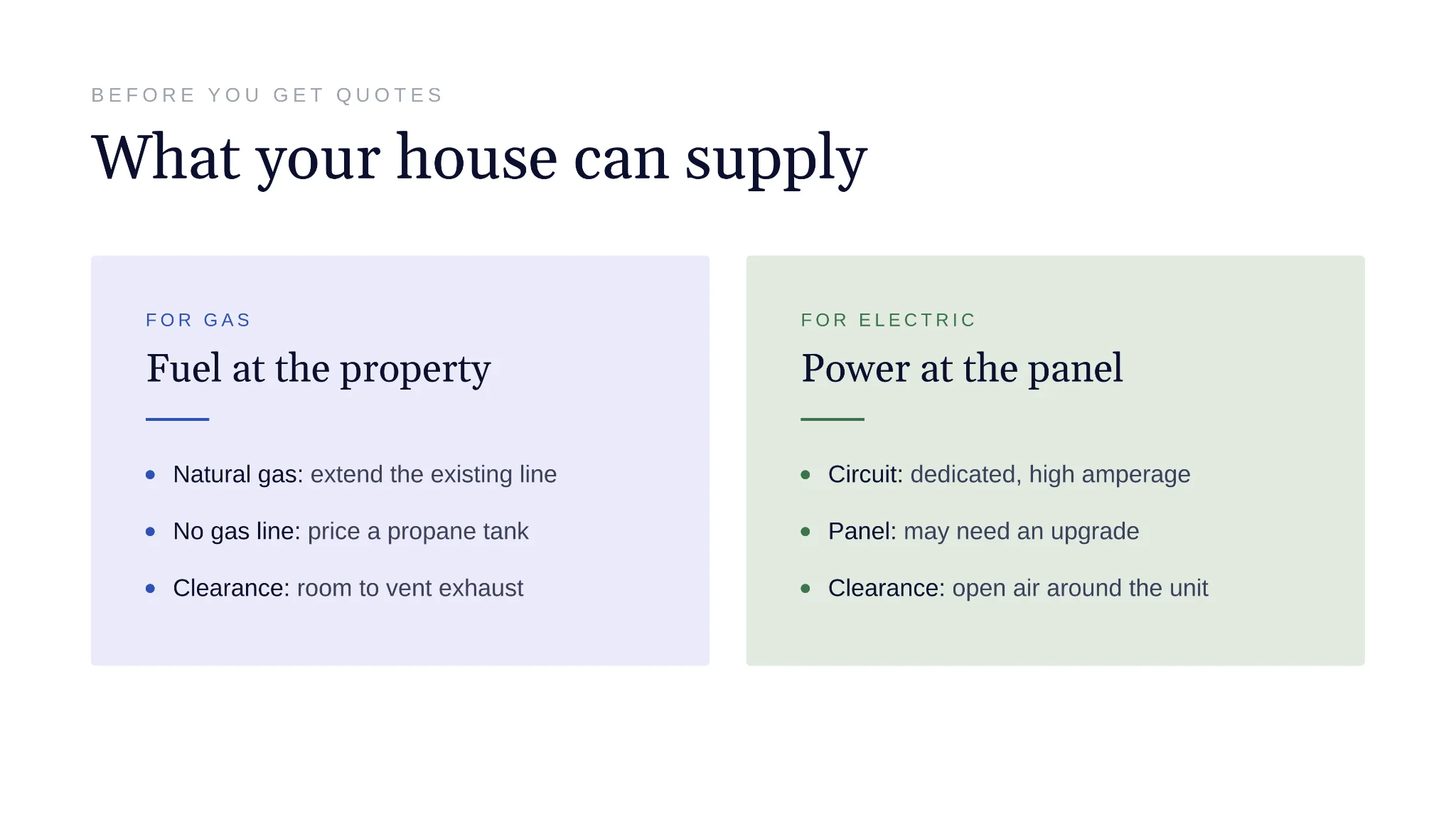
Start with what is already at the property. Running a new fuel line or upgrading the electrical service can add more to the bill than the price difference between heaters.
A natural gas line at the house. Gas is much cheaper to install because the plumber only needs to extend the line to the equipment pad. Ask the installer whether your meter can handle the heater on top of your furnace, water heater, and stove.
No gas line. Gas is still possible with a propane tank, but you pay for the tank, its placement, and delivered fuel, which usually costs more per unit of heat than natural gas.
Electrical panel capacity. Heat pumps and resistance heaters both need a dedicated high-amperage circuit. An older or nearly full panel may need an upgrade, so have an electrician check it before you get heater quotes.
Space on the equipment pad. A heat pump needs open air around it to pull in heat, and a gas heater needs clearance for its exhaust. Tight side yards and spots under windows or overhangs can rule one out.
How You Use the Pool
Your swimming pattern matters as much as your climate. A heater that suits daily swimmers can be the wrong buy for a family that swims only on summer weekends.
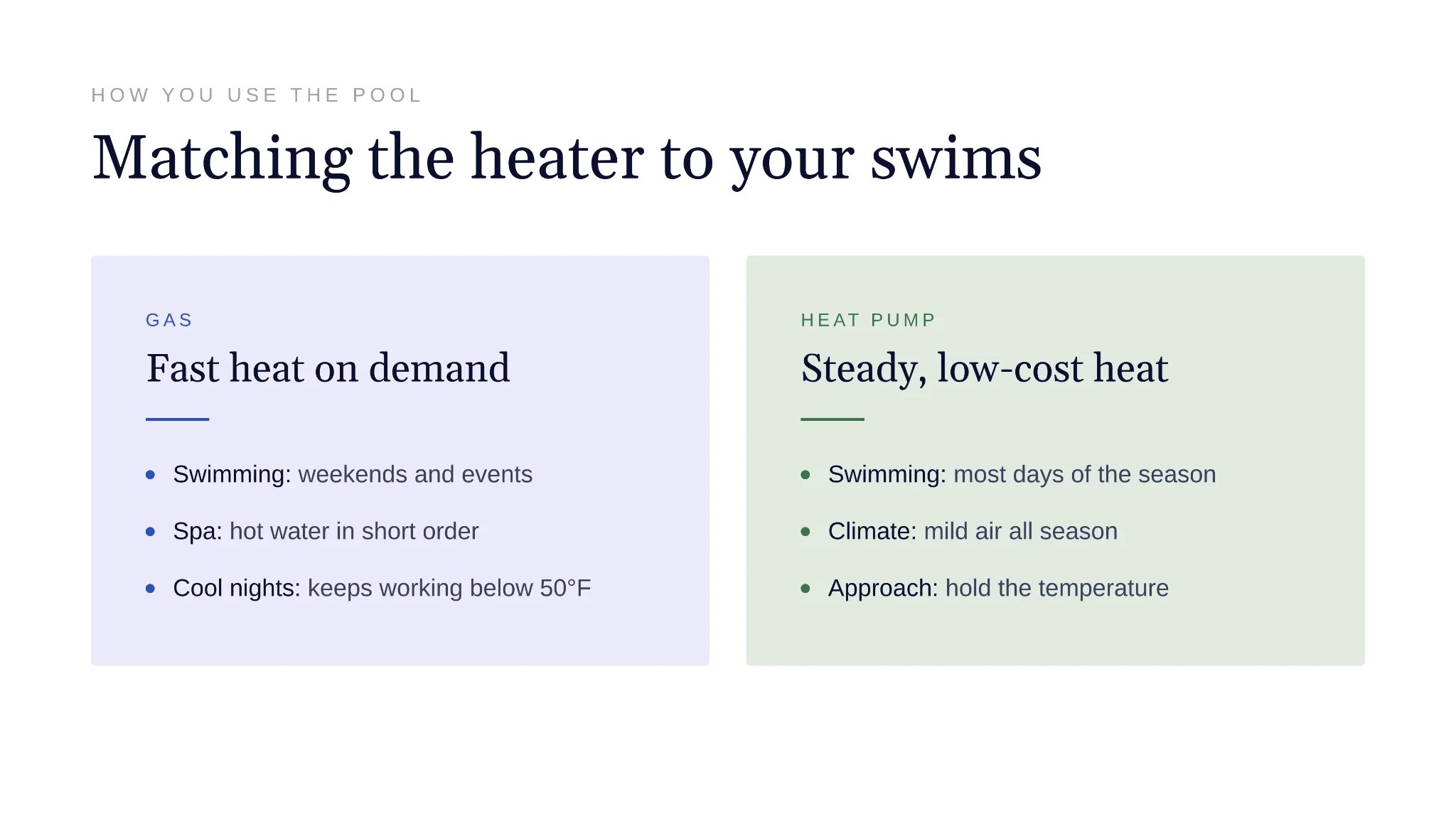
Daily or near-daily swimming all season. Keep the water at a steady temperature with a heat pump. It runs slowly but cheaply, and holding temperature costs far less than reheating cold water.
Weekends and occasional events. Choose gas. Gas heats a pool quickly, which suits pools used only now and then, so you can let the water cool during the week and heat it on Friday.
A spa attached to the pool. Spa users want hot water within about half an hour. Gas handles that, and many owners pair it with a heat pump that keeps the main pool warm.
Stretching the season into spring and fall. In regions where those nights fall below 50°F, gas keeps working when a heat pump slows down. DOE notes gas can hold a set temperature regardless of the weather.
Questions to Answer Before Buying
Run through these in order. Most homeowners have a clear answer by the third or fourth question.
- Is the pool small, like a spa or plunge pool? If so, electric resistance is worth a look. If not, rule it out.
- Do you have natural gas at the house? If not, price a propane tank before assuming gas is the cheaper install.
- Does your electrical panel have room for a dedicated heater circuit? If it needs an upgrade, add that cost to every electric quote.
- Will you heat the pool most days, or only before you swim? Most days points to a heat pump, and occasional use points to gas.
- How cold are the nights in the months you want to swim? Regular nights below 50°F weaken the case for a heat pump on its own.
- Ask installers for an operating-cost estimate based on your local electricity and gas rates. Compare the yearly difference against the gap in installed price.
Keeping Any Heater Running Well
Every pool heater depends on steady water flow through the filter. When the filter clogs, flow drops, the heater shuts itself off or runs hot, and the pool takes longer to warm up.
Keeping debris out of the filter is the simplest way to protect that flow. A robotic cleaner collects leaves and dirt in its own onboard filter, so less reaches the main system. Compare models in the Aiper robotic pool cleaners collection.
Water chemistry matters too. DOE notes that scale building up inside a gas heater’s burner or heat exchanger cuts its efficiency over time, so keep pH and calcium in range and book the annual tune-up.
Get more pool and lawn care guides from Aiper on Google