Green Pool Water That’s Not Algae

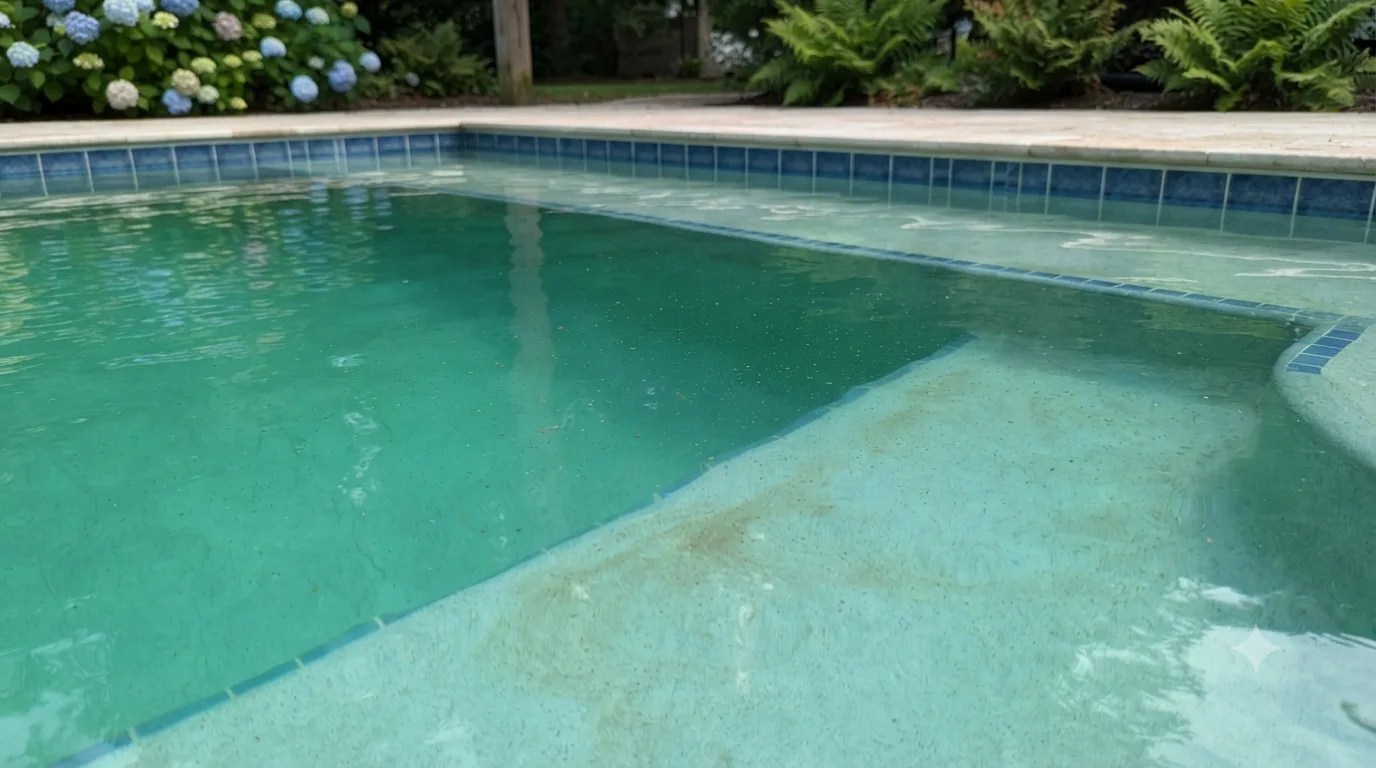
Pool water that’s green but stays clear rather than cloudy, and that gets visibly darker right after a shock treatment instead of clearing, points to dissolved metal — usually iron or copper — oxidizing, not algae — though right after a storm the answer is often simpler: earthworms washed into the pool by rain. The fix is a metal sequestrant, not more chlorine, since shock actually makes metal-caused green water look worse before a sequestrant clears it, unlike the more familiar algae playbook. The full diagnosis and fix are below.
Can Pool Water Be Green Without Algae?
Yes. Dissolved metals — most often iron or copper — oxidize in pool water and produce a green or greenish tint entirely independent of any algae presence. Common sources include well-fill water with naturally high mineral content, corroding metal equipment or heater components, and copper-based algaecides used in a previous treatment.
How Do You Tell If Green Water Is Algae or Metal?
Algae-caused green water is usually cloudy or hazy and responds to an adequate shock dose within about a day, clearing as the algae dies off — but a film that clings to the walls and shrugs off shock is usually biofilm in the pool that won’t clear with shock. Metal-caused green water often stays relatively clear rather than cloudy, and — the clearest tell — gets visibly darker right after shocking rather than clearing, since the shock oxidizes dissolved metal into a more visible form before it’s removed.
Algae vs Metal: How to Tell the Difference
| Symptom | Algae | Metal |
|---|---|---|
| Water clarity | Cloudy or hazy | Stays relatively clear |
| Response to shock | Clears within about a day | Gets visibly darker before a sequestrant clears it |
| Correct fix | Shock, brushing, and continuous filtration | Metal sequestrant, not more chlorine |
Will Shocking a Pool Clear Green Water If It’s Metal, Not Algae?
No, and it can actively make things look worse in the short term. Shock oxidizes dissolved metal into a more visible, sometimes darker particulate form, which is often mistaken for the treatment failing when it’s actually the metal reacting as expected — just not in a way that clears on its own without a sequestrant.
How Do You Fix Greenish Pool Water Caused by Metals?
Add a metal sequestrant to bind the dissolved metal so it stays suspended rather than oxidizing and staining surfaces, then filter it out over the following days. Identify the actual metal source — fill water, a copper-based algaecide used previously, or corroding equipment — using the same testing approach covered in our guide to getting iron out of pool water, since fixing the source prevents needing to repeat this treatment every season.
How Do You Clear a Green Pool in One Day?
If it’s algae, an adequate shock dose combined with brushing and continuous filtration can clear it within about a day. If it’s metal, this timeline doesn’t apply — sequestering and filtering out dissolved metal takes longer, often several days, which is exactly why confirming which cause you’re dealing with matters before starting either treatment.
How Do You Prevent Metal Staining From Recurring?
Avoid copper-based algaecides going forward if metal staining has happened before, and address any corroding metal equipment or heater components directly rather than just treating the symptom each time. Testing the fill water source identifies whether metals are entering the pool that way — hard, mineral-heavy fill water is worth checking against our guide to softening pool water too — and maintaining a sequestrant preventatively makes sense if the source is known to carry dissolved metals.
Frequently Asked Questions
Is it safe to swim while pool water is green from dissolved metal?
It isn’t an immediate health hazard the way active algae can be, but swimming stirs up settling metal particles and raises the odds of copper or iron staining hair, nails, and light-colored surfaces. It’s worth waiting until a sequestrant has cleared the water first.
Can you use a metal sequestrant and shock the pool at the same time?
Adding shock shortly after a sequestrant is generally fine, but shocking heavily before the sequestrant has bound the metal risks oxidizing it into a visible stain before it’s neutralized. Sequence the sequestrant first, then shock once it’s had time to bind the metal.
How do you find out whether iron or copper is causing the green tint?
A test kit with a metals-specific reagent, either strips or a dedicated iron/copper test, confirms which metal and its concentration. This matters because copper is the more common cause of a green tint specifically, while iron more often produces brown or rust discoloration instead.
Whichever cause is behind the green tint, keeping the pool clean afterward protects the fix from being undone by fresh debris — and the same upkeep is what keeps pests away, as our guide to keeping mosquitoes away from your pool area explains. An Aiper robotic pool cleaner handles that ongoing maintenance once the actual chemistry problem is corrected.
Get more pool and lawn care guides from Aiper on Google