How to Get Rid of Biofilm in a Pool

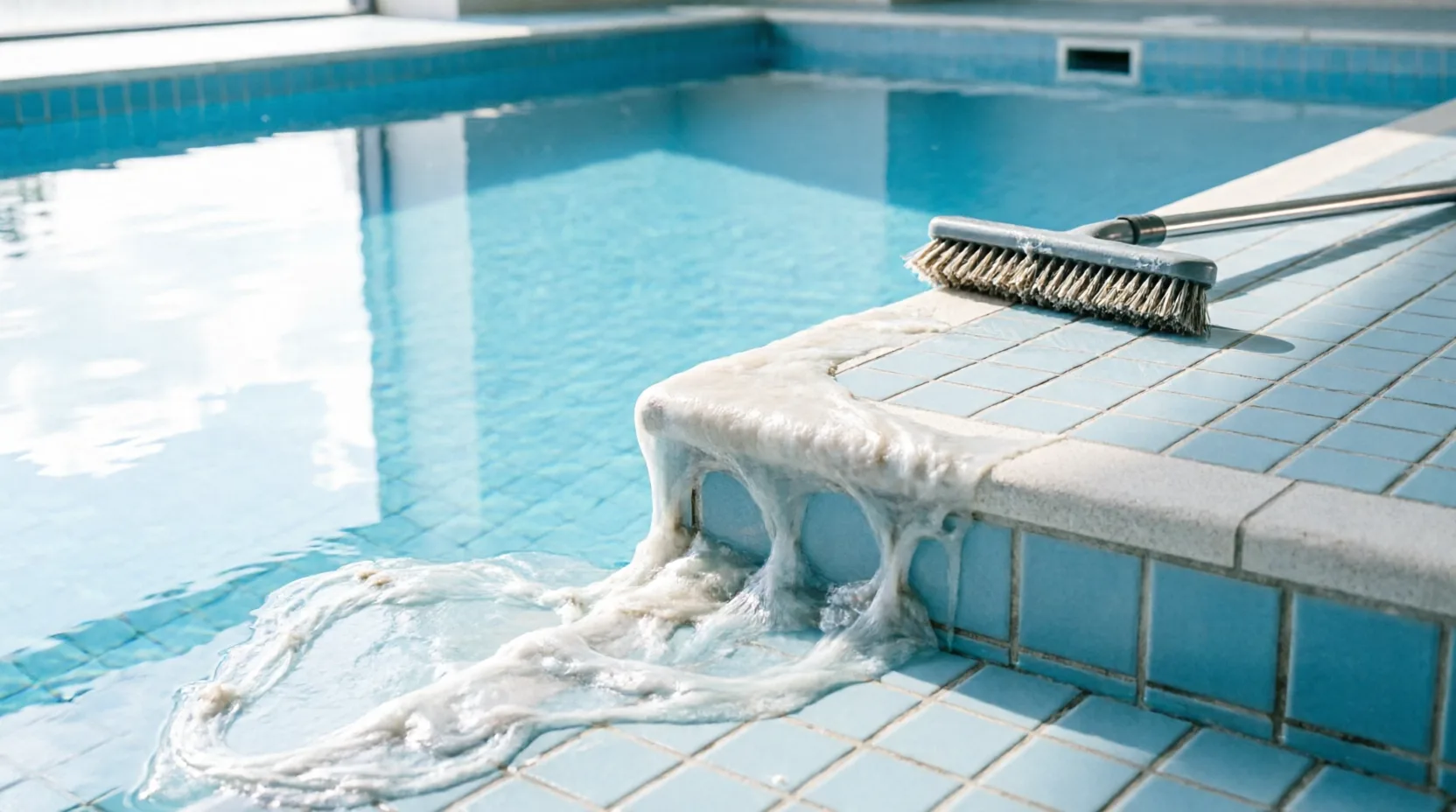
Shocking a pool and watching slimy biofilm come right back anyway leads a lot of owners to assume something’s wrong with their chlorine. Nothing is wrong with the chlorine: biofilm’s protective slime layer shields the bacteria inside from normal sanitizer levels, so brushing to physically break up that layer, then shocking while it’s disrupted, is what actually clears it. What biofilm actually is, and the full removal routine, is below. It’s a different kind of organic buildup than the pests covered in our complete guide to keeping bugs out of a pool, though both thrive on debris left to sit.
What Does Biofilm Look Like in a Pool?
Biofilm typically shows up as a white, gray, or slightly pink stringy or flaky film clinging to walls, steps, and equipment surfaces below the waterline — while what floats on top is the scum that settles on the pool surface. It’s easy to mistake for dead algae or ordinary dirt, but it tends to release in gelatinous clumps or strings when disturbed, rather than dissolving into cloudy dust the way dead algae does.
Is Biofilm the Same as Mold or Algae?
No. Biofilm is a bacterial colony encased in its own protective slime layer, called an extracellular matrix, which the bacteria build themselves. That’s fundamentally different from mold, which is fungal, and from algae, which is photosynthetic. The protective matrix is exactly why biofilm survives conditions that would otherwise keep a pool clear.
Will Chlorine Remove Biofilm?
Not reliably at normal maintenance levels. The slime matrix physically shields the bacteria inside from standard free chlorine, similar to how black algae survives normal chlorine behind its own protective sheath. Clearing biofilm needs mechanical disruption — brushing — to break the matrix open, combined with an elevated, shock-level chlorine dose applied while it’s disrupted.
How Do You Get Rid of Biofilm in a Pool Step by Step?
Brush the affected surfaces aggressively first — this is the step that actually breaks up the protective matrix, not the chemical dose, and it’s the same order of operations when flying ants keep ending up in your pool. Shock the pool to a high free chlorine level immediately after brushing, while the biofilm is physically disrupted and exposed.
Run the filter continuously afterward and plan to backwash or clean it once the initial clouding settles, since dislodged biofilm collects there. Stubborn buildup often needs this brush-then-shock cycle repeated over two or three days rather than resolving in a single treatment.
Why Do People Put Baking Soda in Pools, and Does It Help With Biofilm?
Baking soda raises total alkalinity, which buffers pH rather than killing anything directly. It doesn’t treat biofilm on its own, but a stable pH keeps chlorine in its most effective active form, which supports the shock step above — it’s a background condition for effective treatment, not a treatment itself.
How Do You Prevent Biofilm From Coming Back?
Keep free chlorine consistently in range rather than letting it dip to zero between doses, since a chlorine-free window is when biofilm reestablishes fastest. Clean equipment, hoses, and cleaner brushes regularly — biofilm hides in crevices that never get a direct chlorine dose otherwise. Removing organic debris like leaves promptly also matters, since decaying organic matter is a food source that helps biofilm colonies grow back faster.
Frequently Asked Questions
Can biofilm make swimmers sick?
In a properly chlorinated pool it’s usually more of a cosmetic and equipment problem than a health one, but the bacteria it shields can include organisms linked to skin or ear irritation if the buildup is left untreated for an extended period. Persistent biofilm shouldn’t be ignored just because it looks like a surface issue — it’s the same waterline buildup that attracts bees and other insects to pool water.
Does biofilm form in saltwater or bromine pools, not just chlorine pools?
Yes. The protective slime matrix, not the specific sanitizer type, is what shields the bacteria, so biofilm forms just as readily under salt chlorination or bromine as under standard chlorine. The same brush-then-shock approach applies regardless of sanitizer type.
Is biofilm more likely to show up after a pool sits unused for a while?
Yes. A pool that’s sat with low or no circulation, such as during a cover period or an extended vacancy, gives bacterial colonies time to establish before anyone notices, which is why biofilm often appears first right after reopening a pool.
Regular brushing and debris removal are the two habits that keep biofilm from establishing in the first place. An Aiper robotic pool cleaner handles the debris side of that routine automatically between manual brushing sessions.
Get more pool and lawn care guides from Aiper on Google