How to Get Rid of Quackgrass in a Lawn

Quackgrass is a cool-season perennial that spreads through underground rhizomes and forms coarse, blue-green patches in bluegrass, fescue, and ryegrass lawns. It grows fastest in spring and fall, when the surrounding lawn is also growing.
The difficult part is that every herbicide that kills quackgrass also kills the lawn grass it touches. Removing it means killing each patch down to the rhizomes, replanting the bare spot, and checking for regrowth for at least one full season.
Confirm It’s Quackgrass
Several grasses look like quackgrass from a standing height, and the treatment for quackgrass is severe enough that it pays to check up close first. Pull one plant and look at three things.
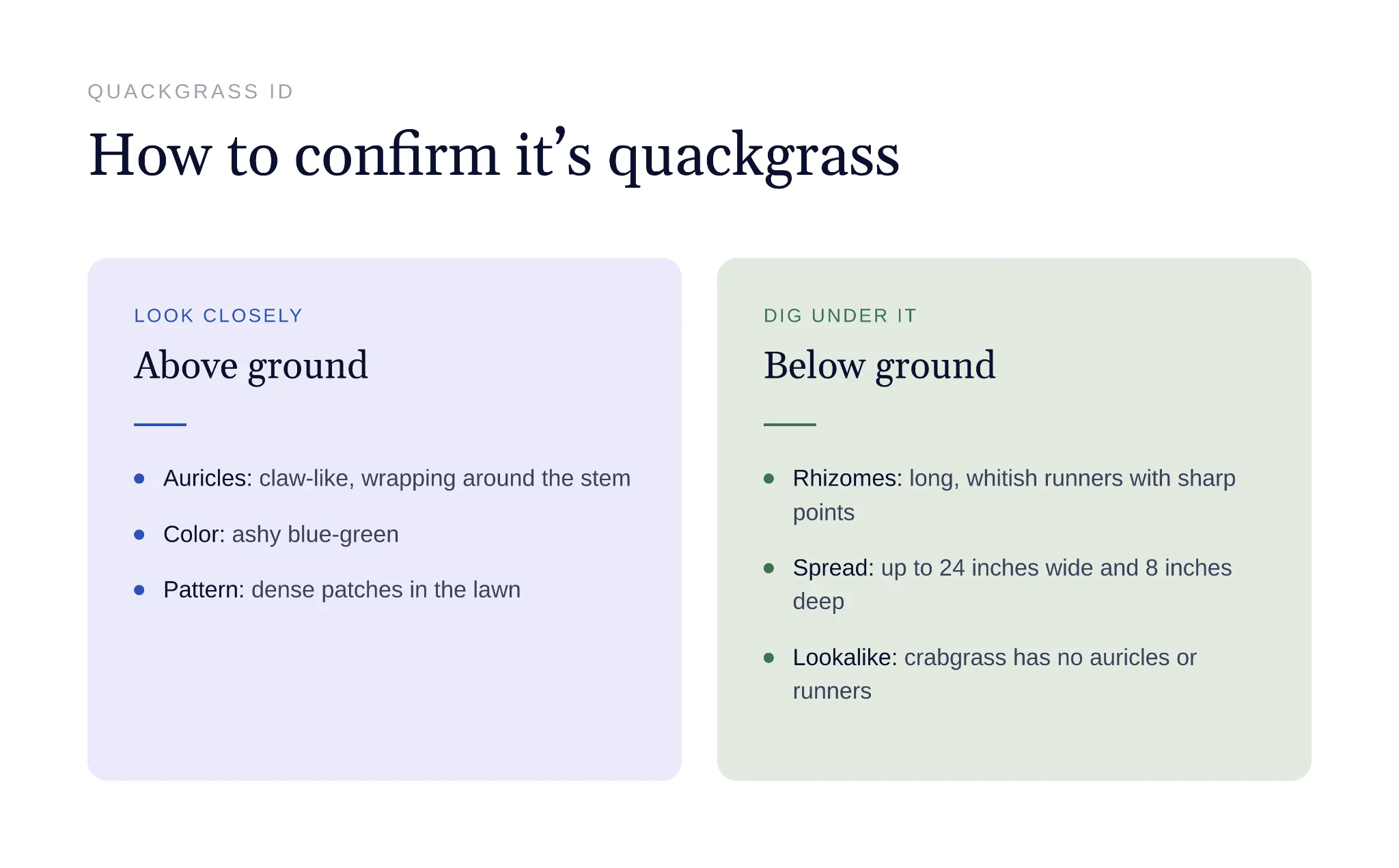
Auricles. Where the leaf blade meets the stem, quackgrass has a pair of claw-like auricles that wrap around the stem. This is the most reliable feature.
Color and pattern. The leaves are an ashy blue-green, and the plant forms dense patches that stand out against the surrounding turf. Purdue notes that quackgrass releases chemicals that suppress other plants, which is why its patches often look nearly pure.
Rhizomes. Dig under the clump, and you will find long, whitish runners with sharp points. Clumps without runners are something else.
Crabgrass and tall fescue are the two grasses most often mistaken for quackgrass. The table shows how to tell them apart.
| Quackgrass | Crabgrass | Tall fescue | |
|---|---|---|---|
| Life cycle | Perennial | Annual that appears later in the season | Perennial |
| Spreads by | Rhizomes and seed | Seed only | Clumps, with no long rhizomes |
| Auricles | Long and clasping | None | Short and blunt |
| Leaf color | Ashy blue-green | Lighter green | Dark green |
If the plant is crabgrass, a crabgrass herbicide will handle it. If it is tall fescue in a bluegrass lawn, the treatment below still applies, since no selective product removes tall fescue from bluegrass either.
Why Weed Killers for Lawns Won’t Work
Quackgrass is closely related to cool-season lawn grasses, so the herbicides that kill it can’t tell them apart. Purdue’s turf program states that only nonselective options exist in cool-season turf.
Broadleaf weed killers and weed-and-feed products have no effect on grasses. Crabgrass preventers do nothing to established quackgrass either, because pre-emergent herbicides only stop seeds from germinating and quackgrass spreads mainly through rhizomes.
When to Spray
Glyphosate moves from the leaves down into the rhizomes, and it only does that well when the plant is actively growing. Quackgrass goes dormant once summer temperatures rise, so treatment windows are limited to spring and fall.
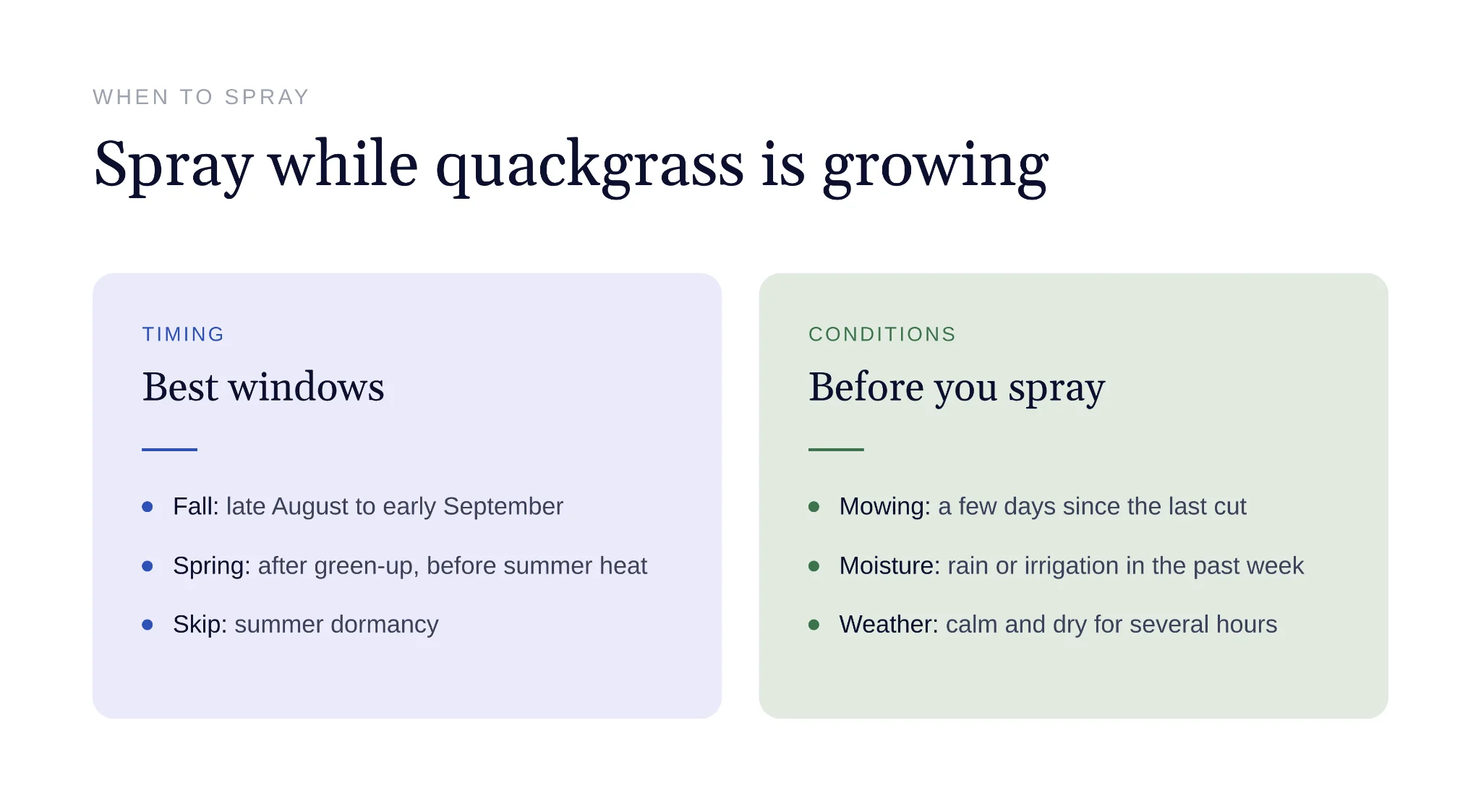
Fall is the better choice for most lawns. Quackgrass enters a vigorous growth cycle in late August and early September and pulls herbicide deep into its rhizomes, and the bare spots can be reseeded while the weather still favors cool-season grass.
Spray when all of these are true:
- The quackgrass leaves are fully green and growing, and at least a few days have passed since the last mowing.
- The lawn has had rain or irrigation in the past week. Drought-stressed plants absorb and move less herbicide.
- No rain is forecast for the next several hours, so the spray has time to dry on the leaves.
- Wind is calm, since glyphosate drift kills any turf it lands on.
How to Spot-Treat a Patch
Spot treatment works when quackgrass is scattered in patches across an otherwise healthy lawn. Plan on two to four weeks from the first spray to replanting.
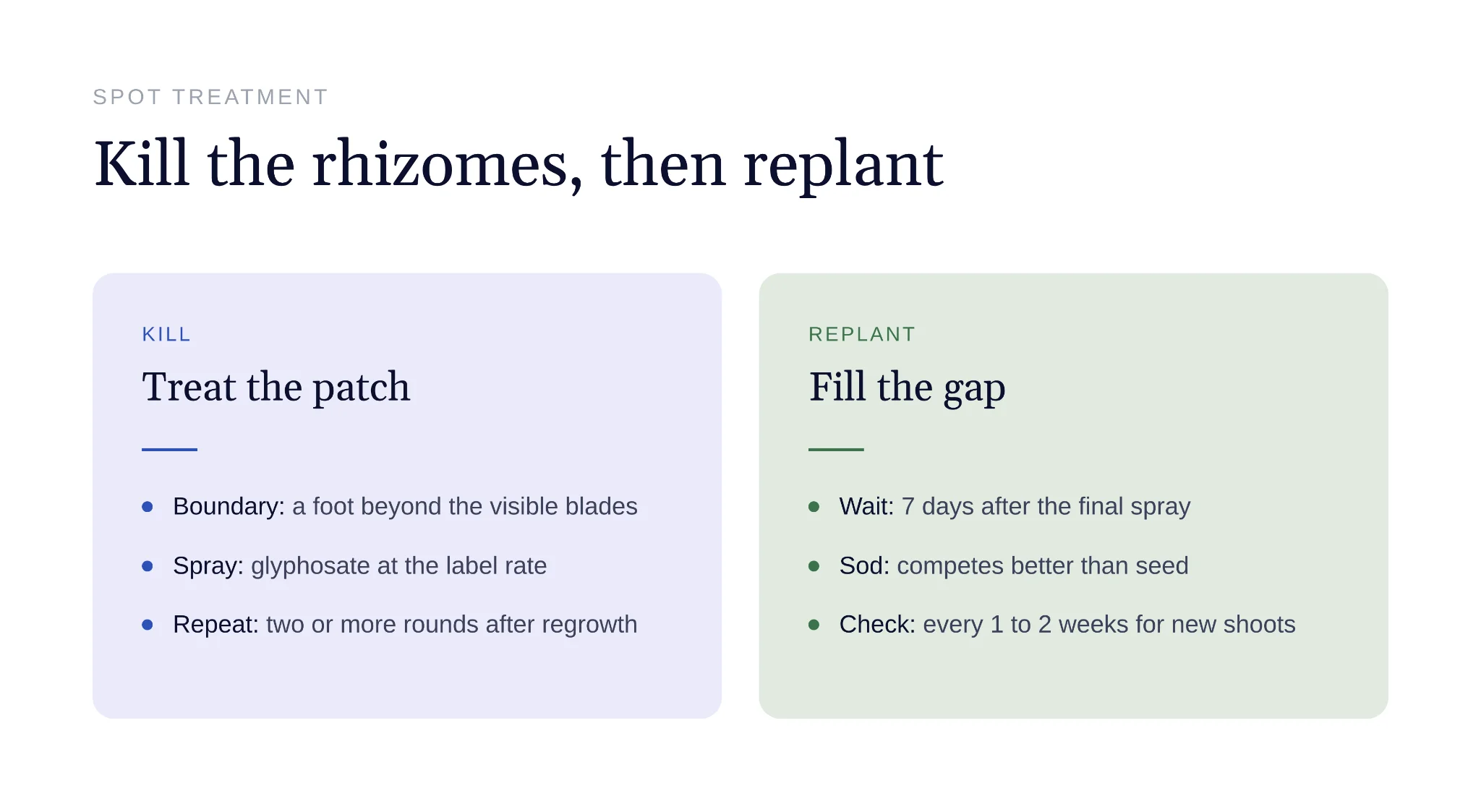
- Mark the treatment area. Push stakes into the ground around the patch and run string between them, spraying everything inside the string. Rhizomes spread up to 24 inches wide and 8 inches deep, so set the string about a foot beyond the visible blades.
- Spray glyphosate inside the boundary. Mix at the label rate for perennial grasses and wet the leaves without runoff. The turf inside the string will die along with the quackgrass.
- Let it regrow, then spray again. Purdue recommends at least two applications, and sometimes three or more, because surviving rhizome pieces send up new shoots. Wait until new green blades appear before the next spray.
- Check one to two weeks after each application. Any green shoot inside the boundary means live rhizome underneath.
- Replant once nothing regrows. Wait at least seven days after the final glyphosate application before seeding. Sod is the better choice where quackgrass was heavy, because sod competes better with any rhizomes that survived than seedlings do.
For a few scattered plants, wipe instead of spraying. In April, quackgrass greens up and grows taller than bluegrass. Wiping glyphosate onto the taller blades with a rope-wick applicator or paintbrush a few days after mowing treats the quackgrass while missing the shorter lawn grass.
Starting Over on a Heavily Infested Lawn
Once quackgrass covers most of the lawn, spot treatments leave more dead ground than live turf. At that point, treating the entire lawn in one pass is faster and gives a more even result.
The process follows the same steps as a spot treatment across the whole area. Start in mid-August so the final spray lands in the early September growth window and seeding still has several weeks of cool weather before frost.
Leave the dead turf in place or scalp it with a mower. Tilling or rototilling chops rhizomes into pieces that each regrow, which can turn one patch into dozens.
Digging Out a Single Clump
Digging works for one young clump that hasn’t spread far. Everything else regrows from rhizome fragments left in the soil.
Cut around the clump a foot beyond the outer blades and dig 8 inches deep. Shake the soil loose over a tarp, bag every rhizome piece, and throw them out with the trash.
Check the spot every two weeks for the rest of the season. Any shoot that comes up means a rhizome was missed.
Keep Quackgrass From Coming Back
Dense turf leaves little room for rhizomes to surface. Mowing height, fall fertilizer, and watering do most of that work.
Find out how much fertiliser your lawn needs.
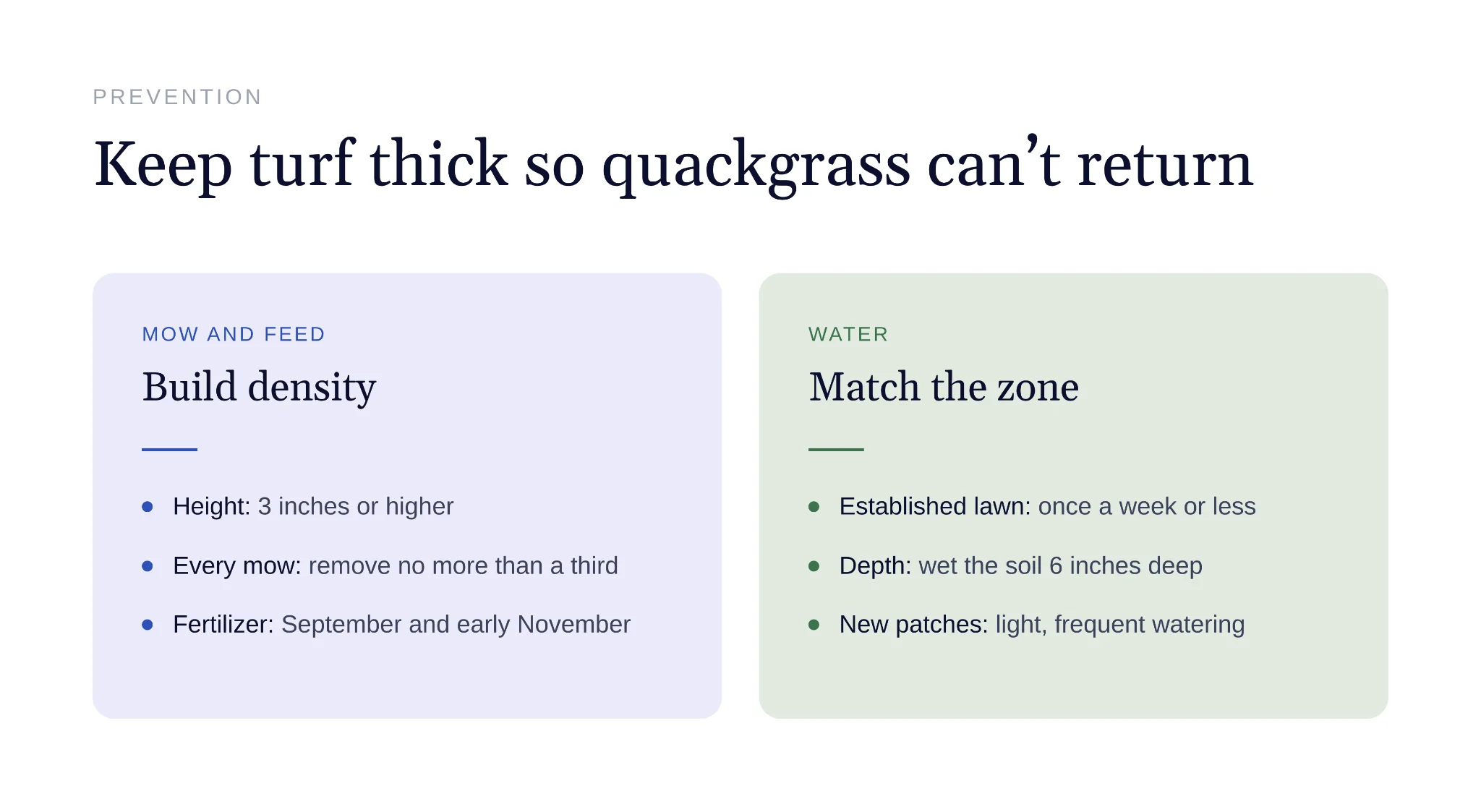
Mow at 3 inches or higher. Purdue recommends setting cool-season lawns at 3 inches or the mower’s highest setting and leaving it there all year. Mow often enough that each cut removes no more than a third of the blade.
Fertilize mainly in fall. Apply 1 pound of nitrogen per 1,000 square feet in September and 1 to 1.25 pounds in early November. A third application of 1 pound in mid-to-late May keeps the lawn thick through summer.
Check seed and sod before you buy. Quackgrass seed and rhizomes can enter a lawn through contaminated seed mixes, sod, and compost. Buy seed labeled with a low weed-seed percentage and inspect sod rolls for thick white runners.
Water deeply and infrequently. University of Minnesota Extension recommends watering an established lawn once a week or less, with enough water to wet the soil 6 inches deep. Depending on soil, that can be as little as half an inch.
Newly sodded or seeded patches are the exception. They need light, frequent watering until roots establish, and that schedule would overwater the rest of the lawn. The Aiper IrriSense 2 sets up to 10 zones with separate schedules, so replanted patches can get frequent light watering while the established lawn stays on a deep weekly cycle.
Get more pool and lawn care guides from Aiper on Google