How to Get Rid of Crabgrass in a Lawn

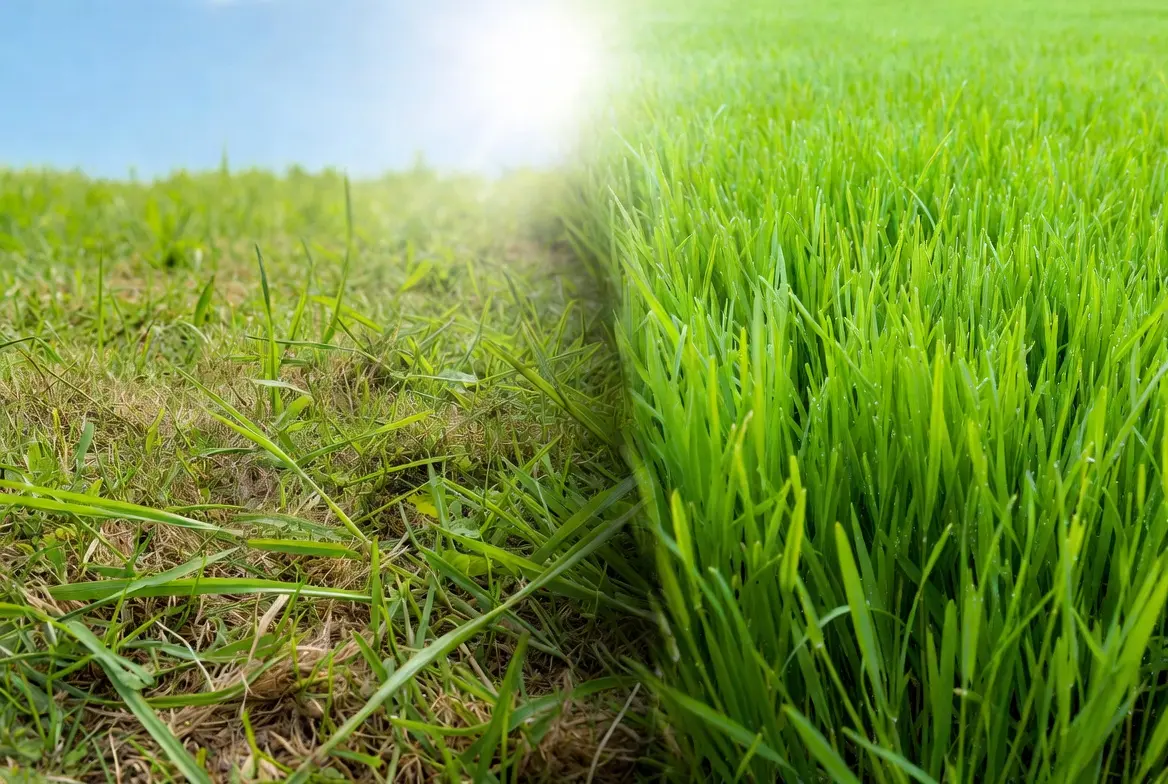
Crabgrass creeps in at the edges first, along the driveway, near the curb, wherever the soil bakes hotter, and your turf runs thin.
By the time you notice it spreading into the middle of the lawn, it’s been there for weeks, rooting out, sending up those flat, branching stems that sprawl like a hand pressed against the ground.
Here’s how to deal with it.
The Seed Problem
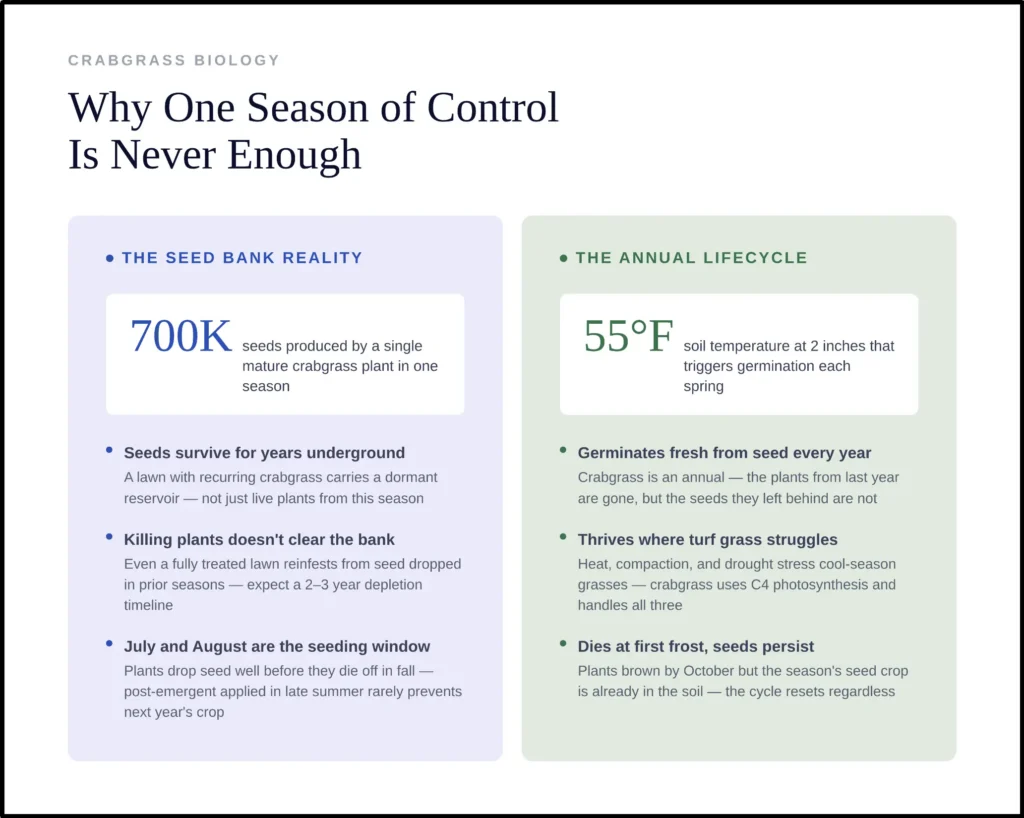
A single crabgrass plant produces somewhere between 150,000 and 700,000 seeds, depending on how much it’s been allowed to mature.
One plant.
Those seeds stay viable in the soil for years. So a lawn that’s had crabgrass for multiple seasons is dealing with a reservoir.
When It Germinates
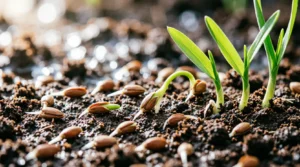
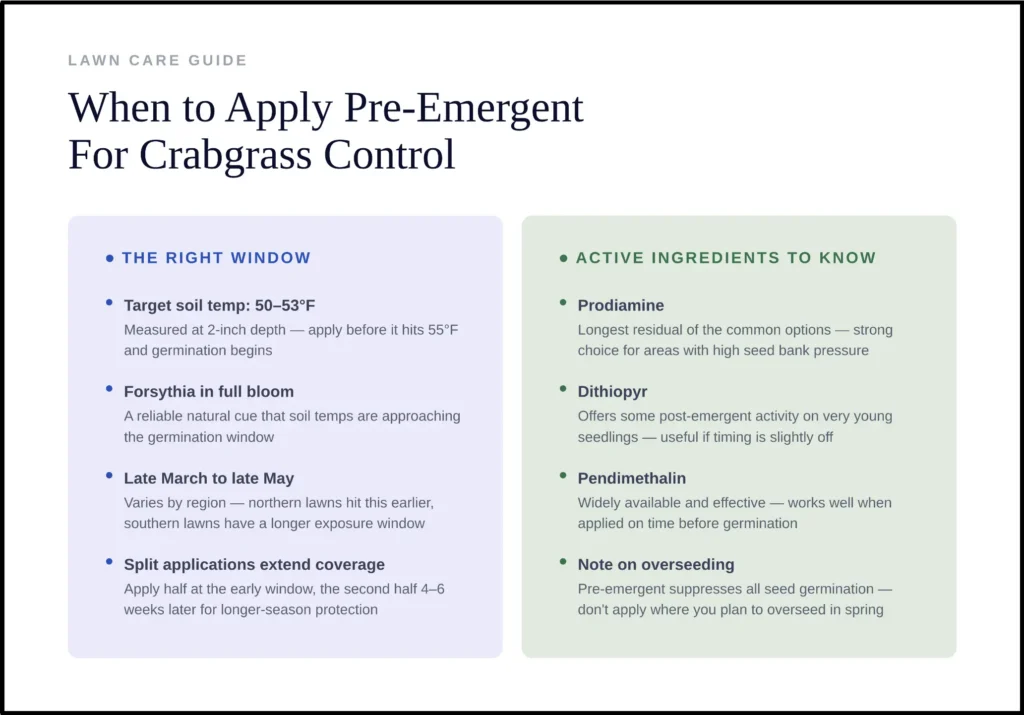
The plant germinates when soil temperature consistently hits around 55°F at a two-inch depth.
In most of the US, that’s somewhere between late March and late May, depending on where you are and what the winter did.
Once it’s up and growing in full summer heat, crabgrass thrives on exactly the conditions that stress your lawn: heat, compaction, drought, and low mowing.
It processes sunlight more efficiently than cool-season grasses in hot conditions. Your fescue is struggling in August. Crabgrass is not.
It dies at first frost. The plants brown, collapse, and look dead by October. They are dead. But the seeds they dropped in July are already in the soil.
Pre-Emergent Is the Work That Actually Matters
If there’s one thing to internalize about crabgrass, it’s this.
Pre-emergent herbicide applied at the right time is so much more effective than anything you’ll do after germination that the comparison almost isn’t worth making.
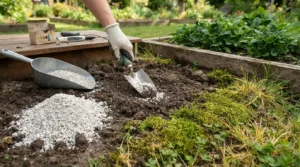
Pre-emergent doesn’t kill plants or seeds. It creates a chemical barrier in the soil that disrupts the germination process, the seedling starts to develop, and then can’t.
Applied correctly, before soil temperatures hit 55°F, a good application will stop the majority of crabgrass from ever establishing.
Getting the Timing Right
Early spring means something different in Michigan than it does in Tennessee.
Track soil temperature, not the calendar. Local university extension programs often publish soil temp data by county.
The target is consistent readings in the 50–53°F range at two inches, you want the barrier down before germination begins.
A useful rule of thumb: forsythia bloom time. When forsythia is in full bloom in your area, soil temperatures are usually approaching the germination window. Imprecise, but surprisingly reliable if you’re not tracking temperature directly.
Which Product to Use
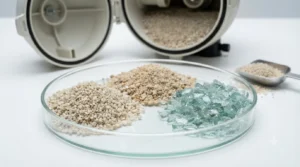
Most consumer pre-emergents use pendimethalin, prodiamine, or dithiopyr as the active ingredient:
- Prodiamine has a longer residual.
- Dithiopyr has some post-emergent activity on very young seedlings, so if you miss the window slightly, it buys a little grace.
- Pendimethalin is widely available and works fine when applied on time.
Split applications, like half the rate at the early window, second half four to six weeks later, can extend protection through a longer germination period. Worth considering in warmer climates where the germination window stretches.
One conflict worth knowing: pre-emergent also suppresses grass seed germination. If you’re trying to overseed thin areas in spring, you can’t do both.
Either apply pre-emergent and accept those thin spots stay thin until fall, or skip it in those areas and deal with whatever crabgrass shows up there.
When You’ve Already Got It
You missed the window. It’s up. Now what?
Quinclorac or fenoxaprop on young plants works well enough. If the tall weed bolting up through your turf is horseweed rather than crabgrass, the timing and treatment change, so read up on getting rid of horseweed in your lawn before it sets seed. Both are selective, so your turf is fine. Check compatibility with your grass type before spraying.
Mature crabgrass in July? You might kill the plant. But it’s already dropped seed. You’re doing cleanup, not control.
Pulling It by Hand
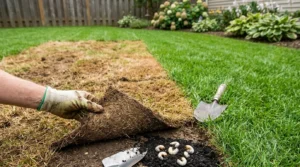
Works on small patches, but only early and only if you get the whole root.
Pull after rain. Dry soil snaps the root and leaves enough behind to regrow. The window is roughly four to six weeks after germination. Past that, the root mass is too dense, and seeding has likely already happened.
Don’t leave pulled plants on the lawn. Bag them. They’ll drop viable seed as they dry.
Lawn Density Is the Long Game
A thick, healthy lawn actively resists crabgrass by shading the soil surface and competing for the same resources.
This isn’t a platitude. Lawn areas that are consistently dense through good mowing height, proper fertilization, and fall overseeding show measurably less crabgrass pressure year over year, even without pre-emergent applications.
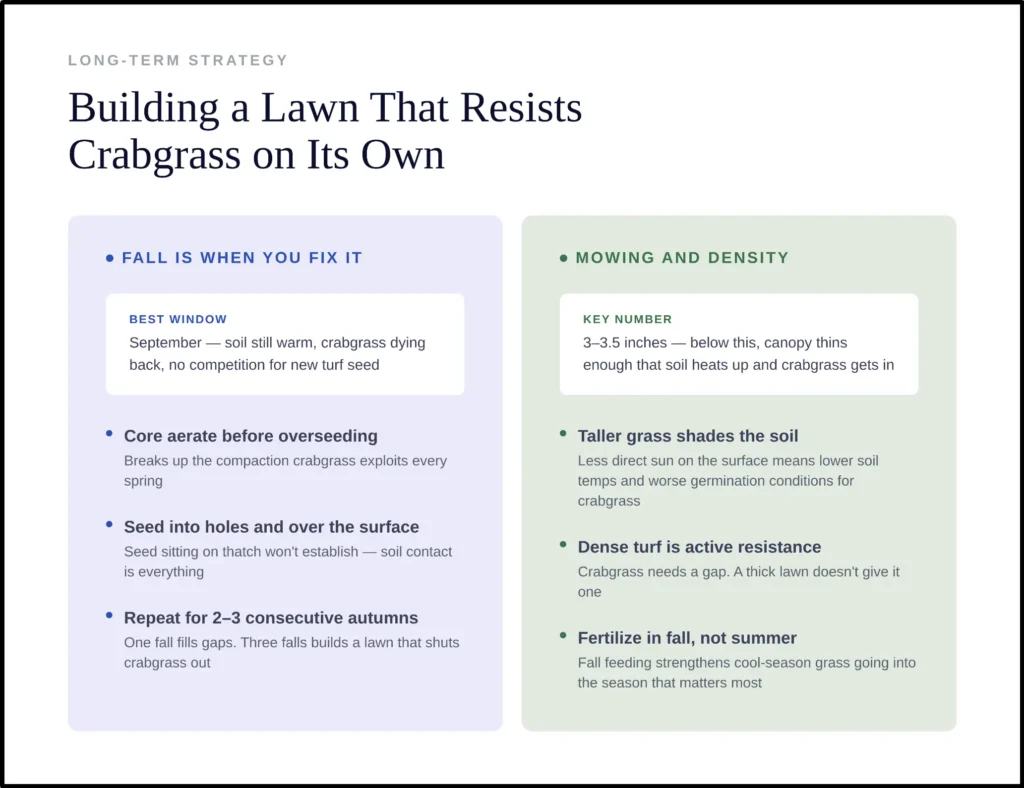
Mowing height matters more than most people think.
Cutting cool-season grass too short, below three inches, reduces the canopy enough that sunlight hits the soil directly, which raises soil temperature and improves germination conditions for crabgrass.
Mowing at three and a half inches doesn’t eliminate the problem, but it consistently makes the environment less hospitable.
Fall Is When You Fix the Lawn
Spring is crabgrass season. Fall is lawn-building season.
Overseeding in September is when you actually address the underlying thinness that lets crabgrass establish in the first place. Core aerate first if the soil is compacted. Seed into the aeration holes and over the surface.
Keep it moist until germination.
Your lawn doesn’t need water on a schedule. It needs water when the soil actually needs it.
The Aiper IrriSense 2 covers 4,800 sq ft across 10 independent zones, adjusts automatically based on local weather forecasts, and skips cycles when rain is coming, without you touching anything.
Get more pool and lawn care guides from Aiper on Google