How to Get Rid of Scum on Top of a Pool

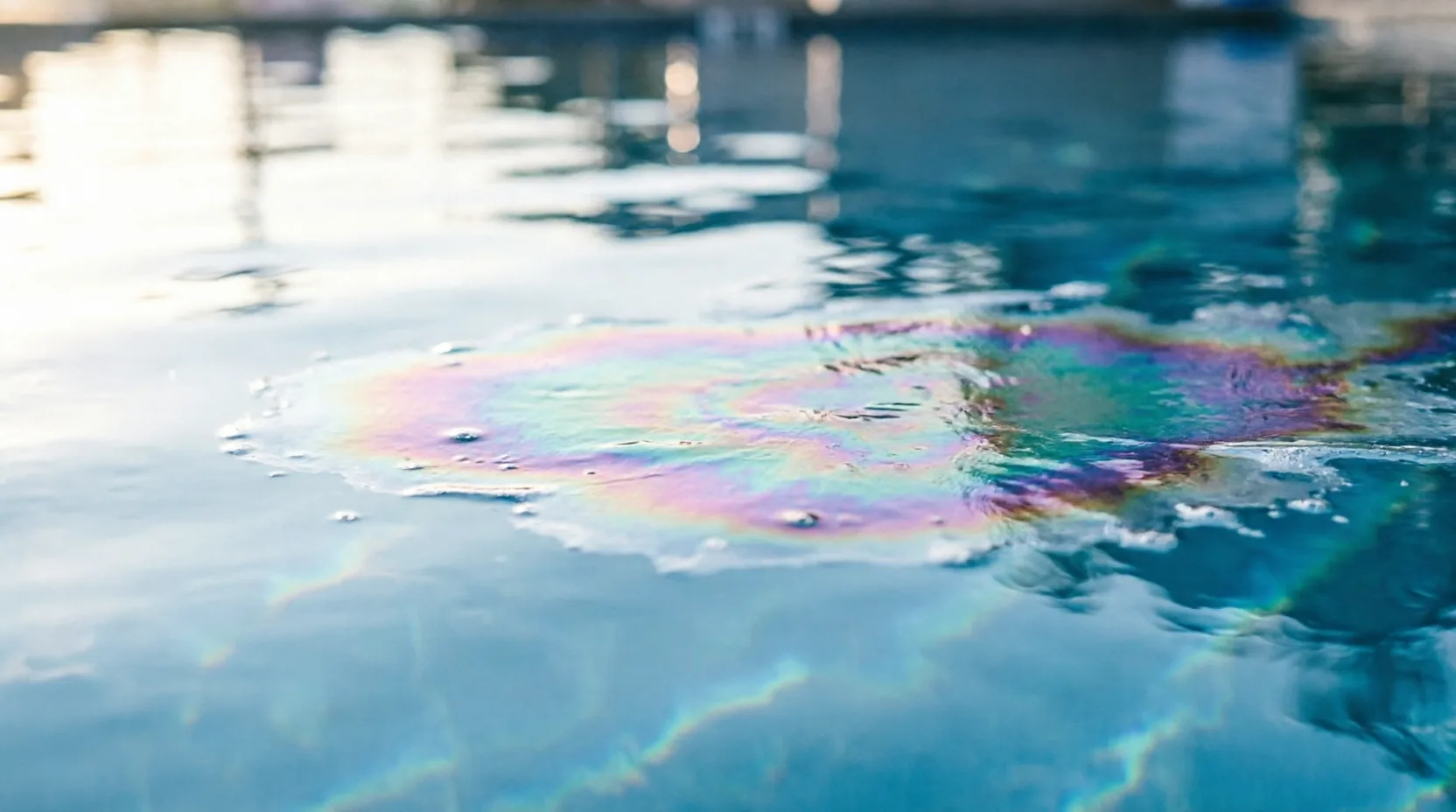
Floating scum on a pool’s surface is usually oils — sunscreen, lotion, and body oil residue — combined with dust and pollen collecting at the waterline due to surface tension, and it clears with skimming, waterline scrubbing, and an enzyme-based clarifier rather than shock. Greenish film that clouds instead of skimming away cleanly is a different problem: algae, which needs shock and brushing, not surface cleaners. Persistent surface film is also worth checking against our broader guide to keeping pests and debris out of a pool, since organic debris feeds the same buildup. The full removal and prevention routine is below.
What Is the Film or Scum Floating on Top of a Pool?
Most surface scum is body oils, sunscreen, and lotion residue combined with airborne dust and pollen, held together at the surface by water’s surface tension rather than dissolving into the water. It typically looks like a thin, sometimes iridescent film and concentrates most visibly along the waterline tile or coping, where wave action pushes it against a solid surface.
How to Get Rid of Algae Floating on Top of a Pool
If the film looks greenish and breaks into cloudy particles rather than skimming off cleanly in one piece, it’s algae, not oil-based scum — a different problem covered in more depth in our complete guide to pool algae. Algae needs an adequate shock dose plus brushing to physically dislodge it from surfaces, not surface skimming or an enzyme product, which only address oil-based films.
What Kills Pool Algae the Fastest?
There’s no single chemical shortcut — a properly dosed shock treatment combined with strong circulation and brushing to loosen algae from surfaces clears it fastest, typically within 24 hours for a moderate bloom. This is the same combination that resolves black algae, which resists chlorine specifically because it protects itself with its own layer that brushing has to break through first.
How Do You Remove Oil-Based Scum From a Pool Surface?
Skim the surface with a fine net to remove what’s floating before it redistributes — bees drink at the surface, so the same cleanup routine that clears scum is part of keeping bees away from your pool water. Scrub the waterline tile or coping directly, since this is where oils concentrate most visibly as a ring. An enzyme-based scum remover or clarifier breaks down oils chemically rather than just masking them, and running the filter continuously for a day afterward helps pull the loosened film through the system instead of letting it resettle.
Does Pool Chlorine Cause Skin Irritation Related to Scum?
Not the scum directly — it’s usually insufficiently filtered oils and lotions combining with chloramines, the compounds chlorine forms when it reacts with organic matter, that irritate skin. A pool with a persistent oily film and chlorine odor stronger than expected for its actual free chlorine level often has more organic load than the filtration is currently handling, which clearing the scum and improving circulation both help correct.
How Do You Prevent Scum From Building Up Again?
Rinsing off sunscreen and lotion with a quick shower before swimming reduces how much oil enters the water in the first place. Running the pump during and after peak swimming hours, rather than only overnight, keeps water turning over while oils are actively being introduced. Clearing floating debris like leaves promptly also matters, since decomposing organic matter feeds the same buildup. Using an enzyme product preventatively, on a regular schedule rather than only once a visible scum line appears, keeps oils from accumulating to a visible level at all.
Frequently Asked Questions
Does shocking the pool get rid of oily scum?
No. Shock treats algae and organic contaminants through oxidation, but it doesn’t break down oils or lotion residue floating on the surface. An oily film needs skimming, waterline scrubbing, and an enzyme-based product; shocking a pool with only oil-based scum wastes chlorine without touching the actual film.
How often should you add an enzyme-based clarifier?
Weekly, as a preventive dose, works better than waiting for a visible film to appear, since enzymes work gradually and a buildup that’s already thick takes longer to clear. Most labels call for a maintenance dose every 7 days alongside normal filtration.
Can a pool cover cause scum to build up faster?
Yes. Solar and winter covers trap oils, pollen, and organic debris against the water surface instead of letting them evaporate or blow off, so a covered pool left unchecked for weeks often develops a heavier ring than an uncovered one — and when debris is glass rather than organic matter, retrieval is a different job, covered in our guide to getting broken glass out of a pool safely. Lifting the cover periodically to skim underneath prevents that buildup from concentrating.
Regular surface and waterline passes catch oil-based film before it has time to concentrate into a visible ring — or harden into the slimy coating covered in our guide to getting rid of biofilm in your pool. An Aiper robotic pool cleaner handles the floor and wall side of that routine, keeping debris from adding to the same buildup.
Get more pool and lawn care guides from Aiper on Google