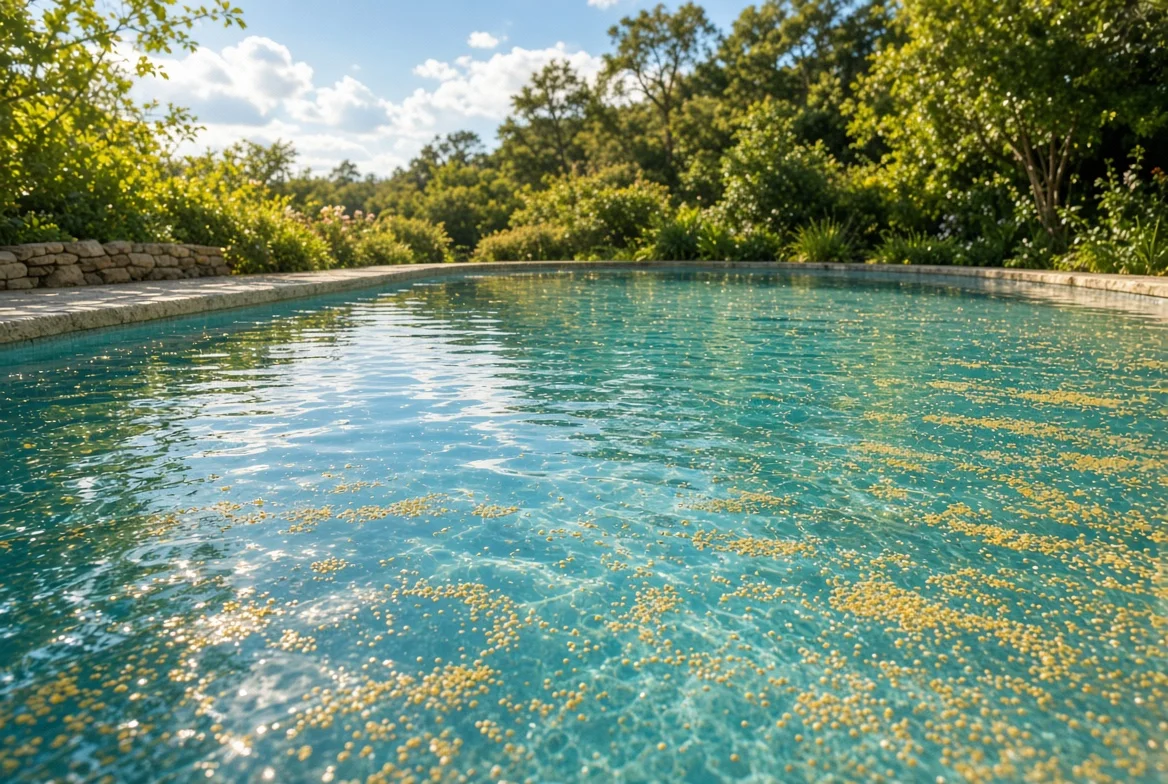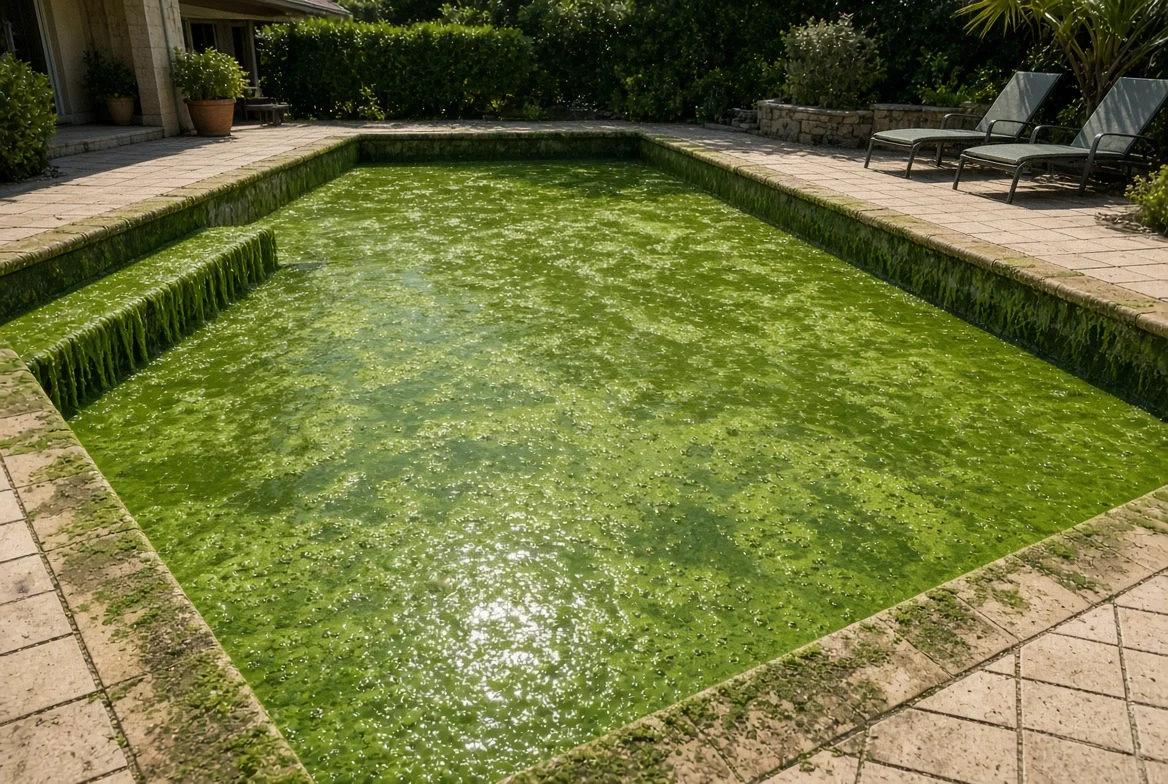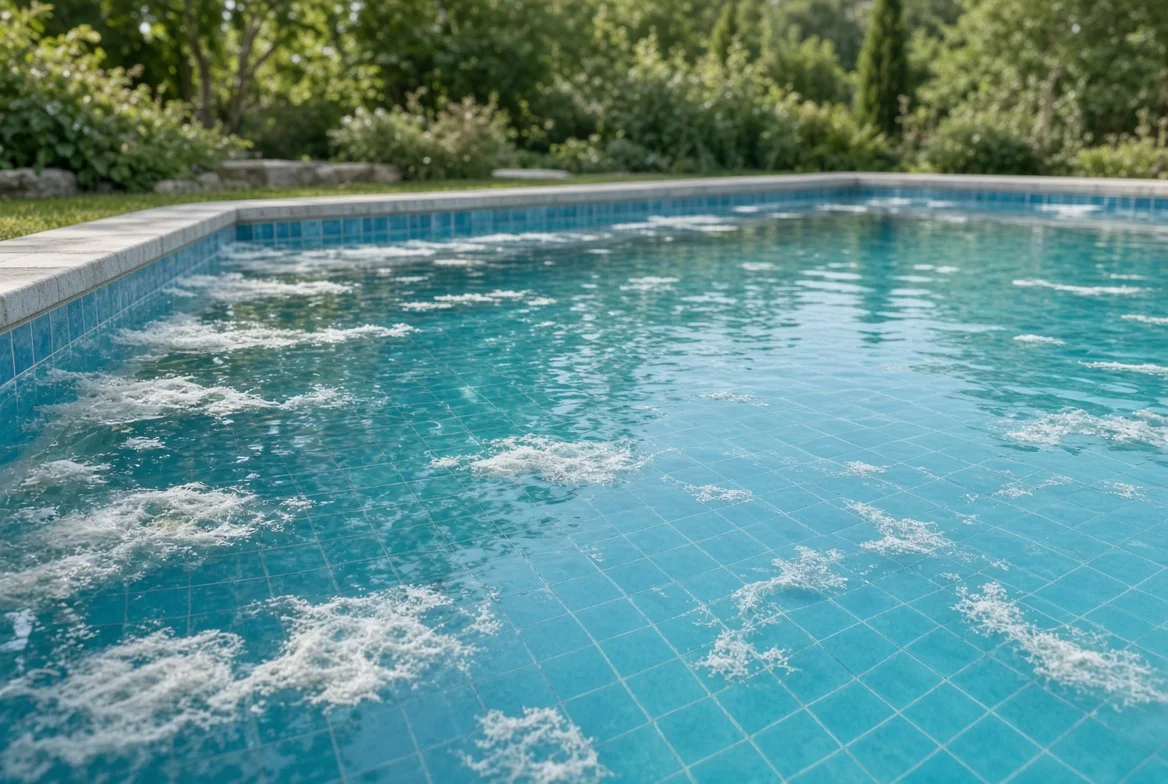

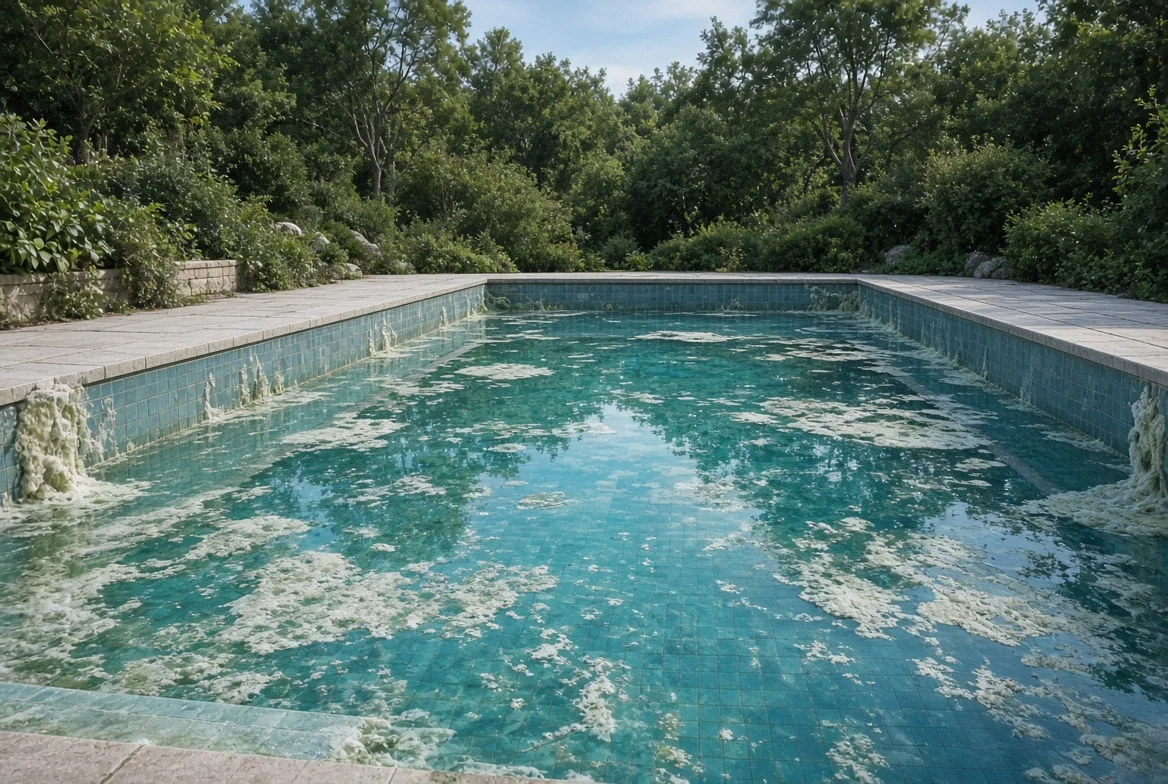
The white water mold that settles into the plumbing and the slack corners is a biofilm, a colony of microorganisms living under a self-made layer of slime.
That slime shields the organisms from chlorine that would otherwise wipe them out, and a pool that shrugs off green algae every spring can still lose a week to this.
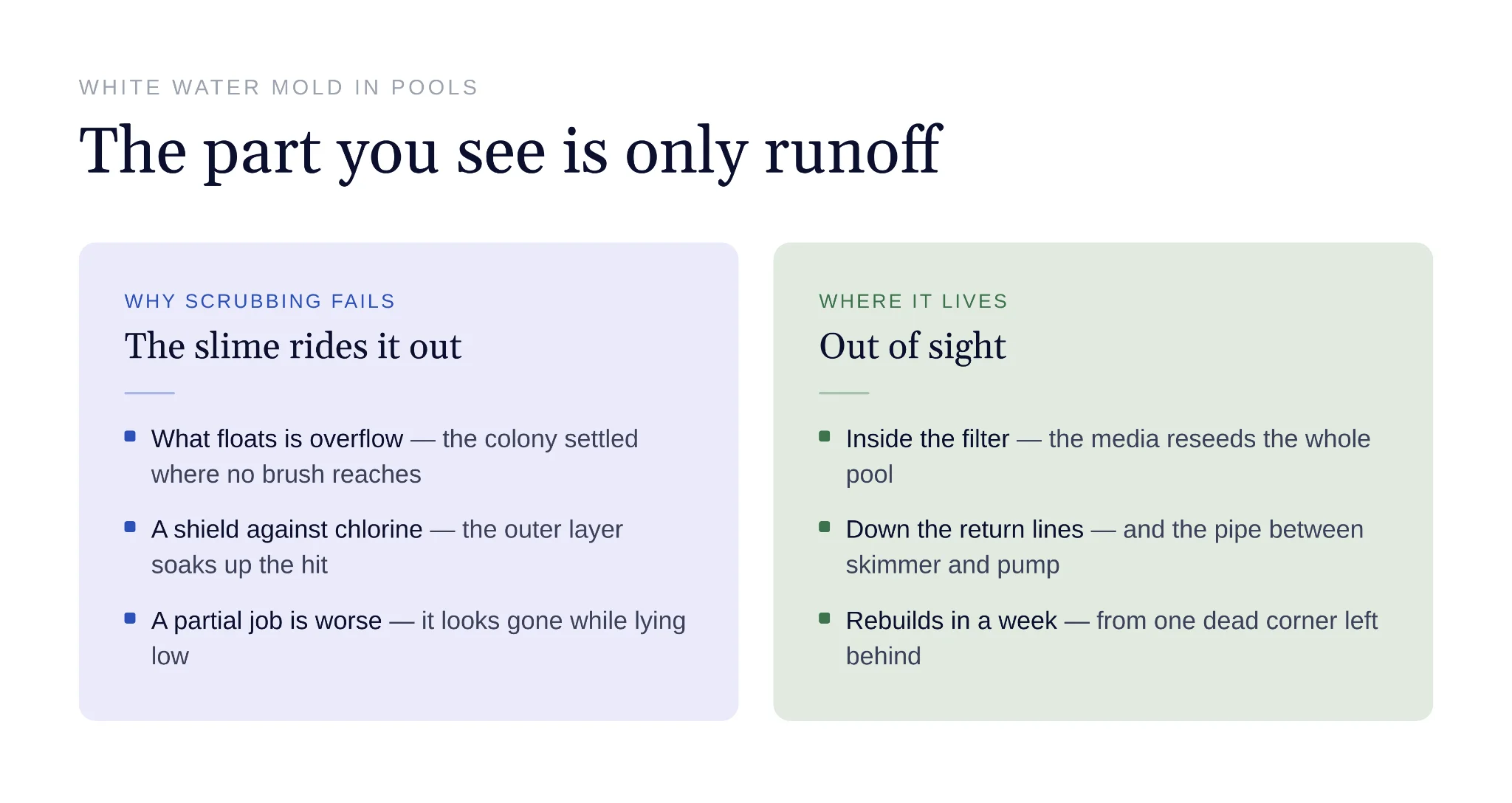
The natural move is to scrub off what shows and call it handled. But give it a few days and the same corners haze over again, because what floats in the water is only the runoff. The colony itself has settled somewhere no brush reaches.
What This Actually Is
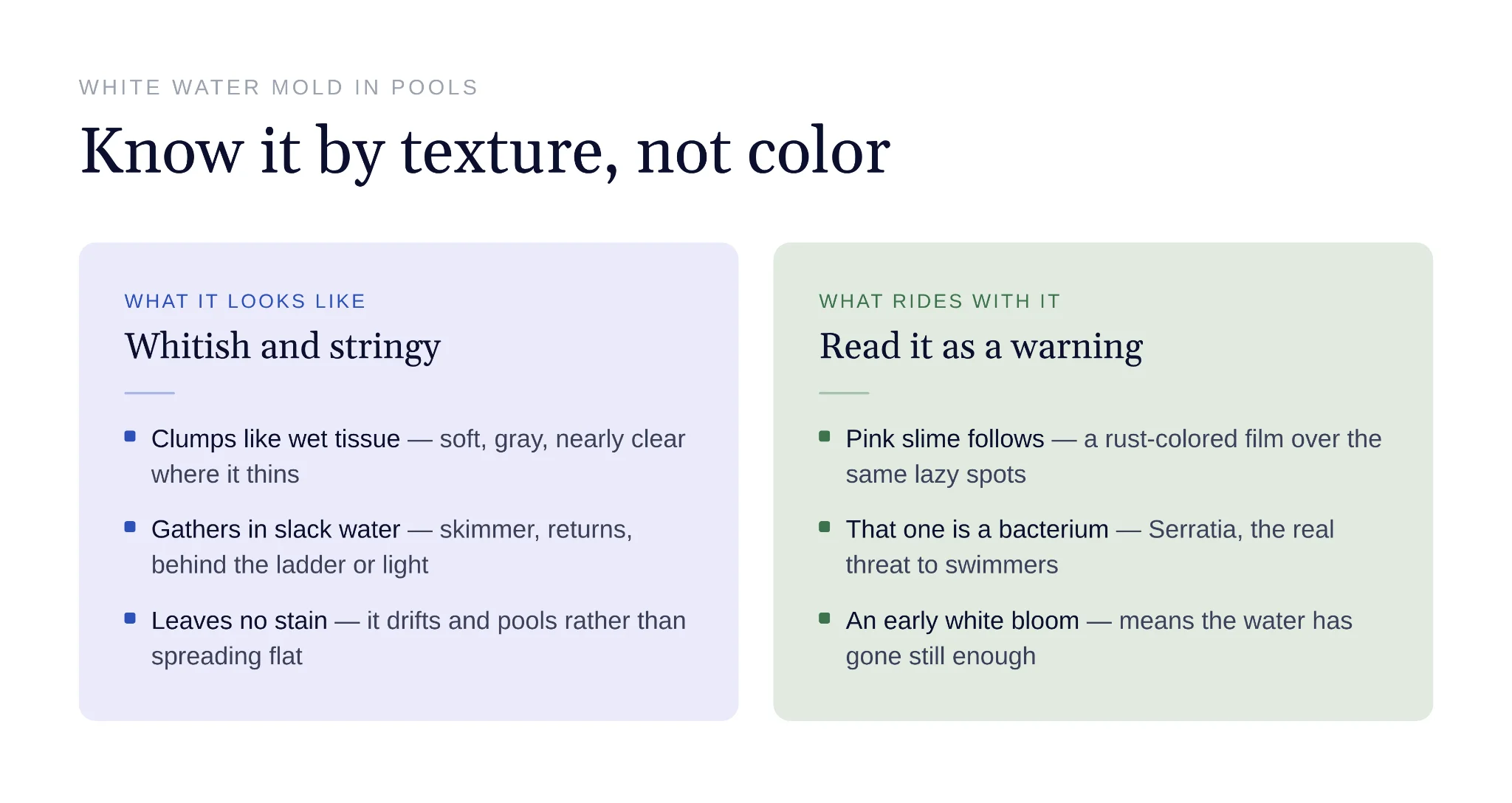
White water mold runs whitish to gray, nearly clear where it thins out, and it clumps like wet tissue that’s soft, stringy, a little mucous-like. It leaves no stain behind. Algae spreads flat across the floor, but this stuff drifts, then gathers wherever the water loses its push: skimmer baskets, the mouths of the returns, the shadow behind a ladder, the niche around a pool light, the dead pocket behind a set of steps.
And it rarely comes by itself.
Pink slime tends to ride in with it, so you’ll have a pink or rust-colored film on those same lazy surfaces, often laid down in a sheet right over the white growth.
That one is a bacterium, Serratia marcescens, and it takes to warm spots where the water sits, and the chlorine has thinned out to nothing.
The white mold is mostly an eyesore and a drain on the equipment. The pink is the one that actually threatens anyone swimming. So an early white bloom is worth reading as a warning: the water has gone still enough that something nastier is lining up behind it.
Where It Comes From
The honest starting point is that the spores are already around. White water mold occurs on its own in the environment, and it hitches a ride into a pool on fill water from the garden hose, on a float that sat out through the winter, on a net borrowed from the neighbor two doors down.
One way or another it gets in. Whether it blooms depends on whether it finds an opening once it’s there.
Two things hold that door open: sanitizer that keeps sliding below where it should be, and water that sits undisturbed long enough for a colony to grab hold.
Heat throws fuel on both. A run of hot afternoons, or a heater cranked for a long weekend, and a pool that looked flawless on Friday can be blooming by Sunday.
It can also happen when the pump gets scheduled for too few hours.
A return sits pointed so the far end of the pool barely moves. Filters go three weeks past a cleaning. Each one manufactures the slack water a biofilm wants, and the plumbing counts every bit as much as the pool shell does.
A lot of the time the growth gets going deep inside the filter and the return lines, out of sight, and it’s well dug in before the first clump ever shows up in the basket.
Pools that run on biguanide instead of chlorine, the Baquacil systems, have earned a name for this, since that chemistry gives the growth more room to work. But no pool is exempt. Let the guard down long enough, and it’s fair game.
How to Clear It Out
Clearing it is mechanical work before it’s chemical.
The colony has to be physically broken apart first, so the sanitizer that follows can reach what’s hiding underneath.
Half-measures are the entire reason it comes back. The treatment has to hit the water, the surfaces, the gear, and the plumbing in one go. Leave any one of them alone, and the survivors there reseed everything else.
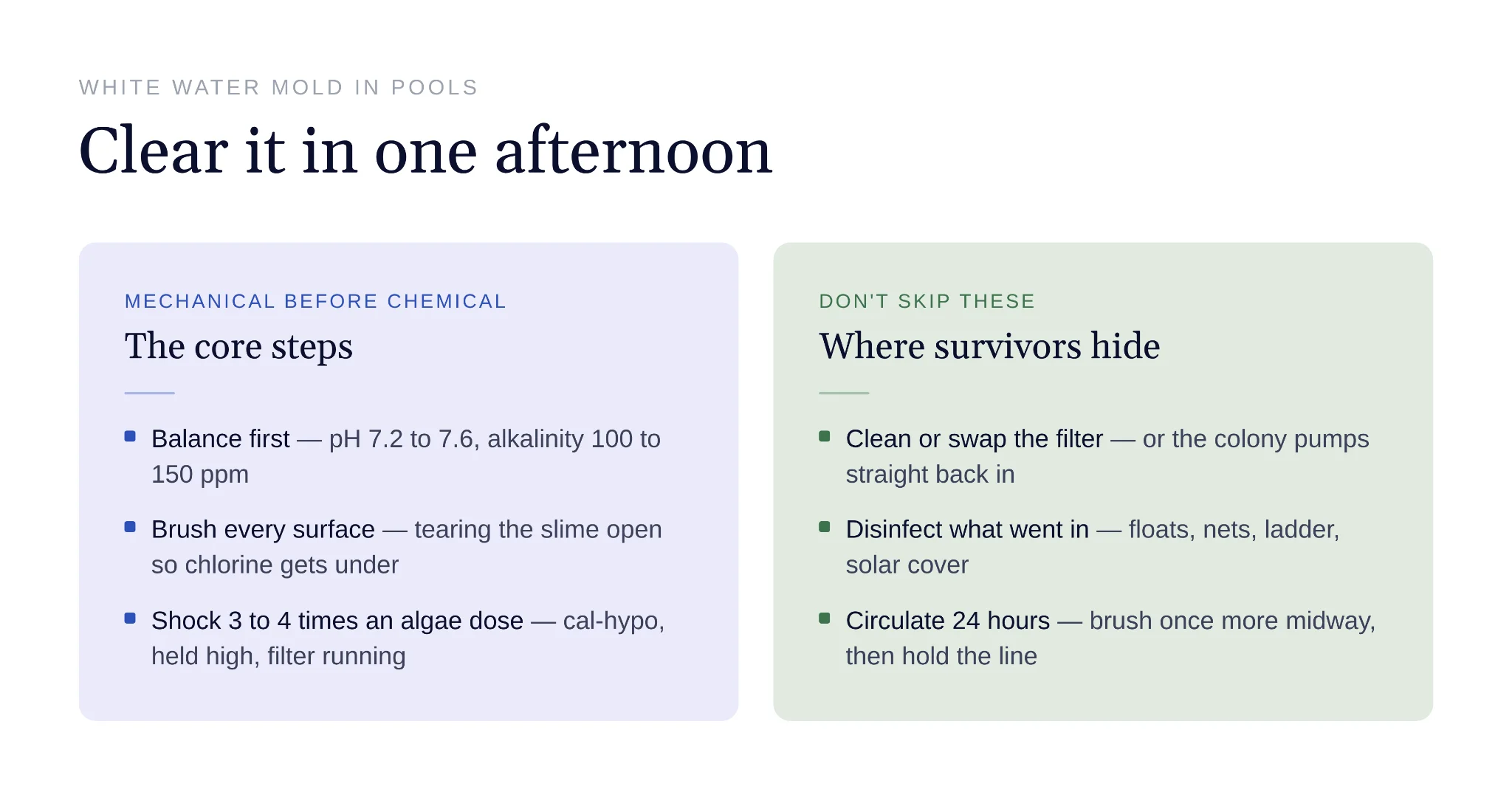
Block out an afternoon and run the whole thing start to finish, no long breaks in between.
- Balance the water first. Get pH and alkalinity into range before any heavy chemical goes in; the targets are in the table below.
- Brush every surface the growth has touched. Walls, floor, steps, and all the slow corners get a stiff brush. Don’t neglect the waterline, the space behind the ladder, and the area around each return and light.
- Shock hard, well past an algae dose. White water mold wants a heavy hit, generally three to four times a routine shock. Push free chlorine well above its everyday number and hold it there with the filter running.
- Clean or swap the filter media. Deep-clean a cartridge or replace it; backwash a sand filter hard and recharge the DE. Shock the pool while the filter is still seeded and all that happens is the problem gets pumped straight back into clean water.
- Disinfect anything that went in the water. A single contaminated pool noodle can kick the whole bloom off again. Soak or wipe down everything that’s touched the pool in a strong chlorine solution:
- Floats, toys, noodles
- Every tool that’s gone in, like the skimmer net, the brushes, the vacuum head
- The ladder, its steps and handrails, any fitting that lifts out
- Solar cover and the reel it winds onto
- Keep the water circulating for a full 24 hours. Leave the pump running a solid day so chlorinated water works through every line, and the filter can catch what the brushing knocked loose. Somewhere in the middle of that window, brush the pool once more.
- Retest, then hold the line. When free chlorine drops back to normal, and the water goes clear, keep the numbers steady across the next week. One dip in the days right after treatment is the whole opening a few survivors need.
| Reading | Where to get it before shocking | Why it matters |
|---|---|---|
| pH | 7.2 to 7.6 | Chlorine goes soft outside this band |
| Total alkalinity | 100 to 150 ppm | Keeps pH from wandering while the shock lands |
| Free chlorine | 3–4× the normal shock dose | Enough to overwhelm a colony that hides behind slime |
Why It Keeps Coming Back
The stubbornness comes down to location. Most of the colony is living where no brush has ever been, like inside the filter, down the return lines, in the short run of pipe between the skimmer and the pump.
Clear off the visible growth, decide the job’s finished, and the part sitting in the plumbing just waits for the next warm, under-chlorinated afternoon to seed a fresh bloom.
The slime does the rest. A hard shock loses its edge against a biofilm because the outer layer soaks up the hit while the organisms under it ride it out. Clear nearly all of a colony and nothing real has been accomplished. The fraction left behind in a dead corner rebuilds inside a week.
Which is why a partial job is worse than no job at all. It convinces the owner the problem is gone when it’s only lying low.
Keeping It Out for Good
Prevention is a matter of starving the colony of the two things it depends on: water that sits still, and a sanitizer that keeps slipping.
Free chlorine should stay steady and in range week to week, without the valleys that open up between top-ups.
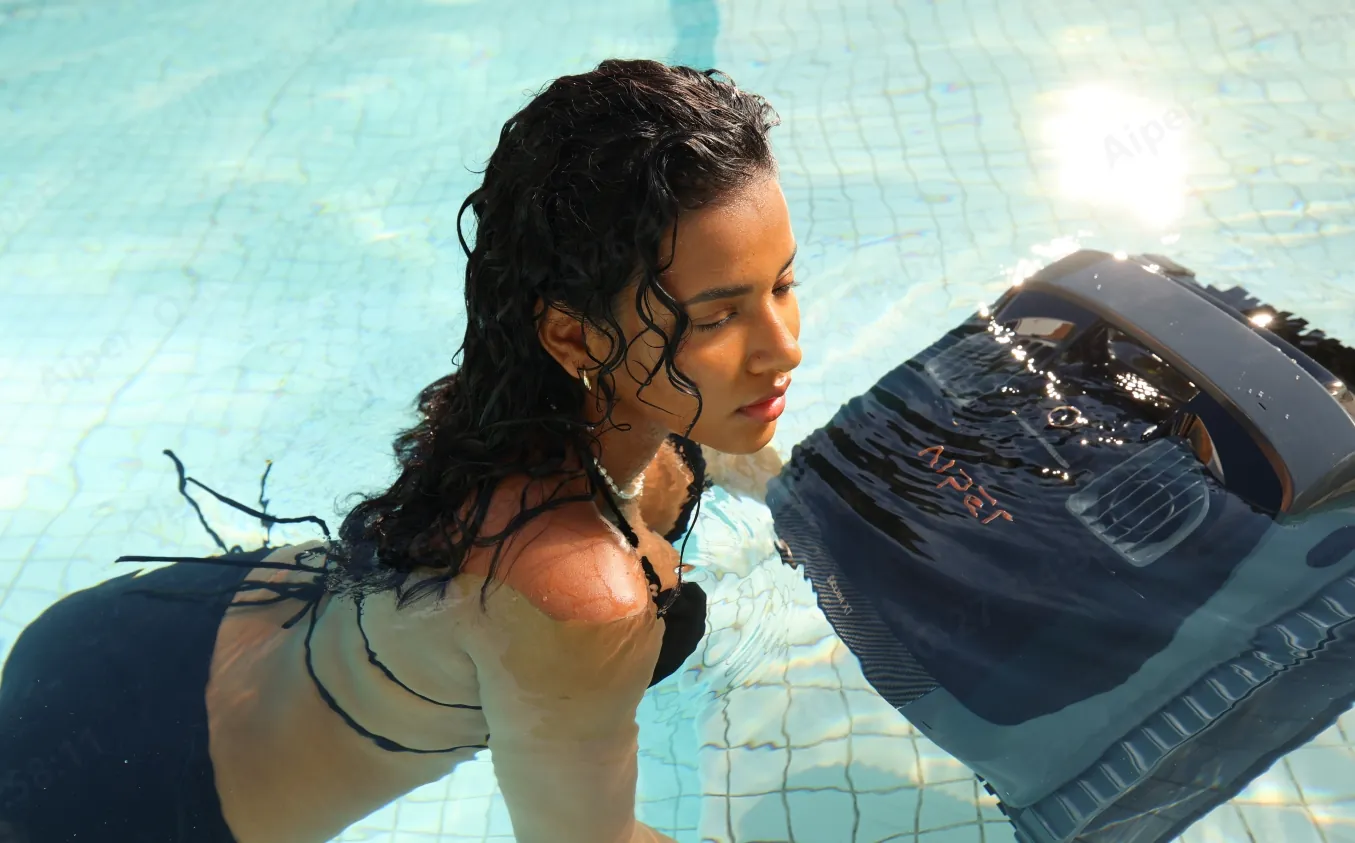
Keeping the surfaces physically disturbed is a real line of defense, because a biofilm has to anchor to something that holds still. A robotic cleaner earns its place here.
A cordless unit like the Aiper works the floor and climbs the walls on its own schedule, scrubbing the exact surfaces where biofilm tries to settle and stirring the dead pockets a fixed return never gets to.
Get more pool and lawn care guides from Aiper on Google