Pool Return Jet Direction: Where to Aim Them for Best Circulation

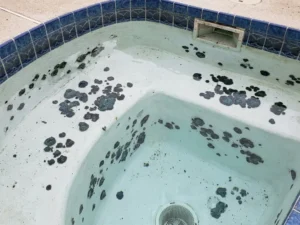
Algae that keeps coming back in the same spot no matter how much the pool gets shocked is rarely a chemistry problem — it’s a jet-direction problem, and the fix is usually just angling each jet 15 to 45 degrees downward and aiming all of them the same rotational direction around the pool instead of straight across at each other. The full setup process, and how to check your circulation, follows below. Poor circulation here is also why robotic and suction cleaners behave so differently, covered in our comparison of pool cleaner types.
Return jets are where filtered, treated water re-enters the pool, and their direction determines how evenly that water mixes with the rest of the pool. Aimed correctly, jets create a rotating current that carries chlorine and heat around the entire pool. Aimed poorly, they create dead zones that never fully circulate — and dead zones waste heat as well, which is why heating an inground pool starts with circulation.
What Does a Pool Return Jet Actually Do?
Water leaves the pool through the skimmer and main drain, passes through the filter and any heater or chlorinator, then re-enters through the return jets — the only point where treated water is pushed back into the pool. Their direction sets the circulation pattern for the whole body of water, the opposite role of the skimmer and main drain, which pull water out. If water isn’t reaching the returns with any force at all, the more likely culprit is a pump that’s lost its prime rather than jet direction. A sudden, unexplained drop in return flow can also point to a suction-side leak pulling in air instead of water, and our walkthrough for locating a leak in an inground pool covers how to tell the two problems apart.
How Do You Set Up Pool Return Jets Correctly?
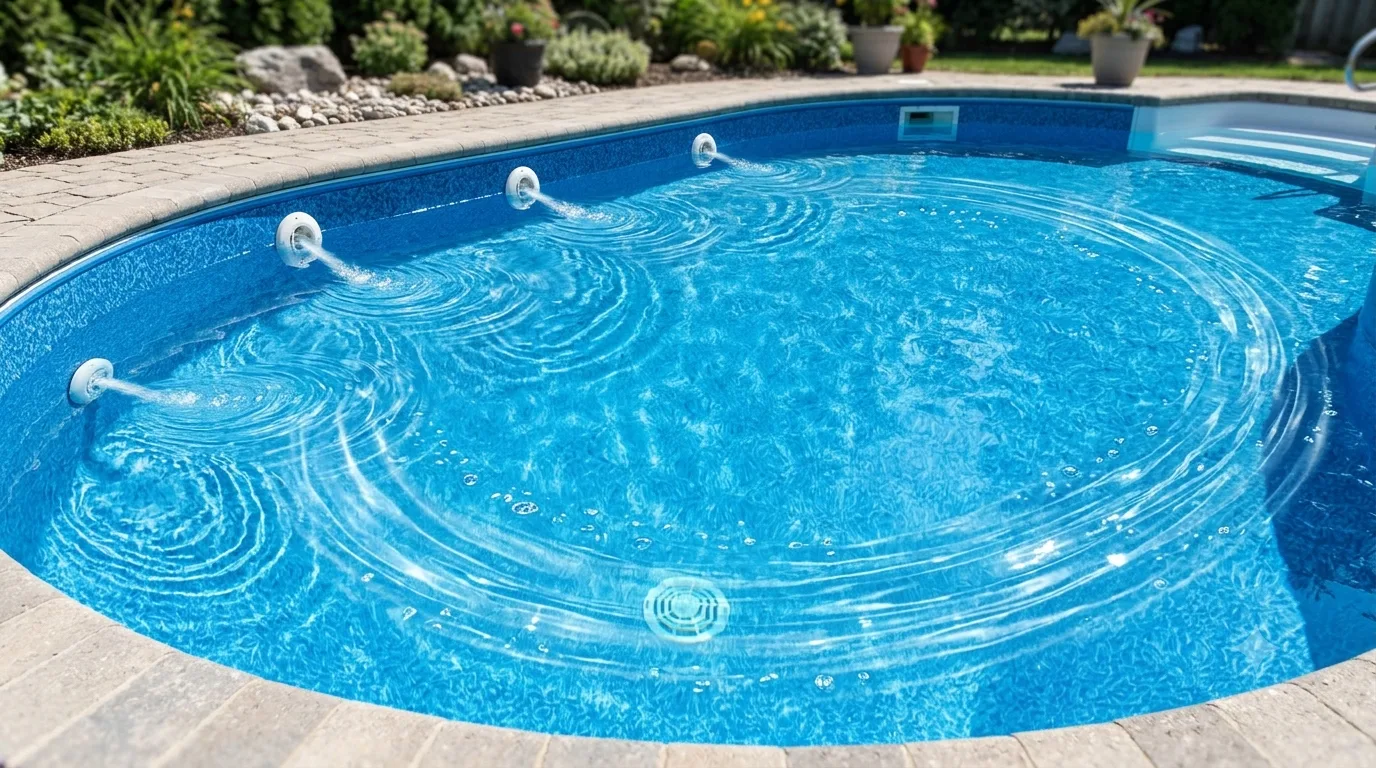
Angle jets slightly downward, roughly 15 to 45 degrees below horizontal, and aim them in a consistent rotational pattern around the pool — all turning the same direction rather than pointing straight across at each other. A consistent rotational aim creates a slow, whole-pool current that carries water from every jet into a single circulating flow, rather than several jets fighting each other and canceling out their own momentum.
What Happens If You Aim Return Jets Toward the Surface?
Jets aimed straight up or angled upward disturb surface skimming, pushing floating debris away from the skimmer instead of toward it. They also create only a surface-level current, leaving deeper water undisturbed — a common cause of chlorine readings that look fine at the surface but not lower in the pool.
Pointing jets downward instead pushes cooler surface water down and pulls warmer or chemically treated water up from below, mixing temperature and chemistry across depth rather than just at the surface — and if you’re not sure what those depths actually are, our guide to measuring the depth of your pool the right way has the method.
How Does Jet Direction Affect Chlorine and Heat Distribution?
A pool with poor rotational flow develops dead zones, typically in corners, near steps, and behind ladders, where chlorine and heat from the returns never fully reach. These zones are where algae growth and cloudy patches appear first, even when chemistry tests fine at the point where you sample the water. Correcting jet aim to establish one continuous rotational current is usually enough to eliminate these localized problems without changing chemical dosing at all. A clogged or overdue filter can also choke flow to the returns, which is worth ruling out with a filter backwash before adjusting jets.
How Do You Adjust a Pool Return Eyeball Fitting?
Most eyeball return fittings rotate and swivel by hand, letting you change both the angle and direction of aim without tools. On larger pools, aim jets slightly toward the center rather than straight along the wall, so the current reaches the middle of the pool instead of just circling the edge. A simple way to check whether the current pattern is working: drop a small amount of dye or a leaf near a jet and watch which direction and how far it travels before losing momentum.
What Are the Signs Your Jets Are Aimed Wrong?
Recurring algae in corners or on steps despite adequate chlorine elsewhere, uneven pool temperature between areas, cloudy patches that don’t match overall water balance, and a skimmer that consistently underperforms at pulling in surface debris all point to the same root cause: jets that aren’t creating a full rotational current. Weak flow near the main drain is also a common reason a pool robot gets stuck there, since both symptoms trace back to the same circulation gap.
Frequently Asked Questions
How many return jets does a typical residential pool need?
Most pools use one return jet per roughly 400 to 600 square feet of surface area, or spaced about 10 to 15 feet apart along the walls, so a small pool may only need two while a larger one needs four or more to avoid dead zones.
Do jets need to be aimed differently when running a variable-speed pump on a low overnight cycle?
Yes — at low RPM the reduced flow makes correct rotational aim more important, not less, since there’s less force available to overcome jets pointed the wrong way or straight across at each other.
How often should return jet direction be rechecked?
Check aim any time you clean or replace the filter, add new equipment like a heater or automatic cleaner line, or notice recurring algae in one spot, since eyeball fittings can drift out of position over time from routine handling.
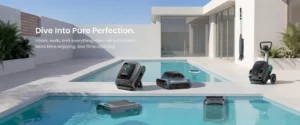
Circulation problems and debris buildup often show up in the same corners and dead zones. An Aiper robotic pool cleaner reaches those low-flow areas directly, cleaning the floor and walls regardless of how well the jets are circulating the water.
Get more pool and lawn care guides from Aiper on Google