How to Measure Pool Depth
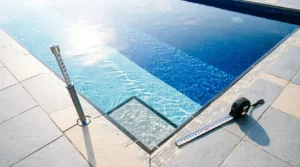
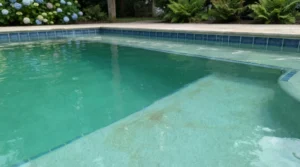
Pool depth is measured vertically from the surface of the water straight down to the pool floor at that point — not from the top of the coping or deck, and not the wall height…
Pool water that’s green but stays clear rather than cloudy, and that gets visibly darker right after a shock treatment instead of clearing, points to dissolved metal — usually iron or copper — oxidizing, not…
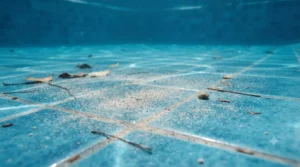
Heavier dirt responds to vacuuming to waste or a robotic cleaner with its own onboard filtration, but very fine silt or dust is often too small for a standard sand filter to catch and needs…
Standard silica sand filter media needs replacing roughly every 3 to 5 years, sooner if you notice cloudy water despite balanced chemistry, backwash cycles needed more often than before, or pressure that climbs faster than…
Low-to-medium speed, run for a longer daily cycle, is the efficient standard for routine pool filtration — pump energy use scales roughly with the cube of speed, so cutting speed in half can cut power…
Pool-specific filter sand, commonly labeled #20 silica sand at a 0.45 to 0.55mm effective size, is the correct media for a sand filter — generic play sand or mason sand is the wrong grain size…
Agricultural lime is the standard fix for acidic soil, raising pH by neutralizing excess acidity, though the exact rate depends on how acidic the soil is and its texture — clay needs meaningfully more lime…
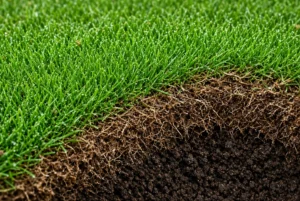
A selective, grass-safe herbicide matched to your specific turf type, applied in late winter to early spring before bindi flowers and sets its sharp seed heads, is the standard fix — a non-selective product like…
Acid washing a pool removes a thin layer of plaster along with the staining embedded in it, using a diluted muriatic acid solution applied to a drained surface, scrubbed, and neutralized immediately — it’s a…
Feeding soil microbes with organic matter, keeping soil aerated rather than compacted, and maintaining steady moisture without waterlogging are the three levers that actually increase microbial activity — most synthetic fertilizers don’t add microbes at…
Floating scum on a pool’s surface is usually oils — sunscreen, lotion, and body oil residue — combined with dust and pollen collecting at the waterline due to surface tension, and it clears with skimming,…
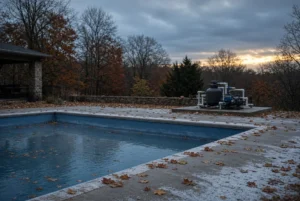
A pool pump that’s suddenly noisier than usual is almost always one of three things: cavitation from restricted water flow, a worn motor bearing, or vibration being transmitted through the equipment pad — and each…
*Aiper is the No.1 brand of smart robotic pool cleaner in the world in terms of sales volume
Source: Euromonitor International Co., Ltd., in terms of 2025 manufacturer sales volume (units) in the world. Smart robotic pool cleaner is defined as: intelligent service robots integrating mechanical, electronic, software algorithm and sensor technologies. They autonomously or with minimal human intervention perform pool cleaning and maintenance tasks, typically featuring smart navigation, path planning, and multiple cleaning modes. Research completed in 2025/12.