How to Tell If Your Lawn Needs Lime (and What pH Has to Do With It)

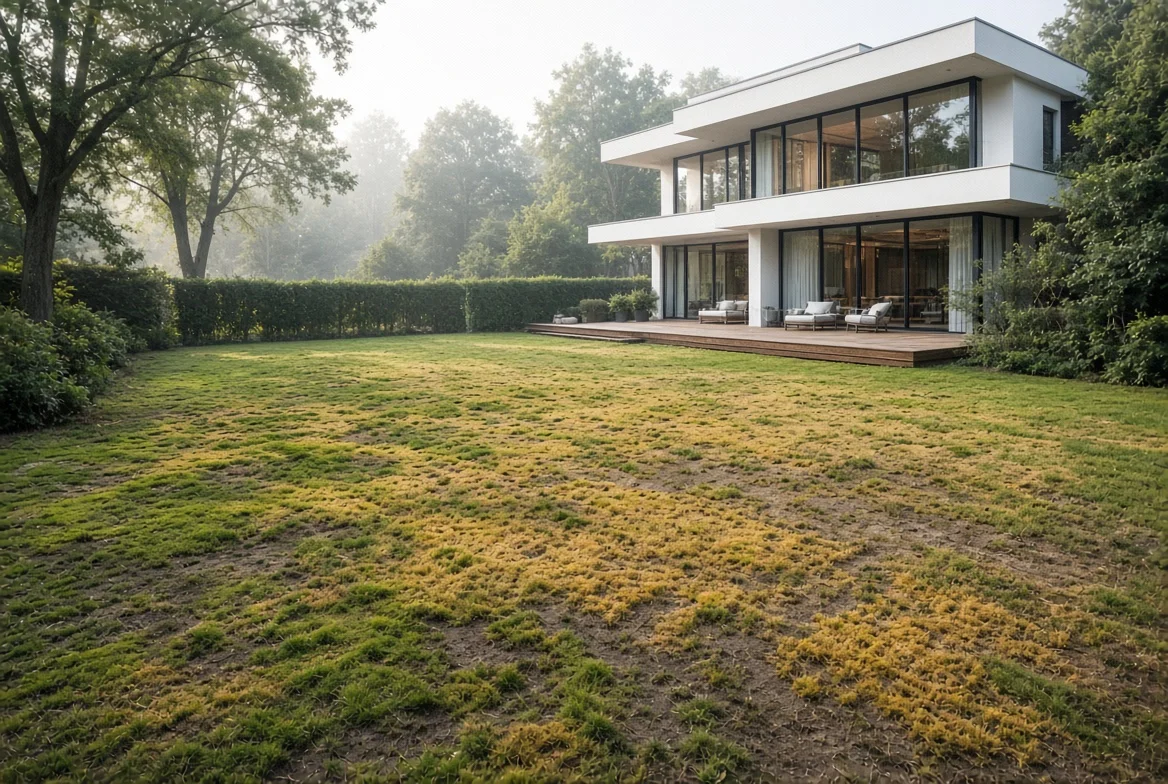
Lime raises soil pH. It helps only when the soil is more acidic than the grass growing in it prefers.
Yellowing grass, moss, and thin patches all get blamed on acid soil. Some of them are linked to low pH, but none of them proves it.
This guide covers the pH range each common grass needs, the signs worth checking, how to take a soil sample, and how to apply lime at the rates extension services recommend.
What pH Means for Grass
Soil pH runs from 0 to 14. Anything below 7.0 is acidic, 7.0 is neutral, and anything above 7.0 is alkaline.
The scale moves in steps of ten. A soil at pH 5.5 is ten times more acidic than one at 6.5, and a soil at 4.5 is 100 times more acidic, so a drop that looks small on a test report is a large change in the soil.
pH matters because it controls what the grass can take up. At pH 5.5 or below, soil can run short of calcium, magnesium, and phosphorus, while aluminum and manganese become available in amounts that can be toxic to turf.
It also affects the soil organisms that feed the lawn. A pH between 6.0 and 7.0 increases microbial activity, which helps break down thatch, and slow-release and organic nitrogen fertilizers depend on those microbes to work.
Find your pool pH with this calculator.
Most lawns drift toward acid over time. Rainfall leaches calcium and magnesium out of the soil, and ammonium-based fertilizers add to the acidity.
Target pH by Grass Type
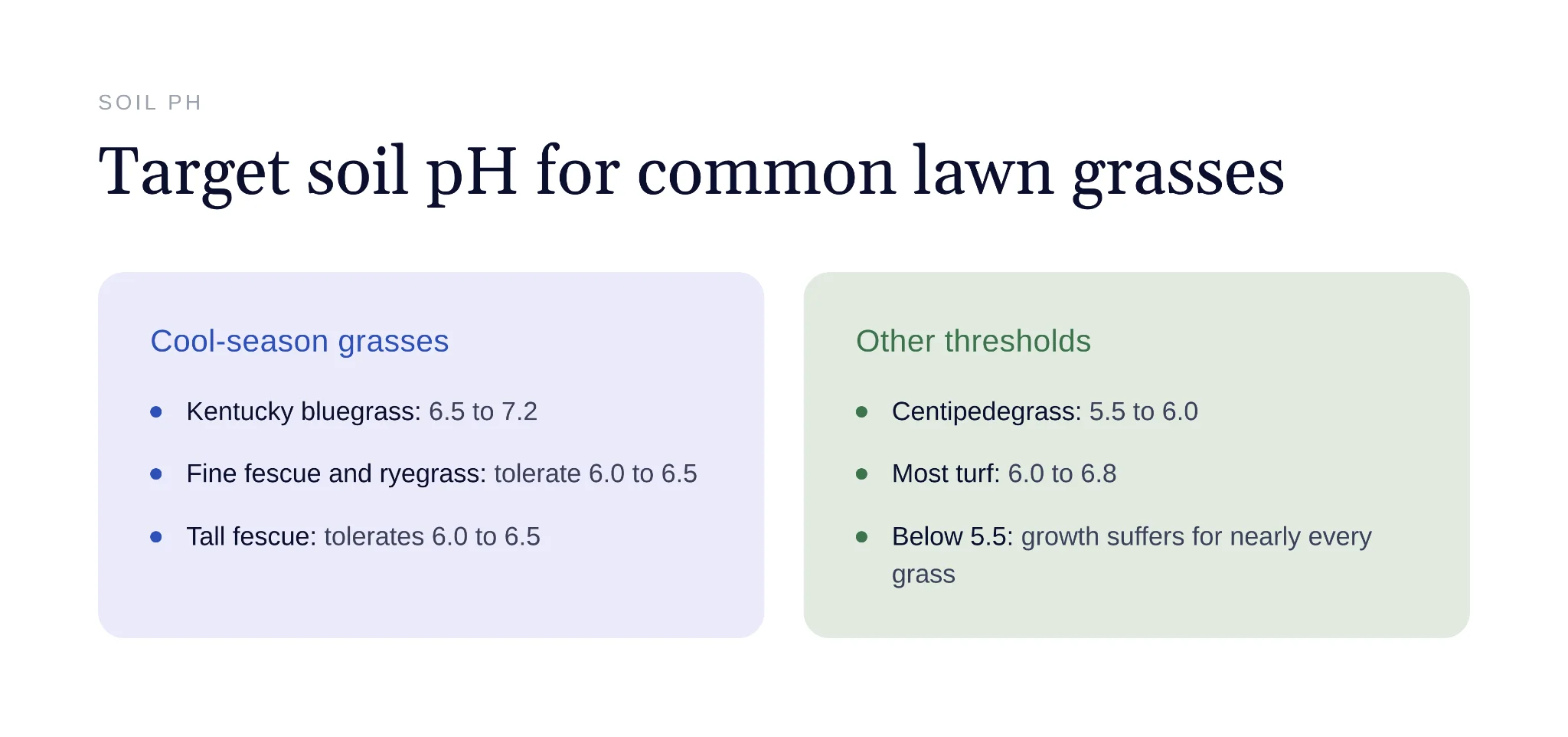
The right pH depends on the grass. Cool-season lawns in the North want soil close to neutral, while centipedegrass in the South prefers soil noticeably more acidic.
| Grass | Target soil pH |
|---|---|
| Kentucky bluegrass | 6.5 to 7.2 |
| Fine fescue, perennial ryegrass, tall fescue | Tolerate 6.0 to 6.5 |
| Centipedegrass | 5.5 to 6.0 |
| Most turf, general guideline | 6.0 to 6.8 |
The number that matters most is the floor. Below pH 5.5, turf growth suffers for nearly every lawn grass.
Centipedegrass is the exception to watch for. Many soils in the South Carolina coastal plain and midlands already sit above the range it prefers, and liming those lawns pushes them further in the wrong direction.
Signs That Point to Acid Soil
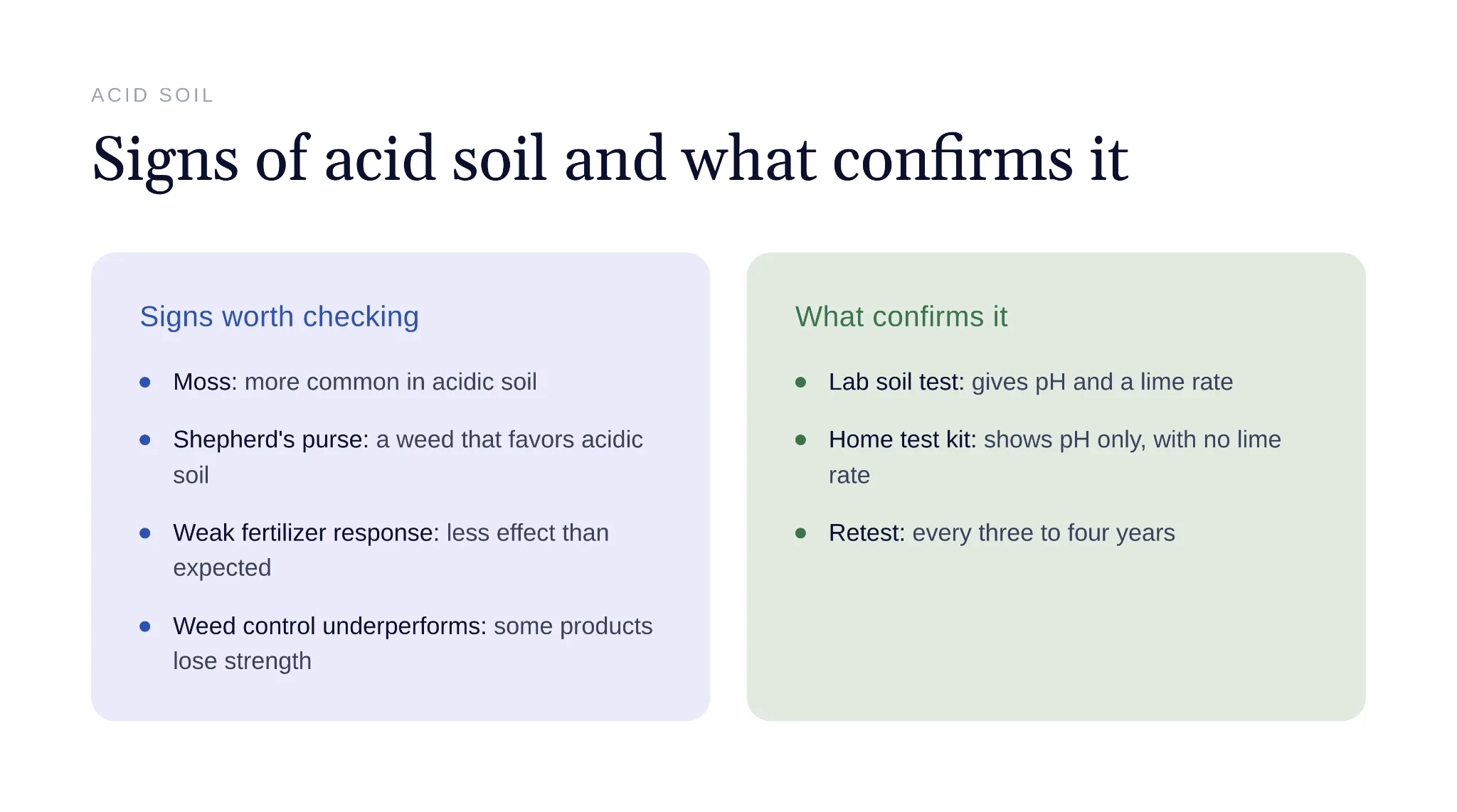
A few signs show up more often in acidic lawns. Use them as a reason to test, since each one has other possible causes:
- Moss. Moss is more common in moderately to strongly acidic soils, but its presence does not necessarily mean the soil is acidic. Shade and poor drainage produce moss too.
- Shepherd’s purse. This lawn weed is a good indicator of moderately to strongly acidic soil.
- Fertilizer that stops working. Strongly acidic soil limits how much a lawn responds to fertilizer, so feeding produces a weaker result than expected.
- Weed and pest products that underperform. Strongly acidic soils can reduce the effectiveness of some turf herbicides and insecticides.
None of these tells you how much lime to apply, or whether to apply any at all. Soil pH can be determined only by a soil test.
How to Take a Soil Test
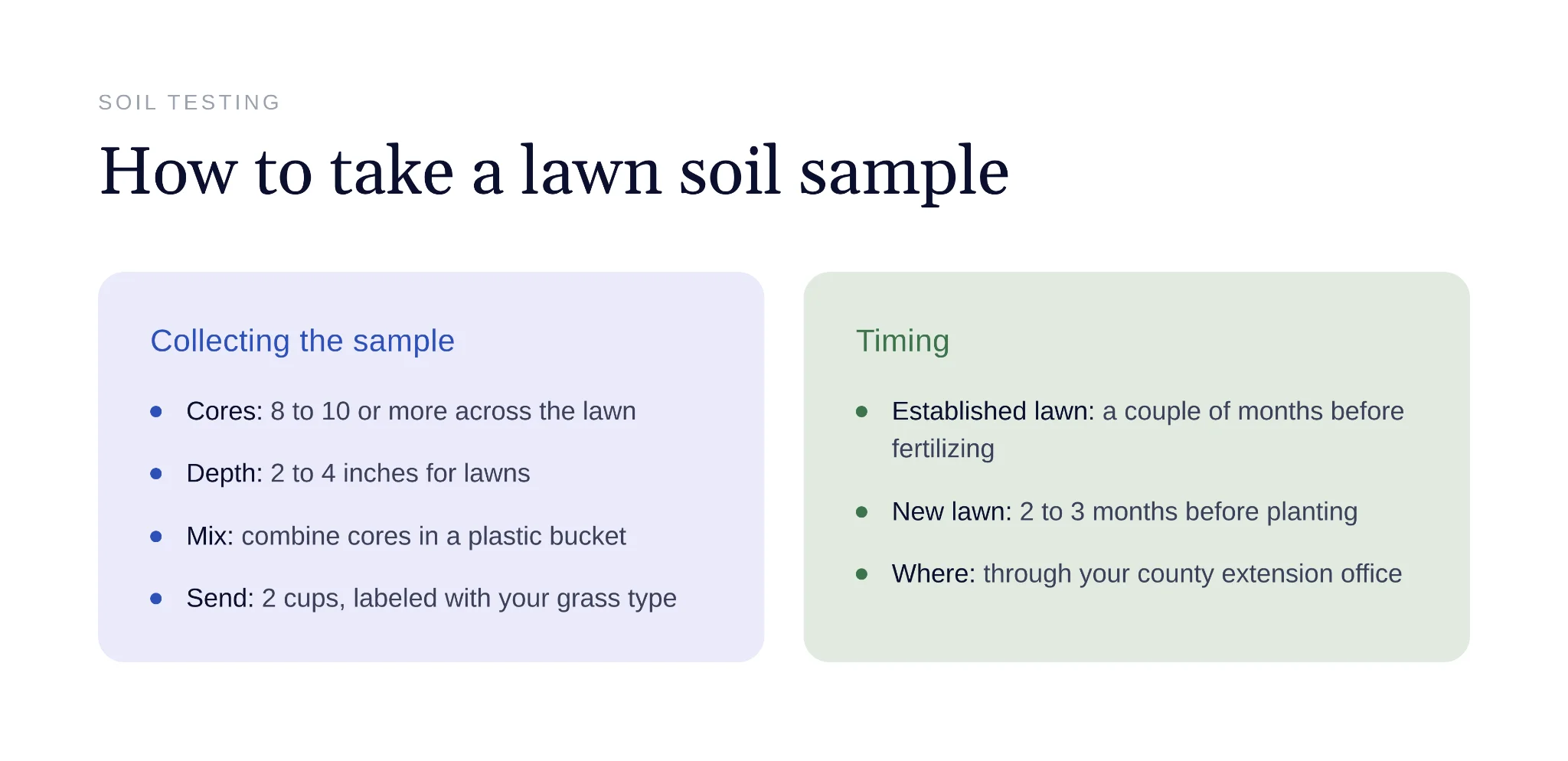
A lab test gives you two things: the current pH and a lime recommendation for your grass. Home test kits can give a fairly good indication of pH, but they cannot provide a meaningful lime recommendation.
Clemson Extension’s method for lawn samples works with a trowel or soil probe and a clean bucket:
- Collect 8 to 10 or more cores from across the lawn, each from the surface to a depth of 2 to 4 inches.
- Mix all the cores in a plastic bucket, then fill the sample bag with 2 cups of the mixed soil.
- Label the bag with your name, address, county, and the type of lawn. The grass type changes the recommendation, so name it specifically.
- Submit the sample through your local cooperative extension office.
Sample a couple of months ahead of your main fertilizing window, since that gives any lime time to react with the soil. For a new lawn, test 2 to 3 months before the planting date.
After the first test, retest every three to four years to catch the gradual drift toward acid.
Here’s a more detailed look at how to test your garden soil.
Reading the Lime Recommendation
The report gives lime in pounds per 1,000 square feet. That number assumes a specific product strength, so check your bag before you measure anything out.
Adjusting for the Product You Buy
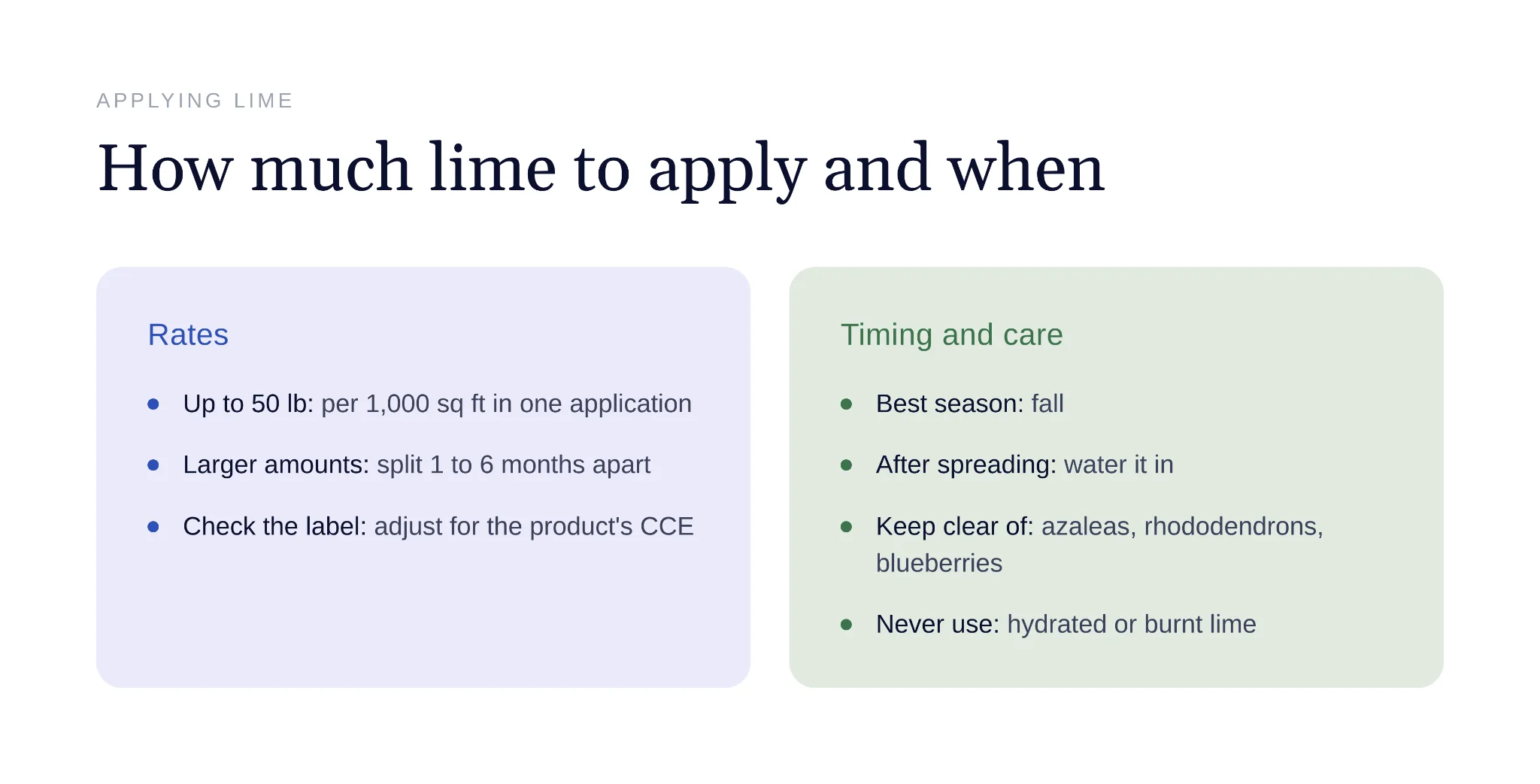
Penn State’s recommendations assume a liming material with the same neutralizing power as pure calcium carbonate, listed on the label as a calcium carbonate equivalent (CCE) of 100 percent. If your product’s CCE is lower, you need more of it.
To adjust, divide the soil test recommendation by the product’s CCE and multiply by 100. A recommendation of 75 pounds per 1,000 square feet with a product labeled 80 percent CCE works out to about 94 pounds of that product.
Choosing the Material
Garden centers carry several products, and only some belong on a lawn:
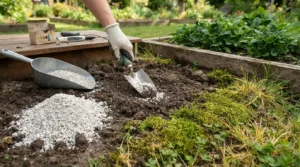
- Ground agricultural limestone is the most widely used liming material for turf.
- Dolomitic limestone contains magnesium and is recommended when the soil test shows low pH and low magnesium.
- Pelletized limestone is ground limestone formed into larger particles. It spreads easily with a standard drop or spinner spreader and creates less dust.
- Wood ash raises pH but is only about 40 percent as effective as limestone, and it can push soil potassium too high.
- Hydrated lime and burnt lime should stay off lawns entirely. Both can burn turf.
Gypsum is not a liming material and will not change pH.
Applying Lime to an Established Lawn
Lime moves into the soil slowly, so rate and timing matter more than technique. The limits below keep the lime working without leaving residue on the grass.
How Much Per Application
If the recommendation is under 50 pounds per 1,000 square feet, apply the full amount at once. If it is higher, split it into applications of up to 50 pounds each, spaced 1 to 6 months apart.
The cap exists because more than 50 pounds per 1,000 square feet at once can leave an undesirable residue on the turf. For example, a 120-pound recommendation becomes three applications of 40 pounds.
A new lawn is different. The full amount can go down at once if it is worked into the top 4 to 6 inches of soil before seeding.
When to apply
Limestone works best when applied in the fall, when rain, snow, and freeze-thaw cycles help move it into the soil. It can go down any time the ground is not frozen, except during severe drought.
Pick a calm day. Blowing lime dust is wasted and can land where it is not wanted, including on acid-loving plants such as azaleas, rhododendrons, and blueberries.
Watering it in
Water the lime in after applying it to avoid burning the grass blades. Moisture also keeps it working, since lime reacts slowly in dry soil.
That follow-up watering is easy to forget once the spreader is put away. The Aiper IrriSense 2 maps up to 10 zones across 4,800 square feet with separate schedules, so a limed section can get its own watering run, and Weather-Sense pauses the schedule when rain does the job instead.
When the Test Says No Lime
A soil test that shows no lime needed is a useful result. Adding lime anyway can overshoot, since too much lime on established turf is one of the ways soils become too alkaline.
High pH brings its own problems. In strongly alkaline soil at pH 8.5 or above, phosphorus becomes unavailable, and iron deficiency can show up as yellowing.
If the report shows pH above your grass’s range, it may recommend sulfur instead. Sulfur lowers pH, and like lime, it should be applied only when a soil test calls for it.
Get more pool and lawn care guides from Aiper on Google