How to Get Rid of Nutsedge (Nutgrass) in a Lawn

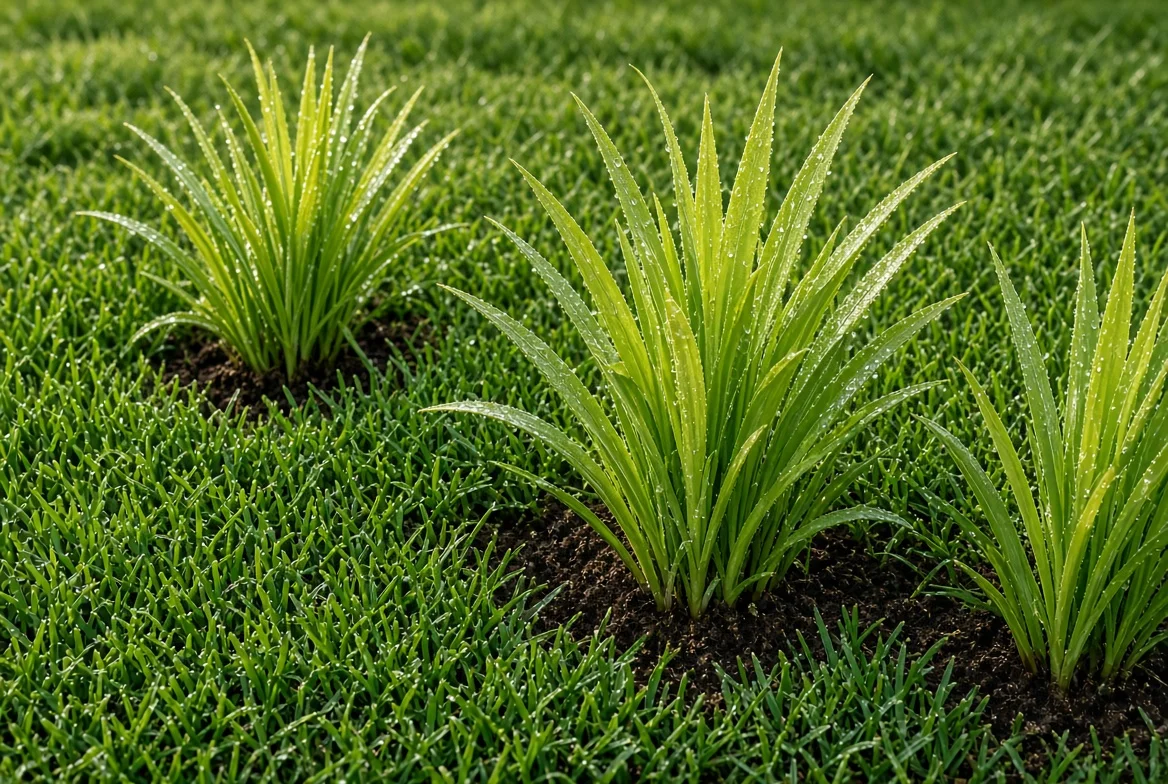
You mow on Saturday. By Tuesday, there are pale green spikes standing an inch and a half above everything else, in the same two spots they were last July.
That’s nutsedge. It grows roughly twice as fast as turfgrass, which is why it looks fine on mowing day and becomes obvious again by midweek. Then you pull it, and three weeks later there are nine plants where there was one.
The problem isn’t the above-ground plant. It’s what’s under it, and almost every intuitive response to the weed makes that underground situation worse. Bahia grass is sometimes confused with nutsedge from a distance, so it’s worth comparing symptoms against a dedicated guide to fixing bahia grass problems in a lawn.
How to Identify Nutsedge in Your Lawn
Roll a stem between your thumb and forefinger. Grass is round or flat and rolls smoothly. Nutsedge has three distinct edges. Sedges have edges. It’s a corny mnemonic, and it works.
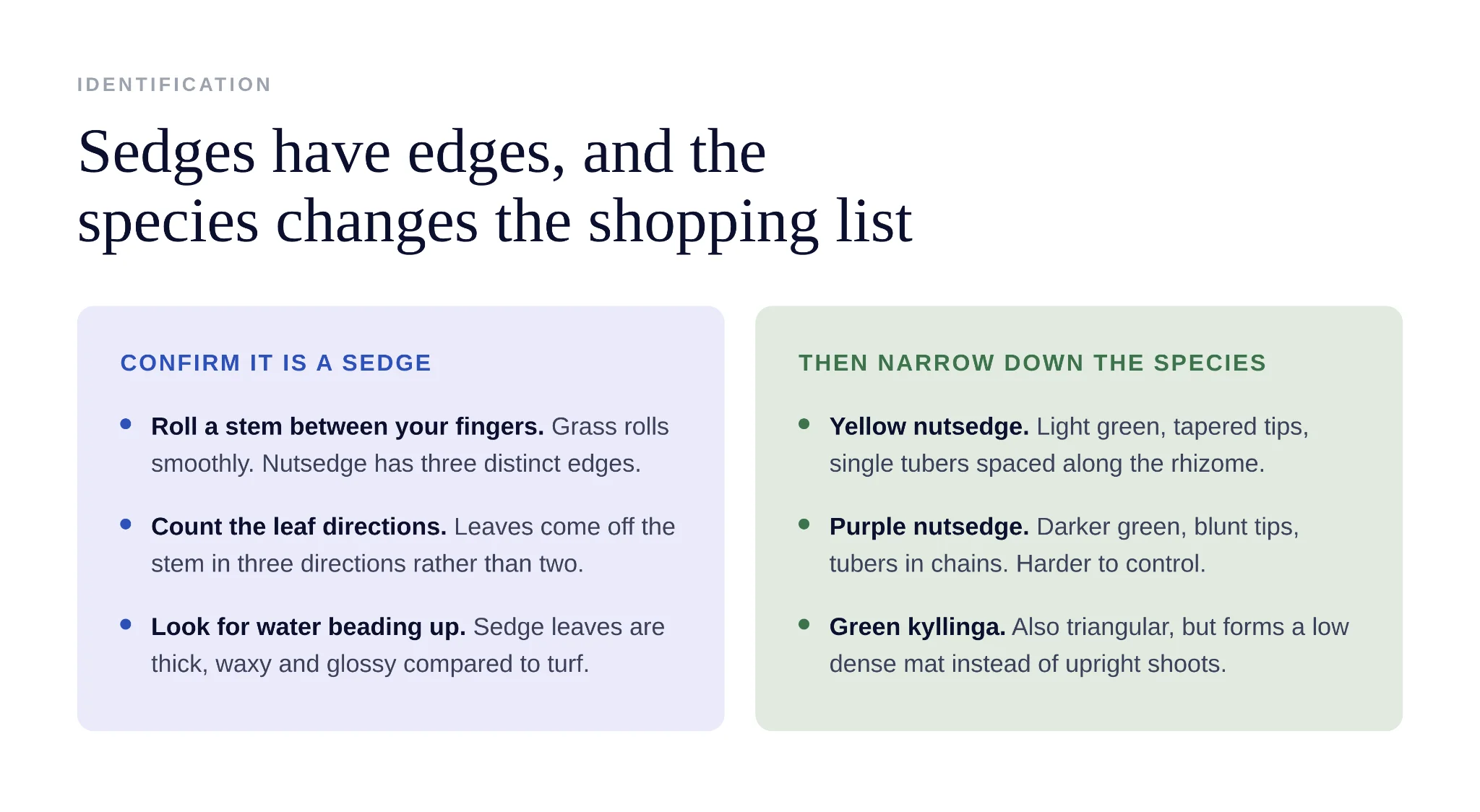
The leaves also come off the stem in three directions rather than two. They’re thicker than turf, waxy and slightly glossy, and water beads on them and rolls off. Remember that last part. It matters later.
Now figure out which one you have, because it changes the shopping list.
Yellow nutsedge is the common one across most of the country. It’s light yellow-green, with leaf tips that taper to a fine point and yellowish-brown seedheads. Dig one up, and you’ll find tubers at the ends of rhizomes, each sitting alone like a bead on a string.
Purple nutsedge runs warmer and further south, roughly the Gulf states and desert Southwest. It’s darker green, with blunt leaf tips and reddish-purple seedheads. Its tubers form in chains along the rhizome, which makes it harder to control. You’re fighting a network rather than one tuber per shoot.
Green kyllinga gets misidentified as nutsedge too. It also has triangular stems, but it’s finer and forms a dense low mat rather than individual upright shoots. If your “nutsedge” is a spreading carpet, you probably have kyllinga and should expect more repeat treatments.
Why Nutsedge Keeps Coming Back
Nutsedge is a perennial that stores its future underground in tubers, the “nuts” in nutgrass. They sit mostly in the top six inches of soil, and a mature patch can hold an inventory of dormant plants waiting to emerge. Bulb-forming weeds fight the same way — wild onion and garlic regrow from bulbs, which is why getting rid of onion grass in a lawn takes persistence, not one good pull.
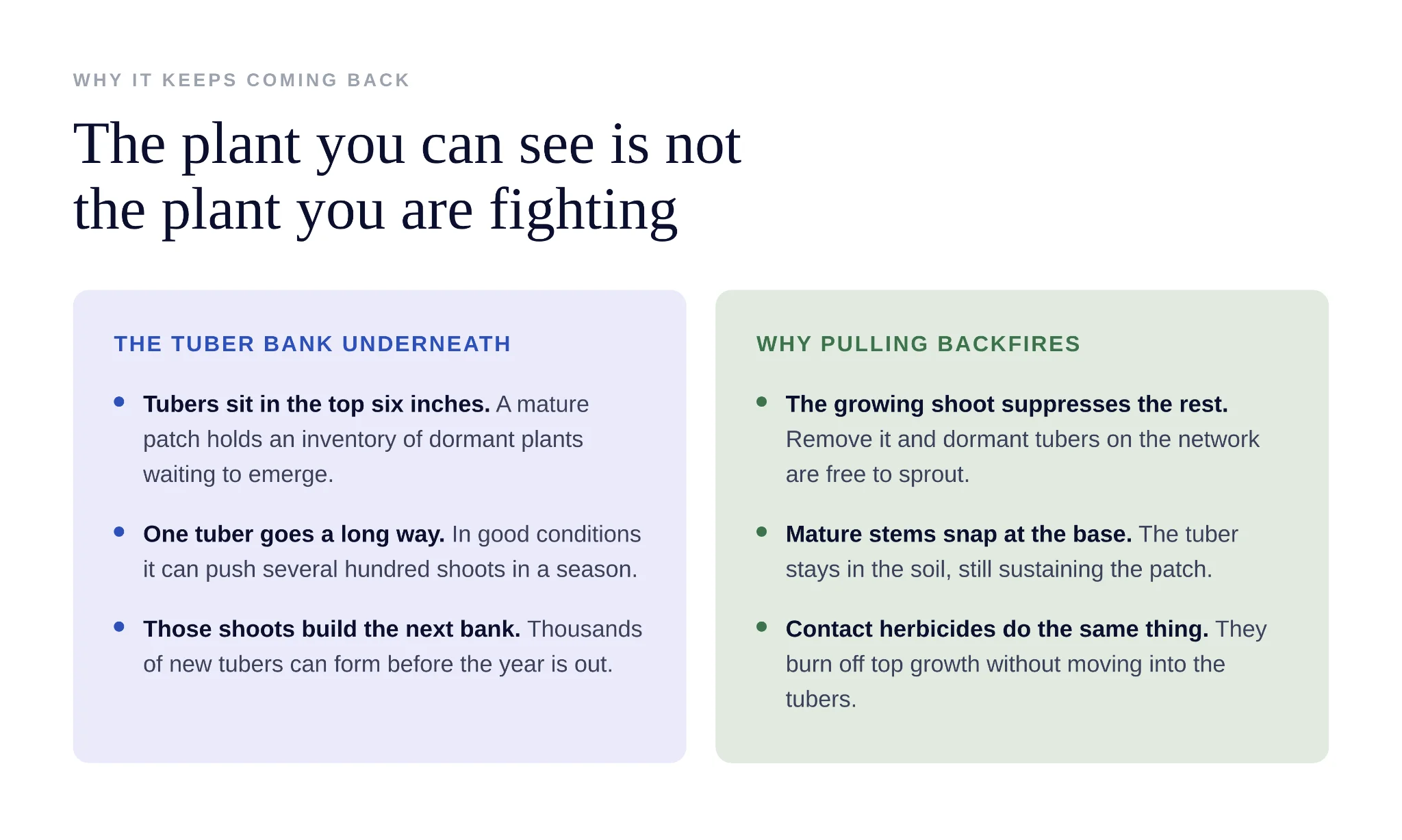
Under favorable conditions, a single yellow nutsedge tuber can produce several hundred shoots in one growing season, and those shoots can generate thousands of new tubers before the year is out.
Here’s why pulling often makes things worse. The actively growing shoot suppresses other tubers on the network. Remove that shoot and the suppression lifts, allowing dormant tubers to sprout.
When you pull a mature nutsedge plant, the stem often snaps at the base while the tuber stays in the soil. You’ve removed what you can see without removing what’s actually sustaining the patch.
Contact herbicides can create the same problem. They burn off the top growth without moving into the tuber network. The patch goes brown, then new shoots emerge.
Anything that only kills what you can see is not treatment. It’s pruning. Taprooted weeds like spurge punish that mistake hardest — how to get rid of spurge in a lawn explains why the root has to come with it.
Why Nutsedge Grows in Certain Parts of Your Lawn
Nutsedge doesn’t colonize randomly. Look at where yours is, and there’s usually an explanation.
It thrives in saturated, poorly draining soil where turf roots struggle. Common causes include low spots that hold water after rain, downspouts draining onto turf, leaking or misaligned sprinkler heads, clay areas getting the same irrigation as faster-draining soil, and compacted ground along paths.
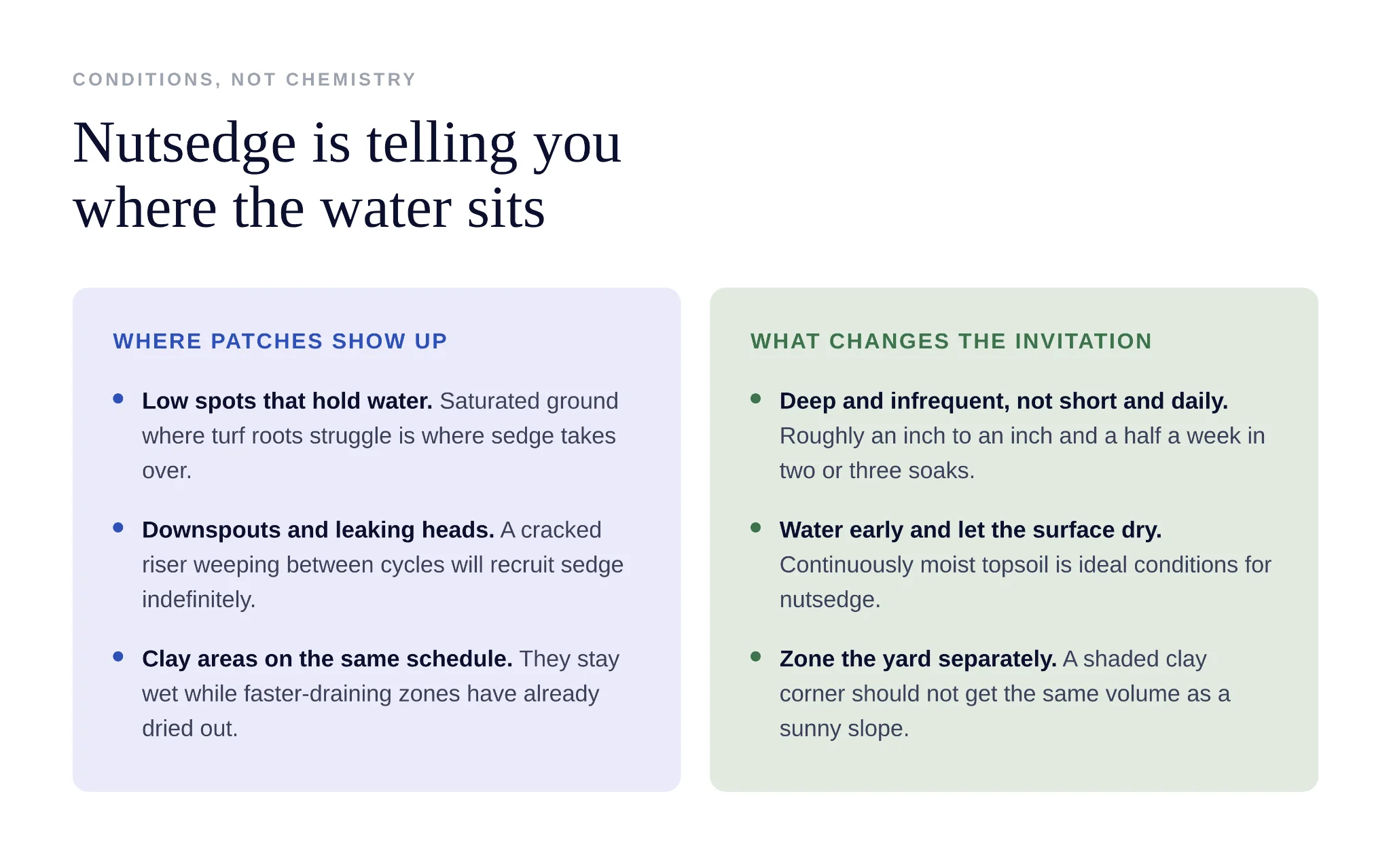
A homeowner can spend two seasons and roughly two hundred dollars in product on a nutsedge patch caused by a cracked sprinkler riser that wept continuously between cycles. The herbicide worked each time. The conditions that recruited the nutsedge never changed.
Fix the chemistry, and you clear the current generation. Fix the water, and you stop making the area attractive to the next one. Shade-loving invaders answer to the same playbook — learning how to remove wild violets from lawns starts with fixing the conditions that let them in.
How to Fix Watering Problems That Encourage Nutsedge
Short, frequent watering is ideal for nutsedge. Ten minutes every day or two keeps the top layer of soil continuously moist while encouraging shallow turf roots.
What you want instead is deep and infrequent watering. Somewhere around an inch to an inch and a half per week total, delivered in two or three long soaks rather than seven short ones. Water early in the morning and let the surface dry between cycles.
The difficulty is doing that correctly across a yard where one area may hold water for two days while another dries by noon.
This is where the Aiper IrriSense 2 earns its place in the diagnosis rather than just the equipment list. It’s a plug-in, hose-fed smart sprinkler system covering up to 4,800 square feet. You can map the yard and assign up to ten zones, so a shaded clay corner doesn’t have to receive the same volume as a sunny slope.
Its Weather-Sense system can delay scheduled cycles when rain is forecast, while a built-in rain sensor stops irrigation when unexpected rain arrives. That helps prevent one of the easiest ways to create chronically wet ground: watering on top of rain.
EvenRain delivery applies water as simulated rainfall rather than a hard jet, reducing runoff from high areas into low ones.
None of this kills nutsedge. It changes whether the nutsedge has a reason to be there.
The Best Herbicides for Killing Nutsedge
You need a systemic herbicide, meaning one the plant absorbs and moves down into the rhizomes and tubers. Four active ingredients are worth knowing.
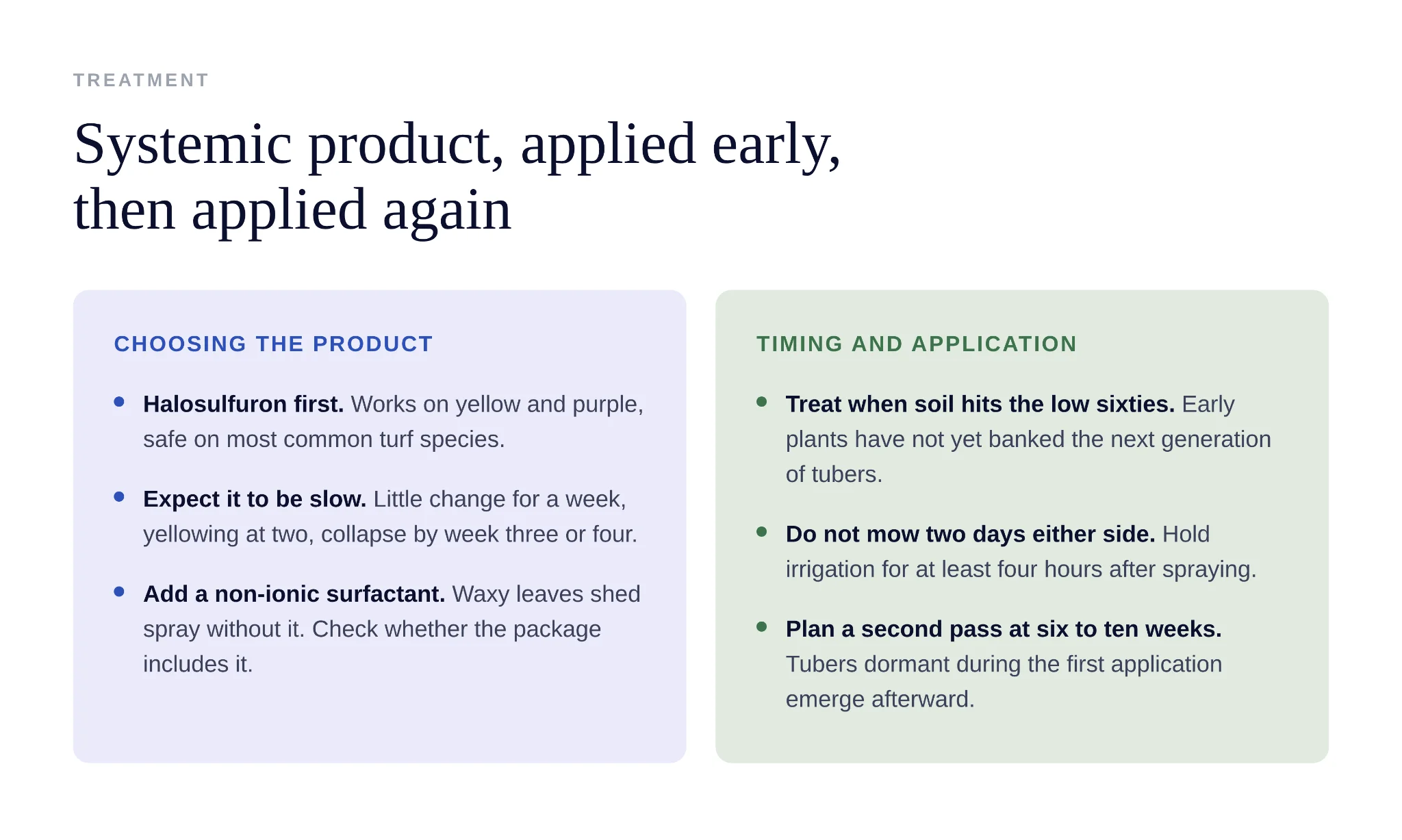
Halosulfuron, sold to homeowners as SedgeHammer and under agricultural names like Sandea, is the one to reach for first. It works on both yellow and purple nutsedge and is safe on most common turf species, including bermudagrass, zoysia, St. Augustine, centipede, bluegrass, fescue, and perennial rye.
It is slow. You may see nothing for seven to ten days, yellowing at two weeks, and full collapse in the third or fourth week. Don’t assume it failed and spray again at day ten.
Halosulfuron also needs a non-ionic surfactant, usually around a quarter percent by volume. Nutsedge leaves are waxy, so without surfactant, much of the spray can roll off instead of being absorbed. Some consumer packages include it. Check the label.
Sulfentrazone, sold as Dismiss and included in several combination products, works much faster. Visible damage can appear within one to three days, but its tuber control is weaker than halosulfuron’s. Check the label carefully for your grass type.
Bentazon, sold as Basagran, is a contact material for yellow nutsedge and does little to purple. It requires repeat applications roughly a week to ten days apart.
Imazaquin, sold as Image, is a warm-season option only and can damage cool-season lawns.
Whichever product you use, don’t mow for two days before or after spraying. Don’t irrigate for at least four hours after application, and avoid spraying drought-stressed plants during the hottest part of the day.
Plan on a second application six to ten weeks later. Tubers that were dormant during the first pass can emerge afterward and need to be caught while they’re young.
When to Treat Nutsedge
Nutsedge starts emerging when soil temperatures a few inches deep reach the low sixties. It spends its early weeks building leaf area, then shifts energy into producing the next generation of tubers.
Treat during that early window, and you’re killing plants before they’ve produced the next tuber crop. Treat in late August, and you’re killing plants that may already have banked hundreds of tubers for next spring.
Late-season applications are still worth doing if that’s when you notice the problem. Just understand that you’re managing the existing growth rather than doing as much to reduce next year’s tuber bank.
When You Can Pull Nutsedge by Hand
There’s a narrow case where hand removal works.
Young plants with fewer than five or six leaves have not yet formed tubers of their own. Pulling them can remove the plant permanently. Do it when the soil is soft, such as after heavy rain or deep irrigation, and pull slowly and straight up.
For scattered young plants in an otherwise clean lawn, checking every couple of weeks through spring can keep a small problem small.
For an established patch with mature plants, don’t. You’ll snap stems, leave tubers, and encourage more growth. Spray that one.
How to Get Rid of Nutsedge in Garden Beds
Nutsedge can punch straight through standard woven landscape fabric. Mulch doesn’t solve the problem either. Even four inches of hardwood mulch does little to stop a sedge tuber underneath it.
In beds where turf safety isn’t a concern, careful spot applications of glyphosate can work, while halosulfuron is labeled for use around many ornamentals. Either way, expect repeat treatment because the underground tuber bank is still there.
How Long It Takes to Get Rid of Nutsedge Completely
If you treated at the right time, followed up six to ten weeks later, and corrected the watering problem, you should see roughly a seventy to eighty percent reduction the following year. Some tubers can remain dormant for more than one season.
Year two is a lighter version of year one. Use the same timing with less product, and by the third season most lawns should be down to scattered individual plants that can be pulled after rain.
If the nutsedge keeps returning, look at the lawn after the next hard rain and note where water is still sitting. Treat those spots as irrigation problems that happen to have weeds in them, rather than weeds alone.
Get more pool and lawn care guides from Aiper on Google